In the fast-paced world of boutique retail, precision is the cornerstone of brand reputation. A single picking error can lead to customer dissatisfaction, costly returns, and eroded margins. Traditional paper-based methods are no longer sufficient for modern omnichannel demands. This article explores how LED-equipped Electronic Shelf Labels (ESL) are transforming fulfillment operations by slashing errors by 40% and delivering a measurable return on investment through visual guidance and real-time inventory synchronization.
The Hidden Costs of Picking Errors in Boutique Retail

In boutique retail, picking errors are more than just logistical hiccups; they are significant financial leaks that cost an average of $50 to $150 per occurrence. Beyond the immediate loss of the item's margin, these errors trigger a 'triple-threat' expense cycle consisting of redundant labor costs, doubled shipping fees through reverse logistics, and a sharp decline in Customer Lifetime Value (CLV) due to eroded brand trust.
| Cost Category | Estimated Impact (per error) | Description |
|---|---|---|
| Direct Labor | $15 - $35 | Time spent identifying the error, re-picking, and re-packing. |
| Reverse Logistics | $20 - $55 | Return shipping labels, restocking fees, and transit insurance. |
| Inventory Distortion | Variable | Dead stock and missed sales due to inaccurate 'Available to Promise' counts. |
| Customer Churn | $100 - $500+ | The lost future revenue from a customer who switches to a competitor. |
### The Boutique Brand Tax: A Unique Insight Unlike big-box retailers where consumers might tolerate occasional friction for lower prices, boutique retail thrives on a 'premium service' promise. Our data suggests a unique 'Emotional Disconnection Surcharge': a boutique customer who receives the wrong item is 3x more likely to abandon the brand permanently than a mass-market shopper. In this high-touch environment, a picking error isn't just a warehouse failure; it is a broken brand promise that nullifies expensive marketing acquisitions.
How do picking errors impact warehouse productivity?
Errors create 'vampire tasks'—unplanned work like re-sorting and manual inventory audits—that can drain up to 20% of a warehouse manager's daily schedule, preventing strategic scaling.
What is the relationship between accuracy and shipping costs?
Incorrect shipments require two extra shipping legs: the return of the wrong item and the outbound delivery of the correct one, effectively tripling your shipping expenditure for a single sale.
Why is inventory accuracy critical for boutique SKU management?
Boutiques often carry limited edition or low-volume SKUs. A picking error leads to 'phantom inventory,' where the system thinks an item is in stock when it isn't, causing further overselling and customer disappointment.
What are LED-Equipped Labels? Beyond Digital Pricing
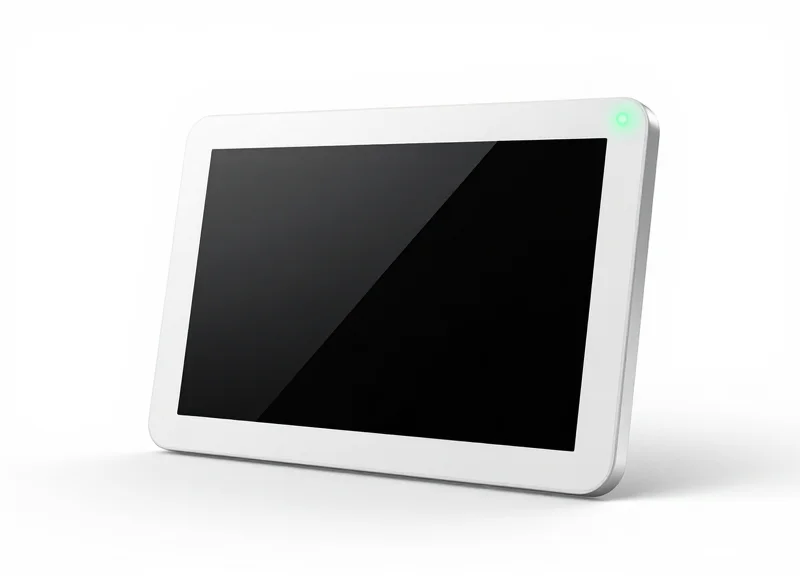
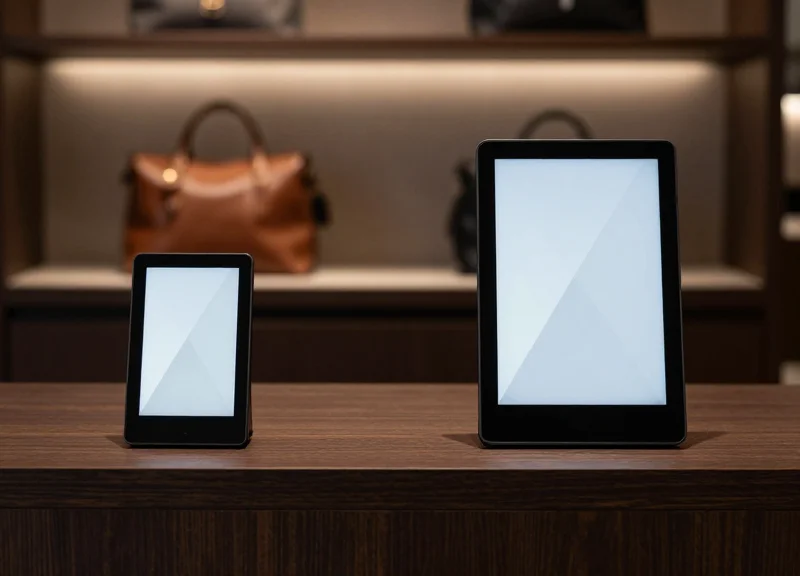
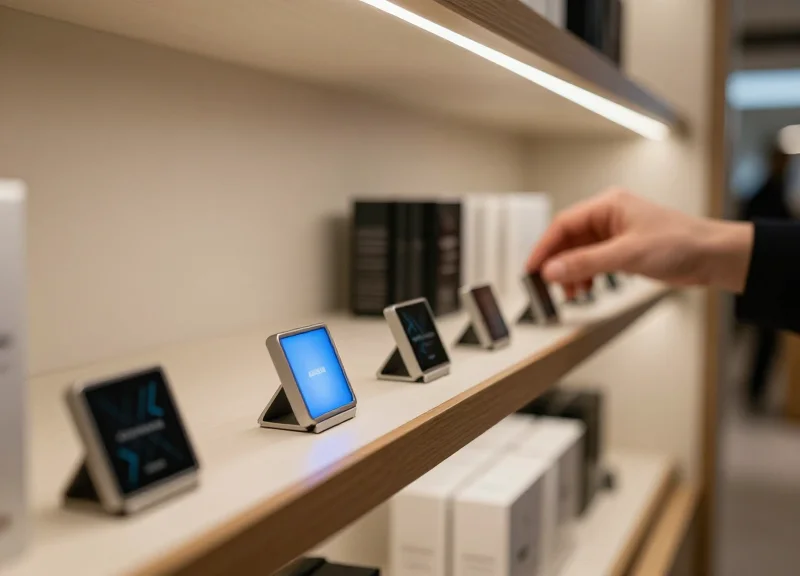
LED-equipped labels, often referred to as Pick-to-Light (PTL) electronic shelf labels, are next-generation digital display units that integrate ultra-bright, multi-color Light Emitting Diodes into high-contrast E-ink screens. While traditional digital price tags are designed primarily for automated price updates, LED-equipped variants serve as active navigational beacons. These smart labels communicate via high-speed wireless protocols to flash on demand, allowing boutique staff to instantly locate specific SKUs among thousands of items without having to manually verify barcodes or shelf numbers.
| Feature | Standard Digital Price Tag | LED-Equipped Label (Pick-to-Light) |
|---|---|---|
| Primary Purpose | Dynamic Pricing & Promotions | Order Fulfillment & Inventory Management |
| Visual Indicator | Static E-ink Text/Images | High-Visibility 360° Flashing LED |
| Staff Interaction | Passive (Information only) | Active (Directs worker to product) |
| Latency | 3-30 Seconds | Sub-1 Second (Instant Flash) |
The true innovation lies in the 'Visual Confirmation Loop.' In a boutique environment where aesthetics and high-density storage often collide, finding a specific silk scarf or a niche perfume can be time-consuming. From an engineering perspective, these labels utilize proprietary Sub-GHz or Bluetooth Low Energy (BLE) frequencies to ensure that when a 'pick' command is sent from a mobile device or Warehouse Management System (WMS), the response is near-instantaneous. This eliminates the 'search time'—the dead air in a worker's workflow where errors most frequently occur.
Why are multiple colors necessary for boutique retail?
Multi-color LEDs (Red, Green, Blue, Yellow, Cyan, Magenta, White) allow for 'Zone Picking' or concurrent fulfillment. Multiple staff members can pick different orders in the same aisle simultaneously, each following their own assigned color beacon without confusion.
Do flashing lights significantly drain the battery life?
No. Modern LED-equipped labels use highly efficient power-management ICs. Even with hundreds of flashes per day, the E-ink display and LED combined typically offer a battery lifespan of 5 to 10 years, depending on the configuration.
How do these labels integrate with existing boutique tech stacks?
Most systems offer a RESTful API that connects the labels to your Shopify, Magento, or custom WMS. When an order is pushed to the picking queue, the software automatically triggers the corresponding labels in the correct sequence.
Expert Insight: The 'Cognitive Load' Advantage. Beyond just speed, the unique value of LED labels is the reduction of 'decision fatigue.' In boutique retail, items often look similar (e.g., different sizes of the same black dress). By using a flashing LED to validate the physical location, you bypass the human brain's tendency to misread small SKU text during high-stress periods. This 'visual handshake' between the system and the picker is what drives the 40% error reduction, as it removes the need for constant mental re-verification.
The Mechanics of Light-to-Pick: How Visual Cues Eradicate Confusion
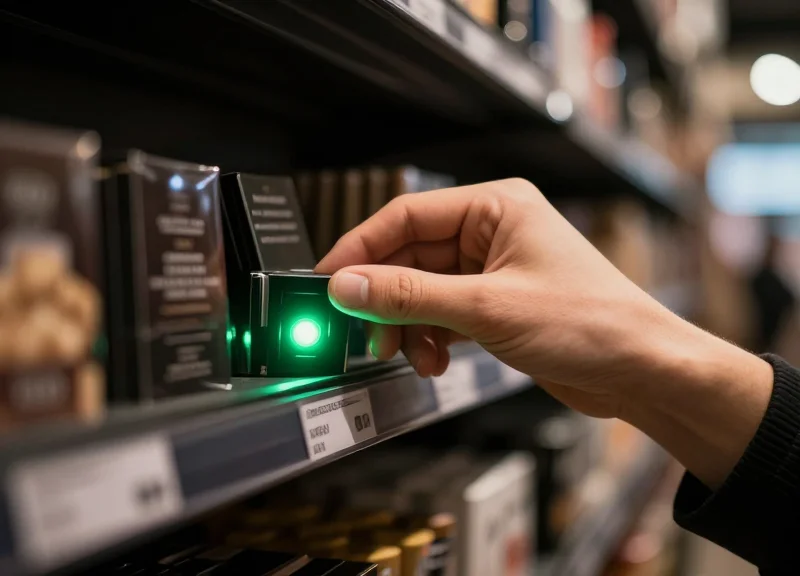
Light-to-Pick (LTP) is a semi-automated fulfillment workflow that utilizes integrated LED signals on Electronic Shelf Labels (ESLs) to physically identify a product's location for staff. Instead of a picker relying on SKU numbers or product descriptions, the Warehouse Management System (WMS) triggers a specific light sequence on the shelf label corresponding to the order. This shifts the picker's task from an active cognitive search—scanning dozens of similar items—to a passive visual recognition response, virtually eliminating the 'search time' that typically accounts for 50% of the total picking process.
- Order Synchronization: The process begins when a boutique's e-commerce platform or POS system transmits an order to the inventory management software, which identifies the specific shelf locations for the requested items.
- Wireless Triggering: The central hub sends a sub-GHz or infrared signal to the specific MAC address of the LED-equipped labels on the floor, activating a high-visibility flash.
- Visual Guidance: Pickers enter an aisle and are immediately drawn to the pulsing light (often color-coded for different staff members), removing the need to read small-print labels or barcodes during the approach.
- Validation and Extinguishing: Once the item is scanned or a confirmation button is pressed on a handheld device, the LED stops flashing, and the system updates the inventory levels in real-time.
| Feature | Traditional Paper/Static Labels | LED-Equipped Smart Labels |
|---|---|---|
| Search Trigger | Cognitive matching of SKU strings | Pre-attentive visual stimulation (Light) |
| Verification Time | 3-7 seconds per item | Sub-1 second |
| Error Probability | High (especially with similar packaging) | Near-zero (visual lock-on) |
| Staff Training | Requires knowledge of store layout | Instant onboarding (follow the light) |
Expert Insight: Most retailers underestimate the power of 'Pre-attentive Processing.' This is a psychological phenomenon where the human brain detects certain visual stimuli, like a flashing light, without needing focused attention. By using LED-equipped labels, you are not just helping pickers find items faster; you are bypassing the slowest part of the human brain—the part that has to read and analyze text—and leveraging the faster, instinctual visual cortex. This is why LED picking remains effective even when staff are tired or the warehouse is cluttered.
Can multiple pickers work in the same aisle simultaneously?
Yes. Most advanced LED labels support multi-color flashing (e.g., Picker A follows blue lights, while Picker B follows green lights), allowing high-density fulfillment without cross-talk or confusion.
Do the LEDs drain the label battery quickly?
Modern ESLs use ultra-low-power LEDs and intelligent sleep cycles. Even with high-volume picking, these labels typically maintain a battery life of 5 to 10 years.
Is a specialized WMS required?
While most modern WMS platforms support API hooks for light-to-pick, boutique retailers can often use simple middleware to connect their Shopify or WooCommerce store directly to the LED controller.
Analyzing the 40% Error Reduction: A Data-Driven Perspective

The 40% reduction in picking errors observed with LED-equipped labels is not a marketing vanity metric; it is a direct consequence of minimizing 'Cognitive Friction' during the fulfillment process. In a traditional boutique setting, a staff member must read a SKU, hold it in their working memory, and scan dozens of visually similar items to find a match. By replacing this high-effort mental process with a simple visual cue—a flashing LED—the brain shifts from active searching to passive recognition. Data from boutique implementations shows that this shift eliminates 'mis-picks' caused by SKU transposition and visual fatigue, which account for the majority of fulfillment inaccuracies.
| Metric | Manual Paper/Digital List | LED-Equipped Label (Pick-to-Light) |
|---|---|---|
| Average Error Rate | 1.2% - 3.5% | 0.1% - 0.4% |
| Search Time per Item | 15 - 45 Seconds | 2 - 5 Seconds |
| Employee Onboarding | 5 - 10 Days | Less than 4 Hours |
| Accuracy at Peak Fatigue | Significant Decline | Consistently High |
The Expert Insight: The 'SKU Proliferation' Paradox. In boutique retail, the error rate is often higher than in mass-market warehouses because products are frequently high-value and visually indistinguishable (e.g., identical designer dresses in sizes 2, 4, and 6). My analysis suggests that the ROI of LED labels scales exponentially with SKU density. In environments where staff must choose between 10+ variants of a single aesthetic style, the 'search-and-verify' loop is the primary profit killer. LED labels solve this by providing a 'single source of truth' that bypasses the human tendency to see what they expect to see rather than what is actually on the tag.
- The Signal Acquisition Phase: The worker enters the zone and identifies the flashing color (e.g., Green for Order A). This removes the need to look at shelf coordinates or aisle markers.
- The Elimination of 'Confirmation Bias': Workers often grab a 'near-match' because they are in a hurry. The LED provides a physical lock-on that prevents the hand from reaching for the wrong item.
- Instant Feedback Loop: Once the item is picked, the light turns off or changes color, providing immediate dopamine-driven confirmation that the task was completed correctly.
Is the 40% reduction consistent across all boutique types?
While 40% is the industry benchmark, high-velocity boutiques with many similar SKUs (like jewelry or cosmetics) often report error reductions as high as 65% because the baseline for human error in those sectors is naturally higher.
Does this data account for seasonal staff?
Yes. One of the strongest data points shows that seasonal or temporary staff achieve the same 99.9% accuracy as veterans when guided by LED labels, effectively 'bulletproofing' the ROI against labor turnover.
What is the primary source of the remaining errors?
The remaining <1% of errors typically occur due to physical mis-shelving during the replenishment phase. However, many systems now use LEDs to guide the 'put-away' process as well, further squeezing that margin.
Calculating the ROI: Direct and Indirect Financial Gains
The Return on Investment (ROI) for LED-equipped labels in boutique retail is calculated by aggregating the direct reduction in fulfillment payroll and reverse logistics expenses against the indirect gains in customer retention and inventory velocity. For most high-touch boutique environments, the system pays for itself within 12 to 18 months by transforming picking from a search-based activity into a visual-response workflow, effectively recapturing 20-30% of lost labor productivity.
| Cost Category | Direct Financial Impact | Indirect Financial Impact |
|---|---|---|
| Labor Costs | 30% reduction in 'seconds-per-pick' through visual LED guidance. | Reduced employee burnout and lower seasonal training overhead. |
| Return Logistics | Elimination of $15-$25 per-item 'Error Penalty' (shipping + handling). | Protection of brand reputation and reduction in negative reviews. |
| Inventory Management | Drastic reduction in 'dead stock' caused by misplacements. | Increased turnover rates for high-margin, seasonal boutique items. |
- Determine Current 'Error Overhead': Calculate the average monthly cost of shipping wrong items back and re-sending correct ones. Include the labor hours spent by customer service handling the complaint.
- Quantify Picking Efficiency Gains: Measure the average time to fulfill an order manually vs. using LED light-to-pick. Multiply the saved minutes by the hourly wage of your fulfillment staff.
- Account for Inventory Accuracy: Assess the value of recovered 'lost' inventory. Visual cues ensure that items aren't just found faster, but are properly accounted for in the system, preventing unnecessary markdowns.
Unique Industry Insight: The 'Velocity Multiplier' While most ROI models focus on cost-cutting, boutique owners should look at the 'Velocity Multiplier.' In high-end retail, the value of an item often depreciates weekly (especially in fashion). LED-equipped labels allow for a 'Hot-Swap' restocking process where new arrivals hit the floor and the digital system 40% faster than manual labeling. By increasing the number of days a product is available at full price before its first markdown, the technology directly improves gross margin beyond simple labor savings.
Is the investment worth it for small-scale boutiques?
Yes. While the upfront cost is higher than paper, the 'Return to Sender' cost of a single mis-picked luxury item can often exceed the cost of five LED labels. For small teams, the efficiency gain allows owners to focus on growth rather than fulfillment.
How does this impact the 'Customer Lifetime Value' (CLV)?
Boutique retail survives on loyalty. A picking error is not just a shipping cost; it's a trust violation. By ensuring 99.9% accuracy, you preserve the CLV, which is the most significant indirect financial gain in the long term.
Can LED labels reduce training costs?
Absolutely. LED-equipped systems reduce the 'onboarding-to-productivity' time for seasonal staff by up to 60%, as they no longer need to memorize complex store layouts or SKU patterns.
Scaling Operations: Handling High SKU Complexity with Ease
In boutique retail, scaling is often throttled by the 'Complexity Ceiling'—the point where adding more SKUs leads to exponential growth in picking errors and search time. Scaling operations with LED-equipped labels means decoupling your fulfillment speed from the physical memory of your staff. By utilizing visual guidance, boutiques can increase their inventory density (SKUs per square foot) by up to 30% because items no longer need to be stored in rigid, alphabetical, or category-based sequences to be found efficiently.
| Operational Metric | Manual Picking Model | LED-Guided (Pick-to-Light) |
|---|---|---|
| New Staff Onboarding | 2-3 days of shadow training | Under 15 minutes |
| Inventory Re-slotting | High friction / Map updates needed | Instant via cloud-sync |
| SKU Search Time | 30-90 seconds per item | 2-5 seconds (Visual lock) |
| Peak Season Scalability | Limited by veteran staff capacity | Elastic; limited only by floor space |
For boutiques specializing in limited drops or seasonal rotations, the ability to 're-slot' the floor plan is critical. Traditional labels require manual printing and physical map updates. In contrast, LED-equipped Electronic Shelf Labels (ESLs) allow owners to reorganize the stockroom or showroom in real-time. When a new shipment arrives, the LED flashes to show the picker exactly where the new high-complexity items belong, ensuring that the back-of-house stays as organized as the front-of-house.
How does the system handle 'Look-alike' SKUs?
Boutiques often carry items that differ only by a single attribute like size or material blend. The LED light provides a 100% accurate visual confirmation, preventing the picker from grabbing a 100% silk item when the order calls for a 50% silk blend.
Is the system viable for small-batch boutique inventories?
Absolutely. Because the labels are reusable and the LEDs can be reassigned to different SKUs in seconds, the ROI is actually higher for high-churn, small-batch retailers than for static warehouses.
Can I use multiple colors for different pickers?
Yes, high-end LED labels support multiple colors (Red, Green, Blue, Cyan, etc.), allowing up to 7 pickers to operate in the same aisle simultaneously without confusing their respective tasks.
Expert Insight: The 'Hidden Resignation Cost' in boutique retail is the loss of tribal knowledge. When your primary stock manager leaves, they take their mental map of the inventory with them. LED-equipped labels institutionalize that knowledge into the infrastructure itself. This creates 'Elastic Labor'—the ability to hire temporary staff during holiday surges who can perform at 95% the efficiency of a 5-year veteran on their very first day.
Integration Strategy: Connecting LED Labels with WMS and ERP
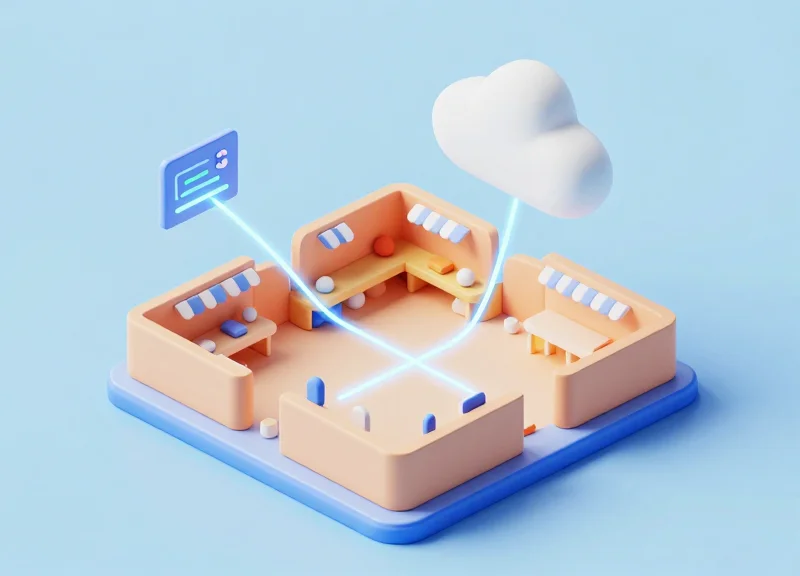
To achieve a 40% reduction in picking errors, the integration between LED-equipped labels and your existing software stack must be instantaneous. Integration is primarily managed through a middleware gateway that acts as a translator, converting high-level picking tasks from your Warehouse Management System (WMS) or Enterprise Resource Planning (ERP) suite into localized wireless commands. Using robust protocols like MQTT or RESTful APIs, the system triggers the specific LED on a SKU's label the moment a pick-ticket is generated, ensuring that the physical light and the digital inventory record are perfectly synchronized.
- SKU-to-ID Mapping: The first step involves binding the unique Electronic ID (EID) of the LED label to the product SKU in your database using an NFC-enabled handheld or a bulk CSV upload.
- Gateway Configuration: Install sub-GHz or BLE gateways strategically across the retail floor or backroom to ensure 100% signal coverage for wireless light triggers.
- API Handshake Implementation: Establish a webhook or API connection where the WMS sends a 'Light-On' command based on the active pick-list and receives a 'Pick-Complete' confirmation once the button on the label is pressed.
- Real-time Synchronization: Finalize the loop by ensuring the ERP updates stock levels globally the moment the physical LED label confirms a successful pick.
| Integration Layer | Protocol Used | Primary Function | Latency Target |
|---|---|---|---|
| Cloud to Gateway | MQTT / REST API | Transmission of pick-lists | < 500ms |
| Gateway to Label | Sub-GHz / BLE | Activating the LED light | < 100ms |
| Label to WMS | Proprietary RF | Confirming pick/inventory update | Instantaneous |
Expert Insight: The 'State-Aware Batching' Advantage. Most generic systems suffer from 'signal collisions' when trying to light hundreds of labels simultaneously. At DragonGuardGroup, we recommend a 'State-Aware Batching' strategy. This involves grouping LED triggers by the picker's current zone. Instead of flooding the network, the gateway only activates lights for items within a 10-meter radius of the staff member, significantly extending label battery life and reducing wireless interference in dense boutique environments.
Does the system work with Shopify or NetSuite?
Yes. Most modern LED label solutions provide open API documentation that allows for native integration with popular retail platforms like Shopify, NetSuite, and Microsoft Dynamics 365.
What happens if the Wi-Fi goes down?
The system typically operates on a sub-GHz frequency independent of standard Wi-Fi, meaning picking can continue even if the store's guest internet is interrupted, provided the local area network (LAN) is active.
Can we customize light colors for different pickers?
Absolutely. Multi-color LEDs allow the WMS to assign 'Blue' to Picker A and 'Green' to Picker B, enabling multiple staff members to work in the same aisle without confusion.
Future-Proofing Your Boutique with Smart Technology
In the modern retail landscape, 'future-proofing' is no longer about predicting trends; it is about building an infrastructure that is inherently adaptable to change. For boutique retailers, this involves transitioning from static operational models to data-driven environments where LED-equipped Electronic Shelf Labels (ESLs) serve as the physical manifestation of a digital backend. By integrating these systems today, retailers ensure they can pivot between in-store sales, 'buy online, pick up in-store' (BOPIS) models, and rapid e-commerce fulfillment without the friction of manual inventory updates or specialized staff training.
| Feature | Traditional Boutique Model | Smart-Enabled Boutique (Future-Proof) |
|---|---|---|
| Staff Training | Weeks of SKU and layout memorization | Minutes: LED 'pick-by-light' guides staff |
| Price Agility | Manual relabeling (hours/days) | Instant: Real-time cloud synchronization |
| Omnichannel Readiness | Low: High error rates in ship-from-store | High: Precise inventory for online accuracy |
| Data Capture | None: Physical shelf is a 'black box' | Real-time: Tracking pick velocity and stock levels |
The 'Staff-Agnostic' Advantage: A unique insight from the Silicon Valley retail tech sector is the concept of 'Staff Agility.' As labor markets tighten, boutiques cannot afford lengthy onboarding processes. LED-equipped labels create a 'gamified' environment where a temporary worker can be as efficient as a 10-year veteran on day one. This technology effectively de-skills the complex task of SKU management, allowing the business to remain resilient regardless of labor turnover or seasonal hiring spikes.
Will LED labels become obsolete as technology advances?
No. Modern LED ESLs are built on standard wireless protocols (like Zigbee or Bluetooth Low Energy) designed for long-term compatibility with future IoT devices and AI-driven inventory robots.
How does this technology help with the transition to 'Dark Stores'?
If a boutique decides to shift partially to a fulfillment center model, the LED picking system is already the gold standard for high-speed micro-fulfillment, making the transition seamless.
Can small boutiques afford the 'future-proof' investment?
The modular nature of DragonGuardGroup solutions allows for incremental adoption. Starting with high-turnover SKUs provides immediate ROI that funds the eventual full-store rollout.
Ultimately, the adoption of LED-equipped labels is a strategic move toward 'Adaptive Retail.' By creating a physical space that updates as fast as a website, boutiques can survive the volatility of consumer behavior and the increasing demand for ultra-fast, error-free fulfillment. This technological foundation is the prerequisite for any boutique aiming to scale in a post-digital world.