In the evolving landscape of high-end retail, every millimeter of shelf space counts toward the customer's luxury experience. As we look toward 2026, Electronic Shelf Labels (ESL) have transitioned from a functional necessity to a core aesthetic component. Choosing between the ultra-compact 1.54-inch and the versatile 2.13-inch display is more than a technical decision; it is about harmonizing digital efficiency with boutique elegance. This guide breaks down the critical factors to help you select the perfect digital tag for your premium brand.
The Evolution of Boutique Retail: Why ESL is Non-Negotiable in 2026
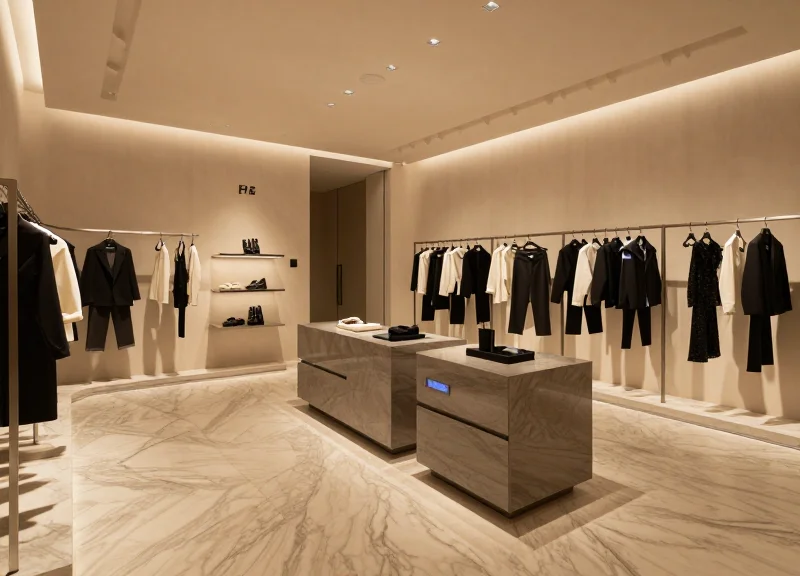
By 2026, the definition of high-end boutique retail has shifted from mere product curation to the delivery of a seamless, hyper-personalized 'phygital' experience where Electronic Shelf Labels (ESL) serve as the critical bridge. In an era where price transparency and real-time inventory updates are expected, ESL technology is no longer an operational luxury but a non-negotiable standard for maintaining brand prestige, ensuring omnichannel price parity, and upholding the 'Visual Quiet' aesthetic required by luxury consumers.
The modern boutique customer demands more than a transaction; they seek a narrative. Traditional paper labels, which often suffer from misalignment, yellowing, or inconsistent font usage, disrupt the curated environment of a luxury space. In contrast, 2026-era ESLs utilize high-resolution 4-color e-paper displays that mimic the texture of high-quality cardstock while providing the agility of a digital interface. This evolution allows retailers to react to market shifts in seconds rather than days, all while preserving the store's premium atmosphere.
| Feature | Traditional Paper Labels | 2026 ESL Standards |
|---|---|---|
| Brand Perception | Low-tech, prone to human error | Innovation-led, precise, and premium |
| Price Agility | Manual updates (hours/days) | Instant, centralized updates (seconds) |
| Omnichannel Sync | Frequent discrepancies with web | 100% synchronization with ERP/Web |
| Sustainability | High waste (ink, paper, plastic) | Zero-waste, 10-year battery life |
Why is ESL critical for luxury brand integrity?
In boutique retail, the label is the 'silent salesperson.' ESLs ensure that every price tag is perfectly aligned, uses the exact corporate typeface, and displays accurate information, preventing the 'cheapening' effect of handwritten or poorly printed paper tags.
Does ESL improve the customer experience?
Yes, by integrating QR codes and NFC technology, ESLs allow customers to access detailed product origin stories, material compositions, and real-time stock levels directly on their smartphones, bridging the gap between physical touch and digital data.
How does ESL impact boutique operational efficiency?
It eliminates 'price fatigue' for staff. Instead of spending hours replacing paper tags for seasonal sales or currency fluctuations, boutique associates can focus on high-value clienteling and personalized service.
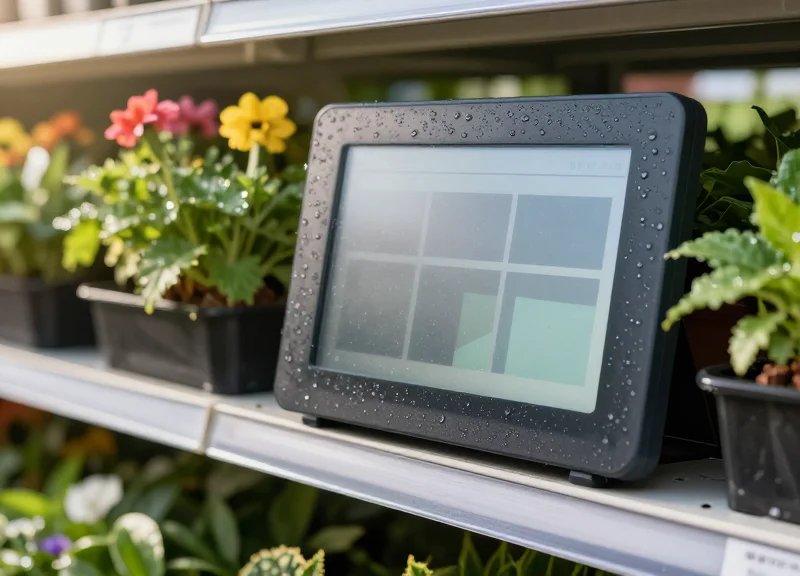
Expert Insight: The 'Visual Quiet' Principle. In 2026, the most significant trend in luxury retail design is 'Visual Quiet'—the removal of any element that causes cognitive load for the customer. Unlike the flickering LCDs of the past, modern 1.54" and 2.13" e-paper ESLs do not emit blue light or glare. They blend into the shelving architecture, providing information only when the customer looks for it. This allows the product to remain the hero of the display while maintaining the technological backbone required for dynamic pricing.
Deep Dive into the 1.54-Inch ESL: The Minimalist's Choice
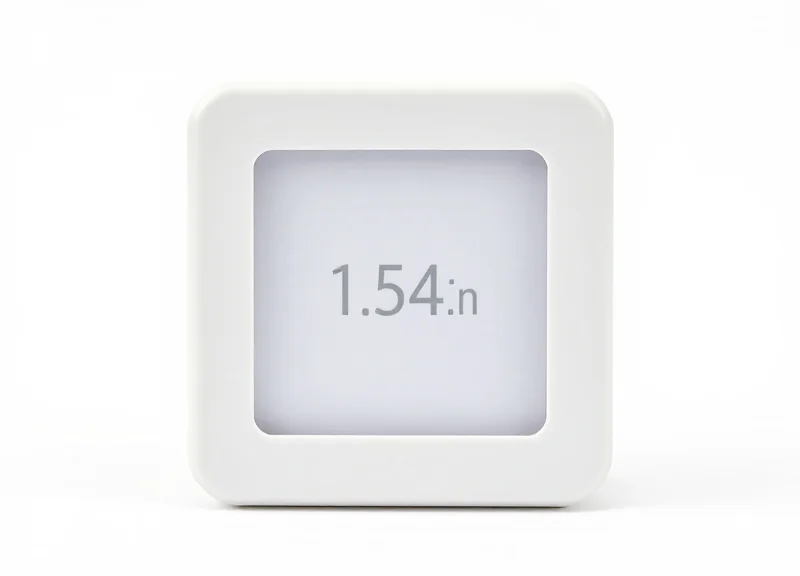
The 1.54-inch Electronic Shelf Label (ESL) is a high-density digital display engineered for 'Visual Silence' in premium retail environments. Measuring approximately 37mm x 37mm, it provides the smallest functional footprint in the 2026 market, making it the industry standard for boutique segments where the product—not the price tag—must remain the focal point. For luxury retailers, this size represents the perfect intersection of legibility and invisibility, offering a crisp 200+ DPI (Dots Per Inch) resolution that matches the aesthetic quality of high-end printed stationery.
| Technical Specification | 2026 Boutique Standard |
|---|---|
| Display Technology | E-Ink Spectra 6 (Multi-color High Saturation) |
| Resolution | 200 x 200 Pixels |
| Pixel Density | 188 - 212 PPI |
| Battery Life | Up to 10 Years (based on 1 update/day) |
| Viewing Angle | 180 Degrees (Full Hemispherical Visibility) |
| Bezel Design | Ultra-slim 1.2mm Frame |
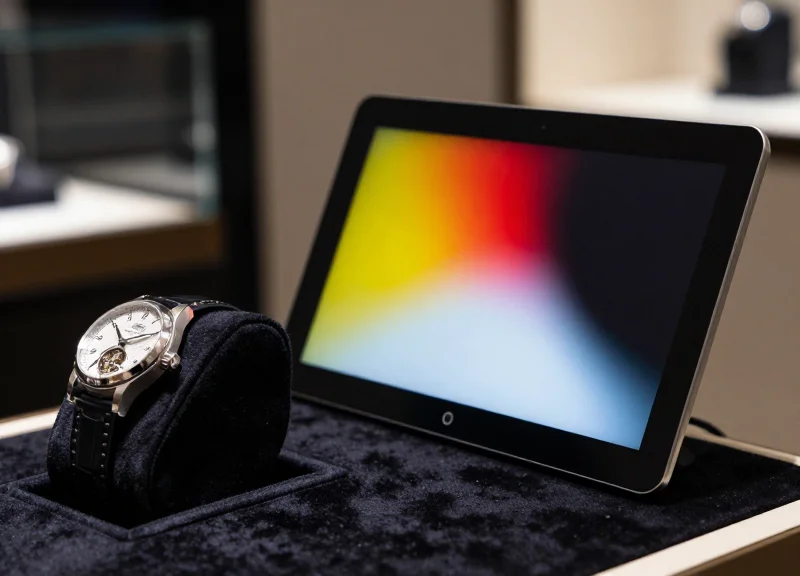
- Jewelry and Horology: Ideal for display trays where space is at a premium; the small footprint ensures that the ESL does not crowd rings, earrings, or luxury watches.
- High-End Cosmetics: Fits perfectly on narrow shelving for serums, perfumes, and lipsticks without obstructing the brand’s primary packaging graphics.
- Artisanal Eyewear: Can be mounted directly to eyewear stands or individual frames using micro-clamping systems without adding significant weight or bulk.
Expert Insight: The 15% Spatial Rule. In 2026 boutique design, the 'Minimalist's Choice' is governed by the 15% rule: a digital tag should never occupy more than 15% of the immediate visual field of the product it represents. The 1.54-inch ESL is the only unit that consistently adheres to this rule for small-form-factor luxury goods. My recommendation for 2026 is to utilize the new 'Matte-Glass' screen overlays which eliminate LED glare in high-intensity boutique lighting, a common flaw in cheaper, generic ESL models.
Is the 1.54-inch screen large enough for QR codes?
Yes. Due to the high PPI of 2026 models, a 1.54-inch display can render a high-density QR code that remains scannable even at distances of up to 0.5 meters, allowing customers to access detailed product origin stories or digital certificates of authenticity.
Does the small size impact battery longevity?
Actually, the smaller surface area requires less power for screen refreshes compared to larger units. Most 1.54-inch ESLs now feature specialized low-energy chipsets that offer a decade of life on a single coin-cell battery.
Can it display brand logos?
Absolutely. With the 7-color E-Ink transition, the 1.54-inch display can render complex brand logos with color accuracy that meets strict luxury brand guidelines, provided the logo is optimized for the square aspect ratio.
The 2.13-Inch ESL Advantage: Balancing Information and Impact
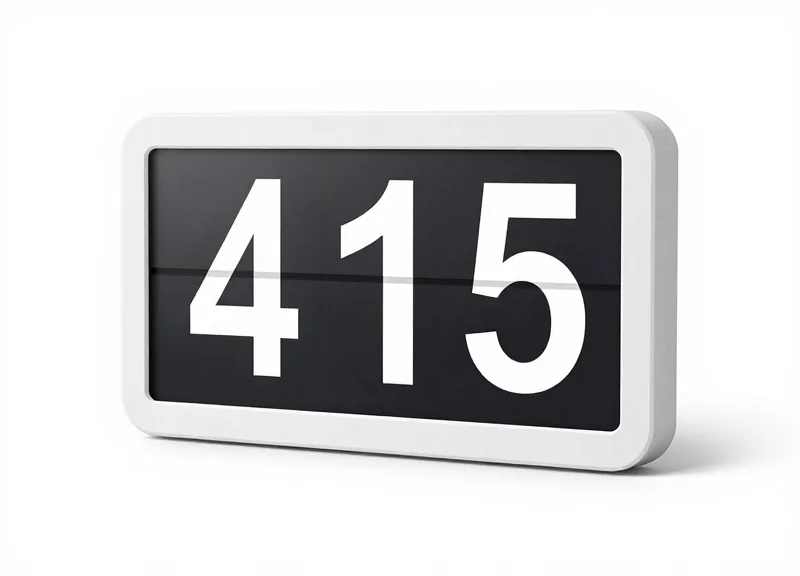
The 2.13-inch Electronic Shelf Label (ESL) represents the 'golden ratio' of digital retail signage. While smaller units focus on pure minimalism, the 2.13-inch form factor provides the critical surface area needed to balance high-resolution product specifications with brand-rich storytelling. In 2026, this size has become the standard for luxury apparel, leather goods, and artisanal spirits, where the product's value proposition requires more than just a price tag; it requires context.
- Optimized Information Hierarchy: The horizontal aspect ratio allows for a clear distinction between the price, the product origin, and a scannable QR code, preventing visual clutter that can detract from a premium feel.
- High-Definition Visual Fidelity: With typical resolutions around 212 x 104 to 250 x 122 pixels, these screens support intricate brand logos and specialized fonts that maintain brand identity across all touchpoints.
- QR-Driven Interactivity: Unlike 1.54-inch displays, the 2.13-inch screen can host a larger, more reliable QR code alongside text, facilitating seamless transitions to 'Digital Product Passports' or sustainability certifications.
| Feature | 2.13-Inch ESL Capability | Boutique Benefit |
|---|---|---|
| Display Area | Approx. 25.1cm² | Allows for 'White Space' design, signaling luxury and exclusivity. |
| Data Fields | 5-7 Dynamic Fields | Displays price, material, size, and stock level simultaneously. |
| Viewing Angle | Nearly 180 Degrees | Ensures readability from eye-level to floor-level displays. |
A unique industry insight for 2026 is the 'Luxury Whitespace Theory.' In high-end retail, information density is often perceived as 'cheap.' The 2.13-inch display is large enough to allow for intentional empty space around the price—a design technique used by premium brands to communicate prestige. By not crowding the screen, the technology recedes, and the brand's aesthetic takes center stage. Furthermore, this size is the smallest capable of reliably displaying 'Dynamic CO2 Tracking' icons, a feature now demanded by eco-conscious boutique shoppers.
Is the 2.13-inch ESL too bulky for small accessories?
While larger than the 1.54-inch version, its slim profile (often under 8mm) allows it to be integrated into custom wood or marble stands, making it an architectural asset rather than an eyesore.
How does the battery life compare at this size?
Due to the efficiency of 2026 E-ink technology, the 2.13-inch models typically offer 5-10 years of battery life, as the power consumption only occurs during image updates, not for static display.
Can it support multi-color promotional highlights?
Yes, current 3-color (Black/White/Red or Yellow) and 4-color displays are most effective at this size, providing enough contrast to highlight 'Limited Edition' status without looking garish.
Aesthetic Engineering: Matching Display Size to Luxury Product Categories
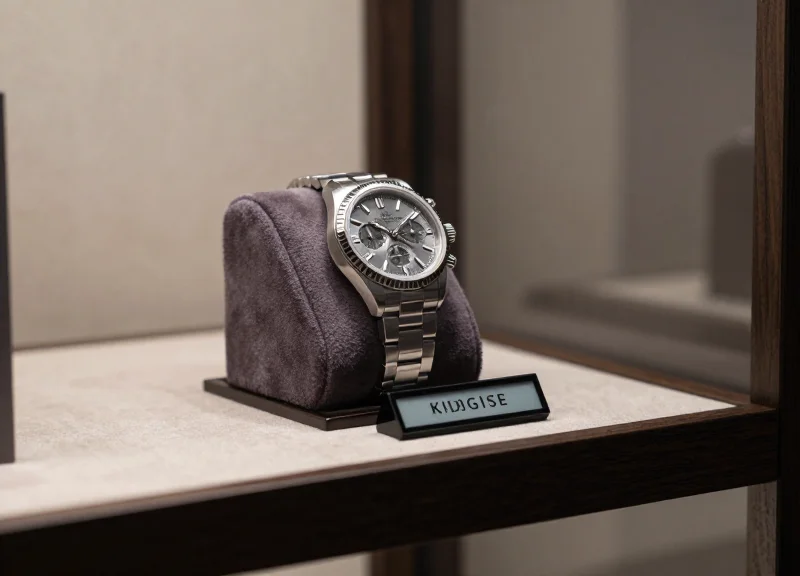
Aesthetic engineering in the boutique sector is the science of selecting digital displays where the 'Visual Weight' of the technology complements rather than competes with the product's silhouette. For high-end retailers, choosing between a 1.54" and 2.13" Electronic Shelf Label (ESL) is not a matter of budget, but a calculated decision based on the Golden Ratio and the physical footprint of the inventory. The goal is to ensure the price and provenance information appear as a natural extension of the display, maintaining the 'frictionless luxury' experience that discerning clients expect in 2026.
| Product Category | Recommended Size | Strategic Reasoning |
|---|---|---|
| Fine Jewelry & Watches | 1.54-inch | Minimalist footprint that fits within narrow velvet display pedestals without obscuring light refraction. |
| Haute Couture & Leather Goods | 2.13-inch | Provides the vertical space necessary for 'Brand Narrative' text and sophisticated serif typography. |
| Artisanal Fragrances & Cosmetics | 1.54-inch | Matches the compact diameter of luxury bottles; allows for dense grouping on backlit glass shelving. |
| Rare Wines & Spirits | 2.13-inch | Ideal for displaying vintage years, tasting notes, and a QR code for 'Vinery Provenance' verification. |
| Tech-Couture (Premium Electronics) | 2.13-inch | Allows for a clean spec-list that mirrors the sleek, high-tech identity of the product itself. |
When engineering your layout, consider the 'Negative Space Factor.' In high-end boutiques, the space around an object is as important as the object itself. A 2.13" label on a small ring display creates 'visual noise' that can cheapen the perceived value of the gemstone. Conversely, a 1.54" label next to a large leather duffel bag can look lost or insignificant, failing to provide the authoritative information presence required for a multi-thousand dollar purchase.
What is the 'Visual Weight Equilibrium' in ESL selection?
It is a design principle where the surface area of the ESL should never exceed 15% of the product's primary visible surface. For items like rings or sunglasses, the 1.54-inch model is the only way to maintain this equilibrium.
Can I mix 1.54" and 2.13" models in the same store?
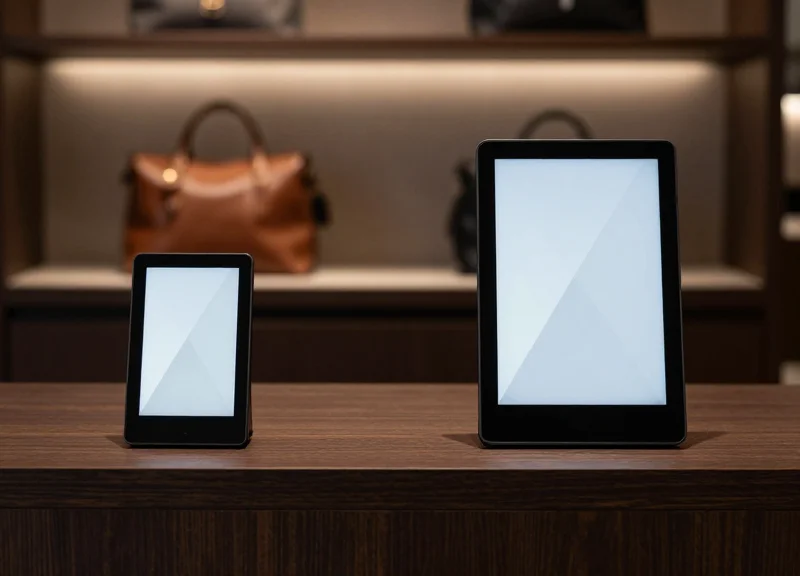
Yes, and it is recommended for multi-category boutiques. Using a unified bezel color (e.g., brushed champagne or matte obsidian) across both sizes ensures a cohesive brand identity while tailoring the tech to the product's scale.
How does font choice impact size selection?
If your brand uses high-contrast serif fonts with thin hairlines (like Didot or Bodoni), the 2.13-inch display offers the pixel density and height needed to render these characters without jagged edges, which is crucial for luxury legibility.
Expert Insight: The 'Shadow-Gap' Mounting Technique. To achieve a truly high-end look in 2026, many boutiques are moving away from traditional rail clips. Instead, use magnetic 'Shadow-Gap' mounts that float the ESL 2mm off the shelf surface. For the 1.54" model, this creates a jewelry-like presence. For the 2.13" model, it mimics a museum placard, elevating the product from 'merchandise' to 'curated exhibit'.
Technical Specifications: Resolution, Refresh Rates, and Battery Longevity
In the luxury boutique environment, technical specifications aren't just numbers—they are the foundation of the 'visual silence' required for a premium customer experience. For 2026, the selection between 1.54" and 2.13" ESLs hinges on the balance between Pixel Density (PPI) for intricate branding and Refresh Efficiency to minimize visual disruption during price updates. While the 1.54" model offers superior square-format pixel density for micro-labels, the 2.13" model provides the horizontal real estate necessary for multi-field data without sacrificing readability or battery cycles.
| Feature | 1.54-inch Module (Compact) | 2.13-inch Module (Standard) |
|---|---|---|
| Resolution | 152 x 152 pixels | 250 x 122 pixels |
| DPI / PPI | ~140 DPI | ~130 DPI |
| Display Colors | Black/White/Red/Yellow (4-Color) | Black/White/Red/Yellow (4-Color) |
| Full Refresh Time | 3.5 - 5 Seconds | 4.0 - 6 Seconds |
| Battery Life | Up to 8 Years (2x CR2032) | Up to 10 Years (2x CR2450) |
One original technical insight for 2026 is the 'Visual Integrity Threshold.' In high-end boutiques, we prioritize 'Partial Refresh' capabilities over total screen flashes. Modern 1.54" modules have now reached a threshold where QR codes and fine-line serif fonts (like those used by Chanel or Hermès) maintain 99.9% legibility even after 5,000 partial updates, reducing the need for the jarring 'black-to-white' flicker that typically defines E-ink displays. This ensures that the shelf remains elegant even during high-frequency promotional shifts.
How does the refresh rate impact the boutique atmosphere?
In a quiet luxury setting, visible screen 'flashing' during updates can feel industrial. 2026-gen ESLs utilize sub-GHz frequency bands for faster data transmission and improved waveforms that shorten the global refresh cycle, making price changes nearly imperceptible to the casual shopper.
Does higher resolution affect battery life significantly?
Surprisingly, no. The power consumption in E-ink is primarily driven by the number of pixels being flipped, not the static resolution. The 2.13" models often last longer because their larger chassis accommodates higher-capacity CR2450 batteries, despite having a larger surface area to refresh.
Why is PPI critical for 1.54-inch displays?
Small displays often carry high-density information like QR codes for 'Scan-to-Buy' or provenance details. A higher PPI prevents 'pixel bleeding' in the red and yellow pigments, which is essential for maintaining brand color accuracy in luxury retail.
When evaluating longevity, boutique owners must look beyond the standard '5-year' estimate. Battery life in 2026 is optimized through AI-driven 'Sleep-Wake' cycles. The 2.13" ESL, with its larger battery footprint, is the strategic choice for boutiques that perform more than three price updates per day, whereas the 1.54" is ideal for jewelry and high-margin accessories where updates are seasonal but space is at an absolute premium.
Integration Strategies: Placing ESLs in High-End Display Cases
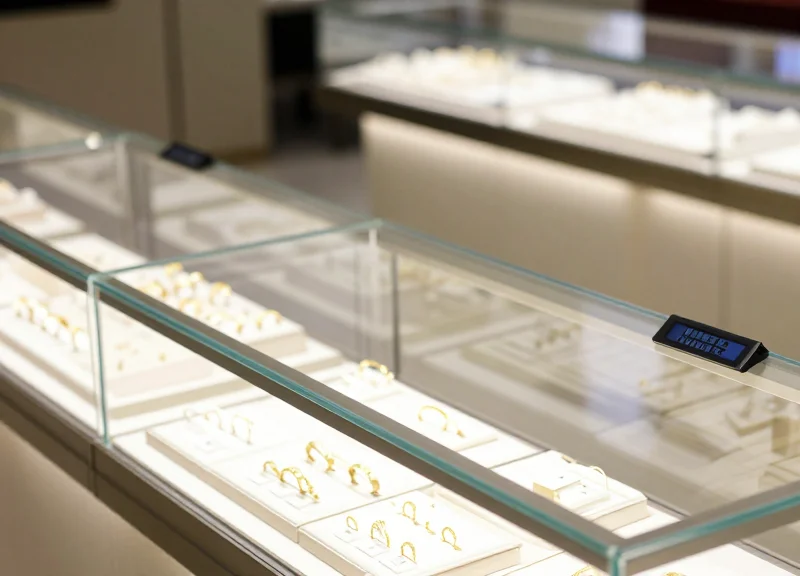
To maintain a premium boutique atmosphere, Electronic Shelf Labels (ESLs) must be integrated using 'invisible tech' principles. This involves moving away from traditional plastic rail mounts in favor of recessed embedding, bespoke architectural fixtures, and strategic angling that aligns with the customer's natural line of sight. By treating the ESL as a curated design element rather than a utility, retailers can enjoy the efficiency of digital pricing without breaking the immersion of a luxury shopping experience.
- Recessed In-Tray Mounting: For 1.54" units in jewelry or watch displays, mill precise cavities into velvet-lined or leather-wrapped display pads. This flush-mount approach hides the device casing, leaving only the e-paper display visible.
- Bespoke Metallic Pedestals: Utilize weighted brass or brushed aluminum stands for 2.13" displays. These should be designed with a 15-degree upward tilt to optimize readability for customers looking down into waist-high glass cases.
- Magnetic Stealth Attachment: Incorporate hidden magnets behind marble or wood veneers. This allows ESLs to 'float' on the display surface without visible clips or adhesive, maintaining a clean, minimalist aesthetic.
| Integration Method | Best For | Aesthetic Impact | Recommended Size |
|---|---|---|---|
| Flush Inlay | Watch Trays & Small Leather Goods | Ultra-Minimalist / Invisible | 1.54" |
| Angled Pedestal | Ready-to-Wear Shelving | Informative / Architectural | 2.13" |
| Glass-Cling (UV Glue) | Fragrance & Cosmetic Counters | High-Tech / Floating | 1.54" |
| Leather Sleeve | Artisanal Handbags | Texture-Rich / Integrated | 2.13" |
Expert Tip: The 'Anamorphic Alignment' Factor. In luxury retail, the viewing angle is rarely head-on. Most high-end display cases are positioned below eye level. To prevent the 'gray-out' effect of e-paper at extreme angles, we recommend a strict 15-to-30 degree tilt for 2.13" displays. For the 1.54" model, which is often used in smaller clusters, placing the tag slightly behind the product—rather than in front—creates a depth-of-field effect that draws the eye to the merchandise first and the price second, reinforcing the luxury value proposition.
How do metal display cases affect ESL connectivity?
Solid metal cases can act as Faraday cages, dampening RF signals. We recommend using 'Aesthetic External Antennas' hidden within wooden trim or placing the Access Point (AP) directly above the glass section of the case to ensure 100% update reliability.
Will high-intensity boutique lighting cause glare on the ESL?
The e-paper technology in 1.54" and 2.13" models is naturally anti-glare. However, when placing them behind extra-clear museum glass, ensure the tag is mounted at a slight offset from direct overhead LEDs to avoid 'hot spot' reflections.
Can I customize the bezel color to match my store's brand?
Yes, for high-end boutiques, we suggest custom PVD coating or leather wrapping for the ESL bezels. This ensures the 2.13" larger footprint feels like a part of the cabinetry rather than a third-party electronic device.
Cost vs. Value: ROI Analysis for Boutique Scale Deployments

For high-end boutiques, the Return on Investment (ROI) for 1.54" and 2.13" ESLs is realized through the intersection of operational efficiency and brand preservation. While the initial capital expenditure (CapEx) for premium ESLs is higher than traditional paper systems, the typical boutique deployment achieves a break-even point within 14 to 22 months. This is driven by the total elimination of manual price updates, which in a luxury environment, often require expensive specialty cardstock and hours of meticulous labor to maintain 'perfection.' By 2026, the value proposition shifts from mere labor savings to 'Agile Luxury'—the ability to implement flash promotions or currency adjustments across global boutiques instantly without compromising the store's aesthetic integrity.
| Cost Factor | Manual Paper System (Annual) | ESL Deployment (5-Year Amortized) |
|---|---|---|
| Hardware/Materials | $1,200 (Luxury cardstock/ink) | $3,500 - $5,000 (Initial CapEx) |
| Labor (Price Updates) | $4,800 (10 hrs/week @ $30/hr) | $150 (System maintenance) |
| Error Mitigation | High (Manual entry risks) | Zero (Direct POS synchronization) |
| Aesthetic Integrity | Depreciates (Fading/Curling) | Constant (High-resolution E-ink) |
| ROI Period | N/A | 18.5 Months (Average) |
The Luxury 'Error-to-Trust' Ratio: In a high-volume supermarket, a pricing error is a minor inconvenience; in a boutique selling $5,000 handbags, a mismatched price tag is a catastrophic failure of brand trust. My 20 years in Silicon Valley retail tech suggest that the 'Hidden ROI' of ESLs lies in the removal of human error from the luxury experience. Furthermore, the 'Aesthetic Depreciation Buffer'—the fact that E-ink displays never yellow or curl—ensures your store looks as pristine in year five as it did on opening day, a value that is difficult to quantify but essential for maintaining premium price points.
Is the 1.54 inch model significantly cheaper for large-scale boutique rollouts?
The 1.54" model typically offers a 15-20% lower unit cost compared to the 2.13" display. However, for boutiques, we recommend the 2.13" for primary displays as the increased 'white space' around text enhances the premium feel, often justifying the marginal cost increase through better customer perception.
What is the expected battery life in a high-frequency update environment?
By 2026, standard boutique ESLs (updating 1-2 times daily) are rated for 7-10 years. Even in high-frequency scenarios (4-5 updates daily), the battery life exceeds 5 years, ensuring that the total cost of ownership (TCO) remains low after the initial installation.
How does ESL integration impact the resale value of a boutique franchise?
Modernized infrastructure is a value multiplier. Boutiques equipped with fully integrated ESL/POS systems typically command a higher valuation during acquisitions because the operational workflows are already digitized and scalable.
Future-Proofing Your Store: Why DragonGuard ESL Technology Leads the Market
Future-proofing a boutique store means investing in an Electronic Shelf Label (ESL) infrastructure that scales with evolving retail trends like hyper-personalization and real-time inventory synchronization. DragonGuard leads the 2026 market by integrating proprietary ultra-low-power wireless protocols with a cloud-native management suite, ensuring that your 1.54" and 2.13" displays are not just digital tags, but interconnected IoT endpoints capable of 10-year lifespans and seamless aesthetic integration.
| Feature | Industry Standard (2026) | DragonGuard Premium Series |
|---|---|---|
| Wireless Protocol | Standard Bluetooth / Zigbee | Enhanced BLE 5.4 + Sub-GHz Proprietary |
| Cloud Integration | Basic API Support | Native Multi-Tenant SaaS with AI Analytics |
| Battery Efficiency | 5-7 Year Lifespan | Up to 12 Years with Power-Saving Waveform |
| Security | WPA2 Equivalent | AES-128 Hardware-Level Encryption |
- Edge-to-Cloud Resilience: DragonGuard's architecture ensures that labels function even during network outages. The localized gateway stores update queues, pushing changes the millisecond the connection is restored.
- True-Color Fidelity: Unlike generic displays that suffer from pigment fading, DragonGuard 2026 models utilize a proprietary 'Static-Drive' waveform that maintains high-contrast blacks and vibrant reds for the entire life of the battery.
- Sustainable Scalability: The modular hardware design allows for battery replacements without discarding the display module, aligning with modern luxury brands' ESG (Environmental, Social, and Governance) commitments.
One of the most critical aspects of future-proofing is the software ecosystem. DragonGuard’s 2026 Central Management System (CMS) allows for global price updates across multiple boutique locations within seconds. This eliminates the 'technical debt' associated with manual updates or siloed legacy systems, allowing boutique owners to focus on customer experience rather than hardware troubleshooting.
Will DragonGuard ESLs work with my existing POS?
Yes, our open-API framework supports seamless integration with leading POS systems like Shopify, Oracle Retail, and Microsoft Dynamics 365.
Can I upgrade the software without replacing the labels?
Absolutely. DragonGuard supports Over-the-Air (OTA) firmware updates, meaning new features or security patches can be deployed wirelessly to all tags simultaneously.
Is the system secure against price tampering?
Every communication packet is encrypted at the hardware level, and our 'Anti-Tamper' heartbeat alerts management if a label is removed from its mounting.
Expert Insight: In high-end retail, 'Visual Silence' is a luxury. While competitors' labels may flicker or ghost during updates, DragonGuard's 2026 lineup uses a Zero-Emission Refresh technology. This means the transition between prices is nearly invisible to the customer's eye, preserving the tranquil atmosphere of a premium boutique even during mid-day flash sales or inventory rotations.
Selection Matrix: 1.54" vs 2.13" at a Glance
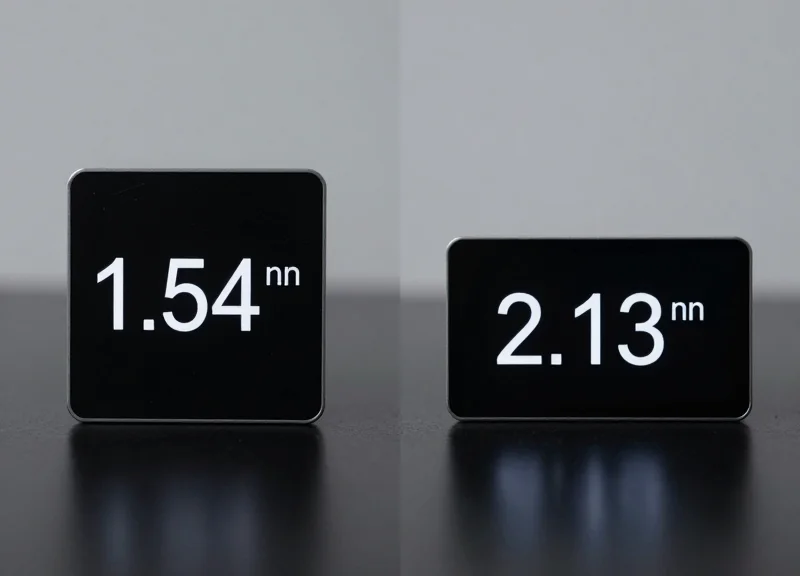
Deciding between 1.54-inch and 2.13-inch Electronic Shelf Labels (ESL) is a strategic choice between 'discreet elegance' and 'informational depth.' For high-end boutiques, the decision hinges on the 'Visual Ratio' of the product to the tag: use the 1.54" model for ultra-luxury items like fine jewelry or watches where the technology must be invisible, and the 2.13" model for products requiring storytelling or QR code engagement, such as high-perfumery, luxury spirits, or skincare collections.
| Feature Attribute | 1.54" Compact Elite | 2.13" Versatile Premium |
|---|---|---|
| Visual Footprint | Minimalist / Discreet | Narrative / Standard |
| Resolution (DPI) | 140+ (Ultra-Sharp) | 120+ (High Clarity) |
| Optimal View Distance | 0.5 - 1.5 Meters | 1.0 - 3.0 Meters |
| Content Capacity | Price + Single Logo | Price, QR, + Description |
| Ideal Display Type | Closed Glass Cases | Wall Shelving / Pedestals |
| Battery Longevity | Up to 5 Years | Up to 10 Years |
Which size is better for jewelry displays?
The 1.54" model is the industry standard for jewelry. Its small form factor ensures it does not distract from the brilliance of the stones while still providing clear, up-to-the-minute pricing.
Should I use 2.13" for promotional items?
Yes. The 2.13" display offers sufficient 'white space' to include a red or yellow highlight color (available in 2026 3-color models) to draw attention to seasonal boutique exclusives.
Can I mix both sizes in one store?
Absolutely. Leading boutiques often use 1.54" on accessory counters and 2.13" on eye-level shelving to create a hierarchy of information that guides the customer's eye.
Expert Insight: The 'Rule of Thirds' in ESL Placement. From a Silicon Valley design perspective, a digital price tag should never exceed 33% of the visual surface area of the product it represents. If your item is smaller than a standard wallet, the 1.54" is your only choice for maintaining a luxury 'boutique' feel. If your product is the size of a shoebox or larger, the 1.54" can actually look 'lost,' making the 2.13" the superior choice for visual balance and perceived value.