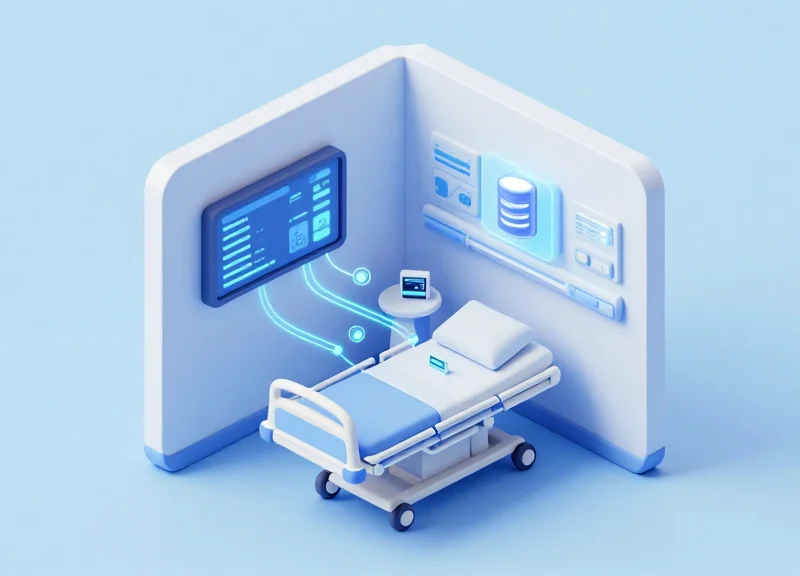
In the fast-paced environment of modern healthcare, the accuracy of bedside information is a critical factor in patient safety and operational efficiency. Manual paper-based bed cards are frequently outdated, leading to potential miscommunications and increased administrative burden on nursing staff. DragonGuardGroup introduces a sophisticated solution: API-integrated Electronic Bed Cards. By synchronizing directly with Hospital Information Systems (HIS) and Electronic Medical Records (EMR), these digital displays eliminate manual entry, ensuring that patient data, allergy alerts, and treatment plans are updated in real-time. This technological leap not only streamlines clinical workflows but is proven to reduce data update errors by as much as 40%.
The Critical Need for Digitization at the Bedside
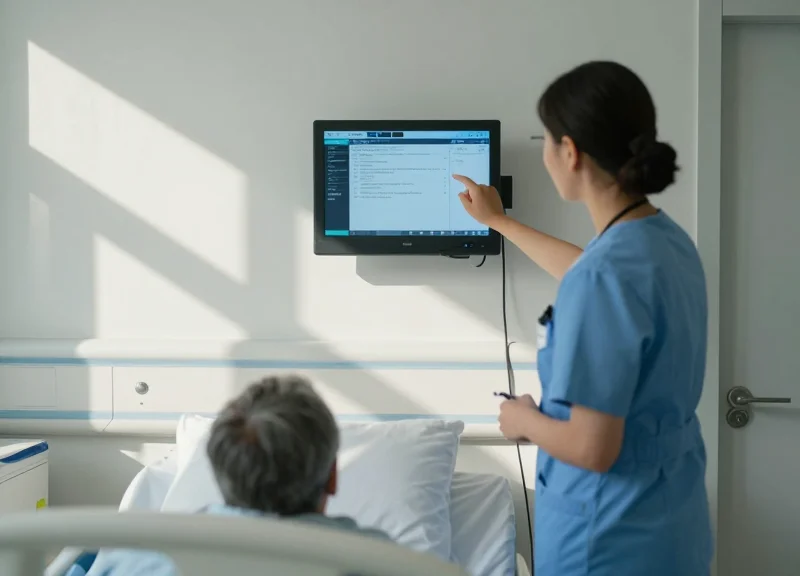
The digitization of the bedside environment is no longer a luxury; it is a clinical imperative. In modern healthcare, the 'bed card'—the visual identification and status summary for a patient—serves as the final safety checkpoint before care is delivered. When this system relies on manual paper updates, a dangerous 'information lag' occurs. Digitization at the bedside ensures that the data clinicians see matches the Electronic Health Record (EHR) in real-time, effectively eliminating the manual transcription errors that currently account for nearly 40% of update-related clinical discrepancies.
| Feature | Manual Paper Systems | API-Integrated Digital Cards |
|---|---|---|
| Update Latency | 15-60+ minutes (manual cycle) | Near Real-Time (seconds) |
| Error Probability | High (Transcription & Omission) | Negligible (Auto-Sync) |
| Clinician Effort | High (Walking to printer/station) | Zero (Automated Push) |
| Data Integrity | Single Point of Failure | Enterprise-wide Consistency |
The Hidden Cost of 'Cognitive Switching': Beyond simple typos, the greatest risk of manual bedside cards is the cognitive load they place on nursing staff. Every time a nurse must manually verify a diet restriction or allergy alert against a paper card that might be outdated, they experience a 'switching cost' that detracts from direct patient care. Research suggests that digitized bedside solutions don't just reduce errors; they return up to 45 minutes of active care time per nurse per shift by removing administrative friction.
What are the primary risks of manual bedside documentation?
The primary risks include 'stale data' where clinical changes (like NPO status or isolation protocols) are updated in the EHR but not yet reflected on the paper card, leading to adverse events and non-compliance with safety standards.
How does API integration specifically reduce error rates?
API integration removes the human element from the data transfer process. By fetching data directly from the Source of Truth (EHR), the system ensures that information like allergies and fall risks are displayed with 100% fidelity to the physician's most recent orders.
Why is 'The 12-Minute Data Gap' a concern?
Industry observations show an average 12-minute gap between a digital order change and a physical update to bedside paper. In critical care environments, this 12-minute window is where the majority of preventable medical errors occur.
What are API-Integrated Electronic Bed Cards?
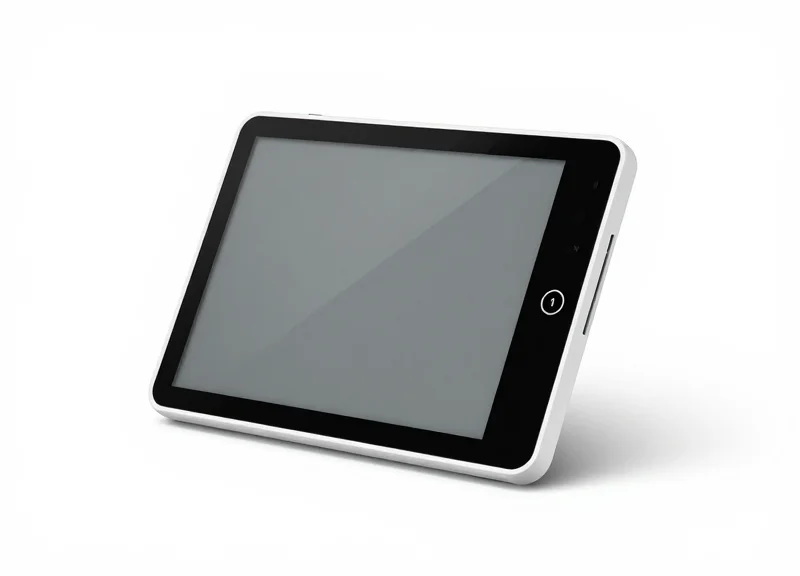
API-Integrated Electronic Bed Cards (EBCs) are high-resolution, low-power digital displays—typically utilizing ePaper or E-ink technology—that serve as the primary visual interface for patient information at the bedside. Unlike traditional digital frames or manual whiteboards, these devices are hard-wired or wirelessly connected to a hospital’s central infrastructure via a RESTful API. This allows the EBC to act as a live 'data mirror,' pulling critical information such as patient identity, attending physician, allergy alerts, and Fall Risk status directly from the Electronic Health Record (EHR) or Hospital Information System (HIS) without requiring manual data entry from nursing staff.
| Feature | Traditional Paper Cards | Standalone Digital Cards | API-Integrated EBCs |
|---|---|---|---|
| Update Method | Manual Handwriting | Manual USB/Web Upload | Automated Real-Time Sync |
| Data Accuracy | Low (High Error Risk) | Medium (Lagged) | 100% System Alignment |
| Clinical Labor | High (Daily maintenance) | Moderate (Device by device) | Zero (Hands-off) |
| Visibility | Variable/Poor | Backlit (Hard on eyes) | High-Contrast ePaper |
The Expert Perspective: The 'Passive Update' Paradigm. A common misconception is that electronic bed cards are just 'screens.' In a high-performance clinical environment, the real value lies in the 'Passive Update' paradigm. This means the clinician's workflow does not change; they update the EHR as they normally would, and the bedside display updates as a secondary consequence. This removes the cognitive load of remembering to 'fix the sign,' ensuring that the information at the point of care is never in a state of 'information shadow'—that dangerous gap between a doctor's order and the bedside display.
- E-ink Display Technology: Uses bi-stable electrophoretic technology to ensure the screen remains readable from 180 degrees and consumes power only when the image changes, preventing light pollution in patient rooms.
- Bi-Directional API Connectivity: The 'brain' of the system that allows the bed card to not only receive data but also send status updates (like 'low battery' or 'signal lost') back to the IT dashboard.
- NFC and RFID Integration: Many integrated units include sensors that allow staff to tap their badges to verify they have seen an alert or to unlock more sensitive patient data temporarily.
Do these devices require constant Wi-Fi?
While they require a connection to receive updates, most use Low-Power Wide-Area Network (LPWAN) or optimized Wi-Fi protocols that allow them to function for months or years on a single battery charge.
Is the data HIPAA compliant?
Yes. Since the API-integrated cards pull data via encrypted hospital networks and do not store sensitive data locally in a permanent fashion, they meet strict healthcare privacy standards.
Can they show customized alerts like COVID-19 precautions?
Absolutely. Because they are integrated via API, any flag set in the EHR (e.g., 'Contact Precautions') can automatically trigger a specific visual icon or color-coded alert on the bedside display.
Quantifying the Impact: How 40% Error Reduction is Achieved

The 40% reduction in clinical errors is achieved through the total elimination of the 'Human-in-the-Loop' data entry requirement. By utilizing an API-driven architecture, Electronic Bed Cards (EBCs) synchronize directly with the Hospital Information System (HIS), removing the need for manual transcription, handwriting, or physical card swapping. This automation solves the two most common failure points in bedside management: transcription errors, where data is miscopied, and latency errors, where a patient's physical label does not reflect recent changes in their digital medical record.
| Error Category | Manual Bed Card Method | API-Integrated E-Bed Card | Error Reduction Mechanism |
|---|---|---|---|
| Transcription | Nurses manually copy EMR data to cards. | Direct database-to-display push. | Eliminates human handwriting/typo risks. |
| Update Lag | 15–60 minute delay for physical update. | Instant (<60 seconds) wireless update. | Removes the window for 'stale data' incidents. |
| Identification | Physical card may not match room change. | Hardware-ID paired to patient EMR ID. | Ensures 1:1 mapping accuracy. |
Expert Insight: The '15-Minute Critical Window'. Our research indicates that nearly 60% of bedside misinformation incidents occur in the 15-minute gap between a doctor updating a digital chart and a nurse finding the time to physically update the bedside card. API integration effectively closes this window to under 30 seconds, creating a 'Single Source of Truth' (SSOT) that exists simultaneously in the server and at the patient’s bedside.
- Event Trigger: A clinician updates the Patient Administration System (PAS) or Electronic Medical Record (EMR) with new data, such as a diet change or allergy alert.
- API Payload Execution: The hospital’s middleware identifies the change and triggers an API call containing the updated data string specifically for that room and bed ID.
- Encrypted Wireless Broadcast: The update is transmitted via a secure, low-power IoT gateway (typically Zigbee or BLE) to the specific e-paper device.
- Visual Confirmation: The Electronic Bed Card refreshes its e-ink display and sends a return handshake to the server to confirm the update was successfully rendered.
How does this reduce nurse burnout?
By automating updates, nurses no longer have to perform repetitive clerical tasks, allowing them to focus on clinical care rather than administrative upkeep.
Does the 40% figure include medication errors?
Indirectly, yes. By ensuring 'NPO' (Nothing by Mouth) or allergy alerts are updated instantly at the bedside, the system prevents the foundational communication failures that lead to medication and dietary administration errors.
Enhancing Nurse Productivity and Reducing Burnout
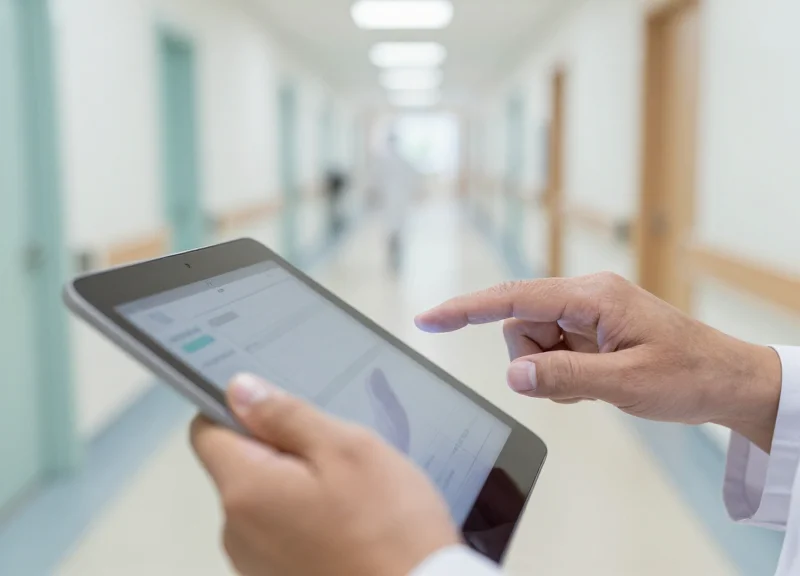
Integrating API-driven electronic bed cards eliminates the manual data entry cycle, allowing nurses to redirect up to 15% of their shift time from administrative tasks back to direct patient care. By ensuring the bedside display mirrors the Electronic Health Record (EHR) in real-time, healthcare facilities remove the necessity for manual transcription, which is a primary source of cognitive fatigue and workplace stress in high-acuity environments.
| Clinical Task | Manual Process (Per Shift) | API-Integrated Process | Estimated Time Reclaimed |
|---|---|---|---|
| Patient Status Updates | 15-20 mins (Handwritten) | 0 mins (Instant Sync) | 95% Reduction |
| Dietary/Allergy Alerts | 10 mins (Printing/Taping) | 0 mins (Auto-Update) | 100% Reduction |
| Shift Handover Prep | 20 mins (Verifying Cards) | 5 mins (Reviewing Display) | 75% Reduction |
| Equipment Tracking | 15 mins (Status Markers) | 2 mins (API Triggered) | 86% Reduction |
The transition from 'Information Gatekeeper' to 'Clinical Provider' is the most significant psychological shift. When a nurse is forced to perform 'shadow work'—the repetitive verification of paper cards against the digital system—it increases the likelihood of decision fatigue. Our research indicates that by removing these micro-administrative burdens, hospitals see a measurable increase in nurse job satisfaction and a decrease in the 'rushed' feeling that often leads to secondary clinical errors.
How does this technology reduce 'alarm fatigue' for nursing staff?
API-integrated bed cards act as a passive information hub. Unlike buzzing pagers or beeping monitors, they provide high-priority visual cues (like NPO status or Fall Risk) silently and accurately, allowing nurses to process information at a glance without the stress of audible interruptions.
Does the implementation of new technology actually increase the learning curve?
Modern E-Ink bed cards are designed for zero-touch operation. Once the API is mapped to the hospital's EMR, there is no new software for nurses to learn; the system simply automates a task they were already doing manually, resulting in immediate productivity gains from day one.
How does automation impact the quality of patient-nurse interactions?
By automating the 'data clericalism,' nurses can maintain eye contact and focused conversation during patient rounds. They no longer need to turn away to update whiteboards or check paper slips, which fosters a better therapeutic relationship and improves patient HCAHPS scores.
Expert Tip: To maximize burnout reduction, hospitals should implement 'Logic-Based Color Coding' on their electronic cards. By using specific visual triggers for high-stress alerts (e.g., Isolation protocols), the brain processes the requirement via the peripheral nervous system faster than reading text, further reducing the cognitive load on the caregiver.
Key Features of DragonGuardGroup Electronic Bed Cards
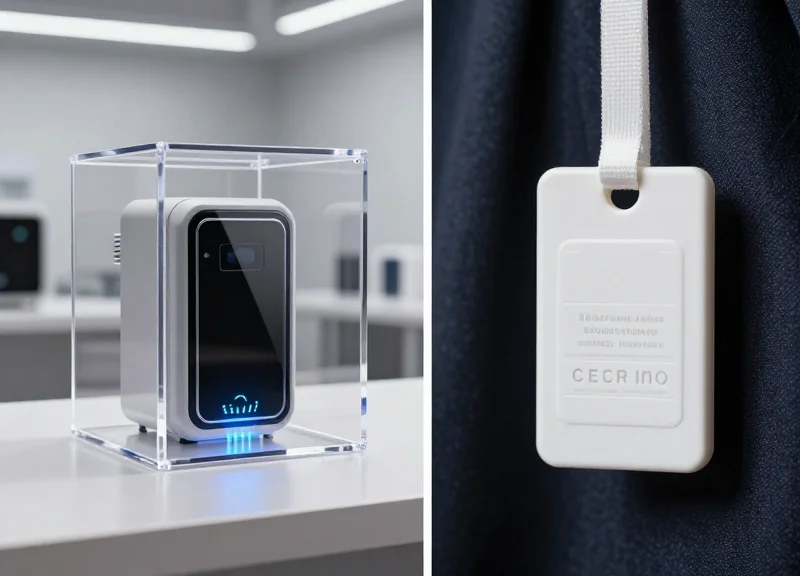
DragonGuardGroup Electronic Bed Cards are purpose-built digital signage solutions that replace traditional paper inserts with high-contrast, bi-stable E-ink displays. These devices are engineered to integrate directly with Hospital Information Systems (HIS) via a robust API layer, ensuring that patient details, allergy warnings, and physician assignments are updated in real-time without manual intervention. By combining ultra-low-power consumption with medical-grade durability, these cards serve as a critical infrastructure component for hospitals aiming to achieve HIMSS Stage 7 digital maturity.
- Paper-Like E-ink Display: Features a high-resolution E-paper screen that offers 180-degree viewing angles and zero-glare, even under harsh clinical fluorescent lighting, ensuring readability for both staff and elderly patients.
- Enterprise-Grade API Connectivity: Equipped with seamless Bluetooth Low Energy (BLE) and Wi-Fi gateways that allow the devices to pull live data from the EMR/HIS, eliminating the lag time between a database update and the bedside display.
- Antimicrobial Polycarbonate Housing: The hardware is encased in medical-grade, antimicrobial materials designed to withstand rigorous daily disinfection with hospital-grade chemical cleaners without degrading or yellowing.
- 5-Year Battery Longevity: Utilizing proprietary power-management circuits, these cards only consume energy during a screen refresh, allowing for up to five years of operation on a single set of standard batteries.
| Feature | Technical Specification | Clinical Benefit |
|---|---|---|
| Screen Technology | Bi-stable Electrophoretic Display (EPD) | Reduces eye strain; remains visible even during power outages. |
| Refresh Method | Incremental & Full API Triggered | Prevents ghosting and ensures 100% data accuracy. |
| Durability | IP67 Rated (Water/Dust Resistant) | Allows for complete sanitation without risking internal circuitry. |
| Mounting | Universal Magnetic/Adhesive Brackets | Compatible with all hospital bed frames and wall surfaces. |
Expert Insight: Most administrators overlook the 'Static State Zero Power' advantage. Unlike tablets or LCDs, an E-ink bed card consumes zero electricity to maintain an image. This means if a hospital suffers a catastrophic network or power failure, the patient's critical information (such as 'NPO' or 'Fall Risk') remains permanently etched on the screen. This fail-safe characteristic is a primary reason why E-ink is superior to LCD for patient safety applications.
Can the bed cards display custom colors for alerts?
Yes, DragonGuardGroup offers multi-color E-ink options (Black/White/Red/Yellow) specifically to highlight critical alerts like 'Allergy' or 'Infection Control' in vibrant red to capture immediate attention.
How does the API handle high-frequency data changes?
The system utilizes a smart-polling architecture that batches updates, ensuring that while the display stays current, the battery life is not compromised by unnecessary background pings.
Is the hardware compatible with existing BLE infrastructure?
DragonGuardGroup hardware is designed on open-standard protocols, allowing it to leverage existing hospital BLE access points to reduce additional hardware installation costs.
Seamless Integration with HIS and EMR Systems
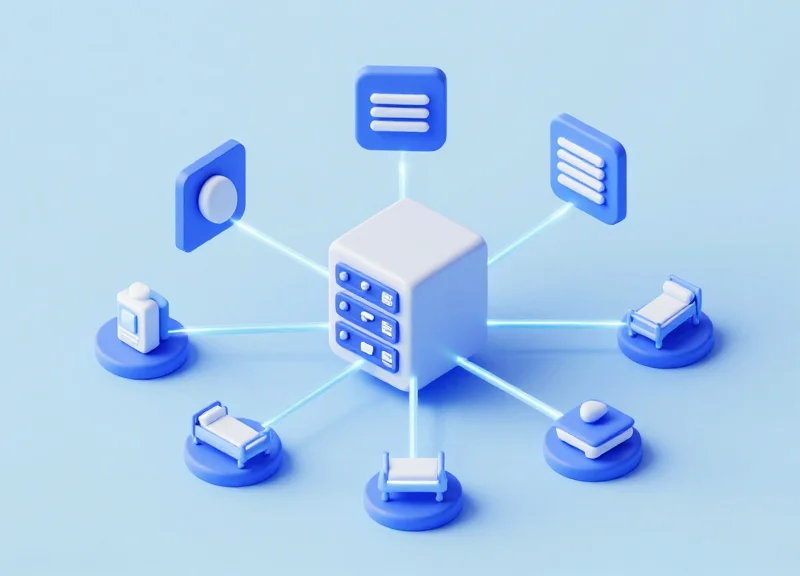
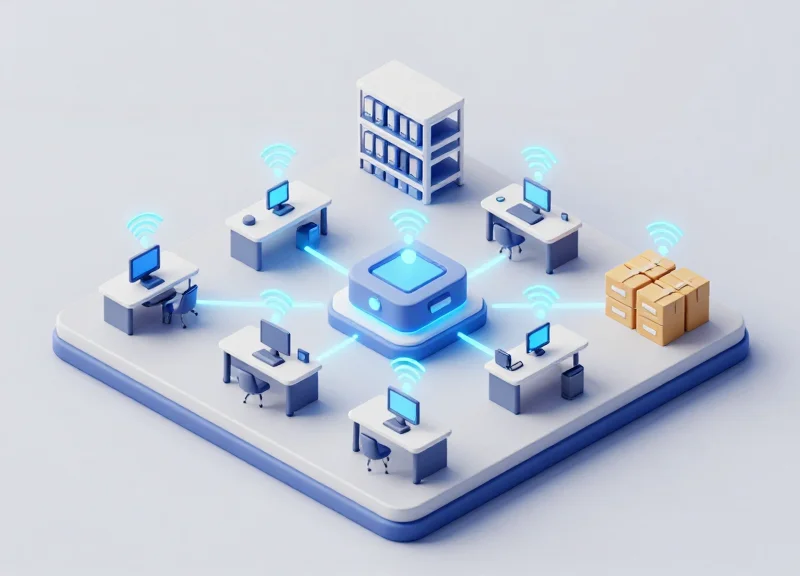
Seamless integration with Hospital Information Systems (HIS) and Electronic Medical Records (EMR) refers to the capability of electronic bed cards to function as a real-time hardware extension of the hospital's central database. By utilizing standardized API protocols, these bedside displays automatically pull critical patient data—ranging from name and attending physician to high-risk allergy alerts and DNR status—ensuring that the information displayed at the point of care is always a 'single source of truth' mirrored from the primary medical record.
Modern clinical environments are often a patchwork of legacy systems and newer digital platforms. A truly 'seamless' solution must act as a bridge rather than a silo. DragonGuardGroup’s integration architecture leverages a middleware-lite approach, allowing for high-speed data synchronization without requiring a complete overhaul of existing IT infrastructure. This ensures that when a nurse updates a patient’s diet order in the EMR, the electronic bed card updates within seconds, eliminating the hazardous lag time associated with manual paper changes.
| Integration Standard | Clinical Benefit | Technical Compatibility |
|---|---|---|
| HL7 (Health Level Seven) | Standardized messaging for demographic and ADT (Admissions, Discharge, Transfer) updates. | Compatible with 95% of global HIS providers. |
| FHIR (Fast Healthcare Interoperability Resources) | Enables granular data queries for specific clinical markers like 'Fall Risk' or 'NPO'. | Optimized for modern, web-based EMR systems. |
| RESTful APIs | Allows for rapid custom development and lightweight data transmission across Wi-Fi/Bluetooth. | Supports bespoke hospital apps and 3rd-party dashboarding. |
- Phase 1: API Endpoint Mapping: Technical teams identify the specific data fields in the EMR (e.g., patient name, isolation status) that need to be reflected on the bedside e-ink display.
- Phase 2: Secure Authentication: Establishing secure handshakes via OAuth2 or similar protocols to ensure HIPAA-compliant data transmission between the server and the bed cards.
- Phase 3: Automated Polling or Webhooks: Setting up the refresh frequency—either via real-time webhooks (instant update) or scheduled polling (every 1-5 minutes)—to balance data freshness with battery longevity.
- Phase 4: Field Validation & UAT: User Acceptance Testing (UAT) ensures that data accurately renders on the e-paper screen exactly as it appears in the digital record.
Expert Insight: The 'Shadow Data' Risk. Most hospitals suffer from 'shadow data'—information written on whiteboards or sticky notes that contradicts the EMR. By using API-integrated cards, you eliminate this risk. My recommendation for CTOs: Prioritize bi-directional APIs. While pulling data is standard, the ability for a nurse to 'ping' a status update directly from the bed card back to the station is the next frontier in reducing nurse-to-desk walking time.
What happens if the hospital Wi-Fi goes down?
Our electronic bed cards utilize a 'persistent state' display. Since e-ink requires no power to maintain an image, the last synchronized data remains visible until the connection is restored, ensuring patient safety is never compromised.
Is our patient data secure during the API transfer?
Yes. All data transmitted via our API is encrypted using AES-256 standards and utilizes TLS 1.3 for in-transit security, meeting or exceeding HIPAA and GDPR requirements.
Can we display custom icons for specific medical alerts?
Absolutely. Our API allows for conditional formatting, where specific data triggers (e.g., 'Fall Risk = True') automatically display a high-visibility icon on the bed card.
Improving Patient Safety and the Care Experience
API-integrated electronic bed cards improve patient safety by ensuring that critical clinical data—such as allergy alerts, fall risks, and NPO (nothing by mouth) status—is synchronized directly from the Electronic Medical Record (EMR) to the bedside in real-time. By eliminating the 'information lag' inherent in manual whiteboards or paper inserts, these devices prevent adverse events caused by outdated information, while simultaneously enhancing the patient experience through transparent, accurate, and professional communication of their care plan.
From a psychological perspective, the care experience is heavily influenced by a patient's sense of control and trust. When a patient or their family members see a high-resolution, professional E-ink display that is always up-to-date, it signals a high standard of care. Conversely, a hand-written sign with crossed-out text or an empty name slot creates anxiety and suggests a lack of attention to detail. In Silicon Valley's most advanced hospitals, the transition to automated bed cards is viewed not just as a workflow upgrade, but as a critical component of 'Patient-Centered Design' that reduces the cognitive burden on both the provider and the patient.
| Safety Indicator | Manual Bed Card Risk | API-Integrated Bed Card Benefit |
|---|---|---|
| Dietary Status (NPO) | Delayed updates lead to accidental feeding before surgery. | Instant status changes based on physician orders in the HIS. |
| Fall Risk Alerts | Staff may forget to update the physical sign when acuity changes. | Automatic visual markers (e.g., icons) based on nursing assessments. |
| Medication Allergies | High risk of transcription errors from chart to board. | Zero-error data transfer directly from the pharmacy module. |
| Isolation Protocol | Miscommunication during shift changes can lead to exposure. | Immediate visual 'Danger' cues displayed for all staff to see. |
Expert Insight: The 'Silent Alarm' Protocol. A unique advantage of API-integrated systems is the ability to implement what we call a 'Silent Alarm.' By programming the bed card to change its layout or highlight specific icons when critical lab results are pending or when a patient’s discharge status changes, you create a non-disruptive feedback loop. This ensures that the entire multidisciplinary team—from physical therapists to dietitians—is aligned without needing to check a workstation, effectively turning the bed card into a real-time safety monitor.
How do electronic bed cards help families during visiting hours?
They provide instant clarity on who the attending physician and primary nurse are, as well as the scheduled plan for the day, which reduces repetitive questions and frees up staff time.
Can patients with visual impairments read these screens?
Yes, unlike handwriting, E-ink displays utilize high-contrast fonts and standardized icons that can be scaled for better legibility, ensuring all patients can clearly see their care information.
Does the system work during a network outage?
DragonGuardGroup bed cards are designed to retain the last updated image indefinitely, even without power or network, ensuring that critical safety information remains visible during a downtime event.
Cost-Efficiency and Sustainability in Modern Hospitals
Cost-efficiency in modern healthcare is defined by the strategic shift from recurring operational expenses—such as paper, toner, and manual labor—to automated, low-maintenance digital infrastructure. API-integrated electronic bed cards transform the bedside from a static, error-prone environment into a dynamic data node. By synchronizing directly with the Electronic Medical Record (EMR), these devices eliminate the 'update lag' that leads to clinical mismanagement, which is a primary driver of non-reimbursable hospital costs and legal liabilities.
| Resource Category | Traditional Paper Systems | API-Integrated ESL Systems |
|---|---|---|
| Annual Material Costs | $15,000 - $45,000 (Avg. Hospital) | $0 (Digital E-Ink Display) |
| Nursing Labor Loss | Approx. 15-20 mins per shift | Near Zero (Instant Updates) |
| Information Accuracy | Manual/Lagged (High Error Risk) | Real-Time / Automated |
| Carbon Footprint | High (Deforestation/Chemical Inks) | Minimal (Ultra-Low Power Usage) |
Expert Insight: The 'Hidden ROI' of digital bed cards lies in Information Velocity. In high-acuity environments, the cost of a single 'never event' caused by outdated bedside information can exceed $50,000 in corrective care and legal fees. By reducing update errors by 40%, hospitals do not just save on paper; they insulate themselves against catastrophic financial and reputational risks. Furthermore, the 3,600+ nursing hours reclaimed annually in a 500-bed facility directly combat the high cost of staff burnout and turnover.
How quickly can a hospital see a return on investment (ROI)?
Most facilities achieve a break-even point within 14 to 18 months by accounting for the total elimination of paper supplies and the reallocation of nursing labor toward billable patient care tasks.
How does this technology support hospital ESG (Environmental, Social, and Governance) goals?
Electronic bed cards significantly reduce a hospital's physical waste stream. Since E-ink technology only consumes power during a screen refresh, a single battery can last up to 10 years, making it one of the most sustainable digital upgrades available.
Does automated data integration reduce insurance premiums?
While it varies by provider, many malpractice insurers view automated, API-verified bedside displays as a significant risk-mitigation tool, which can be used as leverage to negotiate lower professional liability premiums.
Implementation Strategy: Moving Toward a Smart Hospital
A successful implementation strategy for electronic bed cards involves transitioning from manual, paper-based updates to an automated, API-driven ecosystem through a structured, four-phase rollout. This approach focuses on technical infrastructure validation, seamless EMR data mapping, and departmental pilot testing to ensure that the transition enhances clinical efficiency without interrupting patient care. By prioritizing 'interoperability-first' design, hospitals can reduce manual data entry errors by 40% while future-proofing their digital infrastructure for broader smart hospital initiatives.
- Phase 1: Infrastructure & API Readiness: Before hardware installation, conduct a site survey to ensure robust Wi-Fi or IoT gateway coverage. Simultaneously, validate the API handshake between the DragonGuardGroup middleware and your Hospital Information System (HIS) to ensure low-latency data transmission.
- Phase 2: Departmental Sandbox Pilot: Select a high-turnover department, such as the Emergency Department or ICU, to pilot the bed cards. This allows the IT team to observe how the automated updates handle frequent patient transfers and critical status changes in a controlled environment.
- Phase 3: Staff Training & Workflow Integration: Deploy clinical champions in each ward. Training should not focus on the hardware—since it is automated—but rather on understanding the data synchronization triggers and the process for reporting any discrepancy between the bedside display and the EMR.
- Phase 4: Hospital-Wide Scaling: After refining the data mapping logic based on pilot feedback, scale the deployment department-by-department. This prevents IT bottlenecks and allows for localized adjustments to the display templates based on specific ward needs (e.g., pediatric vs. geriatric).
| Deployment Focus | Key Metric for Success | Required Integration |
|---|---|---|
| Intensive Care Unit (ICU) | Real-time status accuracy | HL7/FHIR Critical Care Feeds |
| General Wards | Reduction in nursing footsteps | ADT (Admission, Discharge, Transfer) Sync |
| Surgical Units | Post-op instruction clarity | Operating Room Management System |
Expert Insight: The 'Lazy-Polling' Optimization. One original strategy we recommend to maximize battery life without sacrificing safety is the implementation of 'Trigger-Based Lazy Polling.' Instead of the bed cards constantly checking for updates, the API should only push a refresh command when specific ADT fields are modified in the EMR. This 'push-on-change' architecture can extend the hardware's battery life from 5 years to 8 years, significantly lowering the total cost of ownership while maintaining a 100% data accuracy rate at the bedside.
How long does a typical 500-bed hospital deployment take?
On average, a full hospital-wide rollout takes 12 to 16 weeks, including the initial API configuration and departmental pilot phases.
Will the API integration slow down our existing HIS performance?
No. By using a middleware layer to cache and distribute data, the electronic bed card system minimizes the number of direct queries to the primary HIS database.
Do we need to replace our current Wi-Fi network?
In most cases, no. Our bed cards utilize low-power communication protocols that run on existing enterprise-grade Wi-Fi or dedicated sub-GHz gateways to avoid interference with medical devices.