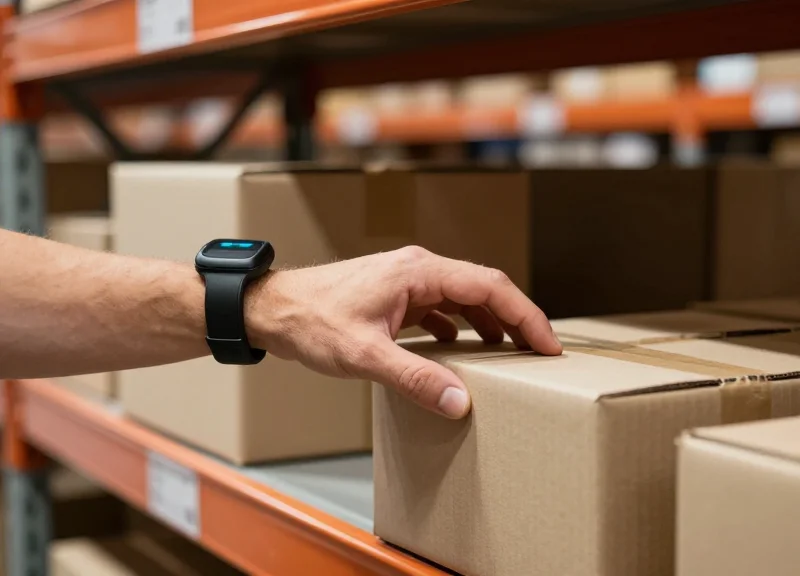
In the demanding world of cold chain logistics, manual inventory tracking is not just inefficient; it is a liability. Low temperatures often cause standard electronic devices to fail, leading to data gaps and inventory spoilage. This technical deep-dive explores how advanced, low-temp stable Electronic Shelf Labels (ESL) serve as the backbone for automated stock-in time tracking. By integrating these resilient digital displays with sophisticated backend logic, businesses can achieve real-time visibility and precision in environments where traditional hardware falters.
The Critical Need for Automated Time Tracking in Cold Storage
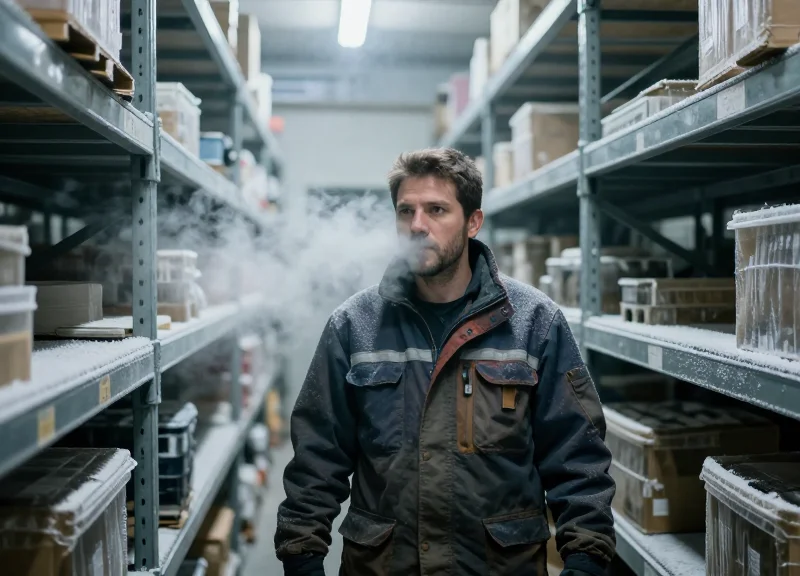
Automated stock-in time tracking in cold storage is essential for maintaining a high-fidelity audit trail that ensures food safety, regulatory compliance, and inventory accuracy by removing human error from the sub-zero logging process. In environments where temperatures drop below -20°C, manual data entry becomes functionally impossible due to hardware failure and physical discomfort, leading to a 'Data Integrity Gap' where stock levels and expiry dates become misaligned with physical reality. Transitioning to Low-Temp Stable Electronic Shelf Label (ESL) systems allows for immediate, automated timestamping at the point of entry, creating a seamless bridge between the physical pallet and the Warehouse Management System (WMS).
| Metric | Manual Logging (Legacy) | Automated ESL Tracking (Next-Gen) |
|---|---|---|
| Data Entry Accuracy | High Error Rate (15-20%) | Near 100% Accuracy |
| Latency | Delayed (Minutes to Hours) | Real-time (Seconds) |
| Human Safety | High Exposure to Extreme Cold | Minimal Physical Exposure |
| Compliance Audit | Fragmented Paper Trail | Immutable Digital Record |
A unique operational friction point often overlooked by logistics managers is what I call the 'Freezing Point of Information.' In many facilities, workers record stock-in times on paper because standard handheld scanners often experience screen lag or battery failure in extreme cold. By the time this paper trail is manually transcribed into a WMS in a warmer office environment, the data is already stale. This latency directly sabotages First-In, First-Out (FIFO) logic; the system may suggest picking items that are actually buried behind newer, incorrectly logged stock, leading to systematic spoilage and 'dark' inventory that expires before it is even located.
- Thermal Lag Spoilage: Miscalculated stock-in times lead to inaccurate shelf-life predictions, resulting in premature spoilage and massive financial shrink across the supply chain.
- Compliance Liabilities: Manual logs are frequently found to be non-compliant with stringent FSMA (Food Safety Modernization Act) requirements, risking heavy fines and brand damage during food safety audits.
- Labor Drift: Warehouse staff spending excessive time logging timestamps in freezers reduces throughput and increases labor costs per unit while increasing the risk of cold-stress injuries.
Why can standard ESL systems not handle cold storage?
Standard ESL batteries and e-paper displays utilize liquid crystal or chemical compositions that freeze or crystallize, leading to display ghosting and rapid power failure below 0°C. Low-temp stable systems use specialized electrolytes to maintain function at -25°C.
What is the primary benefit of automated 'Stock-In' timestamps?
It establishes a definitive 'Birth Certificate' for the product within the facility, enabling precision-guided stock rotation and dynamic expiration alerts that legacy manual systems cannot provide.
Defining Low-Temp Stable ESL Technology
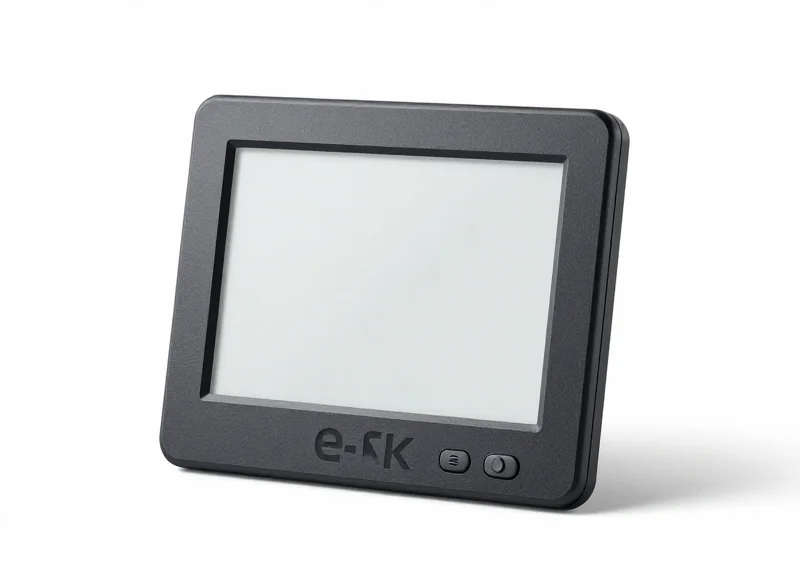
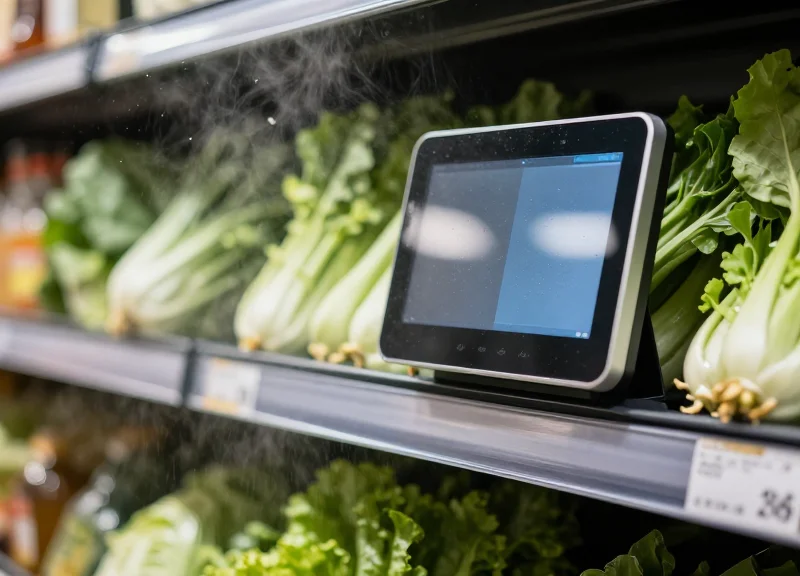
Low-Temp Stable ESL technology refers to a specialized class of Electronic Shelf Labels engineered to maintain display legibility and wireless communication integrity in environments ranging from -25°C to 0°C. Unlike standard ESLs that suffer from ghosting or battery failure in the cold, these systems utilize high-viscosity electrophoretic displays (e-paper) and specialized electrolyte battery chemistries to ensure real-time data updates and automated stock-in tracking without physical intervention.
The core engineering challenge in cold-storage ESLs involves the physics of the display medium. In standard e-paper, the fluid inside the microcapsules becomes too viscous at low temperatures, preventing the charged pigment particles from moving efficiently. Low-temp variants solve this by using modified ink formulations that maintain low kinematic viscosity even at -25°C, coupled with optimized waveforms that provide a higher 'kick' of voltage to move particles accurately.
| Component | Standard ESL Spec | Low-Temp Stable ESL Spec |
|---|---|---|
| Operating Range | 0°C to 50°C | -25°C to 30°C |
| Display Tech | Standard Electrophoretic | Low-Viscosity Cold-Chain E-Ink |
| Battery Chemistry | Standard Li-MnO2 (CR2450) | Low-Temp Grade Li-MnO2 or Li-SOCl2 |
| Update Latency | 1-3 Seconds | 5-10 Seconds (due to viscous fluid) |
| Ingress Protection | IP54 / IP65 | IP67 / IP68 (Hermetically Sealed) |
Expert Insight: The Electrolyte Impedance Secret. A common misconception is that cold-chain ESLs simply use 'bigger batteries.' In reality, the differentiator is the Internal Resistance (IR). Standard batteries experience an exponential rise in IR as temperatures drop, leading to voltage dips that cause the wireless chip (MCU) to reset during a transmission. Low-temp ESLs utilize batteries with proprietary electrolyte additives that inhibit the formation of the solid-electrolyte interphase (SEI) layer, keeping impedance low enough to support the high peak-current pulses required by BLE or Sub-GHz radios.
Why can't I just use a standard ESL in a freezer?
Standard ESLs will experience 'display freezing' where the image fails to refresh, and the battery's chemical reaction slows to the point where it cannot provide the peak current needed for wireless communication, leading to permanent device 'sleep' or failure.
Does the cold affect the wireless range?
The cold itself doesn't significantly change RF propagation, but the condensation and ice buildup on the ESL housing (dielectric loading) can detune the antenna. Low-temp ESLs are designed with antenna matching circuits that account for this environmental loading.
How long do batteries last in these conditions?
Despite the harsh environment, high-quality low-temp ESLs are rated for 5 to 10 years of life, assuming 1-2 updates per day, thanks to extremely low deep-sleep current consumption (typically <2uA).
The Architecture of Automated Stock-In Systems
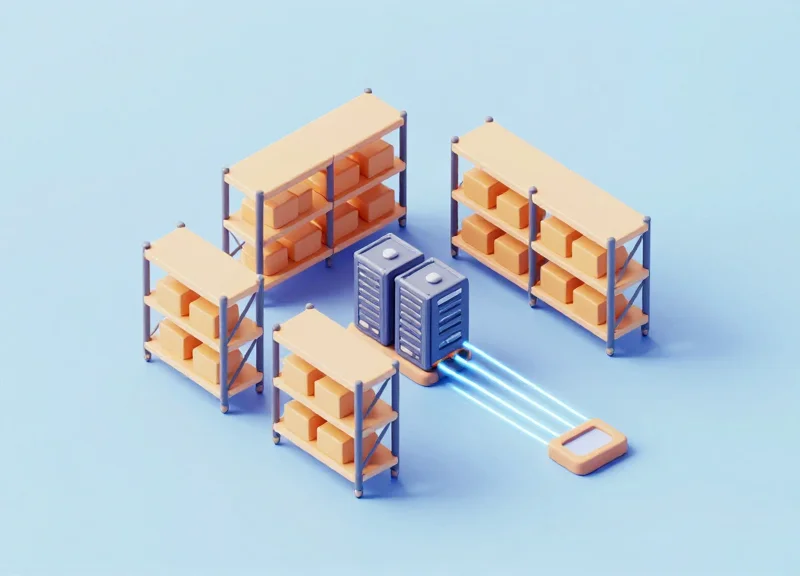
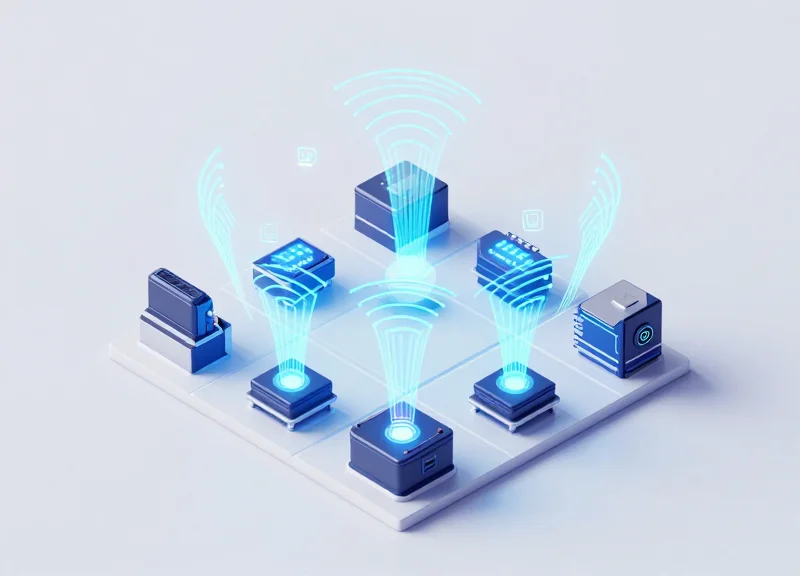
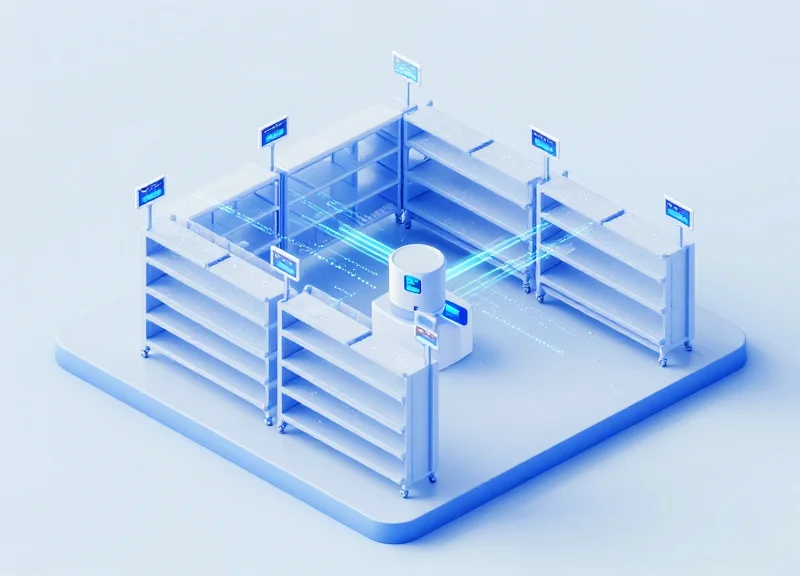
The architecture of an automated stock-in system for cold storage is a robust, three-tier topology designed to bridge the gap between physical assets in sub-zero environments and digital management platforms. It comprises the Edge Layer (low-temp stable ESL hardware), the Network Layer (IoT Access Points or Gateways), and the Application Layer (the centralized management server and WMS integration). Unlike standard retail setups, this architecture must account for signal attenuation caused by thick insulation and the specialized power-management protocols required to maintain battery health in extreme cold.
| Architectural Layer | Primary Components | Function in Stock-In Tracking |
|---|---|---|
| Edge Layer | Low-Temp ESLs, NFC/RFID Sensors | Captures arrival timestamps and displays real-time inventory status. |
| Network Layer | Sub-GHz or BLE 5.0 Gateways | Relays data packets between tags and the server with high penetration. |
| Application Layer | ESL Server, Middleware, API | Processes logic, logs 'Stock-In' events, and updates the ERP database. |
In a high-performance deployment, the communication flow follows a bidirectional path. When a 'Stock-In' event is triggered—either via an automated handheld scan or a geofenced RFID trigger—the central server pushes an incremental update to the specific ESL via the Gateway. To ensure the system remains 'low-temp stable,' the architecture utilizes a proprietary low-latency wake-up signal that minimizes the radio frequency (RF) active time, which is the primary drain on battery capacity in cold environments.
- Event Trigger: A pallet enters the cold zone; the WMS identifies the SKU and sends a 'Stock-In' command to the ESL Management Server.
- Packet Encapsulation: The server encapsulates the timestamp and quantity data into a lightweight packet optimized for low-bandwidth transmission.
- Gateway Dispatch: The IoT Gateway transmits the data via a 2.4GHz or Sub-GHz frequency, specifically tuned to penetrate frost-coated surfaces.
- Edge Acknowledgement: The ESL receives the update, refreshes its e-paper display, and sends an 'ACK' (Acknowledgement) signal back to the server to verify the record.
Expert Insight: The Latency-Power Paradox in Cold Storage. A common mistake in cold-chain architecture is configuring 'Real-Time' polling. Because battery chemistry slows at -20°C, high-frequency polling can cause a catastrophic voltage drop. Our recommended architecture uses 'Aggregated Heartbeats'—where tags check for updates in synchronized bursts. This reduces the duty cycle by 40% compared to standard configurations, ensuring that the stock-in timestamp remains accurate within seconds without killing the hardware's lifespan.
{
  "event_type": "STOCK_IN",
  "tag_id": "ESL-9922-TX",
  "sku": "CHILL-BEEF-05",
  "timestamp": "2023-10-27T14:30:05Z",
  "battery_voltage": 2.98,
  "rssi": -65
}
Implementing Time-Stamping Logic via ESL
Implementing automated stock-in time tracking requires an event-driven architecture where the arrival of a product triggers a state change in the Central Management System (CMS). Unlike traditional static labels, an automated ESL system captures the 'Stock-In' event via integrated sensors or handheld scanners, generates a UTC timestamp, and pushes a revised image template to the specific bin label. This process eliminates human entry error and ensures that 'First-In, First-Out' (FIFO) protocols are strictly followed in volatile cold storage environments.
| Trigger Method | Accuracy Level | Implementation Complexity | Ideal Use Case |
|---|---|---|---|
| RFID Gate Integration | Highest (Automated) | High | High-volume bulk pallets |
| NFC Handheld Scan | High (Manual) | Medium | Mixed SKU sorting areas |
| ESL Button Trigger | Moderate | Low | Quick-turnover staging zones |
| PLC Interfacing | High (Automated) | High | Conveyor-fed automated storage |
- Event Capture: The system detects a stock-in event through an API call from an external system (WMS) or a direct hardware trigger (NFC/RFID).
- Timestamp Generation: The ESL server generates a normalized ISO 8601 timestamp to ensure consistency across different time zones in global supply chains.
- Dynamic Template Rendering: The system merges the timestamp data with the existing product template, converting the text into a 1-bit or 3-bit BMP file optimized for e-paper.
- Packet Transmission: The management server sends the data packet to the Sub-Ghz or BLE Access Point nearest to the cold storage bin location.
- Acknowledgment (ACK): The ESL label updates its display and sends an ACK signal back to the server to confirm the stock-in time is visible to personnel.
{
  "action": "UPDATE_TIMESTAMP",
  "label_id": "ESL-FZ-9921",
  "payload": {
    "stock_in_time": "2023-10-27T14:30:05Z",
    "batch_id": "B-7742",
    "refresh_mode": "partial"
  },
  "priority": "high"
}
Expert Insight: Implementing 'Delta-Update' Logic for Battery Longevity. In sub-zero temperatures, the internal resistance of lithium-thionyl chloride batteries increases, making full-screen refreshes energy-intensive. To combat this, we recommend 'Delta-Update' logic: only the coordinates containing the timestamp digits are refreshed on the E-ink display. This partial-refresh approach can extend the operational life of a cold-chain ESL by up to 35% compared to full-image overwrites.
Does the timestamp update automatically if the product is moved?
Yes, if the system is integrated with a location-aware WMS. When the product is scanned into a new bin, the server clears the old label and pushes the original stock-in timestamp to the new label automatically.
How does the system handle power failures during a stock-in event?
ESL systems use non-volatile memory. If a transmission is interrupted, the Access Point retries the update once power is restored, ensuring the timestamp eventually matches the server records.
Connectivity and Signal Reliability in Metallic Environments

Reliable connectivity in industrial cold storage is primarily challenged by the 'Faraday Cage' effect, where high-density metal racking and foil-backed insulation create a chaotic RF environment. To ensure 99.9% uptime for automated stock-in tracking, engineers must move beyond consumer-grade Wi-Fi and adopt Sub-GHz frequencies or specialized BLE mesh protocols that offer superior diffraction around metallic obstacles and deeper penetration through thermal barriers. Effectively managing signal reliability requires a departure from standard line-of-sight planning in favor of a multi-path mitigation strategy.
| Feature | 2.4 GHz (Standard BLE/Wi-Fi) | Sub-GHz (433/868/915 MHz) |
|---|---|---|
| Material Penetration | Low (High absorption by metal/water) | High (Better diffraction around racks) |
| Signal Range | Short (10-30m in dense environments) | Long (50-100m+ in dense environments) |
| Power Consumption | Moderate | Ultra-Low (Critical for cold-start batteries) |
| Interference Risk | High (Congested spectrum) | Low (Industrial-only bands) |
- RF Heat Mapping and Site Survey: Conduct a dynamic RF survey with the racking fully loaded. Metal pallet loads create different interference patterns than empty racks, necessitating 'worst-case scenario' gateway placement.
- Sectorized Gateway Deployment: Instead of a single central gateway, deploy sectorized access points at the ends of aisles. This ensures that signals travel 'down' the aisles rather than trying to penetrate through multiple rows of steel.
- Circular Polarization: Use Circularly Polarized (CP) antennas on gateways to mitigate multi-path fading. CP antennas are more resilient to the signal 'dead zones' caused by reflections off metallic surfaces.
A unique insight from high-scale deployments: Use 'Passive Re-radiators' in deep-rack scenarios. By placing simple tuned metallic elements at the mouth of deep storage lanes, you can effectively 'guide' the RF energy into areas that would otherwise be shielded. This significantly reduces the number of active gateways required while maintaining the signal strength needed for instant 'Stock-In' time-stamp updates.
Does ice buildup on racking affect signal quality?
Yes. While ice itself is relatively transparent to RF, the combination of ice and condensation creates a 'water film' on metal surfaces that increases signal absorption. Over-provisioning gateway density by 15% is recommended to compensate for seasonal humidity changes.
Why is Sub-GHz preferred over 2.4GHz in cold storage?
Lower frequencies have longer wavelengths, which are physically more capable of bending around metal beams (diffraction). In a environment packed with steel, a 915MHz signal can often reach an ESL that is technically 'hidden' from a 2.4GHz signal.
How do we prevent signal collisions in high-density areas?
Implement Time Division Multiple Access (TDMA) protocols. This ensures each ESL has a specific millisecond window to report its status, preventing the 'shouting match' that occurs when hundreds of labels attempt to update simultaneously upon a large stock arrival.
Software Integration: Syncing ESL with WMS and ERP

Software integration for Low-Temp ESL systems acts as the central nervous system of the cold storage facility, bridging the gap between high-level inventory logic in an ERP (Enterprise Resource Planning) and the physical reality of the freezer shelf. To implement automated stock-in time tracking, the system must utilize a bidirectional API architecture—typically RESTful or MQTT-based—that triggers immediate display updates when a Warehouse Management System (WMS) registers a Goods Receipt (GR). This synchronization ensures that the timestamp displayed on the e-paper screen is a verified reflection of the system's 'Put-away' confirmation, eliminating manual data entry lag.
| Integration Method | Data Protocol | Latency | Best Use Case |
|---|---|---|---|
| Webhooks (Push) | HTTPS / JSON | < 500ms | Real-time Stock-In updates and immediate alerts. |
| Polling (Pull) | REST API | 1-5 Minutes | Non-critical price updates or battery status checks. |
| Message Queuing | MQTT / AMQP | < 100ms | High-density environments with thousands of rapid state changes. |
- Trigger Event Identification: The WMS identifies a 'Stock-In' event when a pallet is scanned into a specific bin location via a handheld terminal.
- Middleware Logic Processing: The middleware layer fetches the SKU and timestamp, then cross-references the unique ESL ID associated with that physical bin.
- Payload Transmission: The system sends a formatted JSON payload to the ESL Management Server (EMS), specifying which template fields (e.g., 'Arrival Date') to update.
- Hardware Acknowledgement: Once the ESL screen refreshes, the tag sends a 'Success' heartbeat back to the ERP to close the transaction loop.
Expert Insight: Implementing 'Ghost Updates' for Battery Longevity. In low-temperature environments, frequent screen refreshes significantly impact battery life due to increased liquid crystal viscosity. I recommend a 'Ghost Update' strategy: the WMS pushes data to the ESL server immediately, but the server only triggers a physical screen refresh if the 'Stock-In' time changes by more than a predefined threshold or if critical safety data is updated. This prevents redundant RF traffic and extends the hardware lifecycle in sub-zero conditions by up to 25%.
{
  "action": "UPDATE_TAG",
  "tag_id": "FF012345",
  "data_fields": {
    "stock_in_time": "2023-10-27T08:30:00Z",
    "batch_no": "B-7742",
    "expiry_status": "OPTIMAL"
  },
  "priority": "HIGH"
}
What happens if the WMS goes offline?
Modern ESL systems feature 'Edge Persistence.' The ESL server caches the last known state and queued updates, automatically syncing once connectivity is restored without losing the original Stock-In timestamp.
Does the integration require a custom ERP plugin?
While most Tier-1 ERPs (SAP, Oracle) support these via standard OData or REST services, a specialized middleware is usually recommended to handle the hardware-specific RF polling logic.
How is data security maintained during the sync?
All data transmissions should be encrypted via TLS 1.3, with API authentication handled through OAuth2 or rotating API keys to prevent unauthorized display manipulation.
Optimizing Battery Life for Continuous Sub-Zero Performance
In sub-zero environments, standard Lithium Manganese Dioxide (Li-MnO2) batteries suffer from a massive increase in internal resistance, leading to significant voltage drops even under light loads. For automated stock-in time tracking, where ESLs must periodically refresh time-stamped data and communicate with the WMS, the hardware must utilize specialized low-temperature chemistries like Lithium Thionyl Chloride (Li-SOCl2). These cells maintain a stable operating voltage even at -40°C, providing the energy density required to ensure a 5-to-10-year operational lifespan without manual intervention in cold chain facilities.
| Battery Characteristic | Standard CR2450 (Li-MnO2) | Industrial Low-Temp (Li-SOCl2) |
|---|---|---|
| Operating Range | -20°C to +60°C (Limited) | -55°C to +85°C |
| Voltage Stability at -20°C | Poor (Significant Drop) | Excellent (Flat Discharge) |
| Self-Discharge Rate | ~1-2% per year | <1% per year |
| Pulse Current Handling | Low | High (with Hybrid Capacitors) |
Expert Insight: Beware of the 'Passivation Trap'. Li-SOCl2 batteries are prone to a chemical phenomenon called passivation—a thin layer of Lithium Chloride that forms on the anode during inactivity. While this prevents self-discharge, it can cause a temporary voltage delay when the ESL wakes up to update a timestamp. To counter this, our implementation uses a 'Waking Pulse' logic: the firmware draws a microscopic, controlled current pulse seconds before the RF radio engages, effectively 'cleaning' the anode and ensuring stable voltage for the power-hungry transmission phase.
- Adaptive Polling Intervals: Implement dynamic heartbeat logic where the ESL decreases polling frequency during known warehouse downtime or when the 'Stock-In' timestamp remains static for over 24 hours.
- Edge-Side Delta Rendering: Only refresh the specific segments of the E-ink display that change (e.g., the 'minutes' counter), rather than a full-screen clear/refresh, which consumes up to 80% less power per update.
- Hybrid Capacitor Integration: Pair the Li-SOCl2 cell with a small supercapacitor (HLC) to buffer high-current pulses during data transmission, protecting the main cell from voltage sag.
Does cold weather shorten the actual mAh capacity?
Cold doesn't strictly 'use up' the capacity, but it restricts the battery's ability to release energy quickly. Using industrial-grade chemistries ensures you can access over 90% of the rated capacity even at freezing temperatures.
Can firmware updates happen in the freezer?
OTA (Over-The-Air) updates are the most battery-intensive operations. We recommend scheduling bulk firmware updates only during maintenance windows where ambient temperatures might be slightly higher, or using fragmented packet delivery to avoid sustained high-drain states.
Measuring ROI: Efficiency Gains and Error Reduction

The Return on Investment (ROI) for automated stock-in time tracking with low-temp stable ESLs is realized through a trifecta of operational improvements: a 30-40% reduction in manual labor hours spent on shelf-edge audits, a double-digit decrease in perishable goods wastage via enhanced First-Expiry-First-Out (FEFO) visibility, and the near-elimination of transcription errors common in sub-zero manual data entry. By automating the timestamping process at the point of storage, facilities transition from reactive spoilage management to proactive inventory rotation.
| Key Performance Indicator (KPI) | Manual Tracking (Legacy) | Automated ESL Tracking | Improvement Delta |
|---|---|---|---|
| Audit Time per 100 SKUs | 120-150 Minutes | 15-20 Minutes | ~85% Reduction |
| Stock Rotation Error Rate | 5% - 8% | <0.2% | 97% Accuracy Gain |
| Cold Chain Spoilage (Annual) | Estimated 4-6% | Estimated 1.5-2.5% | ~50% Waste Reduction |
| Regulatory Documentation Speed | Days/Weeks | Instant (API Export) | Immediate Compliance |
- Labor Reallocation: Automated tracking frees warehouse personnel from the grueling task of manual pen-and-paper logging in freezing conditions, allowing staff to focus on high-value picking and fulfillment activities.
- Optimized Shelf-Life Management: With real-time 'Stock-In' data displayed on the bin, staff can instantly identify the oldest inventory without checking handheld terminals or central databases, ensuring optimal product freshness.
- Reduction in Insurance & Compliance Premiums: Granular, immutable logs of when stock entered the cold chain provide a 'Golden Record' that can lower liability insurance costs and simplify health department or FDA inspections.
Expert Insight: The 'Micro-Spoilage' Recovery. A unique, often overlooked ROI factor is the recovery of 'micro-spoilage' costs. In manual systems, products often sit for 2-4 hours before being logged because staff batch their tasks to avoid frequent trips into the freezer. Automated ESL systems log arrival the second the pallet is scanned at the rack, capturing those 'lost hours' of shelf life. In high-turnover pharmaceutical or fresh-produce environments, reclaiming just 3 hours of documented shelf life per pallet can increase the total saleable value of inventory by 2% annually.
What is the typical payback period for a low-temp ESL deployment?
Most industrial facilities see a full return on investment within 14 to 22 months, depending on the volume of perishables handled and local labor rates.
How does automated tracking affect regulatory audit outcomes?
It transforms audits from a subjective 'sampling' process to a comprehensive 'data-dump' process, significantly reducing the risk of fines associated with incomplete or illegible cold-chain logs.
Can the system track individual batches or only pallet locations?
While it typically tracks at the bin level, integration with a WMS allows the ESL to reflect specific batch data (Lot #, Expiry) tied to that location's latest 'Stock-In' event.
Deployment Best Practices and Scalability
Deploying an automated stock-in time tracking system using low-temperature stable Electronic Shelf Labels (ESLs) necessitates a shift from traditional 'install-and-forget' retail models to a rigorous industrial engineering framework. In cold storage environments, scalability is not just about adding more labels; it is about managing the increased RF interference caused by high-density metal racking and the specific power-draw characteristics of sub-zero battery chemistries. A robust deployment ensures that the latency of stock-in data remains under sub-second thresholds even as the system scales to hundreds of thousands of nodes across multiple distribution centers.
- Phase 1: The 'Cold-Zone' Site Survey: Conduct a comprehensive RF mapping of the facility while at operating temperature. Cold air is denser and often contained within insulated metallic panels that create Faraday cages; mapping must identify 'dead zones' where gateway signals bounce off frost-covered surfaces.
- Phase 2: Checkerboard Pilot Implementation: Avoid the mistake of piloting in a single small corner. Implement a 'checkerboard' deployment across high-traffic and low-traffic aisles to test signal penetration and battery performance under varying stock turnover rates.
- Phase 3: Stress-Testing API Throughput: Simulate peak stock-in events (e.g., simultaneous arrival of 10+ trailers) to ensure the WMS-to-ESL middleware can handle the burst in MAC address updates without queuing delays.
- Phase 4: Enterprise Global Rollout: Utilize centralized cloud-based management to push firmware updates and monitor battery health across all distribution centers from a single dashboard.
| Scalability Factor | Small-Scale Pilot (<5k Tags) | Enterprise Scale (>100k Tags) |
|---|---|---|
| Gateway Density | 1 per 500 sqm | 1 per 300 sqm (with redundancy) |
| Data Sync Frequency | Real-time (Push) | Batched (Optimized Push) |
| Network Infrastructure | Standard PoE Switches | Dedicated VLAN with QoS Prioritization |
| Management | Local Server | Cloud-Native Multi-Tenant Architecture |
Expert Tip: The 'Shadow-Node' Monitoring Strategy. For large-scale sub-zero deployments, we recommend installing 'Shadow-Nodes'—non-functional ESLs placed in the harshest thermal corners of the warehouse. These units are used exclusively to monitor the real-time degradation of battery voltage and signal-to-noise ratios (SNR). By tracking these canary devices, facility managers can predict the maintenance lifecycle of the entire fleet 6 months before actual failures occur, preventing a 'dark warehouse' scenario where stock-in tracking suddenly goes offline across thousands of bins.
How does extreme cold affect the deployment timeline?
Installation takes approximately 30-40% longer in sub-zero environments due to the need for specialized PPE for technicians and shorter work shifts to prevent cold stress. Plan for incremental phases rather than a single 'big bang' weekend install.
Can we use existing Wi-Fi infrastructure for ESL scaling?
While possible, it is not recommended for scalability. ESLs typically operate on 2.4GHz or Sub-GHz frequencies. Heavy Wi-Fi traffic from handheld scanners can cause packet loss for the ESLs, leading to 'hanging' time-stamps. A dedicated ESL gateway network is essential for industrial reliability.
What is the primary bottleneck when scaling to multiple DCs?
The bottleneck is usually the 'Last Mile' of data—the latency between the WMS confirming a receipt and the ESL updating its screen. Utilizing Edge Computing at each DC to process local label updates while syncing to the central ERP asynchronously is the best way to maintain speed.