High humidity is the silent killer of retail electronics, especially in fresh food departments and outdoor display sections. Standard Electronic Shelf Labels (ESL) often succumb to circuit corrosion or screen fogging when relative humidity exceeds 70%, leading to costly hardware replacements and operational downtime. In this expert guide, we explore how IP67-rated humidity-resistant ESL technology provides the robust sealing necessary to eliminate moisture damage, ensuring your digital infrastructure remains resilient even in the most challenging atmospheric conditions.
The Silent Threat: How 70% Humidity Affects Standard Electronics

At 70% relative humidity (RH), standard electronic shelf labels (ESLs) enter a critical danger zone where the air carries enough water vapor to initiate electrochemical migration and surface insulation resistance (SIR) failure. While 70% RH is a standard operational reality in grocery produce sections, floral departments, and cold storage transition zones, it represents a saturation level where even minor temperature fluctuations trigger internal condensation. For electronics without specialized protection, this moisture acts as a catalyst for catastrophic hardware failure, often beginning as 'ghosting' on the e-paper display before progressing to a total board short-circuit.
The physics of the 'Micro-Dew Point' is the primary culprit. In a 70% RH environment, a temperature drop of only 5.4°C (approximately 10°F) is enough to reach the dew point, causing water vapor to phase-shift into liquid droplets. In retail environments, these fluctuations happen constantly due to HVAC cycles or proximity to open-case refrigerators. When this condensation forms on a PCB, it creates an electrolytic bridge between copper traces, leading to dendrite growth—microscopic metallic whiskers that permanently short out the logic board.
| Failure Mechanism | Standard ESL (IP54/Non-Rated) | IP67 Humidity-Resistant ESL |
|---|---|---|
| Electrolytic Migration | High risk; dendrites form within weeks | Zero risk; vacuum-sealed PCB |
| Oxidation of FPC Connectors | Rapid; leads to screen flickering | Prevented by hydrophobic coatings |
| Battery Self-Discharge | Accelerated by parasitic leakage | Standard discharge rate maintained |
| Hygroscopic Dust Effect | Dust becomes conductive and corrosive | Dust and moisture are physically barred |
Expert Insight: Most engineers overlook 'Hygroscopic Dust Attraction.' In 70% humidity, non-conductive dust particles trapped inside a standard ESL housing absorb moisture from the air, turning into a corrosive sludge. This sludge lowers the impedance between high-density components, causing 'phantom' battery drain that can reduce a 10-year battery life to less than 18 months in high-humidity zones.
What is the 'Tipping Point' for humidity damage?
While electronics can often handle 40-50% RH, the 70% threshold is where moisture absorption in FR-4 PCB materials increases exponentially, significantly lowering the dielectric constant and inviting signal interference.
Why do standard seals fail at 70% RH?
Standard IP54 seals are designed for 'splashes.' They utilize simple gaskets that do not account for vapor pressure. At 70% RH, water vapor molecules are small enough to permeate standard silicone seals over time via a process called 'breathability' caused by internal pressure changes.
Does high humidity affect E-ink display legibility?
Yes. Without an IP67-rated seal, moisture can penetrate the laminate layers of the electronic paper display, causing 'ink' microcapsules to stick or lose their charge, resulting in faded text or permanent image retention.
Decoding IP67: What It Means for Moisture Resistance
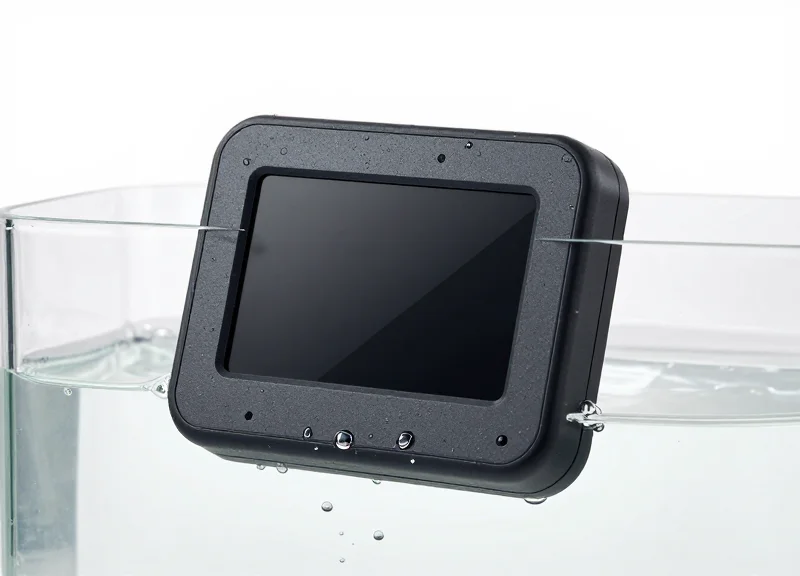
The IP67 rating is an international standard (IEC 60529) that defines a device's resilience against solids and liquids. For Electronic Shelf Labels (ESLs) deployed in 70% relative humidity, the '6' signifies a 'dust-tight' seal that prevents any particulate ingress, while the '7' indicates the hardware can survive total immersion in water up to 1 meter deep for 30 minutes. In high-humidity environments like produce sections or floral departments, this rating is the gold standard because it confirms the device is hermetically sealed against the atmospheric pressure of water vapor that typically bypasses lower-rated electronics.
| IP Digit | Protection Level | Operational Significance for ESLs |
|---|---|---|
| First Digit (6) | Dust Tight | Prevents microscopic dust and debris from fouling the E-ink display or PCB. |
| Second Digit (7) | Immersion (1m) | Ensures the internal vacuum is maintained even when exposed to heavy condensation. |
| Comparison (IP65) | Water Jets | Protects against splashing but lacks the gasket integrity required for 24/7 high-vapor pressure. |
Why is immersion protection (IPx7) more important than jet protection (IPx5) for humidity? High-humidity environments create a physical phenomenon known as 'vapor breathing.' As ambient temperatures fluctuate—such as during a grocery store's defrost cycle—the air inside a poorly sealed ESL expands and contracts. This creates a vacuum effect that 'sucks' moisture-laden air through gaps in the casing. IP67-rated seals are engineered to withstand the static pressure required to prevent this micro-ingression, whereas IP65 seals often fail under the persistent osmotic pressure of 70%+ RH.
Is an IP67 ESL 'waterproof' or 'water-resistant'?
Technically, IP67 defines it as 'waterproof' for temporary immersion. In retail, this means it can survive both heavy misting systems and accidental drops into cleaning buckets.
Does IP67 protect against steam or high-pressure washing?
No. High-pressure steam requires an IP69K rating. IP67 is optimized for static moisture and high humidity, not thermal shock from pressurized hot water.
How often should IP67 seals be checked?
For ESLs, the seals are internal. You shouldn't check them manually; instead, monitor for screen fogging, which is the first sign of seal degradation.
Expert Insight: The LSR Advantage. When evaluating IP67 ESLs, ask your manufacturer about the gasket material. Standard TPU (Thermoplastic Polyurethane) gaskets can harden and shrink over 3–5 years in cold, humid environments. Silicon Valley industry leaders now utilize LSR (Liquid Silicone Rubber) injection-molded seals. LSR maintains its elasticity across a wider temperature range (-40°C to 150°C), ensuring that the IP67 seal doesn't lose its 'grip' on the chassis as the device ages in a humid refrigerated case.
Critical Use Cases: Fresh Food, Seafood, and Garden Centers
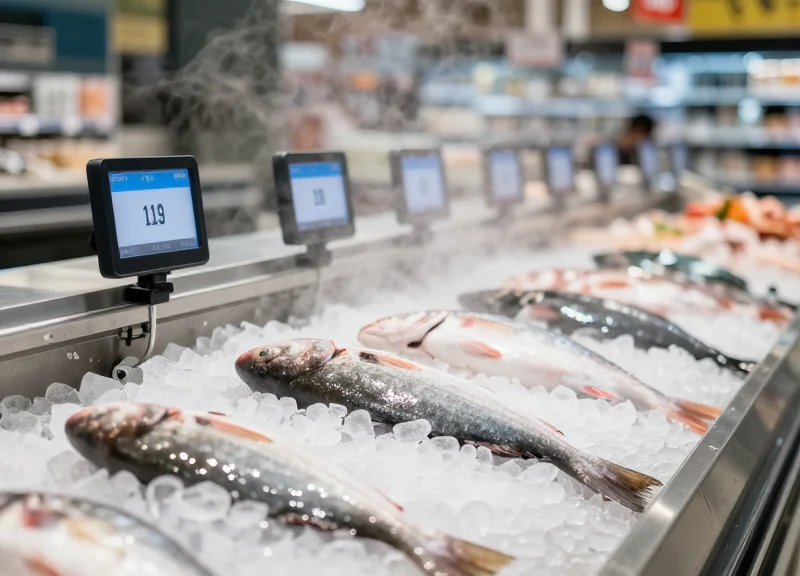
In retail environments where relative humidity (RH) consistently exceeds 70%, IP67-rated humidity-resistant Electronic Shelf Labels (ESLs) are a mission-critical infrastructure rather than an optional upgrade. These specialized environments—specifically fresh food misting zones, seafood ice beds, and outdoor garden centers—create a 'perfect storm' for standard electronics, where airborne water vapor and liquid spray lead to immediate circuit corrosion and screen fogging if the device is not hermetically sealed.
| Retail Department | Typical Humidity Range | Primary Moisture Threat | Standard ESL Risk |
|---|---|---|---|
| Fresh Produce | 70% - 85% RH | Automated misting & irrigation | Capacitive coupling & short circuits |
| Seafood & Meat | 80% - 95% RH | Ice sublimation & daily washdowns | Internal oxidation of battery contacts |
| Garden Centers | Variable (Ambient) | Hose spray & morning dew | E-ink display delamination |
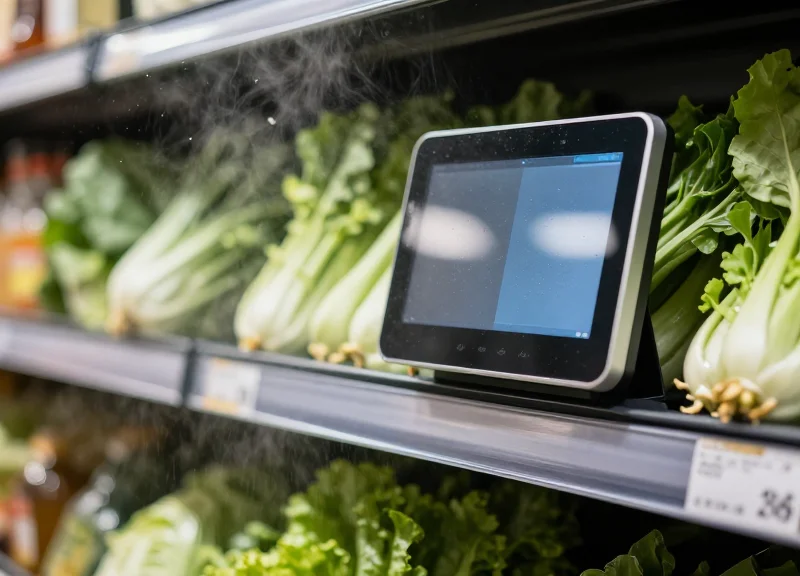
- Fresh Food & Produce Misting Zones: Modern grocery stores use ultrasonic misters to maintain produce crispness. This fine aerosolized water penetrates standard ESL casings through capillary action. IP67 labels utilize ultrasonic welding to ensure no gaps exist for these micro-droplets to enter.
- The Seafood Counter 'Ice Effect': Seafood displays rely on crushed ice that constantly sublimates into water vapor directly beneath the price tags. This creates a micro-climate of nearly 100% humidity. Without an IP67 seal, the temperature differential between the cold ice and the store air causes internal condensation within seconds.
- Garden Centers & Outdoor Nurseries: Garden centers face the dual threat of high-pressure hose overspray and fluctuating ambient humidity. IP67 protection ensures that even if a label is accidentally submerged or sprayed during a watering cycle, the pricing data remains visible and the electronics stay dry.
The Expert Insight: The 'Thermal Shock' Factor. A common mistake is assuming humidity alone is the killer. In high-volume retail, labels often move from cold storage (35°F) to a humid retail floor (70°F/75% RH). This rapid temperature shift creates a vacuum effect in non-sealed ESLs, literally 'sucking' moist air into the device. Only a vacuum-sealed, IP67-rated enclosure can resist this pressure differential, preventing the internal fogging that renders standard labels unreadable and electrically dead within weeks.
Structural Innovations in Humidity-Resistant ESL Design
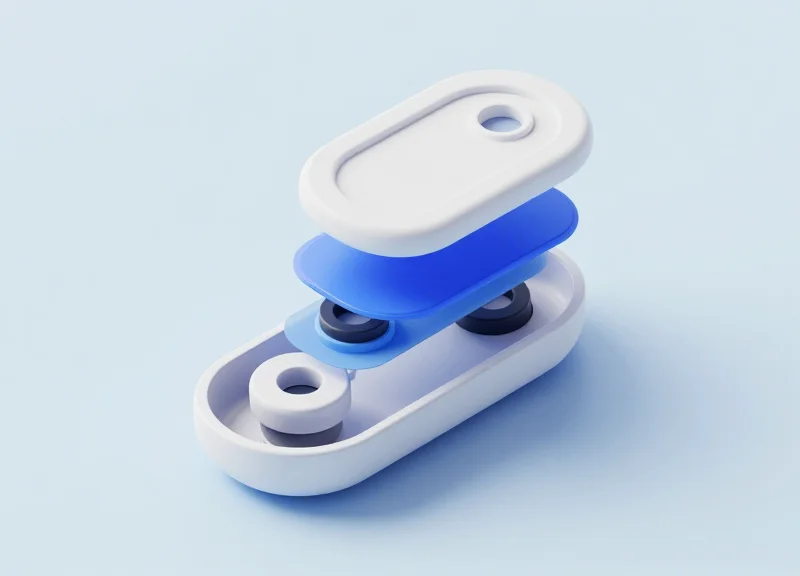
To withstand 70% relative humidity, an ESL must move beyond simple water resistance and achieve a true hermetic seal. While standard electronics rely on mechanical fasteners and adhesive strips, high-performance humidity-resistant ESLs utilize structural innovations like ultrasonic welding to create a molecular bond between housing components, ensuring that water vapor—which is significantly more invasive than liquid droplets—cannot penetrate the internal circuitry.
| Feature | Standard ESL Design | Innovation: IP67 Humidity-Resistant |
|---|---|---|
| Housing Sealing | Adhesive tape or snap-fits | Ultrasonic welding (seamless fusion) |
| Gasket Material | Open-cell foam or EPDM | Closed-cell Fluorosilicone |
| Display Protection | Standard acrylic or PET | Anti-fog nano-coating + Hardened glass |
| Assembly Method | Mechanical screws (point stress) | Unified monolithic structure |
- Ultrasonic Welding Technology: This process uses high-frequency vibrations to melt the interface of the plastic housing parts, creating a single, continuous piece of material. This eliminates the 'seams' where humidity typically enters.
- Fluorosilicone Compression Gaskets: Unlike standard rubber, fluorosilicone maintains its elasticity across temperature swings and resists the degradation caused by cleaning chemicals and high moisture levels.
- Active Anti-Fog Nano-Coatings: To ensure legibility in fresh food sections, a hydrophilic nano-coating is applied to the screen. This prevents water vapor from forming micro-beads that cloud the display during temperature transitions.
A critical, often overlooked innovation in DragonGuardGroup’s design is the management of 'Internal Vapor Pressure.' In high-humidity environments, temperature fluctuations (e.g., during defrost cycles in seafood counters) create a pressure differential that can 'suck' moisture through microscopic gaps. By minimizing the internal dead-air volume within the ESL housing and using high-density components, we reduce the physical capacity for condensation to form internally, effectively neutralizing the threat of humidity even if the external environment reaches saturation levels.
Deployment Strategies for High-Humidity Zones
Deploying IP67-rated Electronic Shelf Labels (ESLs) in 70% relative humidity environments requires more than just high-spec hardware; it demands a tactical approach to installation that prevents the formation of localized 'moisture pockets.' A successful strategy focuses on maximizing airflow around the device and ensuring that mounting hardware does not create capillary paths where liquid water can bypass even the most robust seals over time.
| Environmental Factor | Risk to ESL | Deployment Mitigation |
|---|---|---|
| Temperature Fluctuations | Internal Condensation | Acclimatization for 24h before activation |
| High Pressure Cleaning | Seal Fatigue | Install angled shields to deflect direct spray |
| Limited Airflow | Micro-environment Saturation | Maintain 5mm clearance from shelf back-walls |
| Horizontal Mounting | Water Pooling | Utilize a 5-15 degree tilt to encourage runoff |
- Pre-Installation Acclimatization: Before deployment, store the ESLs in the target environment for at least 24 hours while powered off. This equalizes the internal air pressure and temperature, preventing the 'bellows effect' where a sudden temperature drop causes a vacuum that could pull moist air through gaskets.
- Optimized Rail Orientation: Ensure that the mounting rails have drainage holes or are positioned such that they do not trap condensation. If using adhesive mounts, ensure the surface is degreased and applied at room temperature to ensure a moisture-tight bond.
- Strategic Angling: Mount labels at a slight downward angle (at least 5 degrees). This prevents water droplets from sitting on the screen or pooling at the bottom edge of the bezel, which can eventually degrade anti-fog coatings.
- Signal Path Clearance: Humidity can slightly impact signal propagation. Place Access Points (APs) with a direct line-of-sight to the high-humidity zones to compensate for potential signal attenuation caused by moisture-heavy air.
Expert Insight: Beware the 'Condensation Shadow'. In seafood or floral sections, refrigeration units often create micro-currents of cold air. If an ESL is placed directly in the path of a cold air vent while the ambient humidity is high, it will reach its dew point faster than surrounding items. We recommend a 'Vapor Buffer' approach: installing a secondary plastic barrier 2cm above the ESL line to deflect direct cold air currents, significantly extending the lifespan of the IP67 seals.
How often should IP67 ESLs be cleaned in 70% RH zones?
In high-humidity areas, we recommend a bi-weekly wipe-down with a microfiber cloth. Avoid high-pressure water streams directly on the label edges to prevent unnecessary stress on the ultrasonic welds.
Can I use standard alkaline batteries in these zones?
No. For environments with high humidity and potential temperature swings, we recommend specialized wide-temperature CR2450 lithium button cells which are less prone to leakage under atmospheric pressure changes.
Do humidity-resistant ESLs require special software settings?
While not required, we recommend a 'Reduced Refresh Rate' for high-moisture zones. Frequent screen updates generate micro-heat, which can contribute to internal pressure fluctuations; a stabilized refresh cycle improves long-term seal integrity.
Preventing Condensation During Temperature Fluctuations
Condensation occurs on Electronic Shelf Labels (ESLs) when the device's surface temperature falls below the dew point of the surrounding air, a common occurrence when moving hardware between cold storage and a 70% humidity retail floor. To prevent internal damage, retailers must utilize IP67-rated devices that feature hermetic ultrasonic seals to block moisture ingress and implement staged acclimatization protocols to manage the thermal transition of the hardware's internal components.
The transition from a 2°C (35.6°F) refrigerator to a 22°C (71.6°F) sales floor is a high-risk event for standard electronics. In a 70% relative humidity environment, the dew point is approximately 16°C. This means as soon as the cold ESL enters the warm zone, moisture will instantly liquefy on every available surface. Without an IP67 seal, this moisture is 'sucked' into the device due to the pressure differential created by the temperature change.
| Transition Scenario | Temp Delta | Condensation Risk | Required Protection |
|---|---|---|---|
| Freezer to Ambient | 40°C | Critical (Immediate) | IP67 + Thermal Staging |
| Chiller to Ambient | 15°C | High | IP67 + Gasket Seal |
| Cold Loading Dock to Store | 10°C | Moderate | Anti-fog Coating |
- Phase 1: Controlled Buffer Zone: Before moving ESL-equipped displays from cold storage to the floor, store them in a 'dry buffer' zone (humidity <40%) for 30 minutes to allow the casing to reach 10°C.
- Phase 2: Gradual Deployment: Deploy labels in batches rather than all at once to monitor for surface fogging, ensuring the air circulation in the retail zone is active to accelerate moisture evaporation.
- Phase 3: Post-Transition Inspection: Perform a visual check for internal 'ghosting' on the e-ink display, which indicates a breach in the hermetic seal that requires immediate unit replacement.
Expert Tip: The Vacuum Effect. One often overlooked detail in Silicon Valley hardware engineering is the 'negative pressure vacuum.' When a warm ESL is suddenly placed in a cold environment (like a freezer), the air inside the unit contracts. If the seal is even slightly porous, it creates a vacuum that pulls in humid air. This is why standard IP54 'water-resistant' labels fail over time; they breathe in moisture that eventually corrodes the PCB. Only a true IP67 ultrasonic weld can resist this micro-pressure fluctuation.
Does condensation on the outside of the ESL damage the screen?
If the ESL is IP67-rated, external moisture is harmless. However, if 'fogging' appears behind the clear lens, the seal has failed, and internal corrosion will soon follow.
Will anti-fog coatings help with temperature fluctuations?
Anti-fog coatings prevent water droplets from scattering light, keeping the label readable, but they do not stop the physical process of condensation. They are a visibility aid, not a moisture barrier.
How does humidity affect battery life during temp shifts?
Frequent condensation cycles can create micro-shorts on poorly protected PCBs, significantly draining the battery. Hermetic sealing is essential to maintain the 5-10 year battery life expected in retail.
Battery Life and Reliability in Humid Conditions
High-humidity environments (70% RH and above) significantly reduce Electronic Shelf Label (ESL) battery life by accelerating internal resistance growth and inducing electrolytic corrosion at the contact points. IP67-rated moisture-resistant sealing protects the battery’s chemical integrity by preventing water vapor from infiltrating the housing and reacting with the lithium-based chemistry. By maintaining a hermetically sealed micro-environment, these labels prevent the voltage drops and catastrophic leakages that typically plague unsealed retail technology in seafood or produce departments.
| Performance Metric | Standard ESL (Non-Sealed) | IP67 Humidity-Resistant ESL |
|---|---|---|
| Typical Lifespan (70%+ RH) | 12 - 18 Months | 5 - 10 Years |
| Self-Discharge Rate | Accelerated (via micro-shorts) | Ultra-Low (Nominal) |
| Contact Point Oxidation | High (Lead to connectivity failure) | Zero (Hermetically protected) |
| Internal Resistance (IR) | Spikes due to moisture ingress | Stable over device lifecycle |
A critical, often overlooked factor is the 'Vapor Pressure Gradient.' In a high-humidity environment, moisture isn't just sitting on the surface; it is actively forced into any microscopic gaps in the device casing through osmotic pressure. Expert Tip: While many competitors claim 'water resistance,' only an IP67-rated seal using ultrasonic welding can withstand the constant vapor pressure of a 70% RH environment. Without this level of sealing, moisture eventually reaches the battery’s lithium-manganese dioxide (Li-MnO2) cells, causing a chemical breakdown that leads to swelling and casing rupture, often destroying the entire ESL unit beyond repair.
Can high humidity cause the batteries to leak?
Yes. In unsealed units, moisture causes electrolytic corrosion. As the battery terminals corrode, the seal of the battery cell itself can be compromised, leading to the leakage of electrolyte fluid which is highly corrosive to the ESL's motherboard.
Does the IP67 seal affect the cost of battery replacement?
While IP67 units require specialized sealing gaskets, the total cost of ownership is lower because the replacement interval is extended by 300% to 500% compared to standard units in humid zones.
Why does moisture cause the display to dim or flicker?
This is often a symptom of battery struggle. Moisture ingress increases internal resistance, meaning the battery can no longer provide the peak current required for an e-paper refresh, leading to ghosting or incomplete screen updates.
ROI Analysis: Durable Hardware vs. Frequent Replacements
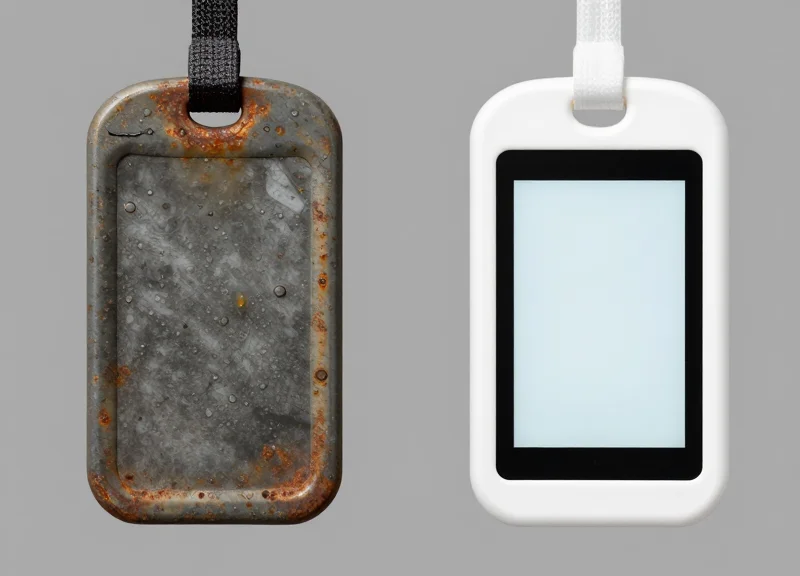
The Return on Investment (ROI) for IP67-rated Electronic Shelf Labels (ESLs) in high-humidity environments is measured through the lens of Total Cost of Ownership (TCO), where the slightly higher initial capital expenditure (CAPEX) of ruggedized hardware is rapidly offset by the elimination of repetitive operational expenses (OPEX). In a 70% relative humidity environment, standard ESLs often face a 'mean time between failure' (MTBF) of less than 18 months due to circuit corrosion and battery leakage. Conversely, IP67-rated units are engineered to survive a full 5-to-7-year battery cycle without moisture-induced degradation, effectively reducing the cost per unit per year by up to 40% when factoring in procurement, logistics, and technical labor.
| Cost Metric (Per 1,000 Units) | Standard ESL (Non-Rated) | IP67-Rated Humidity ESL |
|---|---|---|
| Initial Purchase Price | $5,000 | $8,000 |
| Annual Failure Rate (70% RH) | 15% - 20% | < 1% |
| 5-Year Replacement Volume | 750 Units | 50 Units |
| Labor & Logistics Cost | $11,250 ($15/unit) | $750 ($15/unit) |
| Total 5-Year TCO | $20,000 | $9,150 |
One unique insight often overlooked by procurement teams is the 'Maintenance Death Spiral.' When hardware fails frequently in high-humidity zones like seafood or produce, the labor cost is not just the hourly rate of the technician; it is the opportunity cost of store associates who must revert to manual paper pricing during the lag time between failure and replacement. This creates 'price drift'—a discrepancy between the POS and the shelf—which can lead to regulatory fines and diminished consumer trust. By deploying IP67 units, retailers protect the integrity of their automated pricing system, ensuring that the labor savings promised by ESL technology are actually realized.
- Phase 1: Direct Procurement Savings: Calculate the reduction in re-ordering frequency. In high-humidity zones, standard labels are replaced 3x more often than IP67 labels.
- Phase 2: Labor Optimization: Account for the 'Truck Roll' cost. Every replacement requires unlinking, physical removal, disposal, and re-linking of a new device.
- Phase 3: Brand Equity Protection: Quantify the value of a 'perfect' shelf edge. Flickering or dead screens in fresh food sections suggest a lack of hygiene and tech-savviness.
Is the price premium for IP67 worth it for only 60% humidity?
Yes, because humidity is rarely static. Micro-climates near misting systems or open refrigerators often spike above 80%, causing localized failures that compromise the entire system's reliability.
How does moisture resistance affect battery ROI?
High humidity causes micro-shorting in non-sealed units, which drains batteries 2x faster than normal. IP67 sealing ensures the battery only depletes based on screen updates, not environmental leakage.
What is the 'Hidden Logistics' cost of failure?
Retailers often ignore the cost of shipping failed units back for RMA or the warehousing costs of keeping 'buffer stock' for frequent failures; IP67 units eliminate the need for large on-site replacement inventories.
Future-Proofing Your Retail Infrastructure
Future-proofing your retail infrastructure is the strategic practice of deploying IP67-rated, moisture-resistant Electronic Shelf Labels (ESLs) that exceed immediate environmental demands, thereby ensuring your hardware remains functional during HVAC failures, seasonal humidity spikes, and cross-departmental reallocations. By decoupling hardware performance from environmental limitations, retailers create a resilient digital layer capable of supporting long-term store expansions and evolving IoT ecosystems without the risk of premature hardware obsolescence. In a market where 70% relative humidity is the baseline, building for 85% is not overkill—it is insurance against the inevitable fluctuations of a high-traffic retail environment.
- Environmental Agility: Standardizing on ruggedized hardware allows retailers to move inventory and assets between high-moisture zones (like seafood or produce) and dry zones without maintaining separate hardware stocks.
- FOTA Readiness: Modern IP67 units are typically built with higher-spec chipsets that support Firmware-Over-The-Air (FOTA) updates, allowing for new features like location-based services or interactive customer prompts to be added via software.
- Supply Chain Resilience: Reducing the variety of SKUs needed for store maintenance simplifies the supply chain and ensures that replacement units are always compatible with any zone in the store.
| Strategic Metric | Legacy ESL Infrastructure | Future-Proofed IP67 Infrastructure |
|---|---|---|
| Deployment Flexibility | Restricted to low-moisture zones | Universal deployment across all microclimates |
| Average Lifespan | 2-3 years in humid conditions | 7-10 years due to hermetic sealing |
| Firmware Scalability | Limited by hardware constraints | High (Supports advanced IoT features) |
| E-Waste Impact | Frequent replacements increase footprint | Minimal due to extended hardware durability |
Expert Tip: Account for 'Microclimate Drift.' In large retail environments, humidity is rarely uniform. While your central sensor might read 60%, poorly ventilated corners or areas near open-case misting systems can experience localized spikes exceeding 80%. A future-proofed infrastructure utilizes IP67-rated units to eliminate these 'dark zones' where standard hardware would fail, ensuring 100% uptime across the entire floor plan regardless of localized environmental anomalies.
Can these ESLs be integrated with existing store management software?
Yes, future-proofed ESLs are designed with open API architectures and standard communication protocols like Zigbee or Bluetooth LE to ensure seamless integration with current and future ERP and inventory management systems.
Why is IP67 better than IP65 for long-term planning?
IP65 protects against water jets, but IP67 protects against full immersion and provides a superior hermetic seal against vapor. Over a 10-year period, water vapor ingress in IP65 units can lead to internal corrosion that IP67 units are specifically designed to prevent.
How does ruggedization affect future sustainability goals?
By doubling the functional life of the hardware, you effectively halve the long-term electronic waste generated by your retail operations, aligning your technology stack with corporate social responsibility (CSR) initiatives.