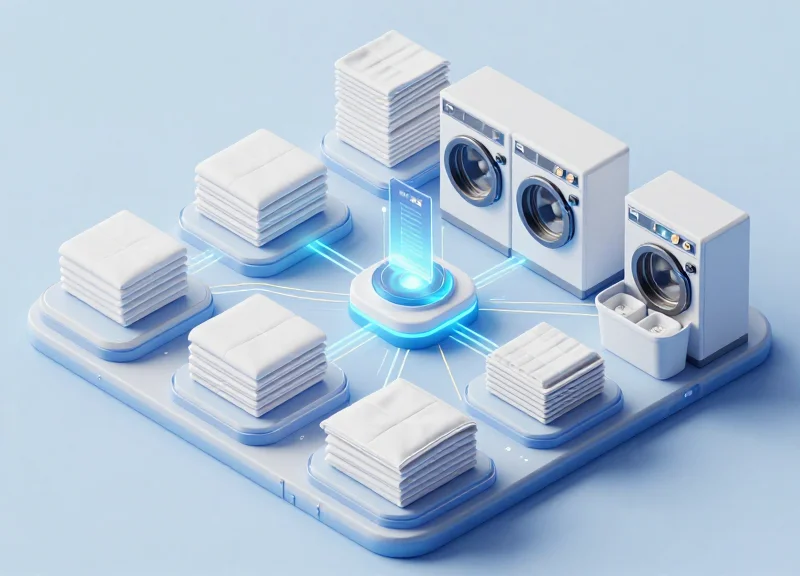

The duty-free retail landscape is undergoing a radical transformation as we approach 2026. In the high-velocity environment of international airports and travel hubs, traditional retail models are no longer sufficient to meet the demands of modern travelers. Today's duty-free operators face the dual challenge of managing complex, high-value inventory while providing a seamless, personalized shopping experience. The solution lies in the convergence of two powerful technologies: Radio Frequency Identification (RFID) and Electronic Shelf Labels (ESL). This hybridization is not just a trend; it is the next frontier of smart retail, offering unprecedented levels of operational efficiency and customer engagement.
The Evolution of the Duty-Free Landscape Toward 2026
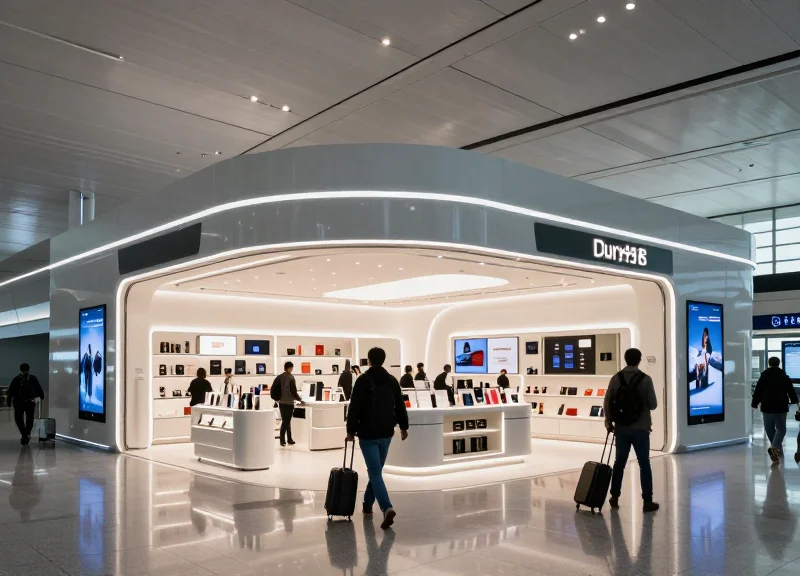
By 2026, the duty-free landscape will have completed its transition from a secondary travel convenience to a primary data-driven retail destination characterized by autonomous operations, real-time pricing elasticity, and 'Phygital' engagement. This evolution is driven by the demand for frictionless commerce and the integration of IoT-enabled infrastructure—specifically the convergence of RFID and Electronic Shelf Labels (ESL)—that bridges the gap between terminal logistics and the modern traveler's smartphone. In this new era, retail is no longer a passive experience but an active, intelligent environment that responds to flight schedules, currency fluctuations, and passenger demographics in real-time.
| Feature | Legacy Duty-Free (2016) | Smart Duty-Free (2026) |
|---|---|---|
| Pricing Model | Manual / Static | Dynamic / Algorithm-Driven |
| Inventory Tracking | Barcode / Periodic Audits | RFID / Continuous Real-time |
| Customer Interaction | Staff-Dependent | Autonomous / Self-Service |
| Data Utilization | Historical Reporting | Predictive Analytics / Live Streams |
| Labeling | Paper / Plastic Tags | Hybrid RFID-ESL Displays |
The shift toward 2026 is largely dictated by the 'Connected Traveler.' These individuals expect the same level of personalization and speed in a physical airport shop as they do on a digital platform. For operators, this means the 'Evolution' isn't just about better aesthetics; it's about solving the 'Data-Physical Gap.' When a flight is delayed, a smart retail hub can instantly adjust promotions on high-dwell-time items. To achieve this, retailers are moving away from siloed systems toward a unified hardware layer where the shelf edge itself becomes a sensing and communication point.
What defines the 2026 Duty-Free traveler?
The 2026 traveler is tech-native, values time-efficiency, and expects 'Frictionless Retail' where queuing is eliminated and pricing is transparent across global currencies.
Why is the 'Smart Hub' model replacing traditional shops?
Escalating labor costs and the need for 24/7 operation in international terminals make automation a financial necessity, not just a luxury.
How does sustainability influence this evolution?
Digitalization via ESLs eliminates thousands of tons of paper waste annually, aligning with the aviation industry's broader ESG goals for 2030.
Expert Insight: The 'Next Frontier' isn't just AI—it is 'Synchronized Inventory Intelligence' (SII). My observation over two decades in Silicon Valley tech-stacks is that software is only as good as its physical touchpoints. In duty-free, the unique differentiator for 2026 will be the ability to use a single piece of hardware to simultaneously update a price (ESL) and track a product's location (RFID). This hybridization eliminates the 'Ghost Stock' problem that currently costs travel retailers millions in lost conversions.
The Strategic Role of RFID in High-Value Travel Retail

Radio Frequency Identification (RFID) in high-value travel retail serves as the foundational layer for digital transformation, enabling 99.9% inventory accuracy by automating the tracking of luxury items from the warehouse to the departure gate. In an environment where every square foot of shelf space is premium, RFID eliminates 'phantom inventory'—items shown as in-stock but physically missing—ensuring that high-margin goods like rare spirits and designer watches are always available for the traveler's limited shopping window.
| Feature | Manual Inventory Management | RFID-Enabled Smart Retail |
|---|---|---|
| Accuracy Rate | 70% - 85% (Average) | 99% - 99.9% (Near-Perfect) |
| Stock Count Time | Hours or Days (Requires store closure) | Minutes (Real-time, non-disruptive) |
| Loss Prevention | Reactive (Discovered after theft) | Proactive (Instant alerts at exits) |
| Visibility | Static snapshots | Live supply chain telemetry |
For travel retailers, the strategic value of RFID extends beyond mere counting. It is about 'The Velocity of Transit.' In a duty-free setting, the window of opportunity to convert a traveler is often less than 20 minutes. If a high-end SKU is misplaced or stuck in the stockroom despite being 'in stock' on the system, the sale is lost forever as the customer boards their flight. RFID provides the real-time granular visibility required to prevent these missed conversions.
How does RFID prevent 'Out-of-Stock' scenarios for luxury goods?
By using ultra-high frequency (UHF) tags, retailers receive automated alerts when shelf levels drop below a specific threshold, triggering immediate restocking from the backroom before a customer ever notices the gap.
Is RFID effective for high-alcohol or metallic packaging?
Modern 'on-metal' and liquid-optimized tags have overcome previous interference issues, allowing seamless tracking of premium champagne, spirits, and foil-wrapped cosmetics without signal degradation.
What is the impact on labor costs?
RFID reduces the time spent on manual stock-takes by up to 90%, allowing boutique staff to focus on high-touch sales interactions and brand storytelling rather than back-office administration.
Expert Insight: The 2026 mandate for travel retail isn't just about knowing what you have; it is about 'Data-as-a-Service' within the airport ecosystem. We are moving toward a model where RFID data is shared with logistics partners to predict when a shipment of limited-edition luxury items will arrive at the terminal, allowing retailers to pre-sell to VIP travelers via mobile apps before the product even hits the floor.
ESL: Redefining Dynamic Pricing in a Global Economy
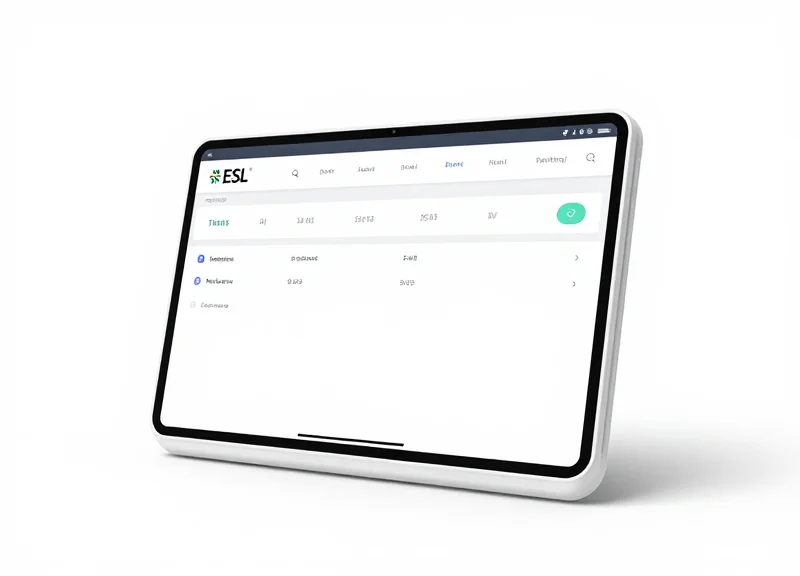
Electronic Shelf Labels (ESL) are the engine of modern dynamic pricing, allowing travel retailers to synchronize digital displays with backend ERP systems for instantaneous price updates across thousands of SKUs. In the volatile global economy of 2026, ESL technology eliminates the latency of manual price changes, ensuring that duty-free operators can protect margins against currency fluctuations while offering competitive, real-time promotions to international travelers.
The complexity of a duty-free environment is unique: a single store might serve customers from fifty different nations in one afternoon. Traditional paper tags are static and prone to human error, creating a disconnect between the price on the shelf and the current exchange rate. ESL systems solve this by integrating with live Forex feeds, allowing prices to be displayed in multiple currencies simultaneously or adjusted the moment a significant currency shift occurs, maintaining trust and transparency with the savvy global shopper.
| Feature | Manual Labeling (Legacy) | ESL Dynamic Pricing (2026 Standard) |
|---|---|---|
| Update Speed | Hours to days per terminal | Sub-60 seconds globally |
| Currency Agility | Fixed; requires manual overrides | Live Forex-linked multi-currency display |
| Promotional Efficiency | Labor-intensive sticker application | Scheduled 'Flash Sales' via centralized CMS |
| Data Accuracy | 85-90% (High risk of POS mismatch) | 99.9% (Perfect POS-to-Shelf synchronization) |
Expert Insight: The 'Arrival-Gate Pricing' Strategy. A unique advantage of ESL in 2026 is the ability to implement 'Passenger-Centric Pricing.' By syncing ESL systems with airport flight arrival data, retailers can automatically adjust promotional priorities based on the demographic currently walking past the storefront. For example, if a flight from Tokyo just landed, the system can instantly highlight high-demand brands for that region or display prices in JPY, significantly increasing the conversion rate through localized relevance.
How does ESL handle battery life in high-frequency update environments?
Modern 2026-gen ESLs utilize ultra-low-power e-paper technology and high-efficiency sub-GHz protocols, ensuring a battery life of 10+ years even with multiple daily price refreshes.
Can ESLs display regulatory or provenance information?
Yes, beyond price, ESLs can display QR codes linking to customs allowances, digital luxury certificates, or 'Scan-to-Pay' options, reducing friction at the checkout counter.
Is the ROI justifiable for smaller duty-free kiosks?
Absolutely. While the initial CapEx is higher, the OpEx savings from labor reduction and the revenue lift from optimized pricing typically result in a full ROI within 14 to 18 months.
Understanding RFID-ESL Hybridization: The Synergy Effect

RFID-ESL hybridization is the strategic integration of Radio Frequency Identification (RFID) tracking and Electronic Shelf Label (ESL) display technologies into a unified hardware and software ecosystem. Unlike siloed deployments, hybridization allows the digital price tag to act as a localized communication hub that validates the presence of physical stock in real-time. By merging the 'what' and 'where' of RFID with the 'how much' of ESL, duty-free operators transition from passive monitoring to a proactive, autonomous retail environment where price adjustments and inventory counts are perfectly synchronized without human intervention.
| Feature | Standalone RFID/ESL | Hybridized Ecosystem (The Synergy) |
|---|---|---|
| Data Source | Disconnected databases for stock vs. price. | Single Source of Truth (SSoT) architecture. |
| Inventory Validation | Periodic manual scans required. | Continuous 'Shelf-to-Label' handshake. |
| Pricing Logic | Triggered by time or global events. | Triggered by real-time local stock levels. |
| Customer UX | Accurate price, unknown availability. | Price accuracy + 'In-Stock' verification. |
- Phase 1: Ambient Sensing: RFID readers (integrated into the shelving or overhead) continuously ping item tags to verify exact SKU quantity and location.
- Phase 2: Intelligent Reconciliation: The central IoT controller compares current stock levels with the active pricing strategy in the Cloud.
- Phase 3: Dynamic Visual Response: The ESL automatically updates to reflect a flash sale if stock is high, or switches to a 'Last Item' alert to drive scarcity and FOMO.
Expert Tip: The 'Self-Healing' Retail Loop. My unique perspective on this technology is its ability to create a 'self-healing' retail floor. In typical duty-free environments, 'phantom inventory' (items misplaced by travelers) accounts for significant lost revenue. In a hybridized model, the ESL can trigger a micro-location alert to staff if the RFID reader detects a luxury item has been moved to a different department, effectively 'healing' the misplaced inventory before a sale is lost.
Does hybridization require twice the infrastructure?
No. Modern 2026-ready systems use unified gateways that manage both the ESL's sub-GHz or Bluetooth signals and the RFID data stream, reducing hardware overhead by up to 30%.
What is the primary ROI driver for hybridization?
The synergy effect eliminates the 'Labor Gap.' Staff no longer spend hours reconciling physical stock against digital displays; the system identifies discrepancies automatically, allowing personnel to focus on high-touch sales.
How does this impact high-value luxury goods?
For products like watches or spirits, the hybrid tag acts as a security anchor. If the RFID tag is tampered with, the ESL can visually flash or send an immediate silent alert to security.
Operational Excellence: Automating Restock and Reducing Shrinkage
Operational excellence in the 2026 duty-free landscape is defined by the transition from reactive manual auditing to predictive, autonomous inventory management. By integrating RFID (Radio Frequency Identification) for item-level tracking with ESL (Electronic Shelf Labels) as the localized communication interface, retailers can achieve a 'self-healing' shelf. This hybridization allows the physical retail environment to automatically trigger restock alerts when stock levels cross a predefined threshold and deploy active countermeasures against shrinkage, ensuring that high-value travel retail remains both profitable and efficient.
- Threshold Detection: RFID sensors embedded in the shelving units continuously monitor the presence of tagged items, identifying exactly when inventory drops below optimal levels.
- ESL Visual Signaling: The ESL instantly updates its display to a 'Low Stock' status for staff or triggers a hidden LED blink pattern to guide replenishment teams directly to the gap.
- Automated ERP Sync: The hybrid hub sends a real-time API call to the back-of-house ERP or warehouse management system, generating a pick-list without human intervention.
- Verification and Compliance: Once the new stock is placed, the RFID reader confirms the arrival of the specific Serialized Global Trade Item Number (SGTIN), closing the loop and updating the shelf label.
| Operational Metric | Legacy Manual Process | RFID-ESL Hybrid Model (2026) |
|---|---|---|
| Inventory Accuracy | 70% - 85% (Weekly Audits) | 99.5% (Real-Time) |
| Restock Lead Time | 4 - 12 Hours | < 15 Minutes |
| Shrinkage Detection | Discovered during EOM Audits | Instantaneous Alerting |
| Staff Labor Allocation | 60% Task-Oriented | 15% Task-Oriented / 85% Service |
The true 'frontier' of this technology lies in what I call 'Active Deterrence.' In high-traffic airport environments, 'sweethearting' and organized retail crime are significant drains on margin. With a hybrid system, if an RFID-tagged item is removed from the shelf but does not pass through a Point of Sale (POS) 'de-activation' zone within a specific timeframe, the ESL can enter an 'Alert Mode.' This might include changing the screen to a security warning or flashing a high-intensity LED. This edge-computing capability turns the shelf itself into a security guard, providing a psychological and technical barrier to theft that static shelves simply cannot offer.
How does the system prevent 'false alarms' in high-traffic zones?
The system utilizes 'dwell-time' logic. If an item is picked up and put back, no alert is triggered. An alert only initiates if the item leaves the localized RFID 'bubble' without a corresponding transaction signal from the POS.
Can this system integrate with existing CCTV?
Yes. In the 2026 smart retail stack, the RFID trigger can automatically timestamp and bookmark the nearest CCTV camera feed, allowing security to review the incident in seconds rather than hours.
Is the power consumption sustainable for 24/7 airport operations?
Modern ESLs use e-paper technology that only consumes power during display updates, and RFID shelf-readers now utilize 'low-duty cycle' scanning to maintain high accuracy with minimal energy draw.
Elevating the Customer Journey: Interactive and Personalized Shopping

Elevating the customer journey in 2026 duty-free retail is defined by the transition from static consumption to 'anticipatory retail,' where RFID-ESL hybridization serves as the bridge between digital traveler profiles and physical product interaction. By integrating these technologies, retailers can trigger hyper-personalized content—such as price displays in a passenger's home currency or specific loyalty tier discounts—the moment a customer engages with a product, effectively removing the friction typical of high-traffic international terminals.
| Shopping Phase | Traditional Duty-Free Experience | 2026 Hybrid Smart Retail Experience |
|---|---|---|
| Product Discovery | Generic signage and manual price checking. | RFID-triggered 'Lift and Learn' displays with ESL multi-language support. |
| Pricing & Currency | Fixed price tags; mental math for currency conversion. | ESLs sync with boarding passes to show prices in 150+ local currencies. |
| Personalization | Mass-market promotions for all travelers. | ESL flashes unique 'Welcome back' offers based on loyalty app proximity. |
| Checkout | Queuing at a central kiosk for scanning/passport check. | RFID 'Tap-to-Bag' with instant digital receipt and automated gate-delivery. |
The power of this hybridization lies in 'contextual awareness.' When a traveler lifts an RFID-tagged bottle of premium whiskey, the surrounding ESLs and digital screens can immediately update to show tasting notes, origin stories, or even pairing suggestions based on the user's past purchase history. This creates a high-touch, concierge-level experience without the need for additional floor staff, which is critical during peak travel surges.
How does RFID enable 'Frictionless' checkout for international passengers?
RFID tags allow for 'bulk scanning,' where an entire shopping bag is read instantly by sensors. By linking the passenger’s digital identity to their RFID-detected items, payment is processed automatically via their pre-loaded travel wallet, bypassing traditional POS queues entirely.
Can ESLs help with language barriers in global hubs?
Yes. Through NFC or QR codes on the ESL, travelers can instantly flip the shelf's digital display to their preferred language or beam full product specifications to their smartphones in their native tongue.
Does this technology improve luxury brand storytelling?
Absolutely. Luxury brands use the RFID trigger to play immersive brand videos on nearby screens the moment a product is handled, ensuring the premium 'unboxing' or 'discovery' feeling starts at the shelf.
Expert Tip: The most significant breakthrough for 2026 is the 'Departure Gate Sync.' By cross-referencing real-time flight data with the ESL, the shelf label can display a countdown of how much time the passenger has left to complete their purchase before they need to reach their specific gate. This 'urgency marketing' is personalized to the individual's walking speed and gate distance, significantly increasing conversion rates for high-margin impulse items.
Data-Driven Insights for 2026: The New Retail Analytics

The New Retail Analytics for 2026 is defined by 'micro-conversion tracking' at the physical shelf, enabled by the integration of RFID and Electronic Shelf Labels (ESL). Unlike traditional retail data that only captures the final sale, hybrid hybridization allows duty-free operators to measure the entire funnel: from the moment a passenger approaches a display to the physical interaction with a product and the subsequent price-sensitivity reaction. This granular data stream provides a real-time 'heat map' of consumer intent, allowing for the optimization of high-value terminal real estate based on actual engagement metrics rather than just historical transaction logs.
| Metric Category | Legacy Duty-Free Analytics | 2026 Hybrid RFID-ESL Insights |
|---|---|---|
| Product Interaction | Calculated via manual stock takes. | Real-time 'Lift-and-Learn' frequency via RFID sensors. |
| Price Sensitivity | Delayed correlation with weekly sales. | Instant A/B testing results via dynamic ESL adjustments. |
| Dwell Time | Inferred from general store traffic. | Precise shelf-level engagement time per SKU. |
| Conversion Funnel | Starts at the POS terminal. | Starts the moment a product is touched. |
A unique insight for 2026 is the emergence of the 'Price Elasticity Heatmap.' Because ESLs allow for instant price changes and RFID tracks which products are being held or returned to the shelf, retailers can now map exactly how much a $5 increase in premium spirits affects the 'dwell-to-buy' ratio in real-time. This allows for 'Tactical Yield Management'—similar to how airlines price seats—where duty-free prices can be optimized for specific flight waves (e.g., adjusting luxury watch prices when a high-net-worth flight from Zurich lands).
How does hybrid data improve product placement?
By tracking which RFID-tagged items are frequently picked up together but not purchased, retailers can identify 'frustration points' or placement mismatches, leading to data-backed planogram adjustments.
Can this data predict stockouts before they happen?
Yes. By analyzing the velocity of 'picks' versus 'sales,' the system identifies high-demand trends hours before the shelf is empty, triggering automated restock alerts to the warehouse.
What is the role of passenger demographics in this analytics model?
When integrated with flight manifest data, hybrid systems correlate specific product engagement with passenger origins, allowing brands to tailor their shelf-front marketing to the cultural preferences of the current terminal demographic.
Expert Tip: Move beyond 'Total Sales' as your primary KPI. In 2026, the most successful duty-free operators will focus on 'Revenue Per Interaction' (RPI). By utilizing RFID-ESL data to increase the quality of shelf-level engagement, you can drive higher margins even if total passenger footfall remains static.
Sustainability and Efficiency: The ESG Benefits of Smart Retail
In the 2026 duty-free landscape, ESG (Environmental, Social, and Governance) compliance is no longer a peripheral 'nice-to-have' but a core driver of institutional investment and consumer loyalty. The hybridization of RFID and Electronic Shelf Labels (ESL) serves as a primary engine for this shift, moving retail from a resource-heavy model to a lean, circular ecosystem. By automating price adjustments and inventory tracking, duty-free operators can eliminate thousands of tons of paper waste and significantly reduce the carbon intensity of their global logistics networks.
| Sustainability Metric | Traditional Retail Impact | Smart Hybrid Impact |
|---|---|---|
| Paper & Ink Waste | High: Manual price tag changes for 10k+ SKUs. | Zero: Centralized, digital updates via ESL. |
| Logistics Carbon | Moderate: Frequent shipments to cover inventory errors. | Low: 99.9% inventory accuracy reduces emergency restocks. |
| Product Spoilage | Higher: Static pricing leads to expired perishables. | Minimal: Dynamic pricing clears stock before expiry. |
| Labor Efficiency | Low: Human hours wasted on manual labeling. | High: Staff redirected to high-value customer service. |
Expert Insight: The 'Shadow Carbon' of Duty-Free Logistics. While most ESG reports focus on paper reduction, the true environmental win lies in reducing the 'Shadow Carbon' footprint. In typical duty-free environments, inventory inaccuracy leads to a 15% increase in unnecessary logistics movement—essentially flying or shipping air. Hybrid RFID-ESL systems provide real-time visibility that allows for 'Just-in-Time' replenishment, effectively shrinking the carbon footprint of the supply chain by up to 22% by 2026.
How does ESL technology affect the 'E' in ESG?
ESL eliminates the need for paper tags and chemical-heavy inks. Modern e-ink displays are extremely low-power, often lasting 5-10 years on a single coin battery, making their long-term environmental footprint significantly lower than recurring paper waste.
Can smart retail improve social governance (S)?
Yes. By automating the most tedious and repetitive tasks, such as manual inventory counts and price tagging, operators improve the employee experience and safety, reducing workplace fatigue and turnover in high-pressure airport environments.
Does this technology help with regulatory compliance?
Absolutely. For international brands, price transparency and accuracy are legal requirements. RFID-ESL hybridization ensures that the price on the shelf always matches the price at the POS, providing a transparent audit trail for regulators.
Ultimately, the integration of these technologies allows duty-free retailers to report verifiable ESG metrics to stakeholders. In an era where 'Greenwashing' is heavily penalized, the hard data generated by smart retail systems provides the empirical evidence needed to prove sustainability claims, turning environmental responsibility into a measurable competitive advantage.
DragonGuardGroup: Leading the Charge in RFID and ESL Innovation
DragonGuardGroup is a global leader in the design and manufacturing of advanced retail security and inventory management solutions, positioning itself as the primary architect for RFID-ESL hybridization in the duty-free sector. By combining high-frequency RFID tracking with dynamic Electronic Shelf Labeling (ESL), DragonGuardGroup provides a unified hardware ecosystem that enables real-time price synchronization, automated inventory replenishment, and enhanced loss prevention. Their specialized R&D focuses on creating high-durability, energy-efficient smart tags that thrive in the demanding, high-traffic environments of international airports and luxury travel hubs.
| Feature | DragonGuardGroup Hybrid Solution | Legacy Retail Systems |
|---|---|---|
| Price Update Speed | Near-instantaneous via cloud sync | Manual or localized only |
| Inventory Visibility | Real-time item-level tracking (99.9%) | Periodic manual counts (65-75%) |
| Theft Prevention | Integrated RFID/EAS surveillance | Stand-alone hardware tags |
| Environmental Impact | Zero paper waste; 5-year battery life | High paper and labor waste |
A unique insight into DragonGuardGroup’s methodology is their focus on 'Interference-Shielded Mesh Networking.' In the complex RF environment of an airport—where Wi-Fi, cellular, and aviation signals compete—generic smart tags often fail. DragonGuardGroup utilizes proprietary signal-filtering technology within their ESL-RFID modules to ensure 100% data integrity for price updates and inventory pings, a critical requirement for duty-free operators managing thousands of high-value SKUs across multiple terminals.
Why is DragonGuardGroup the preferred partner for 2026 duty-free trends?
They offer the only vertically integrated manufacturing process that designs the RFID inlay and the ESL display as a single unit, reducing hardware footprints by 30% and maximizing battery life for long-term deployments.
Does DragonGuardGroup support integration with existing ERP systems?
Yes, their open-API middleware allows for seamless connection with major retail management platforms like SAP, Oracle, and Microsoft Dynamics, ensuring that duty-free operators can upgrade their hardware without overhauling their entire software stack.
How does DragonGuardGroup handle international compliance and standards?
All hardware is engineered to meet global frequency standards (860-960 MHz for RFID) and environmental regulations, making them a scalable choice for retailers operating in dozens of different countries simultaneously.
Beyond simple hardware supply, DragonGuardGroup acts as a strategic consultant, helping duty-free brands map out the digital transformation of their physical storefronts. By leveraging their expertise in smart retail, brands can transform a standard shelf into an interactive data point that communicates directly with the consumer's smartphone, creating a friction-free shopping experience that is the hallmark of the 2026 travel retail landscape.