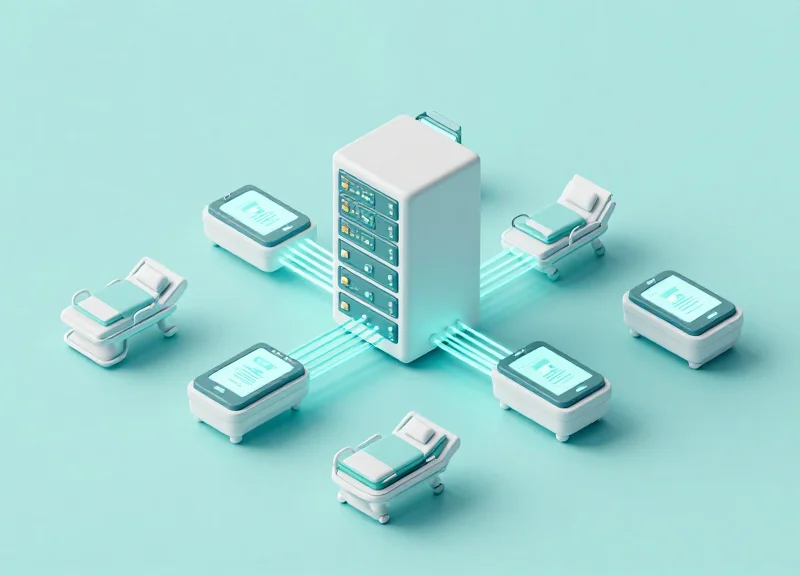
As hospitals accelerate their digital transformation, the shift from manual paper inserts to electronic digital bed cards has become a cornerstone of patient safety. However, the true value of these devices—often powered by high-efficiency ESL technology—lies in their ability to reflect real-time patient data. This technical guide explores the complexities of integrating Hospital Information Systems (HIS) via RESTful APIs, focusing on optimization strategies that ensure millisecond-perfect data synchronization while maintaining system stability and security.
The Strategic Importance of Digital Bed Card Integration
In the modern healthcare environment, the digital bed card acts as the final, most critical link in the patient safety chain. By establishing a real-time, bidirectional sync between the Hospital Information System (HIS) and bedside electronic ink or LCD displays, hospitals can ensure that the 'Single Source of Truth' is visible at the point of care. This integration eliminates the 'information lag' that often leads to adverse events, such as medication errors or dietary mishaps, by replacing manual whiteboards and paper inserts with automated, API-driven updates.
| Feature | Manual Bed Cards | Integrated Digital Bed Cards |
|---|---|---|
| Update Latency | 30 mins to 4 hours (Staff dependent) | Near Real-Time (< 5 seconds) |
| Data Integrity | High risk of transcription errors | 100% data fidelity from HIS |
| Clinical Efficiency | Manual writing/printing required | Zero manual intervention |
| Safety Alerts | Static and easily missed | Dynamic, highlighted (e.g., Fall Risk) |
Strategically, the shift to RESTful API integration for bedside displays is about more than just aesthetics; it is about cognitive load reduction for nursing staff. When a nurse no longer needs to manually update a patient’s isolation status or dietary restrictions on a physical card, they reclaim valuable minutes for direct patient care. Furthermore, digital integration provides a scalable foundation for 'Smart Rooms,' where patient data flows seamlessly across the ecosystem, improving both the clinician's experience and the patient's sense of security.
How does digital bed card integration specifically reduce medical errors?
By pulling data directly from the HIS via API, critical patient alerts such as 'NPO' (Nothing by Mouth), 'Allergies,' and 'Fall Risk' are updated instantly. This prevents scenarios where a staff member relies on outdated information written on a physical board that hasn't been updated since the morning shift change.
What is the primary ROI for hospital administrators?
The ROI is seen in two areas: operational efficiency and risk mitigation. Hospitals save hundreds of nursing hours annually that were previously spent on manual documentation, while simultaneously reducing the financial and legal liabilities associated with preventable inpatient incidents.
Does this integration improve the patient experience?
Yes. Real-time displays provide patients and their families with clear, up-to-date information regarding their care team, daily goals, and discharge plans, which significantly boosts HCAHPS scores and patient confidence.
Expert Insight: Beware the 'Latency Trap'. In 20 years of Silicon Valley health-tech, I’ve seen many systems fail because they rely on batch processing rather than event-driven RESTful hooks. For digital bed cards, a 15-minute sync delay is as dangerous as a 5-hour delay. To truly optimize for safety, your HIS integration must utilize Webhooks or polling intervals under 60 seconds to ensure the display reflects the most recent physician orders immediately.
Anatomy of the Tech Stack: HIS, Middleware, and ESL Gateways
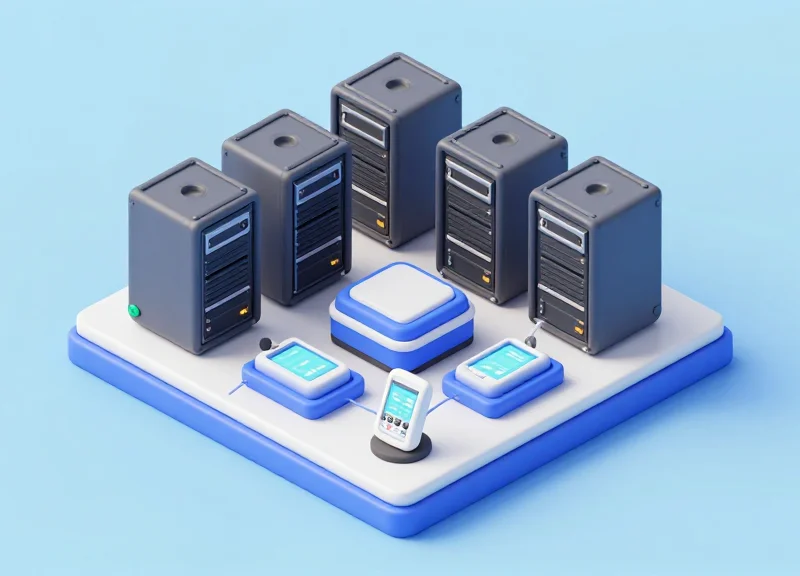
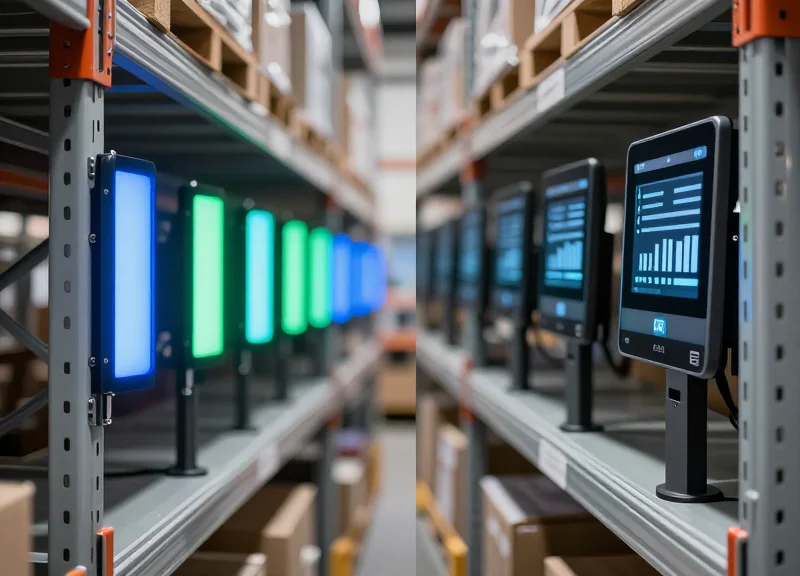
The technical infrastructure for digital bed cards is defined by a tri-layered ecosystem designed to bridge the gap between heavy, often legacy, hospital databases and agile, low-power E-Ink displays. At the core is the Hospital Information System (HIS), which acts as the Single Source of Truth (SSoT) for patient demographics and clinical data. This is connected via RESTful APIs to a Middleware Layer—the 'brain' of the operation—which transforms raw medical data into visual templates. Finally, the ESL Gateway converts these digital images into proprietary wireless signals (such as BLE or Sub-GHz) to update the bedside displays without straining the hospital's primary Wi-Fi network.
| Component | Primary Function | Key Technology | Latency Impact |
|---|---|---|---|
| Hospital Information System (HIS) | Data Source/SSoT | SQL/NoSQL Database, HL7/FHIR | Medium (Database Query) |
| Middleware / API Layer | Orchestration & Transformation | Node.js/Python, RESTful APIs, JSON | Low (Data Processing) |
| ESL Gateway | Wireless Delivery | Sub-GHz, Zigbee, or BLE | High (RF Transmission) |
| Digital Bed Card (ESL) | Visual Display | E-Paper / E-Ink | Low (Local Refresh) |
In a high-performance environment, the Middleware doesn't just pass data; it performs 'Stateful Synchronization.' It maintains a record of what is currently displayed on every screen in the facility. When an update occurs in the HIS, the Middleware calculates the 'Delta'—only triggering a screen refresh if the new data differs from the cached state. This is critical for maximizing the 5-10 year battery life of E-Ink bed cards, as unnecessary screen refreshes are the primary cause of power drain.
{
  "action": "UPDATE_BED_CARD",
  "metadata": {
    "gateway_id": "GW_OR_SEC_04",
    "device_id": "ESL_9921_AF"
  },
  "payload": {
    "patient_name": "John Doe",
    "attending_physician": "Dr. Aristhone",
    "allergies": ["Penicillin", "Latex"],
    "fall_risk": true,
    "last_updated": "2023-10-27T14:20:00Z"
  }
}
Why is a dedicated ESL Gateway necessary instead of using standard Wi-Fi?
Standard Wi-Fi is too power-intensive for coin-cell battery devices. ESL Gateways use low-power protocols (like 2.4GHz proprietary or Sub-GHz) to allow devices to sleep between updates, ensuring multi-year battery life.
Can the Middleware handle image rendering?
Yes. To reduce the processing load on the bed card, the middleware often renders the JSON data into a 1-bit or 3-color bitmap server-side, so the end-device only needs to display the image buffer.
What is the 'Expert Tip' for high-traffic wards?
Implement 'Batch Queuing' in the middleware. Instead of firing 50 individual API calls for a floor-wide shift change, the middleware should aggregate updates into a single gateway burst to minimize RF interference and collision.
Leveraging RESTful APIs for Healthcare Interoperability

RESTful APIs (Representational State Transfer) have emerged as the industry standard for bridging the gap between legacy Hospital Information Systems (HIS) and modern bedside edge devices. Unlike older protocols that require complex state management, REST enables a resource-oriented architecture where patient data—such as allergy alerts, attending physicians, and DNR status—can be accessed and updated via standard HTTP methods. This shift is critical for digital bed card synchronization because it allows for high-frequency updates without the overhead of maintaining persistent connections between the server and thousands of bedside displays.
| Feature | Legacy Protocols (HL7 v2 / SOAP) | Modern RESTful APIs |
|---|---|---|
| Data Format | ER7 (Pipe-delimited) / XML | JSON (Lightweight) |
| State Management | Stateful (Session-dependent) | Stateless (Independent requests) |
| Integration Effort | High (Requires specialized engines) | Low (Standard web technologies) |
| Network Overhead | Heavy (Large headers/envelopes) | Minimal (Optimized for IoT/ESL) |
- Statelessness and Scalability: Each API request contains all information needed to process the update. This allows the middleware to scale horizontally, handling bursts of updates during shift changes across 1,000+ beds without session bottlenecks.
- JSON-Centric Payloads: By using JSON over XML, data payloads are reduced by up to 40%. For battery-powered digital bed cards, smaller payloads translate directly to lower radio-frequency (RF) transmission time and extended battery life.
- Simplified Error Handling: Standardized HTTP status codes (200, 201, 404, 500) provide immediate, programmable feedback to the ESL gateway, ensuring that failed updates are retried automatically without manual intervention.
GET /api/v1/bed-management/unit/ICU-04/status
{
  "bed_id": "ICU-402",
  "patient_name": "John Doe",
  "status": "Restricted Access",
  "precautions": ["Contact", "Airborne"],
  "last_updated": "2023-10-27T14:30:00Z",
  "etag": "w/\"67cf95j9b\""
}
Expert Insight: The Power of Conditional Headers. One often overlooked advantage of REST for healthcare IoT is the use of 'ETags' (Entity Tags). By implementing ETag-based conditional GET requests, the digital bed card gateway only pushes data to the bedside display if the patient record has actually changed in the HIS. This 'delta-only' update strategy is a game-changer for large-scale hospitals, reducing internal Wi-Fi/Zigbee congestion by up to 70% and significantly preserving the hardware lifespan of the bed cards.
Is REST secure enough for HIPAA-regulated patient data?
Yes. When combined with TLS 1.3 encryption and OAuth2/OpenID Connect for authentication, RESTful APIs provide more granular security controls than legacy HL7 streams.
Can REST handle real-time alerts for critical patient changes?
While REST is request-response based, it is typically paired with Webhooks or Long Polling to trigger immediate pushes from the HIS to the bed card gateway when critical data changes.
Does this replace FHIR?
No, it complements it. FHIR (Fast Healthcare Interoperability Resources) is actually built on RESTful principles, making it the perfect standardized framework for these API calls.
Optimizing API Payloads for High-Frequency Updates
Optimizing API payloads for high-frequency updates involves the strategic reduction of data volume per transaction by utilizing delta-coding and selective field synchronization. In a hospital environment where hundreds of digital bed cards may update simultaneously, transmitting the entire patient profile for a simple status change—such as a 'NPO' (Nothing by Mouth) order—is inefficient. Instead, developers must focus on sending only the 'diff' between the current state and the previous state, effectively minimizing bandwidth consumption and reducing the processing load on low-power Electronic Shelf Label (ESL) gateways.
- Implement Selective Field Syncing: Utilize query parameters or GraphQL-style field selection to ensure the HIS middleware only requests and transmits specific attributes required by the display, such as 'patient_name', 'attending_physician', and 'dietary_restrictions'.
- Leverage HTTP PATCH for Delta Updates: Instead of using PUT to replace the entire resource, use the PATCH method to send only the modified fields. This reduces the JSON payload from several kilobytes to just a few dozen bytes.
- Apply GZIP or Brotli Compression: For batch updates involving multiple rooms, enable server-side compression to significantly reduce the transfer size of the JSON body across the internal hospital network.
- Data Normalization and Enumeration: Replace verbose strings with integer-based enumerations (e.g., '1' for 'Stable', '2' for 'Critical') that the bedside display firmware can map back to human-readable text locally.
| Feature | Standard JSON Payload | Optimized Delta Payload | Impact |
|---|---|---|---|
| Payload Size | 2.5 KB - 5.0 KB | 150 B - 300 B | 90% reduction |
| Network Latency | High (congestion risk) | Ultra-Low | Near real-time |
| CPU Overhead | High (Full Parsing) | Minimal (Field Update) | Better battery life |
{ "bed_id": "ICU-402", "update_timestamp": 1715634000, "delta": { "dietary_code": 4, "isolation_status": true }, "checksum": "a1b2c3d4" }Expert Insight: To further optimize battery-constrained bedside displays, implement 'Hash-Based Change Detection' at the middleware layer. Before pushing an update to the ESL gateway, generate a SHA-256 hash of the intended payload and compare it against the last successfully transmitted hash. If the hashes match, the middleware suppresses the transmission entirely. This 'Quiet Sync' strategy ensures that display hardware only wakes its radio for meaningful data changes, potentially extending the battery life of digital bed cards by 18 to 24 months in a high-traffic clinical setting.
How does JSON optimization affect HIS performance?
By reducing the size of each request, you lower the I/O wait times on the HIS database and reduce the memory footprint of the API gateway, allowing for higher concurrency.
Is it better to use Protocol Buffers instead of JSON?
While Protobuf is smaller, JSON is often preferred for HIS integration due to its native support in web services and ease of debugging during the complex implementation phases of hospital workflows.
Push vs. Pull: Implementing Webhooks for Real-Time Sync
In healthcare environments where seconds matter, choosing between a 'Push' (Webhook) and 'Pull' (Polling) architecture determines the reliability of digital bed card updates. While traditional polling requires the middleware to request data at fixed intervals, Webhooks enable an event-driven model where the Hospital Information System (HIS) actively pushes updates the moment a patient's status changes. This transition effectively eliminates unnecessary API traffic and ensures that critical alerts—such as fall risks or updated allergy warnings—are reflected on the digital bed card with sub-second latency.
| Feature | Polling (Pull) | Webhooks (Push) |
|---|---|---|
| Latency | High (Dependent on interval) | Near-instantaneous |
| Server Overhead | High (Constant requests) | Low (Trigger-based only) |
| Resource Efficiency | Wasteful (Empty responses) | Optimal (Data-on-demand) |
| Reliability | Consistent but delayed | High (Requires retry logic) |
Implementing a webhook requires a listener endpoint that can securely receive POST requests from the HIS. For digital bed cards, this payload typically contains the patient ID and the specific attribute that changed (e.g., room assignment or diet restrictions). Below is a conceptual example of a webhook handler structured for high-availability healthcare middleware.
app.post('/api/v1/his-webhook', (req, res) => {
  const { event_type, patient_id, data_hash } = req.body;
  if (verifySignature(req.headers['x-his-signature'])) {
    processUpdate(patient_id, data_hash);
    return res.status(200).send('Event Received');
  }
  return res.status(401).send('Unauthorized');
});
Expert Insight: The 'Thundering Herd' Mitigation. In large-scale hospital deployments, a single event (like a system-wide shift change) can trigger thousands of webhook events simultaneously. To prevent your middleware from being overwhelmed, always implement an asynchronous message queue (like RabbitMQ or Amazon SQS) to buffer incoming webhook payloads. This decoupling ensures that even if your processing layer spikes, no patient data update is lost in transit.
How do you handle missed updates if the network drops?
We recommend a 'Hybrid Sync' strategy. Use webhooks for real-time triggers, but implement a daily 'Integrity Pull' at 3:00 AM to reconcile any discrepancies caused by edge-case network failures.
What is the biggest risk of using webhooks in healthcare?
Payload ordering is the primary risk. If a patient is admitted and then immediately transferred, the 'Transfer' webhook might arrive before the 'Admit' webhook. Implementing a versioning timestamp in the metadata is essential to ensure the most recent data always prevails.
Is polling ever better than webhooks?
Polling is only preferable when integrating with legacy HIS systems that lack event-triggering capabilities or when the data changes so frequently (every few seconds) that the overhead of opening individual HTTP connections for webhooks exceeds that of a single persistent polling stream.
Security First: Encrypting Patient Data in Transit
Securing patient data in transit involves implementing robust encryption and authentication protocols to prevent unauthorized access to Protected Health Information (PHI) as it moves from the Hospital Information System (HIS) to bedside displays. At its core, this necessitates the use of Transport Layer Security (TLS) 1.3 to create a cryptographically secure tunnel, coupled with OAuth2.0 for fine-grained access control. This multi-layered approach ensures that even if data packets are intercepted over complex hospital Wi-Fi networks, the content remains unreadable and the identity of the requesting device is strictly verified. In a Zero-Trust healthcare environment, we treat every internal network segment as potentially hostile, making 'Encryption in Transit' a non-negotiable requirement for HIPAA compliance.
| Security Feature | Implementation Standard | Role in Digital Bed Card Sync |
|---|---|---|
| Transport Encryption | TLS 1.3 | Eliminates obsolete algorithms and reduces handshake latency for faster updates. |
| Identity Management | OAuth2.0 / OpenID Connect | Uses scoped Bearer tokens to ensure the display card only accesses specific patient data. |
| Device Verification | mTLS (Mutual TLS) | Requires both the HIS and the Bed Card Gateway to present valid certificates. |
| Data Integrity | HMAC / SHA-256 | Ensures that the patient data has not been tampered with during transmission. |
- Establish Mutual Trust (mTLS): Before any PHI is exchanged, the API gateway and the bedside hardware perform a mutual handshake using x.509 certificates to verify each other's identity at the socket layer.
- Obtain Scoped Access Tokens: The gateway requests a short-lived access token from the HIS Identity Provider (IdP) with limited 'read-only' scopes specific to the assigned room or ward.
- Encrypt the Payload: The JSON data is encrypted using AES-256-GCM before being transmitted through the TLS 1.3 tunnel, ensuring confidentiality and authenticity.
- Audit and Log: Every API request is logged with a unique Request-ID, capturing the timestamp, source IP, and token fingerprint for compliance auditing.
GET /api/v1/bed-cards/room-402 HTTP/1.1
Host: his-gateway.hospital.org
Authorization: Bearer eyJhbGciOiJSUzI1NiIsInR5cCI6IkpXVCJ9...
X-Device-Signature: 5f3a9e21... (HMAC-SHA256)
Strict-Transport-Security: max-age=63072000; includeSubDomains
Expert Tip: While most developers rely solely on standard HTTPS, a 'Silicon Valley' best practice for high-security IoT is to implement Certificate Pinning. By hardcoding the HIS server's public key fingerprint into the Bed Card Gateway firmware, you effectively neutralize Man-in-the-Middle (MITM) attacks that use fraudulent certificates issued by compromised internal Certificate Authorities.
Why is TLS 1.3 preferred over TLS 1.2 in hospital settings?
TLS 1.3 removes vulnerable legacy ciphers and completes the handshake in a single round-trip, which significantly reduces the latency of real-time patient status updates.
How long should API access tokens last?
In high-stakes clinical environments, we recommend short-lived tokens (5-15 minutes) with a refresh token rotation strategy to minimize the window of opportunity for stolen credentials.
Is mTLS overkill for internal hospital networks?
No. Given the rise in internal lateral-movement attacks, mTLS provides a secondary layer of hardware-backed identity that prevents spoofing by rogue devices plugged into hospital ethernet ports.
Managing ESL Battery Life Through Efficient Refresh Logic
Efficient refresh logic for Electronic Shelf Labels (ESLs) in a clinical setting is the process of using middleware to filter and prioritize data updates from the Hospital Information System (HIS), ensuring that the energy-intensive physical refresh of E-ink displays only occurs when necessary. Because E-ink screens only consume power when changing states, optimizing the 'refresh trigger' is the single most effective way to extend battery life from 2 years to over 5 years.
To achieve this, the integration layer must act as a 'gatekeeper' rather than a simple pass-through. By implementing a delta-comparison engine, the system compares the incoming HIS JSON payload against the current state stored in the local cache. If the changes are purely cosmetic or fall within predefined 'noise' thresholds, the refresh command is suppressed, preserving the device's battery for critical updates.
| Update Type | Power Consumption | Clinical Use Case | Hardware Impact |
|---|---|---|---|
| Full Refresh | High (100%) | Patient Admission/Transfer | Resets all particles; prevents ghosting |
| Partial Refresh | Low (20-30%) | Update specific fields (e.g., Room Temp) | Updates specific pixel blocks only |
| Suppressed Sync | Zero | Minor timestamp or non-visible data changes | No physical movement of E-ink particles |
- Delta-Based Change Detection: The middleware performs a field-level comparison between the previous API response and the current one. Only if specific 'Display-Critical' fields (like Patient Name, Diet, or Risk Level) have changed is a refresh initiated.
- Update Batching and Debouncing: Rapid-fire updates from the HIS—common during shift changes—are debounced in the integration layer, waiting for a 30-second window of stability before sending a single 'final' refresh command to the ESL.
- Intelligent Partial Refreshing: Modern ESLs support partial updates. The logic identifies which coordinates on the screen need updating (e.g., just the 'Attending Physician' area) to minimize the number of pixels being driven.
if (current_data.patient_risk !== cached_data.patient_risk) { triggerFullRefresh(); } else if (current_data.vitals !== cached_data.vitals && Math.abs(current_data.vitals.temp - cached_data.vitals.temp) > 0.5) { triggerPartialRefresh('vitals_sector'); } else { log('Update suppressed: No clinical significance'); }- What is the 'Ghosting' trade-off?: Frequent partial refreshes can cause image ghosting. A best practice is to force one full refresh every 10–20 partial updates to clear the screen particles completely while still saving net energy.
- How do 'Clinical Quiet Hours' help?: Experts recommend a 'Low-Power Mode' during overnight hours where only life-critical updates (like code status) trigger a refresh, while minor updates are queued until morning.
- Expert Tip: Battery-Aware Syncing: Original Insight: Implement a 'dynamic refresh threshold' that tightens as battery voltage drops. When a card hits 15% battery, the middleware can automatically suppress non-critical aesthetic updates to keep the device functional until the next maintenance cycle.
Error Handling and State Reconciliation Strategies
In the mission-critical environment of a hospital, 'eventual consistency' is often insufficient for patient safety; digital bed cards must implement a 'Strict Consistency' model through robust error handling. Effective integration requires a multi-layered approach that distinguishes between transient network glitches and logic-based data conflicts. By treating the Hospital Information System (HIS) as the 'Golden Source' and the Electronic Shelf Label (ESL) as a stateless display, the integration layer can utilize state reconciliation—a process of comparing the intended state with the actual displayed state—to trigger automated corrections during system drift or outages.
- Exponential Backoff with Jitter: When a RESTful API call fails due to 5xx errors or network timeouts, the system should retry using an exponential delay (e.g., 1s, 2s, 4s, 8s). Adding a randomized 'jitter' prevents the 'Thundering Herd' problem, where all failed cards attempt to reconnect simultaneously after a Wi-Fi restoration.
- Idempotent Transaction Keys: Ensure every update request includes a unique 'Idempotency-Key' in the header. This allows the integration layer to safely retry requests without risking duplicate updates or unintended state changes if the original response was lost in transit.
- Dead Letter Queue (DLQ) Management: Requests that fail after maximum retry attempts must be moved to a DLQ. This alerts administrators to persistent issues (e.g., hardware failure or invalid data formats) without blocking the synchronization pipeline for other patients.
| Error Type | Probable Cause | Reconciliation Strategy |
|---|---|---|
| 401 Unauthorized | Expired OAuth2 Token | Automatic token refresh and request replay. |
| 409 Conflict | Stale Data / Version Mismatch | Fetch latest HIS state, resolve diff, and force update. |
| 503 Service Unavailable | API Gateway Overload | Circuit Breaker activation and exponential backoff. |
| Timeout / No Response | ESL Base Station Offline | Queue update for 'Passive Reconciliation' on reconnection. |
{
  "action": "reconcile",
  "metadata": {
    "source_version": "v2.4.1",
    "last_verified": "2023-10-27T14:30:00Z",
    "checksum": "a8f3b2..."
  },
  "payload_hash": "7e92c1..."
}
Unique Expert Insight: To prevent 'Ghost Data'—where a card displays old patient info because it missed a delete command during an outage—implement a 'Heartbeat Checksum.' Every 15 minutes, the ESL controller should broadcast a lightweight hash of the current screen content. If the integration middleware detects a mismatch between the HIS hash and the ESL hash, it triggers a 'Force Refresh.' This hardware-level verification ensures the physical screen is a true reflection of the digital record, even if the initial push notification was dropped.
How does the system handle a total network outage?
During an outage, cards maintain their last known state. Once connectivity is restored, the system performs a bulk reconciliation, comparing the timestamp of each card against the HIS audit log to identify and push only the missed updates.
What happens if a patient is discharged but the card fails to update?
A reconciliation service monitors 'Status: Discharged' events. If the card doesn't confirm the update within a specific TTL (Time To Live), the system escalates an alert to the nursing station dashboard for manual verification.
Scalability Considerations for Multi-Ward Deployments
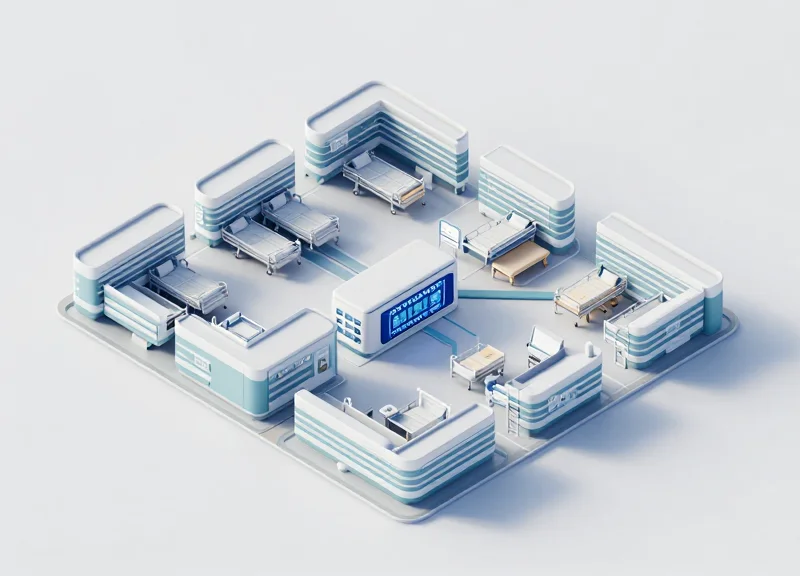
Scalability for multi-ward digital bed card deployments is achieved by architecting a high-availability middleware layer that utilizes horizontal scaling and optimized database indexing to handle thousands of concurrent RESTful API requests. As a hospital scales from a single pilot ward to a campus-wide rollout, the integration layer must transition from a monolithic request-handler to a distributed microservices environment where load balancers distribute traffic based on ward-level demand and data intensity.
| Deployment Tier | Bed Capacity | Middleware Architecture | Data Throughput Strategy |
|---|---|---|---|
| Pilot Phase | 20 - 50 | Single-instance VM | Synchronous API Calls |
| Multi-Ward | 100 - 500 | Clustered Middleware | Asynchronous Task Queues |
| Enterprise/Campus | 1,000+ | Containerized Microservices | Event-Driven Pub/Sub (Redis/Kafka) |
To prevent the 'noisy neighbor' effect—where a high-traffic department like the Emergency Room impacts the update speed of a quieter ward—we recommend implementing Ward-Level Sharding. By logically isolating data traffic at the ward level within your database and middleware, you ensure that high-velocity patient transfers in one area do not bottleneck the RESTful sync performance across the entire facility.
CREATE INDEX idx_bed_card_performance ON patient_sync_logs (ward_id, sync_status, last_updated_at DESC);- Implement Horizontal Auto-Scaling: Utilize container orchestration (like Kubernetes) to automatically spin up additional middleware instances when API latency exceeds a pre-defined threshold (e.g., 200ms).
- Database Query Optimization: Avoid full table scans during synchronization. Use composite indexes on ward_id and last_updated fields to allow the middleware to fetch only modified records since the last sync heartbeat.
- Global State Caching: Deploy an in-memory data store like Redis to cache the 'current state' of all bed cards. This reduces the load on the primary HIS database by allowing the middleware to serve read requests from the cache.
How does load balancing impact real-time updates?
Load balancers ensure that incoming webhook notifications from the HIS are distributed across multiple server nodes, preventing any single CPU from becoming a bottleneck during peak discharge/admission hours.
Why is database indexing critical for bed cards?
Without proper indexing, the middleware must search through every patient record to find updates for a specific card, leading to exponential latency increases as more wards are added to the system.
Can the middleware handle 5,000+ cards simultaneously?
Yes, by moving from a synchronous request-response model to an asynchronous event-driven architecture, the system can queue and process thousands of updates per second without dropping packets.