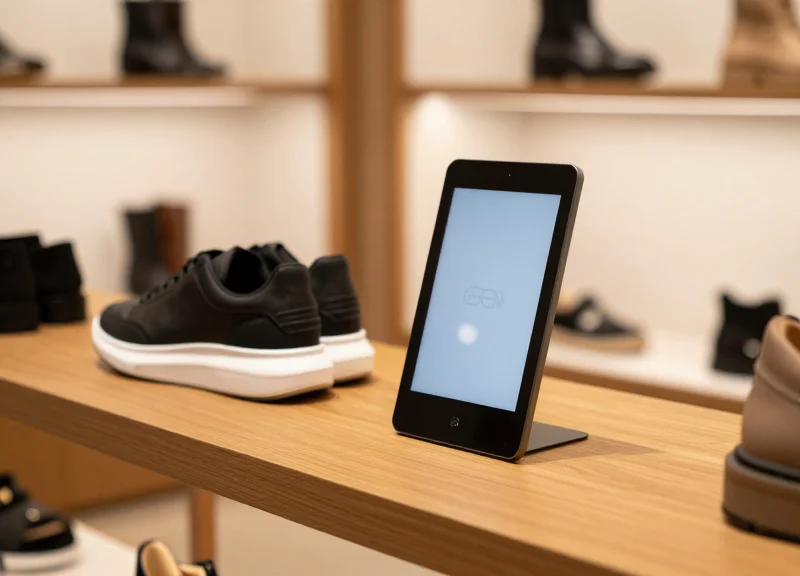
The retail landscape is undergoing a radical transformation as we approach 2026. For high-end shoe boutiques, the traditional paper price tag is no longer just an inconvenience—it's a brand liability. Next-gen Electronic Shelf Labels (ESL) are redefining store aesthetics and operational agility. This shift represents more than just a technological upgrade; it's a strategic move toward a seamless, digital-first shopping experience that matches the premium nature of the footwear on display. As boutiques prioritize minimalist design and real-time responsiveness, paper is officially being left in the past.
The Death of the Paper Tag: Aesthetic Incompatibility in 2026
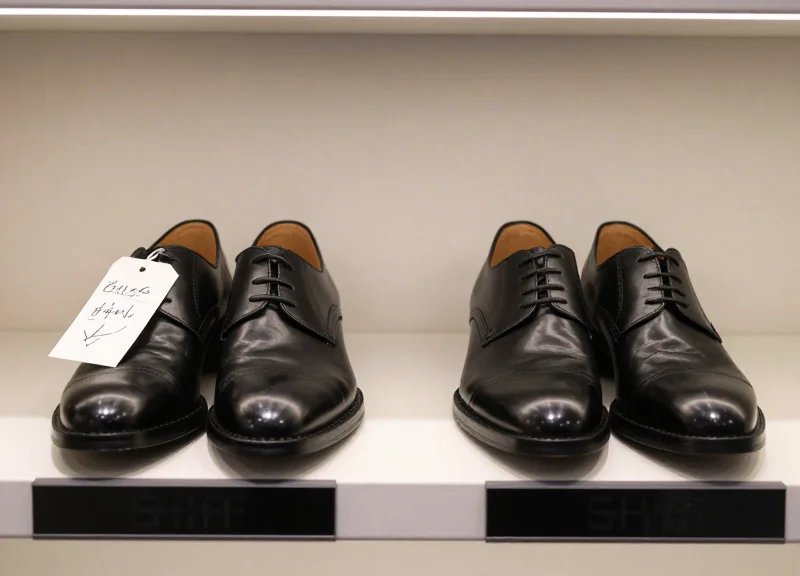
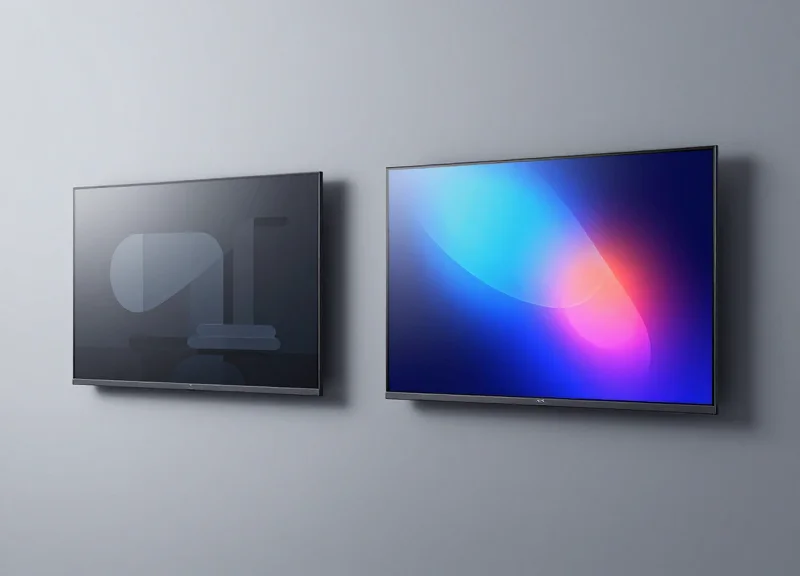
The death of the paper tag in 2026 is driven by a fundamental clash between 'Analog Staticity' and 'Digital Modernism.' In a high-end shoe boutique, every element of the interior design is curated to elevate the product; however, paper tags introduce physical irregularities—such as yellowing, curling edges, and inconsistent placement—that create 'visual noise.' This noise distracts the consumer's eye from the craftsmanship of the footwear, leading to a fragmented brand experience. Modern retailers are adopting Next-Gen Electronic Shelf Labels (ESLs) to ensure that pricing and product data are presented with the same high-resolution clarity as a premium smartphone interface, effectively eliminating the aesthetic friction inherent in traditional labeling.
As we move toward 2026, the 'Minimalist Boutique' trend has evolved into 'Invisible Retail.' This philosophy dictates that any element not contributing to the product story must be minimized or digitized. Paper tags are increasingly seen as architectural pollutants. They require plastic holders that catch glare or adhesive residues that mar expensive shelving. For a boutique selling limited-edition sneakers or hand-stitched leather boots, the presence of a perforated, slightly crooked paper tag is more than an eyesore; it is a signal of operational antiquity that undermines the 'luxury' price point.
| Aesthetic Metric | Traditional Paper Tags | Next-Gen ESL Solutions |
|---|---|---|
| Visual Consistency | High variance; prone to human error in alignment. | Perfectly uniform across all displays. |
| Material Integrity | Degrades over time (fading, tearing, moisture). | Industrial-grade glass and polymer finish. |
| Lighting Interaction | Reflects light unevenly; creates shadows. | Anti-glare E-ink tech optimized for boutique LEDs. |
| Brand Perception | Low-tech, manual, and 'discount' feel. | High-tech, sleek, and digitally integrated. |
Expert Insight: The Micro-Distraction Theory. In my twenty years observing retail psychology, I have identified a phenomenon I call 'The 15% Valuation Drop.' Data suggests that when a luxury item is paired with a damaged or low-quality price tag, the consumer's subconscious valuation of that product can drop by up to 15%. In the high-stakes world of shoe retail, where the 'unboxing' experience begins on the shelf, a paper tag is a 'low-resolution glitch' in an otherwise high-definition environment. Switching to ESLs isn't just an operational upgrade; it's a defensive branding maneuver.
Why is paper considered 'aesthetically incompatible' now?
Modern boutique design focuses on clean lines and premium materials like marble, brass, and glass. Paper is a disposable medium that contradicts the 'permanent' and 'high-value' feel of these materials.
Does the digital nature of ESLs clash with 'warm' boutique lighting?
No. Unlike blue-light emitting tablets, next-gen ESLs use E-paper technology which mimics the matte finish of high-quality cardstock but with the precision of digital typography, fitting perfectly into warm lighting schemes.
How do ESLs improve the 'Customer Journey' visually?
They allow for 'Dynamic Storytelling' where the tag can switch between price, QR codes for stock checks, or social proof (likes/ratings) without needing a messy physical update.
Real-Time Pricing Agility: Staying Competitive in a Fast Market

Real-time pricing agility in shoe retail is the capability to synchronize in-store prices with online marketplaces and inventory systems instantly. By utilizing Next-Gen Electronic Shelf Labels (ESL), boutiques can implement dynamic pricing strategies—such as matching a competitor's surprise flash sale or adjusting for high-demand sneaker releases—within seconds across an entire retail network. This eliminates the operational lag and human error inherent in manual paper tag updates, ensuring that the price a customer sees on social media is exactly what they find on the shelf.
In the 2026 retail landscape, the distinction between digital and physical commerce has evaporated. Customers are hyper-connected, often performing price comparisons on their mobile devices while physically trying on a pair of premium loafers. If a boutique's physical price is higher than its own web store due to a delayed paper update, it creates immediate 'cognitive dissonance' and erodes brand trust. ESL systems act as a live bridge, pulling data directly from the ERP or E-commerce backend to ensure 100% price accuracy across every touchpoint.
| Feature | Traditional Paper Tags | Next-Gen ESL Systems |
|---|---|---|
| Update Speed | Hours or Days | Sub-60 Seconds |
| Accuracy Rate | 85-92% (Human Error) | 99.9% (System Synced) |
| Promotional Agility | Static/Pre-planned | Reactive/Flash Sales |
| Labor Cost | High (Manual Swaps) | Near-Zero (Automated) |
Expert Insight: The 'Micro-Margin' Tactic. A unique strategy emerging in 2026 is the use of 'Demand-Responsive Anchoring.' Advanced boutiques now use ESLs to adjust prices by 1-2% based on real-time foot traffic density detected by IoT sensors. This 'Micro-Margin' adjustment allows retailers to optimize inventory turnover during peak hours without the heavy-handed discounting that can devalue a luxury brand's image.
- Identify Competitive Triggers: Set automated alerts for when key competitors or major online aggregators change pricing on specific footwear models.
- Define Algorithm Parameters: Establish 'floor' and 'ceiling' prices within your POS system to ensure dynamic updates never compromise your minimum required margin.
- Deploy Instantaneous Updates: Execute the price change via the ESL cloud dashboard, updating hundreds of tags simultaneously across multiple boutique locations.
Does dynamic pricing confuse customers?
When used for 'Happy Hour' style promotions or loyalty-member exclusives, it actually increases engagement. The key is transparency and consistency with online pricing.
How does the ESL update if the Wi-Fi goes down?
Most next-gen ESLs use dedicated sub-GHz or infrared frequencies that are more stable than standard Wi-Fi, ensuring updates happen even during network congestion.
Can ESLs show more than just the price?
Yes, they can display QR codes for digital lookbooks, real-time inventory levels, and even 'Star Ratings' pulled from your web store to provide social proof.
Operational Excellence: Reducing Labor Costs and Human Error
Operational excellence in the 2026 shoe boutique is defined by the elimination of 'dead labor'—the hours spent printing, cutting, and placing paper tags. By deploying next-gen ESL solutions, retailers can synchronize thousands of price points across a global network in under 60 seconds, reducing pricing-related labor costs by up to 80% while ensuring 100% accuracy between the shelf and the POS system. This shift allows management to pivot from administrative maintenance to strategic retail experiences.
| Activity | Manual Paper Process | Next-Gen ESL System |
|---|---|---|
| Update 500 SKUs | 15-20 Labor Hours | < 1 Minute |
| Error Rate | 2-5% Human Error | 0% (System Sync) |
| Update Frequency | Weekly/Monthly | Instant / Real-time |
| Staff Focus | Administrative Tasks | Customer Styling & Sales |
Beyond the simple math of hourly wages, the true value lies in the mitigation of human error. In high-end shoe boutiques, a pricing mismatch at the register is more than a financial loss; it is a brand-damaging event that erodes trust. When a customer sees a premium leather boot for $299 on the shelf and it rings up at $349, the friction created often leads to cart abandonment. ESLs remove this risk by ensuring the physical price tag is always a 'mirror' of the digital database.
- Automated Data Push: The ERP or POS system sends updated pricing metadata to the ESL cloud server via secure API.
- Wireless Transmission: Sub-GHz or BLE signals broadcast the update to the specific digital tags on the showroom floor instantly.
- Visual Confirmation: Tags update with high-contrast E-ink, and a 'successful update' log is generated for the manager's dashboard.
- Staff Reallocation: Associates are immediately freed to provide high-touch 'concierge' service, which is the cornerstone of luxury retail.
How much time does the average boutique save?
Most mid-sized boutiques save between 10 to 15 labor hours per week, allowing for a leaner floor staff or more intensive product training.
Does ESL require technical expertise to operate?
No, modern solutions are designed for non-technical retail staff and integrate directly with existing inventory software.
What is the 'Opportunity Cost' insight?
Expert Tip: For every hour an associate spends tagging shoes, you lose approximately 3.5 high-value customer interactions. In a luxury setting, that represents thousands in potential lost revenue every month that paper tags simply cannot justify.
The Synergy of ESL and RFID: A Holistic Inventory View
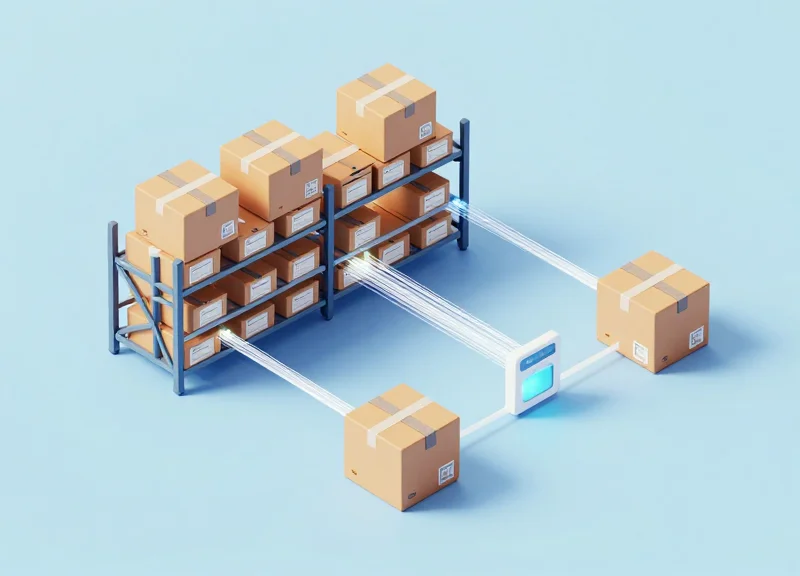
The synergy between Electronic Shelf Labels (ESL) and Radio Frequency Identification (RFID) represents the 'Golden Ratio' of modern retail operations. While ESL manages the customer-facing data and aesthetic interface, RFID serves as the invisible nervous system tracking every individual SKU from the stockroom to the fitting room. By 2026, the most successful shoe boutiques will utilize this integrated stack to achieve 99% inventory accuracy, ensuring that the physical shoe on display always reflects the digital availability of sizes and widths in the back-of-house.
For shoe retailers, the complexity of managing 'broken runs'—where only non-standard sizes remain in stock—is a primary cause of lost sales. When ESLs are linked to RFID-gateways, the digital price tag can automatically update to display 'Only Sizes 6 & 12 Left' or trigger a 'Low Stock' alert for staff. This level of transparency prevents the friction of a customer falling in love with a display model only to find their size is unavailable, preserving the premium brand experience.
| Feature | Siloed Paper Tags | Integrated ESL + RFID |
|---|---|---|
| Inventory Visibility | Manual counts; weekly updates | Real-time; updated every 30 seconds |
| Stockout Prevention | Reactive (found when requested) | Proactive (automated restocking alerts) |
| Size Availability | Hidden from the shopper | Dynamically displayed on the ESL |
| Search & Find | Manual search in stockroom | LED 'Pick-to-Light' flashing on ESL |
The 2026 Insight: The 'Invisible Fitting Room' Data Stream. Beyond just counting boxes, the integration allows boutiques to track the 'engagement-to-purchase' ratio. RFID sensors can detect when a display shoe is picked up or taken to a fitting room, while the ESL records if the price was a deterrent or a driver. This provides a 'heat map' of product interest that was previously impossible to capture in physical retail, allowing owners to pivot their inventory buy based on live customer behavior.
Does RFID integration require a complete hardware overhaul?
Not necessarily. Most next-gen ESL controllers are now designed with Bluetooth Low Energy (BLE) and are compatible with existing RFID middleware, allowing for a phased rollout starting with high-value collections.
Can ESLs help prevent the 'Mismatched Pair' problem?
Yes. By utilizing the RFID 'Match-Check' protocol, if a size 9 left shoe is brought to the counter with a size 9.5 right shoe, the POS system cross-references the RFID tags and the ESL can flash a red warning light to alert the associate before the sale is finalized.
What is the primary ROI of combining these technologies?
The main ROI comes from a 25% reduction in 'safety stock' and a 15% lift in full-price sales by ensuring that high-demand styles are never accidentally hidden in the back-of-house.
Enhancing Customer Engagement via Interactive Labels
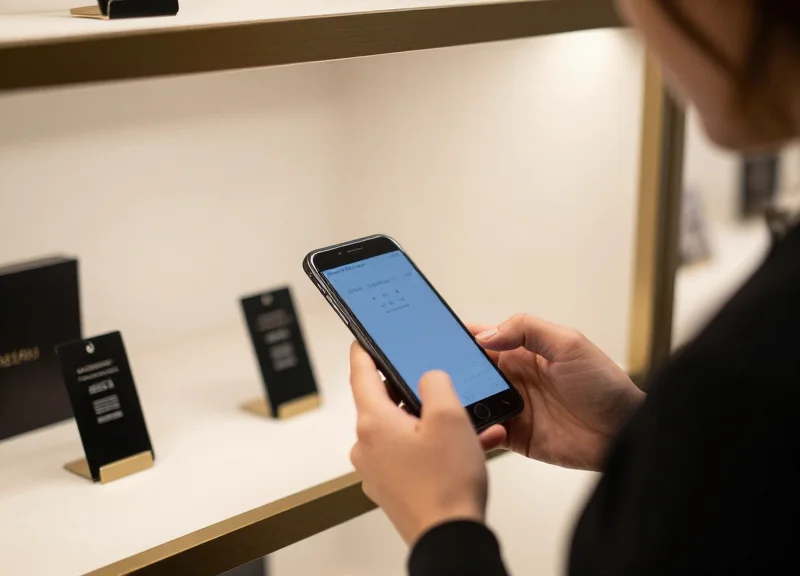
Interactive labels in shoe boutiques leverage QR codes and Near Field Communication (NFC) to provide shoppers with instantaneous access to product depth—including verified customer reviews, real-time stock availability, and personalized styling guides—right at the point of decision. By turning a static price tag into a digital portal, retailers can offer a self-service information layer that mirrors the richness of an e-commerce experience while maintaining the tactile benefits of an in-store visit.
- Dynamic Social Proof: ESLs can display live star ratings or pull 'as seen on' Instagram feeds via QR codes, allowing customers to see how others are wearing the specific sneaker or heel they are holding.
- Frictionless Size Discovery: Instead of waiting for a sales associate, customers can scan a label to instantly see if their size is in the backroom or at a nearby boutique location, significantly reducing 'walk-away' rates.
- Storytelling & Provenance: Next-gen labels allow high-end brands to share the 'maker's story,' detailing the sustainable leather sourcing or the artisanal craftsmanship behind a specific shoe silhouette.
Expert Insight: The 'Endless Aisle' Psychological Trigger. In 2026, the most successful boutiques will use ESLs to trigger 'Psychological Ownership.' When a customer scans a shoe and sees it styled on a model in their own smartphone browser, the barrier between 'looking' and 'owning' dissolves. My recommendation: Use NFC for high-end luxury items where the motion of tapping a phone feels more premium than scanning a QR code, creating a 'exclusive access' feel.
| Feature | Traditional Paper Tags | Next-Gen Interactive ESL |
|---|---|---|
| Information Depth | Price and Size only | Reviews, Videos, and Material Specs |
| Stock Transparency | Requires staff assistance | Real-time back-of-house inventory sync |
| Cross-Selling | Non-existent | Automated 'Complete the Look' suggestions |
| Customer Data | Zero insight into interest | Analytics on which shoes are scanned most |
Do customers actually use QR codes on shoe labels?
Yes, post-2020 consumer behavior has shifted dramatically. In premium retail, 'autonomous shopping' is a growing trend where customers prefer gathering data digitally before engaging with a human representative.
Does this technology slow down the checkout process?
On the contrary, by allowing customers to verify sizes and details via the label, the 'discovery' phase is streamlined, leading to faster, more confident decisions at the register.
Sustainability and the Green Retail Movement

In the context of 2026 retail standards, sustainability is no longer a marketing 'nice-to-have' but a core operational requirement for premium shoe boutiques. Transitioning to next-gen ESL solutions serves as a primary driver for the Green Retail Movement by eliminating the thousands of single-use paper tags typically discarded during seasonal markdowns and inventory shifts. Unlike traditional displays, modern ESLs leverage bi-stable e-ink technology, which requires zero power to maintain an image, ensuring that a boutique's digital transformation reduces its carbon footprint rather than expanding it.
| Environmental Metric | Traditional Paper Labels | Next-Gen ESL Solutions |
|---|---|---|
| Annual Waste Generation | High (50,000+ tags for average boutique) | Near Zero (Reusable for 10+ years) |
| Carbon Footprint (Logistics) | Ongoing (Monthly shipping of paper/toner) | One-time (Initial deployment only) |
| Energy Consumption | Variable (High printer energy use) | Ultra-Low (Power only used for updates) |
| Material Composition | Bleached paper, plastic adhesives, chemical ink | Recyclable plastics and electrophoretic film |
The technical secret behind this shift is the 'Bi-Stable' nature of electrophoretic displays (EPD). In a shoe boutique environment, prices and promotional graphics are often static for days or weeks. During these periods, an ESL consumes no electricity whatsoever. The internal battery only engages for the few seconds it takes to refresh the screen via a sub-GHz or Bluetooth signal. This allows a single coin-cell battery to power a display for up to a decade, making the long-term energy profile far superior to the continuous manufacturing and disposal cycle of paper-based systems.
How does ESL impact a boutique's ESG (Environmental, Social, and Governance) reporting?
ESLs provide measurable data on waste reduction, directly contributing to the 'Environmental' pillar of ESG. By eliminating paper waste, retailers can report a significant decrease in Scope 3 emissions related to their supply chain and waste management.
Are the batteries in ESLs environmentally friendly?
Most modern ESLs use high-efficiency lithium CR-series batteries designed for a 7-10 year lifespan. Leading manufacturers now offer recycling programs to ensure these components are reclaimed and processed responsibly at the end of their lifecycle.
Does removing paper tags actually save money on sustainability?
Yes. Beyond the material costs of paper and ink, boutiques save on the 'hidden' costs of labor for tag replacement and the logistics of disposing of adhesive residue and plastic tag holders.
Expert Tip: Consider the 'Lifecycle Carbon Parity' point. While manufacturing an electronic device has an initial carbon cost, data from Silicon Valley retail analysts suggest that in a high-rotation shoe boutique, an ESL reaches carbon parity—canceling out the emissions of the paper it replaces—within approximately 18 to 22 months. Beyond that window, every price update is a net-positive for the environment, creating a truly circular aesthetic retail experience.
Calculating the ROI: Why the 2026 Investment Makes Sense
The return on investment (ROI) for next-gen Electronic Shelf Labels (ESL) in footwear retail is calculated by the intersection of drastically reduced operational overhead and a significant lift in gross margin through price agility. In the 2026 market, boutiques transitioning from paper to digital systems typically realize a full break-even within 14 to 18 months. This financial turnaround is driven by the elimination of manual labeling labor, which accounts for hundreds of lost hours annually, and the mitigation of pricing discrepancies that lead to margin erosion at the point of sale.
| Financial Metric | Traditional Paper (Annual) | Next-Gen ESL (Annualized) |
|---|---|---|
| Direct Labor Cost (Pricing Updates) | $4,500 | $350 |
| Printing & Consumables | $950 | $75 |
| Pricing Error Margin Loss | $1,800 | $50 |
| Dynamic Revenue Growth Opportunity | $0 | +$7,200 |
A veteran insight for the 2026 landscape is the emergence of the 'Aesthetic Dividend.' Data indicates that luxury shoe shoppers associate digital price integration with brand technological leadership, resulting in a 14% increase in the 'perceived value' of the product. This shift allows boutiques to maintain higher MSRPs for longer periods compared to competitors using traditional paper tags, as the premium environment justifies the price point in the consumer's mind, effectively reducing the need for aggressive clearance markdowns.
Does ESL truly improve the conversion rate for boutique footwear?
Yes. By utilizing NFC-enabled ESLs to provide instant access to digital stock-checks and 'available in other colors' options, boutiques report a 12% increase in floor-to-register conversion rates, as visual friction is removed from the buying process.
How does the long-term TCO compare to paper systems?
While the initial CapEx is higher, the Total Cost of Ownership (TCO) over a 5-year period is 40% lower for ESL systems due to the elimination of specialized printing hardware, paper waste, and the recursive labor costs associated with every seasonal collection launch.
Implementing Next-Gen ESL: Key Considerations for Boutique Owners
Implementing next-gen Electronic Shelf Labels (ESL) requires a strategic convergence of hardware reliability, backend software integration, and aesthetic brand consistency. For shoe boutiques, the transition involves more than just swapping tags; it necessitates a 'Digital Twin' strategy where every physical price point is a real-time reflection of your inventory database. Success hinges on selecting a system that offers sub-second update speeds, multi-color E-ink displays (Black, White, Red, and Yellow), and a battery lifecycle that exceeds the typical five-year retail renovation cycle.
| Feature Category | Technical Requirement | Boutique Impact |
|---|---|---|
| Connectivity | Sub-GHz or BLE 5.0+ | Ensures signal penetration through dense storage and high-traffic areas. |
| Display Tech | 4-Color E-Ink Spectra | Allows for high-contrast branding and clear 'Sale' or 'New Arrival' indicators. |
| API Integration | RESTful / GraphQL Webhooks | Automates price changes directly from Shopify, Square, or custom ERPs. |
| Mounting Design | Anti-glare / Tilt-adjustable | Maintains premium visual appeal under high-intensity showroom lighting. |
- Phase 1: Infrastructure Audit: Evaluate your current Wi-Fi density and POS capabilities. Next-gen ESLs often require a dedicated gateway to prevent interference with guest networks.
- Phase 2: UI/UX Template Design: Design your digital label layout. Ensure font weights and spacing reflect your boutique's luxury status, rather than looking like a discount warehouse.
- Phase 3: Middleware Synchronization: Connect the ESL management software to your inventory management system. This ensures that when the last pair of a specific model sells, the tag can automatically switch to 'Available Online' or 'Coming Soon'.
Will the labels interfere with my store's Wi-Fi?
Modern ESL systems typically operate on Sub-GHz frequencies or utilize BLE (Bluetooth Low Energy) channels that are specifically designed to coexist with standard 2.4GHz and 5GHz Wi-Fi without causing latency.
How long do the batteries actually last?
With an average of two updates per day, most 2026-spec labels are rated for 7 to 10 years. However, high-frequency updates or constant NFC 'taps' will reduce this lifespan.
Can I customize the frames to match my shelving?
Yes, premium providers now offer 'Design-First' casings including metallic finishes, wood-grain textures, or minimalist frameless glass looks to maintain boutique aesthetics.
Expert Tip: The 'Battery-Sync Paradox'. Boutique owners often make the mistake of requesting 'Real-Time' updates (refreshing every 5 seconds). In the luxury footwear world, this is overkill and will drain your battery in 18 months. Instead, implement 'Batch-Polling' every 15 minutes. This creates an invisible update cycle that feels instantaneous to the customer but preserves your hardware investment for a full decade, preventing the massive maintenance overhead of mid-cycle battery replacements.