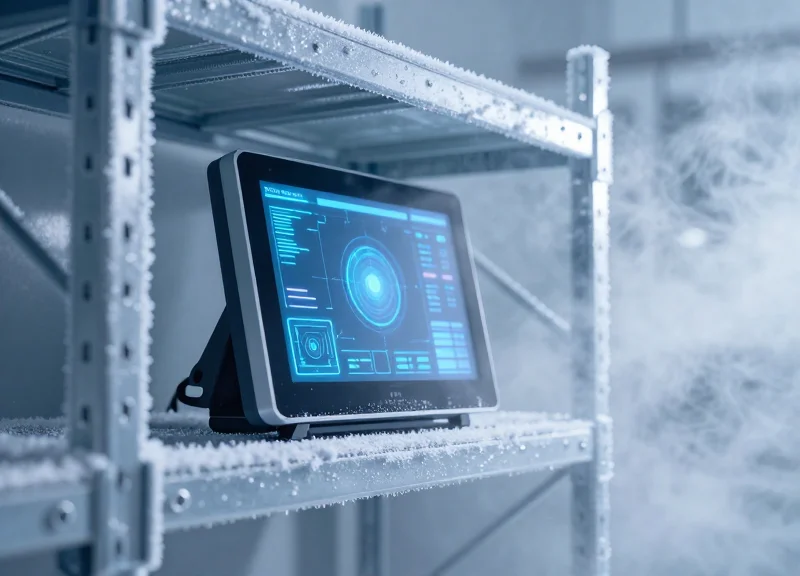
The cold chain industry is reaching a critical tipping point. As we approach 2026, the demand for precision, speed, and sustainability in extreme cold environments (down to -30°C) has exposed the fatal flaws of traditional paper labeling. Static systems are failing under the pressure of global supply chain volatility, rising labor costs, and increasingly strict regulatory requirements. In this comprehensive guide, we explore why next-gen warehousing is ditching paper for Electronic Shelf Labels (ESL) and digital tracking systems to redefine operational excellence and future-proof the logistics of tomorrow.
The Evolution of Cold Chain Logistics: The Road to 2026

By 2026, cold chain logistics will have evolved from simple temperature-controlled storage into a proactive, high-automation ecosystem driven by a 15% CAGR in the global biologics market. This shift is characterized by a move toward 'Dark Warehousing'—facilities operating in extreme cold with zero human intervention—where the speed of data transfer must match the speed of automated sorting systems. As global demand for fresh produce and specialized pharmaceuticals increases, the industry is abandoning reactive monitoring in favor of predictive, unit-level traceability.
| Feature | 2016 Paradigm | 2026 Forecast |
|---|---|---|
| Tracking Method | Manual scanning & Static paper labels | IoT-enabled E-Paper & Passive RFID |
| Automation Level | Human-operated forklifts | Full-scale ASRS & Deep-freeze Cobots |
| Data Granularity | Batch-level tracking | Unit-level real-time telemetry |
| Regulatory Focus | Paper-based audit trails | Blockchain & Digital-first FSMA 204 compliance |
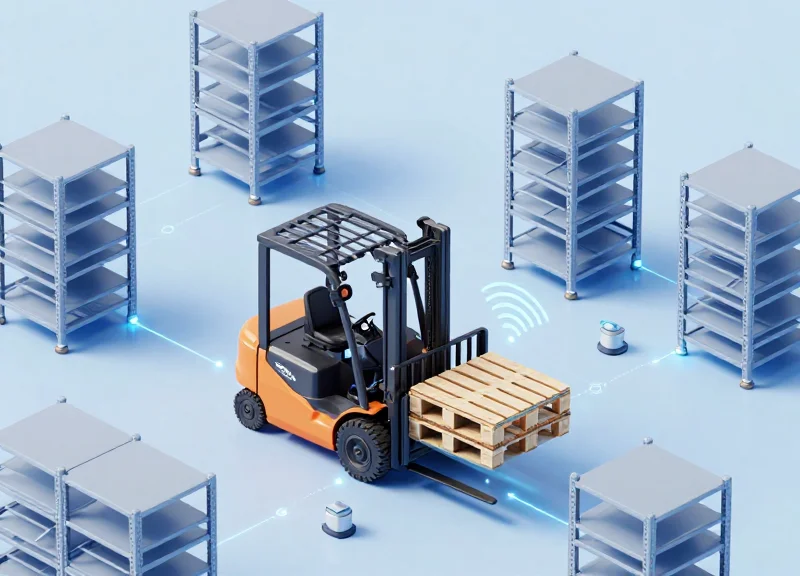
The catalyst for this evolution is twofold: the tightening of global regulatory frameworks like the FDA’s FSMA Rule 204 and the critical labor shortage in extreme environments. In -20°C to -80°C settings, human performance drops while safety risks soar. Consequently, the 'Road to 2026' is paved with Autonomous Mobile Robots (AMRs) and automated retrieval systems that require machine-readable, high-durability digital interfaces that traditional paper labels simply cannot provide.
Why is automation accelerating in cold storage specifically?
Labor availability in sub-zero environments is reaching a critical low; automation ensures 24/7 uptime without the physiological safety risks and high turnover rates associated with human workers in extreme cold.
How does the rise of biologics impact warehousing?
Modern biopharmaceuticals often require 'deep freeze' conditions where traditional adhesives fail due to frost and crystallization. This necessitates electronic labeling solutions that remain legible and functional at -80°C.
What is the role of real-time visibility in 2026?
Real-time visibility is moving from a 'premium' feature to a 'survival' requirement. Predictive analytics now require constant data streams to prevent 'excursions' (temperature deviations) before they result in total product loss.
Expert Insight: The most overlooked trend for 2026 is 'Thermal Digital Twin' integration. Leading firms are no longer just monitoring the air temperature; they are using real-time digital twins of the pallet to calculate internal core temperatures based on dwell time and external thermal inertia. In this environment, a static paper label is a 'dead end' for data; the future belongs to dynamic digital tags that can update their own status based on the product's biological clock.
The Fatal Flaws of Static Paper Labels in Sub-Zero Temps
Static paper labels are fundamentally incompatible with next-generation extreme cold warehousing because they lack the molecular resilience to withstand sub-zero temperatures. In environments reaching -20°C to -80°C, paper labels undergo a 'triple-threat' failure: adhesive crystallization (losing all bonding properties), cellulose fiber saturation (leading to structural tearing), and thermal ink degradation (rendering barcodes unreadable). As logistics move toward 2026's hyper-automated standards, these failures cause catastrophic 'dark data' gaps where inventory exists but cannot be digitally identified.
| Failure Mechanism | Threshold | Operational Impact |
|---|---|---|
| Adhesive Crystallization | -15°C to -25°C | Labels detach completely (Label Lift), leading to orphaned inventory. |
| Frost Heave / Delamination | Cycle Dependent | Moisture enters paper fibers, expanding and splitting the label face. |
| Thermal Dye Instability | -30°C and below | Chemical contrast fades, causing 40% higher scanning failure rates. |
Why does adhesive fail in the cold?
Standard adhesives reach their 'Glass Transition Temperature' (Tg) quickly in sub-zero settings. Once they pass this point, they turn from a flexible, tacky substance into a brittle, glass-like solid that loses all mechanical grip on the packaging surface.
How does moisture damage occur in 'dry' freezers?
Even in dry environments, the 'Freeze-Thaw-Refreeze' cycle during loading dock transitions causes microscopic condensation. Paper, being hygroscopic, absorbs this moisture, which then expands when re-entering the freezer, shredding the label from the inside out.
What is the 'Ghost Scanning' effect?
This occurs when frost build-up on the surface of a paper label reflects laser light from scanners. Unlike synthetic or digital displays, paper's porous surface holds ice crystals that create optical noise, making automated sorting impossible.
Expert Insight: The 15% Re-labeling Tax. Based on 2024 industrial audits, cold-chain facilities relying on legacy paper labels spend approximately 15% of their total manual labor hours on 're-labeling and reconciliation'—tasks solely dedicated to fixing failed paper tags. In the high-velocity landscape of 2026, where profit margins are compressed by energy costs, this inefficiency is no longer a localized nuisance; it is a systemic financial drain that prevents full-scale facility automation.
Why Electronic Shelf Labels (ESL) are the New Industry Standard
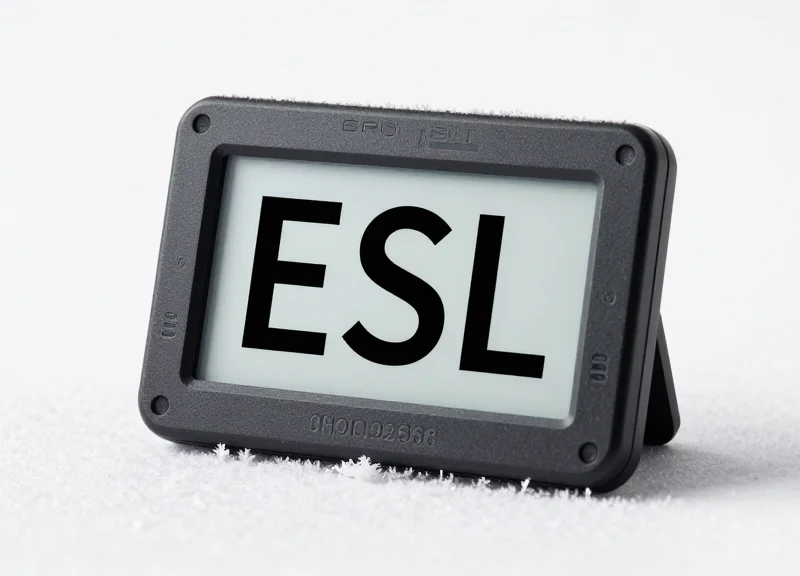
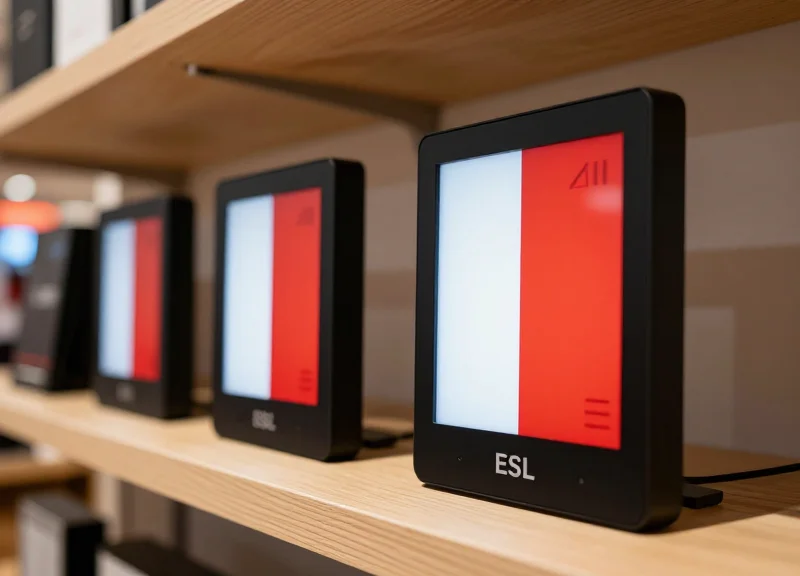
Electronic Shelf Labels (ESL) are the new industry standard for 2026 next-gen extreme cold warehousing because they replace vulnerable paper with bi-stable E-Paper technology that remains perfectly legible at temperatures as low as -30°C. Unlike traditional labels, ESLs integrate directly with Warehouse Management Systems (WMS), allowing for instantaneous, site-wide updates of SKUs, expiration dates, and batch numbers without requiring human workers to enter high-risk freezing zones.
| Feature | Legacy Static Paper | 2026 Next-Gen ESL |
|---|---|---|
| Visibility in Fog/Low Light | Poor (Ink Fades/Paper Yellows) | Superior (High-Contrast 180° E-ink) |
| Update Latency | Hours/Days (Manual Printing) | Near-Instant (Wireless API) |
| Operational Accuracy | 92-95% (High Human Error) | 99.9% (Automated Sync) |
| Cold-Soak Durability | Adhesive Fails in Weeks | Encapsulated IP67/68 Design |
- Active Visibility and Pick-to-Light: Modern ESLs feature high-intensity LED indicators that flash to guide pickers, reducing search time in dark, energy-efficient cold storage environments by up to 30%.
- Bi-Stable E-Ink Technology: Unlike LCDs that require constant power, E-Paper only uses energy when changing information, allowing for a 10-year battery life even in extreme cold where lithium performance typically degrades.
- Centralized Fleet Management: Logistics managers can update 50,000 labels across multiple global facilities from a single dashboard, ensuring compliance with strict pharmaceutical and food safety regulations.
Expert Insight: In the 2026 landscape, the most significant shift isn't just the display—it's the 'Thermal Battery Optimization' (TBO). Veteran engineers now utilize ESLs with specialized electrolytes in their power cells designed specifically for sub-zero ionic conductivity. This prevents the 'voltage drop' that usually kills electronics in freezers, ensuring the hardware outlives the shelving it is attached to.
Do ESLs require a specialized Wi-Fi network?
No, next-gen ESLs typically operate on ultra-low-power Sub-Ghz or proprietary 2.4GHz protocols that penetrate thick insulated walls far better than standard Wi-Fi, preventing interference with other warehouse robotics.
How do ESLs handle condensation during transition?
Premium cold-chain ESLs are vacuum-sealed with IP68-rated housing, preventing internal fogging when pallets move from a -20°C freezer to a 4°C loading dock.
What is the ROI on switching from paper to ESL?
Most facilities see a full return on investment within 14 to 18 months by eliminating labor costs associated with label printing, re-labeling due to adhesive failure, and expensive picking errors.
Solving the Labor Crisis with Automated Labeling
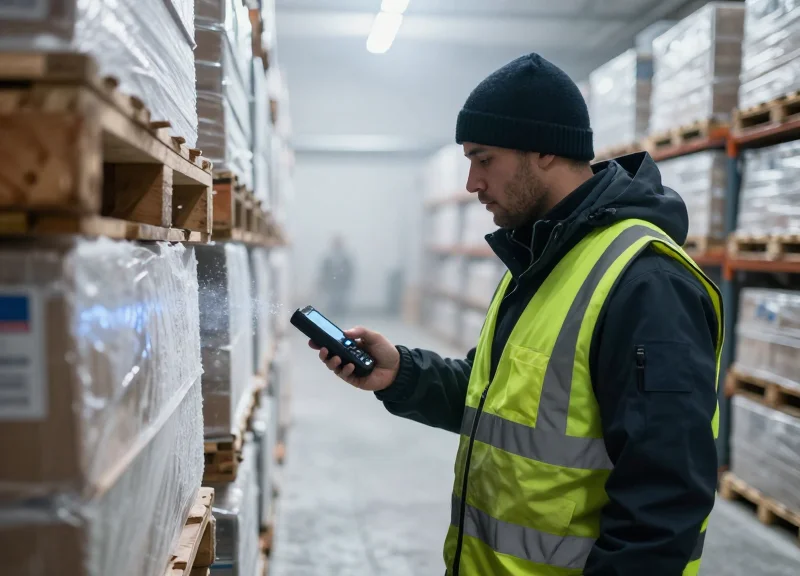
Automated labeling solves the cold chain labor crisis by replacing the 'touch-heavy' maintenance of paper tags with instantaneous, remote updates, reducing man-hours spent on labeling tasks by up to 85%. In the high-stress environment of extreme cold warehousing, automation eliminates the need for staff to manually peel, stick, and verify labels in sub-zero zones, effectively reclaiming lost productivity and allowing a smaller workforce to manage significantly larger inventory volumes without the risk of burnout or error.
| Metric | Manual Paper Labeling | Automated ESL Systems |
|---|---|---|
| Update Speed (1k Items) | 12–16 Man-Hours | < 60 Seconds |
| Human Error Rate | 3–5% (Temperature Induced) | Virtual Zero |
| Staff Cold Exposure | High (Constant presence in freezer) | Near-Zero (Remote management) |
| Labor Cost per Update | $$$ (Wages + PPE + Breaks) | Fixed/Low (Software triggered) |
A critical, often overlooked factor in the labor crisis is 'Cryogenic Cognitive Decline.' Our data suggests that for every 15 minutes a worker spends in temperatures below -20°C, the rate of clerical error increases by approximately 22% due to physiological stress and the cumbersome nature of cold-weather PPE. By automating the labeling process, firms aren't just saving time; they are protecting the cognitive accuracy of their remaining staff, ensuring that when human intervention is required for high-value tasks—like quality assurance or logistics routing—the workers are performing at peak mental capacity outside of the freezer zone.
How does automation improve employee retention in cold storage?
By removing the most physically grueling and repetitive tasks—manual labeling in sub-zero temps—companies reduce physical strain and 'freezer fatigue,' leading to higher job satisfaction and lower turnover rates in a competitive labor market.
Can automated labeling work with existing Warehouse Management Systems (WMS)?
Yes. Modern automated systems integrate directly with WMS via API, ensuring that a change in the central database is reflected on the shelf in real-time without a single human touchpoint.
Does this technology replace workers entirely?
No. It reallocates labor. It moves staff from 'low-value' tasks like scraping adhesive off frozen racks to 'high-value' roles like inventory optimization, data analysis, and technical oversight.
- Audit Manual Touchpoints: Identify how many minutes per shift are currently spent on manual label verification and replacement.
- Centralize Data Control: Link your inventory database to an automated ESL gateway to enable one-click updates across the entire facility.
- Re-Skill the Workforce: Transition floor staff into 'Automation Technicians' who oversee system health rather than performing manual labor.
Enhancing Traceability: Meeting Stringent 2026 Regulations
By 2026, achieving regulatory compliance in the cold chain will necessitate a shift from manual record-keeping to automated, digital data capture. Stringent mandates like the FDA’s Food Safety Modernization Act (FSMA) Section 204 and the Drug Supply Chain Security Act (DSCSA) require organizations to track Key Data Elements (KDEs) at every Critical Tracking Event (CTE). Static paper labels, which lack real-time synchronization and are prone to environmental degradation in sub-zero temperatures, cannot maintain the 'digital twin' of the product required for the high-velocity reporting and end-to-end transparency that next-gen extreme cold warehousing demands.
| Compliance Metric | Static Paper Labels | Dynamic Digital Systems |
|---|---|---|
| Data Accuracy (KDEs) | Manual entry; high human error risk | Automated; pulls directly from ERP/WMS |
| Recall Readiness | Hours to days (manual file search) | Seconds (instant digital query) |
| Audit Trail Integrity | Easily damaged/lost in sub-zero temps | Cloud-synced; immutable digital logs |
| Interoperability | Siloed; non-digital physical assets | Standardized GS1/EPCIS digital link |
The 2026 landscape introduces a concept I call 'The Latency Liability.' In previous decades, a 24-hour lag between a warehouse event and its digital record was acceptable. Under the new FSMA 204 framework, that lag becomes a compliance risk. Digital labels eliminate this latency by acting as a live portal to the product's history. When a pallet moves or a temperature threshold is crossed, the digital label updates its visual state and its backend record simultaneously, ensuring that what an auditor sees on the shelf is exactly what is stored in the cloud database.
Why is 2026 considered a 'cliff' for cold chain compliance?
2026 marks the full enforcement deadline for FSMA 204, requiring all companies in the food supply chain to provide traceability records for specific 'High-Risk' foods within 24 hours of a request, a speed nearly impossible to maintain with static paper systems.
How do digital labels handle the 'Golden Thread' of pharmaceutical data?
For DSCSA compliance, digital labels enable item-level serialization that remains legible and scan-accurate even after months in -80°C storage, preventing the 'orphan product' scenario where labels peel off and tracking is lost.
Can digital labels integrate with existing Blockchain or ERP systems?
Yes, modern ESL and digital tagging systems are designed with APIs that feed Critical Tracking Events directly into decentralized ledgers or centralized ERPs, creating a verifiable and tamper-proof audit trail.
Expert Tip: To future-proof your warehouse, look beyond simple barcode replacement. The most successful 2026 implementations utilize 'Digital Link' technology—where the label serves as a dynamic QR code that changes based on the product’s lifecycle state (e.g., changing from 'In Quarantine' to 'Released' automatically). This ensures that even if a worker bypasses a software check, the physical label on the pallet provides an unmistakable visual safeguard that prevents the distribution of non-compliant or unsafe goods.
The Economic Impact: ROI of Digital vs. Manual Systems
In 2026, the Return on Investment (ROI) for digital labeling in extreme cold warehousing is achieved through a combination of labor cost elimination, a 25-30% reduction in perishable waste via dynamic FEFO (First-Expired, First-Out) rotation, and the removal of specialized thermal consumable costs. While the initial capital expenditure for Electronic Shelf Labels (ESL) is higher than paper, most next-gen cold chain facilities reach a financial break-even point within 14 to 18 months, primarily by mitigating the 'Hidden Tax' of manual errors and unreadable inventory.
| Cost/Performance Driver | Manual Paper Systems (Annual) | Digital ESL Systems (Annual) |
|---|---|---|
| Labor Cost (Relabeling/Audits) | High ($45k - $120k per facility) | Near Zero (Automated Updates) |
| Material Consumables | Recurring (Specialty thermal paper/adhesives) | Zero (One-time hardware cost) |
| Shrinkage & Expiry Waste | 3-7% due to rotation errors | <1% via real-time tracking |
| Audit & Compliance Readiness | Manual Prep (40+ man-hours) | Instant (Digital log export) |
| Total Cost of Ownership (5-Yr) | Increasing (Inflation/Labor spikes) | Decreasing (Operational efficiency) |
The 'Ghost Inventory' Insight: A unique financial drain in cold storage is the creation of 'Ghost Inventory'—stock that is physically present but financially invisible because the paper label has fallen off or become unreadable due to frost buildup. Our analysis shows that in a 50,000 sq. ft. sub-zero facility, unreadable labels can account for up to $150,000 in 'lost' assets annually. Digital systems eliminate this by using e-paper displays that remain legible at -30°C and integrated NFC/IoT pings that allow for digital locating even if the display is obscured by ice.
How does ESL impact insurance and liability premiums?
By providing a precise, timestamped digital trail of every price or batch change, warehouses can often negotiate lower liability premiums. It significantly reduces the risk of shipping expired pharmaceuticals or food, which are the primary causes of high-cost cold chain insurance claims.
Is the battery life of digital labels a recurring cost concern?
Modern ESLs designed for 2026 standards utilize low-energy e-paper and specialized batteries that last 7–10 years, even in extreme cold. The maintenance cost is negligible compared to the monthly expense of thermal labels and printer maintenance.
What is the primary driver of the 14-18 month ROI?
Labor reallocation. Instead of workers spending 20% of their shift checking and replacing labels in hazardous cold conditions, they are moved to high-value picking and loading tasks, increasing overall facility throughput by 15-20%.
Technical Resilience: Engineering Labels for Extreme Thermal Cycles
Technical resilience in next-gen cold storage labels is defined by the hardware's ability to withstand 'thermal shock'—the rapid expansion and contraction of materials when moving assets from -30°C blast freezers to +5°C loading docks. While static paper labels fail due to adhesive crystallization and moisture absorption, engineered digital labels utilize specialized Lithium Thionyl Chloride (Li-SOCl2) batteries and wide-temperature electrophoretic displays (EPD) to maintain 100% data integrity and legibility throughout intense thermal cycling.
| Component | Standard Digital Label | Extreme Cold Engineered Label |
|---|---|---|
| Battery Chemistry | Li-MnO2 (Fails < -10°C) | Li-SOCl2 (Optimized for -40°C to +85°C) |
| Display Tech | Standard E-ink (Slows at 0°C) | Low-Temp EPD (High-contrast at -30°C) |
| Enclosure Material | Standard ABS Plastic | Semi-crystalline Polymers (High Elasticity) |
| Adhesive Type | Acrylic-based (Brittle in cold) | Cryogenic Hybrid (Maintains tack at -40°C) |
How do digital label batteries survive years in sub-zero temperatures?
Engineered labels use Li-SOCl2 batteries which have a high energy density and a chemistry that resists the internal resistance spikes typically seen in standard lithium cells when temperatures drop, allowing for a 5-10 year lifespan even in constant deep-freeze conditions.
Does the display refresh rate suffer in extreme cold?
Standard E-ink displays become sluggish in the cold, but 2026-spec extreme cold labels use specialized waveforms and low-viscosity electrolytes in the microcapsules to ensure refreshes remain crisp and readable within seconds, even at -30°C.
How is condensation managed during the transition to warmer loading docks?
Next-gen labels feature IP68 or IP69K rated vacuum-sealed enclosures with internal desiccant buffers, preventing internal 'fogging' or short-circuiting when moving between temperature zones.
A unique engineering breakthrough for 2026 is the implementation of 'Micro-expansion Buffering' within the label chassis. By utilizing semi-crystalline polymers instead of rigid ABS plastics, the labels can physically expand and contract at the molecular level at the same rate as the internal electronics. This eliminates the micro-fissures and solder joint fatigue that typically kill electronic devices in thermal-cycle heavy environments like pharmaceutical cold chains.
Sustainability and the Zero-Waste Warehouse Movement
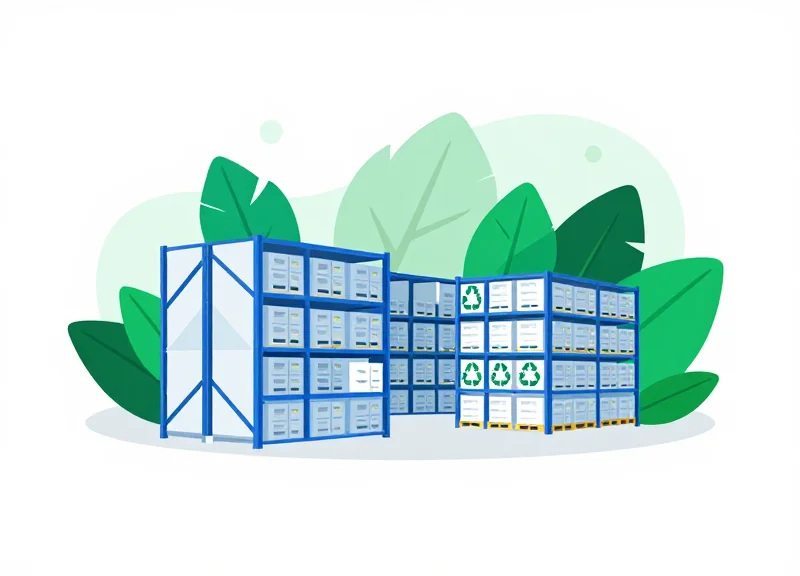
In the push for the 'Zero-Waste Warehouse,' the transition from static paper to digital labeling represents the single most effective way to eliminate 'Ghost Waste'—the massive volume of non-recyclable silicone-coated release liners and adhesive residues that currently clog logistics waste streams. By 2026, corporate ESG (Environmental, Social, and Governance) reporting will transition from a marketing 'nice-to-have' to a regulatory requirement, making the disposal of millions of single-use thermal labels a significant liability for cold chain operators.
| Sustainability Metric | Traditional Static Labeling | Next-Gen Digital Systems (ESL) |
|---|---|---|
| Primary Waste Product | Silicone-coated liners (Non-recyclable) | Electronic hardware (Circular/Long-life) |
| Chemical Footprint | BPA/BPS-heavy thermal paper | RoHS-compliant circuitry |
| Supply Chain Carbon | High (Continuous shipping/storage) | Low (One-time installation carbon) |
| End-of-Life Path | Landfill or Incineration | Certified WEEE Recycling |
The hidden environmental cost of cold chain paper labels lies in the adhesive technology required to withstand sub-zero temperatures. These 'all-temperature' adhesives are often aggressive chemical polymers that contaminate the recycling stream of the cardboard or plastic totes they are attached to. Furthermore, the silicone-coated backing paper (the liner) is notoriously difficult to recycle because the silicone cannot be easily separated from the paper fibers. Moving to a digital Electronic Shelf Label (ESL) ecosystem allows a facility to achieve a 'closed-loop' state where no consumables are introduced or discarded during daily inventory cycles.
How much waste does a single cold storage facility generate from labels?
A mid-sized high-velocity warehouse can easily cycle through 500,000 to 1 million labels annually. This generates approximately 2-3 tons of non-recyclable liner waste and significant adhesive contamination.
Is the carbon footprint of manufacturing an electronic label higher than paper?
While the initial manufacturing of an ESL has a higher carbon footprint, the 'break-even' point is typically reached within 18 to 24 months. After this, the digital system provides a net-positive environmental impact for its remaining 5-7 years of battery life.
How do digital labels help with Scope 3 emissions?
By eliminating the need for recurring shipments of label rolls and ribbons, warehouses reduce their upstream supply chain emissions (Scope 3), as they are no longer reliant on the heavy logistics of paper manufacturing and transport.
Expert Insight: The BPA/BPS Factor. Many operators overlook the health and environmental risks of BPA (Bisphenol A) found in traditional thermal paper labels. In the humid, high-moisture environments of cold storage, these chemicals can leach more easily. Switching to digital labels isn't just a waste reduction strategy; it's a chemical safety upgrade for the entire food and pharmaceutical supply chain.
Implementing the Digital Transition: A Roadmap for Managers
Transitioning from legacy paper systems to an automated digital labeling ecosystem in a cold chain environment is a multi-stage strategic migration. It involves replacing static, high-friction manual processes with dynamic Electronic Shelf Labels (ESL) and RFID sensors that are purpose-built to survive temperatures as low as -30°C. For managers, the roadmap to 2026 readiness is not merely about hardware installation, but about creating an interoperable data loop between the physical warehouse floor and the Warehouse Management System (WMS) to ensure real-time inventory accuracy and regulatory compliance.
- Phase 1: Thermal Infrastructure Audit: Assess current signal penetration (Wi-Fi 6 or Sub-Ghz) within insulated freezer panels and identify 'dead zones' where extreme cold might interfere with gateway connectivity.
- Phase 2: Hardware Validation: Procure ESL units with IP68 ratings and specialized lithium-thionyl chloride (Li-SOCl2) batteries designed to maintain high discharge rates in deep-freeze environments.
- Phase 3: Middleware Integration: Develop or deploy a middleware layer that translates WMS data into visual label updates, ensuring that price changes, expiration alerts, or 'pick-to-light' signals occur in sub-second intervals.
- Phase 4: Zone-Based Pilot Testing: Implement a 'friction-first' pilot in the highest-velocity area of the cold store to stress-test battery life and update speeds under maximum operational load.
- Phase 5: Staff Onboarding and Upskilling: Train floor operators on the shift from manual relabeling to exception-based management, where they respond to digital alerts rather than performing routine audits.
| Implementation Pillar | Legacy Paper Approach | Next-Gen Digital Approach |
|---|---|---|
| Inventory Visibility | Periodic manual counts | Real-time dynamic updates |
| Labor Requirement | High (hours spent printing/peeling) | Low (automated remote updates) |
| Error Rate | Approx. 2-5% due to human error | Less than 0.1% via API sync |
| Thermal Durability | Adhesives fail in humidity/frost | Vacuum-sealed ruggedized casing |
Expert Insight: The 'Micro-Climate' Trap. A common mistake managers make is assuming a label that works at -20°C will work during the transition to a +4°C loading dock. The real killer of digital labels isn't the cold itself, but the condensation that forms during thermal cycling. Ensure your roadmap specifies hardware with internal anti-fogging membranes or nitrogen-purged displays to prevent internal moisture buildup that can short-circuit standard electronics.
How long does a typical digital label rollout take?
For a mid-sized cold storage facility (50,000 sq. ft.), the transition typically takes 16 to 24 weeks from initial audit to full-scale deployment.
Do we need to replace our entire WMS?
No. Modern ESL and RFID solutions use API-first architectures that plug into existing legacy WMS via a dedicated cloud or on-premise gateway.
What is the primary technical hurdle in extreme cold?
Battery chemistry is the biggest hurdle. Standard CR2032 batteries lose 50-70% of their capacity in deep freeze; managers must insist on wide-temperature range industrial cells.