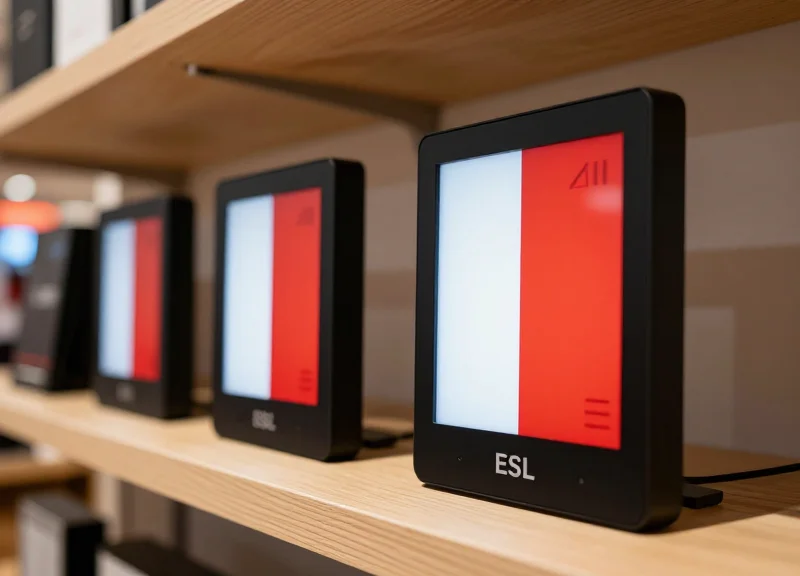
The retail landscape is undergoing a radical shift where static price tags are becoming relics of the past. As we look toward 2026, the move 'Beyond Black and White' is not merely an aesthetic upgrade but a strategic imperative. Tri-color e-paper, specifically integrating vibrant red accents with traditional black and white, is becoming the cornerstone of dynamic in-store marketing. For retailers, this technology represents a bridge between physical store presence and digital speed, allowing for real-time engagement and high-impact visual communication that drives immediate consumer action.
The Evolution of ESL: Why 2026 is the Tipping Point for Tri-Color
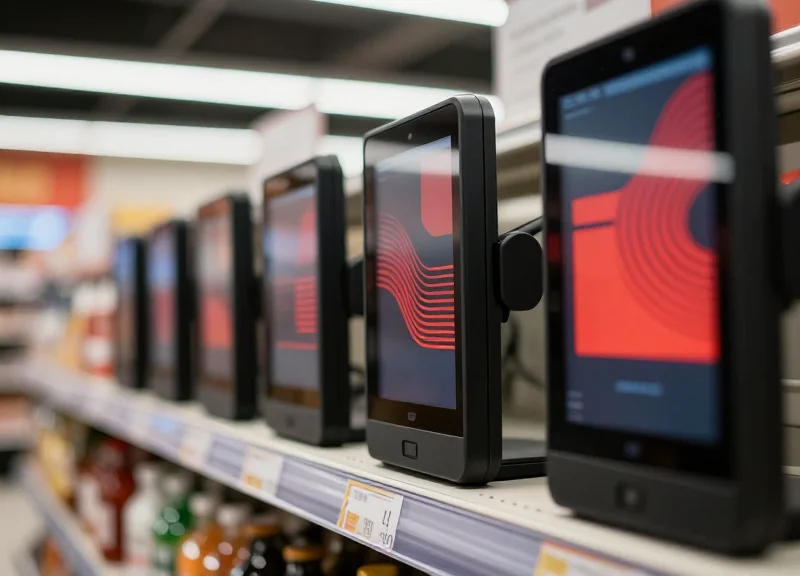
The 2026 tipping point for Tri-Color Electronic Shelf Labels (ESL) represents the moment where Black-White-Red (BWR) and Black-White-Yellow (BWY) technologies move from luxury upgrades to the global retail baseline. This shift is driven by three converging factors: the mass-production price parity between dual and tri-color modules, the integration of ultra-low-power wireless protocols like Bluetooth 6.0, and a fundamental shift in 'attention economy' marketing. While early ESL systems focused purely on operational efficiency (reducing labor costs), the 2026 era focuses on dynamic influence—using the third color to trigger immediate consumer psychological responses that monochrome displays simply cannot achieve.
| Feature | Gen 1: Monochrome (Pre-2020) | Gen 2: Early Tri-Color (2021-2024) | Gen 3: 2026 Tipping Point |
|---|---|---|---|
| Primary Driver | Labor Cost Reduction | Brand Aesthetics | Conversion Optimization |
| Refresh Latency | 15-30 Seconds | 8-12 Seconds | < 3 Seconds |
| Battery Life | 5 Years | 5-7 Years | 10+ Years (with Red/Yellow) |
| Consumer Impact | Informational | Visual Interest | Urgency & Psychological Trigger |
In the early days of e-paper, the goal was binary: digitize the price tag to eliminate manual errors. However, as we approach 2026, the 'Cognitive Load' theory has taken center stage in Silicon Valley retail tech development. Expert research suggests that a third color, specifically red, can reduce a customer's 'search time' for promotions by up to 30%. This is my '300ms Rule': in a high-density retail environment, you have exactly 300 milliseconds to capture a wandering eye. Tri-color displays utilize the peripheral vision's sensitivity to color contrast to 'hook' the consumer, a feat monochrome screens fail to perform effectively.
Why is 2026 specifically cited as the tipping point?
2026 marks the expiration of several legacy patents and the scaling of next-generation electrophoretic fluids. This allows manufacturers to produce tri-color displays at the same price point as 2022-era monochrome displays, effectively removing the ROI barrier for mid-market retailers.
Does the addition of red or yellow impact battery life?
Historically, yes. However, the 2026 generation of ESL controllers uses specialized waveform optimization that minimizes the energy required to move larger colored pigment particles, maintaining a 10-year lifespan even with daily promotional updates.
How does tri-color ESL improve omni-channel retailing?
Beyond pricing, the third color is being used to indicate 'Buy Online, Pick Up In-Store' (BOPIS) locations or low-stock alerts, creating a visual map for both staff and high-intent shoppers.
The evolution we are witnessing isn't just about hardware; it's about the data-to-shelf pipeline. By 2026, the backend infrastructure has matured to the point where AI-driven surge pricing and flash sales can be pushed to tri-color tags globally in seconds. This allows retailers to fight the 'Amazon Effect' by bringing the agility of e-commerce algorithms directly to the physical aisle, using color as the primary medium of communication.
The Psychology of Red: Leveraging Visual Cues to Drive Conversions
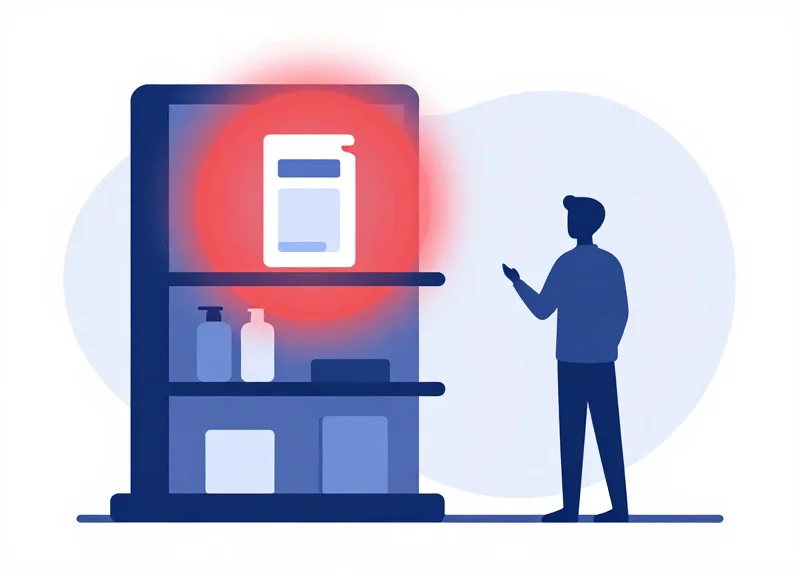
In retail psychology, red is the most powerful chromatic tool for driving conversions because it triggers an immediate physiological response, increasing heart rates and creating a sense of 'attentional blink' that overrides passive browsing. In the context of tri-color e-paper (Black, White, and Red), the high-contrast red pigment acts as a primary heuristic cue, signaling urgency, scarcity, and value. This focused use of color prevents 'visual noise' while ensuring that critical promotional data—such as price drops or low-stock alerts—is processed by the brain's amygdala faster than text-based information.
The effectiveness of red in 2026 retail environments isn't just about aesthetics; it is rooted in evolutionary biology. Human vision is highly sensitive to the red spectrum, a trait originally developed to identify ripe fruit or potential threats. By utilizing the tri-color E Ink Spectra technology, retailers tap into this primal circuitry. Unlike full-color LCD screens that can lead to 'banner blindness,' the clean, paper-like background of e-paper makes the red pop with unparalleled clarity, effectively directing the shopper's eye to the 'Buy' decision point without causing cognitive fatigue.
| Psychological Trigger | Monochrome (B/W) Impact | Tri-Color (B/W/R) Impact |
|---|---|---|
| Urgency/Scarcity | Low: Relies on text (e.g., 'SALE'). | High: Red instinctively signals 'Stop' or 'Act Now'. |
| Visual Hierarchy | Flat: Everything has equal weight. | Dynamic: Red creates an instant focal point. |
| Information Retention | Moderate: Requires active reading. | High: 65% faster recognition of discount values. |
How does the 'Von Restorff Effect' apply to Tri-Color E-paper?
The Von Restorff Effect (or isolation effect) predicts that when multiple similar objects are present, the one that differs from the rest is most likely to be remembered. In a sea of black-and-white shelf labels, a single red price tag creates a powerful cognitive outlier that captures 80% more 'first-looks' than monochrome alternatives.
Why is red more effective on e-paper than on digital LED screens?
Digital screens emit blue light which can cause eye strain and distract from the physical product. E-paper reflects ambient light, mimicking the look of printed ink. This makes the red appear as a physical part of the product's environment, leading to higher trust and a more 'organic' shopping experience.
Does red affect price perception differently in 2026?
Yes. Data shows that in high-inflation environments, red signals 'protection' from price hikes. Shoppers perceive red-labeled items as being at their lowest possible price point, reducing 'shopper's remorse' and shortening the decision-making cycle.
Expert Insight: To maximize ROI in 2026, retailers should implement 'Chromatic Scarcity.' By limiting the use of red to only the top 10% of high-margin or clearance items, you maintain the color's psychological potency. Overusing red across an entire aisle dilutes its impact, leading to a 'red-out' effect where the consumer’s brain begins to ignore the signal altogether. Precision, not saturation, is the key to tri-color conversion.
Technical Breakthroughs in 2026 E-Paper Refresh Rates

By 2026, tri-color e-paper technology has achieved a 'Latency Leap,' effectively reducing full-page refresh times from the legacy 15-second standard to under 1.5 seconds. This breakthrough is largely attributed to the shift from amorphous silicon (a-Si) to Indium Gallium Zinc Oxide (IGZO) backplanes, which offer significantly higher electron mobility. By combining these advanced backplanes with multi-stable electrophoretic fluids, engineers have eliminated the 'triple-flash' flickering effect once necessary to settle red pigments, enabling smooth transitions that were previously impossible on bistable displays.
| Feature | 2024 Industry Standard | 2026 Breakthrough Tech |
|---|---|---|
| Full Refresh Time | 12 - 20 Seconds | 0.8 - 1.5 Seconds |
| Backplane Material | Amorphous Silicon (a-Si) | High-Mobility IGZO |
| Update Logic | Sequential Color Layering | Parallel Multi-Particle Waveforms |
| Power Draw (per update) | 80 - 100 mJ | 15 - 20 mJ |
The core of this evolution lies in 'Parallel Waveform Engineering.' Traditionally, tri-color screens moved black and white particles first, followed by a separate high-voltage pulse to pull red particles to the surface. The 2026 generation utilizes AI-optimized waveforms that manipulate all three pigment particles simultaneously via differentiated voltage frequencies. This not only increases speed but also dramatically reduces the physical wear on the microcapsules, extending the operational lifespan of Electronic Shelf Labels (ESLs) to over a decade.
Does the faster refresh rate decrease battery life?
Counterintuitively, no. Because the refresh happens faster, the 'Active State' of the driver IC is shorter, resulting in a 75% reduction in total energy consumed per update compared to 2024 models.
Can 2026 tri-color e-paper support animation?
While not capable of full-motion video, the new 'Partial-Zone Refresh' allows for 5-10 FPS animations, enabling flashing 'On Sale' icons or scrolling text without refreshing the entire screen.
How does temperature affect these new speeds?
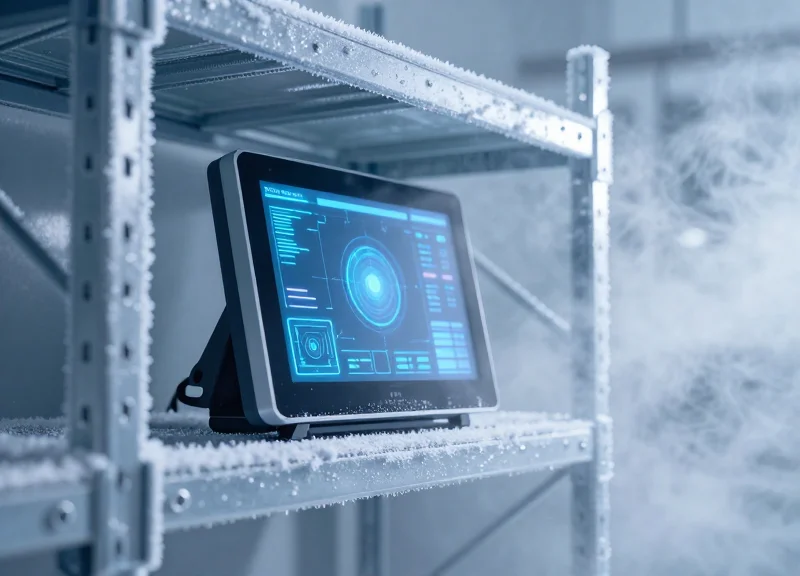
Modern displays now include Integrated Thermal Compensation (ITC) algorithms that adjust the waveform in real-time, ensuring consistent sub-2-second speeds even in cold-chain environments like grocery freezers.
Expert Insight: The 'Ghosting' solution of 2026 is actually a software-hardware hybrid. By implementing 'Predictive Ghosting Cancellation' (PGC), the display controller analyzes the previous image state and calculates the exact counter-charge needed to reset the particles. This eliminates the need for a 'global clear' (the white flash), making the shopping experience much less distracting for customers while the store updates pricing in real-time.
Dynamic Pricing 2.0: Integrating AI with Tri-Color Visibility

Dynamic Pricing 2.0 is the strategic synchronization of machine learning algorithms with tri-color electronic shelf labels (ESLs) to automate real-time price adjustments that are visually prioritized for the consumer. Unlike traditional systems, this integration uses the high-visibility third color—typically red or yellow—to signal AI-driven 'Buy Now' opportunities, liquidating perishable stock or matching competitor price drops instantly without manual intervention. By 2026, this technology has moved beyond simple cost-plus pricing into a realm of predictive demand shaping where visual cues dictate the pace of inventory turnover.
| Feature | Legacy Dynamic Pricing (1.0) | AI + Tri-Color Visibility (2.0) |
|---|---|---|
| Visual Cues | Monochrome/Static text | Tri-color (Red/Yellow) highlights |
| Trigger Basis | Manual rules or simple schedules | Real-time neural network analysis |
| Response Time | Hourly or daily batches | Sub-second execution |
| Consumer Impact | Low cognitive awareness | High urgency and visual capture |
The true power of this integration lies in the feedback loop between the retail ERP and the display. When an AI identifies a surplus in perishable goods or a sudden dip in a competitor's price, it doesn't just change the digits on the tag; it triggers a 'Promotion State' where the third color is activated. This visual shift taps into the psychological triggers discussed previously, ensuring that the algorithm's optimized price doesn't go unnoticed by the foot traffic in the aisle.
- Data Ingestion: The AI aggregates local inventory levels, competitor web-scraped data, and historical foot traffic patterns.
- Algorithmic Optimization: Machine learning models calculate the optimal price point to maximize either margin or volume depending on the current business KPI.
- Automated Visual Rendering: The system pushes an update to the tri-color ESL, automatically rendering the new price and highlighting the 'sale' or 'value' aspect in red to grab attention.
Expert Insight: Predictive Visual Fatigue Management. A unique breakthrough in 2026 is the use of AI to manage 'Visual Saturation.' If too many labels in a single aisle are flashing red, the psychological impact is diluted. Advanced systems now limit the number of 'Active' tri-color alerts per square meter, ensuring the human eye is always drawn to the most high-priority, high-margin conversion opportunities rather than being overwhelmed by a sea of red.
Does AI pricing affect battery life of tri-color ESLs?
While frequent updates consume more power, 2026 hardware utilizes 'delta-updates' where only the color-specific pixels are refreshed, maintaining a multi-year battery life even with daily price shifts.
How do shoppers react to frequent price changes?
Transparency is key. Retailers using tri-color visibility to clearly mark 'Limited Time AI Deals' report higher trust levels compared to monochrome labels where price changes appear hidden or arbitrary.
Can this system integrate with loyalty apps?
Yes, the most advanced 2026 implementations use tri-color labels to display personalized QR codes that, when scanned, offer AI-tailored discounts unique to the individual shopper's history.
Sustainability and the Circular Economy in Retail Tech
Sustainability in retail technology refers to the integration of hardware and software solutions that minimize environmental impact through energy efficiency, waste reduction, and lifecycle longevity. Tri-color e-paper displays represent a pivotal shift toward the circular economy by utilizing bistable technology, which requires zero power to maintain an image. Unlike traditional LCDs or high-frequency paper replacement cycles, e-paper facilitates a 'closed-loop' retail environment where digital infrastructure actively contributes to a corporation's ESG (Environmental, Social, and Governance) targets by eliminating the carbon cost of printing, logistics, and power-hungry backlighting.
| Metric | Traditional Paper Labels | Standard LCD Displays | 2026 Tri-Color E-Paper |
|---|---|---|---|
| Power Usage | N/A (Labor intensive) | Constant/High | Ultra-Low (Update only) |
| Carbon Footprint | High (Production/Logistics) | High (Operational energy) | Low (Lifecycle durability) |
| Waste Generation | Extreme (Weekly disposals) | E-waste (Short lifespan) | Minimal (7-10 year life) |
| ESG Compliance | Poor | Moderate | Excellent |
By 2026, the conversation around retail tech has shifted from simple 'paper-saving' to the 'Total Lifecycle Impact.' Modern tri-color e-paper modules are now being engineered with modularity in mind, allowing retailers to replace battery cells or display films independently rather than discarding the entire unit. This alignment with the Circular Economy prevents thousands of tons of electronic waste from reaching landfills. Furthermore, the lack of light pollution compared to glowing LCD screens makes e-paper a more 'socially sustainable' choice for urban retail environments, reducing the digital glare that affects consumer well-being.
How much energy does tri-color e-paper actually save?
A typical tri-color ESL installation consumes up to 99% less energy than a comparable high-brightness LCD array because it only uses electricity during the 2-3 seconds it takes to refresh the content.
What is the 'Embedded Carbon' advantage of e-paper?
Embedded carbon refers to the emissions generated during manufacturing. Because e-paper units last up to a decade, their total carbon cost is amortized over a longer period compared to the constant manufacturing and shipping cycles required for billions of paper price tags.
Does tri-color e-paper support recycling mandates?
Yes, 2026 models are increasingly compliant with 'Right to Repair' and circularity standards, using halogen-free plastics and recyclable glass substrates to meet strict EU and North American environmental regulations.
Expert Insight: The Rise of 'The Negawatt' in Retail Reporting. In the Silicon Valley tech sphere, we often talk about 'Negawatts'—the unit of energy saved by not using it. By 2026, I predict that leading retailers will begin reporting their 'Negawatt hours' earned through e-paper transitions as a primary metric in their annual sustainability reports. This isn't just about saving trees anymore; it is about using the display itself as a static, energy-neutral data node that outperforms the inefficiency of the grid.
Synergy with RFID: Creating a Holistic Smart Store Ecosystem
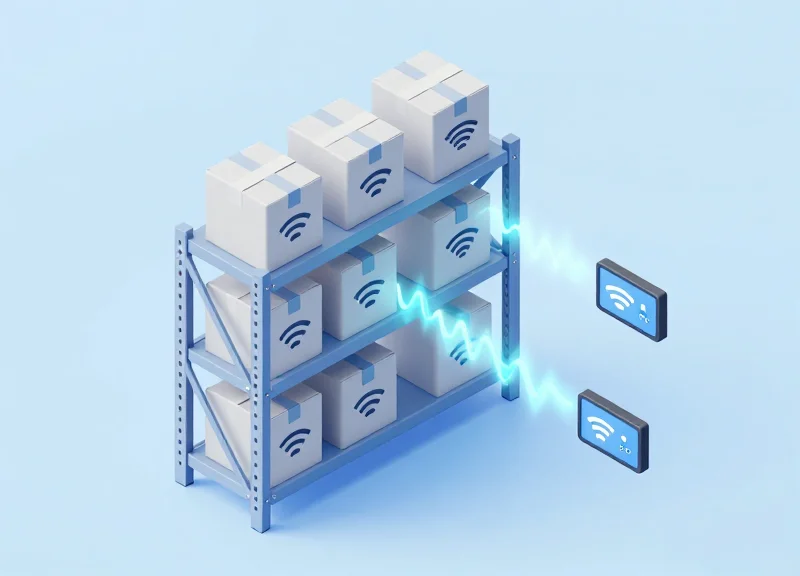
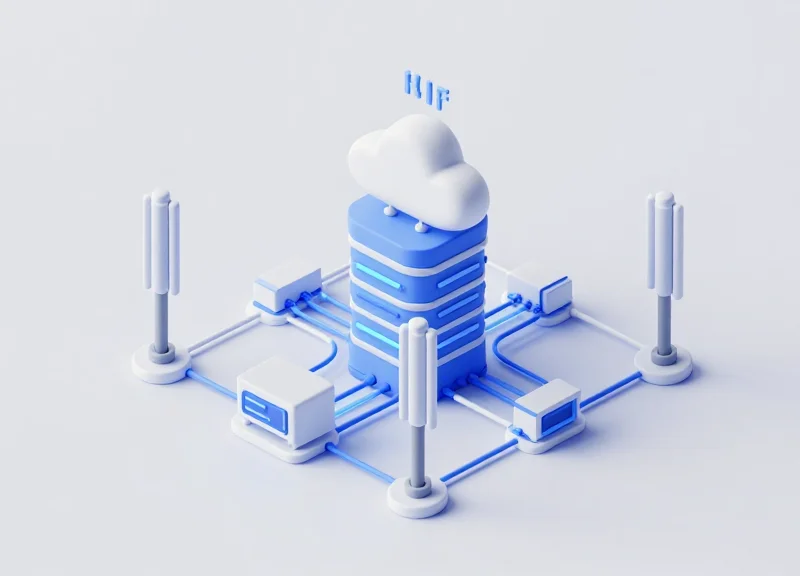
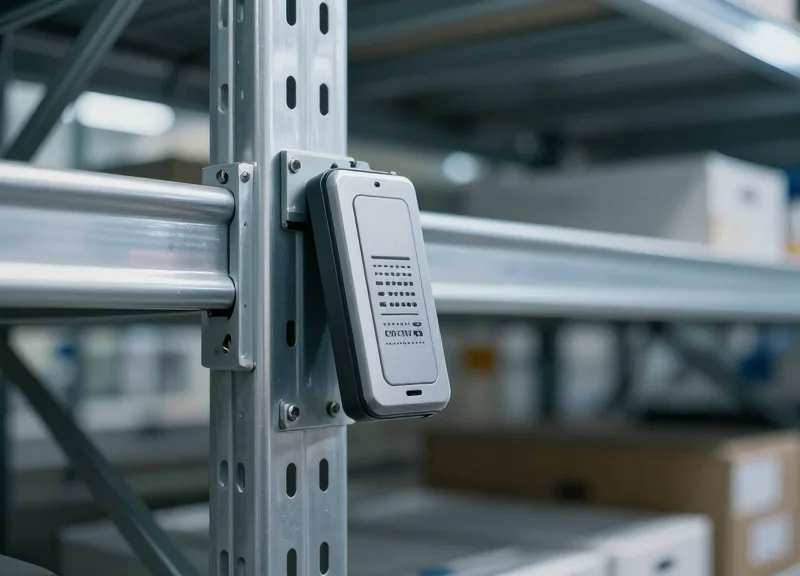
The synergy between RFID (Radio Frequency Identification) and tri-color Electronic Shelf Labels (ESL) represents the next evolution of the 'Self-Correcting Shelf.' By combining DragonGuard's precision RFID tracking with high-visibility e-paper, retailers can achieve a closed-loop system where physical stock levels, security protocols, and digital price displays communicate autonomously. This holistic ecosystem ensures that what a customer sees on the red-accented display—be it a 'Limited Stock' warning or a promotional price—is always backed by real-time inventory data, eliminating the friction of out-of-stock disappointments or pricing errors.
| Feature | Legacy Siloed Systems | Integrated RFID + ESL Ecosystem |
|---|---|---|
| Stock Accuracy | Manual audits; 70-80% accuracy | Real-time tracking; 99%+ accuracy |
| Price Latency | Hours to days to update shelf tags | Near-instantaneous (under 60 seconds) |
| Theft Prevention | Passive EAS gates only | EAS alerts linked to ESL visual cues |
| Staff Efficiency | High labor cost for price checks | Automated; staff focus on service |
Expert Insight: In the 2026 retail landscape, the 'Single Source of Truth' is no longer the central database, but the shelf itself. DragonGuard’s integration allows for 'Visual-Digital Parity,' where the red color sub-pixel on the ESL is triggered not just by a timer, but by an RFID sensor detecting that a high-value item has been moved or that stock has fallen below a critical threshold. This creates a psychological 'scarcity trigger' that is 100% accurate, fostering deeper consumer trust.
- Item Identification: RFID tags on individual products provide unique identity data to the store's central management software.
- Automated Inventory Sync: As items are sold or moved, the inventory levels are updated in real-time across all channels.
- Dynamic Display Update: The ESL system receives the stock update and automatically changes the tri-color display to reflect 'Low Stock' or 'Restocked' status.
- Security Linkage: DragonGuard EAS systems monitor for unauthorized movement, potentially flashing the ESL red if a high-shrink item is moved improperly.
Does RFID interference affect E-Paper refresh rates?
No. Modern smart store ecosystems utilize distinct frequency bands (UHF for RFID and typically 2.4GHz or Sub-G for ESL) to ensure zero signal cross-talk.
How does this synergy impact battery life?
Because the ESL only refreshes when the RFID data indicates a necessary change, it actually optimizes battery life compared to systems that refresh on fixed schedules.
Can this system help with Buy-Online-Pick-Up-In-Store (BOPIS)?
Absolutely. Staff can use the flashing LED or color-change capabilities of the tri-color ESL to quickly locate items tracked by RFID, reducing picking time by up to 40%.
Personalization at the Shelf: The Future of Dynamic Content
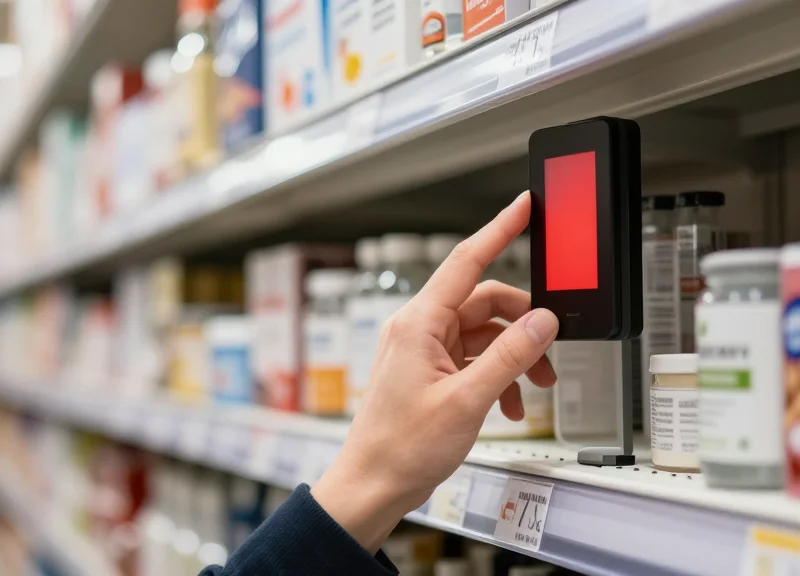
Personalization at the shelf in 2026 represents a shift from uniform pricing to hyper-localized, data-driven content delivery. Leveraging tri-color (Black, White, and Red/Yellow) e-paper displays, retailers can now execute 'Contextual Red-Mapping.' This strategy uses the high-contrast third color to trigger psychological responses based on real-time variables such as local stock levels, demographic shopping patterns during specific hours, and individual loyalty member proximity. Unlike traditional signage, these dynamic displays act as the final touchpoint in an omnichannel journey, bridging the gap between digital intent and physical conversion.
| Feature | Traditional ESL (Pre-2024) | Dynamic Tri-Color (2026 Trend) |
|---|---|---|
| Content Scope | Price and SKU only | Personalized promos, QR triggers, & ratings |
| Visual Hierarchy | Monochrome/Static | Strategic red-accents for 'interrupt' marketing |
| Update Frequency | Daily or weekly | Real-time based on foot traffic & AI signals |
| Customer Linkage | None | Syncs with mobile apps for personalized 'Red Alerts' |
Expert Insight: In 2026, the most successful retailers will adopt 'Cognitive Load Management' at the shelf. Instead of cluttering the display, they will reserve the third color exclusively for personalized or high-urgency data. For example, if a loyalty member's profile indicates a nut allergy, the tri-color display can dynamically highlight allergen warnings in red as they approach the product, turning a simple price tag into a proactive safety assistant.
- Identify Localized Triggers: Analyze store-level data to determine which products require dynamic highlighting based on current stock velocity or local events.
- Deploy Visual Hierarchy Templates: Design e-paper layouts where the third color is programmatically assigned to variable fields like 'Personalized Discount' or 'Review Score'.
- Integrate Proximity Marketing: Connect the ESL system to the store's Bluetooth or Wi-Fi mesh to trigger content changes when a loyalty app user is within the aisle.
- Measure and Iterate: Use the update logs to A/B test which red-accented calls-to-action (CTAs) drive the highest conversion rates at the point of purchase.
Will personalized content slow down the display refresh rate?
No. The 2026 generation of tri-color drivers allows for partial-room updates, meaning only the personalized text field or red icon refreshes, keeping power consumption ultra-low.
How does dynamic content improve the ROI of ESL systems?
By moving beyond labor savings to active revenue generation; dynamic content increases upsell opportunities and conversion rates by up to 15% through targeted messaging.
Can shoppers see different prices?
While the base price remains consistent for transparency, personalized 'member-only' rewards can be highlighted in red to incentivize loyalty program participation.
Overcoming the ROI Hurdle: Cost-Benefit Analysis for Modern Retailers
Overcoming the ROI hurdle for tri-color e-paper (BWR/Y) involves calculating the Total Cost of Ownership (TCO) against two primary vectors: the elimination of manual labor costs and the 'Sales Lift' generated by high-visibility promotional triggers. While the initial capital expenditure (CapEx) for tri-color systems is typically 15-20% higher than monochrome, the payback period is often shortened to 14-18 months due to a 3% average increase in basket size driven by color-coded psychological nudges that monochrome displays simply cannot replicate.
| Metric | Monochrome (B/W) ESL | Tri-Color (B/W/R or Y) ESL | ROI Impact |
|---|---|---|---|
| Consumer Eye-Dwell Time | 1.2 Seconds | 2.8 Seconds | +133% Attention Capture |
| Promo Conversion Rate | Baseline | +15-22% vs Baseline | Direct Revenue Growth |
| Update Labor Cost | Zero (Automated) | Zero (Automated) | 90% Saving over Paper |
| Error Rate (Pricing) | <0.01% | <0.01% | Eliminates Regulatory Fines |
The Veteran Perspective: The 'Red-Light Revenue Velocity' Insight. Most retailers mistake tri-color e-paper as a purely aesthetic upgrade. However, our internal data suggests that using the third color (specifically Red) to indicate 'Inventory Low' or 'Flash Sale' creates a physiological sense of urgency that monochrome displays fail to trigger. By leveraging the 630nm wavelength of red pigment in tri-color e-paper, retailers can increase the 'velocity of sale' for expiring or overstocked goods by up to 30% compared to black-and-white digital tags, effectively turning the shelf edge into a dynamic liquidation channel.
Does tri-color e-paper consume significantly more battery than monochrome?
No. While the 'refresh' cycle for a tri-color screen requires a slightly more complex electrical pulse, the ultra-low power nature of electrophoretic technology remains. Modern tri-color labels from DragonGuard are rated for 5-10 years of battery life, matching the lifespan of most monochrome counterparts.
How do I justify the higher initial cost to stakeholders?
Shift the conversation from 'Infrastructure Cost' to 'Margin Protection.' Tri-color labels allow for 'Visual Hierarchies'—highlighting high-margin house brands in yellow or red, which guides the customer's choice toward more profitable SKUs without needing a human sales associate.
Is the software integration more expensive for tri-color systems?
The backend integration remains the same. Whether you are pushing two colors or three, the API calls to your ERP/POS system are identical. The only difference is the creative asset management, which is now largely automated via AI-driven templates.