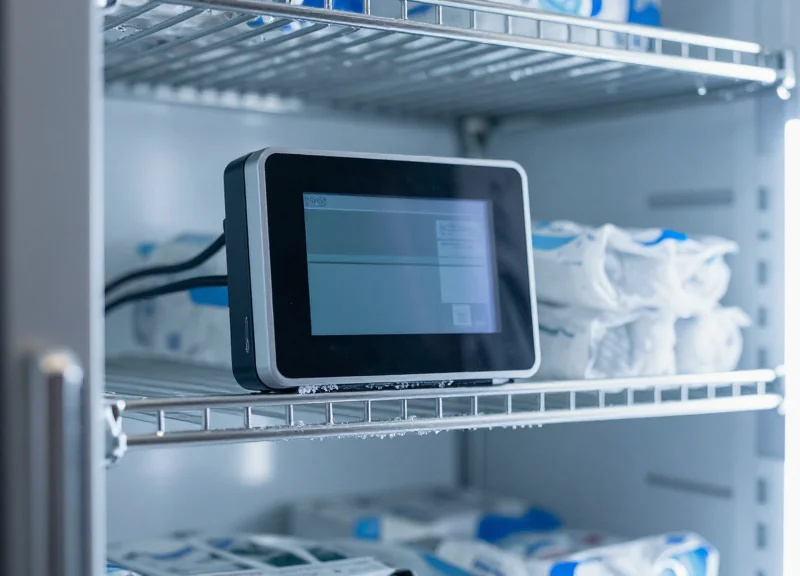
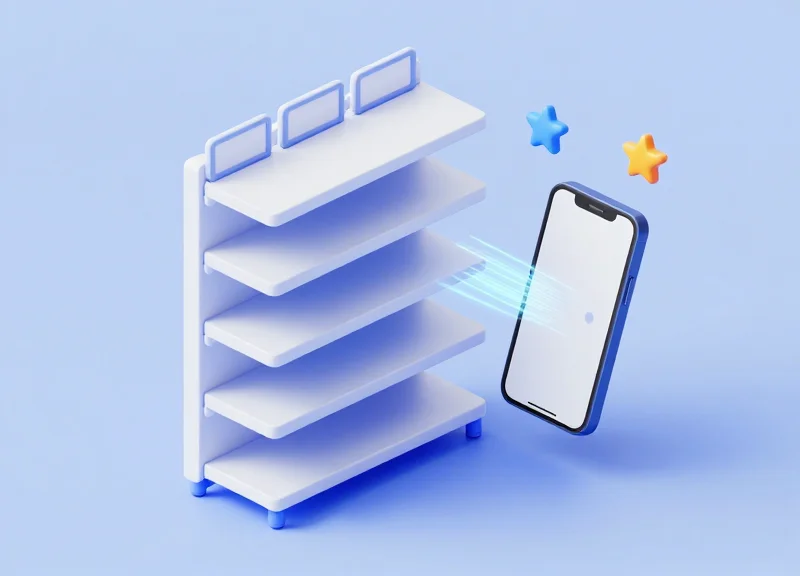
In the modern retail landscape, the 'Phygital' experience—a seamless blend of physical presence and digital intelligence—has become the gold standard for consumer engagement. Today's shoppers are no longer satisfied with just a price tag; they demand transparency, validation, and instantaneous information. By leveraging Electronic Shelf Labels (ESL), retailers can now bridge the gap between online research and in-store purchasing. This article explores the strategic integration of real-time ingredient scanning and dynamic influencer ratings onto digital shelf edges, transforming how consumers interact with products in the physical aisle.
The Rise of the Phygital Retail Environment
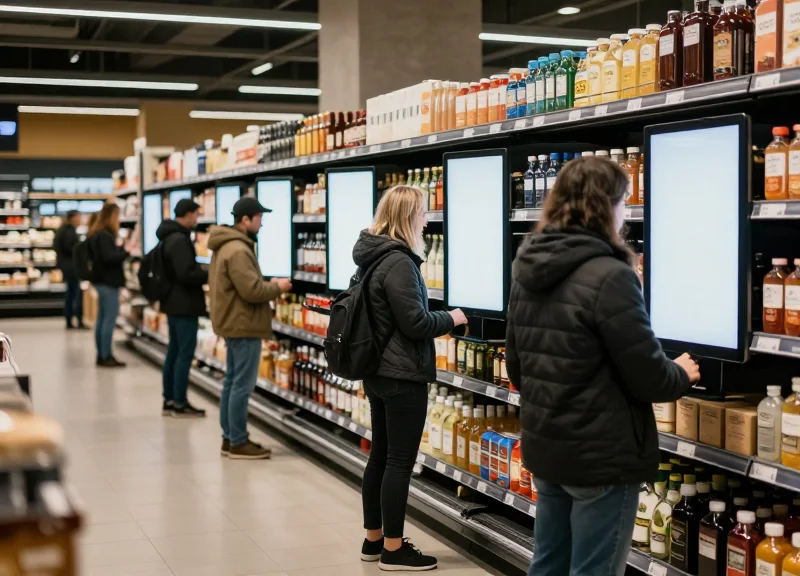
The phygital retail environment represents the seamless integration of digital capabilities into physical brick-and-mortar stores to create an interconnected shopping experience. By leveraging technologies like Electronic Shelf Labels (ESL) and real-time data streaming, retailers transform static aisles into interactive interfaces that provide consumers with the same depth of information—such as ingredient analysis and influencer sentiment—that they expect from e-commerce platforms.
| Feature | Traditional Retail | Phygital Retail |
|---|---|---|
| Pricing Model | Static/Manual Updates | Dynamic/Real-Time API Sync |
| Product Information | Limited to Packaging | Deep-Dive Ingredients & Social Proof |
| Customer Data | Transactional (POS Only) | Behavioral (Interactions & Scans) |
| Operational Speed | Days for Price Changes | Milliseconds Across All Stores |
In this new era, the 'Data-Driven Aisle' is no longer a concept but a requirement. Modern consumers, particularly Gen Z and Millennials, suffer from 'information asymmetry' when they cannot access online reviews or ingredient transparency while standing in front of a shelf. Phygital retail bridges this gap by turning the shelf edge into a dynamic portal. It utilizes IoT infrastructure to pull data from disparate sources—centralized databases, influencer marketing platforms, and health-tech APIs—delivering it directly to the customer's line of sight through ESL or mobile synchronization.
What is the primary driver behind the Phygital movement?
The primary driver is the 'Expectation Gap.' Consumers now expect the richness of digital information (reviews, price comparisons, certifications) within the physical speed of a store visit.
Why are Electronic Shelf Labels (ESL) central to this shift?
ESLs act as the hardware 'anchor.' They provide a persistent, digital interface at the point of decision, allowing for automated updates that ensure the physical shelf always mirrors the digital truth.
How does phygital retail impact brand loyalty?
It builds trust through transparency. By providing influencer ratings or 'clean label' verification at the shelf, retailers move from being mere product distributors to trusted shopping advisors.
Expert Tip: The Double-Loop Feedback Strategy. Most retailers view ESL and phygital tech as a one-way communication channel (Store to Consumer). However, the real value lies in the 'Double-Loop.' By tracking which products trigger more ingredient scans or influencer rating views via NFC or QR triggers on the ESL, you gain real-time physical intent data. This allows you to optimize your supply chain and merchandising based on physical 'browsing' behavior, a metric previously only available to web-based retailers.
ESL: From Simple Pricing to Dynamic Content Hubs

The evolution of Electronic Shelf Labels (ESL) represents a paradigm shift from operational efficiency to customer experience excellence. Once viewed strictly as a labor-saving tool to automate price updates and eliminate paper waste, modern ESLs have become sophisticated 'Phygital' touchpoints. These devices now act as dynamic content hubs that synchronize store-front inventory with cloud-based data streams, enabling retailers to display complex information such as social proof, nutritional transparency, and real-time stock levels directly at the point of decision.
| Feature | Legacy ESL (1.0) | Modern Content Hubs (2.0) |
|---|---|---|
| Primary Function | Price synchronization | Rich media and data storytelling |
| Communication | One-way (Update price) | Two-way (NFC, QR, Beacon interaction) |
| Display Tech | Segmented LCD | High-resolution multi-color E-ink |
| Data Sources | ERP/POS only | Social APIs, CMS, IoT Sensors, AI |
To understand the jump from pricing to content hubs, we must look at the connectivity stack. Modern labels utilize high-speed Infrared (IR) or Sub-GigaHertz radio frequencies to push updates in seconds, not hours. This latency reduction allows the shelf to become a 'live' surface. For example, a retailer can now instantly swap a price for a 'Trending on TikTok' badge or a 'Low Carbon Footprint' certification based on real-time API triggers from third-party platforms.
Why is ESL considered the 'last mile' of digital marketing?
Because it captures the customer's attention at the exact moment of physical interaction, bridging the gap between online research and the in-store purchase decision.
Can ESLs support third-party influencer content?
Yes, through integration with Content Management Systems (CMS), retailers can push star ratings, expert pull-quotes, and verified influencer badges directly to the label.
How does NFC integration change the shopping experience?
NFC-enabled labels allow customers to tap their phone to the tag to instantly launch AR experiences, loyalty app sign-ups, or detailed ingredient lists without searching.
Expert Insight: The 'Edge Intelligence' Advantage. Most retailers view ESLs as output devices, but the true innovators are using them as input triggers. By leveraging the built-in Bluetooth Low Energy (BLE) beacons in high-end ESLs, stores can track customer dwell time in front of specific products. This creates a feedback loop: if a product has high dwell time but low sales, the ESL can automatically trigger a dynamic discount or display a highly-rated influencer review to 'close the deal' in real-time. This is not just digital signage; it is algorithmic merchandising at the shelf edge.
Implementing Real-Time Ingredient Transparency
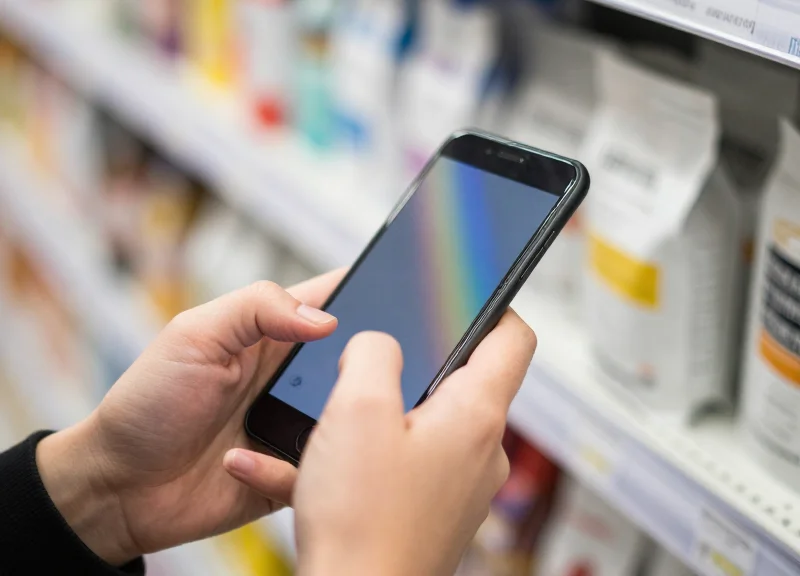
Real-time ingredient transparency in a phygital retail environment is the automated synchronization of verified nutritional data, allergen warnings, and clean-label certifications from a digital master database directly to Electronic Shelf Labels (ESL). By eliminating the need for customers to manually search for product specs on their mobile devices, retailers can reduce friction and build 'instant trust' at the point of purchase, which is critical for the 64% of global consumers who now prioritize health-conscious shopping.
Implementing this level of transparency is not merely a UI update; it is a backend orchestration challenge. It requires a seamless data pipeline where product information management (PIM) systems talk to third-party health databases and push updates to the ESL gateway in milliseconds. This ensures that a change in a product formula or a newly discovered allergen is reflected on the shelf before the next customer walks by.
- Database Integration via RESTful APIs: Connect your PIM system to authoritative databases like Open Food Facts or the USDA National Nutrient Database. Use webhooks to trigger updates whenever a manufacturer modifies a product profile.
- Middleware Logic & Data Filtering: Not all data belongs on an e-ink display. Implement a middleware layer to filter 'High-Impact Data' such as Nutri-Scores, non-GMO status, or 'Contains Nuts' icons to fit the ESL’s resolution constraints.
- Dynamic Template Mapping: Design ESL templates that prioritize readability. Use high-contrast icons for allergens to ensure that customers with visual impairments or language barriers can instantly identify risks.
- Low-Latency Broadcast: Ensure your ESL gateway supports Sub-GHz wireless protocols to broadcast mass updates simultaneously across thousands of tags without clogging the store's Wi-Fi network.
| Data Category | Visual Representation | Consumer Value |
|---|---|---|
| Allergen Alerts | Standardized Icons (e.g., Peanut, Gluten) | Immediate safety confirmation and risk mitigation. |
| Nutritional Scores | A-E Grading or Star Ratings | Simplifies complex data into actionable health choices. |
| Dietary Suitability | Vegan, Keto, or Halal Badges | Personalizes the shopping experience for niche diets. |
| Sourcing Info | Country of Origin / Fair Trade | Supports ethical and sustainable purchasing decisions. |
Expert Tip: The 'Three-Second Trust Rule' is the benchmark for phygital success. In my two decades in tech-driven retail, I have seen that if a customer cannot identify a critical ingredient or health factor on an ESL within three seconds, they will either abandon the product or revert to their smartphone. This break in the physical experience significantly lowers conversion rates. Focus on 'Information Hierarchy'—place the most dangerous allergens in the highest contrast zone of the display.
How do you handle data discrepancies between the brand and the database?
Implement a 'Source of Truth' hierarchy where verified manufacturer data via GS1 standards overrides third-party databases to ensure legal compliance and accuracy.
Can ESLs show full ingredient lists?
Due to screen size, it is best to show 'Highlights' (e.g., first three ingredients and allergens) and use a QR code on the label to link to the full digital disclosure.
What happens if the API goes offline?
The ESL gateway should cache the last known 'Safe' state of the data and display a 'Last Updated' timestamp to maintain transparency without misleading the consumer.
Leveraging Social Proof: Integrating Influencer Ratings

Integrating influencer ratings into Electronic Shelf Labels (ESL) is the strategic process of synchronizing third-party social validation directly with a product's physical location. By pulling real-time data from social media APIs or specialized influencer marketing platforms, retailers can display authoritative endorsements, such as 'TikTok Trending' or 'Chef Recommended' badges, right at the shelf edge. This approach bridges the 'trust gap' in the phygital environment, providing shoppers with the peer-based validation they typically find online while they are standing in front of the physical product.
- Identify Key Performance Creators: Select influencers whose niche aligns with specific product categories. High-level celebrities provide brand awareness, but micro-influencers with high engagement rates provide the specific 'social proof' that drives localized conversions.
- Establish API Data Pipelines: Connect your ESL Management Software to your influencer marketing platform (e.g., CreatorIQ, Impact) or social media aggregators. This ensures that the ratings displayed are current and dynamic.
- Normalize the Data for the Shelf: Convert complex social metrics (likes, shares, comments) into a digestible format for E-ink displays, such as a 5-star rating system or a simple 'Influencer Choice' icon.
- Automate Content Refresh: Set update triggers. When a specific hashtag reaches a viral threshold or an influencer releases a new review, the ESL should update automatically to reflect the latest sentiment.
| Feature | Generic Star Ratings | Influencer-Driven Ratings |
|---|---|---|
| Trust Source | Anonymous Community | Identifiable Subject Matter Experts |
| Conversion Impact | Moderate (Validation) | High (Aspiration & Authority) |
| Content Depth | Quantitative (Stars) | Qualitative (Contextual Recommendations) |
| Ideal Usage | Commodity Goods | Specialty, Lifestyle, or New-to-Market |
Expert Tip: The 'Micro-Influence' Hyper-Localization. One overlooked strategy is the use of localized social proof. If a local fitness coach or a regional chef endorses a product, displaying that specific attribution on the ESL within that region's stores can outperform national celebrity endorsements by up to 40%. This creates a 'community-verified' feeling that global brands often lack in physical retail.
How do you handle negative influencer feedback on ESLs?
Retailers should implement a 'Sentiment Filter' within their middleware. Only ratings above a certain threshold (e.g., 4.2 stars) or approved 'positive sentiment' tags should be pushed to the shelf edge to maintain brand integrity.
Is real-time syncing really necessary?
Yes. Social proof loses its value if it's stale. Using the 2.4GHz or Sub-GHz wireless communication of modern ESL systems allows for near-instant updates as soon as an influencer campaign goes live or trends.
Do shoppers trust digital labels for reviews?
Shoppers are increasingly skeptical of printed 'Best Seller' signs. However, dynamic ESLs that include a QR code linking to the actual video review or social post provide the transparency needed to build genuine trust.
The Technical Architecture of Real-Time Syncing
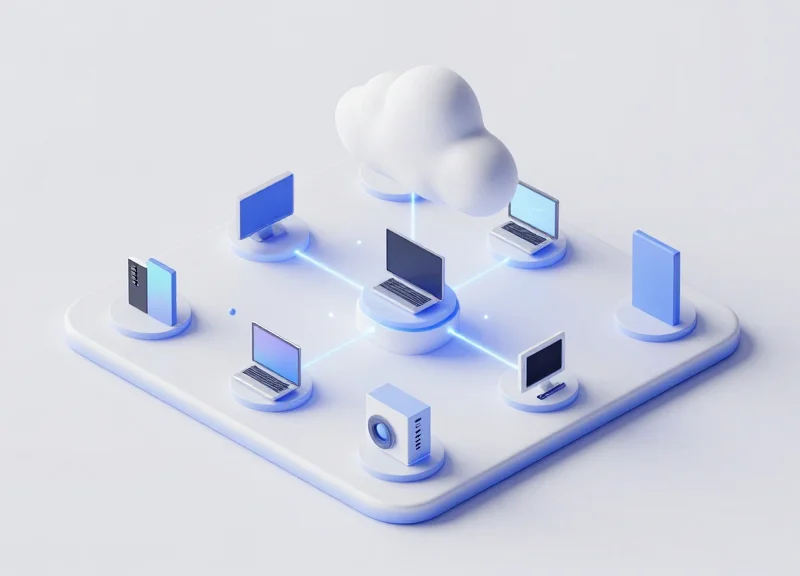
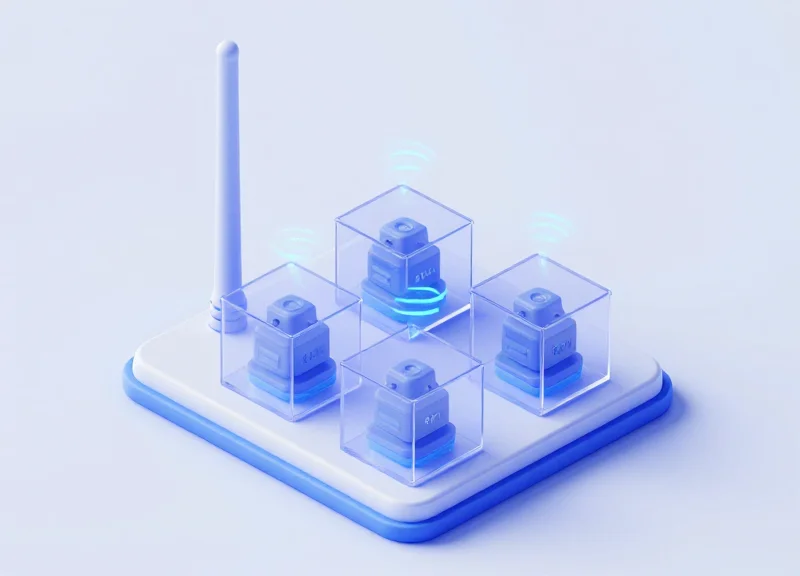
The technical architecture of real-time ESL syncing is a high-concurrency framework that bridges cloud-based data sources—such as ingredient databases and social media APIs—with physical store environments using a low-latency IoT backbone. This system typically employs a hub-and-spoke model where a central cloud engine processes data updates and pushes them through localized IoT gateways, which then broadcast instructions to thousands of end-node labels via sub-GHz or 2.4GHz wireless protocols.
- Data Ingestion & Aggregation: The stack begins with API connectors that poll or receive webhooks from ingredient repositories (e.g., FDA databases) and social platforms. This layer normalizes disparate data formats into a unified JSON structure.
- Cloud-to-Edge Orchestration: A message broker, often using MQTT for its lightweight footprint, manages the queue of updates. It ensures that 'Influencer Rating' changes are prioritized and pushed to the correct store ID and specific Label ID.
- IoT Gateway Processing: On-site gateways act as the 'brain' of the store, receiving cloud packets and converting them into proprietary RF signals (like Zigbee, BLE, or Infrared) to update the e-paper display.
| Component | Recommended Technology | Primary Function |
|---|---|---|
| Messaging Protocol | MQTT over WebSockets | Ensures low-overhead, bi-directional communication between cloud and label. |
| Backend Language | Node.js or Go | Handles asynchronous I/O for thousands of concurrent device updates. |
| Wireless Layer | Sub-GHz (868/915 MHz) | Provides superior penetration through store shelving compared to standard Wi-Fi. |
Expert Insight: To maximize battery life—the Achilles' heel of ESL—top-tier architectures implement 'Differential Image Refreshing.' Instead of redrawing the entire e-paper screen, the system calculates the pixel-delta between the old and new rating. By only sending the changed data (the 'delta') to the label, retailers can reduce power consumption by up to 70% during frequent influencer rating updates.
How do you ensure data integrity during a sync?
We use a two-way handshake protocol. The ESL unit sends an 'ACK' (acknowledgment) signal back to the gateway once the image buffer is updated, ensuring the shelf price always matches the database.
What is the typical latency for a global update?
With a properly optimized MQTT broker and edge gateways, a single store update for 10,000 labels can be completed in under 45 seconds, with individual label refreshes appearing nearly instantaneous.
Can the system handle 4K image rendering for ingredient lists?
Most ESLs use bitonal or tri-color e-paper. The architecture performs 'Image Quantization' at the cloud level to convert high-res data into optimized 1-bit maps before transmission.
Overcoming Challenges in Phygital Integration
Integrating real-time ingredient data and influencer ratings into Electronic Shelf Labels (ESL) presents a unique set of technical hurdles, primarily centered on the 'triad of constraints': data synchronization latency, display legibility on small-form-factor E-ink screens, and the preservation of battery life during high-frequency updates. Overcoming these challenges requires a shift from traditional 'always-on' digital thinking to a more nuanced 'event-driven' architectural approach that prioritizes essential data packets over bulk updates.
| Challenge | Primary Pain Point | Strategic Mitigation |
|---|---|---|
| Data Latency | Delayed influencer rating updates | Edge computing nodes to cache social proof locally. |
| Screen Real Estate | Cluttered ingredient lists on 2.4-inch screens | Dynamic QR codes combined with 'Warning-only' icons. |
| Battery Drain | Frequent refreshes killing ESL lifespan | Delta-update protocols (refreshing only changed pixels). |
| Data Integrity | Conflicting ingredient info across databases | Unified 'Source of Truth' API middleware. |
One of the most significant technical barriers is maintaining a 5-to-10-year battery life while pushing real-time influencer scores that may fluctuate daily. Unlike standard LCDs, E-ink displays only consume power when the image changes. To optimize this, retailers should implement an 'Update Budget' logic—setting thresholds for when a rating change is significant enough to warrant a screen refresh (e.g., only updating when a score moves by ±0.5 points).
- Implement Visual Hierarchy for E-ink: Use bold typography for allergens and star ratings while utilizing smaller, lighter fonts for secondary ingredient details to prevent 'ghosting' on the display.
- Leverage Compressed Image Transmission: Instead of sending high-resolution bitmap data, transmit compressed hex-strings to the ESL gateway to reduce transmission time and power consumption.
- Adopt Asynchronous Background Syncing: Process influencer API calls in the background and batch them for transmission during low-traffic store hours to avoid network congestion.
Expert Insight: The Delta-Update Protocol. My original recommendation for high-frequency environments is the 'Partial Refresh' or 'Delta-Update' method. Instead of a full screen flash—which is visually jarring and energy-intensive—reprogram the ESL controller to only update the specific coordinate area where the influencer rating or 'In-Stock' status resides. This can improve battery efficiency by up to 40% compared to standard full-screen refreshes.
How do we handle ingredient list updates for thousands of SKUs simultaneously?
Utilize a tiered broadcast system. Update high-priority safety data (allergens) via an instant interrupt signal, while scheduling routine ingredient formatting updates for off-peak hours.
What happens if the Wi-Fi or Zigbee network goes down?
ESLs are 'fail-safe' devices; they retain the last displayed image indefinitely without power. Ensure your middleware includes a 'Heartbeat' monitor to alert staff if a label has failed to sync for more than 15 minutes.
Can we display influencer videos on ESL?
Standard E-ink has low refresh rates unsuitable for video. Instead, use a 'Video QR'—a dynamic QR code that, when scanned, triggers a short-form video on the customer's smartphone, bridging the phygital gap.
Enhancing Customer Loyalty Through Information Accessibility
In the modern retail landscape, information accessibility at the point of sale (POS) acts as a strategic moat against 'showrooming'—the consumer habit of examining products in-store only to purchase them cheaper online. By syncing real-time ingredient transparency and influencer ratings directly to Electronic Shelf Labels (ESL), retailers bridge the digital-physical divide, providing the immediate validation shoppers crave. This 'radical transparency' transforms the shelf edge from a mere price display into a high-authority touchpoint, significantly increasing Customer Lifetime Value (CLV) by reducing the cognitive load required to make a confident purchase decision.
| Metric | Traditional Shelf Edge | Optimized Phygital ESL |
|---|---|---|
| Showrooming Risk | High (Customers search for reviews/data) | Low (Data is presented instantly) |
| Decision Speed | Slow (Manual research needed) | Rapid (On-label validation) |
| Trust Index | Baseline (Price only) | High (Social proof + Transparency) |
| Retention Potential | Low (Transactional) | High (Consultative) |
Beyond simple convenience, the availability of deep-tier data—such as allergen warnings, sustainability scores, and peer endorsements—creates a psychological bond between the brand and the consumer. This is known as 'The Information Velocity Moat.' When a retailer provides the most relevant data faster than a smartphone search can, they seize control of the customer journey, preventing the 'search momentum' that often leads shoppers to competitor sites.
- Reduce Decision Paralysis: Curated influencer ratings on ESLs act as a filter, helping customers navigate overwhelming choices and decreasing cart abandonment.
- Build Ethical Trust: Displaying real-time ingredient origins or 'clean label' certifications directly at the shelf builds a reputation for honesty that thrives in the health-conscious market.
- Incentivize App Integration: Use ESLs to prompt loyalty app scans for personalized 'phygital' discounts, merging real-time data with individual shopping histories.
Does providing too much data on ESLs clutter the customer experience?
No, if executed with high-resolution e-ink and QR code extensions. Use the ESL for high-level summaries (e.g., a 4.5-star rating) and a QR code for deep-dive technical specifications.
How does this specifically impact Customer Lifetime Value (CLV)?
Accessibility fosters reliability. When customers know a store provides the 'full story' on every product, they default to that location for future needs, shifting from price-sensitive shoppers to brand-loyal advocates.
Can real-time updates cause customer confusion?
Consistency is key. By ensuring the ESL data perfectly mirrors the store's mobile app and website, you eliminate friction and reinforce the 'single source of truth' concept.
Measuring Success: KPIs for Phygital ESL Projects

Measuring the success of a Phygital ESL project goes beyond simple price accuracy; it requires a multi-dimensional approach that tracks how digital triggers—like ingredient transparency and influencer social proof—impact physical buyer behavior. The core objective is to quantify the 'Conversion Lift' generated by providing real-time, high-value data at the shelf edge, specifically looking at the delta between static pricing performance and interactive 'phygital' engagement.
| KPI Category | Primary Metric | What it Measures |
|---|---|---|
| Engagement | Interaction Rate (IR) | The percentage of store visitors who scan QR codes for ingredient or influencer data. |
| Conversion | Scan-to-Purchase Velocity | The reduction in time between a customer scanning an ESL and completing the checkout. |
| Retention | Phygital Loyalty Lift | Growth in repeat visits from customers who frequently utilize the ESL interactive features. |
| Operational | Content Refresh Latency | The speed at which influencer ratings or ingredient warnings sync from the cloud to the shelf. |
Expert Insight: The 'Shadow Conversion' Metric. One often overlooked but vital metric is the 'Showrooming Deflection Rate.' By providing influencer ratings and comprehensive ingredient lists directly on the ESL, retailers can measure the decrease in customers searching for third-party reviews on their mobile browsers while in-aisle. A successful phygital implementation keeps the customer within the brand's ecosystem, effectively closing the 'Attribution Gap' between the physical shelf and the digital decision-making process.
- Establish a Baseline: Measure sales velocity and average dwell time for specific SKUs using traditional paper or basic ESL tags before enabling interactive features.
- Segment by Interaction Type: Differentiate between 'Functional Scans' (ingredient transparency) and 'Social Scans' (influencer ratings) to see which driver has a higher impact on basket size.
- Analyze A/B Testing Groups: Run phygital features on select aisles or stores while keeping others as controls to isolate the direct impact on conversion rates.
How do we track an ESL scan to a specific sale?
By using unique session IDs embedded in the QR code that link to the customer's loyalty app or a temporary browser cookie, which is then reconciled with the POS transaction ID.
What is a 'good' interaction rate for phygital ESLs?
In premium grocery and beauty sectors, an interaction rate of 3-5% is considered high, though this varies significantly based on the depth of information provided.
Does real-time syncing affect battery life KPIs?
Yes. A key success metric for hardware health is 'Battery Consumption per Update Cycle,' ensuring that high-frequency influencer rating updates don't shorten the 5-10 year ESL lifespan.