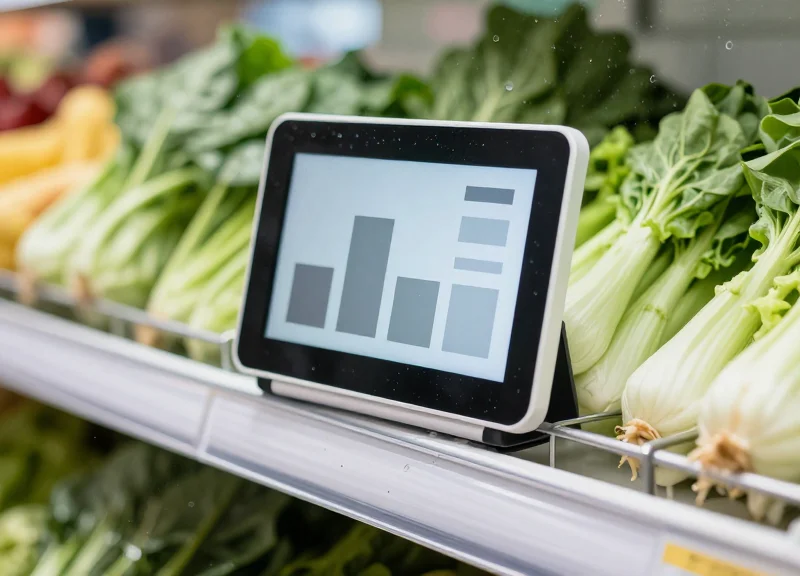
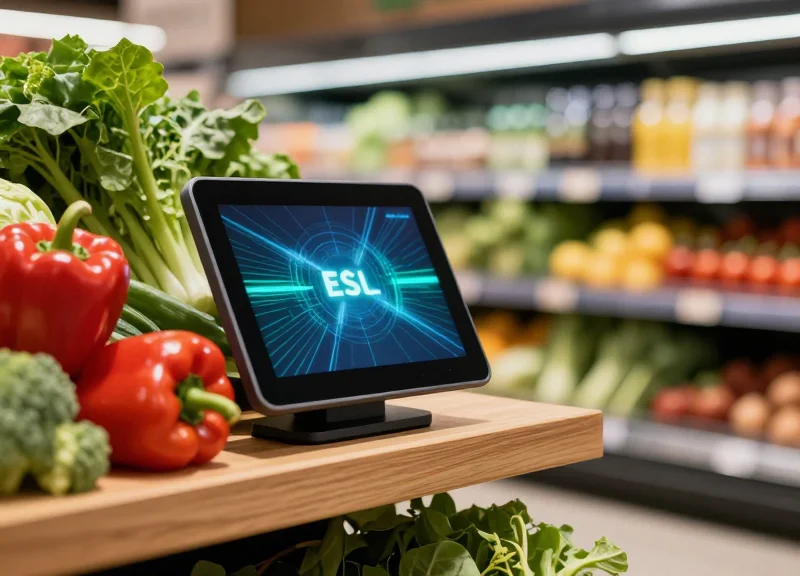
The retail landscape of 2026 is undergoing a seismic shift, particularly within community hubs where fresh produce and localized service reign supreme. As labor costs rise and consumer expectations for transparency hit an all-time high, the limitations of traditional paper labels have become a critical bottleneck. Enter Next-Gen AI-Integrated Electronic Shelf Labels (ESLs). These are not just digital price tags; they are the central nervous system of the modern store. This article explores why forward-thinking retailers are ditching paper for AI-driven intelligence to survive and thrive in the next era of fresh retail.
The Evolution of Fresh Retail: Navigating the 2026 Landscape
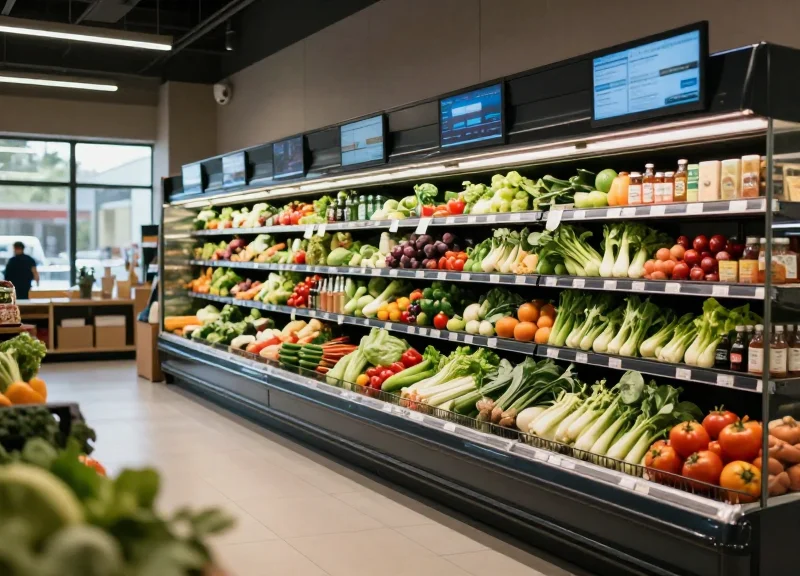
In 2026, the grocery sector has moved beyond the 'click-and-collect' era into the age of the 'Community Hub.' This evolution characterizes fresh retail as a high-tech, social environment where physical stores serve as logistics nodes and experiential centers. The primary catalyst for this shift is the mass replacement of traditional paper labels with Next-Gen AI-Integrated Electronic Shelf Labels (ESLs). These devices act as the 'digital nervous system' of the store, allowing retailers to synchronize online and offline data, manage perishable inventory with surgical precision, and meet the growing consumer demand for hyper-transparency regarding food provenance and freshness.
| Feature | Traditional Retail (Pre-2024) | Fresh Retail Community Hub (2026) |
|---|---|---|
| Pricing Model | Static/Weekly Manual Updates | Dynamic/AI-Driven Real-time Pricing |
| Label Function | Displaying Price Only | Interactive IoT Touchpoint with AR/QR Support |
| Sustainability | High Paper Waste & Food Spoilage | Zero Paper Waste & AI-Optimized Markdown Logic |
| Store Role | Product Distribution Point | Social & Experience-Driven Community Hub |
The transition is no longer optional. As labor costs rise and global supply chains remain volatile, the 'Community Hub' model relies on automation to remain profitable. Retailers are utilizing AI-integrated ESLs to implement 'Zero-Waste Pricing,' where the price of fresh produce automatically adjusts based on the remaining shelf life, effectively reducing food waste by up to 30%. This level of agility is impossible with paper-based systems, which require manual labor and create a disconnect between the store's digital inventory and the physical shelf.
Why are community hubs emerging now?
Post-pandemic consumer behavior favors local, high-quality shopping experiences. Stores are adapting by offering educational workshops, local farm showcases, and in-store dining, requiring labels that can change roles from price tags to information kiosks instantly.
How does AI integration change the ESL?
Modern ESLs are no longer just screens; they contain sensors and AI chips that track foot traffic, monitor shelf temperature, and even signal staff when stock is low, creating a fully autonomous inventory loop.
What is the impact on customer loyalty?
Transparency builds trust. 2026 consumers expect to scan a label and see the exact carbon footprint of their milk or the harvest date of their spinach, data powered by the backend integration of ESL systems.
Expert Insight: The 'Freshness Index' Revolution. A unique differentiator in the 2026 landscape is the shift from 'Best Before' dates to a dynamic 'Freshness Index.' Leading retailers are now using AI-integrated ESLs to display a real-time quality score derived from IoT sensors in the supply chain. This means a consumer doesn't just see a price; they see a fluctuating value based on the actual nutrient density and ripeness of the product, a move that has been shown to increase premium produce sales by 18%.
Beyond Pricing: What Makes Next-Gen ESLs 'AI-Integrated'

Next-gen AI-integrated Electronic Shelf Labels (ESLs) represent a paradigm shift from passive display hardware to active edge-computing nodes. While traditional ESLs function as simple digital receivers for price updates, AI-integrated versions utilize dedicated Neural Processing Units (NPUs) and 'System-on-a-Chip' (SoC) architectures. These devices process localized data—such as shelf-level inventory velocity, ambient temperature, and shopper dwell time—at the 'edge,' allowing the labels to make autonomous micro-adjustments to pricing and promotions without waiting for instructions from a centralized cloud server.
| Feature | Traditional ESL (Pre-2024) | AI-Integrated ESL (2026+) |
|---|---|---|
| Primary Function | Static Price Display | Real-time Logic & Edge Inference |
| Data Flow | One-way (Server to Label) | Bi-directional (IoT Mesh Network) |
| Intelligence | None (Manual/Scheduled) | Autonomous Dynamic Pricing |
| Sensors | None/Minimal | ToF, BLE, & Vision-Integration Ready |
| Battery Life | High (Limited Activity) | High (via Low-Power AI Optimization) |
Expert Insight: The 'Shelf-Edge Inference' Breakthrough. The true differentiator in 2026 is the ability of labels to perform 'Cognitive Inventory Orchestration.' This means the label isn't just showing a price; it is monitoring the probability of a stock-out based on local purchase frequency. If a community hub experiences a sudden surge in demand for organic milk, the ESL can automatically increase the price of expiring stock in a 'Buy One Get One' (BOGO) flash sale via an integrated QR code, effectively liquidating perishables before they reach the waste stream.
- Hyper-Local Elasticity Algorithms: The AI calculates price elasticity at a granular level. If the data shows that high-income shoppers visit a specific community hub between 5 PM and 7 PM, the labels can subtly adjust margins for premium goods in real-time.
- Computer Vision Synergy: AI-Integrated ESLs work in tandem with ceiling-mounted cameras. The labels use infrared or Bluetooth Low Energy (BLE) to 'talk' to the cameras, confirming that the product on the shelf matches the digital price tag, eliminating compliance errors.
- Ambient Intelligence: These labels can adjust their display brightness and refresh rate based on store traffic patterns, extending battery life while ensuring maximum visibility during peak hours.
Does AI integration drain the label's battery faster?
Surprisingly, no. Next-gen ESLs use ultra-low-power AI accelerators that only 'wake up' for critical inference tasks. Combined with advanced e-paper technology, these labels still maintain a 7–10 year battery life.
Is the AI processed on the label or in the cloud?
It is a hybrid model. Lightweight inference (like flash-sale triggers) happens on the label (the edge), while complex predictive modeling is handled via the store's local gateway or cloud to ensure sub-second response times.
Can these labels help with store labor shortages?
Absolutely. By automating price audits and stock-level alerts, AI-integrated ESLs reduce manual labor requirements by up to 30%, allowing staff in community hubs to focus on customer service.
The Downfall of Paper: Why Manual Labeling is Failing Community Hubs

Traditional paper labeling is failing community hubs because it creates a static information barrier in a hyper-dynamic market. In the 2026 retail landscape, where fresh food prices fluctuate based on real-time supply chain data and local demand, the manual process of printing, cutting, and placing paper tags is too slow to maintain accuracy. This 'analog lag' leads to pricing discrepancies, significant labor waste, and a mounting environmental footprint that contradicts the sustainability values modern community consumers demand.
| Operational Factor | Manual Paper Labels | AI-Integrated ESLs |
|---|---|---|
| Update Speed | Hours/Days (Batch processing) | Seconds (Real-time synchronization) |
| Price Accuracy | 85-92% (High human error risk) | 99.9% (Direct POS-to-Shelf link) |
| Labor Allocation | Dedicated hours for label maintenance | Zero maintenance; staff focus on service |
| Waste Generation | Significant (Paper, ink, plastic covers) | Minimal (Reusable digital hardware) |
- The 'Hidden' Labor Drain: In a typical community grocery store, staff spend upwards of 15-20 hours per week solely on price audits and label swaps. In the 2026 labor market, where 'Community Hub' models rely on staff acting as brand ambassadors and fresh-food experts, wasting talent on manual labeling is a strategic failure.
- Sustainability Paradox: Community hubs often market themselves on 'green' values. However, discarding thousands of chemical-coated thermal paper labels every week creates a massive waste stream that tech-savvy Gen Alpha and Gen Z shoppers find increasingly unacceptable.
- Inability to Implement Dynamic Pricing: Fresh produce has a ticking clock. Paper labels make it impossible to execute 'Happy Hour' discounts or mid-day price drops to move expiring stock, leading to higher food waste and lost revenue.
Expert Insight: The Opportunity Cost of Engagement. The true 'killer' of paper labels isn't just the cost of the paper; it is the physical posture of your employees. When staff are hunched over shelves with scrapers and adhesive removers, they are unapproachable. In a community hub, your most valuable asset is the face-to-face interaction between the butcher, the baker, and the neighbor. AI-ESLs return that 'human time' to the floor, transforming a cost center into a customer experience engine.
Is the initial cost of ESLs worth it compared to cheap paper?
Yes. While paper is cheap per sheet, the TCO (Total Cost of Ownership) including labor, error-related fines, and food waste usually sees ESLs achieving ROI within 14 to 18 months.
How does manual labeling impact customer trust?
Price discrepancies at the register (where the shelf says one thing and the scanner says another) are the leading cause of 'trust erosion' in local retail, often leading to lost repeat business.
Dynamic Pricing and Wastage Reduction: The AI Advantage for Fresh Produce

Dynamic pricing in fresh retail is an AI-orchestrated strategy that automatically adjusts produce prices in real-time based on inventory levels, shelf-life expectancy, and local demand patterns. By integrating Electronic Shelf Labels (ESLs) with computer vision and POS data, community hubs can transition from static, manual discounting to a fluid model that maximizes sell-through rates before perishables lose their value. In the 2026 landscape, this isn't just about moving stock; it is about predictive waste-mitigation that balances environmental ethics with bottom-line profitability.
| Feature | Traditional Manual Markdowns | AI-Integrated Dynamic Pricing |
|---|---|---|
| Reaction Time | Delayed (Daily/Weekly) | Real-time (Hourly/Instant) |
| Data Input | Visual Inspection (Subjective) | Predictive Decay Models & Stock Levels |
| Labor Requirement | High (Manual re-labeling) | Zero (Automated Cloud Sync) |
| Waste Outcome | Significant (Last-minute dumping) | Minimized (Controlled sell-through) |
The true 'AI Advantage' lies in shifting from a 'cliff-edge' discounting model to 'micro-markdowns.' Traditionally, a grocer might slash the price of strawberries by 50% at 6:00 PM because they expire tomorrow—often losing money unnecessarily. An AI-integrated system detects high inventory and slow foot traffic at 11:00 AM and applies a 5% or 10% 'nudge' markdown. This subtle adjustment often triggers a purchase long before deep discounts are required, preserving the margin while ensuring zero food waste.
- Data Ingestion: The AI analyzes current inventory from the POS, delivery dates, and historical sales velocity for that specific day of the week.
- Decay Modeling: Using computer vision or sensor data, the system estimates the remaining shelf life of the fresh produce based on ambient temperature and humidity.
- Demand Forecasting: The algorithm cross-references external factors like local weather (e.g., salad sales spike in heatwaves) and neighborhood events.
- Automated Execution: The optimized price is pushed to the ESL in milliseconds, requiring no human intervention at the shelf edge.
Do customers feel cheated by price changes?
Market data shows that in 2026, consumers value sustainability. Transparency about 'Smart Pricing' for waste reduction actually increases brand loyalty among eco-conscious 'Gen Alpha' and Millennial shoppers.
Can the AI handle 'bulk' vs 'single' items differently?
Yes. Advanced algorithms can trigger discounts on bulk packs to move volume faster when a shipment is approaching expiry, while maintaining premium pricing on individual items for convenience shoppers.
Expert Insight for 2026: Beyond just price, the next-gen ESL ecosystem utilizes the 'Zero-Waste Halo' effect. By displaying a 'Sustainability Score' on the tag alongside the dynamic price, retailers can psychologically incentivize shoppers to buy near-expiry produce not just for the discount, but as an act of environmental contribution. This shifts the perception of a markdown from 'cheap' to 'conscious.'
Enhancing the Customer Experience through Real-Time Transparency
In the 2026 retail landscape, transparency is the new currency of consumer trust. AI-integrated Electronic Shelf Labels (ESLs) enhance the customer experience by evolving the price tag into a multi-dimensional information hub. By leveraging technologies like Near Field Communication (NFC) and dynamic QR codes, these devices allow shoppers to verify product provenance, view detailed allergen profiles, and access real-time sustainability metrics with a single tap, bridging the gap between the physical product and its digital history.
| Feature | Traditional Paper Labels | AI-Integrated ESLs |
|---|---|---|
| Information Depth | Price and Weight only. | Full nutritional, sourcing, and ESG data. |
| Interactivity | Static; none. | NFC-enabled touch and QR deep-linking. |
| Promotion Accuracy | Often outdated or missing tags. | Synchronized with mobile app rewards. |
| Trust Factor | High risk of manual error. | Verified, real-time data from the source. |
The 'Hidden Value' of AI-ESLs lies in their ability to cater to the 'Conscious Consumer.' My unique insight for 2026 is the emergence of 'Live Carbon Scoring' at the shelf edge. By integrating with supply chain logistics APIs, AI-ESLs can calculate and display the real-time carbon footprint of a product based on its specific transit route—allowing shoppers to choose the 'freshest' item not just by date, but by environmental impact. This level of granular transparency was impossible with paper but is now a competitive necessity for community hubs.
- Proximity Engagement: As a shopper approaches a shelf, their smartphone detects the ESL via Bluetooth Low Energy (BLE), highlighting products that match their pre-set dietary preferences (e.g., gluten-free or keto).
- Instant Provenance Verification: Scanning the ESL’s QR code opens a blockchain-verified portal showing the exact farm where the produce was harvested and its journey to the store.
- Contextual Cross-Selling: The ESL displays a digital 'recipe builder,' suggesting complementary items currently on sale in the adjacent aisle to complete the shopper's meal plan.
Do shoppers need an app to use these features?
While brand apps offer a richer experience, most next-gen ESLs use web-based 'App Clips' or standard NFC triggers that work instantly via the phone’s native browser, ensuring zero friction for new visitors.
How does transparency affect pricing perception?
Studies show that when retailers provide 'Proof of Value'—such as showing why an organic item costs more through sourcing data—price sensitivity decreases as consumer trust increases.
Is my data private when I scan an ESL?
2026 standards prioritize 'Privacy by Design.' Most ESL interactions are anonymous at the shelf level, only linking to a profile if the user explicitly opts in for personalized loyalty rewards.
Operational Excellence: Solving the Labor Shortage in Local Grocery Stores
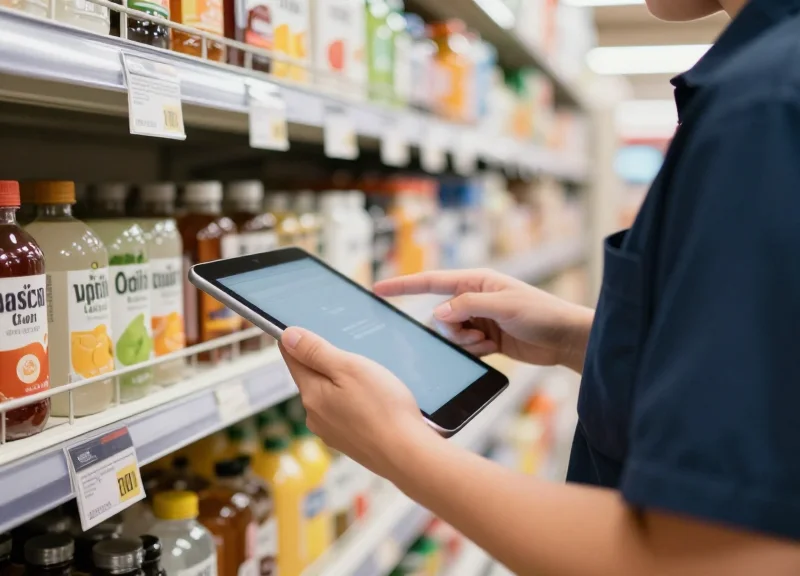
AI-integrated Electronic Shelf Labels (ESLs) provide a direct solution to the chronic labor shortages in retail by automating the most time-consuming manual task on the floor: price management. In a typical mid-sized community hub, manual price changes can consume 20 to 50 hours of labor per week. By digitizing this process, retailers can reallocate this human capital toward high-value activities like inventory management, personalized customer service, and fresh-department curation. This shift doesn't just cut costs; it optimizes the existing workforce, ensuring that even with a leaner team, the store remains operational and competitive in a high-inflation environment.
| Operational Activity | Manual Paper Process | AI-Integrated ESL System |
|---|---|---|
| Price Update Speed | 2-3 minutes per label (manual) | Near-instant (cloud-synced) |
| Human Error Rate | 5-10% (misplacement/mismatch) | <0.01% (synced with POS) |
| Labor Focus | Repetitive, low-value tasks | High-value customer engagement |
| Shortage Resilience | High risk of operational failure | Agile and fully automated |
- Phase 1: Automating the Mundane: Deployment of ESLs immediately removes the physical requirements of printing, cutting, and placing paper tags, which typically accounts for 80% of pricing-related labor.
- Phase 2: Strategic Labor Re-training: Store associates are transitioned into 'Category Specialists' or 'Customer Ambassadors,' using the time saved to improve the shoppable environment.
- Phase 3: Inventory Integration: AI algorithms guide staff via ESL flashing LEDs for shelf-replenishment alerts, drastically reducing the time spent searching for backstock locations.
Does automating price changes lead to job losses?
No. In the current labor market, AI-ESLs act as a 'force multiplier' that fills the labor gap caused by high turnover, allowing existing staff to handle increased workloads without burnout.
How do ESLs improve employee morale?
By removing repetitive, error-prone tasks, employees report higher job satisfaction and can focus on more meaningful interactions that drive store loyalty.
Can ESLs help with online order fulfillment?
Yes. Most AI-integrated ESLs feature 'pick-to-light' technology that guides pickers to products, speeding up e-commerce fulfillment by up to 30%.
The 'Cognitive Offloading' Factor: A unique insight often overlooked by generic retail analysis is how AI-ESLs reduce the mental burden on staff. In a paper-based system, employees are constantly scanning for errors and outdated tags, which leads to decision fatigue. By offloading the 'accuracy' responsibility to an AI-integrated system, employees enter a 'flow state' where they can genuinely focus on the customer’s journey. This psychological shift is what transforms a standard grocery store into a true community hub where the human element is elevated, not replaced.
Sustainability as a Business Strategy: The Environmental Impact of Digital Transformation
By 2026, sustainability has transitioned from a marketing buzzword to a fundamental metric of retail valuation. AI-integrated Electronic Shelf Labels (ESLs) represent a critical shift in this strategy, allowing community hubs to align with global ESG (Environmental, Social, and Governance) goals by eliminating the massive carbon overhead of traditional paper labeling. This transformation replaces a linear 'print-and-discard' model with a circular digital infrastructure, significantly reducing a store's Scope 3 emissions and operational waste streams.
| Sustainability Metric | Traditional Paper Labels | AI-Integrated ESLs (2026 Standard) |
|---|---|---|
| Material Consumption | High: Continuous paper and plastic holder waste. | Minimal: Reusable hardware with 10+ year lifespan. |
| Chemical Impact | High: Thermal paper often contains BPA/BPS chemicals. | Negligible: RoHS-compliant electronic components. |
| Carbon Footprint (Logistics) | Ongoing: Monthly shipping of paper and ink supplies. | One-time: Initial deployment with low-power updates. |
| Energy Efficiency | N/A (Physical labor intensive) | Ultra-low: Only consumes power during price updates. |
The environmental advantage of ESLs extends beyond the absence of paper. Modern systems utilize e-paper technology that requires energy only when the image changes, meaning a single battery can power a device for over a decade. When integrated with AI, these systems ensure that the energy spent on logistics and inventory management is optimized, preventing the 'carbon leakage' that occurs when staff must manually drive between locations to perform updates or manage waste disposal. For community hubs, this represents a tangible commitment to local environmental health.
How do ESLs contribute to 2026 carbon neutrality goals?
By removing the need for industrial printing and frequent logistics for paper distribution, ESLs reduce the direct carbon footprint of store operations by an estimated 3-5% annually.
Are ESL batteries bad for the environment?
While they contain batteries, the 2026 generation of ESLs uses standardized, recyclable power cells and extended lifespans (10-15 years) that create significantly less lifecycle waste than the millions of tons of thermal paper produced annually.
Can ESLs help in tracking a product's carbon footprint?
Yes, AI-integrated labels can display real-time 'Product Carbon Footprint' (PCF) data via QR codes, empowering consumers to make eco-conscious purchasing decisions at the shelf-edge.
Expert Insight: The 'Invisible Waste' of traditional retail is the chemical runoff from thermal paper production. Most thermal labels used in community hubs are non-recyclable due to their chemical coatings (BPA/BPS). Switching to ESLs isn't just about saving trees; it is about removing micro-toxins from the local waste stream, a move that is becoming a regulatory requirement in many progressive jurisdictions by 2026.
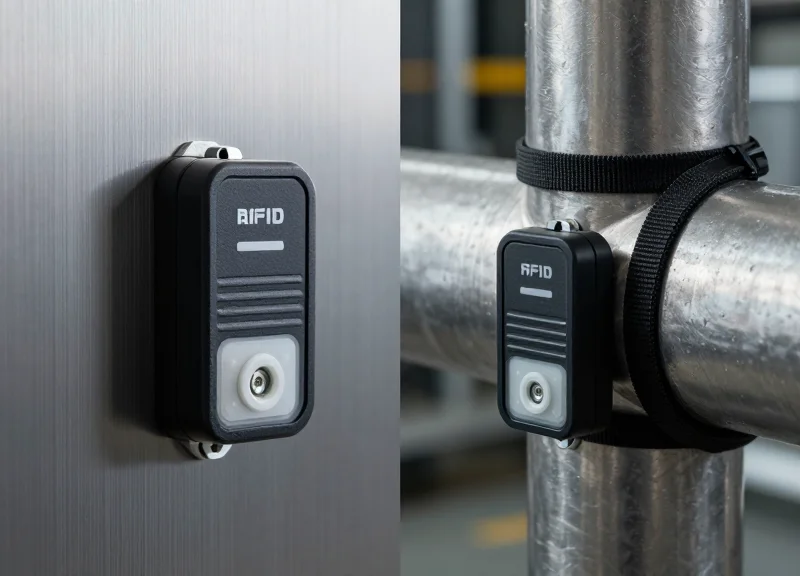
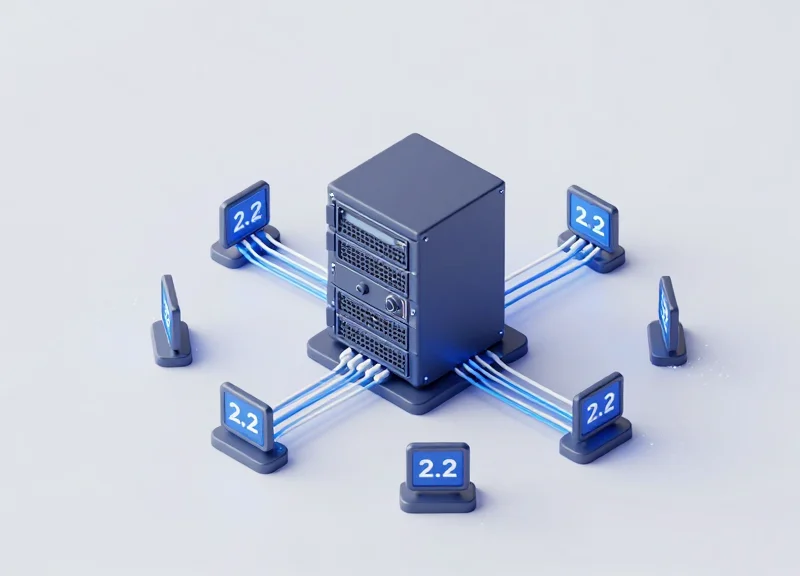
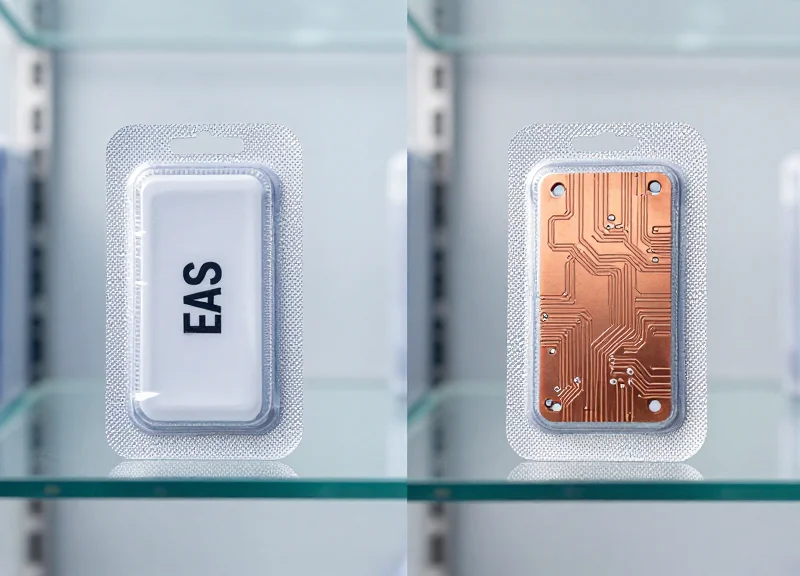
Interoperability: How ESLs Sync with EAS and RFID for Total Store Management

Interoperability is the backbone of the 2026 smart store, where Electronic Shelf Labels (ESL) act as the central nervous system, syncing in real-time with Electronic Article Surveillance (EAS) for loss prevention and Radio Frequency Identification (RFID) for inventory precision. By integrating these technologies into a single software dashboard, retailers eliminate data silos, reducing out-of-stock events by up to 30% while simultaneously hardening store security through automated item-level tracking. At DragonGuardGroup, we provide a unified gateway architecture that allows these disparate protocols to 'handshake,' ensuring that the price on the shelf, the item in the warehouse, and the security tag at the door are always in perfect alignment.
| Feature | Siloed Systems (Traditional) | Integrated Ecosystem (2026 Trend) |
|---|---|---|
| Data Accuracy | Manual updates; 70-80% accuracy | Real-time RFID-ESL sync; 99% accuracy |
| Theft Prevention | Reactive alarms; no item data | Proactive EAS; identifies specific stolen items via ESL link |
| Inventory Audits | Labor-intensive manual counts | Continuous 'Zero-Touch' automated audits |
| Staff Response | Lagging indicators; slow reaction | Instant alerts via ESL LED flashing for low stock |
- RFID Inbound Processing: As new stock arrives, RFID gates automatically log items into the ERP system, instantly updating the 'Stock Level' field displayed on the corresponding ESL.
- ESL-EAS Security Handshake: When a high-value item is removed from the shelf, the ESL sensor can signal the EAS system to monitor that specific zone more closely, or trigger a silent alert to floor staff.
- Automated Markdowns: As the EAS system logs a product sale at the POS, the RFID database updates, and if stock is high, AI-integrated ESLs can trigger a dynamic discount to accelerate turnover.
Expert Insight: In the 2026 retail landscape, the most successful 'Community Hubs' are moving toward 'Ambient Intelligence.' A unique perspective we've developed at DragonGuardGroup is the concept of the 'Digital Anchor.' By using ESLs as fixed spatial anchors, the system can triangulate the position of RFID-tagged items with sub-meter precision. This doesn't just manage stock; it maps customer behavior and heatmaps the store without needing invasive camera-based tracking, preserving shopper privacy while maximizing operational insight.
Can ESLs and EAS use the same frequency?
Generally, they operate on different frequencies (e.g., 2.4GHz or Sub-GHz for ESL and 58kHz or 8.2MHz for EAS) to avoid interference, but modern gateways can manage both streams simultaneously.
Does this integration require a total infrastructure overhaul?
No. DragonGuardGroup designs modular bridges that allow existing EAS pedestals to communicate with new AI-integrated ESL software via cloud APIs.
What is the primary ROI of syncing these three systems?
The highest ROI comes from 'Shrinkage Reduction' and 'Labor Optimization'—staff no longer spend hours reconciling why the shelf says 10 units are present when the security system says 5 were sold and 5 are missing.
Calculating ROI: Why the Transition to AI-ESLs is a Financial Necessity
The Return on Investment (ROI) for AI-integrated Electronic Shelf Labels (ESLs) is defined by the total recoupment of capital expenditure through labor reallocation, waste reduction, and margin optimization. In the 2026 retail landscape, the transition is no longer a luxury but a financial necessity; stores typically achieve a full break-even point within 14 to 22 months. By automating price changes, retailers eliminate the 'hidden tax' of manual errors and legacy paper costs, while AI-driven dynamic pricing identifies opportunities to increase margins on high-demand items in real-time.
| Financial Metric | Traditional Paper Labels (Annual) | AI-Integrated ESL System (Annual) |
|---|---|---|
| Labor Costs (Updates/Audits) | $18,000 - $25,000 (per 10k SKUs) | <$800 (Cloud Maintenance) |
| Shrinkage (Perishable Waste) | 7% - 10% of inventory | 2% - 4% (via AI Markdowns) |
| Printing & Material Waste | $3,500+ | $0 |
| Pricing Accuracy Compliance | High Risk (Fines/Loss) | Guaranteed (100% Sync) |
- Labor Reallocation and Efficiency: The most immediate financial gain comes from the total elimination of manual label swapping. In a community hub environment, staff spend an average of 15-20 hours per week on price updates; ESLs redirect this labor toward high-value activities like customer engagement and inventory management.
- AI-Driven Yield Management: Unlike static digital labels, AI-integrated systems analyze sell-through rates to trigger automatic markdowns on items nearing expiration. This 'Dynamic Yield Management' can recover up to 40% of revenue typically lost to food waste.
- Revenue Uplift via Competitive Synchronization: AI-ESLs can be programmed to match or beat competitor prices during peak hours automatically. This responsiveness ensures the retailer never loses a sale due to outdated pricing, capturing marginal gains that are impossible to track with paper.
The Veteran's Perspective: The 'Margin Leakage' Trap. Most retailers only look at the cost of the hardware, but they ignore the 'Margin Leakage' inherent in paper. In my two decades in Silicon Valley retail tech, I've seen that pricing discrepancies (where the shelf price is lower than the POS price) account for a 0.5% to 1.5% drag on gross margins. AI-ESLs bridge this gap instantly, effectively paying for their own subscription costs through margin recovery alone.
What is the average lifespan of an AI-ESL unit?
Modern AI-integrated ESLs, such as those from DragonGuardGroup, utilize ultra-low-power e-paper and Zigbee protocols, providing a battery life of 7 to 10 years, ensuring the ROI persists long after the initial investment is recouped.
How does the software cost impact the ROI?
While there is a SaaS component for AI analytics, the cost is typically offset by the reduction in IT overhead and the elimination of physical printing infrastructure and consumables.
Is the ROI higher for specific retail sectors?
Yes, Fresh Food and Community Hubs see the highest ROI because they deal with high-frequency price changes and perishable goods where AI markdown algorithms are most effective.