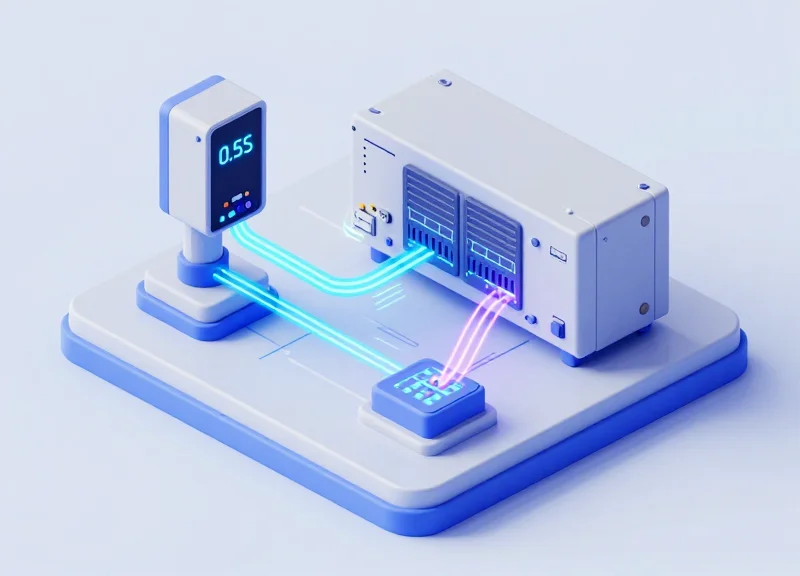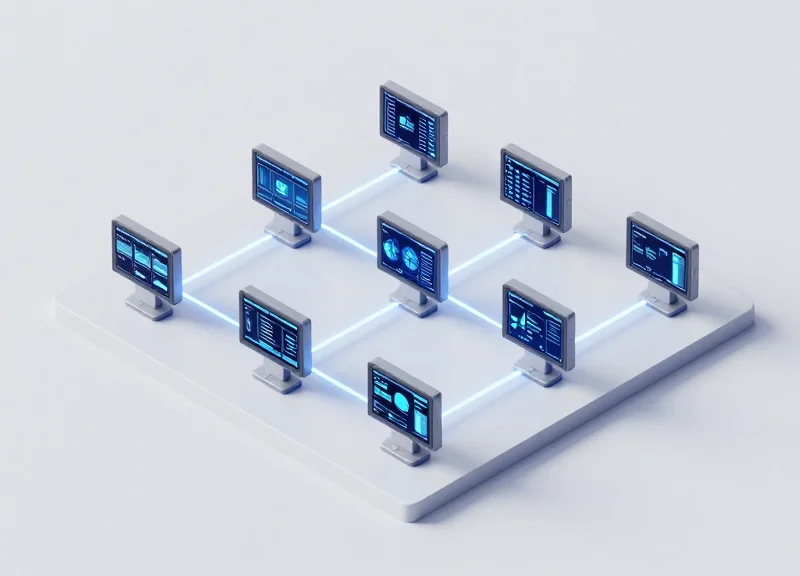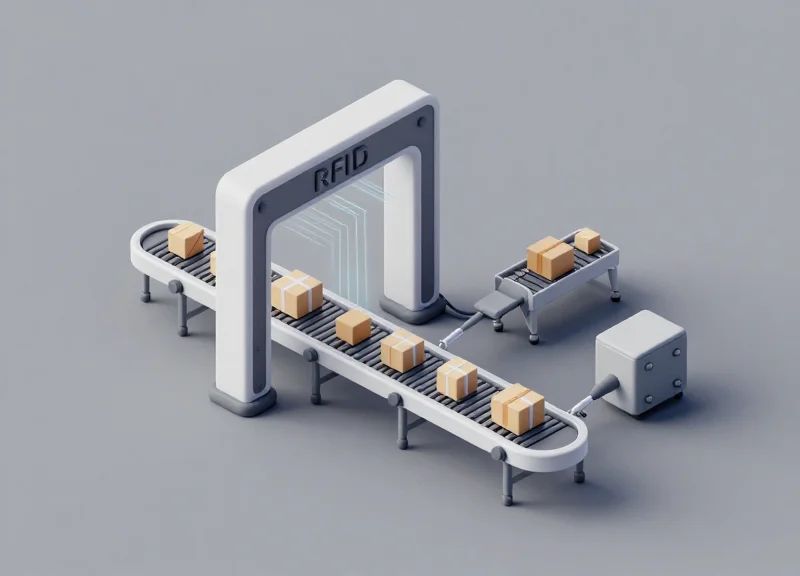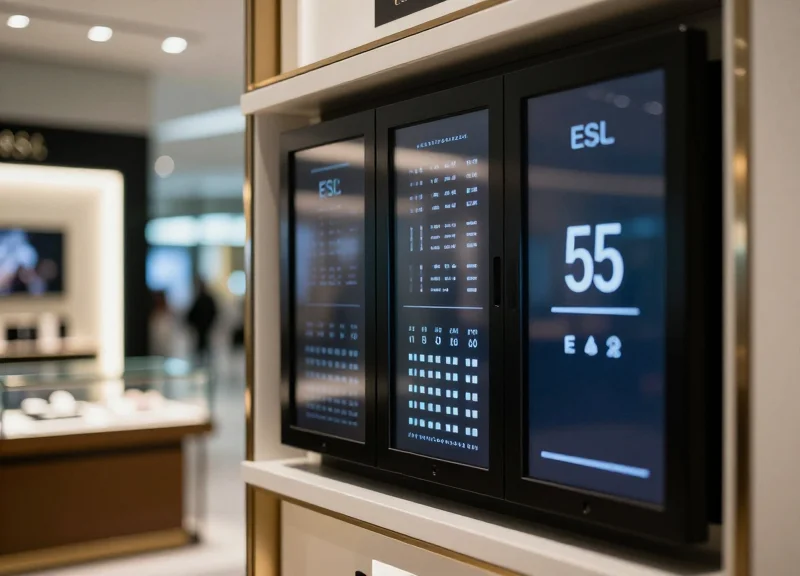
The manual era of logistics is fading. In the high-speed environment of 2026 smart factories, waiting for a barcode scan is a costly delay. RFID smart cabinets are emerging as the backbone of autonomous inventory management, providing the precision and real-time data flow that modern Industry 4.0 ecosystems demand. While barcodes revolutionized the 20th century, the complexity of modern manufacturing requires a hands-free, error-proof solution that keeps pace with automated production lines.
The Evolution of Industrial Inventory: Moving Beyond the Barcode
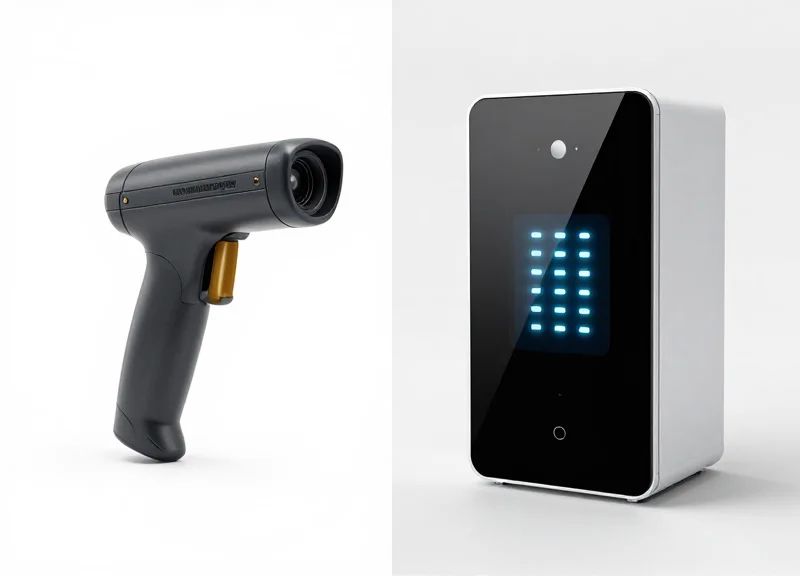
The evolution of industrial inventory management is currently undergoing its most significant shift since the introduction of the Universal Product Code (UPC) in 1974. For decades, barcodes provided a reliable, low-cost method for tracking assets; however, in the context of Industry 4.0, they have become a primary source of 'data latency.' Moving beyond the barcode means transitioning from a reactive system—where an operator must manually initiate a data capture event—to a proactive, sensing environment where inventory is tracked in real-time without human intervention. By 2026, the reliance on line-of-sight scanning will be viewed as a legacy bottleneck that prevents the realization of truly autonomous smart factory logistics.
| Feature | Traditional Barcode Systems | RFID Smart Cabinets |
|---|---|---|
| Data Capture | Manual, Line-of-Sight required | Automatic, Bulk sensing (No Line-of-Sight) |
| Processing Speed | 1-3 seconds per item | Hundreds of items per second |
| Data Capacity | Static (SKU only) | Dynamic (Serial, Expiry, Batch, History) |
| Human Error | High (Missed scans, double scans) | Near Zero (Automated reconciliation) |
| Durability | Low (Damaged labels fail to read) | High (Tags survive oil, heat, and wear) |
In my two decades observing tech cycles in Silicon Valley, I've identified what I call the 'Physical-Digital Gap.' In high-throughput factories, every second spent aligning a barcode scanner is a second where the physical reality of your inventory is out of sync with your Digital Twin. Barcodes are physically limited by physics: light must bounce off a surface and return to a sensor. RFID breaks this barrier by using electromagnetic fields, allowing smart cabinets to 'know' their contents every millisecond. For 2026 standards, if your data requires a human to trigger it, your data is already too late for your AI-driven supply chain.
Why is the barcode reaching its limit in 2026?
As factories move toward 5G-enabled, AI-managed logistics, the manual 'stop-and-scan' workflow creates a massive data bottleneck that the barcode's physics cannot solve.
What is the historical significance of the shift to RFID?
We are moving from 'Information on the Object' (barcode) to 'Intelligence within the Environment' (RFID Smart Cabinets), where the storage unit itself becomes a compute node.
How does RFID improve labor utilization?
It eliminates 'search and find' time. In traditional barcode setups, employees spend up to 20% of their shift just verifying inventory levels, a task RFID automates entirely.
Defining the 2026 Standard: What Makes an RFID Smart Cabinet?
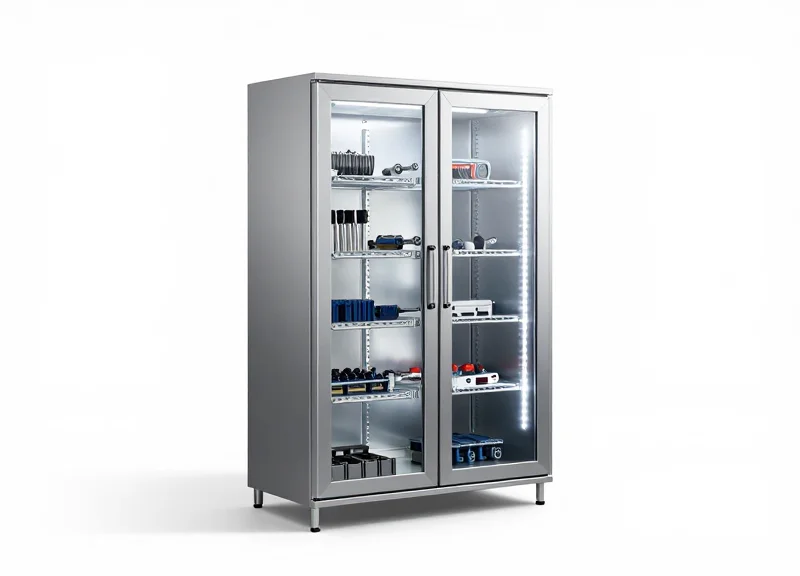
By 2026, the definition of an RFID smart cabinet has evolved from a simple 'connected locker' to a sophisticated edge-computing node. A true industrial-grade RFID smart cabinet is an autonomous, high-security storage system that utilizes Ultra-High Frequency (UHF) radio waves to provide 99.9% inventory visibility without human intervention. Unlike traditional storage, these cabinets create a closed-loop data environment where every movement of a tool, part, or consumable is timestamped, localized, and attributed to a specific user via biometric or NFC access control.
| Component | 2026 Standard Requirement | Primary Function |
|---|---|---|
| RFID Hardware | Multi-static UHF Antenna Arrays | Eliminates blind spots and prevents 'stray reads' outside the unit. |
| Processing Layer | Edge AI Gateway | Filters raw tag data locally to reduce cloud latency and bandwidth costs. |
| Sensor Fusion | Integrated Load Cells & LiDAR | Verifies item weight and volume for non-tagged consumables (e.g., liquids). |
| Connectivity | 5G / Wi-Fi 6E Mesh | Ensures continuous operation and OTA updates in dense factory environments. |
Expert Insight: The Shift to Spatial Intelligence. The critical differentiator in 2026 is 'Spatial Intelligence.' Previous generations could only tell you that an item was 'in the cabinet.' Modern standards require the cabinet to know precisely which shelf and which bin an item occupies. By using phase-based localization, these cabinets guide workers via LED 'pick-to-light' systems, reducing search time by up to 80% compared to legacy barcode-based tool cribs.
- Automated Restock Triggers: The software layer automatically generates purchase orders or ERP alerts when stock levels fall below safety thresholds based on real-time consumption rates.
- Environmental Monitoring: Internal humidity and temperature sensors protect sensitive aerospace components or chemicals, logging environmental compliance for audit trails.
- Zero-Touch Auditing: The system performs a full inventory cycle count every 60 seconds, eliminating the need for annual manual shutdowns or weekend stocktakes.
Can RFID cabinets track metal objects effectively?
Yes. While metal reflects RF signals, the 2026 standard utilizes 'on-metal' tags and circular polarized antennas specifically designed to mitigate interference and ensure 100% read rates for tools and hardware.
How does the cabinet handle power or network outages?
Standard specifications now include local data caching and internal battery backups (UPS). If the network drops, the cabinet continues to track access and inventory locally, syncing with the cloud immediately upon reconnection.
Is the software compatible with existing ERP systems?
Industrial cabinets are now built on open API architectures, allowing native integration with SAP, Oracle, and Microsoft Dynamics to ensure the digital twin matches physical reality.
Real-Time Visibility: The End of Inventory 'Blind Spots'

Real-time visibility in smart factory logistics is the ability to maintain a continuous, 100% accurate digital twin of physical inventory within a secure storage environment, updated every millisecond without human intervention. Unlike traditional systems that rely on periodic scans, RFID smart cabinets utilize an 'ambient intelligence' model where the internal hardware constantly interrogates the storage space. This eliminates 'blind spots'—those critical gaps in time between manual counts where items are lost, expired, or misplaced—turning inventory management from a reactive chore into a proactive data stream.
| Feature | Manual/Barcode Systems | RFID Smart Cabinets (2026 Standard) |
|---|---|---|
| Update Frequency | Periodic (Daily/Weekly) | Instantaneous (Real-Time) |
| Data Accuracy | 85-92% (Human Error prone) | 99.9% (Sensor-driven) |
| Labor Requirement | High (Manual scanning) | Zero (Autonomous tracking) |
| Visibility Gaps | Frequent (Post-scan decay) | None (Continuous awareness) |
| Inventory Velocity | Delayed reporting | Predictive replenishment |
The shift to the 2026 standard is driven by the move from 'Transactional Inventory' to 'Event-Driven Inventory.' In a transactional model, you only know what you have when someone remembers to scan it. In an event-driven model, the cabinet itself acts as the observer. When a technician opens the door and removes a specialized tool or a high-value consumable, the system records the event, identifies the user via biometric or RFID badge access, and updates the global ERP system before the cabinet door even closes. This level of granularity is what allows modern factories to operate with leaner safety stocks without risking line-down scenarios.
How does real-time visibility affect cycle counting?
It effectively renders cycle counting obsolete. Since the cabinet maintains a perpetual inventory state with near-perfect accuracy, there is no longer a need to halt operations for manual verification audits.
Can these cabinets track items with high liquid or metal content?
While these materials used to be 'blind spots' for RFID, the 2026 standard utilizes specialized on-metal tags and high-sensitivity UHF antennas that leverage signal bouncing to ensure 100% readability even in challenging environments.
What is the 'Telemetry of Things' in smart logistics?
This is our unique expert perspective: In 2026, we aren't just tracking location; we are tracking health. Smart cabinets now provide telemetry on shelf-life, temperature-sensitive storage duration, and usage patterns, allowing for automated 'First-Expiring, First-Out' (FEFO) logic.
By removing the human element from data entry, factories eliminate the 'drift' that naturally occurs in inventory databases. When the physical reality matches the digital record at all times, the entire supply chain becomes more resilient. Procurement teams can automate reorders based on actual consumption rates rather than estimated averages, directly impacting the bottom line by reducing tied-up capital in excess stock.
The Cost of Inaccuracy: How RFID Cabinets Slash Operational Waste
In the context of 2026 smart factory logistics, inaccuracy isn't just a clerical error; it is a systemic drain on capital. The 'Cost of Inaccuracy' is the cumulative financial impact of labor overhead spent on manual searches, emergency procurement premiums, and—most critically—unplanned production downtime. RFID smart cabinets slash this waste by maintaining a 'perpetual inventory' state, ensuring that the digital twin of your inventory matches physical reality with 99.9% precision, effectively neutralizing the human-error component of asset management.
| Waste Category | Legacy Barcode/Manual Impact | RFID Smart Cabinet Solution |
|---|---|---|
| Search Time | Average of 15-20 minutes per shift/worker looking for tools or parts. | Real-time GPS-like localization within cabinets; zero search time. |
| Emergency Stocking | High costs for overnight shipping due to 'surprise' stockouts. | Automated low-stock triggers prevent emergency orders. |
| Shrinkage/Loss | 3% to 7% annual loss of small high-value assets. | 100% accountability through badge-linked access and automated logging. |
| Production Downtime | Can cost $10,000+ per hour if a critical component is missing. | Guaranteed availability of mission-critical consumables and tools. |
Beyond simple counting, RFID cabinets address the 'Ghost Asset' phenomenon—items that appear in the ERP system but are physically missing or broken. When a technician retrieves a calibrated tool from an RFID cabinet, the system not only logs the removal but can also verify the tool's remaining service life or calibration status. This prevents the downstream waste of using faulty equipment, which often leads to expensive rework or product recalls.
- Unique Insight: The 'Zero-Touch Compliance' Advantage: Most waste in factory logistics stems from 'process friction.' When workers find check-out procedures tedious, they bypass them. RFID cabinets provide 'Zero-Touch Compliance'—the furniture does the work. By shifting the burden of data entry from the human to the cabinet, factories see a 40% increase in data reliability compared to even the most disciplined barcode-scanning environments.
How quickly do RFID cabinets typically pay for themselves?
Most smart factory implementations see a full ROI within 12 to 18 months, primarily driven by a 25% reduction in inventory holding costs and the total elimination of manual cycle-counting labor.
Can RFID cabinets help with 'First-In, First-Out' (FIFO) compliance?
Yes. Advanced cabinets use LED pick-to-light systems to guide users to the oldest stock first, reducing waste from expired perishables or chemical compounds.
What is the impact on worker morale?
By removing the frustration of missing tools and the administrative burden of manual logging, RFID cabinets improve 'wrench time'—allowing technicians to focus on high-value tasks rather than paperwork.
Seamless Integration: Connecting Cabinets to ERP and WMS
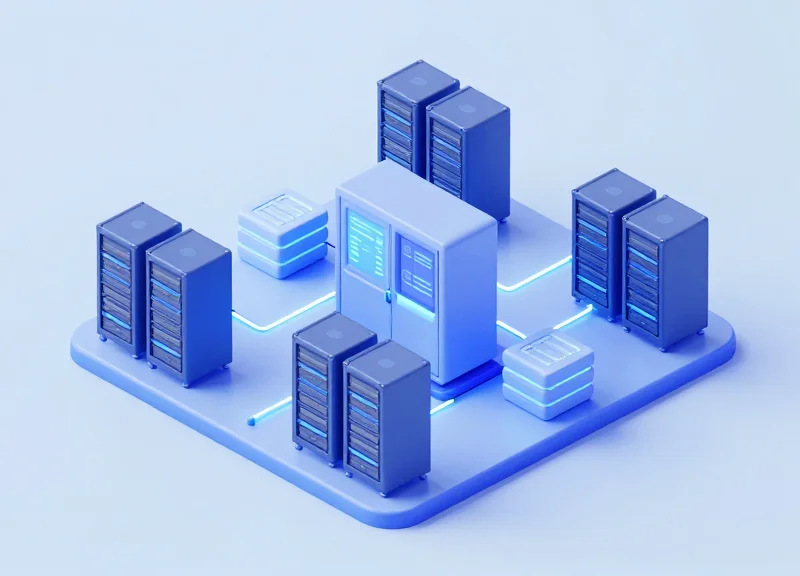
In the 2026 smart factory landscape, an RFID smart cabinet is no longer a standalone piece of furniture; it is a critical IoT edge device. Seamless integration refers to the ability of these cabinets to automatically synchronize physical inventory movements with digital records in Enterprise Resource Planning (ERP) and Warehouse Management Systems (WMS) without human intervention. By utilizing RESTful APIs, MQTT protocols, or direct database middleware, smart cabinets transform 'black hole' storage areas into transparent, live data feeds that empower predictive analytics and automated procurement.
- Edge Data Capture: The cabinet's internal RFID reader detects a tag movement (removal or return) and processes the event at the edge to filter out 'noise' or ghost reads.
- Authentication & Contextualization: The system matches the inventory change with the user ID (via badge scan) and the specific project or work order currently active.
- API Transmission: Data is pushed via secure protocols (HTTPS/TLS) to the central integration layer, ensuring the ERP receives a validated transaction packet.
- Automated Reconciliation: The WMS updates stock levels in milliseconds, triggering immediate ledger adjustments and, if necessary, automated reorder triggers.
| Data Point | Source (Cabinet) | Destination (ERP/WMS) | Business Outcome |
|---|---|---|---|
| SKU Consumption | Real-time RFID scan | Inventory Module | Accurate COGS calculation |
| User Access Logs | Biometric/Badge reader | HR/Audit Module | Enhanced accountability & security |
| Stock Thresholds | Minimum level trigger | Procurement Module | Zero-downtime automated ordering |
| Item Aging | Timestamped entry | Quality Control | FIFO compliance & waste reduction |
Expert Insight: The 'Ghost Inventory' Buffer. While most competitors focus on simple data syncing, the 2026 standard leverages 'Shadow Mapping.' This involves the cabinet maintaining a local, high-frequency cache that allows for 100% operational uptime even during enterprise network outages. Once the connection is restored, the cabinet performs a 'delta-sync' that resolves chronological conflicts, ensuring the ERP never misses a transaction that occurred during a 'blind' period.
Does integration require replacing our current WMS?
No. Modern RFID cabinets are designed with an 'API-first' architecture, meaning they can plug into legacy systems like SAP, Oracle, or Microsoft Dynamics via standardized middleware or custom webhooks.
How is data security handled during transmission?
Data is typically encrypted using AES-256 at the edge and transmitted via TLS 1.3, ensuring that sensitive production and personnel data remain protected from interception.
What happens if the Wi-Fi goes down?
Smart cabinets feature local storage capabilities (Edge Computing) that record all transactions offline and automatically synchronize with the WMS the moment connectivity is restored.
Enhanced Security and Accountability in High-Value Asset Management
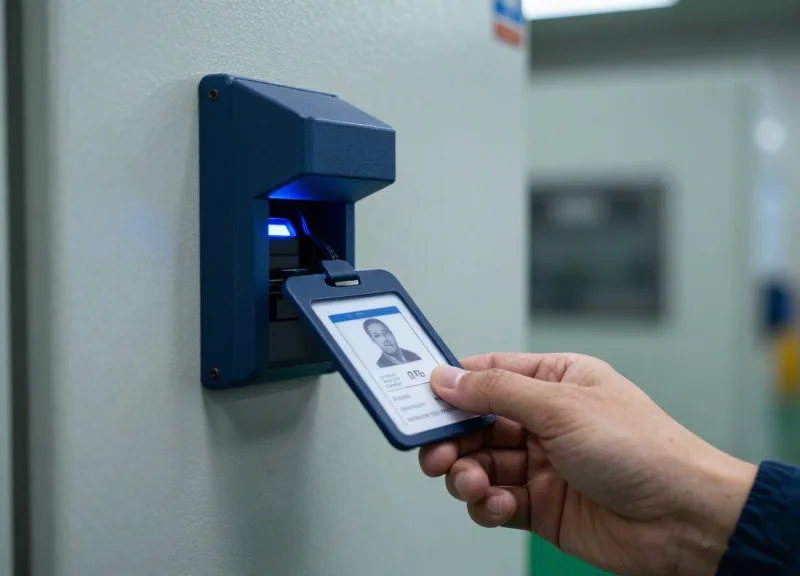
In the 2026 smart factory, high-value asset management has evolved from reactive loss prevention to proactive, data-driven security. RFID smart cabinets serve as the frontline of this evolution by integrating electronic locking mechanisms with individual user authentication. Unlike traditional tool cribs or manual barcode stations, these cabinets create an immutable digital record of every interaction, ensuring that expensive specialized tools, calibrated instruments, and sensitive components are only accessible to authorized personnel. This closed-loop system virtually eliminates the 'disappearance' of assets, as every item is electronically tethered to a specific user and timestamp.
| Security Feature | Legacy Manual Cabinets | 2026 RFID Smart Cabinets |
|---|---|---|
| Access Control | Physical keys or shared PIN codes | Biometrics (Facial/Fingerprint) or RFID Badges |
| Audit Trail | Manual paper logs (often skipped) | Real-time, automated cloud-synced logs |
| Locking Mechanism | Mechanical locks prone to picking | Reinforced electromagnetic solenoids |
| Accountability | Difficult to prove chain of custody | 100% individual accountability per transaction |
- User Identification: The operator scans their employee badge or uses a biometric sensor. The system verifies permissions against the ERP database in milliseconds.
- Automated Unlocking: Upon verification, the specific drawer or door containing the required asset unlocks, while all other compartments remain secured.
- Automatic Item Detection: As the user removes an item, internal RFID antennas detect the change in the electromagnetic field, identifying exactly which serial number was taken.
- Immediate Verification: The cabinet confirms the transaction on an integrated touchscreen and sends a real-time notification to the supervisor if a restricted item is accessed.
Expert Insight: Behavioral Guardrails. One original advantage of the 2026 standard is 'Behavioral Guardrails.' By analyzing access patterns through machine learning, smart cabinets can flag 'anomalous withdrawals'—such as a technician checking out an expensive calibration tool they aren't certified to use, or accessing the cabinet at 3:00 AM without a scheduled shift. This shift from simple logging to predictive security allows management to intervene before a safety incident or asset loss occurs, a level of oversight impossible with traditional storage.
What happens if the factory loses power or internet connectivity?
Modern RFID cabinets are equipped with internal battery backups and local edge-processing. They continue to track transactions offline and sync with the cloud as soon as connectivity is restored, ensuring no gaps in the audit trail.
Can the system prevent 'buddy-punching' or unauthorized access sharing?
Yes. By utilizing multi-factor authentication (MFA) and integrated cameras that capture a photo of the user at the moment of access, the system ensures that the person accessing the asset is exactly who they claim to be.
How does this impact compliance with ISO or aerospace standards?
It simplifies compliance significantly. The automated logs serve as 'audit-ready' documentation for Tool Control and FOD (Foreign Object Debris) prevention programs, providing the digital proof of custody required by strict regulatory bodies.
Scalability and Flexibility: Future-Proofing Your Smart Factory
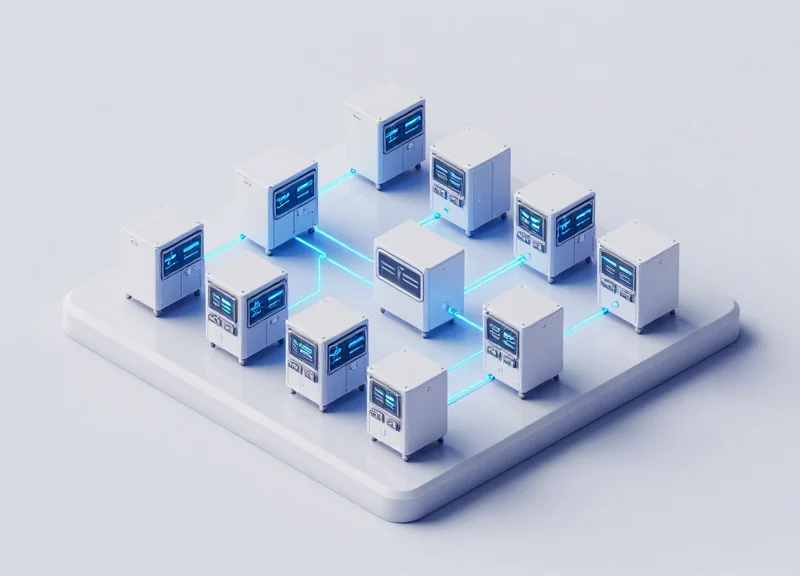
Scalability in smart factory logistics refers to the ability of an RFID cabinet infrastructure to expand horizontally by adding modular hardware units and vertically through software upgrades without disrupting existing workflows. By 2026, the global standard for logistics will shift from monolithic storage to 'LEGO-style' modularity, allowing manufacturers to start with a single intelligent node and scale to an interconnected network of thousands of edge-managed assets. This flexibility ensures that your initial investment remains relevant even as production volumes increase or product lines shift.
Unlike traditional fixed shelving or automated storage and retrieval systems (AS/RS) that require significant capital expenditure and floor-plan redesigns to expand, RFID smart cabinets utilize a decentralized architecture. Each unit functions as an autonomous IoT sensor node. This means that scaling up is as simple as 'plug-and-play' deployment, where new cabinets automatically sync with the existing Enterprise Resource Planning (ERP) environment the moment they are powered on.
| Feature | Traditional Barcode Storage | Modular RFID Smart Cabinets |
|---|---|---|
| Expansion Effort | High (Manual re-labeling, floor redesign) | Low (Plug-and-play node addition) |
| Infrastructure Cost | Linear (More staff needed per shelf) | Decreasing (Economies of scale via software) |
| Adaptability | Rigid (Fixed shelf sizes/locations) | High (Interchangeable interior modules) |
| Future Readiness | Low (Manual data entry is a bottleneck) | High (AI-ready data streams) |
One original insight often overlooked by industry analysts is the emergence of 'Software-Defined Storage.' By 2030, the value of a smart cabinet will not be in the metal box itself, but in its ability to be reconfigured via software. Expert tip: Look for cabinets with interchangeable internal sensing arrays. This allows you to swap from UHF RFID for bulk inventory to high-precision weight sensors or NFC for tool tracking within the same physical frame, effectively decoupling the hardware lifecycle from the rapidly evolving sensor technology.
- Phase 1: The Pilot Node: Deploy 1-3 cabinets at critical bottlenecks (e.g., high-value tool cribs) to establish a data baseline and validate ROI.
- Phase 2: Departmental Synchronization: Expand to full department coverage, integrating the cabinets with your WMS to automate replenishment triggers.
- Phase 3: Global Edge Networking: Connect multiple factory sites through a centralized cloud dashboard, allowing for cross-facility inventory visibility and predictive load balancing.
Will adding more cabinets slow down my network?
No. Modern RFID cabinets use edge computing to process data locally before sending compressed updates to the cloud, ensuring minimal latency regardless of the number of units.
Can these cabinets move with my production line?
Yes. Most high-end smart cabinets are designed with heavy-duty casters and Wi-Fi/Cellular connectivity, allowing them to be relocated as production layouts change.
Are they compatible with future AI tools?
Absolutely. The structured data generated by RFID cabinets is the ideal 'clean data' source needed for training predictive AI models for inventory forecasting.
Strategic Implementation: A Roadmap for Transitioning from Manual to RFID
Transitioning from manual, barcode-based inventory tracking to an automated RFID smart cabinet ecosystem is a strategic migration that involves more than just hardware installation. To achieve the 2026 standard for smart factory logistics, managers must follow a structured implementation roadmap that prioritizes data integrity and minimal operational downtime. This process typically moves through five distinct phases: organizational assessment, technical architecture design, proof-of-concept piloting, enterprise-wide integration, and continuous optimization.
- Phase 1: Asset Audit & Gap Analysis: Identify the high-value or mission-critical assets that currently suffer from 'dark data'—items frequently lost or incorrectly logged in manual systems. Define the specific KPIs for success, such as a 99% reduction in manual cycle-count time.
- Phase 2: Tagging Strategy & Hardware Selection: Select RFID tags based on material constraints (e.g., on-metal tags for tools) and choose smart cabinet configurations that fit your floor space and workflow. This phase includes mapping out power and network connectivity requirements.
- Phase 3: The Pilot Program (POC): Deploy 1–3 cabinets in a controlled environment. Focus on user adoption and edge-case testing, such as 'accidental' returns or simultaneous multi-user access, to stress-test the system before scaling.
- Phase 4: Full-Scale ERP/WMS Integration: Link the RFID middleware with your core Enterprise Resource Planning system. Automate the re-ordering triggers so that the cabinet's real-time inventory levels drive the procurement cycle without human intervention.
- Phase 5: Staff Training & Cultural Shift: Update Standard Operating Procedures (SOPs). Emphasize that the cabinet is an assistant, not a monitor, to encourage staff to embrace the 'tap-and-go' workflow.
| Implementation Stage | Typical Duration | Primary Stakeholder | Key Milestone |
|---|---|---|---|
| Assessment & Design | 2–4 Weeks | Logistics Manager | Approved Hardware Spec |
| Pilot Testing | 4–6 Weeks | Operations Lead | UAT (User Acceptance Testing) Sign-off |
| Facility-Wide Rollout | 2–3 Months | IT & Systems Integrator | Zero-Latency ERP Sync |
| Optimization | Ongoing | Data Analyst | Predictive Restock Automation |
Silicon Valley Insight: The 'Hybrid Data Phase' One common mistake is a 'hard cut-over' where manual logs are abandoned overnight. The most successful smart factory transitions utilize a 'Hybrid Data Phase' (usually 30 days) where RFID systems run in parallel with manual checks. This allows you to calibrate 'Ghost Inventory'—items that exist in the system but aren't physically present—ensuring that your digital twin is 100% accurate from day one. In my two decades of tech deployment, those who skip this step often spend months chasing data discrepancies that undermine organizational trust in the new technology.
Should we tag every item or just high-value assets?
Start with high-value assets (tools, electronics, calibrated gear) and mission-critical components. As the ROI is proven, move to lower-cost consumables to gain a 360-degree view of your supply chain.
How do we handle Wi-Fi dead zones in large factories?
Modern smart cabinets often feature 'Edge Buffering'—they store transaction data locally and sync automatically once a network connection is restored or via an Ethernet fallback.
What is the biggest barrier to adoption?
User habits. The technology works, but if staff aren't trained on the 'grab-and-go' benefits, they may try to find workarounds. Transparent change management is as vital as the hardware.