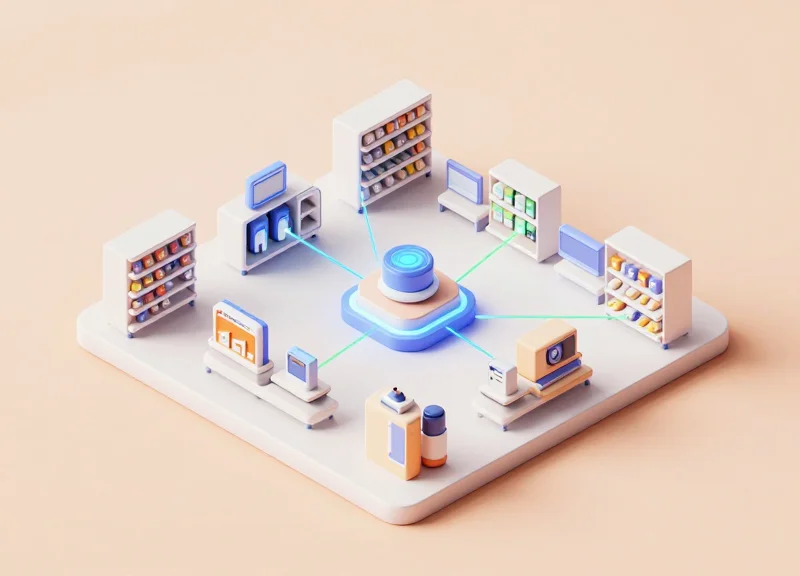

The landscape of industrial manufacturing is undergoing a radical transformation as we approach 2026. For decades, the humble paper label and manual logbook served as the backbone of toolroom organization, but in an era defined by lightning-fast supply chains and precision engineering, these legacy methods have become critical liabilities. Smart manufacturing is no longer just about the assembly line; it has moved into the governance of the tools that make production possible. This article explores why global leaders are ditching outdated labeling for AI-integrated systems that offer unprecedented visibility, accuracy, and operational ROI.
The Evolution of the Toolroom: From Manual Logs to Digital Intelligence
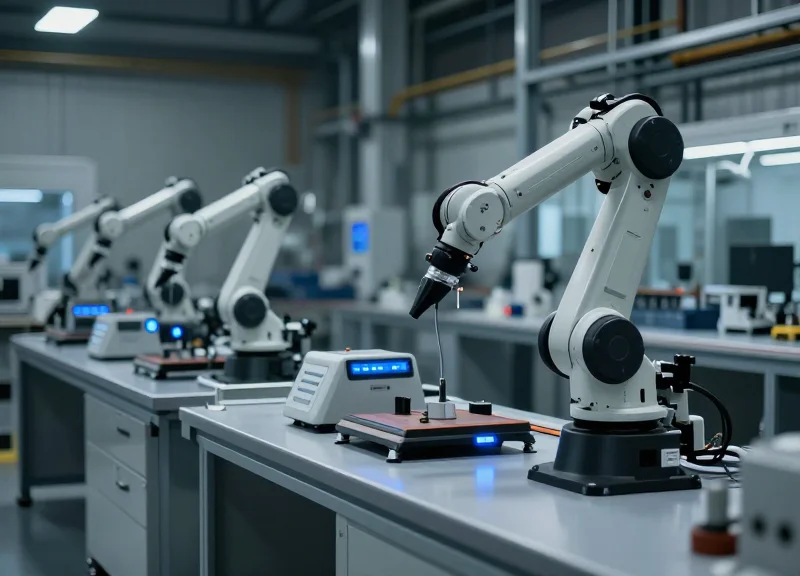
The evolution of the toolroom represents a paradigm shift from manual logs and paper labels, which relied on human memory and physical records, to AI-driven digital intelligence that leverages IoT sensors and machine learning to provide real-time visibility and predictive governance. Historically a siloed cost center, the modern toolroom has emerged as a high-fidelity data hub where every asset is tracked, analyzed, and optimized to prevent production bottlenecks before they occur.
For over half a century, the 'standard' for tool management was the physical ledger—a system inherently prone to 'Inventory Drift,' where the recorded stock levels rarely matched the actual physical count. As manufacturing complexity scaled, these manual systems became the primary bottleneck in Industry 3.0. Today, the move toward Digital Intelligence is not just a technology upgrade; it is a fundamental restructuring of how physical assets interact with digital workflows in the Industry 4.0 and 5.0 eras.
| Era | Primary Tracking Method | Data Fidelity | Strategic Role |
|---|---|---|---|
| The Paper Era | Manual Ledgers & Labels | Very Low (Reactive) | Storage & Organization |
| The Digital Era | Excel & Basic ERP | Medium (Delayed) | Resource Tracking |
| The AI Era | Smart Labels & Neural Governance | Real-time (Predictive) | Strategic Operational Asset |
What is 'Toolroom Dark Matter'?
This refers to the estimated 15% to 20% of tools in a manual toolroom that are misplaced, expired, or decommissioned but still appear as active in old-school ledger systems, leading to unnecessary procurement costs.
How does Digital Intelligence solve for 'Decision Latency'?
Digital systems eliminate the 15-20 minute average search time per shift associated with paper records by providing instant location and status data to the technician's mobile device or AR headset.
Why are paper labels considered a security risk in 2026?
Paper labels lack audit trails. AI-driven governance ensures that only certified personnel access specific precision tools, creating an immutable digital twin of every tool's chain of custody.
Expert Insight: From my twenty years in Silicon Valley industrial tech, I have observed that the most successful transitions don't just replace paper with screens—they replace 'counting' with 'cognition.' The true value of a 2026 digital toolroom isn't knowing where a tool is, but knowing its remaining useful life (RUL) based on its historical performance data across the shop floor.
The Hidden Costs of Paper Labels in Modern Manufacturing
The hidden costs of paper labels in modern manufacturing extend far beyond the price of adhesive and ink, manifesting as a 'Paper Tax' that drains up to 15% of an operative's daily productivity through manual data entry, search latency, and inevitable human error. In the high-velocity industrial landscape of 2026, paper represents a static medium that cannot synchronize with real-time digital twins, leading to inventory shrinkage and critical delays that can cost facilities thousands of dollars per hour in unplanned downtime. By the time a paper tag is smudged, lost, or simply outdated, the resulting data gap creates a ripple effect of inefficiency throughout the entire supply chain.
| Cost Driver | Paper-Based System (Traditional) | AI-Driven Governance (2026 Standard) |
|---|---|---|
| Search & Retrieval | 5-10 minutes per tool pull via manual logs | Sub-second location via IoT & AR overlays |
| Data Integrity | High error rates due to manual transcription | 99.9% accuracy via automated vision systems |
| Asset Lifecycle | Reactive maintenance based on 'guestimates' | Predictive maintenance based on actual usage |
| Audit Readiness | Weeks of manual preparation and filing | Instant, one-click compliance reporting |
Beyond the obvious labor costs, there is a systemic 'Data Silo' Tax. When toolroom data lives on paper, it is effectively invisible to the broader ERP and MES systems. This lack of interoperability prevents the implementation of advanced machine learning models that could otherwise optimize tool life and reduce procurement overhead. In Silicon Valley terms, continuing to use paper labels in 2026 is the industrial equivalent of 'Technical Debt'—you are borrowing against future efficiency to avoid the immediate cost of digital transformation, and the interest rate is your competitive edge.
How does paper labeling lead to inventory shrinkage?
Paper systems lack a 'chain of custody' record. Without real-time digital check-ins, tools go missing between shifts, and by the time the discrepancy is found in a manual audit, the trail is cold, leading to excessive replacement costs.
What is the 'Labor Friction' associated with manual systems?
This refers to the cumulative time spent by skilled engineers doing 'clerical work'—filling out tags, updating whiteboards, and cross-referencing ledger books—which distracts from high-value production tasks.
Why are paper labels a liability for 2026 safety standards?
Modern safety protocols require instant access to calibration and maintenance history. If a tool’s paper tag is unreadable or missing, an operator might use a compromised tool, risking catastrophic failure and legal liability.
Expert Tip: To quantify this for your C-suite, track the 'Mean Time to Find' (MTTF) for a specific high-value assembly tool over a week. Usually, the labor cost wasted just looking for assets exceeds the monthly subscription cost of an AI-driven toolroom governance platform within the first 90 days.
Defining AI-Driven Toolroom Governance for 2026

By 2026, AI-Driven Toolroom Governance is defined as a centralized, autonomous framework where machine learning algorithms and computer vision replace manual oversight to manage the entire lifecycle of industrial assets. Unlike traditional tracking, which simply records where a tool is, AI governance proactively manages the 'health' of the inventory, enforcing compliance standards and optimizing procurement cycles in real-time through a self-governing feedback loop.
This transition marks a shift from tools as passive objects to assets as 'intelligent participants' in the supply chain. In this ecosystem, the 'governance' aspect refers to the system’s ability to make high-level decisions—such as locking out a technician from a tool that hasn't been calibrated or automatically reordering high-wear inserts based on predicted project load—without requiring a human toolroom attendant to sign off on a ledger.
| Feature | Traditional Management (2020-2023) | AI-Driven Governance (2026 Standard) |
|---|---|---|
| Data Capture | Manual barcodes or paper logs | Continuous Computer Vision & Edge AI |
| Decision Model | Reactive (Human-led) | Proactive (Algorithmic-led) |
| Compliance | Periodic audits/Checklists | Real-time Zero-Touch Compliance |
| Optimization | Minimum/Maximum thresholds | Dynamic Predictive Forecasting |
What distinguishes 'governance' from 'tracking'?
Tracking is descriptive (knowing where a tool is), whereas governance is prescriptive (determining who can use it and when it must be replaced based on safety and efficiency parameters).
How does AI eliminate the need for paper labels?
AI uses 'Visual Fingerprinting' and biometric recognition to identify tools by their unique physical characteristics or embedded micro-patterns, making external stickers and paper logs obsolete.
Can AI-driven systems operate offline?
Yes, 2026 governance models utilize Edge AI, allowing toolrooms to process data locally and maintain strict security protocols even during network outages.
Expert Insight: The Concept of 'Tool-as-a-Service' Compliance. A unique shift we are seeing for 2026 is that AI governance allows companies to treat high-value tooling as a service. The governance engine tracks 'micro-wear' metrics through visual analysis, allowing the system to automatically adjust the tool’s book value and depreciation in the company's ERP system after every shift. This creates a 'live' balance sheet that was previously impossible with static paper systems.
The Hardware Revolution: How RFID and ESL Replace the Sticker

The hardware revolution in smart manufacturing replaces static, analog paper labels with a dynamic 'sensory layer' comprised of Radio Frequency Identification (RFID) and Electronic Shelf Labels (ESL). Unlike paper stickers that require manual scanning and offer zero real-time visibility, RFID tags allow for contactless, bulk tracking of assets through gates, while ESLs provide an instantly updatable digital interface at the point of use. This transition creates the high-fidelity data stream necessary for AI governance models to analyze tool health, location, and utilization without human intervention.
In the 2026 toolroom, the 'Sticker' is a bottleneck. The core shift lies in moving from reactive identification to proactive communication. RFID technology serves as the 'identity' of the tool, broadcasting its presence to the network. Meanwhile, ESLs serve as the 'portal,' displaying real-time data from the cloud—such as remaining service hours or safety certifications—directly on the shelf. This synergy ensures the physical world is always in sync with the digital twin.
| Feature | Traditional Paper Labels | RFID (Passive/Active) | Electronic Shelf Labels (ESL) |
|---|---|---|---|
| Update Speed | Manual (Minutes/Hours) | Automated (Milliseconds) | Instant (Cloud-to-Edge) |
| Line of Sight | Required | Not Required | Visual Interface |
| Data Capacity | Static Text/Barcode | Unique UID + Memory | Dynamic Graphics/QR |
| AI Integration | None (Manual Data Entry) | High (Real-time Telemetry) | High (Visual Feedback) |
Expert Tip: For 2026, the trend is 'Spatial Intelligence.' It is no longer enough to know you HAVE a tool; the AI needs to know WHERE it is within 10 centimeters. By deploying High-Density RFID gateways, manufacturers are creating 'Active Geofences' where a tool can automatically disable its own functionality or trigger an alarm if it crosses a zone threshold without the correct operator credentials.
Does RFID work in high-metal environments like toolrooms?
Yes. Modern 'on-metal' RFID tags utilize specialized spacers or PIFA (Planar Inverted-F Antenna) designs to prevent interference from metallic surfaces, ensuring 99.9% read rates even on heavy machinery.
What is the battery life of an ESL in an industrial setting?
Current industrial ESLs use e-ink technology, which only consumes power when the image changes. Typically, these units last 5 to 10 years on a single coin-cell battery, making them lower maintenance than printing and sticking thousands of paper labels.
How does this hardware specifically help AI models?
AI requires high-velocity data. RFID provides a continuous 'breadcrumb trail' of tool movement, which the AI uses to train predictive models on tool wear, loss prevention, and optimal inventory levels.
The adoption of ESLs also introduces a critical human-centric benefit: the 'Dynamic QR.' When an AI detects a tool is nearing its maintenance cycle, it can push a custom QR code to the ESL on the tool's bin. A technician scans it with their tablet to immediately see the AI-generated diagnostic report and 3D repair manual, closing the loop between hardware signals and human action.
Real-Time Data: The Critical Advantage for Production Cycles
Real-time data in the toolroom is the backbone of agile manufacturing, providing a continuous stream of sub-second updates on the location, usage, and health of every asset. Unlike paper-based systems that suffer from "inventory latency," real-time governance allows for the instantaneous synchronization of physical assets with the digital twin of the production line. This eliminates the 20-30 minute search times per shift and ensures that machines never sit idle waiting for a missing carbide insert or a calibrated torque wrench. By 2026, the competitive floor is no longer defined by how fast you can cut metal, but by how fast your data moves from the toolroom to the spindle.
| Production Metric | Legacy Manual Tracking | AI-Driven Real-Time Data |
|---|---|---|
| Information Latency | Shift-end updates (8-12 hours) | Instantaneous (<1 second) |
| Tool Search Time | Avg. 18 mins per setup | Zero (Automated tracking) |
| Stock-out Risk | High (reactive ordering) | Near-Zero (predictive triggers) |
| Machine Downtime | Reactive - wait for tool | Proactive - tool arrives before setup |
An often-overlooked advantage of real-time visibility is the mitigation of "Sub-optimal Substitution." In high-pressure environments, if the primary tool isn't immediately found due to poor paper records, operators often select a "close-enough" alternative. This hidden killer of throughput leads to increased scrap rates and shortened machine life. AI-driven governance prevents this by providing a definitive "Source of Truth," flagging that the correct tool is exactly 42 feet away in Cabinet B, thus preventing the quality-loss chain before it begins.
How does real-time visibility affect Overall Equipment Effectiveness (OEE)?
Real-time visibility directly improves OEE by slashing availability losses. When the AI knows exactly when a tool will reach its wear limit, it pre-stages a replacement in the toolroom, ensuring the spindle never stops for unplanned maintenance.
Can real-time data prevent production bottlenecks?
Yes. By analyzing current production velocity against live tool inventory, the system can predict bottlenecks hours in advance, automatically rerouting tools to high-priority cells or triggering emergency sharpening cycles to maintain flow.
What is the 'Golden Hour' of tool management?
It is the window of time between a tool being flagged for service and the next scheduled production run. Real-time data allows toolroom managers to utilize this window with 100% efficiency, ensuring no tool sits in a 'pending' state during active production hours.
Expert Tip: To maximize ROI, integrate your real-time toolroom data directly into your MES (Manufacturing Execution System). This creates an autonomous loop where the production schedule automatically adjusts based on actual tool availability, rather than a theoretical inventory list that may be days out of date.
Predictive Maintenance and Lifecycle Management

Predictive maintenance in toolroom governance is the application of AI algorithms to real-time asset data to forecast when a tool will fail or require calibration. Unlike traditional schedules based on calendar dates, AI-driven systems analyze actual usage intensity, stress markers, and environmental factors to trigger service exactly when needed. In the 2026 manufacturing landscape, this shift from reactive 'fix-it-when-broken' models to proactive 'predict-and-prevent' strategies reduces unplanned downtime by an average of 30% and significantly extends the total lifecycle of high-value industrial assets.
| Maintenance Strategy | Trigger Mechanism | Impact on Tool Lifecycle | 2026 Status |
|---|---|---|---|
| Reactive | Component Failure | Shortened (high wear) | Obsolete / High Risk |
| Preventative | Fixed Time Intervals | Standard | Inefficient / Wasteful |
| Predictive (AI-Driven) | Real-Time Usage Data | Extended (optimized care) | Industry Gold Standard |
The transition to AI-driven governance relies on the 'Digital Twin' of the toolroom. By integrating RFID and ESL data feeds, the AI maintains a living record of every tool's journey—tracking every cycle, heat exposure, and torque application. This allows the system to identify subtle deviations in performance that a human operator would miss. Our expert observation for 2026: we are seeing the rise of 'Micro-maintenance'—where AI schedules 5-minute technician interventions during natural production pauses to perform high-impact adjustments, effectively eliminating the need for day-long shutdowns later in the quarter.
- Data Aggregation: Sensors and RFID tags stream usage metrics (vibration, heat, cycle counts) to the central AI engine.
- Pattern Recognition: Machine learning models compare current data against historical failure signatures to identify early-stage degradation.
- Automated Scheduling: The system automatically reserves a replacement tool and schedules a maintenance window in the ERP without human intervention.
- Lifecycle Optimization: Post-maintenance data is fed back into the model to refine future predictions and adjust the tool's expected retirement date.
Does predictive maintenance require replacing all existing tools?
No. Most legacy tools can be retrofitted with smart sensors or tracked via AI-integrated tool cribs that monitor checkout duration and frequency to estimate wear.
What is the primary ROI driver for AI lifecycle management?
The biggest gain is the reduction in 'Scrap and Rework.' Tools that are slightly out of calibration produce faulty parts; AI detects these drifts before the parts fail quality control.
How does this impact the toolroom staff?
Staff move from manual inventory counting to 'asset orchestrators,' focusing on high-level maintenance tasks rather than searching for lost equipment or updating paper logs.
Sustainability and the Paperless Factory Goal

In 2026, the 'Paperless Factory' is no longer an aspirational goal but a regulatory necessity for global manufacturers. Sustainability in the toolroom means replacing millions of single-use adhesive labels, paper-based maintenance logs, and physical clipboards with a digital-first governance model. By integrating AI with Electronic Shelf Labels (ESL) and RFID, manufacturers are achieving the 'Triple Bottom Line'—drastically reducing physical waste, lowering the carbon footprint of logistics through better resource utilization, and providing the immutable data trails required for modern ESG (Environmental, Social, and Governance) reporting.
| Sustainability Metric | Traditional Paper-Based System | AI-Driven Digital Governance |
|---|---|---|
| Physical Waste | High: Constant disposal of thermal labels, backing paper, and logs. | Minimal: Reusable RFID tags and dynamic ESL screens last 5-10 years. |
| Data Accuracy for ESG | Low: Manual entry is prone to 'greenwashing' errors or omissions. | High: Automated, real-time data capture ensures 100% audit accuracy. |
| Energy Efficiency | Passive: No direct impact on machine energy optimization. | Active: AI optimizes tool paths to reduce machine uptime and energy. |
| Resource Longevity | Limited: Tools are often scrapped early due to poor tracking. | Extended: Predictive maintenance doubles tool life-cycles. |
The transition to digital governance directly addresses Scope 3 emissions—the indirect emissions that occur in a company’s value chain. When an AI system manages toolroom inventory, it prevents 'panic ordering' and overstocking. This reduces the frequency of emergency shipments (often via air freight) and minimizes the manufacturing demand for new tools, which are energy-intensive to produce. For 2026, this level of supply chain transparency is a critical differentiator for Tier 1 suppliers bidding for contracts with eco-conscious OEMs.
How does paperless governance improve worker safety (The 'S' in ESG)?
Digital governance reduces the 'cognitive load' on floor workers, preventing errors that lead to industrial accidents. AI ensures that only certified, safe-to-use tools are checked out, automatically locking out equipment that has missed safety inspections.
Can AI-driven toolrooms help with ISO 14001 certification?
Yes. The system provides the rigorous monitoring and measurement of environmental performance required for ISO 14001, specifically in waste reduction and resource management sections.
Is the energy used by AI and RFID hardware counter-productive?
No. Modern RFID and ESL hardware operate on ultra-low-power protocols (like Zigbee or BLE). The energy saved by preventing a single hour of idle machine time far outweighs the annual power consumption of the entire toolroom sensor network.
Expert Insight: The Ghost Waste of Rework. While most articles focus on the paper saved, the true environmental 'hero' of AI governance is the prevention of rework. In a traditional shop, a mislabeled tool leads to a batch of defective parts. Scrapping that batch wastes the raw material, the energy used to melt/machine it, and the carbon cost of its transport. AI-driven governance eliminates the 'wrong tool' error at the source, potentially saving a large facility hundreds of tons of embodied carbon annually—a metric we call 'Carbon Avoidance through Precision' that will be the gold standard of 2026 industrial sustainability.
Overcoming the Implementation Gap: A Strategic Roadmap
The 'Implementation Gap' in smart manufacturing refers to the systemic failure to transition from pilot projects to full-scale AI-driven governance due to technical debt, cultural resistance, and operational downtime. To bridge this, leaders must adopt a 'Parallel-Path Integration' strategy—maintaining legacy reliability while incrementally phasing in Electronic Shelf Labels (ESL) and RFID tracking to ensure zero-loss continuity during the digital shift.
Most manufacturing facilities stall in 'pilot purgatory' because they attempt a total 'rip-and-replace' of their inventory systems. In 2026, the competitive edge belongs to those who view digital transformation as a biological upgrade rather than a mechanical overhaul. By focusing on high-value bottlenecks first, you create an immediate ROI that funds the subsequent stages of the roadmap.
- The 80/20 Toolroom Rationalization: Identify the 20% of high-value, high-frequency tools that contribute to 80% of your production delays. Begin ESL and AI-tagging exclusively with these assets to prove value within 30 days.
- Infrastructure Layering: Deploy localized mesh networks for RFID/IoT sensors without dismantling the existing paper-based check-out desk. This allows for 'shadow-tracking' where the AI validates the accuracy of manual logs.
- Governance Digitization: Migrate paper SOPs into AI models. The system begins suggesting maintenance or restock actions based on real-time usage data, even if the final sign-off remains human-controlled.
- Full-Scale Autonomy: Once the AI's predictive accuracy exceeds 98% during the shadow-tracking phase, decommission paper logs and enable automated procurement and self-governing toolroom access.
| Implementation Factor | Legacy 'Rip-and-Replace' | Parallel-Path Integration |
|---|---|---|
| Operational Risk | High (System downtime) | Near-Zero (Redundant systems) |
| Employee Adoption | Low (Resistance to change) | High (Gradual familiarity) |
| Data Accuracy | Delayed (Post-migration) | Immediate (Cross-validation) |
| Budget Impact | Large CapEx Outlay | Incremental OpEx Scaling |
A Silicon Valley insider tip: Don't ignore the 'Human-in-the-Loop' (HITL) factor. Your most experienced shop floor veterans possess tribal knowledge that isn't on your paper labels. During the roadmap's second phase, involve them in 'training' the AI's governance rules. This not only improves the model but transforms potential detractors into the system's most vocal champions.
How long does a typical transition take?
For a mid-sized facility, a full transition from paper to AI governance typically spans 6 to 9 months, though measurable ROI from the '80/20' phase is usually visible within 8 weeks.
Will AI-driven governance require hiring new data scientists?
No. Modern 2026 industrial platforms are designed with 'No-Code' interfaces, allowing existing toolroom managers to oversee the AI using intuitive dashboards rather than complex programming.
What happens if the IoT network goes down?
Industry-standard ESL and RFID systems use edge computing. Even if the primary cloud connection drops, the local toolroom governance remains operational, syncing data once connectivity is restored.
The Future of Smart Governance: Beyond 2026
By 2030, the concept of 'governance' will transcend data monitoring to become an autonomous, spatial operation. While 2026 focuses on the transition from paper to AI-driven digital identification, the subsequent years will see the rise of 'Spatial Intelligence.' This involves the seamless integration of Augmented Reality (AR) and Autonomous Mobile Robots (AMRs) into the governance framework, where the system doesn't just record the location of a tool, but actively directs physical assets and human labor through a 3D-mapped digital twin of the factory floor.
| Feature | Smart Governance (2026) | Autonomous Governance (2030+) |
|---|---|---|
| Human Interface | Mobile Apps & Tablets | AR Contact Lenses & Haptics |
| Tool Retrieval | Manual via Digital Guidance | Fully Autonomous (AMR-driven) |
| Decision Making | AI-Assisted (Human-in-the-loop) | Cognitive AI (Autonomous resolution) |
| Data Source | Edge Sensors & Digital Tags | Ambient Spatial Computer Vision |
The 'Dark Toolroom' is the ultimate evolution of this trend. In this scenario, robotics handles the entire lifecycle of tool governance—from intake and calibration to delivery and end-of-life recycling—without requiring human lighting or intervention. AI agents will act as 'Orchestrators,' negotiating tool priority between different production cells in real-time, effectively eliminating the 'last mile' of manufacturing latency caused by human transit and manual search times.
How will Augmented Reality change the role of toolroom managers?
Managers will transition from 'trackers' to 'system architects.' Through AR overlays, they can see real-time performance heatmaps, stress points, and maintenance requirements projected directly onto physical equipment, allowing for 'tele-governance' across multiple global sites from a single location.
Will robotics make traditional toolroom governance obsolete?
Not obsolete, but invisible. Governance becomes an embedded feature of the robotics firmware. Every movement of a robot is a data point in the governance log, ensuring 100% accuracy in chain-of-custody without manual scanning or logging.
What is the biggest hurdle for post-2026 industrial governance?
The 'Interoperability of Intelligence.' For autonomous governance to work, the AI governing the toolroom must communicate natively with the AI managing the supply chain and the AI controlling the factory's energy grid, necessitating a unified industrial data standard.
Expert Insight: The real 'killer app' beyond 2026 isn't just a smarter robot; it is the 'Self-Healing Toolchain.' We are moving toward a future where AI-driven governance detects a micro-fracture in a CNC bit via acoustic sensors, autonomously orders a 3D-printed replacement, and dispatches a drone to swap the tool before the operator even notices a quality dip. This level of predictive governance will be the primary differentiator between market leaders and those still clinging to legacy workflows.