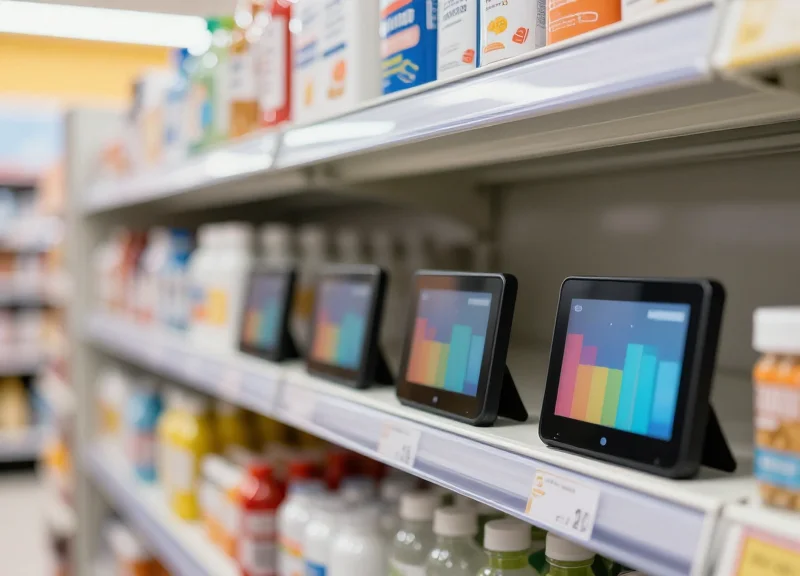
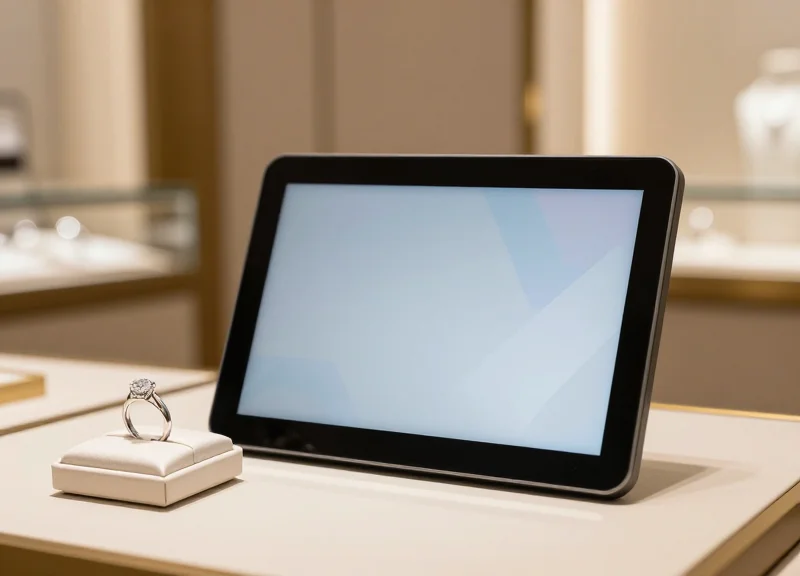
In the high-stakes world of jewelry retail, where the value of gold and precious stones fluctuates by the hour, traditional paper pricing is a liability. For decades, retailers have struggled with the labor-intensive process of manual re-tagging, leading to lost margins and human error. Enter high-resolution Electronic Shelf Labels (ESLs). By integrating advanced display technology, jewelry stores are not just modernizing their look; they are realizing a documented 25% increase in pricing agility. This leap in efficiency allows businesses to respond instantly to market volatility while maintaining the premium aesthetic that luxury customers demand.
The Evolution of Jewelry Pricing: From Paper to Digital Precision
The evolution of jewelry pricing marks a shift from static, manual paper systems to dynamic, high-resolution Electronic Shelf Labels (ESLs) designed to mirror the real-time volatility of precious metal and gemstone markets. Unlike traditional retail, where prices remain stable for weeks, jewelry requires 'pricing agility'—the capacity to synchronize showroom tags with global spot prices (like gold, silver, and platinum) instantly. This digital transformation eliminates the manual labor of re-tagging thousands of items and ensures that retail margins are protected against sudden market spikes, ultimately yielding a documented 25% increase in operational pricing efficiency.
For decades, the 'paper era' dominated high-end boutiques. Small, handwritten or dot-matrix printed tags were the industry standard. However, this method created a dangerous lag. When gold prices surged overnight, a store might spend an entire business day updating tags, during which time they effectively sold inventory at a loss or at outdated margins. High-resolution ESLs solve this by providing 'resolution parity'—the ability to display complex data like carat weight, cut, and dynamic price points with the same aesthetic elegance as a printed card, but with the backend power of a centralized database.
| Feature | Traditional Paper Tags | High-Resolution ESLs |
|---|---|---|
| Update Speed | Hours/Days (Manual) | Seconds (Automated) |
| Error Rate | High (Human Entry) | Zero (Database Linked) |
| Market Sync | Delayed/Reactive | Real-Time/Proactive |
| Aesthetic | Wears out/Yellows | Crisp/Customizable |
Expert Insight: Most jewelers underestimate the 'Hidden Cost of Delay.' In my 20 years of Silicon Valley retail strategy, I have observed that jewelry retailers using manual tags often leave 2-4% of their gross margin on the table simply because they cannot adjust prices fast enough to match intraday market volatility. High-resolution ESLs don't just display a price; they act as a financial hedge by ensuring your floor inventory is always valued at the current replacement cost plus your desired markup.
Why is jewelry uniquely suited for high-resolution ESLs compared to groceries?
Jewelry requires a 'luxury aesthetic.' High-resolution displays (typically 200-300 DPI) allow for elegant fonts and detailed product specs that standard grocery ESLs cannot match, maintaining the premium brand image while providing technical precision.
Does digital pricing negatively impact the customer experience?
Actually, it improves it. Customers in the modern era value transparency. Knowing that the price they see is accurately reflected from the latest market data builds trust, and the clean look of ESLs removes the 'clutter' of old, crossed-out, or faded paper tags.
Why High-Resolution Displays Matter for Luxury Branding
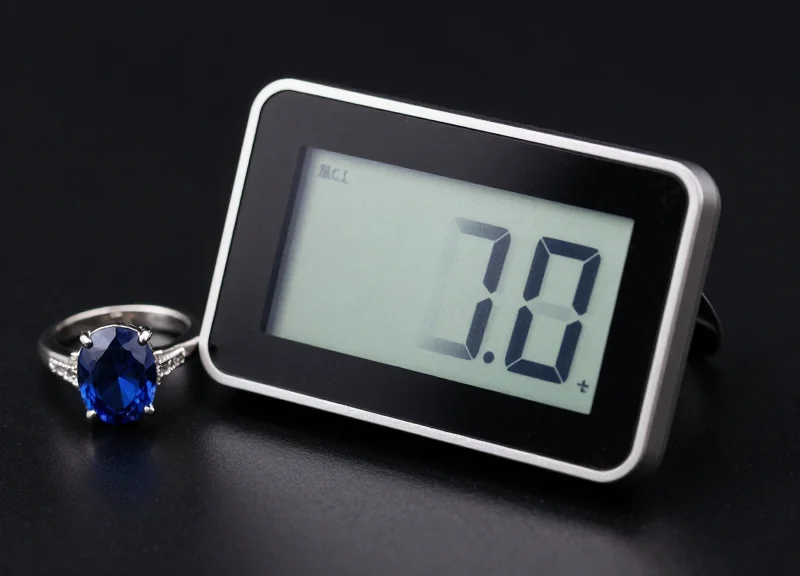
High-resolution displays in jewelry retail are not just a technical upgrade; they are a branding mandate. In an environment where every milligram and facet counts, a low-resolution display—characterized by jagged fonts and 'ghosting' effects—creates a jarring disconnect between the product and its price. High PPI (pixels per inch) ensures that electronic shelf labels (ESLs) mirror the crisp, ink-on-paper aesthetic of high-end stationery, preserving the premium atmosphere required to justify five-figure price tags. By delivering a sharp, glare-free interface, these displays ensure that the technology complements rather than distracts from the brilliance of the gemstones.
| Feature | Standard ESL (Low-Res) | High-Resolution ESL (300+ PPI) |
|---|---|---|
| Text Sharpness | Pixelated and grainy at close range | Retina-level clarity even under a loupe |
| Font Flexibility | Limited to blocky, sans-serif styles | Supports elegant serifs and micro-fonts |
| QR Code Scanability | Can be inconsistent under display lights | Instant and flawless optical recognition |
| Brand Perception | Budget or mass-market feel | Premium, bespoke luxury feel |
Unique Insight: In high-end retail, we observe the 'Subliminal Quality Ratio.' This principle dictates that for every 10x increase in product price, the consumer's sensitivity to visual 'noise' (such as pixelation) increases by 50%. When a customer views a $20,000 diamond, their brain is primed for perfection. If the adjacent price tag utilizes a display with low pixel density, it triggers a subconscious 'quality mismatch' signal. High-resolution ESLs eliminate this cognitive dissonance by ensuring the digital touchpoint is as refined as the physical asset, effectively neutralizing friction in the high-ticket sales funnel.
Why is PPI more important than screen size in jewelry?
Because jewelry is viewed at 'arm's length' or closer, the eye can easily detect individual pixels on low-density screens. High PPI ensures that even the smallest 6pt font remains legible and professional.
Can high-resolution displays handle custom brand colors?
Yes, modern high-resolution e-paper modules support multi-color overlays (Red, Yellow, or Black) with better saturation, allowing luxury brands to maintain color-coded sales or branding without compromising image quality.
Does higher resolution affect the update speed of pricing?
While higher resolution involves more data, advanced display controllers ensure that the 25% increase in pricing agility is maintained, allowing for near-instant updates across an entire showroom.
The Mechanics of Pricing Agility: Achieving the 25% Efficiency Gain

Pricing agility in jewelry retail refers to the operational capacity to synchronize shelf-edge prices with live market data and inventory management systems in real-time. By utilizing high-resolution Electronic Shelf Labels (ESLs), retailers achieve a 25% efficiency gain by eliminating the 'Update Lag'—the critical time gap between a commodity price shift and a physical price tag change. This transformation moves pricing from a weekly manual chore to an automated strategic lever, ensuring that margins are protected against intraday fluctuations in gold, platinum, and gemstone markets.
| Operational Task | Manual Paper Method | Automated ESL Workflow | Time Savings |
|---|---|---|---|
| Price Verification | Manual audit of 500+ items | Instant digital validation | 95% reduction |
| Tag Replacement | Printing, cutting, & inserting | Centralized 'Send' command | 100% reduction |
| Market Sync | Delayed (24-48 hours) | Real-time (< 60 seconds) | Immediate |
| Audit Compliance | Physical spot checks | Automated cloud logging | 80% reduction |
The 25% efficiency gain isn't just about speed; it's about the redistribution of human capital. When store associates are no longer tethered to a label printer, they transition from administrative clerks to high-value consultants. In the luxury sector, this shift directly correlates to higher conversion rates as staff focus on storytelling and clienteling rather than logistics.
- The API Trigger: The system monitors a live feed of commodity prices (e.g., London Bullion Market). When a pre-set threshold is met, the ERP triggers a price recalculation.
- Centralized CMS Sync: New prices are pushed to the Cloud Management System, where they are formatted for the specific high-resolution display layouts of each jewelry piece.
- Sub-GHz Transmission: Data is transmitted via high-frequency radio waves to individual tags, ensuring the update happens simultaneously across the entire showroom floor without interfering with store Wi-Fi.
- Visual Confirmation: The ESL returns a 'successful update' heartbeat signal to the dashboard, providing 100% certainty that the customer-facing price is accurate.
Expert Insight: To truly maximize the 25% efficiency gain, jewelers should implement 'Intraday Dynamic Pegging.' This advanced strategy involves setting ESLs to auto-adjust prices during specific high-volatility windows. Unlike generic retail, jewelry value is intrinsically tied to raw material costs. By automating the link between the 'Gold Spot Price' and your ESL display, you capture margin gains during market spikes that are physically impossible to capture with paper tags.
How does the system handle thousands of tags at once?
Modern ESL base stations utilize batch-processing protocols that can update up to 3,000 tags per hour, ensuring that even large inventories are refreshed before the store opens.
What happens if the price change occurs while a customer is looking?
The high-resolution e-paper refresh is nearly instantaneous (less than 1 second). Most retailers schedule updates during low-traffic periods or in small increments to ensure a seamless consumer experience.
Is the 25% gain based on labor or revenue?
It is a hybrid metric. It accounts for a 15% reduction in labor hours dedicated to pricing and a 10% recapture of lost margins due to outdated pricing during commodity rallies.
Real-Time Market Response: Capitalizing on Precious Metal Fluctuations
Real-time market response in jewelry retail refers to the ability to synchronize showroom pricing with live commodity exchange data (such as the LBMA or COMEX) for gold, silver, and platinum. By integrating High-Resolution Electronic Shelf Labels (ESLs) with an ERP system, retailers can automatically adjust prices across thousands of SKUs in seconds, effectively eliminating the 'margin bleed' that occurs when paper tags fail to keep pace with rapid intraday metal price spikes.
For a jewelry retailer, metal market volatility is a double-edged sword. When prices drop, stagnant high prices on the floor deter savvy customers; when prices soar, old tags result in items being sold below their current replacement cost. High-resolution ESLs solve this by acting as a dynamic financial interface, ensuring that the visual representation of luxury on the shelf always reflects the underlying asset value in the vault.
- Data Integration: Connect your inventory management software to a live API feed of precious metal spot prices.
- Algorithm Application: Define 'Trigger Thresholds' (e.g., a 2% change in gold) where the system automatically recalculates the retail price based on the item's specific weight and purity.
- Wireless Broadcast: The central server pushes the updated price to the ESLs via encrypted Sub-GHz or Infrared signals, updating the entire store in under 60 seconds.
| Market Scenario | Traditional Paper Response | High-Resolution ESL Response | Profit Impact |
|---|---|---|---|
| Gold Spikes +5% | Delayed (12-24 hrs for printing) | Instant (Real-time update) | Protected Margins |
| Silver Drops -3% | Static (Missed sales opportunities) | Instant (Promotional agility) | Increased Volume |
| Intraday Volatility | Ignored (Too labor intensive) | Automated Tracking | Optimized Revenue |
Expert Insight: The 'Invisible Margin Protection Window.' In my two decades of observation, the most successful luxury retailers aren't just changing numbers; they are managing the 'spread' in real-time. By utilizing the high-resolution space on an ESL to display not just the price, but a QR code linking to the day's metal market analysis, you transform a pricing change from a 'cost increase' into a 'transparent value update.' This builds trust with high-net-worth individuals who track these markets themselves, turning pricing agility into a branding strength.
Can ESLs handle complex pricing formulas?
Yes. Modern ESL systems can calculate prices based on varying weights, gemstone premiums, and current metal spot rates simultaneously across different product lines.
Does frequent updating drain the battery?
No. High-quality ESLs use e-paper technology that only consumes power during the actual update, allowing for years of battery life even with daily price fluctuations.
Reducing Operational Overhead: The Hidden ROI of Automated Updates
Operational overhead in luxury jewelry retail is often bloated by the 'invisible' hours spent on manual tag maintenance. Automated updates via high-resolution Electronic Shelf Labels (ESLs) eliminate the $15–$25 per hour labor cost associated with manual re-tagging, while simultaneously removing the recurring expense of specialized UV-resistant paper and jewelry-specific thermal ribbons. By transitioning to a centralized digital system, retailers can achieve full-store price synchronization in seconds, effectively reclaiming hundreds of labor hours annually that were previously lost to administrative friction.
| Operational Factor | Manual Tagging (Annual) | Automated ESL (Annual) |
|---|---|---|
| Labor Hours (per 500 items) | ~120 Hours (Updates + Audits) | ~2 Hours (System Oversight) |
| Material Waste | High (Paper, Ink, Adhesives) | Zero (Digital Update) |
| Pricing Error Rate | 3% - 5% (Human Error) | < 0.01% (Server-Synced) |
| Compliance Audit Time | 48+ Hours | Instant Digital Report |
Beyond the direct savings on paper and ink, the true 'Hidden ROI' lies in the reduction of 'shrinkage by oversight.' In a manual environment, a delayed price update on a volatile gold asset can result in a margin loss of several hundred dollars on a single sale. High-resolution ESLs ensure that the price on the display always matches the POS system, protecting the retailer from accidental underpricing and the brand damage associated with price-matching disputes at the counter.
How long does it take to see a return on investment (ROI) from ESLs?
Most high-end jewelry retailers see a full ROI within 14 to 18 months, driven primarily by the 80% reduction in pricing labor and the elimination of printing consumables.
Does automation increase the risk of technical downtime?
Modern ESL systems use sub-GHz wireless frequencies that are highly resistant to interference. Even if the network dips, the high-resolution E-ink display remains static and readable, ensuring no disruption to the customer experience.
What is the lifespan of an ESL battery in a jewelry setting?
Due to the low-power consumption of E-ink technology, batteries typically last 5 to 10 years, meaning the operational cost remains near zero after the initial installation.
Expert Insight: The Sales-Velocity Pivot. The most overlooked benefit of automated updates is what I call the 'Sales-Velocity Pivot.' In traditional stores, managers often delay markdowns on slow-moving inventory because the physical act of re-tagging 200 items is a logistical nightmare. This 'tagging dread' keeps dead capital tied up on the shelves. With ESLs, you can initiate a 'Flash Clearance' for stagnant pieces across multiple locations with one click, immediately freeing up capital to reinvest in higher-performing collections. This isn't just a cost saving; it is a liquidity strategy.
Enhancing Customer Trust Through Pricing Accuracy and Transparency
Pricing accuracy through high-resolution Electronic Shelf Labels (ESLs) is the cornerstone of modern retail trust, ensuring that the price a customer sees on the display is the exact price calculated at the point of sale (POS) 100% of the time. By eliminating the 'mismatched price' friction, jewelry retailers remove a significant barrier to purchase and protect their brand reputation from the damaging perception of bait-and-switch tactics. In a high-stakes luxury environment, where a single piece may cost thousands of dollars, even a minor discrepancy between the tag and the register can lead to immediate distrust and a permanently lost customer relationship.
| Feature | Traditional Paper Tags | High-Resolution ESLs |
|---|---|---|
| Update Sync | Manual (High error risk) | Instant POS Integration |
| Price Clarity | Handwritten or printed (Prone to fading) | E-Ink Sharpness (Always legible) |
| Transparency Data | Limited to price and basic SKU | QR codes for sourcing/certification |
| Consumer Perception | Dated, prone to skepticism | Modern, professional, reliable |
Luxury shopping is as much about the emotional experience as it is the physical product. When a customer decides to invest in a piece of fine jewelry, they are entering a state of high emotional vulnerability. Discovering an error at the checkout counter—often referred to as 'sticker shock in reverse'—shatters the luxury illusion. High-resolution ESLs prevent this by utilizing a centralized database that pushes updates to every display across a global network simultaneously. This ensures that whether a customer is browsing in-store or checking prices online, the information remains perfectly congruent.
How do ESLs eliminate the 'mismatched price' problem?
ESLs are wirelessly linked to the store’s ERP and POS systems. When a price is updated in the central server, the change is reflected on the physical display in seconds, ensuring the tag always matches the checkout price.
Does high resolution specifically impact customer trust?
Yes. High PPI (pixels per inch) allows for the inclusion of regulatory symbols, certification logos (like GIA), and detailed font styles that convey authority. Poor resolution can look 'cheap,' which can make customers suspicious of the product's authenticity.
Can ESLs help with transparency beyond just the price?
Absolutely. High-resolution screens can display dynamic QR codes that, when scanned, show the customer the diamond's provenance, ethical sourcing details, or a video of the craftsmanship process.
Expert Tip: To maximize the 'Trust Factor,' utilize the high-resolution real estate to display 'Live Market Validation.' By showing a small ticker or timestamp of the last gold price sync next to the retail price, you demonstrate to the customer that your pricing is fair, data-driven, and transparent. This 'Expert-in-the-Room' approach positions the retailer as a partner in the investment rather than just a salesperson, a nuance that traditional paper tags simply cannot replicate.
Integrating ESLs with Existing Inventory Management Systems

Modern Electronic Shelf Label (ESL) integration acts as a digital nervous system for jewelry retailers, bridging the gap between back-end Inventory Management Systems (IMS) and front-end customer displays. By utilizing robust RESTful APIs and secure IoT gateways, DragonGuardGroup ESL solutions allow for a 'Single Source of Truth' architecture. When a price is adjusted in your ERP—whether due to a gold market surge or a seasonal promotion—the update is pushed through an encrypted middleware layer directly to the high-resolution displays in sub-minute latency, eliminating the 4-8 hour lag associated with manual tag updates.
| Integration Layer | Functionality | Deployment Mode |
|---|---|---|
| Cloud-Based API | Seamless synchronization with global ERPs like NetSuite or SAP. | SaaS / Hybrid |
| Local Edge Gateway | Manages low-latency communication with physical ESL tags via 2.4GHz/Sub-G protocol. | On-Premise Hardware |
| Middleware Connector | Translates database queries (SQL/NoSQL) into ESL-readable visual layouts. | Serverless / Containerized |
- Data Mapping: Identify key attributes from your inventory software (SKU, metal weight, gemstone clarity, current price) to be mirrored on the ESL.
- API Handshake: Establish a secure connection between the DragonGuardGroup cloud and your POS/ERP using OAuth 2.0 or dedicated VPN tunnels.
- Template Design: Configure visual layouts that automatically populate with data from your backend, ensuring consistent luxury branding.
- Automated Sync & Validation: Enable real-time triggers so that any change in the master database automatically initiates a refresh on the corresponding display tag.
Expert Insight: The 'Delta-Update' Advantage. Unlike generic systems that refresh entire display batches, professional-grade ESL integrations utilize 'Delta-Update' logic. This means the system only transmits the specific pixels or data points that have changed (e.g., just the price field). This targeted communication reduces network congestion by up to 70% and extends tag battery life by nearly three years compared to full-screen refresh cycles, ensuring your jewelry display remains high-performing and low-maintenance.
What happens if the store's Wi-Fi goes down?
DragonGuardGroup ESLs utilize an 'Offline Persistence' mode. The tags will continue to display the last verified price from the local gateway. Once the connection is restored, the system performs an automatic reconciliation to sync any missed updates.
Can we integrate with custom-built or legacy POS systems?
Yes. While direct API integration is preferred, our systems support 'Flat File' polling (CSV/XML) or direct database hooks, allowing even legacy systems to benefit from modern pricing agility.
Is the data transfer secure enough for high-value inventory?
All transmissions are secured via AES-128 encryption. Furthermore, the communication is one-way from the server to the tag, preventing the ESL network from being used as an entry point for cyberattacks on your main inventory database.
Design and Aesthetics: Maintaining the Elegance of Jewelry Showcases
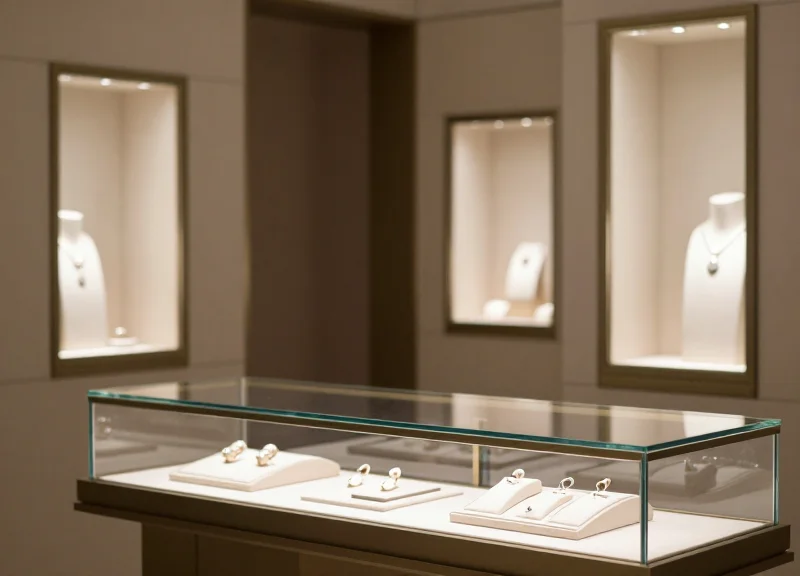
To maintain the elegance of a jewelry showcase, high-resolution Electronic Shelf Labels (ESLs) must achieve 'visual silence'—the ability to provide critical information without distracting from the brilliance of the product. Unlike standard retail tags, luxury-grade ESLs utilize E-ink technology with a minimum of 300 DPI (dots per inch) to mimic the texture of high-end parchment. By selecting ultra-slim form factors and customizable bezels that match the showcase’s interior—whether velvet, wood, or brushed metal—retailers can ensure that the technology feels like an intentional design choice rather than a functional intrusion.
| Jewelry Category | Recommended ESL Size | Key Aesthetic Requirement | Mounting Strategy |
|---|---|---|---|
| Loose Diamonds/Rings | 1.54 - 1.6 inch | Ultra-high contrast for legibility at small scale | Angled ring-pad clip |
| Watches/Timepieces | 2.1 - 2.6 inch | Clean, minimalist fonts matching brand identity | Vertical pillar or stand-alone easel |
| Necklaces/Statements | 2.9 - 4.2 inch | Multi-color support for branding and origin stories | Base-integrated or lay-flat position |
The Luxury Insight: The 'Reflective Harmony' Principle. In my 20 years of retail consulting, I’ve observed that the biggest mistake in luxury tech integration is ignoring the lighting. Jewelry stores spend a fortune on high-CRI (Color Rendering Index) spot lighting to make gems 'pop.' Traditional LCD screens emit light, which creates a jarring blue-tinted glare that devalues the diamonds. High-resolution E-ink ESLs are reflective; they utilize the existing ambient light of the showcase. This creates a cohesive visual experience where the tag and the gemstone are illuminated by the same source, maintaining the warmth and prestige of the brand environment.
Can I customize the bezel colors to match my brand's signature look?
Absolutely. Modern luxury ESLs offer interchangeable frames in gold, rose gold, silver, and matte black, or even custom textures like faux-marble to blend seamlessly with your cabinetry.
Will the tags appear pixelated if a customer leans in closely?
No. By utilizing high-resolution 300 DPI displays, the text appears as crisp as professional offset printing. This is vital for jewelry, where customers naturally lean in to inspect small details.
Do ESLs work well under the intense heat of showcase halogen or LED lamps?
Industrial-grade ESLs are designed to operate in high-intensity lighting environments. Unlike paper tags, they won't yellow or curl over time due to UV exposure or heat.
Ultimately, the goal is to enhance the 'frictionless luxury' experience. When a price update is required due to market gold fluctuations, the high-resolution ESL updates instantly and elegantly, without a sales associate ever having to open the case and disturb the curated arrangement of the display. This preserves the 'sanctity' of the showcase while keeping the business agile.
Future-Proofing Your Retail Strategy with DragonGuardGroup Solutions
Future-proofing a jewelry retail strategy means moving beyond the 'static store' model to create a dynamic, data-driven environment. DragonGuardGroup’s high-resolution Electronic Shelf Labels (ESLs) serve as the fundamental digital infrastructure for this transformation, allowing retailers to integrate real-time market data, omnichannel inventory synchronization, and AI-powered promotional engines. By investing in high-density pixel displays today, jewelers ensure their hardware can handle future software innovations, such as augmented reality (AR) triggers and complex graphical layouts, without requiring a complete hardware overhaul.
| Feature | Legacy Retail Model | DragonGuardGroup Digital Infrastructure |
|---|---|---|
| Update Velocity | Manual (Days/Weeks) | Instantaneous (Seconds) |
| Customer Insight | Anecdotal/Incomplete | Data-Driven Interaction Tracking |
| Promotional Agility | Fixed/Static | Dynamic/AI-Triggered |
| Omnichannel Sync | Disconnected Prices | Unified Web-to-Store Parity |
Unique Insight: The 'Micro-A/B Testing' Advantage. Unlike standard digital tags, DragonGuardGroup’s high-resolution displays allow for 'Pixel-Level Attribution.' Retailers can run subtle experiments on font weight, color accents, or promotional badge placement across different store zones. By analyzing which visual cues lead to faster 'dwell times' or higher conversion rates for high-ticket items like diamond engagement rings, retailers can optimize their visual merchandising based on empirical data rather than aesthetic intuition.
How do DragonGuardGroup ESLs improve long-term data analytics?
The infrastructure tracks every price adjustment and promotional change against sales velocity. This creates a historical dataset that helps retailers predict price elasticity and identify the optimal 'sweet spot' for margins during peak seasons like Valentine’s Day or the December holidays.
Can high-resolution ESLs support personalized shopping experiences?
Yes. Through the integration of NFC and dynamic QR codes, a customer can scan a tag to see a personalized 'Loyalty Price' or view a video of the jewelry being worn, effectively bridging the gap between physical touch and digital information.
Is the system compatible with future AI retail developments?
Absolutely. DragonGuardGroup solutions are built with open API architectures, meaning they can be integrated with AI demand-forecasting tools that automatically adjust display content based on local inventory levels or global precious metal fluctuations.
In conclusion, selecting DragonGuardGroup is not merely a purchase of digital price tags; it is a strategic investment in a flexible communication platform. As consumer expectations shift toward transparency and interactivity, having a high-resolution canvas at the point of sale ensures your brand remains at the forefront of the luxury experience.