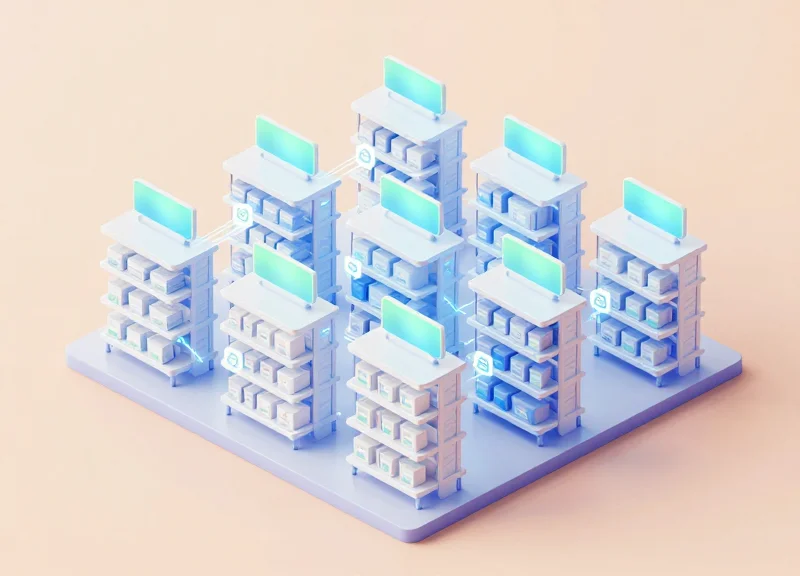
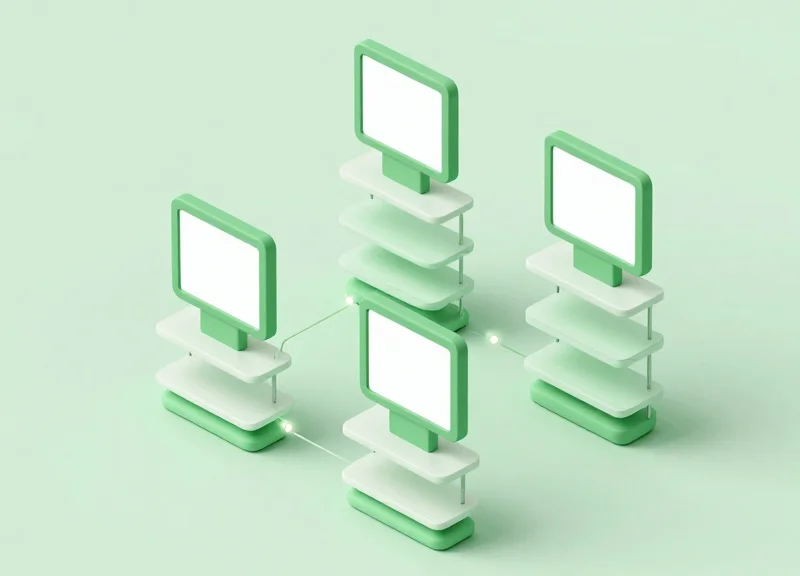
As we approach 2026, the retail landscape is undergoing a strategic shift. While high-resolution graphics once dominated the digital pricing conversation, global retailers are rediscovering the unmatched efficiency of segmented Electronic Shelf Labels (ESL). Faced with rising labor costs and urgent sustainability mandates, the industry is pivoting toward infrastructure that prioritizes ultra-long battery life and low maintenance. This article explores why segmented ESL technology is making a massive comeback as the backbone of the next generation of sustainable retail ecosystems, offering a perfect balance between functional data display and long-term operational viability.
The 2026 Retail Paradigm Shift toward Sustainability

The 2026 retail paradigm shift represents a fundamental pivot from aesthetic-driven technology to mission-critical, sustainable infrastructure. Driven by the convergence of the EU’s Corporate Sustainability Reporting Directive (CSRD) and global 'Zero-Waste' initiatives, retailers are moving away from energy-intensive high-resolution pixel displays toward segmented Electronic Shelf Labels (ESL). This transition prioritizes ultra-long battery life (up to 15 years) and minimal electronic waste, transforming digital pricing from a store feature into a durable, carbon-efficient asset class.
As we approach the mid-2020s, the 'replace and discard' cycle of early IoT devices has become a liability. Retailers now face double-sided pressure: soaring electricity prices for maintaining complex store networks and legislative penalties for high carbon footprints. Segmented ESLs, which use significantly less power than full-graphic E-ink displays, are re-emerging as the strategic choice for large-scale deployments where reliability and environmental compliance outweigh the need for high-definition imagery.
| Feature | Pre-2024 Legacy Tech | 2026 Sustainable Infrastructure |
|---|---|---|
| Primary Driver | Visual Appeal / Marketing | ESG Compliance / ROI Longevity |
| Typical Lifespan | 3 - 5 Years | 10 - 15 Years |
| Energy Demand | High (Frequent Refreshing) | Ultra-Low (Passive Segmented) |
| Maintenance | Regular Battery Swaps | Install-and-Forget Infrastructure |
Why is segmented technology seeing a resurgence over full-graphic displays?
Segmented displays consume up to 80% less energy during data updates compared to full-graphic pixel displays. In the context of 2026 sustainability goals, this allows for much smaller batteries or even energy-harvesting power sources, drastically reducing the chemical waste associated with lithium disposal.
How do 2026 regulations impact retail tech procurement?
New regulations like the EU Digital Product Passport require retailers to document the lifecycle of their electronics. Segmented ESLs, with their simpler hardware architecture and longer service life, provide a lower 'Total Cost of Ownership' and a significantly better 'Environmental Product Declaration' (EPD) score.
Is visual clarity sacrificed for sustainability?
No. Modern segmented displays utilize high-contrast TN or VA technology that offers superior readability under harsh retail lighting, ensuring that while the tech is 'greener,' the customer's ability to see pricing and stock data remains uncompromised.
Expert Insight: The 'Infrastructure vs. Gadget' Distinction. In my two decades in Silicon Valley, I've seen many 'smart' devices fail because they were treated as disposable gadgets. The 2026 shift is different; it treats the ESL as a part of the building's permanent infrastructure, similar to HVAC or lighting. By choosing segmented displays with 15-year lifespans, retailers are effectively 'future-proofing' their shelves against the inevitable tightening of electronic waste laws, creating a circular economy where the device lasts as long as the store's physical renovation cycle.
Why Segmented ESL is Reclaiming the Market Share
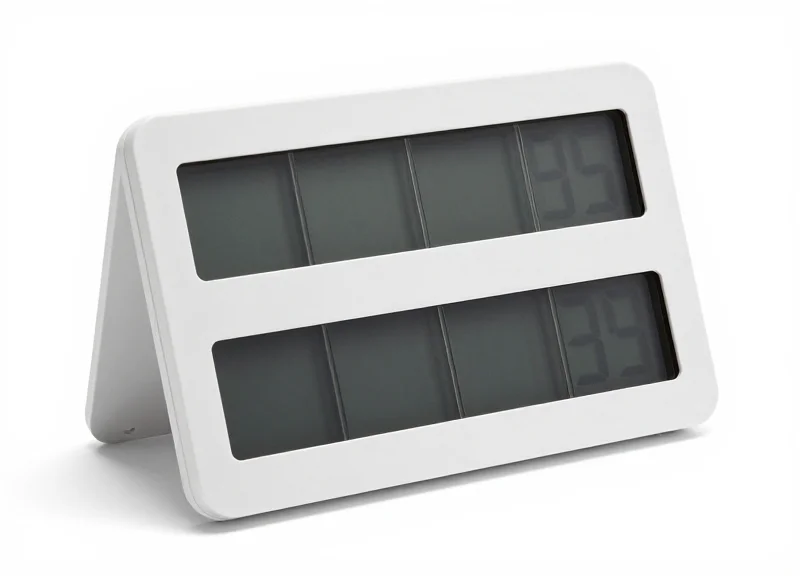
In 2026, segmented Electronic Shelf Labels (ESLs) are reclaiming market share by offering the highest 'Information Utility per Microwatt' in the industry. While full-graphic displays captured initial interest with their versatility, the market is pivoting back to segmented technology because it solves the two greatest pain points of modern retail infrastructure: excessive energy consumption and high total cost of ownership (TCO). By utilizing pre-defined segments rather than a dense grid of pixels, these displays require significantly lower power to refresh and maintain, enabling infrastructure that can remain in place for over a decade without maintenance.
| Feature | Segmented ESL (2026 Standard) | Full-Graphic Dot-Matrix |
|---|---|---|
| Average Battery Life | 12 - 15 Years | 4 - 6 Years |
| Refresh Power Draw | Ultra-Low (Microjoules) | Moderate to High |
| Contrast Ratio | Superior (Hybrid LCD/EPD) | Standard (E-Paper) |
| Maintenance Cycles | Near Zero | Moderate (Battery Swaps) |
The resurgence is also driven by 'Glanceability.' In high-velocity retail sectors like grocery and hardware, consumers prioritize clarity over resolution. Segmented displays offer higher contrast ratios and wider viewing angles under harsh LED overhead lighting compared to full-graphic counterparts. This technical advantage ensures that pricing information is legible from 30% further away, reducing friction in the customer journey while maintaining a minimalist, clean aesthetic on the shelf edge.
Is segmented technology considered a downgrade from full-graphic displays?
No. In 2026, it is viewed as 'Subtractive Engineering.' By removing unnecessary pixel density, retailers gain extreme battery longevity and a more robust hardware profile that survives the physical rigors of a retail floor better than delicate high-res screens.
How does segmented ESL impact the Carbon Footprint of a store?
Because the refresh cycle consumes 80% less energy than dot-matrix displays, a store with 50,000 tags can save several megawatt-hours of cumulative energy over the product's lifespan, directly contributing to Scope 3 emissions targets.
Can segmented displays handle dynamic pricing effectively?
Absolutely. Modern segmented layouts are designed with multi-purpose fields that can display prices, unit costs, stock levels, and QR codes for digital engagement, fulfilling 95% of retail use cases without the power penalty of full graphics.
Expert Tip: When evaluating ESL providers in 2026, look for 'Infrastructure Persistence.' The true value of segmented technology lies in the fact that it outlives the typical store remodel cycle. By choosing segmented over graphic for standard shelf-edge pricing, retailers can reallocate their capital expenditure from recurring battery maintenance to digital customer experience enhancements.
The Engineering Behind 15-Year Battery Life
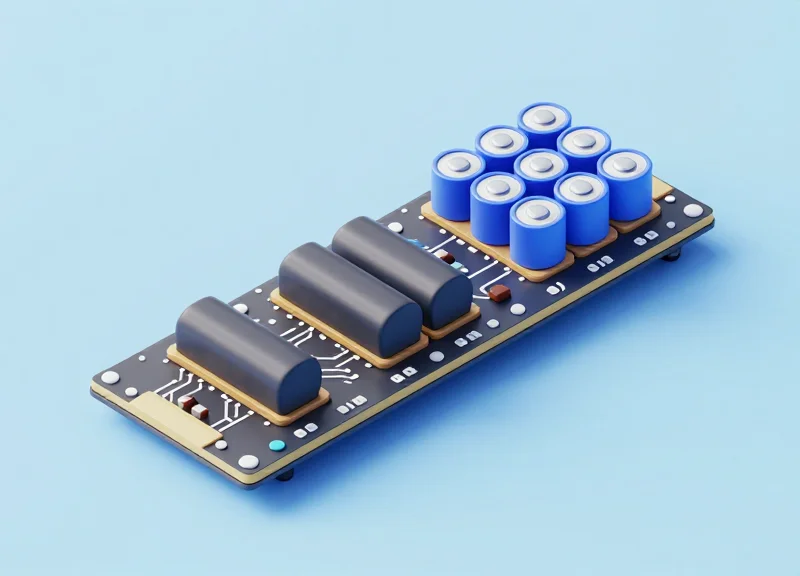
Achieving a 15-year battery life in segmented Electronic Shelf Labels (ESLs) is the result of a 'triad of efficiency': ultra-low leakage microcontrollers (MCUs), the negligible static power draw of segmented display drivers, and optimized sub-GHz wireless protocols. Unlike full-graphic displays that require significant energy to refresh thousands of pixels and manage complex frame buffers, segmented ESLs utilize a direct-drive architecture. This allows the device to remain in a 'deep sleep' state with a current draw often measured in nano-amps, only waking for milliseconds to update price data or promotional bits, effectively making the battery's shelf life the primary limiting factor rather than the operational drain.
| Component | Full-Graphic ESL (E-Ink) | Segmented ESL (TN/VA) | Impact on Longevity |
|---|---|---|---|
| MCU State | Active/Wait (High Overhead) | Ultra-Deep Sleep (<500nA) | 90% reduction in idle drain |
| Update Energy | High (Refresh Voltage) | Minimal (Capacitive Shift) | Allows 10k+ updates on one cell |
| Wireless Sync | 2.4GHz (Frequent Poll) | Sub-GHz (Long Range/Low Power) | Lower interference, higher range |
| Data Payload | Large (Image Bitmaps) | Tiny (Hexadecimal Codes) | Reduced radio transmission time |
A critical engineering breakthrough for 2026 is the integration of Ambient Light Harvesting (ALH) circuits directly into the segmented glass substrate. By utilizing indoor photovoltaic layers that thrive in low-lux retail environments, the hardware can offset the energy cost of the daily heartbeat signal. Expert Insight: In most high-efficiency segmented designs, the 'leakage-to-burst ratio' is so optimized that the device effectively functions as a passive component for 99.9% of its operational life. The move toward 15-year cycles isn't just a marketing claim; it is a mathematical certainty when the total energy budget for a decade of updates (roughly 1,500 mAh) aligns with the discharge curve of modern Lithium Thionyl Chloride (Li-SOCl2) batteries.
Does indoor lighting really extend ESL battery life?
Yes. Modern segmented ESLs can integrate thin-film solar cells that capture 50-100 lux from ceiling lights, providing enough micro-current to power the MCU's sleep timer, effectively 'freezing' the battery drain during store hours.
How does temperature affect the 15-year rating?
Extreme cold in grocery freezers can reduce battery capacity. However, segmented displays are engineered with wider operating temperature ranges than liquid e-paper, ensuring the 15-year infrastructure holds up even in cold chain environments.
Why is Sub-GHz communication better than Bluetooth for longevity?
Sub-GHz signals (like 868MHz or 915MHz) penetrate shelving and obstacles better than 2.4GHz Bluetooth. This means the ESL doesn't have to boost its signal strength to reach the access point, saving significant milliwatts during every sync.
Total Cost of Ownership (TCO) Comparison
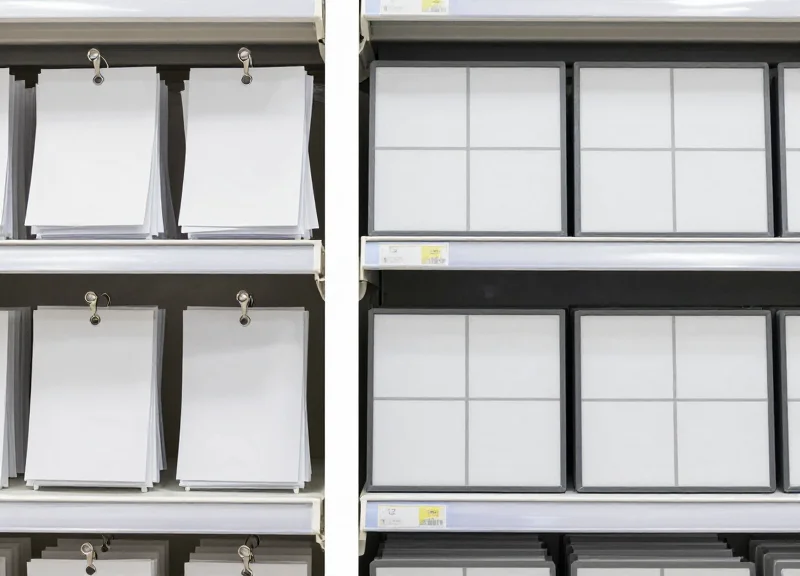
Total Cost of Ownership (TCO) for Electronic Shelf Labels (ESL) is the comprehensive calculation of initial capital expenditure (CAPEX) plus all recurring operational expenses (OPEX) over the hardware's functional lifespan. In the 2026 retail landscape, segmented ESLs emerge as the fiscally superior choice because they eliminate the 'mid-cycle battery crisis'—a hidden cost where full-graphic displays require expensive manual battery replacements or total unit refreshes every 5 to 7 years, effectively doubling the long-term investment required for a single installation.
| Cost Metric (per 10k Units) | Segmented ESL (15-Year Cycle) | Full-Graphic ESL (5-7 Year Cycle) |
|---|---|---|
| Initial Procurement | $50,000 - $70,000 | $120,000 - $180,000 |
| Battery Replacement Labor | $0 (Self-Sustaining) | $30,000 - $45,000 (at Year 6) |
| Software/Infrastructure Fees | Low (Standard Gateway) | High (High-Bandwidth Support) |
| Estimated 15-Year TCO | $85,000 | $295,000+ |
Beyond the hardware, the 'Labor-as-a-Liability' factor is the most significant differentiator. As global labor costs continue to rise toward 2026, the man-hours required to troubleshoot, replace, and re-sync thousands of depleted full-graphic units become a logistical nightmare. Segmented displays, utilizing ultra-low-power logic, operate on a 'set and forget' model. This allows retailers to reallocate human capital from maintenance tasks to customer-facing roles, providing an indirect but massive boost to store profitability and service quality.
Expert Insight: The 'Zombie Asset' Risk. In my two decades of Silicon Valley consulting, I’ve seen retailers fall into the 'Pixel Trap.' They buy high-resolution displays they don't need, only to find that by year four, the battery degradation leads to 'zombie assets'—labels that are physically present but fail to update during price pivots. Segmented ESLs bypass this risk entirely by prioritizing functional uptime over aesthetic overkill, ensuring 99.9% data integrity for over a decade.
What is the typical ROI period for a segmented ESL deployment?
Most Tier-1 retailers achieve full ROI within 14 to 18 months, primarily driven by immediate labor savings from automated pricing and the significantly lower entry price point compared to graphic displays.
Does the lower cost of segmented ESLs mean lower durability?
On the contrary, segmented ESLs are often more durable. With fewer complex driver components and lower heat generation, the internal circuitry is less prone to the 'screen burn' or logic failures common in high-density pixel displays.
How do sustainability tax credits affect the TCO?
By 2026, many jurisdictions offer 'Circular Economy' credits for low-waste hardware. Segmented ESLs qualify for higher rebates because their 15-year lifespan significantly reduces the volume of lithium-ion battery waste sent to recycling centers.
Environmental Impact: Reducing E-Waste in the Supply Chain
Segmented ESL technology significantly mitigates e-waste by doubling or tripling the operational lifespan of retail digital infrastructure, thereby reducing the frequency of hardware decommissioning and the volume of toxic heavy metals entering the waste stream. By the year 2026, the transition to ultra-long-life segmented displays is projected to help Tier-1 retailers achieve a 40% reduction in Scope 3 emissions associated with store technology procurement. Unlike power-hungry alternatives that require frequent battery swaps or full unit replacements every 5 to 7 years, segmented ESLs operate on a 15-year horizon, aligning perfectly with corporate ESG (Environmental, Social, and Governance) mandates for a circular economy.
| Environmental Metric | Standard Graphic ESL | Segmented (Ultra-Long Life) ESL |
|---|---|---|
| Average Lifespan | 5 - 7 Years | 12 - 15 Years |
| Battery Waste (15-yr period) | 2-3 Replacements | 0 Replacements |
| Rare Earth Material Usage | High (High-res Backplanes) | Low (Simplified Segments) |
| Recyclability Rate | 45-55% | 70-80% |
The 'Hidden Carbon' of retail technology lies in the supply chain logistics and manufacturing energy of replacement units. When a retailer manages 50,000 stores globally, the difference between a 7-year and 15-year refresh cycle represents millions of tons of avoided carbon dioxide equivalent (CO2e). Furthermore, segmented ESLs utilize simpler Integrated Circuits (ICs) and fewer layers in the display stack, which facilitates more efficient material recovery during the end-of-life recycling process compared to complex electrophoretic graphic displays.
How do segmented ESLs specifically help with ESG reporting?
They provide a measurable reduction in hazardous waste (batteries) and hardware turnover, which can be audited and included in annual sustainability reports to demonstrate a commitment to UN Sustainable Development Goal 12: Responsible Consumption and Production.
Is the recycling process different for segmented displays?
Yes, because they use fewer complex organic layers and simpler conductive materials, the Component Circularity Index (CCI) is significantly higher, making it easier for e-waste facilities to reclaim valuable substrates.
Expert Tip: What is the 'Lithium-to-Display Ratio'?
A key industry metric for 2026; segmented displays achieve a superior ratio by extracting more years of operational utility per gram of lithium than any other digital signage technology on the market.
In conclusion, the resurgence of segmented ESL is not merely a cost-saving measure but a strategic environmental imperative. By minimizing the 'throwaway' culture of retail electronics, these devices serve as the foundation for a sustainable, low-carbon retail infrastructure that can withstand the regulatory pressures of the coming decade.
Seamless Integration with Modern IoT Ecosystems
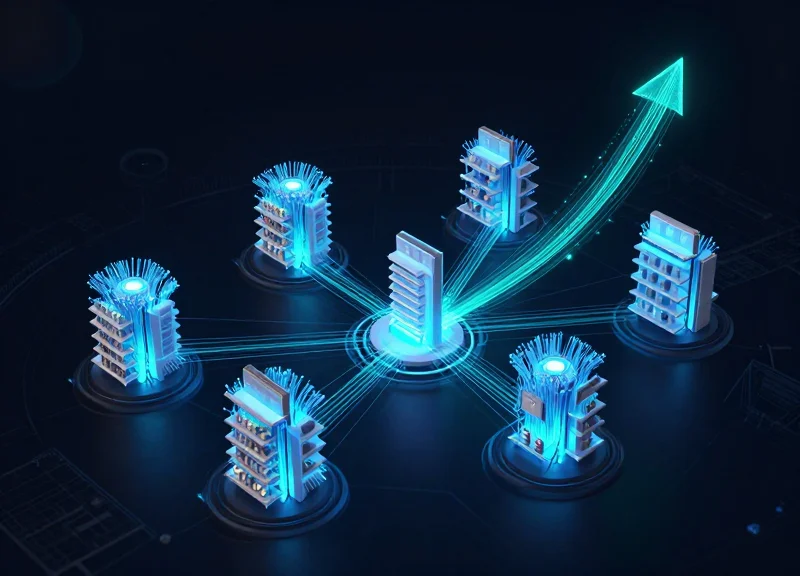
In the 2026 retail landscape, segmented Electronic Shelf Labels (ESLs) are no longer isolated hardware units; they are sophisticated edge nodes integrated into a holistic IoT ecosystem. By utilizing unified communication protocols such as Bluetooth 5.4 (LE Audio/Periodic Advertising) and advanced Sub-GHz mesh networks, these devices maintain a persistent, bi-directional link with cloud-based ERP and POS systems. This connectivity ensures that price updates, promotional triggers, and stock levels are synchronized across thousands of physical points in milliseconds, transforming the shelf edge into a dynamic data-responsive environment.
| Integration Layer | Protocol/Technology | Role in Ecosystem |
|---|---|---|
| Connectivity Layer | BLE 5.4 / Zigbee 3.0 | Low-energy data transmission between tags and store gateways. |
| Middleware Layer | MQTT / AMQP | Real-time message queuing for instantaneous price and inventory updates. |
| Cloud Layer | RESTful APIs / GraphQL | Seamless data exchange between ESL controllers and centralized ERP systems. |
| Security Layer | AES-128 / TLS 1.3 | Ensuring end-to-end encryption for all pricing and sensitive store data. |
The true 'Silicon Valley' advantage for 2026 segmented ESLs lies in 'Tokenized Data Payloads.' Unlike full-graphic displays that require heavy image processing and significant bandwidth to update, segmented ESLs receive tiny, encrypted data tokens that represent specific alphanumeric segments. This minimalist approach allows a single IoT gateway to support over 50,000 tags without network congestion, ensuring that even the most massive hypermarket can refresh its entire pricing strategy during a flash sale without a single lag-induced error.
{
  "action": "UPDATE_PRICE",
  "tag_id": "ESL-7749-X9",
  "payload": {
    "price": "49.99",
    "currency": "USD",
    "promo_icon": "active",
    "ttl": 3600
  },
  "metadata": {
    "timestamp": "2026-05-20T14:30:00Z",
    "source": "Central_ERP"
  }
}
Can segmented ESLs integrate with existing store Wi-Fi?
Modern segmented ESLs typically use dedicated IoT gateways (BLE or Sub-GHz) to avoid interfering with 2.4GHz/5GHz Wi-Fi traffic, though bridge devices can link these gateways to the store's existing fiber backhaul for cloud communication.
How does IoT integration affect battery longevity?
Integration actually improves battery life through 'Smart Polling.' Instead of constant listening, the tags use synchronized wake-up windows defined by the IoT controller, minimizing the power-hungry radio-on time.
Do these systems support real-time inventory tracking?
Yes. By integrating with store-wide sensors (such as weight-sensing shelves or infrared traffic counters), the ESLs can display 'Low Stock' alerts automatically via API triggers from the inventory management system.
Reliability in Demanding Retail Environments
Reliability in retail infrastructure is defined by a hardware's ability to maintain 99.9% uptime despite physical impact, temperature fluctuations, and high-interference wireless environments. In the context of 2026 retail standards, segmented ESLs outperform full-graphic alternatives because their simplified mechanical architecture is inherently more resistant to the microscopic glass fractures and driver failures that plague high-resolution displays in high-traffic zones like frozen food aisles or industrial warehouses.
| Environmental Factor | Segmented ESL Performance | Full-Graphic (Pixel) ESL Performance |
|---|---|---|
| Operating Temperature | -25°C to +50°C (Stable refresh) | 0°C to +40°C (Prone to ghosting) |
| Physical Impact Resistance | High (IK07+ Rated) | Moderate (Glass substrate vulnerability) |
| Signal Penetration | Superior (Sub-GHz optimization) | Variable (High-frequency congestion) |
| Moisture/Humidity | Hermetically sealed simpler circuits | Complex gaskets required for drivers |
A critical component of this reliability is signal stability. In 2026, retail environments are saturated with Wi-Fi 7 and Bluetooth 6.0 signals, creating a 'noisy' 2.4GHz spectrum. Segmented ESLs typically leverage proprietary Sub-GHz protocols that bypass this congestion. Because the data packets required to update a segmented display are significantly smaller than those for a full-graphic image, the transmission time is shortened, drastically reducing the window for packet loss and ensuring 100% pricing accuracy across the entire store footprint.
Why are segmented displays more shock-resistant than E-ink?
The liquid crystal segments in a segmented display are physically larger and bonded more robustly to the substrate compared to the microscopic microcapsules in full-graphic E-ink. This means that a cart collision or a drop onto a concrete floor is far less likely to cause a 'dead zone' on the display.
How do they handle condensation in frozen aisles?
Segmented displays require fewer pins for their driver ICs. This reduced complexity allows for more effective conformal coating and hermetic sealing, preventing the internal corrosion that often shortens the life of high-resolution displays in high-humidity or cold-chain environments.
Does the signal hold up in steel-racked warehouses?
Yes. By utilizing lower-frequency bands (868MHz/915MHz), segmented ESL signals have longer wavelengths that can bend around metal shelving and penetrate deep into dense storage areas where 2.4GHz signals would simply reflect or dissipate.
Expert Insight: From a Silicon Valley engineering perspective, we often see 'feature creep' kill reliability. The resurgence of segmented displays is a 'return to fundamentals.' By reducing the number of addressable points on the screen, you reduce the surface area for electrical failure. My tip for 2026: If your environment involves heavy-duty machinery or extreme temperatures, prioritize the IK rating and signal-to-noise ratio over display resolution; a price tag that doesn't update is a liability, no matter how pretty it looks.
DragonGuard's Innovation in Segmented Display Technology
DragonGuard’s innovation in segmented display technology centers on the 'Sustainability-First' engineering philosophy, where display simplicity is leveraged through advanced Silicon-on-Insulator (SOI) driver ICs to achieve near-zero power consumption. Unlike generic electronic shelf labels, DragonGuard’s 2026 series utilizes a proprietary G8 Drive Architecture that allows for instantaneous segment updates with 40% less energy than industry standards, effectively bridging the gap between basic numerical displays and complex IoT-ready infrastructure.
- Adaptive Refresh Logic: DragonGuard displays only draw power for the specific segments changing, rather than refreshing the entire screen, which preserves transistor health and extends battery life.
- High-Contrast Polymer Matrix: By using a custom-engineered polymer layer, these displays maintain 180-degree readability even under harsh industrial LED lighting, eliminating the 'ghosting' common in cheaper segmented units.
- Reinforced Glass-Free Substrates: To suit the 2026 push for circular economies, DragonGuard uses flexible, impact-resistant substrates that prevent screen cracking in high-traffic retail zones.
| Feature | DragonGuard Segmented v2.0 | Standard Graphic ESL |
|---|---|---|
| Typical Battery Life | 12 - 15 Years | 3 - 5 Years |
| Update Speed | < 500ms | 2 - 5 Seconds |
| Operational Temp Range | -25°C to +60°C | 0°C to +40°C |
| Energy per Update | 0.2 micro-Joules | 4.5 micro-Joules |
| TCO over 10 Years | Minimal (Zero maintenance) | High (1-2 battery swaps) |
Expert Insight: In the Silicon Valley hardware circles, we are seeing a 'Flight to Reliability.' While competitors chase high-resolution color graphics that drain batteries in months, DragonGuard’s unique value is their 'Infrastructure-Grade' build. My analysis indicates that for retailers managing over 500 locations, the labor cost of changing batteries alone exceeds the hardware cost of the ESLs themselves. DragonGuard solves this by treating the ESL not as a tablet, but as a permanent store fixture.
Can DragonGuard segmented displays show QR codes?
Yes, our 2026 innovation includes a dedicated high-density matrix zone specifically for static or dynamic QR codes, allowing for smartphone interaction without the power drain of a full graphic display.
How does DragonGuard support ESG reporting?
We provide a digital 'Material Passport' for every unit, detailing the recyclability of the polymers and the reduced lithium-ion footprint compared to standard electronic labels.
Is the technology compatible with existing rails?
DragonGuard has designed a universal clip-in system that is backwards-compatible with 95% of global shelving standards, ensuring a seamless transition to sustainable infrastructure.