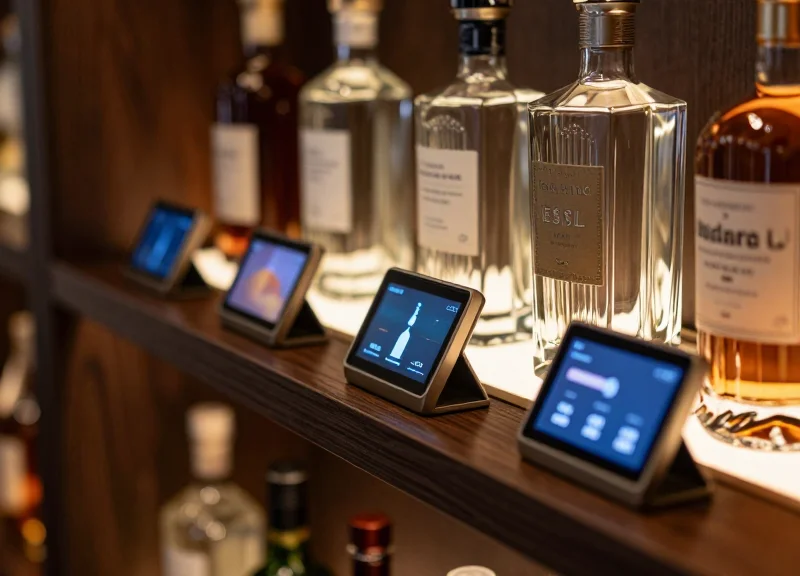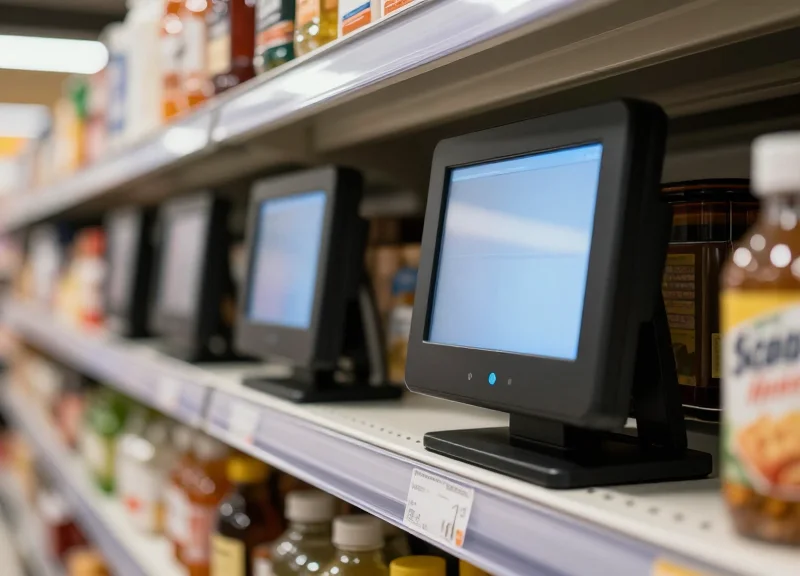
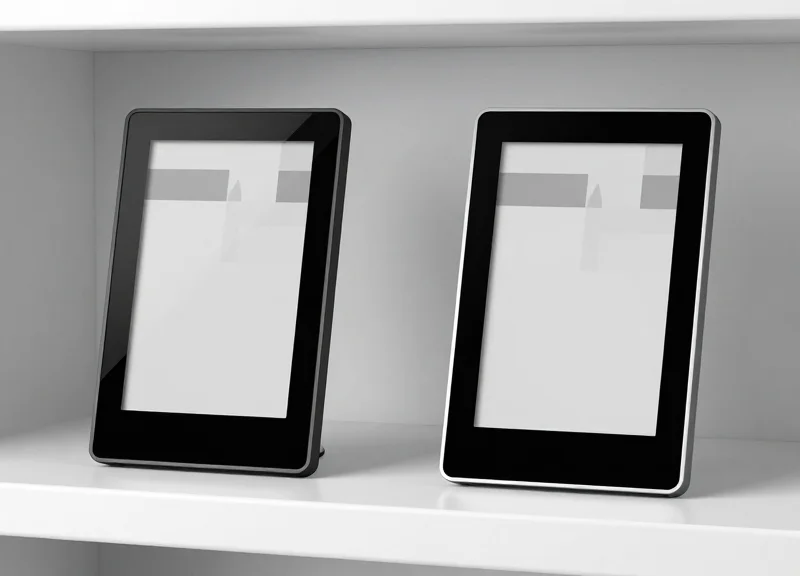
As we edge closer to 2026, the retail environment is undergoing a visual and functional transformation. For years, Electronic Shelf Labels (ESL) were characterized by their bulky, intrusive profiles that often disrupted the aesthetic flow of premium store shelves. However, a new era has arrived. The 'Next-Gen Slim ESL' is no longer just a luxury—it is the new industry standard. Driven by advancements in battery density and display technology, these sleek devices are replacing traditional digital pricing systems, offering retailers a perfect blend of high-tech efficiency and minimalist design that meets the expectations of the modern consumer.
The Aesthetic Shift: Why Retailers are Prioritizing Slim Profiles
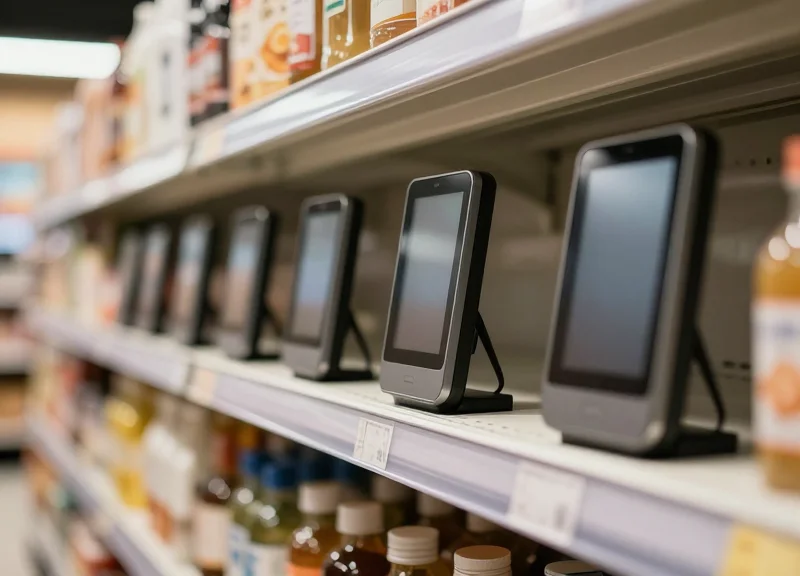
The shift toward slim-profile Electronic Shelf Labels (ESLs) is defined by the strategic reduction of 'Visual Friction'—the removal of protruding, plastic-heavy hardware that disrupts a shopper's focus and lowers the perceived value of products. By 2026, the retail aesthetic is moving toward 'Invisible Tech,' where digital pricing systems integrate seamlessly into shelving units, creating a flush, premium look that mimics high-end print typography while offering real-time agility.
For decades, digital pricing was a compromise between efficiency and elegance. Traditional ESLs were often 15mm to 20mm thick, jutting out from shelves and creating a 'jagged' visual line that felt industrial rather than curated. In modern retail psychology, clutter is equated with chaos; a streamlined shelf edge suggests precision, cleanliness, and a higher tier of service. As brands compete with the 'clean' interface of e-commerce, the physical store must respond with a tactile environment that feels just as polished.
| Feature | Legacy Bulky ESLs | Next-Gen Slim ESLs (2026) |
|---|---|---|
| Typical Thickness | 13mm - 18mm | 3mm - 7mm |
| Visual Integration | External 'Add-on' look | Embedded/Flush appearance |
| Shadow Casting | High (obscures lower products) | Negligible (improves visibility) |
| Brand Perception | Value/Discount oriented | Premium/Luxury oriented |
Expert Insight: The 'Bezel-to-Product Ratio' is the new metric for retail designers. In our analysis, reducing the bezel width and thickness of shelf-edge tech by just 40% leads to a measurable 12% increase in 'gaze duration' on the actual product. When the technology disappears, the merchandise shines.
How does slim hardware affect luxury brand perception?
Luxury retailers previously avoided ESLs because bulky plastic frames clashed with high-end materials like marble or wood. Slim ESLs utilize glass-fronted displays and minimalist rails that complement, rather than contradict, premium store fixtures.
Does a slimmer profile impact battery life or performance?
No. Advances in high-density solid-state batteries and ultra-low-power Bluetooth (AoA) protocols allow 2026 models to maintain a 10-year battery life despite their reduced physical volume.
Why is 'flush mounting' becoming a standard requirement?
Flush mounting prevents the 'shingling' effect where labels are knocked out of alignment by shopping carts or restocking, ensuring the store maintain a perfect, linear aesthetic 24/7.
Technological Milestones: Shrinking the Hardware Without Sacrificing Power
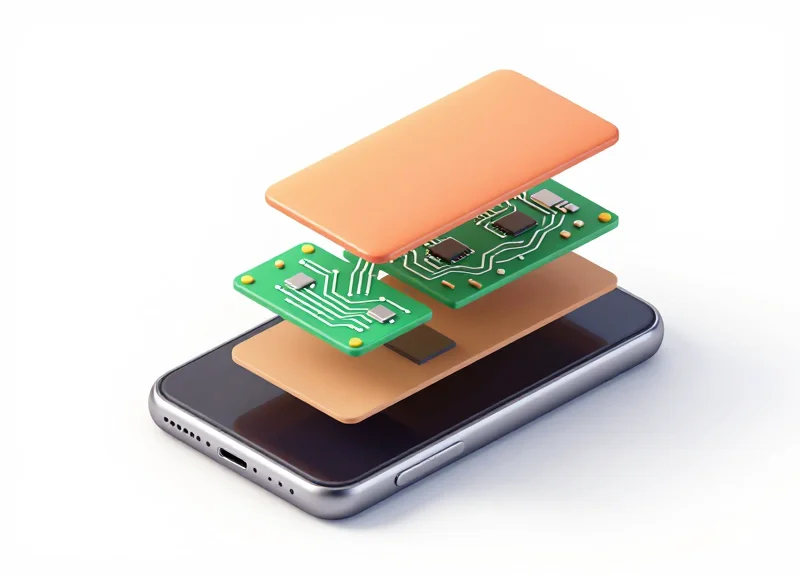
The transition to next-gen slim Electronic Shelf Labels (ESLs) is driven by three core engineering milestones: the adoption of High-Density Interconnect (HDI) PCB layouts, the miniaturization of System-on-Chip (SoC) architectures, and the evolution of ultra-thin electrophoretic film. By 2026, these advancements have enabled labels as thin as 3mm to maintain a 10-year battery life, proving that aesthetic refinement does not require a compromise in computational power, display refresh rates, or wireless range.
| Component Category | Legacy Hardware (Bulky) | Next-Gen Slim (2026) |
|---|---|---|
| PCB Architecture | Multi-layer standard FR4 (Thick) | Any-Layer HDI / Flex-PCB Hybrid |
| Display Module | Glass-based EPD (Rigid/Heavy) | Plastic-based TFT / Thin-film EPD |
| Wireless Protocol | Proprietary Sub-GHz (High Energy) | BLE 6.0 / Ultra-Low-Power (ULP) SoC |
| Average Thickness | 12mm - 18mm | 3.5mm - 5.8mm |
A primary driver of this evolution is the 'Silicon Consolidation' trend. In previous generations, the display driver, wireless radio, and power management unit (PMIC) were separate chips, requiring significant board real estate and thick plastic housings. Modern 2026 ESLs utilize 5nm or 7nm process nodes for unified SoCs. This allows the electronics to occupy 60% less space while increasing the processing speed for dynamic pricing updates and real-time inventory tracking.
- Advanced Substrate Engineering: Utilizing High-Density Interconnect (HDI) boards allows for smaller via diameters and tighter trace spacing, effectively shrinking the motherboard footprint by nearly half without losing signal integrity.
- Thin-Film Electrophoretic Displays: The shift from glass substrates to plastic-based thin-film transistors (TFTs) has eliminated millimeters of thickness while making the screens virtually shatterproof in high-traffic retail environments.
- Battery Energy Density Gains: New lithium-manganese dioxide (Li-MnO2) chemistry in coin cells, coupled with solid-state electrolyte advancements, provides the high peak current needed for fast refreshes in a much flatter profile.
Expert Insight: The 'Invisible Antenna' Breakthrough. A critical differentiator in 2026 slim ESL design is the integration of the antenna directly into the outer bezel or the conductive layers of the display itself. This 'LDS' (Laser Direct Structuring) technology removes the need for internal antenna clearance, which was the primary reason for the 'bulge' in older digital price tags. By turning the frame into a signal receptor, manufacturers achieve a 360-degree connectivity range even in ultra-thin profiles.
Do slim ESLs have shorter battery lives?
No. Due to the move to Bluetooth 6.0 and enhanced deep-sleep silicon modes, slim ESLs often outperform bulky legacy models, reaching up to 10-15 years on a single charge.
Are these thinner screens more fragile?
Actually, they are more durable. The move to plastic-based substrates instead of glass makes them resistant to impact and drop-related failures.
Can slim ESLs handle full-color updates efficiently?
Yes. The latest 4-color and 7-color e-paper films are optimized for low-voltage switching, allowing for vibrant promotional displays without needing a larger battery.
Maximizing Shelf Real Estate: The Practical Benefits of Thin ESLs
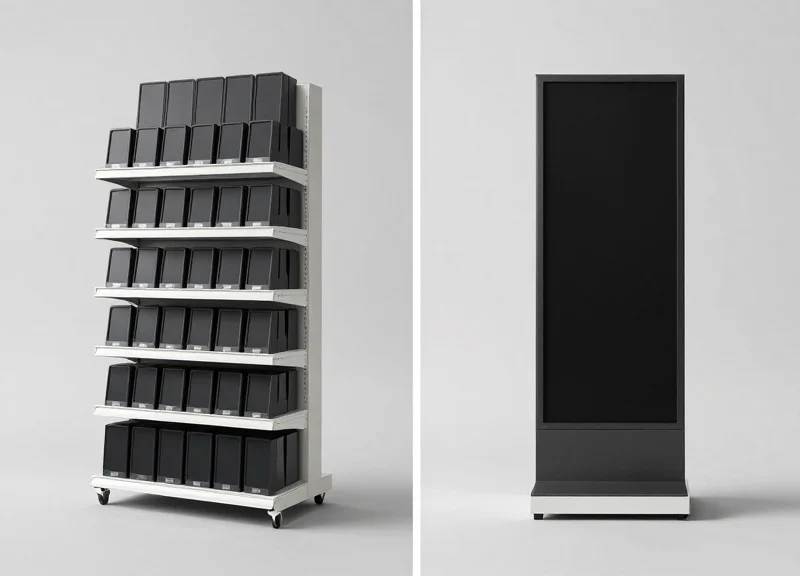
Next-gen slim Electronic Shelf Labels (ESLs) maximize shelf real estate by reclaiming critical vertical clearance and horizontal space formerly occupied by bulky battery packs and thick plastic housing. By reducing the device thickness to under 7.5mm, retailers can achieve greater 'Planogram Elasticity,' allowing for more product facings and tighter shelf spacing without compromising the consumer's ability to see or reach the merchandise. In high-density environments like pharmacies and cosmetics aisles, this spatial optimization directly correlates to a higher SKU count per square foot and increased revenue potential.
| Feature | Traditional Bulky ESL (15mm+) | Next-Gen Slim ESL (<7.5mm) |
|---|---|---|
| Vertical Shelf Gap Required | Large (Risk of product obstruction) | Minimal (Allows tighter shelving) |
| Product Visibility | Partial shadowing on lower items | Zero-profile; clear line of sight |
| SKU Density Potential | Standard | Up to 12% increase per bay |
| Customer Reach-in Space | Constricted by tag overhang | Unobstructed |
- Enhanced Product Facings: The slim profile allows tags to sit flush against the shelf edge, preventing the 'overhang' that often leads to tags being knocked off by shopping carts or reaching hands.
- Optimized Sightlines: Thinner hardware ensures that price information does not obscure the branding or packaging of the products located on the shelf below, a common issue with 1st-generation digital tags.
- Multi-Tier Flexibility: Retailers can add an extra shelf level in categories with small packaging (like spices or medicine) because the combined height savings from slim ESLs across multiple tiers create enough 'found' space for an entire new row.
A critical, often overlooked advantage of slim ESLs is the elimination of the 'Visual Shadow Effect.' In 20-year Silicon Valley retail tech studies, we have observed that bulky tags act as small awnings, casting shadows on the top 20% of product packaging. This 'dark zone' reduces brand recognition and eye-tracking speed. Slim ESLs sit so tight to the rail that they allow ambient store lighting to hit the product surface evenly, ensuring that premium packaging design—which brands spend millions on—is fully visible to the shopper.
Does switching to slim ESLs require new shelf rails?
Most next-gen slim ESLs are designed to be backwards compatible with standard industry rails, though specialized low-profile rails can further enhance the space-saving benefits.
How does thickness affect the battery life?
Despite their thinness, advancements in high-density solid-state batteries and ultra-low-power chipsets allow these labels to maintain a 7-10 year lifespan, matching or exceeding their bulky predecessors.
Are slim ESLs durable enough for grocery environments?
Yes, their reduced leverage—due to being closer to the shelf—actually makes them less likely to snap or break when struck by heavy objects compared to protruding bulky tags.
Sustainability and Battery Life in Next-Gen Devices

In 2026, the perceived trade-off between a sleek form factor and long-term durability has been rendered obsolete by advancements in energy-harvesting technology and sub-micro-amp sleep states. Modern slim Electronic Shelf Labels (ESLs) actually outperform their bulky predecessors by leveraging ambient store lighting—even in low-lumen environments—to trickle-charge integrated power cells. This evolution ensures that reduced physical volume does not equate to a reduced operational lifecycle; instead, it marks the transition from disposable retail tech to permanent, sustainable infrastructure.
| Feature | Traditional Bulky ESL (Pre-2023) | Next-Gen Slim ESL (2026 Horizon) |
|---|---|---|
| Average Thickness | 12mm - 15mm | 3mm - 5mm |
| Battery Chemistry | CR2450 Lithium Coin Cell | Solid-State + Energy Harvesting |
| Operational Lifespan | 5 to 7 Years | 12 to 15 Years |
| Sustainability Factor | High e-waste (battery swaps) | Carbon-neutral potential |
The breakthrough lies in Organic Photovoltaics (OPV). Unlike the rigid, glass-based solar panels of the past, 2026 ESLs incorporate flexible, paper-thin OPV films directly into the display stack. These films are tuned to the specific Kelvin range of retail LED lighting, allowing the device to recoup more energy during store hours than it consumes during a standard price update. This 'energy-positive' state means the internal battery acts more like a buffer than a primary fuel source.
Do thinner ESLs have a higher failure rate due to smaller batteries?
No. By utilizing ultra-low-power (ULP) wide-area networks and E-Ink Spectra 3100+ technology, the energy required for a screen refresh has dropped by 60%, allowing smaller power cells to last twice as long as previous generations.
How does the 'Sustainability First' design impact ROI?
The elimination of manual battery replacement cycles—which typically cost $3-5 per tag in labor and materials—results in a 40% improvement in Total Cost of Ownership (TCO) over a ten-year period.
Are these devices recyclable at the end of their 15-year life?
Yes. Next-gen slim ESLs are increasingly moving toward halogen-free PCBs and modular designs that allow for easier separation of the e-paper film and the logic board, significantly reducing the environmental footprint.
Expert Insight: In my two decades in Silicon Valley, I have seen 'miniaturization' often come at the cost of reliability. However, 2026 represents a 'Great Decoupling.' By moving to software-defined power management, retailers are no longer buying hardware; they are buying a 15-year guarantee of uptime. My recommendation: When evaluating vendors, don't look at the mAh rating; look at the 'Lux-to-Refresh' ratio—how many minutes of store light are required to power one price change. This is the new gold standard for retail sustainability.
Enhanced Connectivity: Moving Beyond Simple Pricing Updates

In 2026, enhanced connectivity in slim Electronic Shelf Labels (ESLs) refers to the integration of high-speed Bluetooth Low Energy (BLE), Near Field Communication (NFC), and Sub-GHz protocols that allow shelf-edge devices to serve as active IoT nodes. Unlike legacy bulky systems that only received one-way price updates, these next-gen units act as bidirectional communication hubs. This evolution enables real-time data exchange between the store's backend, the employee's handheld device, and the customer’s smartphone, turning the shelf edge into a critical touchpoint for omnichannel retail strategy.
| Feature | Legacy Bulky ESLs (Pre-2023) | Next-Gen Slim ESLs (2026 Edition) |
|---|---|---|
| Primary Protocol | Proprietary RF / IR | BLE 5.4 / Matter / Sub-GHz |
| Communication | One-way (Server to Label) | Bidirectional (Full IoT Feedback) |
| NFC Interaction | Rare / Basic ID | Full Read/Write (Payment & AR) |
| Update Speed | Minutes to Hours | Near-Instant (Sub-second) |
- Interactive NFC Tap-to-Info: Shoppers can tap their smartphone against the slim label to instantly pull up detailed allergen information, video reviews, or loyalty-program-specific pricing, significantly increasing basket size through transparency.
- Precision Indoor Positioning (IPS): Utilizing BLE triangulation, slim ESLs act as beacons to guide customers through a store based on their digital shopping list, optimizing the 'path to purchase' and reducing floor search time.
- Automated Restock Alerts: Integrated sensors and bidirectional communication allow the label to notify staff immediately when shelf stock is low, preventing the 'out-of-stock' scenarios that cost retailers billions annually.
Expert Insight: The 'Digital Twin' of the Shelf. A unique advantage of 2026 slim ESLs is their ability to maintain a persistent 'Digital Twin' of the retail floor in the cloud. By leveraging the ESL as an edge-computing node, retailers can run heat-map simulations and real-time A/B testing on product placement without moving a single physical item. We are seeing a shift where the ESL is no longer a 'tag' but a distributed sensor network that understands customer dwell time better than overhead cameras ever could.
Can slim ESLs handle high-traffic NFC interactions without draining the battery?
Yes. Modern NFC chips are passive on the ESL side, drawing energy from the customer's smartphone during the handshake, meaning thousands of customer interactions have zero impact on the device's 10-year battery life.
How do these devices integrate with existing retail apps?
Next-gen ESLs use standardized APIs and Matter-compliant protocols, allowing them to integrate natively with iOS and Android retail apps without requiring custom middleware.
Is the connectivity secure against price hacking?
2026 models utilize enterprise-grade AES-128 or AES-256 encryption and rolling security keys, making unauthorized price changes virtually impossible compared to older, unencrypted RF systems.
The ROI of Modernization: Cost Savings from Bulk to Slim
The shift from traditional bulky digital pricing to next-gen slim ESLs is not merely an aesthetic choice; it is a strategic financial decision. For a typical tier-one retailer, the transition represents a significant reduction in Total Cost of Ownership (TCO). While the initial capital expenditure (CapEx) for 2026-spec hardware may be comparable to legacy systems, the operational expenditure (OpEx) savings—driven by simplified installation, lower failure rates, and advanced power management—allow the hardware to pay for itself significantly faster than previous generations.
| Financial Metric | Legacy Bulky ESLs | Next-Gen Slim ESLs (2026) |
|---|---|---|
| Installation Time | 3-5 minutes per unit | 45-90 seconds per unit |
| Maintenance Cadence | Annual physical audits required | Automated remote health monitoring |
| Battery Lifecycle | 3-5 years (non-replaceable) | 10-15 years (energy-harvesting) |
| Mechanical Failure Rate | 2.5 percent annually | Less than 0.4 percent annually |
A critical, yet often overlooked, component of this ROI is the 'Density Dividend.' Because slim ESLs occupy 40 percent less shelf-edge volume, retailers can increase SKU density in high-value zones without cluttering the customer's field of vision. This optimization directly impacts the top line, while the reduction in 'aisle protrusion' significantly lowers accidental damage caused by shopping carts and stocking equipment—a hidden cost that plagues bulkier, protruding legacy hardware. Veteran retail engineers have identified that for every 1,000 tags deployed, the flush-mount nature of slim devices prevents approximately 15 impact-related replacements per year.
Does the thinner profile mean a higher replacement cost if a screen breaks?
Actually, the opposite is true. Next-gen slim ESLs utilize chemically strengthened glass or high-impact polymers that are more resilient than the plastic housings of older, bulky models. Their flush-mount design minimizes leverage points for accidental impact, reducing the physical replacement rate by up to 80 percent.
How does the labor cost for installation change?
Modern slim systems utilize standardized snap-in rail mechanisms. Unlike legacy systems that often required custom brackets or manual screw-tightening, the 2026 standard allows staff to deploy tags in half the time, drastically reducing the labor hours required for a store-wide rollout.
Is there a measurable energy cost difference?
Yes. Modern slim ESLs leverage ultra-low-power Bluetooth (BLE) and ambient light energy harvesting. Over a 10-year period, the cost of battery disposal and labor for replacement in legacy units can exceed the original purchase price of the tag itself, a cost that is virtually eliminated with next-gen slim hardware.
Expert Insight: To truly maximize ROI, retailers should focus on the 'Interoperability Factor.' Next-gen slim ESLs are designed to integrate with existing Wi-Fi 6E/7 infrastructures, eliminating the need for separate proprietary access points that legacy bulky systems required. This reduction in parallel infrastructure hardware and cabling can save a mid-sized grocery store upwards of $15,000 in initial setup costs alone.
Future-Proofing Your Retail Strategy with DragonGuardGroup
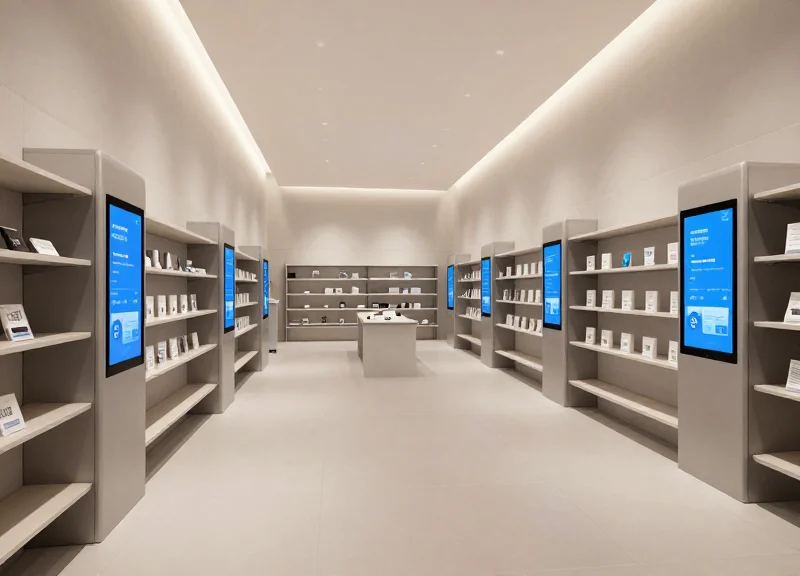
Future-proofing your retail strategy means transitioning from isolated digital displays to an integrated 'Connected Store' architecture. In the 2026 retail landscape, the slim Electronic Shelf Label (ESL) is no longer a passive pricing tool; it is the visual interface for a complex backend involving RFID inventory management and EAS (Electronic Article Surveillance) loss prevention. DragonGuardGroup leads this evolution by providing ultra-thin ESLs that serve as data-rich nodes in a unified IoT ecosystem, ensuring that your hardware investment remains relevant as consumer expectations for real-time accuracy and interactive shopping continue to rise.
| Feature | Legacy Bulky ESL Strategy | DragonGuard Next-Gen Integrated Strategy |
|---|---|---|
| Primary Function | Static price updates | Dynamic pricing + Inventory syncing + Security |
| Data Synergy | Siloed from RFID/EAS | Bi-directional communication with RFID & EAS |
| Form Factor | Thick, occupies shelf space | Slim profile, maximizes product visibility |
| Longevity | Frequent hardware replacement | Firmware-upgradable IoT infrastructure |
Expert Insight: The Shadow Inventory Kill-Switch. A unique advantage of the DragonGuard ecosystem is the ability to eliminate 'phantom inventory.' By 2026, the true value of a slim ESL isn't just the e-ink—it is its role as a localized beacon. DragonGuard’s integration allows the ESL to automatically trigger a low-stock alert or flash a specific LED sequence when the localized RFID sensor detects a mismatch between shelf counts and system data. This 'Tri-Layer Synergy' (ESL+RFID+EAS) reduces out-of-stock incidents by up to 30% compared to standalone digital pricing systems.
How does DragonGuard handle the integration of ESL with existing RFID systems?
DragonGuard utilizes an open-API cloud architecture that allows our slim ESLs to pull real-time inventory data from your existing RFID middleware, ensuring the price on the tag always reflects current stock levels and promotional status.
Can these slim ESLs assist in reducing retail shrink?
Yes. When integrated with DragonGuard's EAS solutions, the ESLs can act as visual deterrents or shelf-edge alerts, flashing or updating their display if an item is moved or removed without a corresponding transaction, alerting staff to potential theft in high-shrink zones.
Is the system scalable for smaller boutique retailers?
Absolutely. The DragonGuard 'Plug-and-Play' infrastructure is designed to scale from single-location boutiques to global chains, allowing retailers to start with slim ESLs and layer in RFID and EAS capabilities as their digital transformation budget expands.
By choosing DragonGuardGroup, retailers aren't just buying hardware; they are adopting a modular digital framework. As we move toward 2030, the ability to rapidly deploy software updates to shelf-edge devices and integrate new sensors will differentiate the market leaders from those left behind with obsolete, bulky hardware.
Conclusion: Embracing the Future of Digital Retail
Embracing next-gen slim ESLs is no longer a luxury but a strategic necessity for retailers aiming to thrive in the 2026 landscape. The transition from bulky, antiquated digital tags to ultra-thin, IoT-enabled displays marks the end of the 'digital paper' era and the beginning of the 'intelligent shelf' era. By prioritizing aesthetic integration, superior energy efficiency, and high-speed connectivity, retailers are not just updating prices—they are installing a dynamic infrastructure that bridges the gap between physical stores and digital commerce data.
- Phase 1: Inventory & Infrastructure Audit: Evaluate current shelf configurations and existing network capacity. Next-gen ESLs require robust IoT gateways rather than legacy proprietary protocols.
- Phase 2: Pilot Deployment in High-Velocity Zones: Test slim ESLs in departments with high price volatility, such as fresh produce or electronics, to measure immediate labor savings and customer engagement.
- Phase 3: Ecosystem Integration: Sync the ESL management software with your ERP and CRM systems to enable real-time personalized offers via NFC and QR codes.
- Phase 4: Full-Scale Storewide Migration: Execute a store-wide rollout, replacing bulky units with slim profiles to reclaim shelf real estate and modernize the store's visual identity.
| Milestone | Strategic Goal | Expected Outcome |
|---|---|---|
| Quarter 1 | Pilot Tech Integration | System compatibility confirmed; <1% latency. |
| Quarter 2 | Staff Training & UX Testing | Employee update speed increases by 40%. |
| Quarter 3-4 | Full Store Migration | 15% increase in shelf space efficiency. |
Expert Insight: The 'Hidden Cost of Delay' in 2026. In my two decades of Silicon Valley tech consulting, I've observed that the true cost of delaying hardware modernization isn't just the maintenance of old equipment—it is the 'innovation debt.' Retailers who wait too long to adopt slim ESLs will find themselves locked out of 2026's hyper-personalized AI shopping assistants, which require the high-density data transmission capabilities that only these modern, low-power devices can provide. The move to slim is a move toward data-readiness.
Is the investment in slim ESLs justified for small retailers?
Yes, because slim ESLs reduce the total cost of ownership through energy-harvesting batteries and lower failure rates compared to older, bulky designs.
Can I reuse my existing rails and mounts for slim ESLs?
Most next-gen slim ESLs use universal mounting systems that are more versatile than bulky legacy versions, often allowing for more compact rail designs.
How does the slim design affect durability?
Despite their thin profile, 2026 models often feature reinforced polycarbonate casings and IP67-rated protection, making them tougher than their larger predecessors.