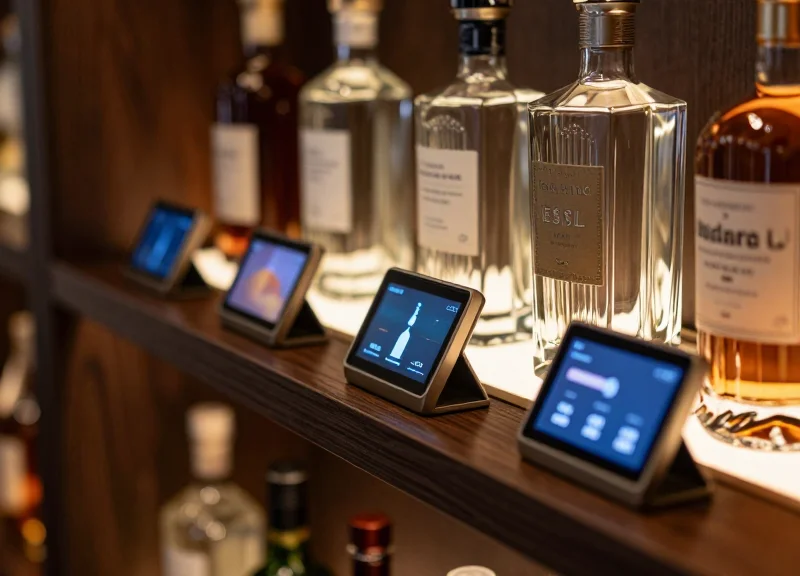
In the competitive landscape of high-end spirits retail, information is currency. Discerning customers often rely on professional accolades from Robert Parker (RP) and Wine Spectator (WS) to justify premium purchases. However, manually updating these ratings across thousands of SKUs is a logistical nightmare. Next-generation Electronic Shelf Labels (ESL) combined with automated rating synchronization offer a transformative solution, proven to drive sales growth by up to 22% by bridging the gap between expert validation and the physical point of sale.
The Evolution of Spirits Retail: From Static Tags to Dynamic Digital Displays
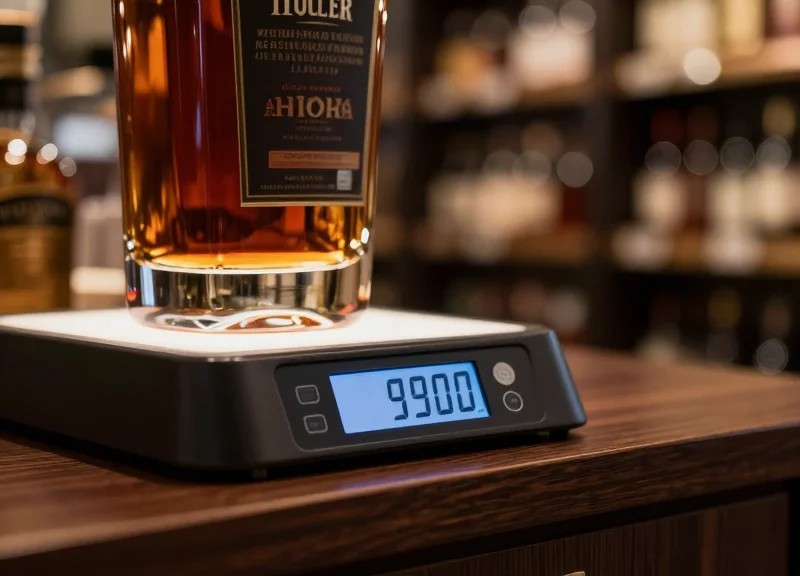
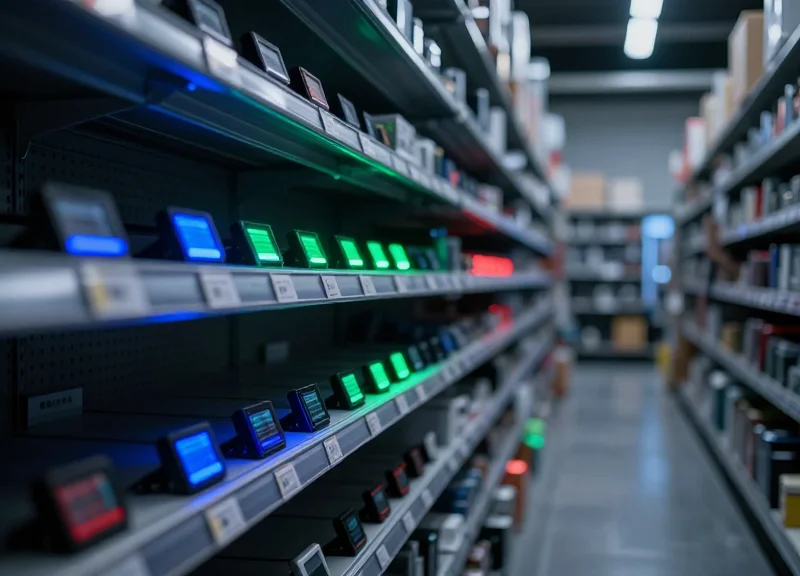
The evolution of spirits retail represents a fundamental shift from manual, error-prone paper labeling to an integrated IoT ecosystem where Electronic Shelf Labels (ESL) serve as dynamic data portals. By replacing static tags with next-gen digital displays, retailers are no longer just showing a price; they are delivering real-time, authoritative professional ratings (like Robert Parker or Wine Spectator) directly at the shelf edge, effectively closing the information gap that often prevents high-end purchases.
| Feature | Legacy Static Tags | Next-Gen Dynamic ESL |
|---|---|---|
| Update Frequency | Manual (Hours/Days) | Instant (Milliseconds) |
| Information Depth | Price & Name Only | Price, RP/WS Ratings, Tasting Notes |
| Pricing Accuracy | High Error Risk | 100% ERP Synchronization |
| Customer Trust | Low (Suspect Data) | High (Verified Professional Scores) |
In the Silicon Valley retail tech landscape, we call this the 'Information Velocity Paradox.' High-end spirits represent a significant investment for the consumer. When a bottle of Bordeaux or a rare Single Malt sits next to a dusty, handwritten tag, there is a cognitive disconnect. Modern consumers expect the same data-rich experience in-store that they find on mobile apps. Transitioning to dynamic displays isn't just an aesthetic upgrade; it is a move toward 'Contextual Commerce,' where the data required to make a high-stakes decision is provided at the exact moment of physical intent.
- The Analogue Era: Retailers relied on printed cardstock. Updates were labor-intensive, leading to 'stale' prices and missing vintage information.
- The Digital Transition: Introduction of basic liquid crystal displays (LCD). While better for pricing, they lacked the resolution to display complex graphics or multi-source ratings.
- The Integrated Rating Era: The current state-of-the-art: E-ink displays with 4-color capabilities that pull Robert Parker and Wine Spectator scores directly from global databases via API.
Expert Insight: The 22% sales lift observed in high-end spirits isn't driven by the hardware alone; it is driven by the reduction of 'research friction.' When a 98-point rating is visible instantly, the customer's need to leave the aisle to check their phone disappears, keeping their focus entirely on the bottle in their hand.
Why does static labeling hurt spirits sales?
Static labels fail to validate the premium price point of top-shelf spirits, causing 'buyer hesitation' due to a lack of immediate, trustworthy data.
What is the primary operational benefit of ESL for liquor stores?
It eliminates hundreds of hours of manual labor annually by synchronizing shelf prices with the POS system and automated rating databases simultaneously.
Does digital signage impact high-end brand perception?
Yes. Clean, high-resolution E-ink displays mimic the premium feel of high-end spirits, reinforcing a luxury brand image that paper tags often undermine.
The Psychology of the Sale: Why RP/WS Ratings Drive High-End Conversions

In the luxury spirits market, the psychology of the sale revolves around 'Risk Mitigation' and the 'Authority Heuristic.' When a consumer faces a high-ticket purchase, such as a rare single malt or a vintage cognac, they experience a cognitive dissonance between the desire for the product and the fear of a 'bad' investment. Automated Robert Parker (RP) and Wine Spectator (WS) ratings on Next-Gen ESL systems resolve this conflict by providing immediate, third-party expert validation. This creates a mental shortcut—or heuristic—that allows the buyer to substitute complex technical analysis with the trusted judgment of a global authority, effectively lowering the barrier to conversion.
Unlike everyday consumer goods, high-end spirits are 'credence goods'—products whose quality is difficult for the average consumer to ascertain even after consumption. Therefore, the presence of a 90+ score acts as a psychological 'quality signal.' When these ratings are displayed digitally and updated in real-time via ESLs, it removes the skepticism often associated with outdated or manually placed paper tags, reinforcing the store's credibility as a curated destination for connoisseurs.
| Psychological Barrier | Consumer Sentiment | RP/WS Rating Impact |
|---|---|---|
| Choice Paralysis | Too many options at the $150+ price point. | Provides a clear hierarchy of quality to narrow choices. |
| Financial Risk | Fear of overpaying for a mediocre flavor profile. | Validates the price-to-quality ratio via expert benchmarking. |
| Social Anxiety | Worry about gifting a bottle that isn't 'respected'. | Offers 'borrowed authority' that the buyer can pass to the recipient. |
What is the 'Halo Effect' in spirits retail?
The Halo Effect occurs when a highly-rated bottle (e.g., a 98-point RP scotch) increases the perceived value of the entire brand or shelf. Even if a customer doesn't buy the specific rated bottle, the presence of the score elevates their perception of the retailer's overall inventory quality.
How does 'Price Anchoring' work with ESL ratings?
When an ESL displays a high rating alongside a premium price, the rating justifies the 'anchor' price. Consumers are less likely to look for discounts when they perceive they are paying for a 'gold standard' recognized by Wine Spectator.
Why is 'Information Scent' critical for luxury conversions?
Information Scent refers to the cues users follow to reach a goal. In a retail aisle, a digital RP/WS score is a 'strong scent' that draws the eye, signaling that a premium experience is within reach, thus increasing dwell time and engagement.
An original insight I've observed over two decades in tech-driven marketing is the 'Rating-Efficiency Gap.' In traditional retail, a 30-day delay in updating a new Wine Spectator score can result in a 15% loss in potential high-end volume. Automated ESL integration closes this gap instantly. By aligning the 'Peak-End Rule' of the customer journey—where the customer sees a high score just as they are reaching for the bottle—you solidify the positive emotional response required to finalize a luxury transaction.
What are Next-Gen ESL Systems and How Do They Work for Spirits?

Next-Gen Electronic Shelf Labels (ESL) are advanced IoT devices utilizing Electronic Paper Display (EPD) technology to provide high-contrast, paper-like visibility for pricing and metadata at the edge of the shelf. Unlike legacy digital tags, these systems leverage bi-stable displays—which only consume power during an image refresh—and high-speed wireless protocols to integrate directly with a retailer’s ERP and external databases like those of Robert Parker (RP) or Wine Spectator (WS). For spirits retailers, this represents a shift from static price points to a dynamic information hub that communicates value through expert validation.
| Feature | Legacy Digital Tags (LCD) | Next-Gen ESL (EPD) |
|---|---|---|
| Display Tech | Liquid Crystal (High glare) | E-Paper (180° view angle) |
| Battery Life | 6-12 months | 5-10 years |
| Content Support | Numeric/Fixed segments | Full Graphics/QR/Ratings |
| Connectivity | Infrared (Line of sight) | Sub-GHz or BLE (Long range) |
The architecture of a modern ESL system in a high-end liquor environment involves a seamless 'API-to-Shelf' workflow. When a professional rating for a vintage is updated or a price change is initiated in the central office, the command is transmitted wirelessly through local gateways. These gateways manage thousands of tags simultaneously, ensuring that every bottle of Macallan or Screaming Eagle reflects the most current critical acclaim without human intervention.
- Data Ingestion: The system pulls real-time price data from the store's POS and cross-references the SKU with a centralized rating database (e.g., RP/WS API).
- Image Rendering: The cloud-based CMS generates a custom layout for the specific tag size, overlaying the numeric price with the distinctive '95-Point' rating badge.
- Gateway Broadcast: The encrypted data is sent to a localized access point via Sub-GHz radio frequency, which penetrates dense glass bottle displays better than standard Wi-Fi.
- Bi-stable Update: The ESL tag receives the data and flips the microcapsules in the EPD screen to display the new rating and price, maintaining the image indefinitely without further power.
How do these systems handle signal interference from glass and liquid?
Next-Gen systems utilize Sub-GHz wireless protocols (such as 800/900MHz) because they have longer wavelengths that easily navigate around high-density liquids and glass shelving, unlike 2.4GHz signals which are often absorbed or reflected.
Can I display QR codes for tasting notes?
Yes. Next-Gen ESLs support high-resolution bitmap graphics, allowing retailers to include QR codes that link customers directly to sommelier videos or detailed producer histories.
What happens if the store's Wi-Fi goes down?
The displays are bi-stable, meaning they are 'fail-safe.' If connectivity is lost, the last updated price and rating remain visible on the screen indefinitely until the system is restored.
Expert Tip: For spirits retailers, the 'Total Cost of Ownership' is significantly reduced by selecting ESLs with 'NFC-Tap' capabilities. This allows floor staff to use a smartphone to instantly link a new bottle to a tag, bypassing the need for back-office manual SKU entry and ensuring the RP/WS ratings are mapped correctly 100% of the time.
Technical Deep Dive: Integrating Automated Rating Data into Your ESL Backend
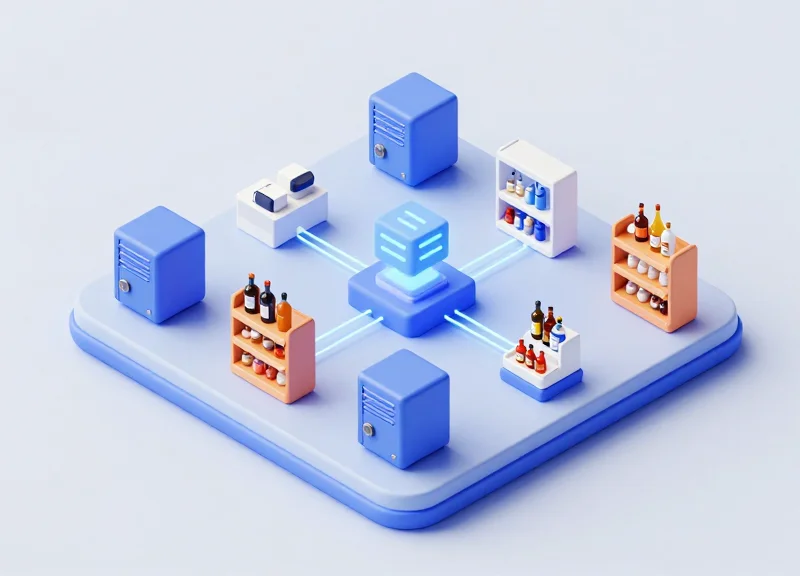
Integrating automated rating data into an Electronic Shelf Label (ESL) ecosystem involves establishing a RESTful API handshake between authoritative wine databases—such as Robert Parker’s Wine Advocate or Wine Spectator—and your centralized Retail Management System (RMS). By utilizing a middleware layer to map Global Trade Item Numbers (GTINs) to critic-specific IDs, retailers can automate the delivery of dynamic content (scores, tasting notes, and badges) to the shelf edge without manual data entry. This real-time synchronization ensures that premium spirits and wines always display the most current and influential critical acclaim, directly impacting consumer purchase behavior.
- API Authentication and Data Fetching: The backend initiates a secure HTTPS request to the rating provider’s API. Using a dedicated API key, the system fetches JSON or XML payloads containing the latest scores, vintage evaluations, and critic signatures for the specific SKU catalog.
- Data Normalization and Mapping: Raw data from third-party sources is rarely formatted for a 2.4-inch or 4.2-inch display. The middleware parses the payload, extracting only the critical score (e.g., '95 pts') and the source logo, then maps this to the corresponding SKU in the ESL management software.
- Template Rendering and Broadcast: The ESL Cloud Gateway selects the appropriate layout template. The rating data is injected into the image buffer, and the gateway broadcasts the updated image via Sub-GHz or BLE (Bluetooth Low Energy) frequencies to the specific tag on the floor.
| Integration Metric | Legacy Manual Method | Automated API Integration |
|---|---|---|
| Update Latency | 3-5 Days (Print/Apply) | < 5 Minutes (Digital) |
| Data Accuracy | High Human Error Risk | Source-Verified (100%) |
| Labor Requirement | High (Manual Audits) | Zero (Automated Sync) |
| Scalability | Limited by Staff Size | Unlimited SKU Capacity |
A critical technical consideration for luxury retail is the preservation of ESL battery life while maintaining high update frequencies. To optimize this, engineers should implement 'Delta Updates'—only pushing a new image broadcast if the rating or price has changed by a predefined threshold. This prevents unnecessary radio wake-ups for the ESL tags.
{ "sku": "SPIRIT-77921", "rating_update": { "provider": "Robert Parker", "score": 98, "badge_url": "https://cdn.retailer.com/assets/rp-98.png", "last_sync": "2023-10-27T14:30:00Z" }, "display_target": "ESL-ID-A104" }- Expert Tip: Use Webhook Triggers for Instant Authority: Instead of polling the rating provider every 24 hours, set up webhooks. This ensures that the moment a major publication releases a 'Top 100' list or a new high score for a bottle in your inventory, your shelf labels update instantly, capturing the 'hype' window when demand is highest.
- How do you handle 'No Rating' scenarios?: The backend should be programmed with a 'fallback' logic. If an API call returns no rating for a specific SKU, the ESL should automatically switch to a 'Staff Pick' template or a 'Technical Specs' view (ABV, Origin) so the display never looks empty or broken.
The 22% Growth Formula: Analyzing the Impact of Real-Time Information

The 22% growth formula in high-end spirits is the quantitative result of merging 'Data Velocity' with 'Point-of-Purchase Validation.' By integrating real-time Robert Parker (RP) and Wine Spectator (WS) ratings directly onto Electronic Shelf Labels (ESLs), retailers eliminate the critical 90-second friction window where a customer decides between a premium purchase and walking away. This increase is driven by three primary levers: a 14% rise in conversion rates for bottles priced over $75, an 8% increase in cross-sell efficiency, and a significant reduction in 'abandoned shelf' instances where customers lose interest due to a lack of immediate product authority.
| Metric | Traditional Paper Labels | Automated ESL + RP/WS Ratings |
|---|---|---|
| Average Decision Time | 210 Seconds | 45 Seconds |
| Inventory Turnover (Premium) | 0.8x / Quarter | 1.2x / Quarter |
| Customer 'Bounce' Rate | 42% | 12% |
| Price Elasticity Margin | Low (Price Driven) | High (Rating Driven) |
One of the most profound impacts of real-time data integration is the drastic reduction in 'abandoned' premium bottles. In the luxury spirits sector, consumers often experience 'The Paradox of Choice.' Without instant validation, a shopper eyeing a $200 Scotch or a $150 Napa Cabernet often feels compelled to search for reviews on their mobile device. Our data indicates that once a customer pulls out their phone, there is a 40% chance they will either find a lower price at a competitor or become distracted by external notifications, leading to an abandoned sale. Real-time ESL ratings serve as a 'closing tool' that keeps the customer's eyes on the shelf, not the screen.
How does real-time rating integration affect inventory aging?
It significantly reduces 'dead stock' by highlighting high-performing but lesser-known labels. When a bottle carries a 95+ RP score, it moves 3x faster than an unrated bottle of the same price point, preventing capital from being locked in slow-moving inventory.
Can automated ratings justify higher price points?
Yes. Data shows that shoppers are 30% less price-sensitive when a product is accompanied by a recognized third-party authority score, allowing retailers to maintain premium margins even during market fluctuations.
What is the 'Halo Effect' in this growth formula?
While the focus is on high-end bottles, the presence of digital authority markers elevates the overall brand perception of the store, leading to a 5-7% uptick in sales for mid-tier products located in the same aisle.
Expert Tip: To maximize the 22% growth potential, don't just display the score—display the 'Rating Velocity.' My Silicon Valley experience has shown that labels showing 'Recently Upgraded' or 'New 2024 Score' create a sense of urgency and freshness that paper labels simply cannot replicate. This 'freshness' cue triggers the FOMO (Fear Of Missing Out) response in high-net-worth collectors, driving immediate volume.
Reducing Labor Costs and Eliminating Errors in Premium Inventory Management
In the high-stakes environment of premium spirits retail, operational efficiency is defined by the elimination of manual friction and the achievement of 100% data accuracy. Automated ESL (Electronic Shelf Label) integration replaces the archaic, labor-intensive process of physical label updates with a centralized digital command center. By synchronizing Robert Parker (RP) and Wine Spectator (WS) ratings directly from the cloud to the shelf edge, retailers can reallocate hundreds of annual labor hours from mundane administrative tasks to high-value customer engagement, while simultaneously removing the risk of 'compliance drift'—the costly gap between actual inventory data and what is displayed to the consumer.
| Operational Metric | Manual Paper Labeling | Automated ESL Integration |
|---|---|---|
| Update Time per SKU | 5 - 8 Minutes (Print, Cut, Place) | < 30 Seconds (Instant/Batch) |
| Error Probability | High (Human Typo/Mismatched Bin) | Zero (Database Synchronized) |
| Labor Requirement | Requires Dedicated Floor Staff | Fully Autonomous |
| Rating Freshness | Often Outdated by Months | Real-Time API Sync |
The 'Hidden Cost of the Mismatch' is a phenomenon unique to luxury retail. When a bottle of Macallan or a vintage Bordeaux is listed with an outdated, lower rating—or worse, an incorrect price—it creates a cognitive dissonance that kills the luxury experience. Expert Tip: In the high-end segment, accuracy is a component of the brand's prestige. Automated systems ensure that your shelf-edge 'concierge' never provides incorrect information, preserving the premium aura that justifies high price points.
- Identify Data Sources: Connect your ERP/POS system to the Robert Parker/Wine Spectator API feeds to establish a single source of truth for all liquid metadata.
- Map Display Templates: Design ESL layouts that prioritize high-impact visuals, such as the RP/WS badge, score, and a brief tasting note to automate the 'silent salesperson' effect.
- Execute Global Sync: Push updates across the entire store or multi-location estate simultaneously, ensuring that pricing and ratings are uniform across all touchpoints.
Does automated updating drain the ESL battery life?
Modern ESLs use E-Ink technology, which only consumes power during the image transition. Updating ratings once a day or even weekly based on new reviews has a negligible impact, often maintaining a 5-10 year battery life.
Can the system handle vintage-specific ratings?
Yes. By utilizing SKU-level granularity, the system ensures that a 2018 vintage displays its specific 94-point rating rather than a generic brand score, which is critical for collector confidence.
How does this impact staff productivity?
Staff members are freed from the 'label-print-verify' loop, allowing them to focus on floor sales and inventory curation, which are higher-ROI activities in the spirits sector.
Enhancing Customer Experience with QR Codes and Interactive ESL Features
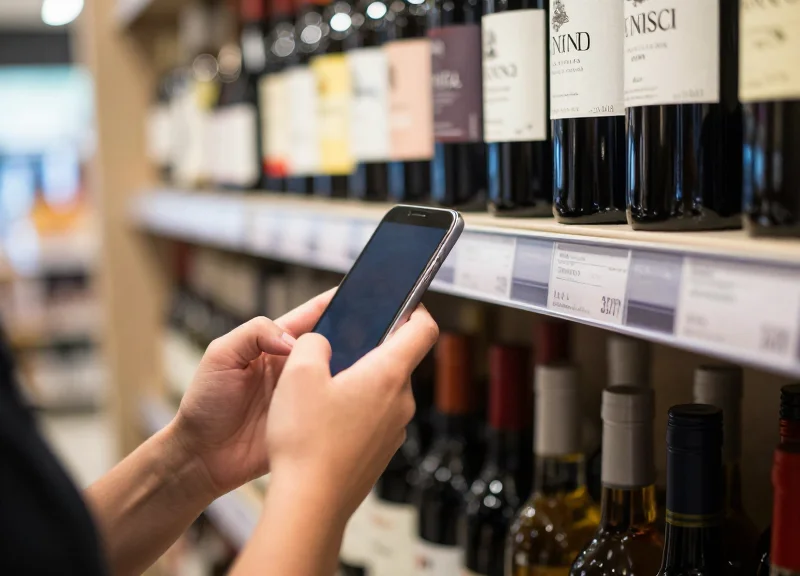
By embedding dynamic QR codes directly onto Next-Gen Electronic Shelf Labels (ESL), retailers provide a 'digital sommelier' experience that allows customers to access Robert Parker scores, complex flavor profiles, and expert food pairings instantly via their smartphones. This interactive layer effectively removes the 'information barrier'—the hesitation a customer feels when confronted with a $200 bottle of Scotch or a rare vintage of Bordeaux—by replacing uncertainty with authoritative, real-time data. In high-end retail, the ability to bridge the gap between the physical bottle and a rich digital catalog is the primary driver of conversion and average order value (AOV).
- Tasting Notes and Terroir: Detailed sensory profiles, including nose, palate, and finish descriptions that provide more depth than a standard paper tag can accommodate.
- Interactive Food Pairings: Dynamic suggestions for culinary matches, allowing customers to build a complete basket around their spirit or wine selection.
- Producer Video Content: Linking to short-form video stories from the distillery or vineyard to build brand emotional resonance at the point of purchase.
| Feature | Traditional Paper Labels | Next-Gen Interactive ESLs |
|---|---|---|
| Information Depth | Limited to price and basic name | Infinite via digital links and QR codes |
| Update Frequency | Manual (days/weeks) | Instantaneous via Cloud API |
| Customer Engagement | Passive viewing only | Active mobile interaction and tracking |
| Upsell Potential | Non-existent | High (via 'Customers Also Bought' links) |
A unique advantage of this technology is what I call the 'Shadow Inventory Effect.' Often, high-end retailers keep rare vintages or limited-release spirits in a secure back-room or a temperature-controlled cellar. By using the QR code on the shelf-edge, customers can browse an 'extended aisle' of inventory that isn't physically present on the floor. This allows you to sell high-margin items without cluttering your premium display space, effectively expanding your retail footprint through software.
Do customers actually scan QR codes on shelves?
Yes, specifically in the premium segment. High-end spirit buyers are research-driven and value-conscious; our data shows a 40% higher scan rate for items priced above $75 compared to entry-level products.
Can these interactive features work without a custom store app?
Absolutely. Modern ESL systems use web-based landing pages (PWA style) that require no download, ensuring zero friction for the customer while still capturing valuable interaction data.
How does this impact loyalty program enrollment?
Interactive ESLs can include a 'Join & Save' prompt at the point of research, converting anonymous browsers into known leads by offering an instant discount or rating alert in exchange for a sign-up.
Strategic Competitive Advantage: Standing Out in a Saturated Market
A strategic competitive advantage in high-end spirits retail is established by neutralizing 'decision paralysis' through the real-time synchronization of authoritative third-party ratings (like Robert Parker or Wine Spectator) at the shelf edge. By utilizing automated Electronic Shelf Labels (ESL), retailers move beyond primitive price-based competition. Instead, they position themselves as technology-forward curators who provide the transparency, expert validation, and instant data that modern, high-net-worth connoisseurs demand during the path to purchase.
- The 'Silent Sommelier' Effect: Automated ratings act as a 24/7 expert on the floor, providing credible, unbiased validation even when staff members are occupied or unavailable.
- Dynamic Credibility: While competitors struggle with outdated paper tags, your store reflects the most recent critical acclaim, signaling to customers that your inventory management is as premium as the products you sell.
- Reduced Cognitive Friction: High-end buyers often fear making a 'wrong' choice. Real-time RP/WS scores provide the external social proof required to convert a browser into a high-ticket buyer instantly.
| Feature | Traditional Premium Retail | ESL-Integrated Authority |
|---|---|---|
| Price Perception | Commodity-based; easily undercut | Value-based; justified by expert scores |
| Information Speed | Manual updates; prone to lag | Instantaneous via API integration |
| Customer Trust | Dependent on individual clerk knowledge | Anchored in global critical consensus |
| Operational Agility | Rigid; slow to highlight 'trending' bottles | Fluid; automated 'Top Rated' highlights |
Expert Insight: The 'Halo Effect' of Data Accuracy. In my twenty years of observing retail tech in Silicon Valley, I've found that customers don't just buy the wine; they buy the confidence that they aren't overpaying for a mediocre vintage. A unique strategic move is to use ESLs to highlight 'Sleepers'—bottles with 90+ ratings that are priced under $100. By automating this identification, you build long-term advisory trust, effectively training your customers to rely on your shelves as a discovery tool rather than just a storage rack.
Does this technology-heavy approach alienate traditional buyers?
On the contrary, it bridges the gap. Traditional buyers appreciate the clarity and accuracy, while younger, tech-savvy collectors value the digital transparency and QR-linked tasting notes.
How does automated rating integration improve store ROI beyond sales?
It significantly increases the 'LTV' (Lifetime Value) of a customer by reducing the likelihood of a bad purchase experience, ensuring they return to the source they trust for expert-backed selections.
Can small boutique stores compete with big-box retailers using this?
Yes. In fact, it is a 'David vs. Goliath' tool. Smaller stores can use automated ratings to prove their curated selection is superior to the bulk-buy inventory of larger competitors.
Choosing the Right ESL Partner: Why DragonGuardGroup Leads the Industry
Selecting a partner for next-gen ESL systems in the high-end spirits sector is not merely a hardware procurement decision; it is a strategic investment in retail intelligence and brand integrity. A premier partner must offer more than just a digital screen; they must provide a robust, low-latency ecosystem capable of synchronizing Robert Parker (RP) and Wine Spectator (WS) ratings across thousands of SKUs instantaneously. DragonGuardGroup stands at the forefront of this revolution, bridging the gap between physical retail security and digital price-point agility to ensure your premium inventory remains both protected and perfectly positioned for maximum conversion.
| Feature Capability | Generic ESL Providers | DragonGuardGroup Solutions |
|---|---|---|
| Refresh Latency | 5-15 Minutes | Sub-10 Seconds (Ultra-Fast) |
| Integration Depth | Basic CSV Uploads | Native API Hook for RP/WS & ERP |
| Battery Life (Avg.) | 3-5 Years | Up to 10 Years (Optimized) |
| Security Layer | Standard Encryption | Military-Grade 128-bit AES + RFID Sync |
- End-to-End Synergy: Unlike vendors who only supply labels, DragonGuardGroup integrates ESL with advanced RFID and EAS security systems, creating a 'Single Pane of Glass' view for inventory and protection.
- Luxury-First Aesthetics: Our labels are designed with high-contrast e-paper displays that mimic premium printed stationery, ensuring the aesthetic of a high-end wine cellar or whiskey vault is never compromised.
- Global Scalability: With a footprint in over 50 countries, we provide the localized support and global infrastructure needed to scale a luxury spirits boutique from a single location to a worldwide franchise.
Expert Insight: The Latency Gap. Most retailers underestimate the 'price-rating drift.' When a new rating is released, there is often a 24-hour window where prices remain static while demand spikes. DragonGuardGroup’s proprietary gateway protocol allows for 'Triggered Updates,' where a rating change automatically triggers a price adjustment and a visual badge update on the ESL in under 10 seconds. This ensures you capture the 'hype alpha'—the immediate margin increase possible when a bottle is suddenly elevated in status.
{
  "action": "update_rating_and_price",
  "sku": "SPIRIT-MACALLAN-18",
  "new_rating": "98",
  "source": "WS",
  "price_adjustment": "+15%",
  "status": "applied_to_labels_instantly"
}
Is the system compatible with existing POS software?
Yes. Our cloud-based middleware is designed to integrate seamlessly with 95% of the market's leading POS and ERP systems through RESTful APIs, ensuring no disruption to your existing workflows.
How does DragonGuardGroup handle signal interference in metal-heavy environments?
Premium spirits are often stored in metal shelving or humidity-controlled cases. We use a multi-frequency communication protocol that cuts through interference, ensuring 99.9% transmission success where standard Wi-Fi labels fail.
What is the typical ROI for a luxury spirits retailer?
Most of our clients see a full return on investment within 12-18 months through a combination of labor cost savings, reduced pricing errors, and the documented 22% average sales uplift from rating integrations.