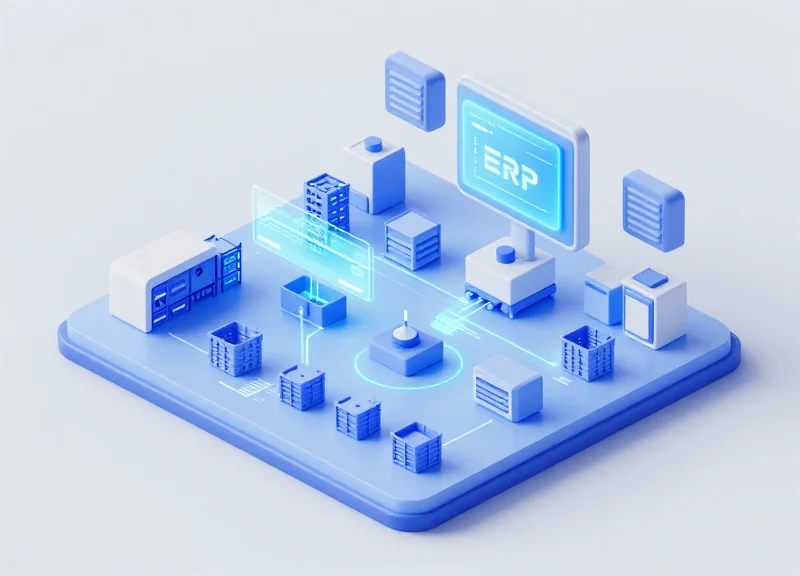
In the modern industrial landscape, the management of high-value assets has evolved from a back-office necessity to a critical security imperative. Traditional manual tracking methods are no longer sufficient to combat shrinkage, mismanagement, and operational downtime. This technical deep-dive explores the transformative power of integrating Radio Frequency Identification (RFID) hardware with Enterprise Resource Planning (ERP) software. By bridging the gap between the physical floor and digital records, organizations can achieve an unprecedented level of visibility and security, ensuring that every asset is accounted for in real-time.
The Strategic Importance of RFID-ERP Convergence
RFID-ERP convergence is the architectural integration of Radio-Frequency Identification hardware with Enterprise Resource Planning software to create a continuous, real-time data loop that synchronizes physical asset movement with digital financial records. By bridging the 'visibility gap' between the factory floor and the corporate database, this integration serves as a foundational security layer that prevents asset shrinkage, unauthorized access, and data discrepancies that plague traditional industrial operations.
For decades, industrial environments have operated with a 'siloed' mentality: hardware (RFID readers, sensors) captured data locally, while software (ERP systems) managed business logic. This disconnect creates a massive security liability known as 'Data Latency Vulnerability.' When a high-value asset is moved or tampered with, a siloed system may not reflect that change in the ERP for hours or even days, giving bad actors a wide window of opportunity to exploit the system without detection.
| Feature | Siloed Systems (Traditional) | Converged RFID-ERP (Modern) |
|---|---|---|
| Data Latency | Delayed (Batch processing) | Real-time (Stream processing) |
| Audit Trail | Manual / Fragmented | Automated / Immutable |
| Security Response | Reactive (Post-event) | Proactive (Trigger-based) |
| Data Integrity | Low (Susceptible to human error) | High (Single source of truth) |
Why is the 'Semantic Gap' the biggest risk in industrial security?
The semantic gap occurs when a raw RFID tag read (e.g., a hex code) lacks business context. In a converged system, that raw signal is immediately translated into a 'Security Event' within the ERP—such as 'Unauthorized movement of Class-A Turbine'—allowing the system to automatically freeze related financial transactions or alert floor security.
Can RFID-ERP integration prevent internal fraud?
Yes, by establishing an automated Chain of Custody. Because the ERP requires a hardware-validated RFID 'handshake' at every transition point, employees cannot manually override inventory levels or hide asset removals without triggering an immediate system exception.
Expert Tip: To maximize ROI, look beyond simple tracking. The most secure industrial frameworks utilize 'Edge-to-ERP' logic, where the RFID hardware performs initial data filtering (Edge Computing) to identify anomalies before sending high-fidelity alerts to the ERP. This prevents 'data noise' from overwhelming your network while ensuring that critical security breaches are prioritized instantly.
Hardware Foundations: Selecting Industrial-Grade Tags and Readers
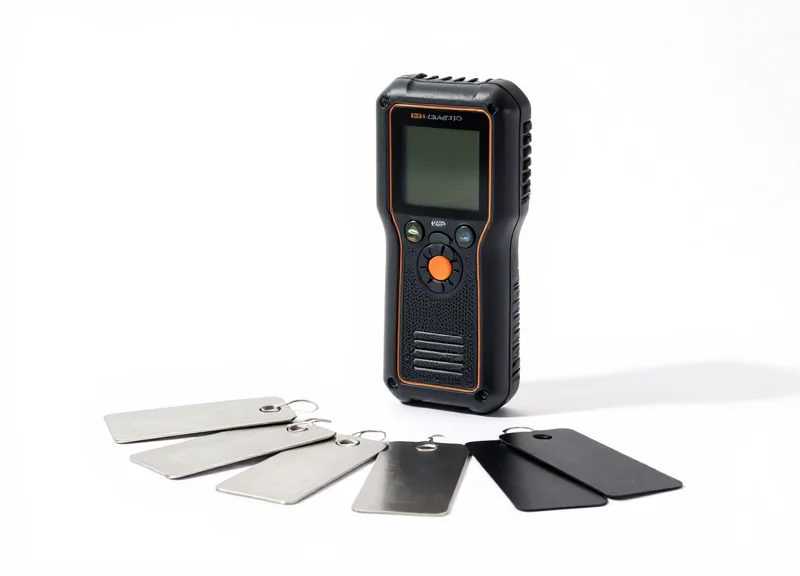
In industrial environments, selecting RFID hardware is not merely about frequency; it is about ensuring the physical layer can withstand extreme heat, chemical exposure, and electromagnetic interference while maintaining a high data-read rate. The foundation of a secure RFID-ERP integration relies on choosing 'Industrial-Grade' components—hardware specifically engineered with ingress protection (IP) ratings and specialized antenna designs that prevent data dropouts, which would otherwise lead to 'ghost inventory' or security gaps in the ERP ledger.
| Feature | Passive RFID Tags | Active RFID Tags |
|---|---|---|
| Power Source | Backscatter (Powered by Reader) | Internal Battery |
| Read Range | Up to 10-15 meters (UHF) | Up to 100+ meters |
| Lifespan | Indefinite (No battery to fail) | 3-5 Years (Battery dependent) |
| Best Use Case | High-volume inventory, tool tracking | Real-time location (RTLS), large vehicle tracking |
| Cost | Low ($0.10 - $2.00) | High ($15.00 - $100.00+) |
Expert Insight: The 'On-Metal' Physics Challenge. One of the most common points of failure in industrial RFID deployment is the proximity of tags to metallic surfaces. Standard RFID tags are detuned by metal, rendering them unreadable. For industrial asset security, you must specify 'On-Metal' tags that utilize a ceramic or foam spacer. These designs actually leverage the metal surface as a ground plane, significantly enhancing the antenna's radiation pattern and ensuring the ERP system receives a clean signal even in dense manufacturing environments.
- Determine the Environmental Stressors: Identify if tags will face high temperatures (autoclaves), chemical washes (IP69K rating), or heavy vibrations. Select housings like ruggedized ABS or polycarbonate.
- Assess Reader Topology: Choose between fixed portals for automated choke-points or ruggedized handheld readers for manual security audits. Ensure readers support LLRP (Low Level Reader Protocol) for easier ERP middleware integration.
- Define Memory Requirements: Determine if you need User Memory for 'on-tag' data logging (useful for offline security) or just an EPC (Electronic Product Code) that links to a cloud-based ERP record.
What IP rating is required for outdoor industrial assets?
For outdoor use or heavy washdown areas, an IP67 or IP68 rating is standard. For high-pressure, high-temperature washdowns (common in food processing), seek IP69K-rated enclosures.
Can RFID readers handle multiple tags simultaneously?
Yes, industrial readers use 'anti-collision' algorithms, allowing them to read hundreds of tags per second. This is critical for ERP systems to update bulk asset transfers in real-time.
Is UHF better than HF for industrial security?
UHF (Ultra-High Frequency) is preferred for most industrial applications due to its long read range and ability to read multiple tags quickly. HF (High Frequency) is better suited for short-range, secure access control or when tags are near liquids.
The Middleware Layer: Filtering and Processing Raw Data

RFID middleware serves as the logical nervous system of an industrial security architecture, functioning as the high-speed interface between physical hardware and the ERP database. Its primary role is to ingest massive streams of raw Tag Data Exchange (TDE) protocols, strip away redundant noise through sophisticated filtering algorithms, and translate physical 'reads' into meaningful business events. Without this layer, an ERP system would be overwhelmed by thousands of duplicate pings per second, leading to database latency and false security alerts.
- Data Smoothing and Debouncing: Eliminates 'jitter' caused by tags oscillating at the edge of a reader’s field, ensuring a single movement isn't recorded as multiple entry/exit events.
- Redundancy Elimination: Filters out duplicate reads from multiple overlapping antennas, passing only a single 'best-read' signal to the application layer.
- Virtual Device Management: Allows administrators to manage a fleet of physical readers as a single logical zone, such as 'Warehouse North Gate'.
| Processing Strategy | Latency | Bandwidth Usage | Best Use Case |
|---|---|---|---|
| Edge-Based Middleware | Ultra-Low (<10ms) | Minimal (Local) | High-speed conveyor security and automated gate access. |
| On-Premise Server | Low (10-50ms) | Moderate | Complex multi-reader synchronization and facility-wide tracking. |
| Cloud-Native Middleware | Variable (100ms+) | High | Global supply chain visibility and non-time-critical audits. |
def process_rfid_stream(raw_reads):
    # Filter redundant tags within a 5-second window
    unique_events = {}
    for read in raw_reads:
        if read.tag_id not in unique_events or (read.timestamp - unique_events[read.tag_id]) > 5:
            unique_events[read.tag_id] = read.timestamp
            push_to_erp(read.tag_id, read.location)
    return len(unique_events)
Expert Tip: To maximize industrial security, implement 'Adaptive Thresholding' within your middleware. Unlike static filters, adaptive filters adjust their sensitivity based on the time of day or the asset's 'Risk Profile.' For example, during high-traffic shift changes, the middleware can tighten debouncing windows to prevent cross-talk, while increasing sensitivity during off-hours to detect even the faintest signal from a high-value asset being moved unauthorized.
Can middleware prevent RFID spoofing?
Yes, advanced middleware can analyze the Signal Strength (RSSI) and Phase Angle of a read. If the physical characteristics of the signal don't match the historical profile of the tag, the middleware can flag it as a potential spoofing or cloning attempt.
How does middleware handle reader downtime?
Robust middleware solutions employ local caching (Store-and-Forward logic). If the connection to the ERP is lost, the middleware buffers security events locally and synchronizes them once the connection is restored, ensuring no loss of audit trails.
API and Webhook Integration: Communicating with the ERP
API and Webhook integration acts as the digital bridge that translates physical RFID event streams into actionable business intelligence within an ERP. By leveraging standardized communication protocols, organizations can transform a 'tag read' into a 'security event' or a 'inventory update' across SAP, Oracle, or Microsoft Dynamics. The core objective is to move from a polling-based architecture to a push-based, event-driven model that ensures the ERP's digital twin perfectly mirrors the physical state of industrial assets.
| Protocol | Primary Use Case | Overhead | Real-time Capability |
|---|---|---|---|
| REST (JSON/HTTPS) | Transactional updates (e.g., checking in an asset). | Medium | Near Real-time |
| MQTT | Low-bandwidth hardware signaling and sensor heartbeats. | Low | Real-time (Pub/Sub) |
| Webhooks | Pushing specific security alerts to third-party apps. | Low | Instantaneous |
| SOAP (XML) | Legacy ERP integrations with strict schema requirements. | High | Delayed |
- Authentication & Handshaking: Secure the connection using OAuth 2.0 or mutual TLS (mTLS) to ensure that the ERP only accepts data from authorized middleware gateways.
- Data Normalization: Map the raw RFID Hex/EPC data to the specific schema requirements of the ERP's Asset Management module.
- Payload Transmission: Transmit the JSON payload via an asynchronous POST request to avoid blocking the middleware processing thread.
- Acknowledgement & Error Handling: Implement a retry logic (Exponential Backoff) for cases where the ERP API is temporarily unreachable or rate-limited.
{
  "event_type": "ASSET_DEPARTURE",
  "timestamp": "2023-10-27T10:15:30Z",
  "reader_id": "GATE_04_SOUTH",
  "tag_id": "303425789012345678901234",
  "idempotency_key": "UUID-8892-X122-9012",
  "security_status": "UNAUTHORIZED"
}
Expert Tip: Implement 'Idempotency Keys' in your API headers. In industrial environments, an RFID reader might detect the same tag dozens of times per second as it sits in a portal. Without an idempotency key (a unique identifier for that specific physical event), your ERP might redundantly process the same movement multiple times, leading to data corruption and false security triggers. By requiring a unique key per logical event, you ensure that the ERP processes the scan exactly once, regardless of how many times the hardware sends the packet.
Should I use MQTT or REST for ERP integration?
MQTT is superior for the 'edge-to-middleware' layer because of its low overhead. However, most modern ERPs prefer RESTful APIs for the 'middleware-to-cloud' layer due to better support for complex business logic and security standard integration.
How do we handle ERP downtime without losing asset data?
Use a local message queue (like RabbitMQ or Kafka) at the middleware layer. This buffers the RFID events and 'drains' them into the ERP once the connection is restored, preventing any gaps in the security audit trail.
What is the security risk of using Webhooks?
Webhooks are vulnerable to replay attacks. Always verify the 'Webhook Signature' (usually a HMAC hash in the header) to ensure the data truly originated from your middleware and wasn't intercepted or forged.
Real-Time Asset Security and Geofencing Logic

Real-time asset security in an industrial context is defined by the programmatic intersection of spatial RFID data and ERP transactional states. Unlike consumer-grade geofencing, industrial geofencing logic does not merely track location; it validates the 'right to move' by cross-referencing a physical tag's transition across a portal (the geofence) with the current operational status of that asset in the database. If an asset crosses an egress point without a 'Released' or 'In Transit' flag in the ERP, the system triggers an immediate security protocol, effectively turning passive tracking into active loss prevention.
- Spatial Event Detection: The RFID reader identifies a tag ID at a specific portal (Zone A to Zone B) and calculates the Received Signal Strength Indicator (RSSI) to confirm directional movement.
- ERP State Verification: The middleware executes a low-latency query to the ERP (e.g., SAP EWM or Oracle SCM) to check for an active Work Order or Gate Pass associated with that Tag ID.
- Logic Gate Evaluation: The system applies Boolean logic: If (Movement == 'Exit') AND (ERP_Status != 'Authorized'), then execute 'Security_Alert'.
- Automated Response: The system triggers a REST webhook to lock automated bay doors, activate CCTV recording, and push a high-priority notification to the Security Operations Center (SOC).
| Feature | Static Geofencing | Dynamic ERP-Integrated Logic |
|---|---|---|
| Authorization Basis | Fixed spatial boundaries | Real-time Work Order status |
| False Positive Rate | High (during valid maintenance) | Low (context-aware) |
| Security Action | Log entry only | Active hardware lockout/alerting |
| Asset Context | Unknown | Full metadata (Value, Owner, Destination) |
Expert Tip: Implementing 'Temporal Geofencing' To significantly reduce alarm fatigue, implement 'Temporal Geofencing.' This involves syncing the geofence sensitivity with the ERP's production schedule. For example, a high-value tool may be permitted to move freely between 08:00 and 17:00 within a specific cell, but any movement after hours triggers a 'Hard Lockdown' state regardless of location. This temporal layer ensures that security tightens automatically when human oversight is minimal.
{
  "event": "egress_violation",
  "asset_id": "RFID_66782_X",
  "location": "Warehouse_Exit_Gate_4",
  "erp_check": {
    "status": "In_Storage",
    "authorized_move": false,
    "assigned_personnel": null
  },
  "action_triggered": ["Activate_Alarm", "Lock_Gate_4", "Notify_SOC"]
}
Can geofencing work with passive RFID tags?
Yes, but it requires 'Choke Point' architecture. Readers must be placed at all physical transition points (doors, gates) to create a virtual fence, as passive tags do not broadcast location autonomously.
How do you handle 'Signal Bleed' in tight industrial spaces?
Signal bleed occurs when a reader picks up a tag that is near a gate but not passing through it. This is mitigated using RSSI thresholding and 'directionality' logic which requires the tag to hit two distinct antenna fields in a specific sequence.
What happens if the ERP connection is lost?
Systems should fail-safe. Edge middleware usually maintains a 'Local Cache' of recently authorized IDs to allow for continued operation during brief network outages.
Optimizing Inventory Accuracy and Lifecycle Management
Optimizing inventory accuracy through RFID-ERP integration involves creating a self-reconciling system where physical asset movement automatically updates financial and operational ledgers. By replacing periodic manual audits with continuous, hardware-driven visibility, industrial enterprises can achieve inventory accuracy rates exceeding 99%, effectively eliminating 'phantom inventory' and ensuring that lifecycle data—from procurement to decommissioning—is captured without human bias or error.
| Lifecycle Phase | Legacy Manual/Barcode Process | Integrated RFID-ERP Approach |
|---|---|---|
| Commissioning | Manual serial number entry into ERP. | Bulk tag encoding and auto-provisioning upon gate entry. |
| Utilization | Estimated based on project logs. | Real-time hours-of-use tracking via portal transitions. |
| Maintenance | Reactive or time-based scheduling. | Condition-based triggers driven by movement and age. |
| Disposal | Manual write-off; prone to data lag. | Auto-retirement triggered by 'Exit Zone' reader events. |
- Automated Asset Commissioning: When new hardware arrives, RFID tunnels read entire pallets simultaneously, triggering an API call to the ERP to move items from 'In Transit' to 'On Hand' instantly.
- State Transition Logic: Middleware maps specific reader IDs to functional locations. Moving a pump from the 'Storage' zone to the 'Repair' zone automatically updates the asset status in the ERP's Maintenance Module.
- Continuous Cycle Counting: Instead of annual shutdowns for inventory, overhead 'smart shelves' or mobile RFID robots perform invisible daily audits, flagging discrepancies between the physical floor and the ERP database in real-time.
- Data-Driven Decommissioning: The system tracks the 'Total Path Travelled' or 'Days in Service.' Once an asset hits its technical limit, the ERP autonomously flags it for replacement and generates a purchase requisition.
The Veteran Perspective: Combating 'Data Decay' with Heatmap Analysis. A common failure point in industrial settings is the 'Stale Tag'—an asset that remains in the ERP as 'Active' but hasn't been physically sensed for weeks. To solve this, we implement Heatmap Stale-Data logic. If a tag isn't 'pinged' by any reader in the network within a defined threshold, the middleware pushes a 'Missing/Stale' exception to the ERP. This forces a physical verification before the data decays, preventing costly tax and insurance overpayments on assets that are no longer on-site.
How does the system handle 'shielded' assets or metal interference?
We utilize specialized 'On-Metal' PCB tags and strategic reader placement (multiplexing) to ensure signals are captured even in high-interference environments, supplemented by 'Last Known Location' logic in the ERP.
What happens if a tag is damaged during the asset's lifecycle?
Modern middleware includes 'Expected Presence' alerts. If an asset is expected in a zone but its tag fails to read while others nearby succeed, the system triggers a 'Maintenance Task' in the ERP to replace the tag.
Can this integration reduce Capex spending?
Yes. By identifying 'under-utilized' assets through real-time movement data, companies can redeploy existing equipment rather than purchasing new units, often reducing annual Capex by 10-15%.
Technical Challenges: Interference, Latency, and Scalability
Deploying RFID-ERP systems in industrial environments requires overcoming three primary engineering hurdles: physical signal interference caused by metallic structures and fluids, network latency that delays real-time security alerts, and the scalability limitations of ERP databases when faced with high-volume telemetry. While software logic is flexible, physics is not; ensuring high asset visibility requires a hardware-software architecture that can filter signal noise and process events at the edge to prevent system-wide bottlenecks.
| Challenge Type | Primary Cause | Technical Mitigation Strategy |
|---|---|---|
| Multipath Interference | Metal surfaces reflecting RF energy (Multipath) | Utilizing Circular Polarized Antennas and FHSS (Frequency Hopping). |
| Network Latency | ERP round-trip times and API overhead | Implementing local Edge Controllers for sub-millisecond local triggers. |
| Data Bottlenecks | High-density tag reads flooding the database | Delta-based reporting (only push changes in asset status). |
| Tag Shadowing | Physical obstruction by other assets or equipment | Redundant reader arrays and RSSI (Received Signal Strength) analysis. |
Expert Insight: The 'Signal-to-Noise Paradox' in Industrial IoT. In twenty years of Silicon Valley deployments, the most common failure point isn't missing a tag—it is reading too many. In a high-density warehouse, a single reader can generate 50,000 'I am here' signals per hour for static assets. True scalability is achieved through 'Edge Discard' logic: the middleware must be intelligent enough to ignore 99.9% of redundant signals and only transmit 'state changes' to the ERP. If your ERP receives a pulse for every tag every second, the system will collapse under its own weight during a full inventory audit.
How do we prevent signal collisions in a facility with 50+ readers?
We utilize Dense Reader Mode (DRM) and LBT (Listen Before Talk) protocols. This ensures readers operate on distinct spectral channels and time-slots, preventing one reader's output from masking another reader's tag responses.
Can RFID work near heavy machinery or high-voltage lines?
Yes, but it requires Electromagnetic Interference (EMI) shielding for the readers and the use of 'On-Metal' tags that utilize a ceramic or foam spacer to prevent the asset's metallic surface from detuning the tag antenna.
What happens if the ERP connection goes down?
Enterprise-grade integration must support 'Store-and-Forward' architecture. The middleware layer caches all security and movement events locally with cryptographic timestamps, syncing them to the ERP once connectivity is restored to ensure no audit trail gaps.
Data Security and Encryption in RFID Transmission

Data security in RFID transmission refers to the implementation of cryptographic handshakes and encrypted tunnels to protect sensitive asset information from the moment a tag is energized until the data reaches the ERP database. To mitigate threats like 'Man-in-the-Middle' (MitM) attacks, replay attacks, or data spoofing, modern industrial systems utilize standards-based encryption like AES-128 or ECC (Elliptic Curve Cryptography). This ensures that the asset identity is immutable and the signal captured by the reader is authentic, preventing unauthorized entities from injecting fraudulent data into the enterprise supply chain record.
| Security Feature | Standard RFID (Legacy) | Industrial-Grade Secure RFID | |||
|---|---|---|---|---|---|
| Encryption Protocol | None or basic XOR | AES-128 / ECC / 3DES | |||
| Authentication | Unidirectional (Reader only) | Mutual (Tag and Reader) | Tamper Resistance | Minimal | Hardware-level 'Kill' and 'Lock' commands |
| Data Integrity Checks | Simple CRC-16 | Cryptographic MAC (Message Authentication Code) |
- Establish Mutual Authentication: Utilize ISO/IEC 29167 compliant tags that require the reader to prove its identity before the tag releases sensitive memory banks, preventing unauthorized scanners from harvesting asset data.
- Implement End-to-End Encryption (E2EE): Encrypt the payload at the tag level. Even if the air interface is intercepted, the data remains ciphertext until it is decrypted by the secure element in the ERP gateway or specialized middleware.
- Secure the Reader-to-Middleware Pipeline: Apply TLS 1.3 protocols to all TCP/IP communications between the physical RFID reader and the cloud or local ERP server to prevent packet sniffing on the industrial network.
Expert Insight: Beyond standard encryption, the most resilient industrial systems are now moving toward 'Physical Unclonable Functions' (PUF). Unlike traditional keys stored in memory, a PUF uses the unique micro-variations in the silicon of the RFID chip itself to create a 'silicon biometric.' This makes the tag virtually impossible to clone, even if an attacker has physical access to the asset, providing a hardware-rooted level of trust that software-only solutions cannot match.
Does encryption significantly increase latency?
Modern crypto-enabled chips like those using the NXP UCODE DNA series perform AES calculations in milliseconds, adding negligible latency that does not impact high-speed industrial conveyor belt operations.
How is key management handled across thousands of assets?
Enterprise Key Management Systems (KMS) are integrated with the ERP to rotate keys and manage the 'Birth Certificates' of RFID tags securely across the global supply chain.
Are encrypted tags compatible with all readers?
Encrypted tags require readers that support the specific cryptographic command set (e.g., Gen2V2). Legacy readers may require firmware updates or hardware replacement to interact with secure memory banks.
Future-Proofing with ESL and IoT Connectivity

Future-proofing industrial asset management requires shifting from passive identification to active, bidirectional communication. By integrating Electronic Shelf Labels (ESL) and multi-modal IoT sensors into an existing RFID-ERP framework, organizations transform static data into a dynamic 'visual floor.' This integration allows for real-time status updates—such as security clearance, maintenance schedules, or environmental alerts—to be displayed directly on the asset or its storage location, bridging the gap between digital ERP records and physical operational reality.
While RFID excels at bulk identification and location tracking, ESL and broader IoT sensors add layers of 'condition-aware' intelligence. For instance, an ESL can automatically flash a red LED or update its display to 'DO NOT MOVE' if an integrated IoT accelerometer detects a drop or if the ERP marks the item as quarantined. This create a 'self-policing' environment where the hardware actively assists in security enforcement.
| Feature | Passive RFID | Electronic Shelf Labels (ESL) | Advanced IoT Sensors |
|---|---|---|---|
| Primary Role | Identification & Location | Dynamic Data Visualization | Condition Monitoring |
| Data Flow | Unidirectional (Tag to Reader) | Bidirectional (System to Label) | Continuous Streaming |
| Key Benefit | Low cost, bulk tracking | Human-readable status updates | Environmental/Security telemetry |
| ERP Synergy | Inventory ledger updates | Visualizing ERP status on-floor | Predictive maintenance triggers |
- Establish a Unified Gateway Architecture: Deploy multi-protocol gateways capable of handling Sub-GHz (for ESL), BLE, and Zigbee alongside existing RFID readers to consolidate data backhaul.
- Map ERP State Logic to ESL Templates: Define specific ERP triggers—such as 'Quality Hold' or 'Export Restricted'—to automatically push template updates to the corresponding ESL unit.
- Integrate Sensor-Based Security Triggers: Bind IoT sensors (vibration, light, humidity) to asset records in the ERP so that threshold breaches initiate automated security lockdowns or audit logs.
Expert Insight: To truly future-proof, implement 'Edge-Driven Dynamic Labeling.' Instead of waiting for a round-trip command from the ERP, configure your IoT sensors to talk directly to local ESLs via a mesh network. If an asset is moved without a valid BLE handshake from an authorized operator's handheld, the ESL can instantly switch to an 'Unauthorized Movement' warning. This reduces security latency from seconds to milliseconds, ensuring the physical warning happens faster than the network can process the event.
How does ESL impact battery life in industrial settings?
Modern ESLs use E-ink technology, consuming power only during display refreshes. In typical industrial use-cases with 2-3 updates per day, batteries often last 5 to 10 years, making them a low-maintenance addition to the security stack.
Can ESLs operate in high-interference environments?
Yes, industrial-grade ESLs often utilize proprietary protocols in the 2.4GHz or Sub-GHz bands with frequency-hopping spread spectrum (FHSS) to bypass the congestion typical of Wi-Fi heavy manufacturing floors.
What is the primary ROI for adding IoT sensors to RFID?
The ROI comes from 'Total Asset Visibility.' Beyond knowing where a tool is, you know its health. This prevents the 'phantom inventory' problem where items are present but unusable due to environmental damage or missed calibration.