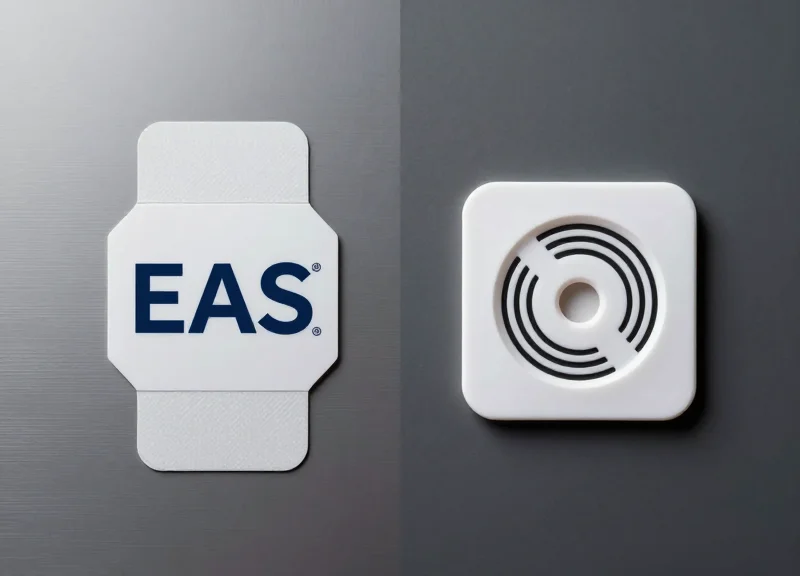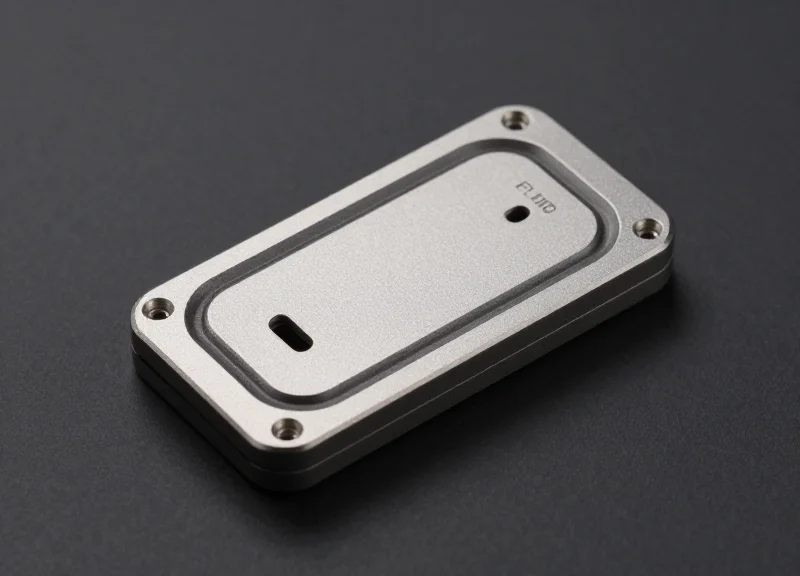

As we approach 2026, the global landscape of asset security is undergoing a seismic shift. While Passive RFID has long been the industry standard for inventory management, the escalating demand for real-time precision and proactive security has pushed Next-Gen Active ESL (Electronic Shelf Label) positioning to the forefront. High-value assets require more than just a periodic checkpoint scan; they demand continuous, bidirectional visibility. This article explores the technological convergence rendering traditional passive systems obsolete for high-stakes security environments and why industry leaders are pivoting to active solutions.
The Evolution of Asset Tracking: From Checkpoints to Continuity
The evolution of asset tracking represents a shift from historical record-keeping to live spatial intelligence. Traditionally, tracking relied on 'checkpoints'—specific moments in time where an asset's location was manually logged or scanned via barcodes and passive RFID. However, as we approach 2026, the industry is moving toward 'continuity,' characterized by active, persistent monitoring that eliminates the blind spots between gates. This transition is driven by the need for real-time telemetry in high-value asset security, where knowing an item was at a dock two hours ago is no longer sufficient; security now demands knowing its exact coordinates every second.
| Era | Technology | Data Type | Primary Limitation |
|---|---|---|---|
| The Manual Era | Logbooks & Pen/Paper | Static / Historical | High human error; no real-time utility. |
| The Identification Era | Barcodes & QR Codes | Event-Based | Requires line-of-sight and manual labor. |
| The Proximity Era | Passive RFID | Checkpoint-Based | Assets are 'invisible' between scanner gates. |
| The Continuity Era | Active ESL & Bluetooth LE | Continuous / Real-Time | Higher initial infrastructure complexity. |
The Visibility Gap: The Hidden Cost of 'Late' Data. In the passive RFID model, an asset is effectively 'lost' to the system the moment it moves away from a reader. This creates a visibility gap where theft or misplacement can occur without an immediate alert. Next-gen Active Electronic Shelf Label (ESL) positioning solves this by acting as a 'Digital Tether.' By utilizing sub-GHz or Bluetooth-based active signals, these devices broadcast their status and location autonomously, ensuring that the system is alerted the microsecond an asset deviates from its prescribed path or geofence.
What is the primary difference between checkpoint-based and continuous tracking?
Checkpoint-based tracking (like RFID) only updates when an asset passes a reader, whereas continuous tracking (Active ESL) provides 24/7 location updates regardless of movement through specific gates.
Why is 'continuity' essential for high-value asset security in 2026?
Modern security relies on AI-driven predictive analytics. Continuous data allows algorithms to detect 'anomalous behavior' (like a sensitive server being moved at 3 AM) before it leaves the building, rather than discovering a missing item hours later at a checkpoint scan.
Does the shift to continuity mean barcodes and RFID are obsolete?
No. They remain effective for low-value, high-volume inventory. However, for 'mission-critical' assets where the cost of loss or downtime is extreme, the industry is standardizing on active, continuous positioning.
Expert Insight: The Silicon Valley Perspective. Having seen two decades of supply chain shifts, the most significant change I've observed is the move from 'inventory management' to 'asset orchestration.' In 2026, the goal isn't just to find an object; it is to integrate that object's live location into a broader automated workflow. If a high-value medical device or a calibrated aerospace tool isn't precisely where the digital twin says it should be, the entire production line or surgical schedule can be dynamically rerouted. This is only possible through the persistent connectivity of active ESL systems.
Technological Breakdown: How Next-Gen Active ESL Positioning Works

Next-Gen Active Electronic Shelf Labels (ESL) function as intelligent IoT nodes that utilize internal power sources to autonomously broadcast signals and calculate their own spatial coordinates. Unlike passive RFID, which requires an external reader to energize a tag, Active ESL positioning leverages a combination of Bluetooth Low Energy (BLE 5.4+) and Ultra-Wideband (UWB) protocols. This dual-band approach allows the labels to communicate with a network of gateways to provide real-time, sub-meter accuracy and persistent 'heartbeat' monitoring for high-value assets.
- Signal Broadcast: The Active ESL initiates a timestamped packet broadcast via BLE or UWB, depending on the required precision level.
- Gateway Trilateration: Fixed IoT gateways receive the signal and measure the Received Signal Strength Indicator (RSSI) or Time of Flight (ToF) data.
- Edge Calculation: The central management platform or the gateway itself processes these signals to triangulate the exact X, Y, and Z coordinates of the asset.
- Autonomous Uplink: If the label detects movement outside of a geofenced zone via its onboard accelerometer, it immediately triggers an encrypted alert to the security dashboard.
| Feature | Passive RFID | Active ESL (BLE/UWB) |
|---|---|---|
| Power Source | External (Reader) | Internal (Battery) |
| Range | Up to 10 meters | Up to 100+ meters |
| Precision | Proximity-based | Sub-meter (30cm - 1m) |
| Security Monitoring | Intermittent (On-scan) | Continuous (24/7) |
| Data Capacity | Minimal (ID only) | High (Sensor/Status data) |
Expert Insight: The Shift to Edge-Logic Labels. A critical differentiator for 2026 technology is the integration of 'Edge Logic.' Modern ESLs no longer just broadcast 'I am here.' They utilize onboard micro-processors to analyze data locally—such as detecting if a high-value item has been tilted or if its ambient temperature has spiked—before deciding whether to consume battery life by sending a high-priority alert. This 'decision-at-the-edge' capability is what makes Active ESL positioning viable for massive deployments without overloading corporate Wi-Fi networks.
Does Active ESL interfere with existing warehouse Wi-Fi?
No. Next-gen labels use Channel Hopping and BLE Advertising Extensions to operate in the 2.4GHz spectrum without conflicting with standard 802.11ax/be Wi-Fi protocols.
How long do the batteries last in active tracking mode?
With optimized 'heartbeat' intervals and low-power UWB chips, 2026-spec labels typically achieve a 5 to 7-year battery life even with daily positioning updates.
Can these labels detect if they are being tampered with?
Yes. Most active ESLs for high-value assets include capacitive touch or light sensors on the rear to detect if the label has been detached from the asset.
The Strategic Limitations of Passive RFID in 2026
In the 2026 security landscape, the primary limitation of Passive RFID lies in its inherent 'reactive' nature: the technology remains dormant until it passes through a powered reader field, creating significant temporal and spatial gaps in asset visibility. Unlike Active ESL systems that provide continuous heartbeats, Passive RFID is functionally blind between checkpoints, making it an insufficient defense against sophisticated theft or unauthorized internal movement of high-value assets.
| Capability | Passive RFID | Next-Gen Active ESL | |||
|---|---|---|---|---|---|
| Reporting Frequency | Triggered (at gates/handhelds) | Continuous (Heartbeat) | |||
| Real-Time Location (RTLS) | No (Proximity only) | Yes (Sub-meter accuracy) | Detection Range | <10 Meters (Optimal) | Up to 100+ Meters |
| Tamper Alerts | None (Tag must be scanned) | Instant (Accelerometers/Sensors) | |||
| Bidirectional Communication | No | Yes (OTA Updates) |
Beyond simple range limitations, the strategic failure of Passive RFID in modern facilities is tied to its inability to confirm 'presence' without 'movement.' For high-value medical devices or sensitive IT hardware, knowing that an item was present at 9:00 AM at a gate is useless if it was moved to a restricted zone at 9:05 AM. Passive systems lack the autonomous intelligence to self-report their status, requiring a human or a gate to initiate the security check—a workflow that is increasingly prone to evasion.
Why is Passive RFID signal attenuation a problem in 2026?
Modern 'Green' buildings use high densities of low-E glass and recycled metals which create massive interference for the low-power backscatter signals used by Passive RFID, leading to missed reads in critical zones.
Can Passive RFID detect if an asset is being tampered with?
No. Passive tags are essentially 'dumb' stickers; they lack the onboard power to support accelerometers or light sensors that would immediately alert security to a forced removal or unauthorized box opening.
What is the 'Reader Infrastructure' burden?
To achieve even moderate coverage, Passive RFID requires expensive, fixed high-power readers at every doorway. In contrast, Active ESL utilizes existing BLE/Wi-Fi mesh networks, providing better coverage at a lower infrastructure cost.
Expert Insight: The Dead Zone Paradox. In our 20 years of Silicon Valley deployments, we've observed that as facilities become 'smarter,' they become harder for Passive RFID to navigate. The 'Dead Zone Paradox' refers to the fact that the more automated a warehouse or lab becomes (with robots and metal racking), the more the 800-900MHz signals of Passive RFID are absorbed or reflected, resulting in a 25-30% failure rate at the very security checkpoints where they are needed most. Active ESL systems, leveraging 2.4GHz and UWB with active amplification, pierce through this digital noise to maintain a constant lock on the asset's coordinates.
Precision Matters: Why Active ESL Wins the Location Battle

The fundamental divide in 2026 asset security is the shift from 'Presence Detection' to 'Coordinate Intelligence.' Passive RFID is a proximity-based technology, meaning it only confirms an asset's location when it passes within the narrow 3-to-5-meter radius of a powered reader. In contrast, Next-Gen Active ESL utilizes multi-anchor trilateration and Angle of Arrival (AoA) processing to provide constant sub-meter accuracy (0.1m to 1.0m). This allows security teams to move beyond knowing an asset 'is in the building' to knowing exactly which shelf, workbench, or floor tile it occupies in real-time.
One of the most significant pitfalls of legacy RFID is the 'Chokepoint Fallacy'—the assumption that securing an exit portal is equivalent to securing the facility. This creates massive internal 'shadow zones' where assets can be misplaced or tampered with for hours before a system update occurs. Active ESL eliminates these shadows by maintaining a heartbeat connection with the network infrastructure, ensuring that the 'last known location' is always the 'current location.'
| Feature | Passive RFID Portals | Active ESL (BLE/UWB Hybrid) |
|---|---|---|
| Typical Accuracy | 3 - 10 Meters (Room-level) | 0.1 - 1.0 Meters (Shelf-level) |
| Location Frequency | Occasional (At gateways) | Continuous (Configurable intervals) |
| Signal Logic | Binary (Present/Absent) | Coordinate (X, Y, Z Axis) |
| Interference Resilience | Low (Susceptible to liquids/metal) | High (Active signal penetration) |
Expert Insight: The Sensor Fusion Advantage. A unique advantage of 2026 Active ESL modules is 'Sensor Fusion.' Unlike passive tags, active labels often integrate ultra-low-power accelerometers. This means the tag only consumes high-precision positioning power when it detects movement. This creates a 'Drift-Free Lock' where stationary high-value assets have a rock-solid digital twin location that doesn't 'ghost' or fluctuate, which is a common frustration with older RSSI-only active systems.
Does metal shelving interfere with Active ESL precision?
While metal can reflect signals (multipath effect), modern Active ESL systems use frequency hopping and sophisticated AoA algorithms to filter out reflected signals, maintaining higher precision than passive RFID in dense industrial environments.
How does sub-meter accuracy prevent 'shrinkage' better than RFID?
Sub-meter accuracy allows for 'Micro-Geofencing.' If a high-value asset moves even 2 meters from its assigned station, an alert can be triggered instantly. Passive RFID would only detect the movement once the asset reaches an exit portal, often too late for intervention.
Is the precision affected by the number of tracked assets?
Next-gen active protocols are designed for massive density. Because the labels communicate asynchronously and use short burst transmissions, thousands of assets can be precisely located in the same zone without the signal collisions that plague passive RFID 'bulk reads.'
Beyond Price Tags: ESL as a Multi-Functional Security Sensor

In the 2026 technology landscape, Next-Gen Electronic Shelf Labels (ESLs) have transcended their original purpose as digital price displays to become critical multi-functional security sensors. Unlike passive RFID tags that remain dormant until they pass a reader, active ESLs are powered IoT endpoints capable of continuous environmental monitoring. By integrating micro-electromechanical systems (MEMS) such as accelerometers, temperature sensors, and light-sensitive diodes, these labels act as a distributed security grid. This allows organizations to move from a 'search and recover' mindset to a 'detect and prevent' strategy, providing instant alerts for unauthorized handling or environmental breaches that could compromise high-value assets.
| Feature | Passive RFID Tag | Next-Gen Active ESL |
|---|---|---|
| Motion Detection | None (Requires portal crossing) | Real-time 3-axis Accelerometer |
| Tamper Alerts | Destruction only (Post-event) | Immediate Optical/Capacitive Trigger |
| Environmental Monitoring | None | Continuous Temp/Humidity Logging |
| On-Device Logic | Hardwired/Static | Programmable Edge Thresholds |
The shift to 'Active Security' is driven by the integration of onboard logic. In high-value asset management—such as aerospace components or luxury electronics—an active ESL does not just wait for a ping. It can be programmed with specific 'g-force' thresholds; if a delicate instrument is dropped or moved outside of business hours, the label proactively broadcasts an alarm to the centralized management system. This level of granular telemetry is impossible with passive technology, which cannot 'feel' or 'think' between scan points.
How does 'Tamper-Evident' technology work on an ESL?
Modern ESLs utilize back-mounted light sensors or capacitive touch circuits. If the label is peeled or pried away from the asset surface, the sudden change in light exposure or capacitance triggers an immediate high-priority alert to security personnel.
Can ESL sensors protect temperature-sensitive assets?
Yes. Active ESLs frequently include thermistors that monitor ambient conditions every few seconds. If a high-value biological sample or chemical reagent exceeds its safe temperature range, the display can flash a visual warning while simultaneously alerting the cloud.
Do these sensors drain the battery quickly?
No. Using 'Interrupt-Driven' architecture, the sensors stay in a low-power state and only 'wake up' the radio when a threshold is breached, allowing for a 5-to-10-year battery life.
Expert Tip: The true 'hidden' advantage of 2026 ESL tech is Sensor Fusion via Digital Tethering. By leveraging the Bluetooth Low Energy (BLE) stack, an ESL can be 'tethered' to other nearby labels. If a group of assets is moved together (indicating a bulk theft attempt), the labels can verify each other's proximity. If one label loses its 'neighbor' signal unexpectedly, it triggers a lockdown, effectively creating a self-aware, mesh-based security perimeter that functions even if the primary gateway is obstructed.
Infrastructure and ROI: Comparing Total Cost of Ownership

In 2026, the Total Cost of Ownership (TCO) for high-value asset security is no longer determined by the unit price of a tag, but by the 'Infrastructure Density' required to make the system reliable. Passive RFID presents a deceptive entry price; while individual tags are pennies, the system requires high-power reader arrays, specialized coaxial cabling, and physical 'choke-point' portals that cost thousands to install per doorway. In contrast, Next-Gen Active ESL (Electronic Shelf Label) systems utilize existing Wi-Fi 6E/7 or Bluetooth mesh networks, allowing for a 'Security Blanket' coverage model. This shift from specialized hardware to software-defined positioning allows enterprises to deploy asset tracking with up to 60% lower initial CAPEX, as the infrastructure is largely already in place within the modern smart building.
| Cost Component | Passive RFID (Traditional) | Active ESL (Next-Gen) |
|---|---|---|
| Primary Hardware | $2,500 - $4,000 per Portal | $150 - $400 per Gateway |
| Installation Labor | High (Cabling, Tuning, Mounting) | Minimal (Plug-and-play / PoE) |
| Network Integration | Proprietary Middle-ware Required | Direct Cloud/API Integration |
| Scalability Cost | Linear (Price per new portal) | Sub-linear (Leverages mesh) |
| Maintenance | Physical antenna calibration | Over-the-air (OTA) updates |
A critical 'Hidden Tax' of Passive RFID is the cost of environmental remediation. To achieve 99% accuracy, RFID environments often require metallic shielding or specialized floor layouts to prevent signal bounce. Active ESL positioning avoids this because it uses a low-power, multi-path resilient signal (often UWB-augmented) that doesn't require the environment to be 'tuned' to the reader. Expert Tip: When calculating ROI, look beyond the tags. The '10:1 Gateway Ratio' is the new industry benchmark: one Active ESL gateway can typically monitor 10x the floor area of a single high-power RFID portal at roughly 40% of the total cost of ownership over a five-year lifecycle.
- Infrastructure Assessment: Evaluate current Wi-Fi 6/7 access point density to determine if additional ESL gateways are even necessary or if 'virtual' gateways can be used.
- Labor and Cabling Audit: Calculate the cost of running dedicated PoE or coaxial lines for RFID portals versus the mesh-networking capabilities of Active ESL units.
- Operational Value Mapping: Factor in the secondary ROI from ESL features like dynamic labeling and temperature sensing, which passive RFID cannot provide.
Why is the initial setup for Active ESL cheaper than Passive RFID?
Active ESL units communicate over longer distances and use existing enterprise wireless standards, eliminating the need for expensive, high-gain reader portals and specialized wiring at every exit.
How does battery life impact the TCO of Active ESL?
Modern ESLs use extreme low-power e-paper and BLE technology, with batteries lasting 5-10 years. This makes the maintenance cost comparable to passive systems while providing real-time data that passive systems lack.
What is the 'Hidden Cost' of Passive RFID?
The hidden cost lies in 'false negatives'—when an asset isn't detected because it was held at the wrong angle. Active ESL’s constant heartbeat signal ensures 100% visibility, preventing expensive loss-events that RFID might miss.
The Role of AI and Data Analytics in 2026 Asset Security

By 2026, the true competitive advantage of Active ESL over passive RFID lies in the 'Data Continuity' it provides. While RFID offers a static snapshot of an asset's last known location, Active ESLs generate a continuous telemetry stream—a heartbeat of location, motion, and environmental data. AI models ingest this high-velocity data to build 'Behavioral Baselines' for every high-value asset. When an asset's movement deviates from its historical pattern—such as being moved at an unusual hour or along a non-standard trajectory—AI identifies the anomaly in milliseconds, triggering security protocols before the asset even reaches a perimeter exit.
| Feature | Passive RFID Data (Reactive) | Active ESL + AI (Predictive) |
|---|---|---|
| Data Frequency | Intermittent (Point-in-time) | Continuous (Real-time stream) |
| Contextual Awareness | None (ID only) | High (Motion, Temp, Orientation) |
| Pattern Recognition | Post-event analysis | Real-time anomaly detection |
| Actionability | Historical reporting | Automated real-time intervention |
One of the most significant breakthroughs in 2026 is 'Kinetic Intent Modeling.' By analyzing the velocity and 'dwell time' of an asset within specific zones, AI can distinguish between an employee preparing an item for shipping and a bad actor staging an item for theft. This level of nuance is impossible with passive systems, which lack the temporal-spatial resolution required to feed modern neural networks.
- Predictive Asset Health: AI uses ESL vibration and temperature data to predict when high-value medical or industrial equipment requires maintenance, preventing costly downtime.
- Automated Inventory Reconciliation: Deep learning algorithms constantly compare real-time ESL positions against ERP records, eliminating the need for manual cycle counts and identifying 'phantom' inventory instantly.
- Dynamic Geofencing: Analytics engines can create temporary, software-defined 'safe zones' around assets that move, automatically tightening security alerts if the asset leaves its assigned team.
Expert Insight: The 'Digital Crumple Zone'. In 2026, savvy security architects are implementing 'Digital Crumple Zones.' This is a predictive analytics layer that calculates the probability of a security breach based on the acceleration of an asset toward an unauthorized exit. If the AI detects a 'high-velocity departure' signature, it can automatically lock smart doors or alert floor security before the thief is within 50 feet of the door, a feat impossible with the short-range, reactive nature of passive RFID gates.
Can AI eliminate the need for security guards?
No, but it acts as a force multiplier. By filtering out 99% of 'normal' asset movements, AI ensures that security personnel only intervene during high-probability threats, vastly increasing efficiency.
Is the data from Active ESLs private and secure?
Modern 2026 protocols use Edge AI, meaning the raw movement data is processed locally on the gateway or ESL itself, sending only encrypted 'intent signals' to the cloud to ensure privacy and reduce latency.
Does AI analytics work in high-interference environments?
Yes. Advanced signal processing AI can filter out 'RF noise' in dense industrial settings, ensuring the location data remains accurate even in warehouses filled with metal shelving.
Future-Proofing Your Facility: Scalability and the IoT Ecosystem
Future-proofing your facility in the 2026 landscape means moving away from proprietary, siloed hardware toward open-standard ecosystems. Next-gen Active Electronic Shelf Label (ESL) positioning outpaces passive RFID by utilizing existing Bluetooth Low Energy (BLE) and Wi-Fi 6E/7 access points as the backbone for location data. This convergence allows organizations to scale from a single room to a global multi-site enterprise without installing thousands of specialized RFID portals or miles of coaxial cabling, effectively turning your building's communication layer into a high-precision security grid.
The original insight for 2026 is the emergence of 'Software-Defined Asset Tracking' (SDAT). Unlike passive RFID, which is physically limited by the fixed range of a reader, Active ESLs are programmable nodes. As your security needs evolve—perhaps requiring more frequent pings during high-risk hours or integration with a new AI-driven building management system—you can push Over-the-Air (OTA) firmware updates to the tags. This capability transforms the asset tag from a static identifier into a dynamic IoT sensor that evolves with your facility's software stack.
| Scalability Metric | Passive RFID Systems | Active ESL (BLE/IoT) |
|---|---|---|
| Infrastructure Expansion | High: Requires new readers, antennas, and cabling for every zone. | Low: Uses existing enterprise Wi-Fi/BLE access points. |
| Integration Difficulty | Proprietary: Requires middleware to translate RFID data to IoT platforms. | Native: Direct API integration with standard IoT and ERP ecosystems. |
| Device Management | Manual: Tags must be physically scanned or localized via portals. | Automated: Centralized cloud management for global tag fleets. |
| Future-Readiness | Static: Hardware is limited to its initial frequency/design. | Dynamic: OTA updates allow for new protocols and security features. |
How does Active ESL reduce the cost of scaling?
Active ESL reduces costs by eliminating the need for 'dead' infrastructure. While passive RFID requires expensive dedicated readers that serve only one purpose, Active ESL uses the multi-purpose Bluetooth and Wi-Fi networks already present for corporate internet and mobile device connectivity.
Can Active ESL tags interact with other IoT devices?
Yes. Because they operate on standard BLE protocols, Active ESL tags can trigger automated actions in other IoT devices, such as activating smart cameras when a high-value asset moves or locking smart doors if an unauthorized removal is detected.
What happens to the system when we upgrade our Wi-Fi network?
Active ESL systems are designed for backward and forward compatibility. When you upgrade to Wi-Fi 7 or future standards, the asset tracking layer typically sees an immediate boost in bandwidth and latency performance without needing to replace the tags themselves.