As industrial environments accelerate toward Industry 5.0, the reliance on traditional paper-based Safety Data Sheets (SDS) has become a significant operational liability. In high-stakes hazardous material management, information lag can lead to catastrophic safety breaches and regulatory fines. By 2026, the adoption of chemical-resistant Electronic Shelf Labels (ESL) is set to become the industry standard, offering a dynamic, durable, and error-proof alternative to manual documentation. This shift represents more than just a technological upgrade; it is a fundamental reimagining of workplace safety and data integrity in the face of increasingly complex global chemical regulations.
The Current Landscape of Hazardous Material Management
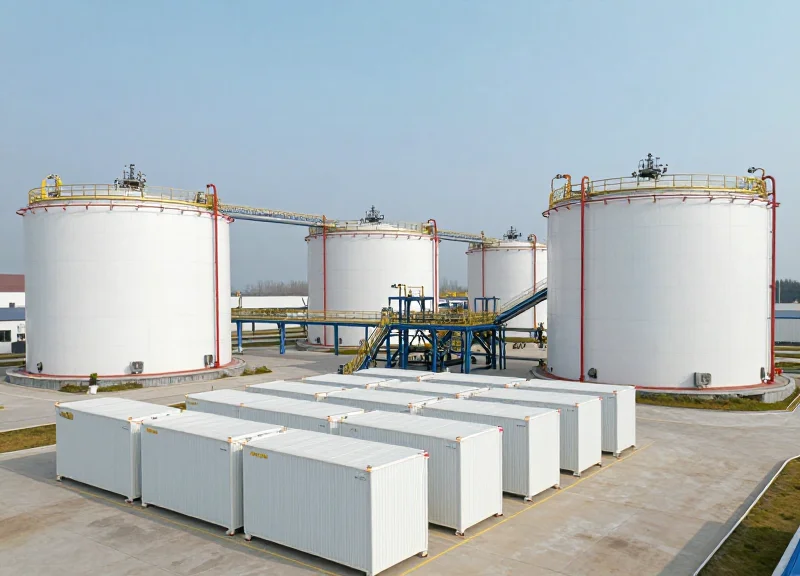
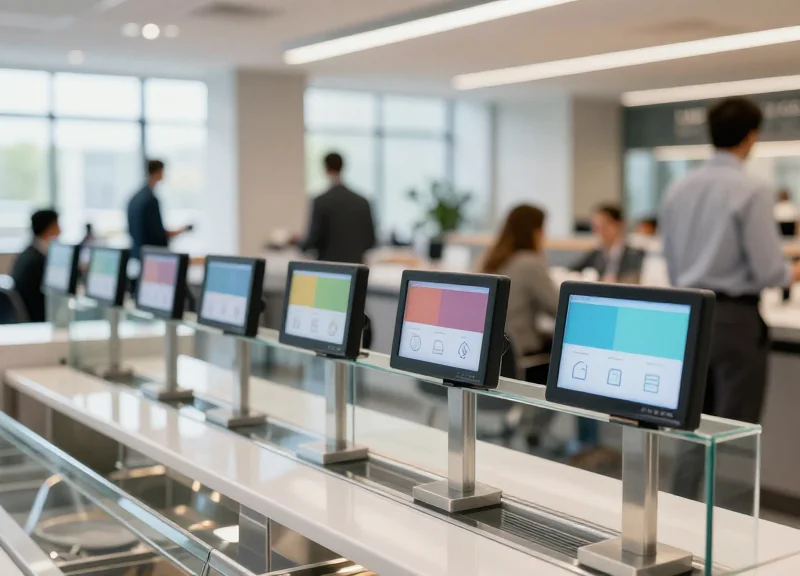
As we head into 2026, the landscape of hazardous material (HazMat) management is undergoing a fundamental shift from reactive compliance to proactive, real-time risk mitigation. Traditionally defined by static binders and manual Safety Data Sheets (SDS), modern industrial environments are now prioritizing digitized, IoT-integrated systems. The current standard requires that safety information be not just present, but immediately accessible at the point of use to reduce emergency response times and eliminate the human error associated with manual document maintenance.
| Feature | Legacy Management (Pre-2024) | Modern Landscape (2025-2026) |
|---|---|---|
| Data Retrieval | Manual search in physical binders | Instant digital access via ESL or Mobile |
| Update Frequency | Quarterly/Annual manual audits | Real-time centralized cloud updates |
| Visibility | Centralized (Admin office) | Point-of-Use (On-shelf/Tank-side) |
| Compliance Risk | High (Outdated/Missing sheets) | Low (Automated version control) |
The catalysts for this digital migration are dual-pronged: tightening global regulations (such as updated GHS standards and stricter OSHA oversight) and the operational realization that 'paper latency' is a liability. In high-risk chemical environments, the 3-5 minutes spent locating a binder during a spill is no longer acceptable. Companies are now treating safety data as a dynamic asset rather than a static filing requirement.
Why is 2026 considered a turning point for digital SDS?
The convergence of affordable E-Ink technology, 5G industrial connectivity, and post-pandemic labor shortages has made manual labeling unsustainable. 2026 marks the year where the cost of digital implementation finally falls below the insurance and labor costs of maintaining paper systems.
What is the biggest challenge in the current landscape?
Interoperability remains the hurdle. Facility managers are looking for solutions that bridge the gap between ERP inventory data and physical safety signage without requiring manual intervention at every step.
Expert Insight: The 'Safety Latency Gap' is the new metric for 2026. Forward-thinking Silicon Valley industrial firms are no longer measuring safety by 'days without incident' alone, but by the 'seconds to information'—the time elapsed between a chemical leak and the worker having the exact neutralization protocol in their line of sight. Chemical-resistant Electronic Shelf Labels (ESL) are the primary hardware solution closing this gap.
The Critical Failures of Manual Safety Data Sheets (SDS)

Manual Safety Data Sheets (SDS) fail as a modern safety tool because they represent a static, fragile medium attempting to govern dynamic and hazardous industrial environments. In practice, the 'paper binder' method creates a dangerous information gap: by the time a chemical hazard is identified on a factory floor, the physical document is often illegible, outdated, or physically inaccessible. This failure in information delivery not only compromises worker safety but also exposes organizations to significant OSHA violations and liability risks that digital, chemical-resistant alternatives are designed to eliminate.
| Failure Category | Manual SDS Limitation | Operational Impact |
|---|---|---|
| Physical Integrity | Subject to chemical spills, moisture, and UV fading. | Inaccessible data during actual emergencies. |
| Update Latency | 30–90 day lag for manual printing and filing. | Non-compliance with GHS revision updates. |
| Audit Readiness | Requires 100+ manual labor hours for site-wide checks. | High risk of 'missing sheet' fines during inspections. |
| Searchability | Linear, alphabetical sorting prone to human error. | Delayed response times during critical exposure events. |
How does physical degradation impact compliance?
Safety inspectors require that SDS be 'readily accessible' and legible. Manual sheets kept in high-humidity or chemical-heavy zones often smudge or tear, rendering them legally non-compliant and useless for emergency responders.
What is the hidden cost of manual SDS updates?
Beyond printing costs, the 'labor friction' of manually swapping sheets in dozens of binders across a facility can cost medium-sized enterprises upwards of $15,000 annually in wasted administrative hours.
Why is version control a fatal flaw in paper systems?
When a chemical manufacturer updates a formulation, manual systems rely on a human to find every physical instance of that sheet. Missing just one binder creates a 'Shadow Compliance' environment where workers follow outdated first-aid protocols.
Expert Insight: The 'Version Ghosting' Trap. A unique risk of manual systems is what we call 'Version Ghosting.' In large facilities, it is statistically common for different departments to use different versions of the same chemical's SDS. This inconsistency creates a legal nightmare during litigation; if an employee is injured and the SDS in their specific work zone was the 2018 version while the 2024 version was available in the main office, the company is often found negligent for failing to maintain a 'unified truth' of safety data. Chemical-resistant Electronic Shelf Labels (ESLs) solve this by pushing a single source of truth across the entire facility simultaneously.
Engineering Resilience: What Defines Chemical-Resistant ESL
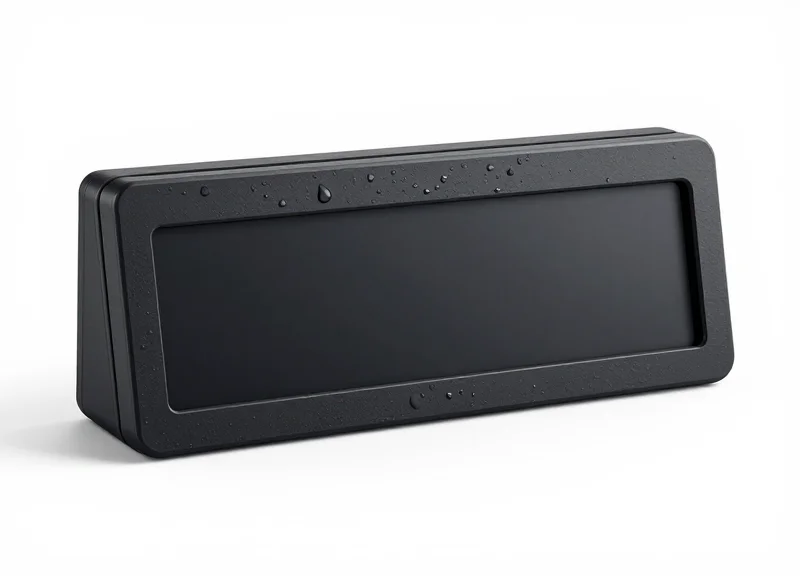
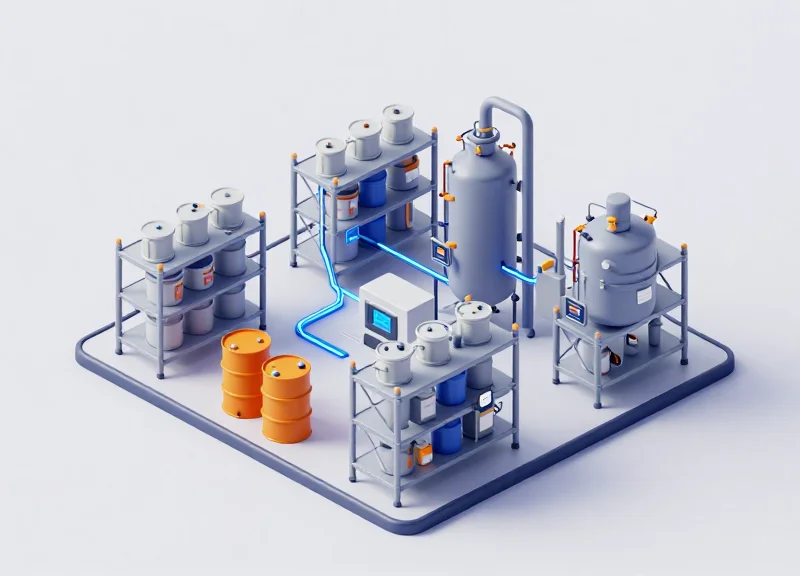
A chemical-resistant Electronic Shelf Label (ESL) is a specialized industrial-grade display device engineered with advanced polymers like Polytetrafluoroethylene (PTFE) or reinforced Polyether ether ketone (PEEK) to withstand continuous exposure to acids, bases, and volatile organic solvents. Unlike standard retail displays, these units utilize hermetic sealing, ultrasonic welding, and specialized E-ink protective films to maintain structural and data integrity in environments that would typically dissolve or degrade standard consumer electronics. By 2026, engineering resilience in these devices is defined by their ability to meet IP68 and IP69K ratings while resisting specific chemical vapor penetration at the molecular level.
| Component | Standard ESL Material | Chemical-Resistant ESL Material | Resistance Profile |
|---|---|---|---|
| Housing | ABS Plastic | Modified Polycarbonate/PEEK | Resists high pH and hydrocarbons |
| Sealing | Rubber Gasket | Ultrasonic/FKM Viton Sealing | Airtight against chemical vapors |
| Screen Cover | Standard Acrylic | Chemically Strengthened Glass | Resists scratching and chemical etching |
| Adhesive | Cyanoacrylate | Epoxy-Resin Systems | Won't delaminate under solvent stress |
- Advanced Substrate Selection: The outer shell is the first line of defense. Engineers select high-performance thermoplastics that possess low surface energy, meaning chemicals bead up and roll off rather than bonding to or penetrating the surface.
- Hermetic Barrier Technology: Using a combination of ultrasonic welding and specialized potting compounds, the internal circuitry is vacuum-sealed. This prevents the 'breathing' effect where temperature changes draw moist, chemical-laden air into the device.
- Optical Bonding and UV Filtering: The display is optically bonded to the protective lens using UV-curable adhesives that prevent fogging and remain clear even when exposed to harsh cleaning agents or industrial solvents.
Expert Insight: In 2026, the leading edge of ESL engineering involves Atomic Layer Deposition (ALD). This process applies a ceramic coating only a few nanometers thick directly onto the internal PCB. This 'nano-armor' ensures that even if the outer casing is physically breached, the electronic components remain impervious to corrosion from acidic fumes or humidity, providing a fail-safe that was previously impossible in digital hardware.
Can chemical-resistant ESLs handle high-pressure washdowns?
Yes, devices rated IP69K are specifically designed to withstand high-pressure, high-temperature water jets and steam cleaning common in pharmaceutical and chemical processing plants.
Are these devices resistant to specialized solvents like MEK or Acetone?
While standard plastics melt when exposed to Acetone, chemical-resistant ESLs utilize specialized polymer blends designed specifically to resist softening or clouding in the presence of aggressive ketones.
How long does the chemical resistance last?
Engineering standards for 2026 target a 5-to-10-year lifespan, ensuring the material integrity outlasts the internal battery life even in corrosive environments.
Real-Time Data Sync: Bridging the Gap Between ERP and the Factory Floor
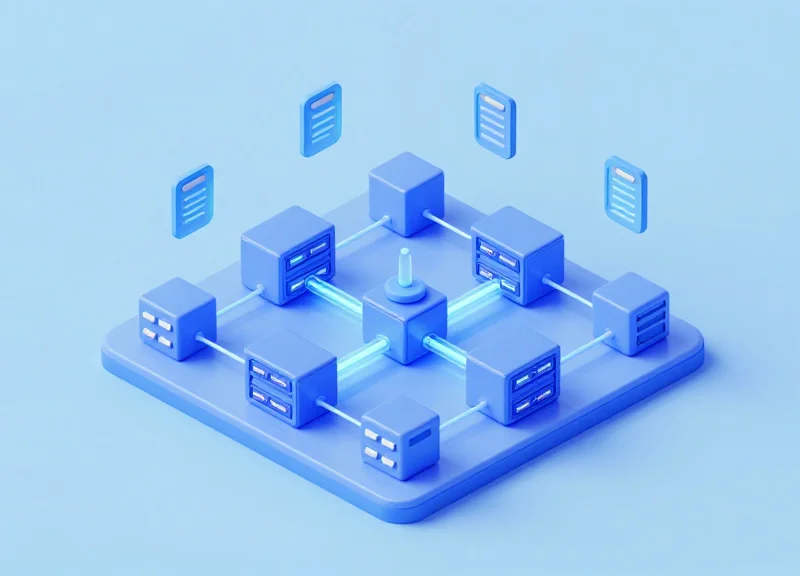
Real-time data sync in hazardous material management is the automated, instantaneous transmission of Safety Data Sheet (SDS) updates and handling instructions from a central Enterprise Resource Planning (ERP) or Quality Management System (QMS) directly to chemical-resistant Electronic Shelf Labels (ESLs) on the shop floor. By 2026, this technology is set to replace manual clipboard updates, ensuring that every container displays the most current GHS (Globally Harmonized System) classifications, shelf-life warnings, and disposal protocols without human intervention or administrative delay.
The fundamental challenge in industrial safety has always been the 'latency gap'—the time elapsed between a compliance update in the boardroom and its physical implementation on the production line. When a supplier updates a chemical’s toxicity profile, a manual system relies on a chain of emails, printing, and physical audits. In contrast, an integrated ESL system treats the factory floor as a live extension of the digital database. Through secure IoT gateways and APIs, any change in the ERP triggers a wireless update to the corresponding label in milliseconds, providing a seamless 'Single Source of Truth' across the entire enterprise.
| Feature | Manual SDS Updates | ERP-Integrated ESL |
|---|---|---|
| Update Speed | Days to Weeks | Near-Instant (Seconds) |
| Data Accuracy | High Human Error Risk | Automated Verification |
| Compliance Audit | Manual Paper Trail | Digital Time-Stamped Logs |
| Shelf-Life Tracking | Passive/Static | Active/Dynamic Countdown |
Expert Insight: In 2026, the leading edge of this technology is moving toward 'Bidirectional Feedback Loops.' Unlike traditional digital signage that only receives data, next-generation chemical-resistant ESLs report back to the ERP. They confirm successful updates, report ambient temperature fluctuations that might affect chemical stability, and even alert the system if their physical location has changed, creating a closed-loop safety ecosystem that was previously impossible.
- ERP Trigger: A compliance officer or automated system updates a chemical profile or expiration date within the central ERP (e.g., SAP, Oracle).
- API Handshake: The ERP pushes the update through a secure API to the ESL Management Software.
- Wireless Broadcast: The software identifies the specific MAC address of the label attached to the chemical container and broadcasts the update via Sub-GHz or BLE frequencies.
- Visual Confirmation: The label updates its E-ink display to show the new safety data, including updated QR codes for full SDS access.
Can ESLs sync with third-party chemical databases?
Yes, most 2026-grade ESL systems use open APIs that can pull data directly from global regulatory databases as well as internal ERPs.
What happens if the Wi-Fi or network goes down?
ESLs are designed with fail-safe persistence; they continue to display the last known data and queue updates to sync immediately once connectivity is restored.
Is the data sync encrypted?
Industrial-grade ESL systems utilize AES-128 or AES-256 encryption to prevent unauthorized tampering with safety information.
Automating GHS Compliance and Regulatory Reporting
Automating GHS (Globally Harmonized System) compliance involves the integration of chemical-resistant Electronic Shelf Labels (ESL) with centralized Safety Data Sheet (SDS) management software to ensure that every container on the factory floor displays the most current hazard information. In the high-stakes environment of 2026 chemical management, this automation means that when a regulatory body like OSHA or the ECHA updates a substance's classification, the corresponding pictograms, signal words, and hazard statements are updated globally across all physical labels within seconds. This creates a 'Dynamic Compliance' environment where the risk of displaying outdated safety information is virtually zeroed out.
| Compliance Feature | Manual SDS Labels | Automated ESL Labels | |||
|---|---|---|---|---|---|
| Update Speed | Days or Weeks | Near Real-Time (Seconds) | |||
| Error Rate | High (Human Dependency) | Zero (Database Driven) | Audit Readiness | Reactive / Preparation Needed | Continuous / Always-On |
| GHS Pictogram Accuracy | Static / Prone to Fading | Dynamic / High Contrast E-Ink | |||
| Reporting Capability | Manual Log Compilation | Instant Digital Audit Trail |
- Database Trigger: A regulatory change is logged in the central ERP or SDS database (e.g., a change in a chemical's toxicity threshold).
- API Orchestration: The system pushes the updated GHS data through an API to the facility's wireless access points.
- Edge Update: The chemical-resistant ESLs at the storage point refresh their E-ink displays to show the new pictograms and signal words.
- Feedback Loop: The label sends a 'success' packet back to the system, timestamping the update for compliance reporting.
Unique Industry Insight: By 2026, the 'Multi-Language Dynamic Toggle' will become the gold standard. Unlike paper labels that are limited by physical dimensions, automated ESLs can cycle through different languages (e.g., English, Spanish, and Mandarin) every 30 seconds. This ensures that a diverse workforce can comprehend critical GHS hazard statements in their native language, a move that significantly reduces workplace accidents and satisfies increasingly stringent localized labor safety regulations.
Does ESL automation satisfy OSHA 1910.1200 requirements?
Yes, modern ESL systems provide the required 'Point of Use' access to hazard information, and when integrated with a digital SDS repository, they exceed traditional paper-based accessibility standards.
How does automation handle facility-wide audits?
Instead of physical walkthroughs to verify every label, the system generates a 'Compliance Health Report' showing the battery status, signal strength, and current displayed content of every label in the facility.
Can the labels withstand harsh decontamination?
Yes, the 2026 generation of ESLs uses hermetically sealed specialized polymers that are resistant to IPA, bleach, and pressurized washdowns common in regulated environments.
The Human Factor: Improving Worker Safety and Emergency Response

Chemical-resistant ESLs (Electronic Shelf Labels) revolutionize worker safety by replacing dense, paper-based Safety Data Sheets (SDS) with high-contrast, color-coded digital displays that communicate critical hazard information in milliseconds. During emergency spill responses or industrial fires, these devices utilize backlit E-ink technology and dynamic alerts to provide clear evacuation or containment instructions, effectively eliminating the 'search-and-retrieve' time that often leads to accidents during manual binder lookups. By simplifying complex data into visual cues, ESLs ensure that even stressed or fatigued workers can make life-saving decisions instantly.
| Feature | Manual SDS Binder | Chemical-Resistant ESL |
|---|---|---|
| Visibility in Low Light | Zero (Requires flashlight) | High (Backlit or High-Contrast E-Ink) |
| Information Retrieval | 1-3 minutes (Flipping pages) | Instantaneous (At-a-glance) |
| Emergency Cues | Static black and white text | Dynamic color-coding (Red/Yellow/Flash) |
| Legibility with PPE | Difficult (Goggles/Gloves) | Optimized (Large, bold digital fonts) |
In the 'Heat of the Moment,' the human brain undergoes a process called High-Arousal Stress, which significantly impairs the ability to process complex linguistic information. When a chemical spill occurs, a worker's peripheral vision narrows, and cognitive load spikes. Manual SDS binders require the worker to find a physical book, locate a specific chemical entry, and read fine print—a sequence of actions prone to failure under pressure. ESLs bypass this cognitive bottleneck by using pre-attentive visual processing. For example, a label that flashes bright red with a 'POISON' icon communicates a threat to the amygdala faster than the conscious mind can read a sentence, triggering immediate, correct safety protocols.
How do ESLs remain functional if the facility loses power during an emergency?
Most chemical-resistant ESLs utilize E-paper technology, which is bi-stable, meaning the safety information remains visible on the screen indefinitely without power. This ensures that even in a total blackout, responders can still read chemical identities and hazard codes.
Can these displays be seen through thick smoke or chemical vapors?
Modern ESLs are designed with high-glare resistance and wide-angle visibility (up to 180 degrees). Specialized backlit models provide an active light source that cuts through haze much more effectively than reflective paper.
Do ESLs help with Personal Protective Equipment (PPE) compliance?
Yes. ESLs can be programmed to display large icons indicating exactly which PPE is required for a specific zone. This visual shorthand reduces the likelihood of workers entering hazardous areas with improper gear.
Expert Insight: In 2026, we are seeing the rise of 'Contextual Alerting.' This unique feature allows ESLs to act as a distributed emergency broadcast system. If a leak is detected by a central sensor, every ESL in the vicinity can automatically switch its display from product data to a directional arrow pointing to the nearest eyewash station or safety shower based on its specific GPS or floor-grid coordinates. This turns a static labeling tool into an active, localized navigation system for emergency response, a level of safety integration that paper systems could never achieve.
Economic Analysis: The ROI of Transitioning to Digital Labeling
The Return on Investment (ROI) for chemical-resistant Electronic Shelf Labels (ESL) in hazardous material management is calculated by measuring the 'Total Cost of Safety' (TCS) over a five-year lifecycle. While the initial capital expenditure for ESL hardware is higher than traditional paper systems, the digital transition typically achieves a break-even point within 18 to 24 months through the elimination of manual labor, material waste, and the high financial risks associated with regulatory non-compliance and workplace accidents.
| Cost Variable (Annual) | Traditional Manual Labeling | Chemical-Resistant ESL System |
|---|---|---|
| Labor (Updates/Audits) | $12,000 - $18,000 per facility | $200 - $500 (Software-driven) |
| Consumables (Ink, Labels) | $2,500 - $4,000 | Negligible (Battery-powered) |
| Compliance Fine Risk | Moderate to High ($14k+ per citation) | Near-Zero (Real-time sync) |
| Asset Recovery/Waste | High (Expired/Lost materials) | Low (Dynamic shelf-life alerts) |
Beyond simple material costs, the true economic driver of ESL adoption is the reallocation of skilled labor. In a traditional chemical facility, a safety officer may spend up to 20% of their month physically auditing SDS binders and adhesive labels for degradation. Digital labeling automates this verification, allowing personnel to focus on higher-value risk mitigation strategies. Furthermore, the 'Precision Maintenance Dividend'—a term coined by industry analysts—refers to the 15% average reduction in chemical waste achieved when ESLs dynamically highlight upcoming expiration dates, preventing the disposal of viable materials.
How do ESLs affect insurance premiums?
Major industrial underwriters are beginning to offer 'Risk-Tech' discounts to facilities that implement IoT-monitored safety systems. By providing an immutable digital audit trail of safety data updates, companies can often negotiate lower liability premiums.
What is the typical lifespan of a chemical-resistant ESL?
Modern units are designed for a 5-to-10-year battery life. When factoring in the durability of specialized polymers against corrosive vapors, the hardware lifecycle far outlasts the readability of paper labels in harsh environments.
Can digital labeling reduce OSHA recordable incidents?
Yes. Statistics show that 10-15% of chemical handling errors are linked to outdated or illegible signage. Automating these updates directly reduces the probability of high-cost medical claims and legal settlements.
Expert Insight: In the 2026 landscape, we are seeing a shift where 'Digital Maturity' is a prerequisite for M&A activity in the chemical sector. A facility equipped with integrated ESL systems has a significantly higher valuation because it represents a 'de-risked' environment with predictable operational overhead. For Silicon Valley-style scalability, the transition isn't just a safety upgrade; it is a strategic financial move to eliminate the hidden tax of manual administrative friction.
Future-Proofing Infrastructure for 2026 and Beyond
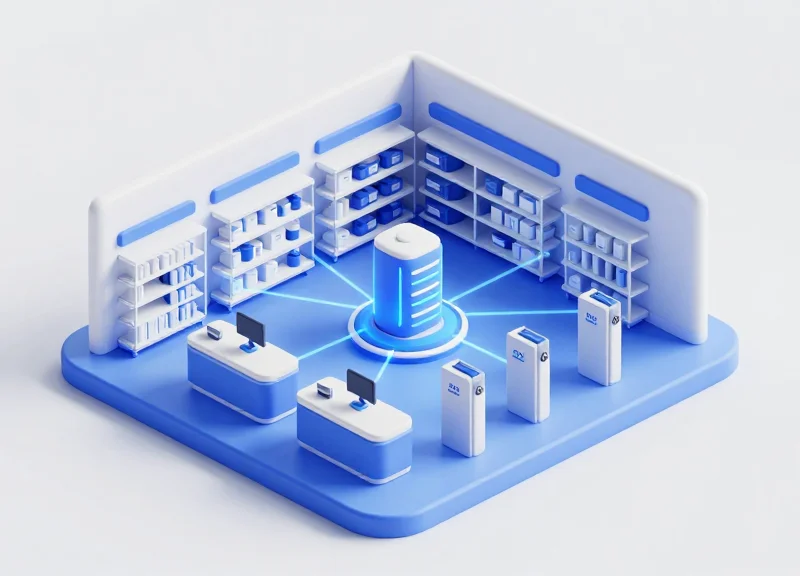
To future-proof hazardous material infrastructure for 2026, organizations must transition from static, paper-based Safety Data Sheets (SDS) to a centralized, IoT-enabled ecosystem utilizing chemical-resistant Electronic Shelf Labels (ESL). This digital transformation turns every chemical container into a live data node, facilitating real-time safety updates and seamless interoperability with modern Enterprise Resource Planning (ERP) and Environment, Health, and Safety (EHS) software. By adopting hardware that withstands corrosive environments today, safety managers ensure their facilities remain compliant with evolving GHS standards and ready for the next decade of automation.
- Interoperability Assessment: Evaluate current ERP and Warehouse Management Systems (WMS) to ensure they support API-driven data exports for real-time label updates.
- Gateway and Mesh Network Deployment: Install industrial-grade Bluetooth or Sub-Ghz gateways designed to penetrate high-density storage areas and resist chemical interference.
- Pilot Program with High-Turnover Chemicals: Deploy ESLs first on frequently used hazardous substances to refine the synchronization logic between the central database and the factory floor.
- Scalable Integration: Roll out the digital ecosystem across the facility, integrating ESL data with automated emergency response systems and ventilation controls.
| Feature | Legacy Infrastructure (Pre-2024) | Future-Ready Infrastructure (2026+) |
|---|---|---|
| Data Source | Manual print-outs/binders | Cloud-synchronized ERP/LIMS |
| Connectivity | None (Isolated) | IoT-enabled Mesh Networks |
| Durability | Degrades in acidic environments | IP68-rated Chemical Resistance |
| Response Time | Hours (Manual search) | Seconds (Instant display change) |
How do we ensure ESLs don't lose signal in large chemical warehouses?
Modern chemical-resistant ESLs utilize proprietary Sub-Ghz or BLE mesh networking which provides superior penetration through metal racking and chemical drums compared to standard Wi-Fi.
Can these systems integrate with existing EHS software?
Yes, most leading ESL platforms provide RESTful APIs that allow safety managers to push SDS updates from software like VelocityEHS or Enablon directly to the labels.
Expert Insight: The 'Active Hazard Profile'. In the 2026 landscape, the ESL is not just a display but a safety trigger. By utilizing the built-in Bluetooth Low Energy (BLE) beacons within the ESLs, smart facilities can implement 'Proximity Alerts'. If a container of flammable material is moved too close to an oxidizer, the ESLs can communicate with local IoT sensors to trigger an immediate supervisor alert or shut down nearby machinery, preventing accidents before they occur.