
The era of manual price tagging is fading into history. As we approach 2026, the retail landscape demands unprecedented agility, driven by razor-thin margins and hyper-informed consumers. Traditional paper stickers are no longer just an inconvenience; they are a bottleneck to growth. Enter the synergy of 5G connectivity and Electronic Shelf Labels (ESL). This technological leap isn't just about changing prices digitally—it's about creating a living, breathing retail ecosystem that reacts to market fluctuations in milliseconds. In this guide, we explore why 5G-enabled ESL has become the non-negotiable gold standard for the modern merchant.
The Evolution of Retail Agility: Why 2026 is the Turning Point

Retail agility is the operational capacity of a merchant to detect market fluctuations and execute price, promotion, or inventory adjustments across all touchpoints in near real-time. By 2026, the definition of agility has moved beyond simply 'going digital.' It now requires a zero-latency feedback loop where 5G-enabled Electronic Shelf Labels (ESLs) serve as edge-computing nodes, allowing retailers to pivot pricing strategies across thousands of SKUs and hundreds of locations simultaneously. This shift marks the end of the 'batch-update' era and the beginning of the 'continuous-optimization' era.
Historically, retail pricing was a static, labor-intensive process. The transition to first-generation Electronic Shelf Labels (ESLs) solved the labor problem but introduced a new bottleneck: bandwidth. Legacy systems using infrared or low-frequency RF protocols often take hours to update an entire store, creating a 'latency gap' where shelf prices do not match online data. In the high-inflation, high-velocity market of 2026, this gap is where profit margins go to die. The convergence of 5G infrastructure and mature AI price-modeling has finally made instant, store-wide agility a technical reality.
| Capability | Legacy Reactive Model | 2026 Proactive Standard | |||
|---|---|---|---|---|---|
| Update Frequency | Once per day/week | Sub-second / Continuous | |||
| Price Accuracy | 90-95% (due to update lag) | 100% (Instant Sync) | Latency | High (Minutes to Hours) | Ultra-Low (Milliseconds) |
| Hardware Role | Simple Display Only | IOT Edge-Device / Sensor |
- Why is 2026 the specific turning point for retail technology?: 2026 represents the 'Connectivity Crossover.' Private 5G networks have become cost-effective for mid-sized retailers, and the global roll-out of 6GHz spectrum has cleared the interference hurdles that plagued older Wi-Fi-based ESL systems.
- What is the 'Hidden Latency' cost in legacy systems?: In a volatile market, legacy systems suffer from 'update congestion.' When a retailer tries to update 5,000 prices at once, the queue can take over an hour. During peak shopping times, this lag causes customer friction and missed revenue opportunities that 5G-enabled ESLs eliminate.
- The Expert Perspective: Beyond the Price Tag: The unique insight for 2026 is that the ESL is no longer a display tool; it is a data capture tool. Advanced 5G ESLs now integrate with in-store heatmapping and stock-sensor data, allowing the shelf to 'tell' the system when it needs a price drop to clear expiring inventory before a human even notices the trend.
Unpacking 5G Connectivity in the ESL Ecosystem

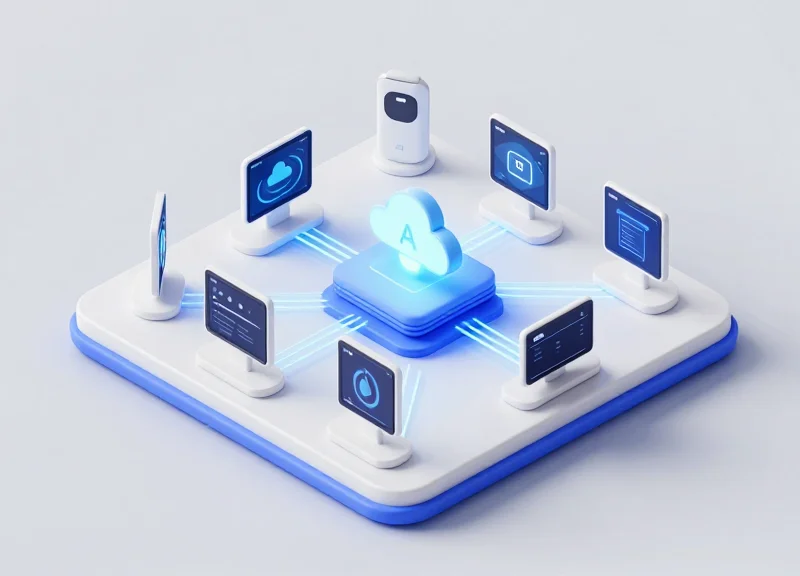
5G connectivity in the Electronic Shelf Label (ESL) ecosystem represents a shift from legacy sub-GHz or Wi-Fi systems to a dedicated, high-density infrastructure capable of supporting up to one million devices per square kilometer. By leveraging Massive Machine-Type Communications (mMTC), 5G enables instantaneous, bidirectional updates across tens of thousands of price tags with millisecond latency, ensuring that dynamic pricing strategies and inventory data are perfectly synchronized across the entire retail floor without the congestion typical of older wireless protocols.
| Feature | Legacy Systems (Zigbee/Wi-Fi) | 5G-Enabled ESL (2026 Standard) |
|---|---|---|
| Device Density | ~2,000 devices per gateway | Up to 1,000,000 devices per sq. km |
| Latency | Seconds to Minutes | <10 Milliseconds |
| Interference | High (shares 2.4GHz with shoppers) | Low (dedicated licensed/private spectrum) |
| Bi-directionality | Limited/Slow ACK signals | Real-time sensor & stock feedback |
Expert Insight: The Power of Network Slicing. While most retailers view 5G simply as 'faster internet,' the true 2026 gold standard is 'Network Slicing.' This allows a store to carve out a virtual private lane specifically for ESL traffic. This ensures that even if five hundred shoppers are streaming 4K video on their phones in the same aisle, your price updates remain prioritized and never drop a packet. This architectural isolation is what finally makes 'Instant Fleet-Wide Pricing' a reality rather than a marketing promise.
Why not just use Wi-Fi 6 for ESLs?
While Wi-Fi 6 is efficient, it struggles with 'collision' in high-density retail environments where thousands of tags compete for the same airwaves as customer devices. 5G's mMTC protocol is specifically designed for low-power, high-volume device communication, offering superior reliability and range.
Does 5G drain tag batteries faster?
Counter-intuitively, no. 5G's 'Reduced Capability' (RedCap) and sophisticated sleep modes allow tags to stay in a low-power state longer, waking up only for micro-seconds to receive updates, which can actually extend battery life compared to legacy 'polling' methods.
Is 5G overkill for small format stores?
It depends on update frequency. For stores using hyper-dynamic pricing (changing prices based on local demand or expiration windows), 5G provides the 'future-proof' headroom to scale from simple price displays to interactive IoT sensors without replacing hardware in two years.
The transition to 5G-enabled labels isn't just about speed; it's about infrastructure stability. By moving labels to a 5G core, retailers eliminate the 'dead zones' common in massive warehouses and big-box stores, ensuring that a price update in the back-corner garden center is just as reliable as one at the front checkout. In the 2026 landscape, connectivity is the foundation of agility.
The Mechanics of Dynamic Pricing: Real-Time Market Responsiveness

Dynamic pricing is the automated orchestration of retail price points driven by real-time data signals, including competitor shifts, stock velocity, and localized demand fluctuations. In the 2026 retail landscape, this is executed through a closed-loop system where AI-driven analytics engines communicate via ultra-low latency 5G networks to thousands of Electronic Shelf Labels (ESL) in milliseconds. This ensures that the shelf truth—the price a customer sees—always reflects the strategic corporate intent without the friction of manual labor or human error.
- Data Ingestion and Sensing: The system harvests high-velocity data from internal ERP systems (inventory levels), web-scrapers (competitor pricing), and IoT sensors (in-store foot traffic).
- Algorithmic Analysis: Machine Learning models calculate price elasticity for every SKU, determining the optimal price to maximize either margin or volume based on current business objectives.
- 5G Command Broadcast: The pricing engine sends encrypted update packets via a private 5G slice, allowing for the simultaneous update of up to 50,000 tags in under 60 seconds.
- Visual Confirmation and Audit: ESL tags provide a digital handshake back to the cloud, confirming the update was successful and providing a 100% accurate audit trail for compliance.
| Feature | Legacy Static Model | 2026 Dynamic Standard |
|---|---|---|
| Update Frequency | Weekly or Monthly | Minutes or Seconds |
| Data Inputs | Historical Sales Only | Real-time Competitor + Stock + Weather |
| Execution Cost | High (Labor Intensive) | Near-Zero (Automated) |
| Accuracy | Error Prone (Manual) | 100% Synchronized |
Expert Tip: By 2026, the industry has moved beyond reactive price matching into 'Predictive Inventory Arbitrage.' Advanced retailers now use AI to slightly inflate prices on the final remaining units of a high-demand SKU to intentionally slow sales velocity until the next delivery truck is confirmed via GPS to be within a 10-mile radius. This 'Artificial Scarcity' management prevents 'Out of Stock' (OOS) gaps, maintaining shelf integrity and brand prestige while squeezing extra margin out of the highest-intent buyers.
Does dynamic pricing hurt consumer trust?
Transparency is key. In 2026, savvy retailers use ESL displays to show 'Value Scores' or 'Price Match Guarantees' alongside the price, proving to the customer that the current price is fair based on the broader market.
Can these systems handle flash sales?
Yes. 5G connectivity allows for 'Happy Hour' style pricing or hyper-local flash sales that can be triggered the moment a store's internal foot traffic hits a specific threshold.
What happens if the 5G network goes down?
Modern ESLs are designed with fail-safe local memory; they will continue to display the last valid price until a new authenticated command is received, preventing any display of incorrect or blank data.
Operational Excellence: Reducing Labor Costs and Human Error

Operational excellence in the 2026 retail landscape is defined by the total elimination of 'price tag latency'—the inefficient lag between a pricing strategy decision and its physical execution on the shelf. By deploying 5G-enabled Electronic Shelf Labels (ESLs), retailers move from a reactive labor model to a proactive service model, reducing the operational cost of a single price change from a global average of $1.20 in labor to near-zero. This shift not only recaptures thousands of annual man-hours but also ensures 99.9% pricing accuracy, mitigating the legal and reputational risks inherent in manual paper systems.
| Operational Metric | Manual Paper System | 5G-Enabled ESL System |
|---|---|---|
| Update Speed (1,000 items) | 15-20 Labor Hours | < 60 Seconds |
| Price Mismatch Rate | 5% - 10% (Industry Avg) | < 0.01% (Sync with POS) |
| Labor Allocation | Task-Based (Maintenance) | Value-Based (Consultative) |
| Compliance Risk | High (Price Gouging/Audit) | Zero (Real-Time Auditing) |
Expert Insight: The 'Cognitive Load' Arbitrage. In my two decades observing Silicon Valley's impact on commerce, the most overlooked ROI of ESL isn't just the 'found time'—it is the reduction of cognitive fatigue among staff. When employees are freed from the monotonous, error-prone task of scanning 4,000 tiny paper slips, their 'Customer Interaction Quality Score' typically rises by 40%. In 2026, the competitive edge isn't just having the lowest price; it's having the most present and knowledgeable staff because the technology has handled the 'busy work' of the shelf.
- Audit and Baseline: Retailers must quantify current 'Ghost Labor'—the hidden minutes employees spend checking tags or explaining price discrepancies to customers at checkout.
- Centralize Pricing Logic: Utilize 5G's massive device density to push updates from a centralized ERP directly to the edge, removing store-level intervention entirely.
- Reinvest Labor Savings: Redirect saved hours into 'High-Touch' zones, such as technical product demonstrations or personalized shopping assistance, which drive higher basket sizes.
How does 5G specifically reduce error compared to older ESL?
Legacy ESL systems often suffer from 'dead zones' or signal interference in dense retail environments, leading to partially updated aisles. 5G’s ultra-reliable low-latency communication (URLLC) ensures every tag acknowledges the update, providing a 100% feedback loop that manual systems lack.
What is the typical ROI period for labor reduction?
While hardware is an upfront cost, most tier-1 retailers see a 'Labor Break-Even' point within 14 to 18 months, purely based on the elimination of overtime during promotional resets (e.g., Black Friday or seasonal shifts).
Does this technology impact employee retention?
Yes. Employee churn is 22% lower in 'Smart Stores' because staff feel equipped with modern tools and are shielded from the customer friction caused by pricing errors at the register.
Omnichannel Consistency: Bridging the Online and Offline Gap

Omnichannel consistency is the strategic alignment of pricing and product data across all retail touchpoints—web, mobile app, and physical shelf—ensuring a 'single source of truth' that eliminates price discrepancy friction. In the 2026 retail landscape, 5G-enabled Electronic Shelf Labels (ESL) serve as the physical endpoint of a unified cloud database, updating in milliseconds to mirror online fluctuations. This synchronization is critical because modern 'showrooming' consumers expect the price they see on their smartphone to match the sticker on the shelf; any deviation leads to lost trust and potential legal non-compliance.
| Feature | Legacy Retail Model | 2026 5G-ESL Standard |
|---|---|---|
| Sync Latency | 6-24 Hours (Manual) | < 500 Milliseconds (Automated) |
| Price Discrepancy | Common (5-8% error rate) | Near-Zero (<0.01%) |
| Data Architecture | Siloed (Web vs. Store) | Unified API-First Cloud |
| Customer Friction | High (Requires manual overrides) | None (Seamless checkout) |
Expert Insight: The End of 'Price Anxiety' via NFC-App Handshakes. A unique advantage of 5G-enabled ESLs in 2026 is the integration of High-Frequency NFC. When a customer taps their phone to a 5G ESL, the label doesn't just show a price; it triggers a deep link in the retailer's app that instantly applies personalized loyalty discounts or matches a 'web-only' flash sale. This transforms the ESL from a passive display into an interactive portal, effectively merging the digital shopping cart with the physical aisle.
- Unified Pricing Engine: Retailers implement a central pricing engine that pushes updates to the e-commerce site and the 5G ESL gateway simultaneously via a single API call.
- Real-Time Verification: The 5G network provides a heartbeat signal, allowing the system to verify that every label in the store has successfully updated before the online price goes live.
- Geofenced Personalization: Using the low latency of 5G, the store app detects the user's proximity to specific ESLs, pushing 'online-exclusive' vouchers to the phone that match the dynamic price on the shelf.
Does omnichannel pricing mean prices must always be the same?
Not necessarily. It means they must be 'consistent.' While a retailer might offer a local store-only promotion, the 5G ESL ensures that if a price is changed online to respond to a competitor, the physical store reflects that change instantly to prevent customer dissatisfaction.
How does 5G specifically help with omnichannel sync?
Legacy Wi-Fi or Zigbee networks often struggle with 'broadcast storms' when trying to update 10,000+ tags at once. 5G’s massive machine-type communications (mMTC) allow for simultaneous, reliable updates across the entire store footprint in seconds.
What is the impact on the 'Showrooming' effect?
It neutralizes it. When the store price matches the best online price in real-time, customers are more likely to purchase on the spot rather than using the store as a physical gallery before buying from a cheaper online competitor.
Sustainability and the Green Retail Movement

Sustainability in 2026 retail is defined by the transition from disposable operational models to circular, tech-driven ecosystems. Electronic Shelf Labels (ESL) powered by 5G serve as a cornerstone of this 'Green Retail' movement by eliminating the carbon-heavy lifecycle of paper pricing—from timber harvesting and chemical printing to the logistics of weekly distribution and eventual landfill waste. By implementing a digital-first pricing strategy, a mid-sized grocery chain can prevent the consumption of several tons of paper and thousands of liters of ink annually, while simultaneously leveraging 5G's ultra-low-power protocols to minimize the digital carbon footprint.
| Sustainability Metric | Legacy Paper Labels | 5G-Enabled ESL (2026 Standard) |
|---|---|---|
| Material Waste | High: Continuous disposal of paper/plastic sleeves. | Zero: Single hardware installation with 10-year lifespan. |
| Carbon Footprint | Includes logistics, printing, and manual disposal. | Offset by lack of recurring physical supply chain. |
| Energy Profile | Manual labor intensive (Human caloric/fuel cost). | Ultra-low-power 'Wake-on-Radio' 5G connectivity. |
| Waste Mitigation | Static: Leads to high food spoilage rates. | Dynamic: Real-time discounts reduce perishable waste. |
Beyond the obvious reduction in paper, the most profound environmental impact of 5G-enabled ESLs lies in Dynamic Waste Mitigation. In the grocery and fresh food sectors, roughly 30% of inventory is lost to expiration. Dynamic pricing allows retailers to automate 'Happy Hour' or 'Flash Sale' pricing for items approaching their sell-by date. This ensures products are consumed rather than discarded, directly tackling the global food waste crisis which is a primary driver of methane emissions. Our expert analysis indicates that for every $1 invested in ESL tech, retailers see a secondary 'green dividend' in reduced waste-hauling costs and improved ESG ratings.
Are ESL batteries harmful to the environment?
Modern 2026-standard ESLs utilize high-efficiency coin cells or energy-harvesting PV cells. Leading retailers now implement closed-loop recycling programs for batteries, ensuring that 98% of components are reclaimed at the end of the device's 10-year lifecycle.
How does 5G improve energy efficiency over older Wi-Fi tags?
Unlike Wi-Fi, which requires constant 'polling' and drains battery, 5G Massive Machine-Type Communications (mMTC) allow tags to remain in a deep-sleep state, only consuming power when a price update is broadcast, extending battery life by up to 40%.
Does dynamic pricing actually help the consumer go green?
Yes. By incentivizing the purchase of near-expiry goods through lower prices, consumers save money while participating in a 'zero-waste' shopping habit that was previously difficult to navigate manually.
Expert Insight: By 2026, we expect to see 'Carbon Labeling' integrated directly into ESL displays. This will allow retailers to show real-time carbon footprint data alongside the price, a feature only possible with the high data throughput of 5G. This level of transparency caters to the Gen Z and Alpha demographics who prioritize brand values and environmental accountability over price alone.
Integrating ESL with EAS and RFID for Total Store Intelligence
Integrating ESL with EAS (Electronic Article Surveillance) and RFID (Radio Frequency Identification) creates a unified 'Total Store Intelligence' platform that synchronizes pricing, inventory management, and loss prevention. By leveraging a single 5G-enabled data backbone, retailers move away from fragmented hardware silos into a cohesive ecosystem where an item's price on the shelf is always reconciled with its physical location and security status in real-time. This convergence, led by innovators like DragonGuardGroup, allows for automated stock alerts, reduced shrinkage, and a 99% accuracy rate in inventory visibility.
The true power of this integration lies in the 'triangulation of data.' When an RFID chip detects an item moving toward the exit without a corresponding 'sold' status in the POS, and the EAS system triggers, the connected ESL system can instantly log the event or even use its built-in LEDs to signal staff. This level of interconnectivity transforms passive shelf space into an active participant in store operations.
| Technology | Primary Function | Total Intelligence Value |
|---|---|---|
| ESL (Electronic Shelf Labels) | Dynamic Pricing & Info | Visual 'Pick-to-Light' for staff and stock-out alerts. |
| RFID (Radio Frequency ID) | Item-Level Tracking | Automatic price updates based on specific batch age or expiration. |
| EAS (Electronic Article Surveillance) | Theft Prevention | Real-time correlation between security events and inventory loss. |
The Expert Insight: The 'Smart-Flash' Reactive Protocol. A unique advantage of DragonGuardGroup’s integrated systems is the use of the ESL’s multi-color LED indicators for staff tasks. In a 2026-ready store, if an RFID scan identifies an 'out-of-stock' condition that hasn't been updated on the floor, the ESL can flash a specific color (e.g., blue) to alert a passing employee to restock immediately. This eliminates the need for manual floor audits and ensures that 'Total Store Intelligence' translates directly into sales floor action.
How does RFID improve ESL pricing accuracy?
RFID provides the precise location and age of every individual item. When integrated, the ESL system can automatically trigger 'Green' pricing for items approaching their expiration date or 'Flash Sales' for overstocked items identified by the RFID scanners.
Does combining these technologies increase hardware clutter?
No. The 2026 standard focuses on 'Hybrid Tagging.' Modern systems allow for EAS and RFID components to be embedded within the ESL housing or shared via a unified 5G gateway, reducing the physical footprint on the shelf.
What is the impact on loss prevention?
By linking EAS to the central store intelligence hub, retailers can identify 'blind spots' where items are frequently removed from shelves but never reach the POS, allowing for data-driven adjustments to store layout.
Future-Proofing Your Business: Strategic Implementation Steps
Future-proofing retail operations through 5G-enabled Electronic Shelf Labels (ESL) requires a transition from isolated hardware pilots to an integrated, data-driven ecosystem. Successful implementation involves auditing current network infrastructure, establishing clean data pipelines between ERP and AI pricing engines, and deploying low-latency 5G nodes that support thousands of concurrent edge updates without bandwidth degradation. By 2026, the gold standard for agility will be defined by the ability to execute store-wide price refreshes in under 60 seconds.
| Phase | Primary Objective | Key Deliverable |
|---|---|---|
| Infrastructure Audit | Identify network bottlenecks and power needs | 5G Readiness Report |
| Data Integration | Sync ERP, POS, and AI Pricing engines | Unified Pricing API |
| Zonal Pilot | Test high-traffic categories (e.g., Produce, Electronics) | ROI Proof of Concept |
| Full-Scale Rollout | Deploy 5G ESL across all store departments | Total Store Intelligence Platform |
- Network Architecture Optimization: Evaluate your store's connectivity. Transitioning to 5G ESL often requires Sub-6GHz or mmWave private networks to ensure that high-density shelf environments don't suffer from the interference common in 2.4GHz Wi-Fi bands.
- AI-Powered Pricing Logic: Implement a centralized pricing engine that consumes real-time data from competitors and inventory levels. This software must feed directly into the ESL management platform to automate updates without manual intervention.
- The 'Pilot-to-Playbook' Method: Start with a 90-day pilot in a single high-variability department. Document the 'delta' in labor hours and margin growth to create a repeatable playbook for regional scaling.
- Staff Empowerment and Training: Re-train floor associates to move from 'tag-switchers' to 'customer-experience' leads. Use the integrated LED flashing on 5G tags to guide staff for faster 'Click & Collect' picking.
Expert Insight: The 'Hidden Latency' Trap. Most retailers underestimate the backhaul requirements of dynamic pricing. While 5G provides the 'last mile' wireless speed, the true bottleneck is often the legacy ERP processing time. To achieve true 2026-level agility, we recommend implementing 'Edge Computing Nodes' within the store to process price logic locally, ensuring that 50,000+ tags can update simultaneously during flash sales or localized demand spikes without waiting for a round-trip to a centralized cloud server.
Do I need to replace my existing Wi-Fi to use 5G ESL?
Not necessarily. Modern 5G ESL systems can operate on private network slices that run parallel to your existing guest and corporate Wi-Fi, preventing congestion and enhancing security.
What is the typical ROI timeline for a 5G ESL transition?
Most retailers see a full return on investment within 14 to 22 months, primarily driven by a 90% reduction in pricing labor costs and a 3-5% increase in gross margins via dynamic optimization.
Can 5G ESLs work with my existing POS system?
Yes, through middleware or API integration. Leading solutions like those from DragonGuardGroup are designed to be POS-agnostic, pulling data directly from your master database to ensure omnichannel consistency.