
As the retail industry approaches 2026, the mandate for carbon-neutral operations has moved from boardroom discussions to frontline implementation. Sustainable retail labeling—encompassing everything from biodegradable RFID tags to energy-efficient Electronic Shelf Labels (ESL)—is now the cornerstone of an eco-conscious supply chain. This guide explores how retailers can achieve operational efficiency while drastically reducing their environmental footprint through next-generation labeling solutions designed for the modern circular economy.
The Strategic Imperative for Sustainable Labeling in 2026

By 2026, the strategic imperative for sustainable labeling is defined by a 'Regulatory-Market Tsunami' where non-compliance means market exclusion. Retailers are now required to align their labeling strategies with the EU's Ecodesign for Sustainable Products Regulation (ESPR) and the mandatory Digital Product Passport (DPP), which require granular data on a product's carbon footprint and recyclability. Sustainable labeling is no longer just about choosing recycled paper; it is about building a carbon-neutral data bridge between the physical product and the digital supply chain to ensure transparency, traceability, and operational resilience.
| Driver Category | 2026 Market Reality | Strategic Risk of Inaction |
|---|---|---|
| Regulatory Compliance | Mandatory Digital Product Passports (DPP) and CSRD reporting. | Fines up to 4% of annual turnover and regional trade bans. |
| Consumer Behavior | 82% of shoppers demand third-party verified carbon claims. | Rapid brand erosion and loss of Gen Z/Alpha market share. |
| Operational Efficiency | Transition to Linerless and RFID-integrated eco-labels. | Increased waste disposal costs and higher per-unit logistical energy. |
The shift toward carbon-neutral operations requires a holistic view of the label's lifecycle. Traditional labeling processes account for a surprising portion of 'hidden' Scope 3 emissions due to high-energy adhesive production and non-recyclable backing liners. In 2026, the industry is pivoting toward 'Linerless Technology' and bio-based inks that not only reduce the carbon footprint by up to 40% but also optimize warehouse space and shipping weight, directly impacting the bottom line.
How does sustainable labeling impact the ROI of retail operations?
Beyond compliance, sustainable labeling reduces waste management costs and improves logistics density. For example, linerless labels allow for 30-40% more labels per roll, reducing shipping frequency and storage requirements, leading to a direct decrease in operational overhead.
What role does labeling play in the 2026 Circular Economy?
Labeling acts as the 'identity layer.' By 2026, labels must facilitate the end-of-life process. This includes using 'wash-off' adhesives that allow plastic containers to be recycled without contamination and embedded QR codes that provide consumers with localized recycling instructions.
Are carbon-neutral labels more expensive to procure?
While the initial unit price can be 5-10% higher than traditional materials, the total cost of ownership (TCO) is lower when factoring in carbon tax savings, reduced waste disposal fees, and the premium consumers are willing to pay for transparently sustainable products.
Expert Insight: The 'Label-as-a-Digital-Twin' Strategy. To truly outperform competitors in 2026, retailers should view labels not as stickers, but as 'digital twins' of the product. My unique recommendation for this year is to implement 'Smart-Ink' technology that changes color if a product has been exposed to temperatures that compromise its carbon-neutral shipping status. This turns the label into a real-time auditor of your sustainability claims, building an unbreakable bond of trust with the consumer that traditional branding simply cannot match.
Material Innovation: Moving Beyond Plastic and Toxic Adhesives

Material innovation in 2026 retail labeling represents a fundamental shift from petrochemical-based films to regenerative substrates and bio-mimetic bonding agents. To achieve carbon-neutrality, brands are moving beyond simple 'recyclable' claims toward 'circularity-ready' components, utilizing FSC-certified papers, agricultural waste fibers, and wash-off adhesives that prevent contamination during the recycling process.
| Component | Traditional (Linear) | 2026 Innovation (Circular) | Carbon Impact |
|---|---|---|---|
| Substrate | BOPP / Vinyl | Mycelium or Hemp Fiber | 75% Reduction |
| Adhesive | Solvent-based Acrylic | Starch-based Wash-off | Zero Microplastics |
| Ink | Petroleum-based | Algae-derived Black | Carbon Negative |
| Security Tags | Plastic RFID Housing | Compostable Paper Inlay | 90% Less Waste |
The most significant hurdle in sustainable labeling hasn't been the paper itself, but the 'invisible' components: adhesives and inks. In 2026, the industry standard has moved to 'Switchable Adhesives.' These are designed to maintain a high-tack bond during the product's shelf life but release cleanly during the high-temperature wash cycle of the recycling process. This ensures that the underlying container (glass or plastic) isn't downgraded due to adhesive residue—a common failure point in previous decades.
Why is soy-based ink considered a bridge technology rather than the final goal?
While soy-based inks are better than petroleum, they still rely on industrial monoculture. The 2026 gold standard is Algae-based ink, which actively sequesters carbon during production and offers a truly carbon-negative footprint.
Can compostable security tags withstand high-shrink retail environments?
Yes. Modern compostable tags use PLA (Polylactic Acid) derived from corn starch or sugarcane, engineered to handle the mechanical stress of shipping while remaining certified for industrial composting facilities.
Is FSC-certified paper enough for carbon neutrality?
FSC is a baseline for responsible sourcing, but for carbon-neutral operations, brands are layering FSC certification with 'Post-Consumer Waste' (PCW) content to minimize the energy expenditure of virgin fiber processing.
Expert Insight: In my two decades of observing supply chain shifts, the most overlooked innovation is 'Stone Paper'—a substrate made from calcium carbonate and high-density polyethylene. While not fiber-based, its production requires zero water and no bleach, making it a niche powerhouse for waterproof retail environments where traditional paper fails but carbon goals must be met.
The Role of RFID in Reducing Supply Chain Waste

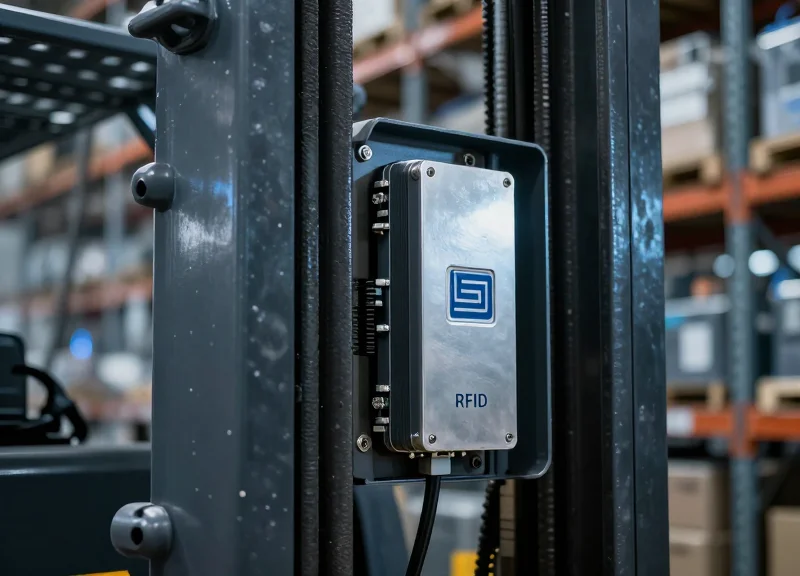
In the context of 2026 retail operations, Radio Frequency Identification (RFID) has evolved from a simple tracking tool into a primary driver of waste reduction. By providing real-time, 99% inventory accuracy, RFID allows retailers to transition from a 'buffer-stock' model to a precision-led supply chain. This transparency eliminates the need for safety stock overproduction—a practice currently responsible for nearly 10% of global retail carbon emissions—and ensures that every item manufactured has a verified destination, effectively decoupling growth from physical waste.
| Impact Metric | Legacy Inventory Systems | RFID-Enabled Sustainable Logistics |
|---|---|---|
| Inventory Accuracy | 65% - 75% (Average) | 98% - 99.5% (Real-time) |
| Overproduction Rate | High (to cover visibility gaps) | Minimal (Demand-driven manufacturing) |
| Reverse Logistics Waste | High due to manual errors | Low through automated item-level routing |
| Carbon Footprint | Excessive (Dead stock transport) | Optimized (Direct-to-consumer/store) |
Beyond simple stock counts, RFID facilitates a circular economy through the implementation of Digital Product Passports (DPP). By 2026, these labels will store essential lifecycle data, allowing retailers to automate the sorting process for resale, repair, or recycling. This precision significantly lowers the carbon cost of reverse logistics; instead of items ending up in landfills due to lost metadata, RFID tags ensure that every garment or product can be identified and re-routed to its next highest-value use case.
- Automated Demand Forecasting: Utilize real-time shelf data to trigger localized replenishment, preventing the 'bullwhip effect' that leads to massive end-of-season inventory liquidations.
- Serialized Reverse Logistics: Apply unique identifiers to track returned goods instantly, reducing the processing time by 80% and preventing the carbon-intensive disposal of 'unknown' returned items.
- Omnichannel Fulfillment Optimization: Turn physical stores into micro-fulfillment centers with 100% stock confidence, reducing the 'last-mile' shipping distance and associated fuel emissions.
Expert Insight for 2026: The leading edge of sustainability is the 'Paper-Based RFID' tag. Historically, RFID was criticized for its plastic substrate and etched copper antennas. The 2026 standard utilizes silver-ink printing on FSC-certified paper, making the electronics fully compatible with standard paper recycling streams and eliminating the 'mixed material' waste dilemma.
Can RFID tags be recycled with the garment?
With the 2026 shift toward 'Green RFID,' tags are now manufactured using water-soluble adhesives and paper substrates, allowing them to be recycled in standard paper streams without contaminating the process.
How does RFID reduce the carbon footprint of shipping?
By ensuring 100% order accuracy at the warehouse level, RFID eliminates 'mis-picks' and the subsequent double-shipping required to correct errors, which can reduce logistics-related emissions by up to 15%.
Is the energy cost of RFID systems worth the waste reduction?
Yes. While RFID infrastructure requires energy, the net carbon savings from preventing the production and transport of unsold goods far outweigh the operational energy of the readers and cloud data processing.
Electronic Shelf Labels (ESL): The Paperless Revolution

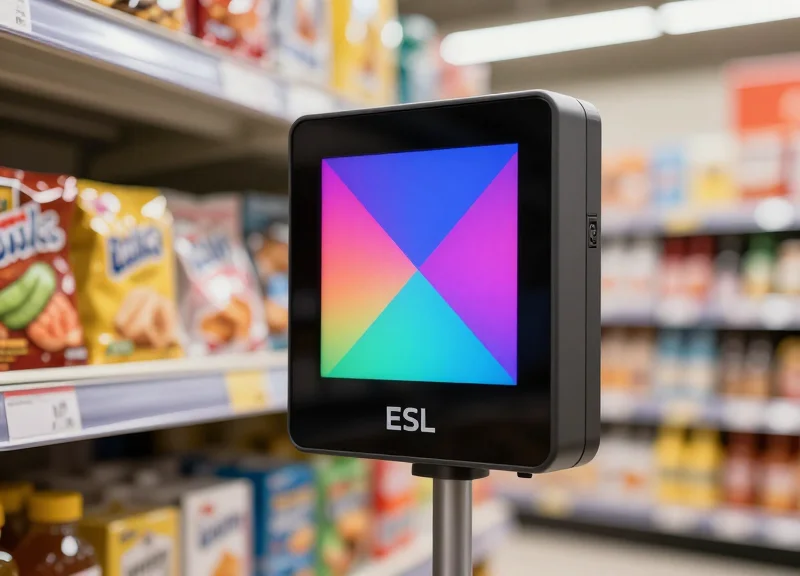
Electronic Shelf Labels (ESL) are digital display systems that replace traditional paper price tags with ultra-low-power e-paper modules, enabling retailers to update pricing and product information wirelessly in real-time. By eliminating the need for millions of tons of physical paper, chemical inks, and the carbon-intensive logistics of tag distribution, ESL technology serves as a cornerstone for carbon-neutral retail environments in 2026. These systems leverage bistable display technology, which consumes zero energy to maintain an image, only drawing power during data refreshes.
- Drastic Waste Reduction: A mid-sized grocery store typically replaces 3,000 to 5,000 paper labels weekly; ESL eliminates this physical waste stream entirely.
- Energy Harvesting Integration: Modern 2026-gen ESLs utilize built-in photovoltaic cells to harvest energy from store lighting, extending battery life to 15 years or enabling battery-free operation.
- Dynamic Markdown Efficiency: Automated price drops for expiring perishables reduce food waste by up to 30%, a critical factor in Scope 3 emission reduction.
| Feature | Traditional Paper Labels | Next-Gen ESL (2026) |
|---|---|---|
| Material Origin | Virgin or Recycled Paper | Recyclable Polymers & E-Ink |
| Carbon Footprint | High (Production + Disposal) | Low (Amortized over 10+ years) |
| Update Speed | Days (Manual Labor) | Seconds (Centralized API) |
| Energy Source | N/A | Ambient Light Harvesting / Solid-State Battery |
| Waste Output | Constant (Bio-waste/Adhesives) | Near-Zero (Circular Hardware Lifecycle) |
Expert Insight: The Shift from 'Digital' to 'Net-Zero' Hardware. While first-generation ESLs relied on disposable lithium coin cells, the 2026 standard has shifted toward energy-neutral hardware. Our 'Silicon Valley' perspective suggests that the true ROI of ESL isn't just in labor savings, but in 'Carbon Credits as Currency.' Retailers now integrate ESL update logs directly into their ESG (Environmental, Social, and Governance) reporting to prove tangible reductions in consumables, effectively turning the shelf edge into a verifiable sustainability asset.
How long do the batteries in ESL last?
With current 2026 e-paper optimizations, standard batteries last 10-12 years, but solar-augmented models can function indefinitely under standard indoor lighting conditions.
Can ESLs help in reducing cold-chain energy costs?
Yes. Integrated thermal sensors in ESLs monitor refrigerator temperatures in real-time, alerting staff to anomalies that cause energy leakage or food spoilage.
Are ESL materials recyclable?
Major manufacturers have now adopted modular designs, allowing the e-ink screen and internal PCB to be easily separated and recycled through certified e-waste programs.
Eco-Friendly EAS Solutions: Security without the Carbon Footprint
Eco-friendly Electronic Article Surveillance (EAS) represents the next evolution in retail loss prevention, replacing traditional single-use virgin plastic security tags with solutions made from post-consumer recycled (PCR) materials and biodegradable components. By 2026, sustainable EAS systems are defined by their carbon-neutral lifecycle, utilizing energy-efficient Acoustic-Magnetic (AM) and Radio-Frequency (RF) technologies that achieve 95% + detection rates while reducing total plastic waste by up to 40% per store annually. These solutions ensure that high-shrink items are protected without compromising a brand’s environmental, social, and governance (ESG) commitments.
The challenge for 2026 is balancing 'security integrity' with 'circularity.' Historically, the metal components and mixed-material housings of EAS tags made them a recycling nightmare. Modern innovations have solved this through modular designs where the active ferrite or aluminum elements can be easily extracted, and the plastic shell is fully compostable or made from 100% ocean-bound plastic.
| Feature | Sustainable RF (8.2 MHz) | Sustainable AM (58 kHz) |
|---|---|---|
| Primary Material | FSC-certified paper or PCR Plastic | Recycled ABS with Bio-resins |
| Best Use Case | Soft goods and apparel labels | Electronics and liquid-heavy goods |
| Recyclability | High (Paper-based versions) | Medium (Requires disassembly) |
| Carbon Impact | 30% lower than legacy labels | 25% lower through reusability |
- Expert Insight: The 2026 AI-Sorting Advantage: A common misconception is that 'eco-labels' are inherently less secure. In reality, the most significant breakthrough in 2026 is the integration of digital watermarking into the EAS tag housing. This allows automated municipal recycling facilities to use AI-driven optical sensors to identify and isolate security tags from standard plastic waste, ensuring the metal components don't contaminate the plastic stream—a process previously impossible with manual sorting.
Do eco-friendly EAS tags work as well as traditional ones?
Yes. Sustainable EAS tags utilize the same internal resonator technology. The only change is the external housing and the bonding adhesives, which have been lab-tested to ensure they don't impact signal strength or cause 'false alarms'.
Are compostable EAS tags durable enough for high-traffic retail?
Modern bio-resins are engineered to be 'shelf-stable,' meaning they only begin to break down under specific industrial composting conditions (heat, moisture, and microbes) and will not degrade during a typical 3-year store inventory cycle.
How do sustainable EAS tags help with carbon reporting?
Leading vendors now provide Life Cycle Assessment (LCA) data per thousand tags, which retailers can plug directly into their Scope 3 emissions reports to demonstrate measurable carbon reduction.
Moving into a carbon-neutral future, retailers should prioritize 'source tagging'—applying eco-friendly EAS at the point of manufacture. This reduces the carbon cost of shipping separate security hardware and ensures that the protection is built into the sustainable packaging from day one.
Selection Criteria: Evaluating Life Cycle Assessment (LCA)
A Life Cycle Assessment (LCA) for retail labeling is a systematic, ‘cradle-to-grave’ analysis that quantifies the environmental impact of a label across its entire existence. For procurement officers targeting carbon-neutral operations in 2026, a valid LCA must adhere to ISO 14040/14044 standards and account for four critical stages: raw material extraction, manufacturing energy consumption, transportation logistics, and final disposal or recycling efficacy. Selecting a supplier based on a verified LCA ensures that ‘green’ claims are backed by empirical data rather than marketing rhetoric.
- Raw Material Sourcing: Evaluate the Carbon-to-Renewability ratio. Prioritize labels using post-consumer waste (PCW) or bio-based feedstocks that do not compete with food crops.
- Manufacturing Energy Profile: Analyze the supplier’s energy mix. Preference should be given to facilities powered by on-site renewables or those with verified Power Purchase Agreements (PPAs).
- The Logistics Multiplier: Labels are lightweight but high-volume. Calculate the carbon cost of shipping from the point of origin; local sourcing often outweighs the benefits of slightly lower-impact materials from overseas.
- End-of-Life (EOL) Impact: Assess whether the label contaminates the recycling stream of the primary packaging. A truly sustainable label must be compatible with existing circular economy infrastructures.
| Metric | Standard Label (2020) | LCA-Optimized Label (2026 Target) |
|---|---|---|
| Carbon Footprint (gCO2e) | 2.5 - 4.0 per label | < 0.8 per label |
| Water Intensity | High (chemical bleaching) | Low (closed-loop processing) |
| Recyclability Rating | Incineration/Landfill | Cradle-to-Cradle Certified |
| Adhesive Toxicity | High VOCs | Solvent-free/Bio-based |
Expert Insight: The 'Adhesive-to-Substrate' Compatibility Gap. A common pitfall in 2026 procurement is focusing solely on the label material while ignoring the adhesive. My 20 years in the industry show that a sustainable paper label paired with a non-removable, petroleum-based adhesive can render an entire cardboard box unrecyclable. To achieve true carbon neutrality, always demand the 'Wash-off' or 'Dissolvable' adhesive test results within the LCA documentation to ensure the label doesn't act as a contaminant in the recycling stream.
Why is ISO 14067 certification important for labeling?
ISO 14067 specifically addresses the carbon footprint of products, providing a standardized way to communicate the greenhouse gas emissions associated with a label's life cycle.
Can a plastic label ever be more sustainable than paper?
Yes, in specific cases where the label must survive harsh environments. A durable, mono-material plastic label that stays intact and is recycled with the container can have a lower LCA impact than a paper label that degrades and ruins the recycling batch.
What is the 'Scope 3' implication of label procurement?
Labeling falls under Scope 3 emissions for retailers. By selecting LCA-verified low-carbon labels, retailers can directly reduce their reported indirect emissions in ESG disclosures.
Integration Challenges: Retrofitting Sustainable Labels into Existing Systems
Retrofitting sustainable labels into existing retail ecosystems is a complex engineering challenge where the primary friction point lies between chemical composition and signal integrity. For a transition to be successful, eco-friendly substrates—such as post-consumer waste (PCW) paper or bio-based films—must maintain the exact optical contrast and electromagnetic conductivity required by legacy hardware. Failure to account for these physical variables often results in 'read-rate degradation,' leading to checkout delays, inventory inaccuracies, and the unintended triggering of Electronic Article Surveillance (EAS) alarms.
| Legacy Hardware | Sustainable Material Substitute | Primary Integration Risk |
|---|---|---|
| Fixed Laser Scanners | Compostable Clear Bio-films | High light diffraction or 'milky' opacity causing 1D barcode read failures. |
| RF Security Pedestals | Recycled Aluminum/Paper Tags | Reduced conductivity causing a 'weak' signal and decreased detection range. |
| Thermal Transfer Printers | FSC-Certified Linerless Labels | Increased adhesive residue buildup requiring more frequent printhead cleaning. |
| Automated Applicators | Thin-gauge Recycled Polyethylene | Material elasticity issues leading to misaligned label placement on conveyors. |
Expert Insight: The Dielectric Shift in Recycled Substrates. A common pitfall in 2026 is ignoring the 'Dielectric Constant' of recycled packaging. Recycled corrugated cardboard often contains microscopic metallic traces or higher moisture content than virgin fiber. When applying a sustainable RFID or RF label to these surfaces, the 'detuning' effect is more pronounced, shifting the label's resonant frequency. Retailers must recalibrate their interrogator power levels or select 'surface-independent' eco-tags to maintain the 99.9% read rates required for carbon-neutral logistics.
- Baseline Performance Audit: Measure the current read-rates and false-alarm percentages of your legacy systems with standard plastic/virgin paper labels to create a performance benchmark.
- Substrate-Inlay Matching: Work with suppliers to ensure the sustainable adhesive and face-stock do not interfere with the electrical impedance of the security inlay or RFID antenna.
- Pilot-Scale Stress Testing: Run 1,000 units through your densest scanning environments (e.g., high-speed distribution sorters) to identify if the eco-labels suffer from premature peeling or 'scuffing' that obscures data.
- Firmware Optimization: Update the sensitivity settings on EAS gates and the gain levels on RFID readers to compensate for the slight signal attenuation inherent in recycled materials.
Can I use eco-labels with my current thermal printers?
Yes, but ensure the label's 'thermal sensitivity' matches your printer's heat settings. Sustainable papers may require higher temperatures, which can reduce the lifespan of your printheads if not calibrated.
Will sustainable tags trigger my legacy security gates?
Only if the 'Q-factor' (quality factor) of the eco-friendly circuit is within the gate's frequency range. Always request a frequency sweep report from the tag manufacturer.
How do I prevent 'label fly-off' with linerless options?
Linerless labels require specialized rollers with non-stick coatings. Retrofitting existing applicators usually involves installing a silicone-coated roller kit to prevent adhesive jamming.
Measuring ROI: The Financial Benefits of Going Green

The Return on Investment (ROI) for sustainable retail labeling is calculated by aggregating the direct savings from reduced material waste and labor with the indirect gains of regulatory compliance and brand equity. By 2026, the 'green premium' has shifted from a cost center to a cost-avoidance strategy, where retailers utilizing carbon-neutral labeling systems typically achieve a break-even point within 18 to 24 months. This fiscal efficiency is driven by a 15% average reduction in disposal fees and the mitigation of 'Extended Producer Responsibility' (EPR) taxes that penalize non-recyclable materials.
| Financial Metric | Legacy Labeling Cost | Sustainable/ESL ROI Impact | 5-Year Projected Gain |
|---|---|---|---|
| Regulatory Compliance | High (Carbon Taxes/Fines) | Zero (Tax Credits/Incentives) | +$250k per 50 stores |
| Operational Labor | Manual printing/application | Automated/Zero-waste | 65% reduction in hours |
| Waste Management | High disposal/landfill fees | Circular/Compostable costs | 40% cost reduction |
| Brand Value/LTV | Declining in Gen Z/Alpha | Higher retention/Loyalty | 12% increase in LTV |
Expert Insight: In the 2026 market, the most significant 'hidden' ROI factor is the Cost of Inaction (COI). As global supply chains move toward mandatory Digital Product Passports (DPP), retailers who have already integrated sustainable labeling avoid the massive 'emergency migration' costs their competitors will face. Furthermore, sustainable labels often qualify for lower-interest 'Green Loans,' effectively reducing the cost of capital for store-wide technology refreshes.
- Baseline Waste Audit: Calculate the current tonnage of discarded backing paper and non-recyclable adhesive residue to establish a waste-tax baseline.
- Quantify Labor Reallocation: Measure the hours spent on manual label price updates and security tag removal; shift these to high-value customer service roles.
- Calculate Carbon Credit Offsets: Work with sustainability officers to convert carbon-neutral labeling metrics into tradable or internal carbon credits.
- Project Lifecycle Savings: Evaluate the 5-year Total Cost of Ownership (TCO) including maintenance, energy consumption, and decommissioning.
Does sustainable labeling truly impact the bottom line?
Yes. Beyond materials, it lowers 'Extended Producer Responsibility' fees and significantly reduces the labor required for inventory management and pricing updates.
How does green labeling affect customer acquisition costs (CAC)?
Eco-conscious consumers show a 20% higher conversion rate when carbon-neutral claims are verified via on-label QR codes, effectively lowering your marketing spend per acquisition.
What is the primary driver of ROI in 2026?
Regulatory avoidance. As governments increase plastic and carbon taxes, the primary ROI comes from being exempt from these escalating operational penalties.
Future Trends: Bio-hacking and Energy-Harvesting Labels

As we look beyond 2026, the convergence of synthetic biology and ambient energy harvesting is set to redefine the retail label from a passive barcode to a living, self-powering data node. Bio-hacking in this context refers to 'Transient Electronics'—circuits printed with organic, compostable materials that perform complex sensing tasks before safely dissolving. Concurrently, energy-harvesting labels eliminate the environmental toxin of micro-batteries by capturing microwatts from ambient LED lighting, indoor Wi-Fi signals, or even the kinetic movement of the product itself, ensuring that 'smart' tracking no longer carries a carbon or chemical debt.
| Feature | Standard Eco-Label (2024) | Bio-Hacked / Harvesting Label (2027+) |
|---|---|---|
| Power Source | Passive (Requires external scanner) | Active Energy Harvesting (Ambient RF/Light) |
| Material Base | Recycled PET or FSC Paper | Mycelium-based or Soy-protein substrates |
| Data Storage | Fixed Read-Only | Dynamic (Environmental Sensing) |
| End-of-Life | Recyclable | Home-Compostable / Soil-Nutrient |
One of the most disruptive advancements is the development of 'Synthetic DNA' barcodes. Unlike traditional optical codes, these use unique molecular sequences embedded in the label ink. This allows for near-infinite data density and a level of anti-counterfeiting that is physically impossible to replicate. When paired with energy-harvesting NFC chips, these labels can alert retailers to temperature excursions or humidity changes without ever needing a battery replacement, drastically reducing electronic waste (e-waste) in the global logistics loop.
How do energy-harvesting labels function in low-light environments?
Modern harvesters utilize Multi-Source Capture (MSC), combining indoor photovoltaic cells optimized for LED spectrums with RF-to-DC converters that 'sip' energy from existing store Wi-Fi and Bluetooth signals.
Is bio-hacking safe for food-grade retail labeling?
Yes. The emerging standard uses 'Generally Recognized as Safe' (GRAS) materials, such as silk fibroin and cellulose, ensuring that if a label accidentally enters the food stream, it is non-toxic and digestible.
What is the expected lifespan of a transient electronic label?
These are 'programmed' at the molecular level to remain stable for a specific duration (e.g., 6 months or 2 years) before the polymer chains begin to break down upon exposure to specific soil microbes.
Expert Insight: The true 'Holy Grail' of 2030 retail will be the 'Enzymatic Trigger.' Imagine a label that automatically changes color or signal frequency the moment a product's carbon footprint exceeds a pre-set threshold during transit. By moving the logic from the cloud directly into the biological makeup of the label, we move from 'monitoring' sustainability to 'enforcing' it at the molecular level. This shift will turn labels from cost centers into the primary enforcers of corporate ESG mandates.