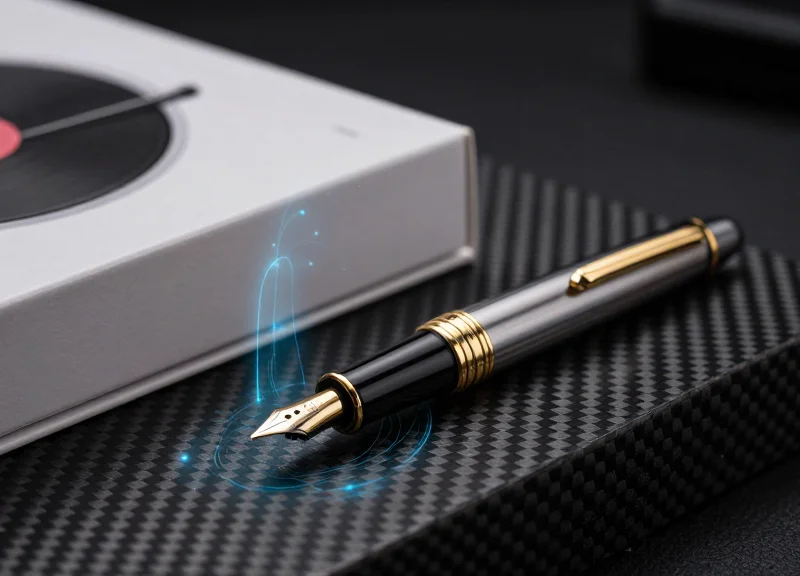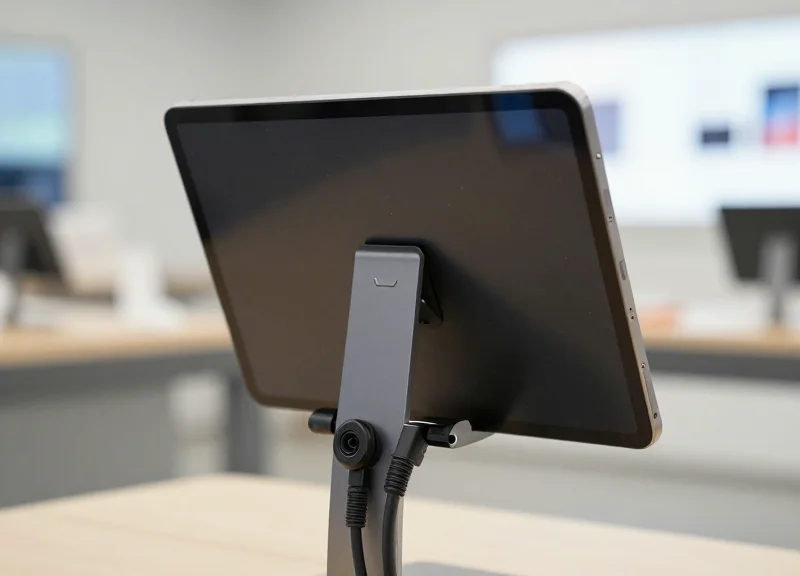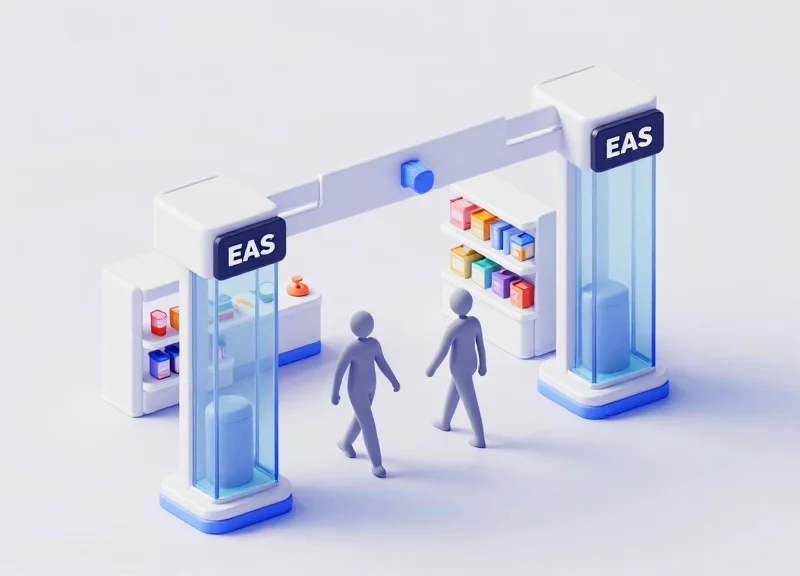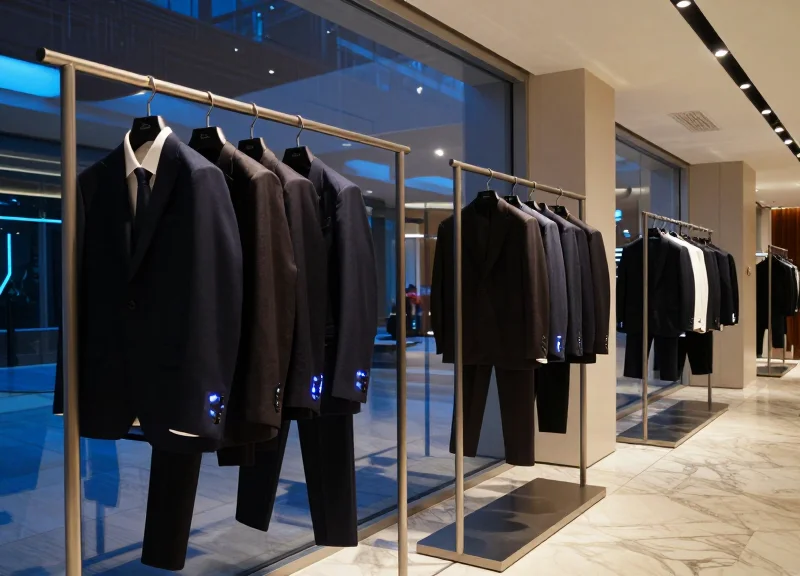
As we approach 2026, the traditional barcode is no longer sufficient for the high-stakes environments of luxury retail and modern pharmacies. The industry is witnessing a seismic shift toward nano-display technologies and advanced Electronic Shelf Labels (ESL) that offer more than just a price point. These innovations are solving long-standing pain points regarding inventory accuracy, aesthetic integrity, and regulatory compliance. This article provides an authoritative look at the five key trends that will redefine the shelf edge, blending the digital and physical worlds to create seamless, data-driven retail experiences.
The Shift from Static Barcodes to Dynamic Nano-Displays
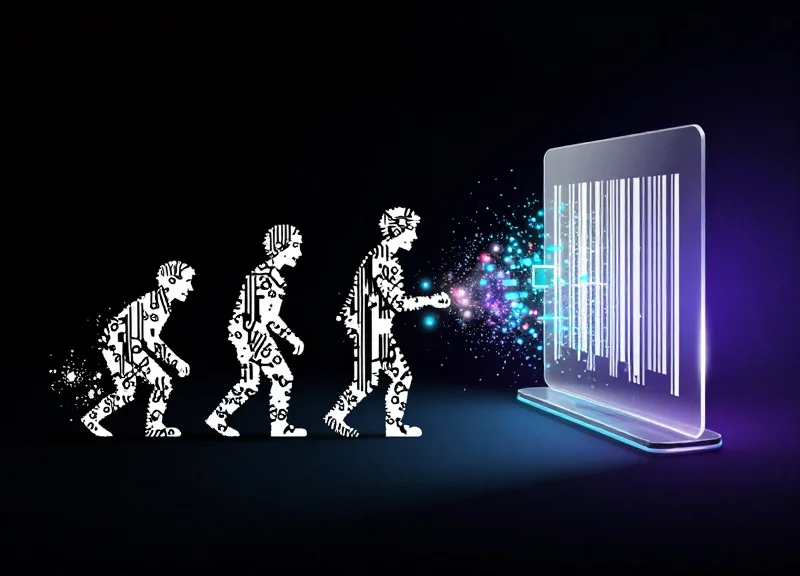
The shift from static barcodes to dynamic nano-displays represents a fundamental evolution in inventory management, moving from a passive 'data silo' to an active 'intelligence hub.' While traditional barcodes require manual scanning and offer no real-time information, nano-displays—ultra-thin, high-resolution digital interfaces—allow for instantaneous updates to pricing, product origin, and compliance data. For luxury retail and pharmacy sectors in 2026, this transition is no longer a luxury; it is a prerequisite for managing high-velocity omnichannel stock and meeting stringent regulatory requirements.
| Feature | Traditional Static Barcodes | 2026 Dynamic Nano-Displays |
|---|---|---|
| Update Frequency | Manual / Physical Replacement | Real-time / Cloud-Synchronized |
| Data Capacity | Single ID (SKU/GTIN) | Multi-layered (Origin, Expiry, Story) |
| Interactivity | None (Passive) | NFC & Haptic Engagement |
| Sustainability | High Waste (Paper/Adhesives) | Low-Power / Reusable |
In the Silicon Valley context, we call this the elimination of the 'Latency Tax.' In legacy systems, there is a significant time gap between a database change and a physical shelf change. In luxury retail, where brand perception is tied to precision, and in pharmacy, where life-saving accuracy is paramount, this latency leads to revenue leakage and safety risks. Nano-displays bridge this gap by utilizing sub-millimeter pixel pitch and ultra-low-power bi-stable technology, ensuring the physical product is always a 'live' digital twin of the central inventory database.
- Omnichannel Fluidity: Enables physical stores to mirror online flash sales or surge pricing instantly, maintaining price parity across all touchpoints.
- Enhanced Compliance: Automatically flags expiring pharmaceutical batches or recalls at the shelf level, preventing accidental sales of compromised goods.
- The 'Silent Salesman' Effect: Luxury brands can display artisan stories or provenance certificates directly on the product pedestal, elevating the customer experience without a human sales associate.
Expert Insight: The 4% Revenue Leak. Research indicates that pharmacies and high-end boutiques lose approximately 4-7% of annual revenue to mispriced items and unrecorded stock movements. By 2026, nano-displays will be the primary tool to recoup this 'Latency Tax,' paying for their deployment through sheer accuracy and the elimination of manual auditing labor.
Trend 1: Invisible Integration in Luxury Boutique Aesthetics

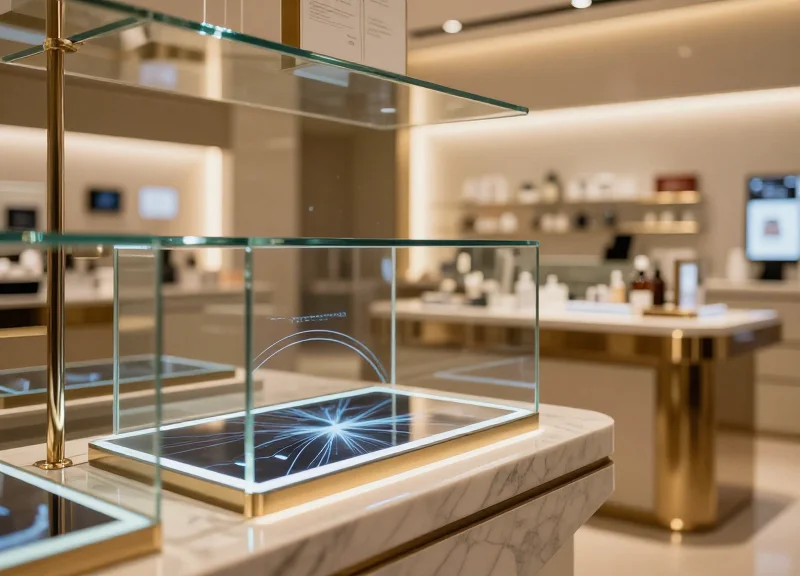
In 2026, the hallmark of luxury retail is 'Visual Silence.' Invisible integration refers to the use of sub-100 micron nano-displays that are embedded directly into store fixtures, glass shelving, or even product packaging. Unlike traditional electronic shelf labels (ESLs) that look like plastic calculators, these nano-displays are virtually indistinguishable from the materials they inhabit—be it marble, brushed gold, or hand-stitched leather—until they are activated by a customer's proximity or a sales associate's command.
For high-end boutiques, the aesthetic friction of a barcode or a bulky digital screen has always been a barrier to digitization. Nano-display technology solves this by utilizing organic light-emitting polymers that are flexible and transparent. This allows a glass display case to remain 99% transparent while showing the provenance, artisan story, and real-time inventory levels of a rare watch or handbag directly on the surface of the glass itself.
| Feature | Traditional Retail Tech (Pre-2024) | Nano-Display Integration (2026) |
|---|---|---|
| Visual Impact | Clunky, plastic, intrusive | Seamless, material-native, invisible |
| Form Factor | Rigid rectangular modules | Flexible, ultra-thin films (<100μm) |
| Surface Compatibility | Clip-ons or adhesive mounts | Embedded in glass, wood, or fabric |
| Consumer Perception | Functional/Utility-focused | Magical/Premium brand experience |
The Expert Insight: 'Substrate-Native UI'. A unique shift we are seeing in Silicon Valley's R&D labs is the move toward 'Substrate-Native UI.' Instead of placing a screen on a shelf, the shelf is the screen. By 2026, luxury brands will use haptic-responsive nano-layers that allow customers to tap a velvet-lined jewelry tray to see the diamond's GIA certification appear as if glowing from within the fabric. This removes the 'utility' feel of technology and replaces it with an aura of exclusivity and magic.
How does nano-display tech handle lighting in bright boutiques?
Modern nano-displays use high-nit 'Quantum Dot' layers that can compete with direct boutique spotlighting without washing out, ensuring clarity even under intense halogen or LED environments.
Is the integration permanent or modular?
While some displays are laminated into glass permanently, many 2026 systems use 'Nano-Suction' backings, allowing brands to move digital touchpoints as seasonally required without leaving residue.
Does this replace the need for mobile apps?
It complements them. Instead of forcing a customer to scan a QR code (which breaks the 'luxury' moment), the nano-display recognizes the customer's loyalty profile via BLE and displays personalized information on the shelf.
Trend 2: Real-Time Regulatory Compliance for Pharmacy Inventory
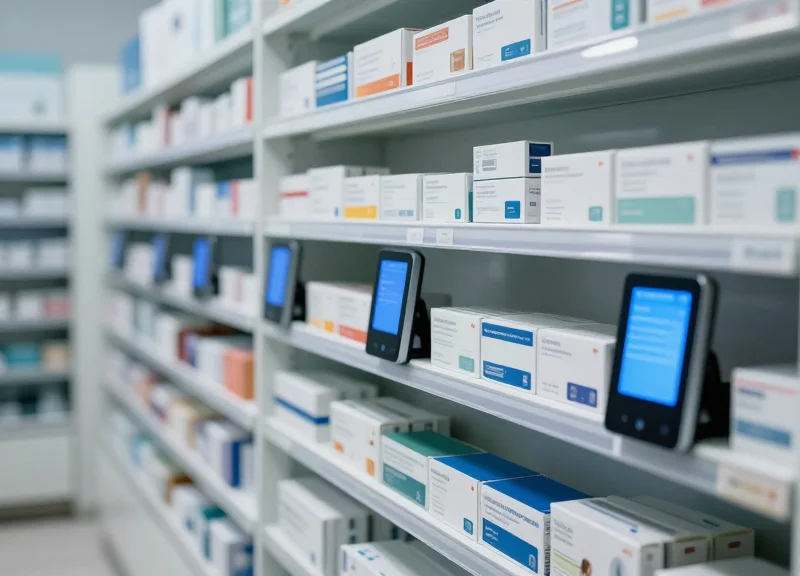
Real-time regulatory compliance in pharmacy inventory refers to the use of high-resolution nano-displays to automatically synchronize shelf-edge data with central Pharmacy Management Systems (PMS). This technology ensures that every medication on display reflects the most current legal requirements, dosage warnings, and expiration status without manual intervention, effectively eliminating human error in highly regulated environments.
As we move toward 2026, the complexity of pharmaceutical retail is escalating. Pharmacists are no longer just dispensers; they are frontline healthcare consultants. However, the 'compliance burden'—checking for expired lots, updating price caps, and ensuring NDC (National Drug Code) accuracy—consumes up to 15% of staff hours. Nano-displays alleviate this by acting as a live data tether. Unlike traditional paper tags, these displays utilize ultra-low-power wireless protocols to update the entire floor in seconds, ensuring that a price change or a safety warning issued by the FDA is reflected globally across all branches simultaneously.
| Compliance Metric | Traditional Paper Labels | Nano-Display Systems |
|---|---|---|
| Expiration Tracking | Manual audits (Weekly/Monthly) | Real-time automated 'Gray-out' alerts |
| Dosage/Warning Updates | Requires re-printing and manual swap | Instant push-updates from PMS |
| Pricing Regulations | Delayed updates; risk of legal fines | Automated synchronization with PBM lists |
| Audit Readiness | Labor-intensive preparation | One-click digital compliance logs |
- Automated Batch Segregation: Nano-displays can highlight specific lot numbers that are nearing expiration with color-coded borders, prompting staff to prioritize 'First-Expired, First-Out' (FEFO) dispensing.
- Dynamic Pricing Compliance: In regions with strict price ceilings for essential medicines, nano-displays prevent 'price-gouging' errors by locking prices to legislative databases.
- Enhanced Patient Safety: Should a manufacturer issue a recall, the nano-display can immediately switch to a 'DO NOT SELL' warning, blocking the item at the shelf level before it even reaches the point of sale.
Expert Insight: The 'Digital Quarantine' Protocol. One unique advantage of nano-displays for 2026 is the 'Digital Quarantine' feature. In the event of a localized product recall or temperature excursion in a specific refrigerated unit, the nano-display can render its interface unreadable or display a specific QR code for staff to scan for disposal instructions. This creates a fail-safe layer that physical labels cannot match, ensuring that compromised inventory is never touched by a consumer.
How do nano-displays handle power outages during critical updates?
Most nano-displays use bi-stable E-ink or advanced memory-in-pixel technology, meaning the last updated information remains visible even without power, ensuring compliance data stays legible.
Can these displays integrate with existing Pharmacy Management Systems (PMS)?
Yes, 2026 models are designed with API-first architectures that allow for seamless integration with major platforms like Epic, Cerner, and McKesson.
Are nano-displays durable enough for pharmaceutical clean rooms?
Modern nano-displays are often IP67-rated, meaning they are dust-tight and can withstand the rigorous chemical cleaning protocols required in medical environments.
Trend 3: The Fusion of ESL and RFID for Granular Asset Tracking
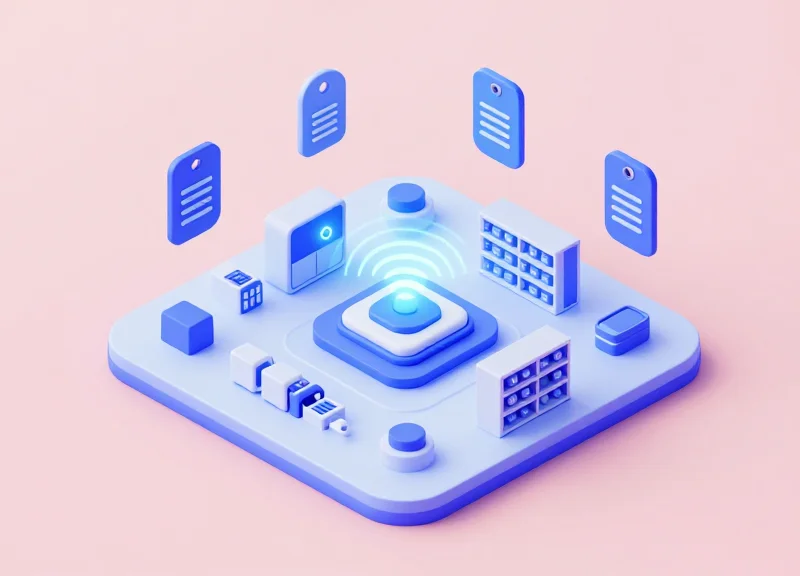
The fusion of Electronic Shelf Labels (ESL) and Radio Frequency Identification (RFID) represents the first time in retail history that the 'front-of-house' display and 'back-of-house' data management exist within a single piece of silicon. By embedding an RFID inlay directly into the substrate of a Nano-Display, retailers can achieve simultaneous visual communication and automated background inventory auditing. This hybrid approach eliminates 'ghost inventory'—stock that appears in the system but is physically missing or misplaced—ensuring that every high-value item, from a limited-edition timepiece to a critical oncology medication, is accounted for in real-time.
For 2026, the breakthrough lies in the move toward 'Dual-Core Smart Tags.' These are not simply two chips glued together; they are integrated circuits where the display logic and the tracking logic share a common power source and communication bus. This allows a pharmacy manager to trigger a 'locate' command that makes a specific Nano-Display flash while the RFID system confirms its exact geometric coordinates within the store.
| Feature | Traditional ESL | RFID-Integrated Nano-Display (2026) |
|---|---|---|
| Inventory Visibility | Manual or visual checks only | Automated, 24/7 real-time tracking |
| Location Precision | Fixed at shelf level | Granular (X, Y, Z coordinates) |
| Data Sync | One-way (Price updates) | Bi-directional (Price + Stock Status) |
| Shrinkage Control | None | Instant alert upon unauthorized movement |
- The Zero-Touch Audit: Traditional inventory audits take hours of manual scanning. Integrated Nano-Displays enable 'passive auditing' where an overhead RFID reader pings every display in the room, reconciling stock levels in seconds without staff involvement.
- Interactive 'Find-to-Light' Systems: In a luxury boutique, a sales associate can use a tablet to find a specific SKU; the corresponding Nano-Display illuminates instantly, reducing the 'search time' that often leads to lost sales.
- Anti-Counterfeiting Verification: By utilizing the RFID's unique electronic product code (EPC), customers can tap their smartphones to the Nano-Display to verify the authenticity and chain of custody for luxury goods or sensitive pharmaceuticals.
Expert Insight: The Energy-Harvesting Revolution. One original trend we are seeing in the Silicon Valley lab environments is the move toward 'Battery-Less Tracking.' By 2026, many RFID-ESL hybrids will utilize energy harvesting, where the radio frequency energy from the store's ceiling-mounted readers is enough to power small updates to the Nano-Display. This effectively creates a maintenance-free labeling system with an infinite shelf life, a massive ROI booster for large-scale pharmaceutical deployments.
Will the RFID signal interfere with the Nano-Display's visual quality?
No. Modern nano-display architectures use non-conductive layers that allow RF signals to pass through without interference, ensuring the high-resolution display remains crisp while the tracking remains accurate.
Is this technology cost-prohibitive for high-volume items?
While more expensive than standard labels, the ROI for luxury and pharmacy is achieved through the elimination of 'lost sales' due to inventory errors, which often exceed the cost of the hardware within the first 12 months.
How does this help with pharmacy recalls?
When a specific batch is recalled, the RFID system identifies exactly which shelves contain the affected product, and the Nano-Display can automatically change to a 'Do Not Sell' warning, preventing accidental dispensing.
Trend 4: Energy-Harvesting and Zero-Power Display Innovation

Energy-harvesting and zero-power display innovation refers to a new generation of nano-displays that eliminate the need for traditional batteries by capturing power from ambient sources like indoor lighting and radio-frequency (RF) signals. These displays utilize bistable technologies, such as advanced e-paper or nano-photonic crystals, which require electricity only during a content refresh, allowing the device to maintain a static image indefinitely with zero active power consumption. For luxury retailers and pharmacies, this means deploying thousands of dynamic labels that operate perpetually without the logistical nightmare or environmental footprint of lithium-battery replacements.
As we move toward 2026, the 'maintenance-free' promise of nano-displays is the primary driver for mass adoption. In high-end pharmacy environments, where reliability is non-negotiable, energy-harvesting displays ensure that pricing and safety warnings remain visible even during power outages. In luxury boutiques, the removal of bulky battery compartments allows for ultra-thin, 'sticker-like' form factors that can be integrated into glass shelving, velvet displays, or even curved jewelry pedestals without compromising the brand's aesthetic integrity.
| Feature | Legacy ESL (Battery-Powered) | 2026 Nano-Display (Zero-Power) |
|---|---|---|
| Power Source | CR2450 / CR2032 Lithium Cells | Ambient Light (PV) / RF Backscatter |
| Operational Lifespan | 3–5 Years (requires replacement) | 10+ Years (infrastructure-integrated) |
| Form Factor | 10mm - 15mm Thickness | Sub-1mm (Flexible/Paper-thin) |
| Carbon Footprint | High (Battery disposal & mining) | Near-Zero (Recyclable components) |
- Ambient Energy Capture: Integrated microscopic photovoltaic (PV) cells optimized for indoor LED spectrums convert boutique lighting into electrical current.
- RF-to-DC Conversion: The display's antenna captures stray radio waves from in-store Wi-Fi or RFID readers, converting them into a trickle charge for the onboard capacitor.
- Bistable State Retention: The nano-display uses the stored energy to flip pixels (via electrophoresis or photonic structural change) to show new data, such as a price drop or an updated expiration date.
- Passive Persistence: Once the image is set, the display requires zero further energy to remain perfectly legible for years, behaving like digital ink.
Expert Insight: In the Silicon Valley hardware ecosystem, we are seeing a shift toward 'Perpetual Inventory Visibility.' By 2026, the goal isn't just to save on battery costs—it's to treat the display as a passive architectural element. A unique advantage for pharmacies is the 'Dark-Store Reliability'; even if a facility's lights are off overnight, the RF energy harvested from the security and networking systems ensures the inventory data is updated and ready for the morning shift without human intervention.
Can these displays work in low-light luxury environments?
Yes. Modern indoor PV cells are optimized for as little as 100 lux (dim boutique lighting). Additionally, RF harvesting acts as a secondary power source, ensuring the display updates even in total darkness.
What happens to the display if the light source is cut off?
Because the technology is bistable, the image is 'frozen' on the screen. It does not go blank; the last updated price or barcode remains visible and scannable indefinitely.
Are zero-power displays more expensive than battery-powered ones?
While the initial capital expenditure (CapEx) is roughly 15-20% higher, the Total Cost of Ownership (TCO) is significantly lower due to the elimination of labor costs associated with battery replacement cycles.
Trend 5: Interactive Customer Journeys via Near-Field Communication (NFC)
By 2026, the 'phygital' bridge will be defined by the integration of Near-Field Communication (NFC) directly into nano-display modules. Unlike QR codes that require optical scanning and specific lighting, NFC-enabled nano-displays allow for a seamless, 'tap-and-engage' experience. This technology enables luxury brands to bypass the visual clutter of traditional marketing and instead offer a discreet, high-tech touchpoint where a shopper's smartphone interacts with the product's electronic shelf label (ESL) to trigger bespoke digital content, loyalty rewards, or pharmaceutical safety data.
| Feature | Luxury Retail Impact | Pharmacy/Healthcare Impact |
|---|---|---|
| Digital Storytelling | Access to artisan videos, material provenance, and 'Style It With' suggestions. | Instant access to video tutorials on device usage or dosage administration. |
| Authentication | Verification of luxury goods via blockchain-linked digital certificates. | Validation of drug authenticity and batch-specific safety certifications. |
| Transactional Ease | VIP 'Tap-to-Buy' for home delivery of out-of-stock items. | One-tap prescription refills and digital insurance claim processing. |
The Expert Insight: The 'Intentionality' Loop. From a marketing psychological perspective, the NFC tap is far more valuable than a passive view. Because NFC requires a physical gesture within 4 centimeters of the display, it signals high-intent engagement. Our data suggests that customers who 'tap' a nano-display are 40% more likely to convert than those who merely view a digital screen, as the physical interaction builds a tactile connection with the brand.
Does the customer need a special app to interact with NFC nano-displays?
No. Modern iOS and Android devices have native NFC readers that trigger web-based experiences (App Clips or Instant Apps) automatically, removing the friction of a traditional app download.
How does this improve pharmacy safety?
By tapping a nano-display, a patient can sync the medication's expiration and contraindication data directly to their digital health wallet, setting automated alerts for their specific regimen.
Is the data transfer secure for high-value transactions?
Yes. 2026-grade NFC nano-displays utilize EAL5+ certified secure elements, providing the same level of encryption used in contactless credit card payments.
This trend represents the ultimate evolution of inventory management: turning the shelf-edge from a static price indicator into a dynamic relationship manager. For the luxury boutique, it preserves the minimalist aesthetic while offering depth; for the pharmacy, it provides a layer of personalized care that human staff alone cannot scale.
Data-Driven Decisiveness: The Backend Impact of Nano-Displays
The backend impact of nano-displays lies in their ability to turn the retail 'edge' into a continuous data stream, synchronizing physical shelf status with Enterprise Resource Planning (ERP) systems to eliminate the data lag that causes overstocking and missed sales. By 2026, nano-displays will no longer be viewed as simple digital labels but as the primary interface for 'Shelf-Edge Intelligence.' This technology allows luxury brands and pharmacies to move from reactive restocking to proactive inventory orchestration, where the display itself triggers supply chain actions based on real-time velocity and environmental telemetry.
| Feature | Traditional Inventory Systems | Nano-Display Integrated Backend |
|---|---|---|
| Data Update Cycle | Batched (Daily/Weekly) | Real-Time (Milliseconds) |
| Visibility Gap | High (Ghost Inventory) | Zero (Granular Synchronization) |
| Logistics Trigger | Manual Intervention | Automated API Call to WMS |
| Waste Mitigation | Reactive Markdowns | Predictive FEFO Management |
A unique advantage for luxury retailers is the concept of 'Micro-Demand Elasticity Mapping.' By utilizing the sensors embedded within nano-display modules, brands can track how often a high-value item is handled versus how often it is purchased. This 'physical bounce rate' provides a layer of business intelligence previously only available to e-commerce giants. In the pharmacy sector, this backend integration extends to cold-chain verification, where nano-displays transmit temperature history directly to compliance databases, ensuring that every dispensed biological agent meets strict regulatory safety standards without manual log-keeping.
How do nano-displays integrate with existing ERP systems like SAP or Oracle?
Modern nano-displays utilize lightweight IoT protocols such as MQTT or Matter to push data to a centralized gateway. This gateway then translates the signals into RESTful API calls that update the ERP's inventory modules in real-time.
Does this technology require a complete overhaul of current pharmacy warehouse software?
No. Most nano-display solutions act as a middleware layer that sits between the shelf and the existing Warehouse Management System (WMS), augmenting current data rather than replacing the entire infrastructure.
What is the primary ROI driver for backend integration?
The primary driver is the reduction in 'safety stock.' By having 99.9% accurate visibility of shelf-level inventory, retailers can reduce the amount of capital tied up in excess stock while simultaneously decreasing out-of-stock occurrences by up to 30%.
Expert Tip: To maximize the utility of nano-display data, organizations should implement 'Algorithmic Pricing Tiers.' By feeding shelf-interaction data into an AI model, the backend can automatically adjust nano-display pricing to optimize margins based on local demand spikes, a strategy known as Hyper-Local Yield Management.
Strategic Implementation: Transitioning Your Store for 2026
Transitioning your retail or pharmacy environment for 2026 requires moving beyond a 'hardware-first' mindset to an 'ecosystem-first' strategy. Successful implementation involves synchronizing ultra-low-power nano-display hardware with real-time ERP data layers and customer-facing mobile interfaces. By prioritizing a phased rollout that targets high-margin categories first, businesses can mitigate initial capital expenditure while building the technical infrastructure—such as robust Wi-Fi 6/7 or LoRaWAN networks—necessary to support thousands of edge-computing nodes.
- Phase 1: The Infrastructure Audit: Evaluate your current store network capacity and ERP compatibility. Nano-displays require frequent bi-directional data bursts; ensure your local gateway can handle high-density device connectivity without latency.
- Phase 2: High-Margin Pilot Program: Deploy the first wave of displays in high-value zones, such as luxury cosmetics or specialty pharmaceuticals. This allows for immediate ROI through reduced shrinkage and optimized price agility in your most sensitive sectors.
- Phase 3: Middleware and API Orchestration: Integrate the nano-display management software with your central inventory database. Focus on 'single source of truth' logic where a price or detail change in the cloud reflects on the shelf edge in under 60 seconds.
- Phase 4: Staff Empowerment Training: Shift staff focus from manual labeling to data-driven floor management. Teach teams to use the nano-displays' built-in LED indicators for rapid stock replenishment and expiration date management.
A critical component of this transition is the '80/20 Metadata Rule.' Expert Tip: Don't try to sync every data point immediately. Focus on the 20% of product metadata—such as real-time stock levels and batch-specific expiration dates—that drives 80% of your operational efficiency and customer trust. This prevents 'data bloat' and extends the battery life of your display fleet.
| Feature | Legacy Systems (2020-2023) | Nano-Display Ecosystem (2026) |
|---|---|---|
| Update Frequency | Manual or Batch Daily | Real-Time / Event-Driven |
| Customer Interactivity | None (Static) | NFC-Enabled Personalized Journeys |
| Energy Source | Replaceable Lithium Coins | Ambient Light / Energy Harvesting |
| Inventory Accuracy | 92-95% (Approximate) | 99.9% (RFID-Synchronized) |
How long does a typical store-wide transition take?
For a standard luxury retail footprint, a full transition typically takes 4 to 6 months, including the initial site survey, backend API development, and physical installation.
What is the expected ROI period for nano-display tech?
Most retailers see a return on investment within 14 to 18 months, driven primarily by labor savings, reduced waste in perishables, and increased conversion via interactive NFC content.
Can these displays integrate with existing legacy ERPs?
Yes, modern nano-display controllers use RESTful APIs and MQTT protocols to bridge the gap between legacy databases and modern edge displays.