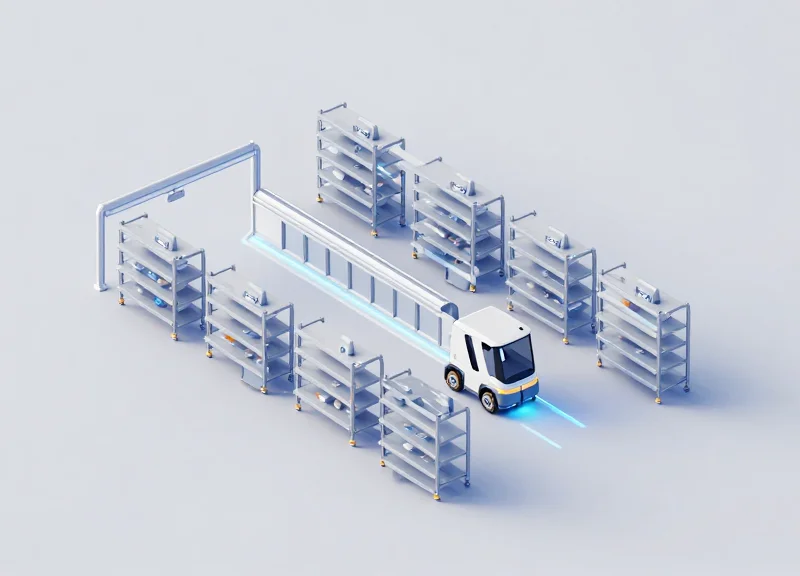
As we approach 2026, the manufacturing landscape is undergoing a radical shift toward total agility. The traditional wired pick-to-light systems that once defined efficiency are now becoming bottlenecks due to their rigid infrastructure and high maintenance costs. In this authoritative guide, we explore how Wireless Electronic Shelf Labels (ESL) are disrupting the status quo, offering unparalleled flexibility, real-time data integration, and a future-proof solution for modern smart factories looking to scale effectively.
The Evolution of Warehouse Guidance: From Wired to Wireless
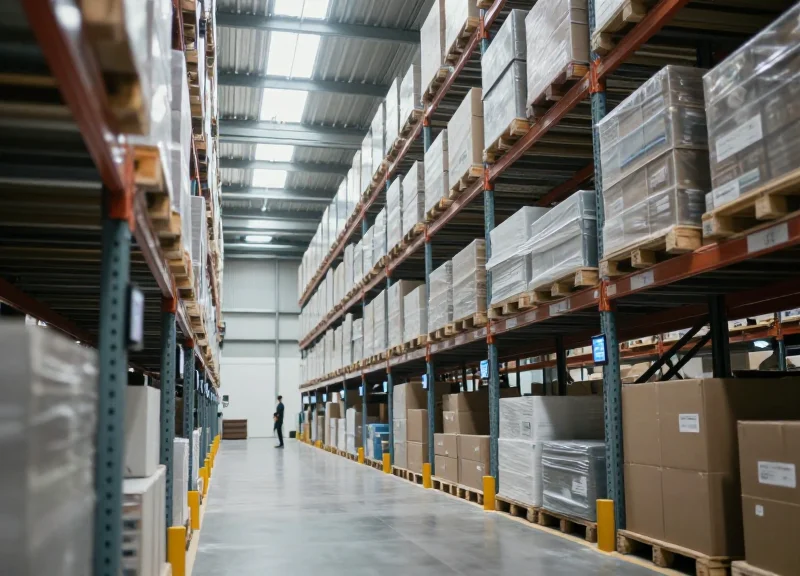
The evolution of warehouse guidance marks a fundamental shift from static, fixed-wire infrastructure to modular, software-defined environments. Originally, Wired Pick-to-Light (PTL) systems revolutionized throughput by using light indicators to guide workers; however, as we approach 2026, these systems are being rapidly replaced by Wireless Electronic Shelf Labels (ESL). This transition is driven by the need for 'Agile Factories'—environments where production lines must be reconfigured in hours, not weeks, a feat impossible with the physical constraints of traditional copper-wired installations.
| Feature | Wired Pick-to-Light (PTL) | Wireless ESL (2026 Standard) |
|---|---|---|
| Installation Time | Days/Weeks (Cable pulling & trunking) | Minutes (Clip-on mounting) |
| Scalability | Fixed capacity per controller | Virtually unlimited via Mesh/Sub-Ghz |
| Data Display | Limited (7-segment or simple LED) | Rich (E-ink, QR codes, multi-color LEDs) |
| Maintenance | High (Cable fatigue, connector issues) | Low (Battery life up to 10 years) |
| Reconfigurability | Requires hardware rework | Instant via software/API |
Why did wired systems dominate for so long?
Wired systems offered perceived stability and low latency before the maturation of industrial-grade wireless protocols like Zigbee, Sub-GHz, and Bluetooth 5.0. They were the gold standard when factory layouts were expected to remain unchanged for a decade.
What is the primary catalyst for the wireless shift in 2026?
The rise of Mass Customization. Modern factories now handle smaller batch sizes and more frequent SKU changes, requiring guidance systems that can move with the inventory without needing a licensed electrician to move a single light.
Does wireless ESL compromise on speed?
No. With the advent of ultra-low-latency wireless protocols, modern ESL systems can update pick information in under 500 milliseconds, matching the performance of wired alternatives while offering superior data density.
Expert Insight: The 'Infrastructure Debt' of Wired Systems. In my 20 years observing Silicon Valley's impact on industrial automation, the most significant hidden cost I’ve seen is 'Infrastructure Debt.' When a facility is hard-wired, the cost of moving a workstation is often higher than the value of the optimization itself. By 2026, the competitive advantage belongs to the 'Liquid Factory'—one that utilizes wireless ESLs as intelligent edge nodes. These devices don't just flash a light; they act as two-way communication portals that provide real-time feedback to the Warehouse Management System (WMS), effectively turning every shelf into a data-producing asset.
The Bottlenecks of Traditional Wired Pick-to-Light Systems
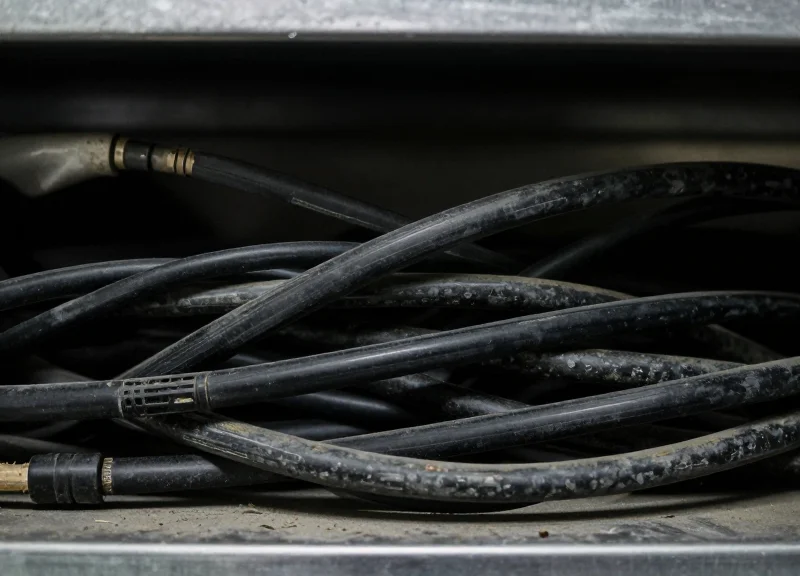
A traditional wired pick-to-light (PTL) system is a legacy material handling technology that relies on hard-wired electrical connections and data cables to power and control LED indicators at picking locations. While reliable in static environments, these systems act as a 'physical anchor' in modern facilities, creating bottlenecks such as high upfront capital expenditure for cabling, weeks of installation downtime, and a total lack of modularity that prevents manufacturers from quickly reconfiguring lines to meet shifting market demands.
| Bottleneck Category | Wired PTL Impact | Operational Consequence |
|---|---|---|
| Installation Complexity | Requires extensive conduit, drilling, and licensed electricians. | High CAPEX and 2-4 weeks of facility downtime. |
| Layout Flexibility | Fixed to racking; moving a light requires rewiring. | Agile manufacturing pivot speed reduced by 80%. |
| Scalability | Limited by physical port density on controllers. | Expensive 'all-or-nothing' expansion costs. |
| Maintenance | Daisy-chain failures can take down entire rows. | Difficult troubleshooting of physical cable breaks. |
- The 'Rigidity Tax' of Fixed Infrastructure: Every time a SKU profile changes or a production line needs to be optimized, wired systems require a physical teardown. This 'Rigidity Tax'—the hidden cost of lost production hours during reconfiguration—often exceeds the initial cost of the hardware itself within three years.
- Maintenance Blind Spots: In a wired environment, a single frayed cable or a loose connector in a daisy-chained sequence can cause intermittent signals across multiple bins. Identifying the exact point of failure without software-driven diagnostic pings is labor-intensive and error-prone.
- Cable Fatigue in Dynamic Zones: In factories utilizing mobile carts or height-adjustable workstations, cables are subject to constant mechanical stress. Over time, cable fatigue leads to intermittent connectivity issues that result in mispicks and QC failures.
Expert Insight: The 2026 'Dark Warehouse' Conflict. As we move toward more autonomous and dark warehouse configurations, the presence of overhead cabling becomes a literal barrier for AMRs (Autonomous Mobile Robots) and drones. Traditional wired PTL systems create a 'ceiling of complexity' where the overhead cable trays interfere with the sensors and navigation paths of the next generation of robotic automation. True agility requires a 'clear air' policy where data flows via sub-GHz or 2.4GHz frequencies rather than physical copper, allowing both humans and robots to move without obstruction.
Unpacking Wireless ESL Technology in a Manufacturing Context
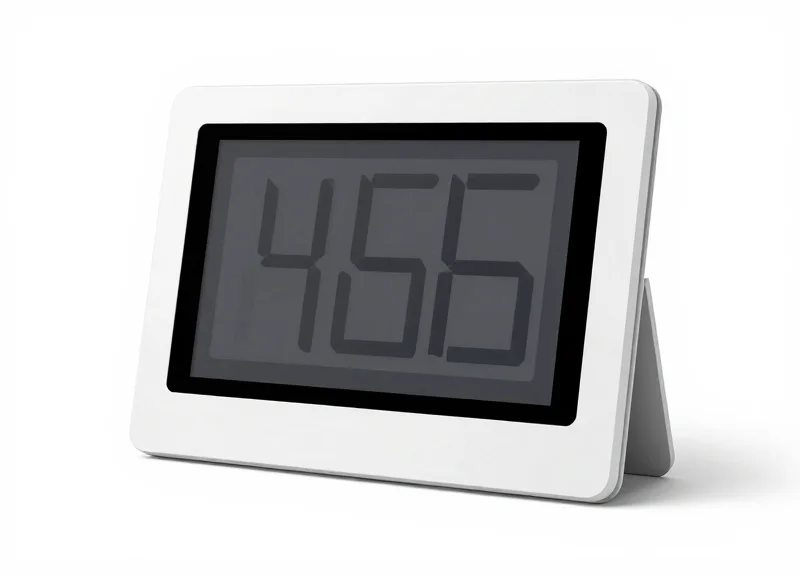
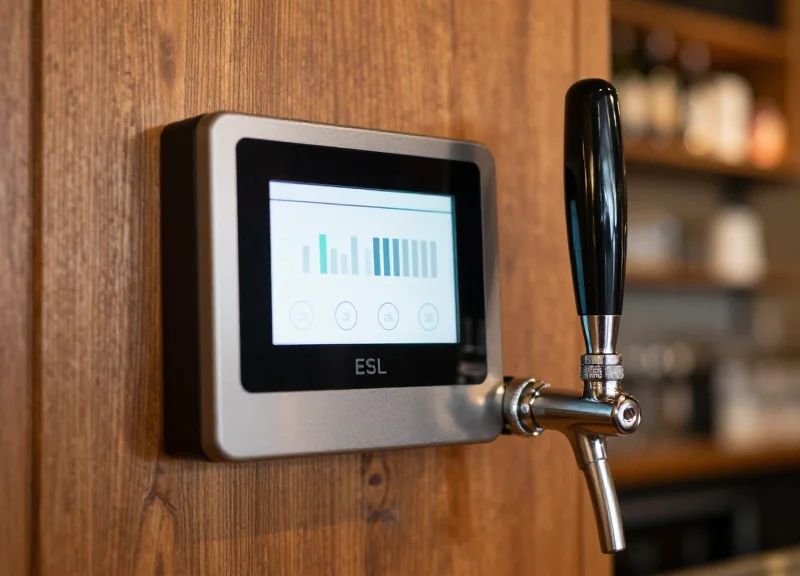
In the modern agile factory, a Wireless ESL (Electronic Shelf Label) is far more than a digital price tag; it is a high-performance, bidirectional IoT edge device designed for the 'Industrial Internet of Things' (IIoT). Unlike traditional wired Pick-to-Light systems that rely on physical circuitry and one-way signals, Wireless ESL technology utilizes low-power radio protocols (such as BLE or Sub-GHz) and E-ink displays to provide a dynamic interface between the Manufacturing Execution System (MES) and the human operator. This allows for instantaneous updates to work instructions, part numbers, and inventory levels without the infrastructure constraints of hard-wired cabling.
| Feature | Wired Pick-to-Light | Wireless ESL (2026 Standard) |
|---|---|---|
| Communication | Unidirectional (Controller to Node) | Bidirectional (Full Handshake Confirmation) |
| Display Tech | Simple Segmented LED/Alpha | High-Resolution E-Paper (Multi-Color) |
| Connectivity | Physical Bus (RS-485/Ethernet) | Secure Wireless Mesh (BLE/Sub-GHz) |
| Installation | Weeks (Hard-wiring required) | Hours (Plug-and-play) |
| Power Source | Central Power Supply | Long-life Lithium Batteries (5-10 years) |
- Dynamic E-Paper Displays: Utilizes electrophoretic ink technology that only consumes power when the image changes, ensuring maximum readability even under harsh industrial lighting and extreme viewing angles.
- Multi-Color LED Indicators: Integrated high-intensity LEDs (typically 7+ colors) allow for zone-based picking and multi-operator simultaneous tasks, mimicking the 'light' in Pick-to-Light.
- Bidirectional Feedback Loop: Unlike older systems, wireless ESLs include interactive buttons or NFC touchpoints, allowing workers to confirm a pick or report a stock-out directly at the bin.
Expert Insight: The Shift to 'Closed-Loop Edge Confirmation'. By 2026, the competitive advantage in manufacturing is no longer just about speed, but data integrity. While legacy systems simply 'tell' a worker what to do, modern Wireless ESLs create a 'closed-loop' at the edge. Because the device is bidirectional, it can timestamp the exact millisecond a button is pressed and sync that data back to the MES. This provides granular 'time-per-pick' analytics that were previously impossible to capture without expensive, localized PLC programming. This 'Edge Intelligence' transforms every bin and rack into a data collection point, effectively turning your storage infrastructure into a giant sensor network.
How does Wireless ESL handle signal interference in a metal-heavy factory?
Modern industrial ESLs use frequency-hopping spread spectrum (FHSS) and operate in the Sub-GHz or 2.4GHz bands with specialized interference-avoidance algorithms to penetrate metal shelving and bypass Wi-Fi congestion.
What is the typical latency for a display update?
Current generation gateways can update thousands of labels in minutes, but for picking operations, 'Instant-Update' protocols ensure that LED triggers occur in sub-500 milliseconds, satisfying the requirements for high-velocity lines.
Can Wireless ESLs operate in cold storage or high-heat environments?
Yes, specialized industrial ESL variants are rated for temperatures ranging from -25°C for freezer applications to +50°C for foundry-adjacent assembly lines, often utilizing ruggedized polycarbonate casings.
Agility and Flexibility: Reconfiguring Lines Without Downtime
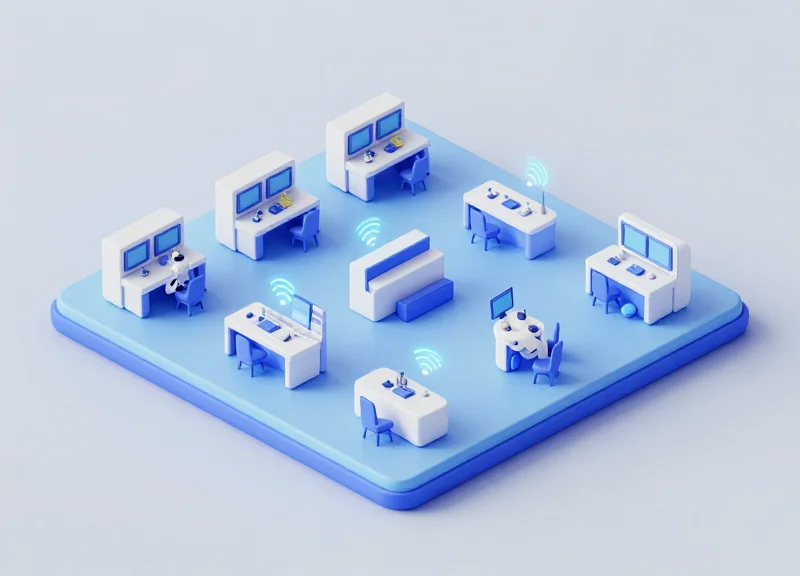
In modern agile manufacturing, agility is defined as the ability to transition from one product configuration to another in minutes rather than days. Wireless ESL systems enable this by replacing rigid, hard-wired infrastructure with a software-defined logic layer. Unlike traditional Pick-to-Light systems that require physical cable rerouting and PLC reprogramming for every layout change, wireless ESLs use a 'plug-and-play' architecture that allows operators to move picking bins, resize pick-faces, and reassign SKU locations via a central dashboard without ever touching a wire.
| Feature | Wired Pick-to-Light | Wireless ESL Systems |
|---|---|---|
| Relocation Time | 48-72 hours (requiring electricians) | 5-10 minutes (drag-and-drop) |
| Cost of Change | High labor + replacement hardware | Near-zero operational cost |
| Downtime Impact | Full line stoppage required | Zero downtime; hot-swappable |
| Scalability | Fixed by cable capacity | Virtually unlimited within gateway range |
The shift to wireless ESL is particularly transformative for High-Mix Low-Volume (HMLV) environments. When a new product batch requires a different set of components, the warehouse management system (WMS) simply pushes new coordinates to the ESL tags. This allows for 'Liquid Layouts'—the concept of a factory floor that breathes and shifts shape to optimize ergonomics and travel distance for every specific work order.
- Identify Change requirements: The production manager determines the new layout in the WMS or MES software based on current demand.
- Digital Mapping: Tags are reassigned to new SKUs or locations digitally using a drag-and-drop interface.
- Physical Movement: Bins or racks are physically moved to new positions; the tags remain attached and require no reconnection.
- Instant Synchronization: The central gateway pushes updates to the E-ink displays, reflecting new instructions or pick sequences immediately.
Expert Insight: The Rise of Zero-Touch Commissioning. A unique advantage of 2026-era wireless ESL is 'Zero-Touch Commissioning.' Utilizing NFC-enabled mobile devices, a floor worker can simply tap a new tag to associate it with a bin. This democratizes the technical setup, moving the responsibility of line reconfiguration from expensive external contractors to the floor staff themselves, effectively turning every operator into a line-optimization engineer.
Can the system handle high-frequency layout changes?
Yes, wireless ESLs are designed for hundreds of daily updates, making them ideal for just-in-sequence (JIS) manufacturing where the assembly line changes for every unit.
What happens if a tag is moved out of range?
Modern gateways feature roaming capabilities; if a tag moves, it automatically handshakes with the nearest access point to maintain its data link.
Is the wireless signal stable enough for a fast-paced factory?
Industry-standard protocols like Sub-GHz or Bluetooth 5.0 are used to ensure signals penetrate metal shelving and avoid interference with local Wi-Fi networks.
Total Cost of Ownership (TCO): Wired vs. Wireless Solutions
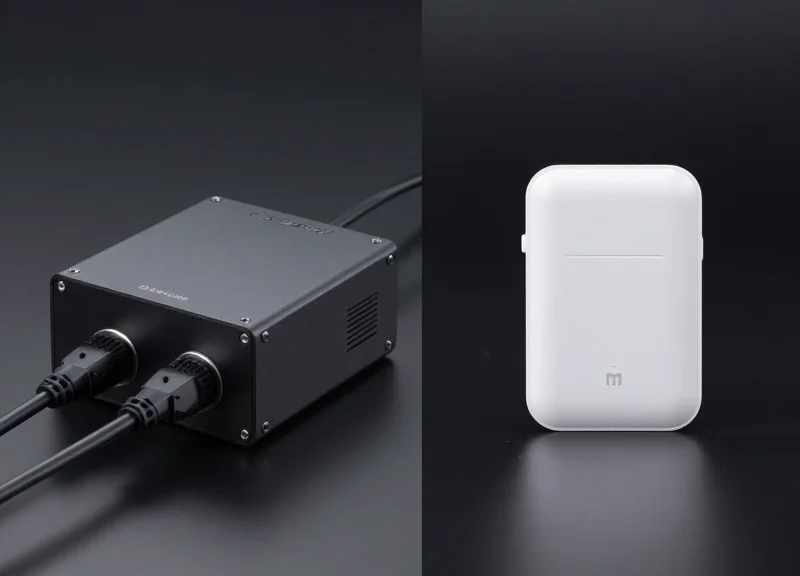
Total Cost of Ownership (TCO) in manufacturing guidance systems is the sum of initial Capital Expenditure (CapEx)—including hardware and specialized installation labor—and ongoing Operational Expenditure (OpEx), such as maintenance and downtime during system updates. In 2026, the TCO for wireless Electronic Shelf Label (ESL) systems is significantly lower than traditional wired Pick-to-Light (PTL) because the absence of physical infrastructure eliminates the 'Hidden Tax of Rigidity'—the thousands of dollars spent on electricians and conduit every time a production line is adjusted.
| Cost Category | Wired Pick-to-Light (PTL) | Wireless ESL Systems |
|---|---|---|
| Initial Hardware | Moderate (Low per-unit cost) | High (Integrated displays/batteries) |
| Installation Labor | Very High (Electricians, conduit, wiring) | Low (Software pairing, snap-on mounting) |
| Reconfiguration Cost | High ($150-$300 per pick point shift) | Near Zero (Drag-and-drop in software) |
| Maintenance | Cabling repairs, connector corrosion | Battery replacement (every 5-10 years) |
| Scalability | Limited by controller ports/wiring | Unlimited within gateway range |
The most significant differentiator is the Cable-to-Device Cost Ratio. In traditional wired setups, the cost of copper wiring, PLC integration, and certified electrical labor often accounts for 60% of the total project budget. For a 1,000-bin facility, a wired system might require 2,000+ meters of cabling. Conversely, wireless ESL shifts the budget from 'static copper' to 'intelligent hardware.' While the individual ESL unit may cost more upfront, the total deployment cost is often 20-30% lower because it can be installed by warehouse staff rather than specialized contractors.
How does the 'Reconfiguration Tax' impact long-term ROI?
In agile manufacturing, lines change 3-4 times per year. A wired system requires physical decommissioning and re-wiring, costing roughly $200 per meter. Wireless systems allow for 'zero-touch' re-labeling and physical movement, saving an estimated $45,000 annually for mid-sized facilities.
Is battery replacement a major OpEx concern for wireless ESL?
Modern ESLs use ultra-low-power E-ink and BLE/Sub-Ghz protocols, resulting in battery lives exceeding 7 years. When amortized, the cost of a $2 battery every 7 years is negligible compared to the 24/7 power draw and potential failure points of a complex wired grid.
What is the typical 'Break-Even' point when switching?
Most enterprises see a total ROI crossover at the 14-to-18-month mark. The savings are realized through reduced downtime during the initial install and the immediate elimination of technician call-outs for wiring faults.
Expert Tip: When calculating your TCO, don't just look at the hardware quote. Request a 'Change Order Simulation' from vendors. Ask what it would cost to move 50 pick locations by 10 feet. In a wired environment, this involves a multi-day project; in a wireless environment, it’s a 15-minute task for a floor supervisor. This 'Agility Premium' is what defines successful 2026 manufacturing operations.
Real-Time Data Synchronization with ERP and WMS

Real-time data synchronization with ERP (Enterprise Resource Planning) and WMS (Warehouse Management System) is the process of creating an instantaneous, bidirectional link between your digital database and the physical inventory on the manufacturing floor. In agile 2026 factories, wireless Electronic Shelf Labels (ESL) serve as the hardware interface for this 'Single Source of Truth,' ensuring that every item picked, restocked, or moved is reflected in the system without the latency associated with manual entry or batch-processed wired systems. This connectivity effectively transforms passive storage bins into active IoT nodes that communicate directly with platforms like SAP, Oracle, or Microsoft Dynamics.
- API Trigger: The ERP or WMS identifies a change in inventory status or a new production order and pushes a data packet via RESTful APIs or MQTT to the ESL management server.
- Wireless Broadcast: The central gateway transmits the update via sub-GHz or 2.4GHz protocols to the specific ESL tag at the pick-face in milliseconds.
- Physical Confirmation: Once the operator completes the pick and confirms via the tag's integrated button, a return signal is sent back through the gateway.
- Database Reconciliation: The WMS receives the 'Pick Complete' confirmation and instantly updates stock levels, triggering automated reordering if thresholds are met.
| Feature | Legacy Wired Systems | Wireless ESL Integration |
|---|---|---|
| Update Frequency | Batch-based / Periodic | Instantaneous / Event-driven |
| Data Integrity | High risk of 'ghost' inventory | 100% Digital-to-Physical parity |
| Feedback Loop | Uni-directional (Display only) | Bi-directional (Confirmations & Alerts) |
| Latency | Minutes to Hours | Sub-second (<900ms) |
A unique advantage of wireless ESL in 2026 is 'Dynamic Buffer Balancing.' Unlike wired systems that are fixed to a specific logic, wireless ESLs can receive instructions from a WMS to dynamically change picking priorities or 'Hot Zone' designations on-the-fly based on real-time throughput data. This allows the system to shift worker focus to different assembly lines without any manual reprogramming, a level of agility that was previously impossible.
Does ESL integration require a complete WMS overhaul?
No. Modern ESL controllers act as middleware, using standard API connectors to plug into existing WMS or ERP systems without requiring core code changes.
What happens if the Wi-Fi or local network goes down?
Enterprise-grade ESL systems operate on dedicated frequencies and feature 'Offline Persistence,' meaning they continue to display the last known correct data until the connection is restored.
Can ESLs display custom data from the ERP like QR codes?
Yes. Beyond simple quantities, ESLs can render dynamic QR codes or barcodes that link directly to digital work instructions or SDS sheets stored in the ERP.
Energy Efficiency and Battery Longevity: Myths and Realities
Modern wireless Electronic Shelf Labels (ESL) overcome the power-drain concerns of early IoT devices by utilizing bistable E-ink technology and ultra-low-power communication protocols like Sub-GHz or BLE 5.x. Unlike active displays that require constant energy to maintain an image, an ESL only draws power during the milliseconds it takes to update information. In a 24/7 manufacturing environment, this enables a standard coin-cell battery to power a device for 5 to 10 years, depending on the frequency of updates and the sophistication of the system's power-management firmware.
| Common Myth | Industrial Reality | Technical Driver |
|---|---|---|
| Wireless devices need monthly charging. | Tags operate for 5-10 years on one battery. | Bistable E-paper draws zero power to display static text. |
| Frequent updates kill the battery instantly. | Optimized tags handle 3-5 updates daily for years. | Adaptive polling intervals and deep-sleep states. |
| Environmental heat ruins battery life. | Industrial tags are rated for -25°C to +50°C. | Solid-state components and specialized electrolytes. |
A unique insight often overlooked by procurement teams is the concept of 'Shift-Aware Wake-up Cycles' (S-AWC). Advanced 2026-era ESL controllers can synchronize with a factory's MES (Manufacturing Execution System) to adjust the 'listening' frequency of tags based on active shifts. If a production line is idle between 2:00 AM and 6:00 AM, the tags enter a 'deep hibernation' mode, reducing polling frequency. This strategic power throttling can reclaim up to 18% of a battery's total capacity over its lifetime, effectively adding an extra year of operation without any hardware changes.
How do high-frequency pick environments affect longevity?
Even with 10+ updates per shift, modern ESLs use differential updates—only refreshing the specific pixels that change (like a quantity number)—which significantly reduces the energy-intensive full-screen flash.
Is battery replacement a logistical nightmare for thousands of tags?
No. Modern ESLs feature hot-swappable battery cassettes or 'power-rails' that allow for bulk replacement, though most manufacturers choose to refresh the hardware entirely every 7-10 years to benefit from newer display resolutions.
Do wireless signals like Wi-Fi drain ESL batteries through interference?
No. Industrial ESLs operate on specific channels (like Sub-GHz) that avoid the crowded 2.4GHz spectrum, preventing the 'radio noise' that would otherwise force a tag to stay awake longer to verify data packets.
Future-Proofing for 2026: The Role of RFID and ESL Integration

Future-proofing manufacturing for 2026 centers on the convergence of RFID and ESL technologies to create a 'self-aware' supply chain. While ESLs provide the visual interface for human workers, integrated RFID (Radio Frequency Identification) allows the components themselves to communicate with the factory's digital twin. This synergy transforms static storage bins into intelligent nodes that automatically verify pick-and-place actions, conduct autonomous cycle counts, and ensure 100% traceability from the warehouse to the assembly line without manual scanning.
| Feature | Standalone ESL | Standalone RFID | Integrated RFID+ESL |
|---|---|---|---|
| Human Interaction | High (Visual Cues) | Low (Hidden Tags) | Maximum (Visual + Auto-Verify) |
| Inventory Tracking | Manual/Triggered | Automatic/Passive | Autonomous & Error-Correcting |
| Infrastructure Cost | Moderate | High (Portal Based) | Optimized (ESL as Gateway) |
| Traceability | Batch Level | Item Level | Real-Time Item Visibility |
The Veteran Perspective: The 'Edge Gateway' Shift. In my two decades in Silicon Valley, I’ve seen hardware move from passive to active. By 2026, the most successful agile factories will treat the Wireless ESL not just as a display, but as an IoT Edge Gateway. By embedding RFID reader modules directly into the ESL hardware, you eliminate the need for expensive overhead RFID portals. Every bin becomes its own checkpoint, creating a high-resolution data grid that traditional wired Pick-to-Light systems simply cannot replicate.
Can RFID and ESL signals interfere with each other on the factory floor?
No. Modern industrial ESLs typically operate on 2.4GHz (proprietary or Zigbee-based) or Sub-GHz frequencies, while passive RFID typically utilizes UHF (860-960 MHz). When integrated properly, these systems operate on non-overlapping bands, ensuring zero signal interference even in high-density metal environments.
Does adding RFID significantly drain the ESL battery life?
Integration is designed for efficiency. The RFID tag on the part is passive (no battery), and the ESL's internal reader is programmed to 'pulse' only during expected movement windows or at scheduled intervals, maintaining a 5+ year battery life even with dual-technology use.
How does this integration improve 'Just-in-Time' (JIT) manufacturing?
It closes the loop. When a part is pulled, the RFID sensor detects the removal and the ESL immediately updates the count. If the wrong part is pulled, the ESL can flash a red 'Error' alert locally while instantly notifying the WMS to stop the line, preventing downstream defects.
- Automated Reordering: The integrated system detects when inventory falls below a specific physical threshold and triggers a restock request in the ERP automatically.
- Dynamic Routing: As parts move through the factory, the ESLs on mobile carts update in real-time to show the next destination based on the RFID-tracked location of the assembly.
- Zero-Gap Compliance: Every movement is logged digitally, providing a perfect audit trail for regulated industries like aerospace or medical device manufacturing.
Implementation Strategy: Making the Switch to Wireless
Transitioning from legacy wired Pick-to-Light systems to wireless ESL (Electronic Shelf Label) technology is a mission-critical digital transformation that prioritizes operational continuity. Unlike rigid wired installations that require significant downtime for rewiring, the 2026 gold standard for implementation follows a 'Parallel-Path' methodology. This involves deploying a wireless infrastructure alongside existing hardware to validate data latency and signal integrity before the final cutover, ensuring that your agile factory remains fully operational throughout the migration process.
- Phase 1: RF Site Survey and Infrastructure Audit: Conduct a comprehensive Radio Frequency (RF) heat map of the facility to identify potential interference zones from heavy machinery or existing Wi-Fi networks. Determine the placement of IoT Gateways to ensure 100% coverage across picking zones.
- Phase 2: Middleware and API Integration: Establish a robust link between your WMS/ERP and the ESL management software. Utilize RESTful APIs to ensure real-time data flow, allowing the wireless tags to reflect inventory changes with sub-second latency.
- Phase 3: The 'High-Velocity' Pilot Program: Select a single high-traffic production line or picking zone to deploy the wireless ESL system. This 'Shadow-Run' phase allows for the validation of battery performance and worker ergonomics in a live environment.
- Phase 4: Full-Scale Rollout and Legacy Decommissioning: Systematically replace wired light modules with wireless tags across all zones. Once the wireless system is validated, decommission the legacy wiring to reclaim physical space and reduce maintenance overhead.
| Implementation Phase | Estimated Duration | Primary Objective |
|---|---|---|
| Site Audit | 1-2 Weeks | RF Mapping & Gateway Placement |
| Software Integration | 3-4 Weeks | WMS/ERP Data Synchronization |
| Pilot Testing | 2 Weeks | User Acceptance & Signal Validation |
| Full Deployment | Variable | Total System Cutover |
Expert Insight: In 2026, the most resilient factories are adopting an 'Agnostic Protocol' strategy. Do not lock yourself into a proprietary wireless frequency. Instead, choose a system that supports multi-protocol communication (e.g., Sub-Ghz for range and BLE for proximity), allowing your ESL hardware to double as localized IoT sensors for temperature, humidity, or vibration monitoring.
Will switching to wireless disrupt my current production schedule?
No. Because wireless tags require no physical cabling, they can be pre-configured and 'snapped' into place during short shift breaks, allowing for a phased migration without shutting down entire lines.
How do we handle worker training during the switch?
Wireless ESLs often utilize the same visual cues (LED colors/flashing patterns) as wired systems, leading to a near-zero learning curve for picking staff.
What happens if the wireless signal drops?
Modern ESL systems feature 'edge-caching' technology where the tags retain the last valid instruction and log errors locally until the connection is restored, preventing data loss.