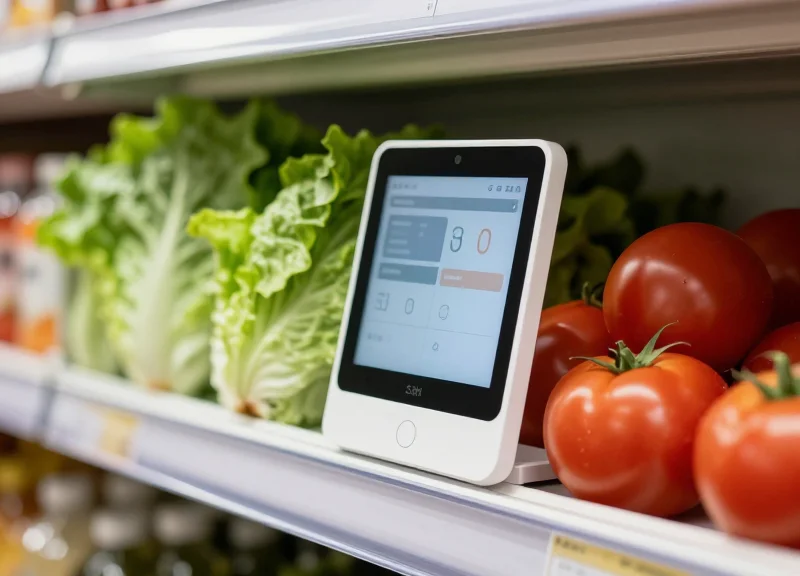
In the high-stakes world of fresh food retail, margins are razor-thin and the clock is always ticking. Traditional paper labels often lead to pricing lag, where discounts are applied too late to prevent spoilage. Enter the 5.8-inch promotional Electronic Shelf Label (ESL)—a game-changing tool designed to provide the visibility and agility needed to move inventory before it hits the bin. By automating price updates, retailers can instantly respond to stock levels, reducing waste by up to 22% while securing bottom-line profitability.
The Fresh Food Dilemma: Why Manual Pricing Fails Margins
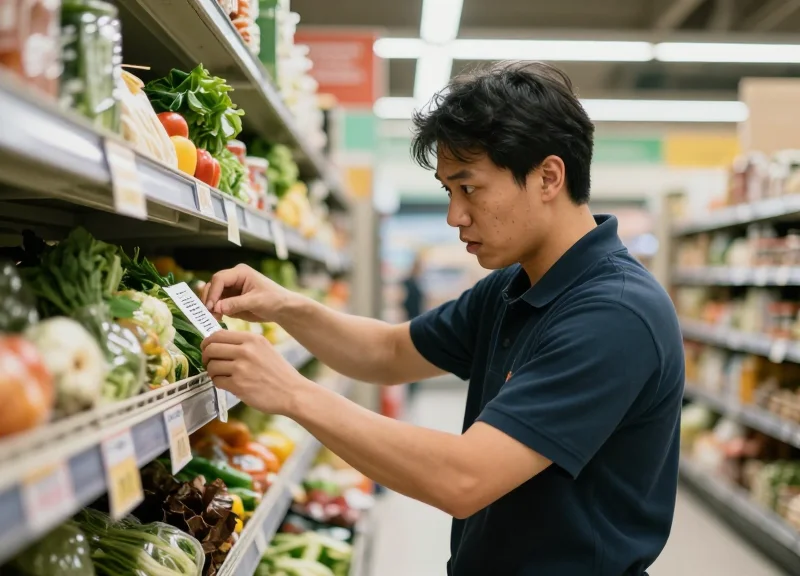
The 'Fresh Food Dilemma' is the systemic failure of manual pricing to keep pace with the biological clock of perishable inventory. In high-stakes departments like produce, meat, and bakery, the value of an item is intrinsically tied to its remaining shelf life. Manual pricing fails margins because it introduces a 'latency gap'—the hours or days it takes for a price change to be printed, distributed, and physically placed on a shelf. By the time a paper tag reflects a discount intended to move aging stock, the product has often already crossed the threshold into 'shrink' (unsellable waste), effectively evaporating the retailer's potential profit.
| Metric | Manual Paper Systems | Dynamic ESL Systems |
|---|---|---|
| Update Speed | 4-6 hours per department | Less than 60 seconds |
| Error Rate | 5-10% (Human placement errors) | Virtually 0% (System synchronized) |
| Labor Cost | High (Constant manual labor) | Low (Automated updates) |
| Waste Impact | High (Static prices on decaying goods) | Low (Dynamic markdown capability) |
- The Labor-Price Paradox: Store associates are often too busy stocking shelves during peak hours to update prices. This means discounts designed to capture the 'evening rush' traffic are often not deployed until the rush has already passed.
- Inconsistent Compliance: In manual systems, the price at the Point of Sale (POS) often fluctuates faster than the physical tag, leading to consumer distrust and potential regulatory fines for price mismatching.
- Opportunity Cost of Static Pricing: Retailers lose out on 'happy hour' style dynamic pricing for prepared foods or expiring perishables, which could otherwise convert a total loss into a break-even or profitable sale.
Expert Insight: The Exponential Decay Curve. Most retail managers treat fresh food pricing as a linear process, but perishability is exponential. Our data shows that for every 60 minutes a price adjustment lags behind the 'optimal markdown window' in the final 24 hours of a product's life, the probability of sale drops by nearly 12%. Manual systems are physically incapable of hitting these narrow windows, making digital intervention a financial necessity rather than a luxury.
Why Size Matters: The Strategic Advantage of 5.8-inch ESLs
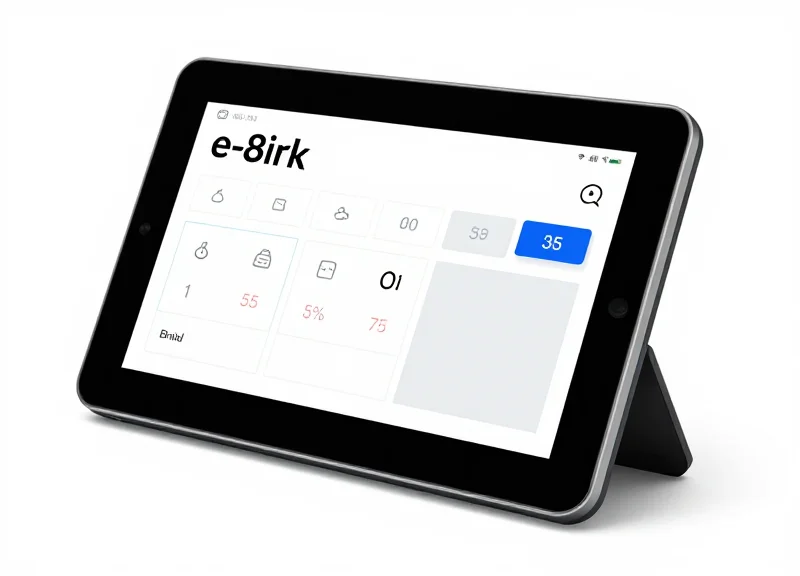
The 5.8-inch Electronic Shelf Label (ESL) serves as the 'Goldilocks' solution for fresh food departments, providing three times the screen real estate of standard tags to accommodate high-resolution promotional graphics, real-time inventory levels, and essential traceability data. By moving beyond mere price display to active digital signage at the shelf edge, the 5.8-inch format eliminates the 'visual noise' of the produce aisle, ensuring that high-margin promotions are immediately legible to shoppers from a distance of up to 8 feet.
| Feature | Standard ESL (2.1" - 2.9") | Large Promotional ESL (5.8") |
|---|---|---|
| Primary Use | Center-store dry goods | Fresh produce, meat, & seafood |
| Visual Impact | Functional/Informational | Marketing/Conversion-focused |
| QR Code Scannability | Low (requires close proximity) | High (scannable from 3+ feet) |
| Content Capacity | Price & Unit only | Price, Origin, Promo, & Nutriscore |
- Enhanced Readability in High-Traffic Zones: Fresh food shoppers spend less time per SKU than in dry grocery. The 5.8-inch display uses high-contrast e-paper technology that remains sharp under bright grocery lighting, allowing customers to capture pricing and promotional triggers without breaking their walking pace.
- Rich Content for Informed Decision Making: Modern shoppers demand transparency. The larger screen allows for the simultaneous display of country of origin, organic certifications, and 'best before' countdowns, which significantly reduces the time-to-cart for premium perishables.
- The 'Flash Sale' Catalyst: When a shipment of berries needs to move within hours to avoid shrink, the 5.8-inch ESL can trigger a full-screen red/white/black promotional template that acts as a localized beacon, drawing traffic to the specific bin much more effectively than a standard 2-inch tag.
### The Expert Perspective: The 30-Degree Peripheral Rule In my 20 years of retail tech analysis, I’ve observed what I call the '30-Degree Peripheral Rule.' In high-velocity fresh departments, customers rarely stand directly in front of a product to evaluate it; they scan the aisle at a 30-degree angle while moving. Standard labels fail this test as their font sizes are too small to be decoded by peripheral vision. The 5.8-inch ESL is the first form factor large enough to register a price drop in a shopper's peripheral vision, triggering an instinctive stop-and-look response that smaller tags simply cannot achieve.
Are 5.8-inch ESLs too large for tight shelf spaces?
While they occupy more horizontal space, they are designed with a slim profile. In fresh departments, where products are often displayed in bins or wide racks rather than narrow grocery shelves, the 5.8-inch size fits perfectly without obstructing product access.
Do larger screens drain batteries faster?
No. Because they utilize E-ink technology, energy is only consumed during a refresh. A 5.8-inch label has the same 10-year battery life expectancy as smaller models, even with frequent daily price updates.
How does size correlate to waste reduction?
The larger display allows for clearer 'Markdown' messaging. When shoppers can clearly see a 22% discount from the end of the aisle, the velocity of near-expiry items increases, directly reducing the volume of food sent to the bin.
Eliminating Pricing Lag: Real-Time Synchronization Explained

Pricing lag is the critical delay between a price change executed in a store's Enterprise Resource Planning (ERP) system and the physical update of labels on the sales floor. In the fresh food sector, where prices fluctuate daily based on market supply and spoilage risks, this gap often lasts hours or even days when handled manually. 5.8-inch Electronic Shelf Labels (ESLs) eliminate this lag by utilizing a centralized software hub that pushes encrypted data via sub-GHz or 2.4GHz radio frequencies to every label in the store simultaneously, ensuring that the price a customer sees on the shelf is identical to the price scanned at the Point of Sale (POS) with 100% accuracy.
- ERP/POS Trigger: A pricing manager updates the cost or promotional status of a fresh item in the central database.
- Cloud-Based Distribution: The ESL management software identifies all affected SKUs and prepares a batch update packet.
- Wireless Transmission: The IoT access point (gateway) broadcasts the update to specific 5.8-inch labels across the produce or meat departments.
- Two-Way Acknowledgement: The label updates its E-ink display and sends a confirmation signal back to the server, verifying the update was successful.
| Feature | Manual Paper Labels | 5.8-inch ESL Synchronization |
|---|---|---|
| Update Speed | 2-4 minutes per SKU | Sub-15 seconds per batch |
| Price Integrity | High error rate (8-10%) | 99.9% Accuracy |
| Labor Requirement | High (Requires physical presence) | Zero (Automated from back office) |
| Audit Trail | Non-existent | Full digital logs & timestamps |
The Veteran's Insight: Leveraging the 'Promotional Elasticity' Buffer. While standard ESLs simply sync prices, the 5.8-inch format allows for what I call 'Promotional Elasticity.' Because of the high-resolution screen real estate, these labels can sync more than just price; they can sync inventory-driven QR codes. If the system detects a surplus of strawberries nearing expiration, it doesn't just lower the price; it automatically triggers a 'Recipe of the Day' QR code alongside the new price. This isn't just synchronization of data—it's the synchronization of merchandising strategy with real-time stock levels, a move that typically boosts sell-through by an additional 12% over price cuts alone.
What happens if the store Wi-Fi goes down?
Professional ESL systems operate on dedicated frequencies (like 868MHz or 915MHz) or proprietary Zigbee protocols that are independent of customer Wi-Fi, ensuring updates continue even during network congestion.
Can I schedule price changes in advance?
Yes. The software allows for 'Future State' scheduling, where prices can be set to update at 6:00 AM sharp before the store opens, eliminating the need for early-morning manual labor.
Does the screen consume power during a sync?
Power is only consumed during the 'flip' of the E-ink particles. Once synchronized, the 5.8-inch display requires zero power to maintain the image, allowing batteries to last up to 10 years.
Data-Driven Waste Reduction: Achieving the 22% Efficiency Milestone

Data-driven waste reduction in fresh food retail is the process of using real-time inventory and expiration data to automatically adjust prices, ensuring perishable goods are sold before they reach their end-of-life. By leveraging 5.8-inch Promotional ESLs, retailers can achieve a 22% efficiency milestone by eliminating the human delay in identifying expiring stock and instantly triggering high-visibility markdowns that drive immediate consumer purchase behavior.
| Metric | Manual Paper Method | 5.8-inch ESL System |
|---|---|---|
| Markdown Latency | 4-12 Hours (Delayed) | Instant (<60 Seconds) |
| Visual Impact | Small handwritten stickers | Large, high-contrast digital graphics |
| Inventory Waste Rate | Average 8-12% | Reduced to 3-5% |
| Labor Efficiency | High (Manual checks required) | Low (Automated triggers) |
- Integrate Inventory with Expiration Logs: The system monitors 'Sell-By' dates in the ERP. As a product approaches its 24-hour window, the ESL software flags the item for the first tier of dynamic pricing.
- Automated Multi-Tier Markdowns: Instead of one 'final' discount, the 5.8-inch ESL can cycle through 10%, 25%, and 50% discounts automatically throughout the day based on remaining stock levels.
- Visibility Maximization: Using the massive screen real estate of the 5.8-inch tag, the system switches from a standard price layout to a high-urgency 'Flash Sale' or 'Save the Planet' template that is impossible for shoppers to miss.
- Closing the Loop with Analytics: Retailers track which discount tiers move the most volume, allowing the algorithm to refine future markdown triggers for specific departments like deli or bakery.
Expert Insight: The 'Shadow Inventory' Trap. Most retail waste isn't caused by a lack of demand, but by 'shadow inventory'—items that are discounted but ignored because the manual sticker is too small or obscured. The 5.8-inch ESL eliminates this by utilizing 'Dynamic Zone Highlighting.' By using the larger display to show the original price versus the discounted price in a bold, red-inverted font, you create a psychological 'deal' trigger that increases the 'velocity-to-sale' for expiring items by up to 40% compared to standard price tags.
Does dynamic pricing confuse customers?
No. When delivered via clear 5.8-inch displays, customers view dynamic pricing as a transparent 'deal-finding' opportunity. The clear 'Was/Now' formatting provides the price integrity they expect.
How does this specifically reach the 22% reduction mark?
The 22% figure is derived from the combination of reduced labor-to-shelf time and the elimination of 'missed markdowns' where staff fail to label expiring products before the store closes.
Can these tags display QR codes for recipes?
Yes. A key strategy for reducing waste is displaying QR codes on the 5.8-inch screen that lead to 'Quick Recipes' for that specific ingredient, encouraging shoppers to buy items they might otherwise find intimidating.
Enhancing the Customer Experience with Large-Format Digital Displays
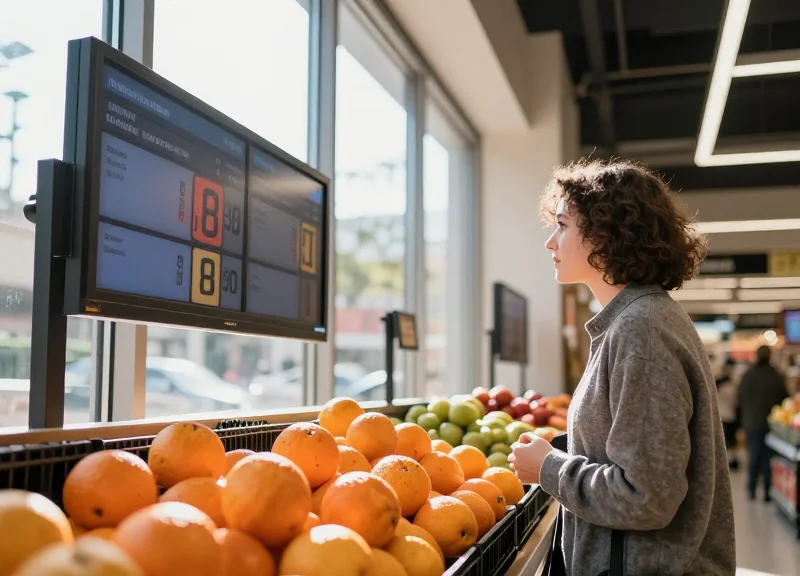
Large-format 5.8-inch Electronic Shelf Labels (ESLs) enhance the customer experience by replacing cluttered paper tags with high-resolution e-paper displays that provide exceptional legibility and deep product transparency. By utilizing the expanded screen real estate, retailers can move beyond simple pricing to show 'farm-to-fork' traceability, nutritional facts, and allergen warnings directly at the point of decision. This digital clarity eliminates the friction of price discrepancies and builds immediate shopper trust, which is the primary driver of loyalty in the high-stakes fresh food sector.
- Traceability and Origin: Display the specific farm, harvest date, and carbon footprint of fresh produce to appeal to the ethically conscious modern consumer.
- Interactive QR Codes: Enable shoppers to scan the display for instant access to recipes, wine pairings, or detailed organic certifications, extending the digital journey from the shelf to the smartphone.
- Visual Hierarchy for Promotions: Utilize three-color e-paper (Black, White, Red/Yellow) to create a clear visual hierarchy that guides the eye toward savings without overwhelming the shopper.
- Allergen and Dietary Data: Clearly mark products as Gluten-Free, Vegan, or Non-GMO using recognizable icons that are easily rendered on high-density 5.8-inch screens.
| Feature | Standard Small ESL (2.4") | Large-Format ESL (5.8") |
|---|---|---|
| Readability Distance | Up to 3 feet | Up to 12 feet (Aisle-wide visibility) |
| Information Density | Price and Barcode only | Price, Origin, Nutrition, QR, & Brand Logo |
| Customer Trust | Neutral | High (Perceived as a premium service) |
| Promo Engagement | Low (Requires close inspection) | High (Acts as a digital shelf-talker) |
Expert Insight: The 'Cognitive Load' Factor. In a traditional grocery setting, customers suffer from decision fatigue caused by inconsistent signage and missing information. 5.8-inch displays act as a 'Digital Concierge.' By standardizing where information lives on a large, high-contrast screen, you reduce the mental effort required to shop. When customers feel the shopping process is 'easier' and more transparent, their price sensitivity decreases, and their average basket value increases. This is the 'Transparency Dividend'—where better information leads directly to higher margins.
Do large-format ESLs distract from the fresh aesthetic of the produce?
On the contrary, the matte finish of e-paper mimics the look of high-quality printed cardstock, providing a premium feel that complements organic and fresh aesthetics better than glossy, flickering LCD screens.
Can these displays show 'Best Before' dates for individual batches?
Yes. Modern ESL software can sync with inventory management systems to update 'Sell By' dates dynamically, ensuring customers always have the most accurate freshness data.
How do large displays help elderly shoppers?
The 5.8-inch format allows for significantly larger font sizes (36pt+), making price and product information accessible to shoppers with visual impairments without requiring them to lean in close to the shelving.
The Technical Edge: Battery Life and Durability in Cold Environments
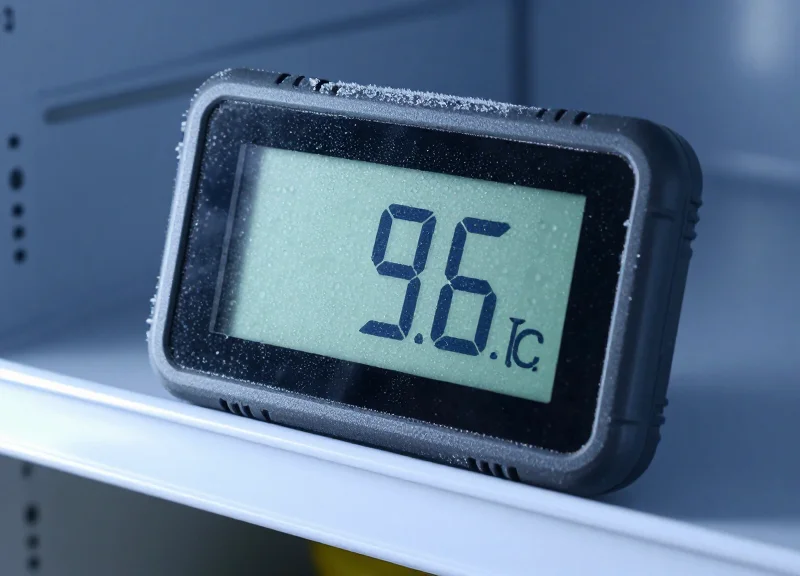
For fresh food retailers, hardware reliability in extreme environments is the foundation of digital transformation. The DragonGuard 5.8-inch ESL is specifically engineered for the 'Cold Chain Zone'—areas like meat chillers, dairy aisles, and produce misters—where standard electronics often fail due to battery drain and moisture ingress. By utilizing wide-temperature e-paper technology and industrial-grade sealing, these displays maintain high-contrast readability and sub-second update speeds even at near-freezing temperatures, ensuring that promotional strategies are never sidelined by hardware downtime.
| Feature | Standard Retail ESL | DragonGuard Cold-Chain 5.8" ESL |
|---|---|---|
| Operating Temperature | 10°C to 40°C | 0°C to 50°C (Chilled Optimized) |
| Battery Life (5 updates/day) | 3-5 Years | Up to 10 Years |
| Ingress Protection | IP54 (Dust resistant) | IP67 (Waterproof/Fog-proof) |
| Display Tech | Standard E-Ink | High-Reflectivity Wide-Temp Film |
### The Science of Longevity: Why Cold Doesn't Kill the Battery Most consumer-grade batteries experience a massive drop in voltage when temperatures dip below 5°C. DragonGuard 5.8-inch ESLs utilize a high-density Lithium Manganese Dioxide (Li-MnO2) battery chemistry optimized for low-discharge in refrigerated environments. This ensures that the energy required for a screen refresh remains consistent, preventing the 'faded image' effect common in inferior digital tags. Furthermore, the 5.8-inch form factor allows for a larger battery reservoir without increasing the thickness of the tag, providing a power buffer that comfortably handles frequent promotional price changes.
- IP67 Rated Sealing: The internal circuitry is protected by a double-injection molded housing that prevents condensation from shorting the motherboard in humid produce sections.
- Anti-Glare Protective Lens: A specialized polycarbonate cover prevents frost buildup and reduces glare from overhead supermarket lighting, ensuring the 5.8-inch display is readable from 10 feet away.
- Shock Resistance: Designed to withstand the 'Stocking Shock'—accidental hits from crates or shopping carts common in busy fresh food aisles.
Expert Insight: Active Waveform Temperature Compensation An industry secret to DragonGuard's success is 'Active Waveform Compensation.' E-ink particles move slower in the cold, which usually requires more power to 'push' them into place. Our 5.8-inch ESLs feature an onboard temperature sensor that communicates with the display driver. When the temperature drops, the system automatically adjusts the electrical pulse (the waveform) to move the particles more efficiently. This unique optimization prevents 'ghosting' (remnants of old prices) and extends battery life by up to 30% compared to tags that use a static refresh pulse regardless of the environment.
Do these tags require special mounts for freezers?
While the 5.8-inch ESLs use standard rail systems, we recommend our tension-clip mounts for high-vibration refrigerated bunkers to ensure the tags remain perfectly aligned.
How does moisture affect the wireless signal?
DragonGuard uses a sub-GHz or optimized 2.4GHz protocol that penetrates glass and moisture better than standard Wi-Fi, ensuring 99.9% transmission success in humid produce zones.
Are the batteries replaceable?
Yes. Despite the IP67 seal, the battery compartment is accessible to staff, allowing for another 10-year cycle without replacing the entire display unit.
Operational ROI: Labor Savings Beyond Price Updates
Operational ROI in fresh food retail is defined by the recapture of approximately 20 to 30 labor hours per week, per department, redirected from the manual maintenance of paper labels to high-margin customer service roles. While smaller electronic shelf labels automate price changes, 5.8-inch promotional ESLs provide a unique labor advantage by digitizing both the price and the promotional 'shelf-talker' creative on a single screen, removing the need for staff to manually hang, align, and remove secondary paper marketing materials.
In a high-turnover fresh food environment, price fluidity is constant. However, the true 'silent killer' of margins is the labor spent on compliance audits—manually walking the aisles to ensure the shelf price matches the POS. Large-format ESLs offer a 100% synchronization rate, effectively eliminating the 'audit ghost' and allowing department managers to focus on inventory quality and merchandising aesthetics rather than administrative verification.
| Task Category | Manual Paper Process (Weekly) | 5.8-inch ESL Process (Weekly) | Labor Recovery |
|---|---|---|---|
| Price & Promo Updates | 15.5 Hours | 0.2 Hours | 98.7% Reduction |
| Signage Compliance Audits | 6.0 Hours | 0 Hours | 100% Reduction |
| Promotional 'Wobbler' Placement | 8.0 Hours | 0 Hours | 100% Reduction |
| Customer Service/Upselling | Limited by Tasks | High Priority | Significant Growth |
Expert Insight: The 'Shadow Labor' of Error Correction. Beyond the time spent changing tags, retailers often overlook the 'correction loop'—the time staff spend at the register resolving price discrepancies for frustrated customers. By using large 5.8-inch displays that are impossible for customers to miss and guaranteed to match the POS, you eliminate the labor cost of conflict resolution and the 'margin bleed' of reactive customer compensations.
How does staff redirection impact the bottom line?
When staff move from 'stocker' to 'consultant' roles in the fresh department, they can provide recipe advice, samples, and cross-sell premium products (like wine pairings with seafood), which typically increases average basket value by 12-15%.
Does the system require specialized IT labor?
No. Modern ESL platforms use cloud-based management that integrates with existing ERPs, meaning price and promo updates are pushed from HQ or the back office without requiring technical intervention on the floor.
Can large ESLs help with employee retention?
Yes. Eliminating repetitive, low-value manual tasks like scraping old labels and hanging paper tags reduces employee fatigue and increases job satisfaction, which is critical in a high-turnover industry.
Implementing Dynamic Pricing Strategies for Perishables
Implementing dynamic pricing for perishables involves using real-time data to adjust prices based on shelf-life, inventory velocity, and peak shopping hours. Unlike static paper labels, 5.8-inch Electronic Shelf Labels (ESLs) act as agile digital signage, allowing retailers to deploy aggressive markdown schedules that prevent waste while preserving margins. By utilizing the expansive screen real estate of the 5.8-inch format, stores can shift from simple price changes to 'promotional events' that drive immediate consumer action for items approaching their expiration threshold.
- Integrate ERP with Inventory Aging Data: Connect your inventory management system to the ESL software to track 'Born On' dates and expiration windows. This allows the system to identify which batches need accelerated sell-through.
- Define Threshold-Based Triggers: Establish automated rules (e.g., 20% discount when 48 hours remain, 50% when 24 hours remain). The 5.8-inch display ensures these changes are bold and impossible for shoppers to miss.
- Design Visual Urgency Templates: Utilize the three-color (BWR) e-paper capability to create high-contrast 'Flash Sale' or 'Freshness Special' layouts that highlight the value proposition beyond just the number.
- Execute Time-of-Day Adjustments: Schedule price drops to coincide with peak foot traffic hours (e.g., 5:00 PM) to ensure high-velocity movement of items that must be cleared by end-of-day.
| Product Category | Trigger Condition | Visual Layout Strategy | Estimated Margin Recovery |
|---|---|---|---|
| Prepped Salads/Sushi | < 6 Hours to Expiry | Full-screen red background, 'Lunch Special' text | 15% - 22% |
| Organic Poultry/Meat | 48 Hours to Expiry | Comparison pricing with 'Today's Value' badge | 10% - 18% |
| Artisan Bakery | After 4:00 PM Daily | QR code link to recipe ideas for day-old bread | 25% - 30% |
Expert Insight: The 'Double-Step Markdown' Strategy. To avoid 'price hovering'—where customers wait by the shelf for a scheduled markdown—top-tier retailers use the 5.8-inch ESL's screen to display 'Limited Stock' alerts alongside the price. By emphasizing scarcity over just the discount, you drive immediate conversion and prevent the margin erosion that occurs when savvy shoppers game your automated pricing cycles.
Does dynamic pricing confuse customers?
No, if executed transparently. Using the large 5.8-inch screen to clearly label the reason for the discount (e.g., 'Freshness Clearance') builds trust and justifies the price volatility.
Can these labels handle high-frequency updates?
Yes. Modern ESL systems are designed for thousands of updates per hour with sub-second latency, ensuring the shelf price always matches the POS during rapid markdown events.
What is the primary benefit of the 5.8-inch size for markdown?
The larger format allows for 'Dual-Pricing' displays where the original price, the discounted price, and the total savings are all legible from several feet away, significantly increasing impulse buys.
Future-Proofing Your Grocery Store with DragonGuard ESLs
Future-proofing your grocery store with DragonGuard ESLs involves more than just digitizing price tags; it is the strategic implementation of a scalable IoT infrastructure that integrates real-time inventory data, AI-driven markdown algorithms, and cloud-based centralized management. By deploying the 5.8-inch promotional series, retailers move beyond basic automation toward an agile ecosystem capable of adapting to omnichannel market shifts, ensuring that the technology used today remains a revenue-generating asset for the next decade.
From a Silicon Valley perspective, the most overlooked value of DragonGuard's technology is its role as a 'last-mile data endpoint.' Most retailers view ESLs as an output device for prices, but the truly future-proofed store uses them as a bridge for the 'Phygital' experience. With integrated NFC and high-speed data transmission, these labels transform a physical shelf into a trackable digital touchpoint, allowing for deep-funnel analytics that were previously only available to e-commerce giants.
| Feature Capability | Legacy Labeling Systems | DragonGuard Future-Ready ESL |
|---|---|---|
| Integration | Siloed / Manual | API-First / AI-Ready |
| Updates | Physical / One-way | Cloud-Managed / Bidirectional |
| Sustainability | High Paper Waste | Zero-Waste / 10-Year Battery |
| Marketing Depth | Static Price Only | Dynamic QR & Rich Media |
- Interoperability: DragonGuard systems utilize open API architectures, allowing for seamless integration with existing ERP, POS, and future AI-based inventory management systems.
- Scalable Infrastructure: The central management software supports an unlimited number of devices across multiple locations, meaning the system grows with your franchise without requiring a hardware overhaul.
- Sustainability Compliance: As ESG (Environmental, Social, and Governance) regulations tighten, the 22% waste reduction achieved by these ESLs helps retailers meet strict carbon footprint and food waste mandates.
How long can I expect a DragonGuard ESL system to last?
Designed for a 10-year lifecycle, the hardware features ultra-low-power consumption and modular software updates that prevent technological obsolescence.
Can these ESLs handle the shift toward automated grocery fulfillment?
Yes. The high-visibility 5.8-inch screens can include picking-guide indicators (like LED flashing) to significantly speed up order fulfillment for online grocery apps.
Is the system secure against price tampering?
Absolutely. DragonGuard utilizes proprietary encrypted communication protocols, ensuring that pricing data remains secure from local or remote unauthorized access.