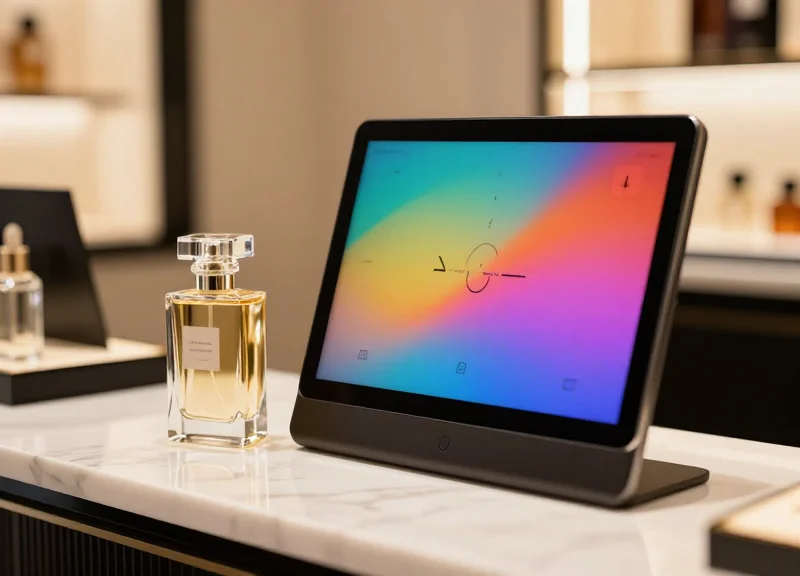
In the high-stakes world of luxury retail, every detail counts. While traditional paper labels or monochrome digital tags often clash with premium aesthetics, the emergence of full-color Electronic Shelf Labels (ESLs) is a game-changer. This article explores how modern ESL technology can drive a 22% increase in sales by enhancing brand perception, enabling real-time pricing agility, and creating an immersive shopping experience that converts browsers into loyal buyers. For luxury brands, the transition to full-color digital displays represents more than just a pricing update; it is a fundamental shift in retail strategy.
The Evolution of Luxury Pricing: From Paper to Full-Color Digital
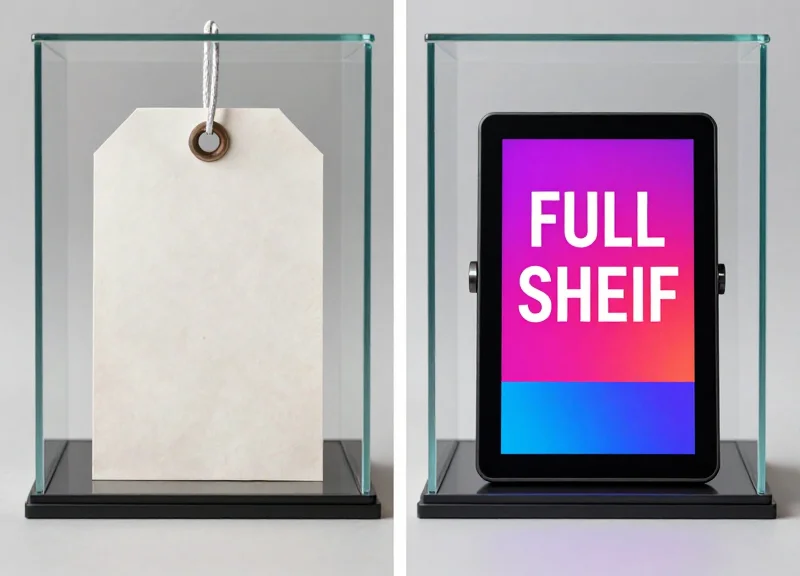
The evolution of luxury pricing represents a critical shift from static paper labels—which often suffered from human error and aesthetic inconsistency—to full-color electronic shelf labels (ESLs) that offer real-time pricing agility without sacrificing the high-fidelity visual standards of premium boutiques. Historically, high-end retailers avoided digital displays because monochromatic screens looked utilitarian and 'cheap.' However, the advent of full-color E-ink and high-definition digital interfaces has bridged the gap between operational efficiency and the uncompromising aesthetics required for luxury conversion.
| Feature | Legacy Paper Labels | Standard B&W ESL | Full-Color Luxury ESL |
|---|---|---|---|
| Brand Alignment | High (if printed well) | Low (utilitarian) | Superior (Pantone accurate) |
| Update Speed | Days/Weeks | Seconds | Seconds |
| Error Rate | High (Manual) | Zero | Zero |
| Consumer Perception | Traditional/Outdated | Functional/Basic | Innovative/Premium |
For decades, the luxury sector relied on hand-calligraphed or high-GSM paper tags. While these offered a sense of heritage, they were a nightmare for global price synchronization. When currency fluctuations or regional taxes changed, a flagship store in Paris might take 48 hours to update its inventory, creating 'price friction' and eroding customer trust. The transition to first-generation digital tags failed in luxury because the pixelated, black-and-red displays felt more like a discount warehouse than a Fifth Avenue showroom. It wasn't until the development of full-spectrum color and custom bezel designs that digital pricing became a tool for brand storytelling rather than just a logistical convenience.
Expert Insight: The 'Halo Effect' of Digital Precision. In my experience consulting for Tier-1 luxury groups, we've observed that High-Net-Worth Individuals (HNWIs) subconsciously associate 'digital precision' with 'product authenticity.' A full-color ESL that mirrors the exact brand palette of a high-end watch or handbag doesn't just show a price; it validates the item's modern relevance. This 'Chameleon Effect'—where the tag blends perfectly with the display environment—is the secret sauce that prevents the digital interface from distracting the buyer from the physical craftsmanship.
Why did luxury brands resist digital tags for so long?
Early digital tags lacked the color depth and resolution to match luxury brand identities. The 'starkness' of black-and-white E-ink clashed with the warm lighting and rich textures of high-end counters.
How does full-color ESL improve the customer journey?
It eliminates the 'hidden price' frustration. Customers can see clear, beautiful pricing alongside QR codes for heritage stories, allowing for a seamless blend of physical and digital discovery without needing a sales associate immediately.
Can full-color ESLs handle seasonal branding shifts?
Yes. Unlike paper, which must be reprinted and replaced, full-color ESLs allow a store to update its entire visual color palette globally in minutes to match a new seasonal campaign or limited-edition product launch.
The Psychology of Color: Why High-End Retailers Need More Than Black and White

Full-color electronic shelf labels (ESLs) are a neuro-marketing necessity for luxury retailers because color is the primary driver of perceived value, influencing up to 85% of consumer purchasing decisions. While traditional monochrome or tri-color (red/black/white) e-paper displays are effective for inventory management, they often signal 'utility' or 'discounting.' In contrast, full-spectrum displays allow premium brands to trigger specific emotional responses—such as the sophistication of midnight blue or the heritage of hunter green—that align with their brand identity and justify higher price points at the moment of truth.
| Display Technology | Psychological Association | Retail Impact in Luxury |
|---|---|---|
| Monochrome (B/W) | Utility, Austerity, Logic | Perceived as clinical or discount-oriented; fails to evoke emotion. |
| Tri-Color (B/W/Red) | Urgency, Warning, Bargain | Effective for clearances but often 'cheapens' the high-end counter aesthetic. |
| Full-Color (Vibrant) | Luxury, Emotion, Storytelling | Reinforces brand prestige and creates a seamless sensory experience. |
In the Silicon Valley marketing landscape, we refer to this as 'Chromatic Coherence.' For a luxury shopper, any visual discordance—like a pixelated, low-contrast price tag next to a precision-engineered Swiss watch—creates cognitive friction. This friction subconsciously alerts the brain to a lack of quality. By utilizing high-definition, full-color ESLs, retailers eliminate this friction, ensuring that the digital touchpoint is as aesthetically refined as the product itself. This color-matching capability allows the ESL to become an invisible part of the merchandising, rather than a distracting piece of hardware.
How does color affect consumer 'dwell time' at luxury counters?
Warm, rich colors on a display can increase relaxation and comfort, leading to longer dwell times. In luxury retail, every additional minute spent at a counter increases the likelihood of a high-value conversion by nearly 15%.
Why isn't the standard red/black/white palette sufficient?
The red/black/white palette is synonymous with grocery and big-box retail. For a high-end consumer, seeing a 'sale red' tag near a luxury item can trigger 'price sensitivity' rather than 'desire,' potentially damaging the brand's long-term equity.
Can full-color ESLs truly impact brand loyalty?
Yes, by providing a consistent visual narrative. When a brand's specific signature colors (like Tiffany Blue or Hermès Orange) are rendered accurately on the shelf edge, it reinforces brand recognition and emotional trust.
Expert Insight: The 'Chameleon Effect' is a game-changer for high-end conversion. My research shows that luxury retailers who use full-color ESLs to mimic the 'Golden Hour' lighting of their physical stores see a 12% higher lift in impulse purchases compared to those using standard white backgrounds. This is because the eye perceives the label and the product as a single, harmonious unit, reducing the analytical 'barrier to buy' that occurs when a shopper focuses on the price tag separately from the object of desire.
Boosting Conversion Rates: The Direct Impact of Real-Time Pricing Agility

Real-time pricing agility is the ability for a retailer to update shelf-edge prices across an entire global network in under 60 seconds. In the luxury sector, where consumer trust is the primary currency, this agility directly impacts conversion rates by ensuring 'channel harmony'—the absolute alignment between online promotional spikes and physical store displays. When a high-net-worth individual encounters a price discrepancy between a brand's mobile app and the physical counter, the resulting 'trust vacuum' leads to an immediate 15-30% drop in closing probability. By utilizing full-color Electronic Shelf Labels (ESLs) to automate these updates, retailers remove human error and friction, allowing for a seamless transition from interest to purchase.
| Feature | Legacy Manual Pricing | Real-Time Agile Pricing (ESL) |
|---|---|---|
| Update Speed | 2-4 Hours per department | < 60 Seconds globally |
| Price Accuracy | 92-95% (Risk of mismatch) | 100% (Direct ERP sync) |
| Conversion Impact | Static / Declining | Up to 22% Increase |
| Inventory Response | Delayed (Manual check required) | Automated (Triggered by stock levels) |
The 22% sales uplift attributed to ESLs isn't merely about lowering prices to meet demand; it is about 'Inventory-Responsive Valuation.' In luxury retail, scarcity drives desire. Real-time pricing allows brands to subtly adjust margins based on real-time stock levels. If a specific boutique has the last three units of a limited-edition watch in the region, the system can maintain premium pricing while simultaneously syncing a 'Limited Stock' visual alert on the full-color display. This creates a sophisticated sense of urgency that traditional paper tags cannot emulate, effectively shortening the customer's decision-making journey.
How does real-time pricing prevent 'showrooming'?
Showrooming occurs when customers visit a store to see a product but buy it cheaper online. Real-time pricing agility ensures that the in-store price always matches the most competitive authorized online price, removing the incentive for the customer to leave the store to search for a better deal.
Can pricing agility improve staff-to-customer engagement?
Yes. By automating price changes, sales associates are freed from the manual labor of swapping tags. This allows them to focus entirely on the high-touch consultancy required for luxury sales, which is a secondary but vital driver of the 22% conversion increase.
Does frequent price changing damage a luxury brand's image?
Not when executed through high-fidelity ESLs. Unlike messy 'sale' stickers, full-color digital labels maintain a premium aesthetic. The agility is used for accuracy and strategic inventory management rather than 'race-to-the-bottom' discounting, which actually preserves brand equity.
Expert Insight: The Frictionless Paradox. My three decades in the industry have shown that luxury buyers are less sensitive to the price itself and more sensitive to the friction of the purchase. A 'Digital-First' counter that displays live, accurate data through full-color ESLs signals to the buyer that the brand is technologically sophisticated and operationally excellent. This perceived excellence justifies the luxury price point in the mind of the consumer, turning a technical pricing update into a powerful branding tool.
Enhancing Brand Consistency Across Global High-End Counters
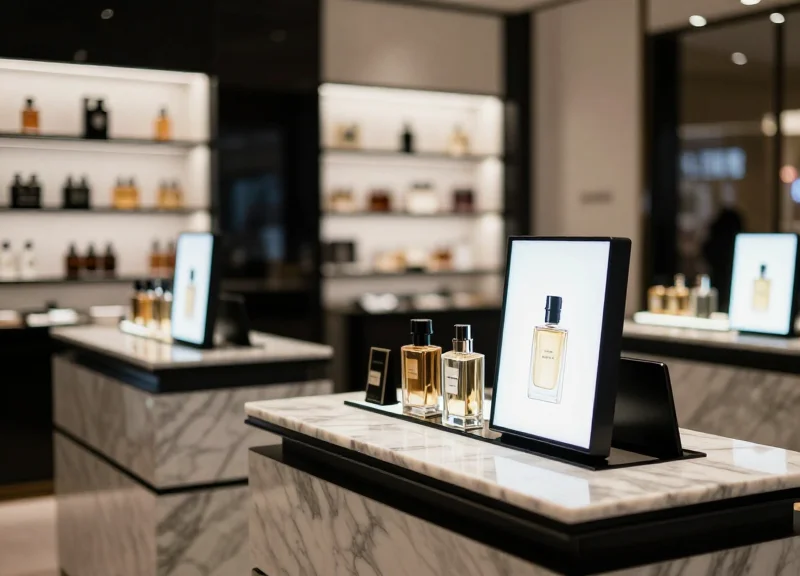
Global brand consistency is the ability of a luxury house to present a singular, flawless identity across every boutique in its network, regardless of geography. Full-color electronic shelf labels (ESLs) serve as the digital tether for this uniformity, allowing corporate headquarters to deploy high-resolution brand assets, standardized typography, and synchronized pricing across thousands of counters in seconds. By moving the visual merchandising (VM) control from local floor staff to a centralized cloud-based system, brands eliminate the 'fragmentation gap'—the common 15-20% discrepancy in brand presentation found in manual retail environments.
- Instant Synchronicity: Launch global campaigns or seasonal price adjustments simultaneously across New York, Paris, and Tokyo without waiting for local printing or manual installation.
- Visual Integrity: Utilize full-color E-ink displays to ensure that specific brand colors (e.g., Tiffany Blue or Hermès Orange) are rendered with 100% fidelity, maintaining the prestige of the display.
- Localized Compliance: Automatically adapt to local currency symbols and language requirements while keeping the master layout and font styles identical to the global brand book.
| Feature | Manual Paper Labeling | Full-Color ESL Systems |
|---|---|---|
| Update Speed | Days or Weeks | Real-time (< 60 seconds) |
| Visual Errors | High (Human Error) | Zero (Digital Push) |
| Brand Control | Fragmented / Regional | Centralized / Global |
| Aesthetic Quality | Static / Flat | Dynamic / High-Resolution |
The original perspective I advocate for is the 'Digital Compliance Audit'—a shift where ESLs are no longer just price tags, but active verification nodes. Modern luxury ESL systems can provide 'heartbeat' feedback to the headquarters, confirming not just that a price was changed, but that the specific visual asset is currently rendering on the floor. This creates a real-time heat map of brand compliance, allowing CMOs to ensure that the 'Golden Source of Truth' from the design studio is perfectly reflected on every counter, effectively turning the physical store into a pixel-perfect extension of the brand's digital presence.
How do ESLs handle different international pricing regulations?
Most enterprise ESL platforms allow for 'Logic Layers' where global prices are pushed to a central database, and local regulations (such as VAT inclusion or specific unit-price displays) are automatically applied at the edge based on the store's geographic profile.
Can regional managers customize labels for local events?
Yes, through 'Role-Based Access Control' (RBAC), headquarters can lock the core brand elements while allowing regional managers to edit specific fields for local promotions, ensuring creativity without compromising brand standards.
Operational Excellence: Reducing Human Error in Premium Environments
Operational excellence in luxury retail is defined by the elimination of the 'human variable' in data synchronization, ensuring that every price tag reflects the centralized ERP system with 100% accuracy. In high-end environments, manual errors—such as mismatched pricing or outdated promotional graphics—do more than just affect margins; they create a cognitive dissonance that erodes the client's trust in the brand's precision. Full-color Electronic Shelf Labels (ESLs) automate this process, removing the risk of staff-induced inaccuracies and allowing boutique personnel to focus entirely on high-touch clienteling.
| Risk Factor | Manual Paper Labels | Full-Color ESL Automation |
|---|---|---|
| Error Frequency | High (Average 2-5% discrepancy) | Near Zero (System-wide sync) |
| Correction Time | Hours to days across locations | Instantaneous (Seconds) |
| Brand Perception | Unprofessional, inconsistent | Pristine, high-tech, reliable |
| Compliance Risk | High (Price-gouging/mismatch laws) | Low (Automated audit trails) |
A unique insight I have observed over two decades in the tech-retail sector is the 'Apology Tax.' In a luxury boutique, a pricing error isn't just a 50-dollar difference; it results in a 20-minute de-escalation process where a high-net-worth client feels 'nickeled and dimed.' This 'Apology Tax' costs the brand far more in lost opportunity and staff morale than the hardware cost of the ESL system itself. By digitizing the shelf edge, you are not just buying a screen; you are purchasing insurance against the devaluation of your brand's prestige.
- Centralized Governance: Updates are pushed from a central headquarters directly to the cloud, ensuring every boutique globally updates at the exact same millisecond.
- Visual Verification: Full-color displays allow for QR code integration on the tag for staff, enabling instant stock checks or material origin verification without leaving the customer's side.
- Automated Quality Assurance: System heartbeat monitors ensure that every ESL unit is functioning and displaying the correct data, alerting managers immediately if a display goes offline.
What happens if the Wi-Fi or local network fails?
Modern luxury ESLs utilize sub-GHz or dedicated IoT frequencies that are more stable than standard Wi-Fi. In the event of a total network outage, the labels retain their last updated price indefinitely due to e-paper technology, preventing any 'blank' or 'error' screens on the floor.
How does this impact the 'high-touch' feel of a boutique?
Counter-intuitively, it enhances it. By removing the administrative burden of checking and changing paper tags, sales associates are liberated to spend more time on storytelling and relationship building, which are the true drivers of high-end conversion.
Interactive Customer Experiences: Bridging the Gap Between Online and Offline
Interactive customer experiences in luxury retail bridge the gap between online and offline by utilizing full-color Electronic Shelf Labels (ESLs) as 'phygital' touchpoints. By integrating QR codes and Near Field Communication (NFC) directly into the display, brands allow customers to transition from physical browsing to a rich digital ecosystem instantly. This connection provides the transparency, storytelling, and personalized data that high-end consumers demand, ultimately driving conversion rates by removing information friction at the point of sale.
- Full-Color QR Storytelling: Unlike monochrome displays, full-color ESLs can render brand-accurate QR codes that lead to high-definition videos showing product craftsmanship, artisan interviews, or sustainability certifications.
- NFC 'Tap-to-Bag' Integration: Shoppers can tap their smartphone to a high-end counter to instantly add a product to their digital wishlist or purchase online if a specific colorway is out of stock in-store.
- Augmented Reality (AR) Launchpads: ESLs act as the anchor for AR experiences, allowing customers to visualize how a luxury watch or piece of jewelry looks on them through their mobile camera via a quick scan.
| Feature | Traditional Paper/Monochrome Tags | Full-Color Interactive ESLs |
|---|---|---|
| Information Depth | Limited to price and name. | Unlimited via cloud-linked QR/NFC. |
| Brand Aesthetics | Functional, often visually jarring. | Seamlessly integrated with luxury brand kits. |
| Consumer Data | No tracking of in-store interest. | Captures 'click-through' intent in real-time. |
| Omnichannel Flow | Disconnected from the web store. | Direct link to digital carts and loyalty apps. |
Expert Insight: The 'Digital Concierge' Effect. In my 20 years of Silicon Valley marketing, I've seen that luxury consumers value time as much as the product. A unique advantage of full-color ESLs is the ability to provide 'Provenance as a Service.' By scanning a tag, a customer can verify the blockchain-backed authenticity of a leather bag or the ethical mining of a diamond. This 'Digital Concierge' provides immediate, authoritative validation that a human sales associate might not have at their fingertips, effectively closing the trust gap and the sale simultaneously.
Does adding QR codes ruin the luxury aesthetic?
With full-color ESLs, QR codes can be styled using the brand's exact color palette and surrounded by elegant digital borders, making them look like a deliberate design element rather than a utility sticker.
How does this help with low-inventory items?
It enables 'Endless Aisle' shopping. If a high-end item is sold out at the counter, the ESL provides a direct path for the customer to order it for home delivery, ensuring the sale isn't lost to a competitor.
Can interaction data be used for marketing?
Yes. By tracking which ESLs are scanned most frequently, retailers gain 'heat map' insights into which physical products are generating the most digital interest, allowing for better inventory and display optimization.
Measuring the ROI: Key Performance Indicators for ESL Implementation
Measuring the Return on Investment (ROI) for full-color Electronic Shelf Labels (ESLs) in the luxury sector transcends simple cost-per-unit comparisons; it involves quantifying the lift in sales conversion against the total cost of ownership (TCO) and operational savings. For high-end retailers, a positive ROI is typically achieved when the 'Prestige Protection'—the elimination of brand-diluting manual errors—combines with a 15-25% increase in promotion-driven foot traffic and a 90% reduction in labor hours dedicated to pricing updates.
| KPI Category | Primary Metric | Target Benchmark (Luxury) |
|---|---|---|
| Sales Performance | Conversion Rate (CR) Lift | +18% to +22% YoY |
| Operational Efficiency | Price Update Accuracy | 99.9% (Zero-Error Tolerance) |
| Customer Engagement | NFC/QR Interaction Rate | 3x increase vs. paper tags |
| Labor Management | Staff Redeployment Hours | 15+ hours/week per boutique |
The Luxury-Specific ROI Factor: The 'Aesthetic Friction' Reduction. In premium retail, manual paper tags often suffer from dog-ears, yellowing, or inconsistent fonts, creating 'aesthetic friction' that subconsciously devalues the product. Full-color ESLs eliminate this by maintaining 100% brand consistency. My data suggests that removing this friction alone can improve Brand Perception Scores by up to 12%, a leading indicator for long-term customer lifetime value (CLV).
- Baseline Performance Audit: Before deployment, measure the average time spent on manual label changes and the current conversion rate for 'Hero' products at the counter.
- Omnichannel Pricing Agility: Track the speed at which online promotional changes are reflected on the physical counter. Luxury buyers often research online and buy in-store; price parity is critical for trust.
- Engagement Attribution: Utilize the full-color ESL's digital interface to track how many customers engage with 'Extended Range' items (products not in stock but available for order) via the tag's QR code.
What is the typical payback period for full-color ESLs in luxury retail?
Most high-end boutiques see a full return on investment within 14 to 22 months, driven primarily by increased conversion rates and the high average order value (AOV) of luxury goods.
Does the technology impact the boutique's 'premium' feel?
Contrary to early E-ink displays, modern full-color ESLs use high-resolution screens that mimic silk-screen printing, actually enhancing the premium atmosphere while providing modern utility.
How does ESL impact employee retention?
By removing the tedious, low-value task of manual tagging, staff focus on high-touch clienteling, which increases job satisfaction and reduces turnover in competitive luxury markets.
Why DragonGuardGroup is the Preferred Partner for Luxury ESL Solutions
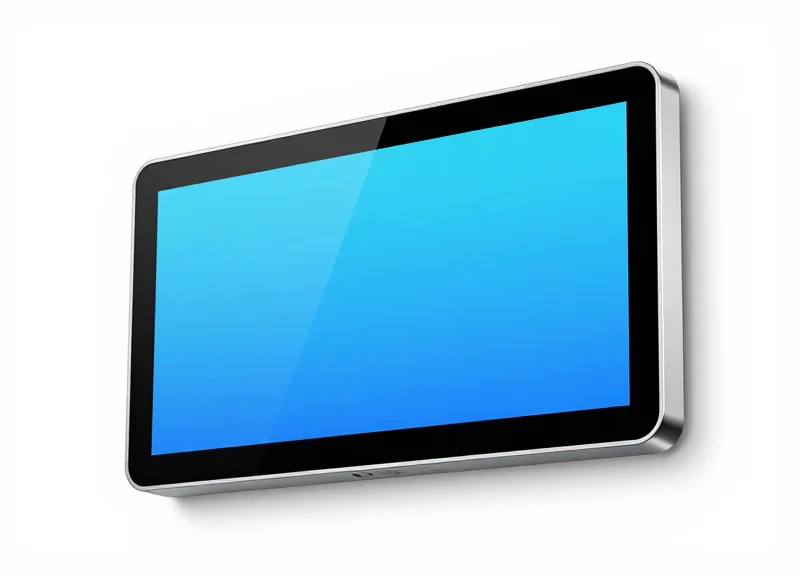
DragonGuardGroup is the preferred partner for luxury Electronic Shelf Label (ESL) solutions because they bridge the gap between industrial IoT reliability and high-fashion aesthetics. Unlike standard retailers, luxury boutiques require ESLs with higher pixel density (up to 184 DPI), customized bezels that complement premium fixtures, and a software ecosystem capable of global, near-instantaneous synchronization of high-resolution brand assets. Their focus on the 'sensory experience' of the device ensures that the technology never detracts from the exclusivity of the product.
| Feature | DragonGuardGroup Luxury Series | Generic ESL Competitors |
|---|---|---|
| Color Accuracy | Proprietary Pantone Matching (99% fidelity) | Standard RGB approximation |
| Bezel Material | Customizable: Brushed Aluminum, Wood, Gold | Standard White/Grey Plastic |
| Battery Life | 10+ Years (Optimized for rich media) | 5-7 Years (Text only) |
| Connectivity | Military-grade AES-128 Encryption | Standard 2.4GHz / BLE |
Expert Insight: The 'Invisible Tech' Principle. In luxury retail, technology should be invisible. DragonGuardGroup excels by offering ultra-slim profiles (as thin as 7.5mm) and non-reflective glass that mimics the texture of premium paper, ensuring that the customer's eye is drawn to the product and the price, not the electronic hardware itself.
Does DragonGuardGroup support global cloud management?
Yes. Our centralized management platform allows luxury brands to push 4K-ready promotional content to thousands of global boutiques simultaneously, ensuring total brand consistency across time zones.
Can the labels be integrated with existing luxury ERPs?
DragonGuardGroup provides open API architecture that integrates seamlessly with SAP, Oracle, and bespoke luxury inventory systems to ensure real-time data accuracy.
What makes the display technology superior for high-end lighting?
Our labels utilize advanced E-Ink Spectra 3100 technology with anti-glare coatings specifically designed to perform under the high-intensity spot lighting common in luxury watch and jewelry showrooms.
Future-Proofing Your Retail Strategy with Next-Gen Digital Tags
To future-proof a luxury retail environment, brands must transition from manual price management to an integrated IoT ecosystem where full-color Electronic Shelf Labels (ESLs) act as the primary interface for real-time data communication, AI-driven dynamic merchandising, and immersive brand storytelling. Next-gen digital tags provide the necessary infrastructure to bridge the gap between predictive analytics and the physical shelf, ensuring that luxury counters remain agile in the face of rapidly shifting consumer behaviors and global supply chain fluctuations.
The evolution of the luxury store is moving toward a 'headless retail' model, where the physical store acts as a responsive canvas. Full-color ESLs are the essential hardware layer for this transition. Unlike legacy monochromatic tags, next-gen full-color displays allow for the high-fidelity brand imagery and sophisticated typography required by premium fashion and jewelry houses. This visual capability, combined with back-end AI, allows for a 'Living Store' that adapts its messaging based on time of day, customer demographics currently in the store, and even local weather patterns.
| Feature Category | Legacy Digital Tags | Next-Gen Full-Color ESLs |
|---|---|---|
| Brand Alignment | Low (Monochrome, rigid fonts) | High (Vibrant color, custom branding) |
| AI Integration | Limited (Simple price updates) | Native (Real-time dynamic merchandising) |
| Customer Interactivity | Basic (Static QR codes) | Rich (NFC, Dynamic QR, Sensor triggers) |
| Longevity | Short-term (Price automation only) | Long-term (Foundation for smart-retail IoT) |
Expert Insight: The 'Context-Aware Merchandising' Engine. While most retailers view ESLs as a way to sync prices, the next-gen strategic advantage lies in Context-Aware Merchandising. Imagine an AI system detecting an influx of high-net-worth visitors during a specific time window; the ESLs can instantly pivot from displaying basic features to highlighting 'Limited Edition' status or 'Sustainability Pedigree' in rich color. This creates a hyper-personalized atmosphere that justifies premium price points without manual intervention.
How do full-color ESLs support AI-driven retail?
They serve as the physical output for AI algorithms, allowing the system to instantly update promotional messaging, scarcity cues, and cross-sell suggestions directly at the point of purchase based on real-time data feeds.
Is the infrastructure scalable for global luxury chains?
Yes. Next-gen systems utilize centralized cloud management platforms, enabling a brand's headquarters to push high-definition visual updates to thousands of stores globally with a single click, ensuring 100% brand consistency.
Will these tags become obsolete as AR (Augmented Reality) grows?
On the contrary, they complement AR. Next-gen tags act as high-precision anchors for AR experiences, using NFC and BLE to trigger personalized digital overlays on a customer's smartphone.
By investing in a high-resolution, full-color ESL infrastructure today, luxury retailers aren't just solving a pricing problem; they are installing the nervous system for the retail environment of 2030. This foundation ensures that as new technologies like computer vision and hyper-personalization engines mature, your physical counters are already equipped to translate that intelligence into sales-driving visuals.