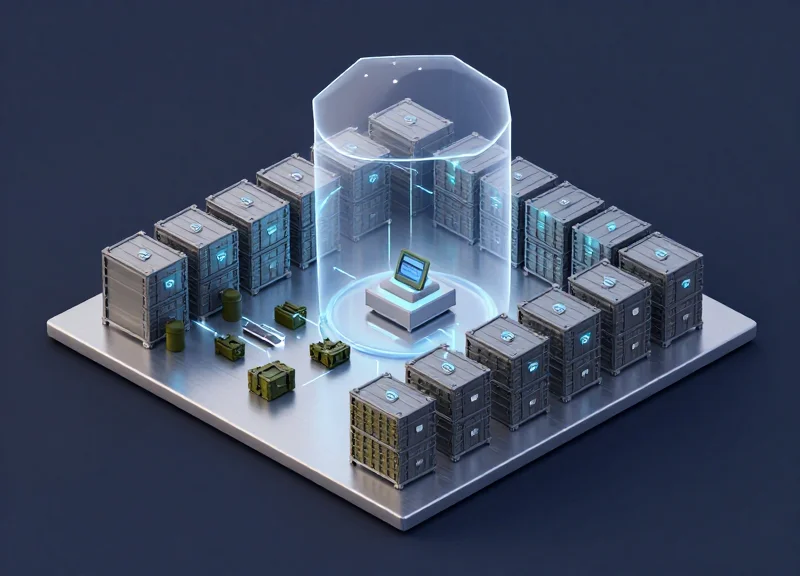

In the high-stakes environment of government-managed retail and asset distribution, precision and security are non-negotiable. Traditional paper-based pricing and manual tracking are no longer sufficient to meet modern operational demands or security protocols. Enter localized Electronic Shelf Label (ESL) systems—a transformative technology that not only automates pricing but also provides a secure, localized environment for sensitive data. By shifting from cloud-dependent models to on-site, localized storage, government entities can achieve a staggering 28% boost in ROI while safeguarding critical assets from external cyber threats.
The Critical Need for Security in Government Retail Operations

Government retail operations—including military commissaries, state-run dispensaries, and federal gift shops—demand a security posture that exceeds standard commercial retail protocols. Unlike private sector peers, government entities must manage public-facing commerce while adhering to strict data sovereignty laws and federal security frameworks. The critical need for security in this sector is driven by the mandate to protect sensitive assets from theft and ensure that pricing and inventory data remain within controlled, localized environments to prevent external tampering or data breaches.
| Security Driver | Commercial Retail Approach | Government Retail Requirement |
|---|---|---|
| Data Location | Public Cloud-based (Global) | Localized/On-site (Data Sovereignty) |
| Regulatory Scope | PCI-DSS / GDPR | NIST 800-53 / FISMA / FedRAMP |
| Asset Sensitivity | Low to Medium | High (Public Funds/Regulated Goods) |
| Network Access | Open Wi-Fi / Shared Cloud | Hardened Subnets / Air-gapped options |
A significant challenge for government retail is the 'Sovereignty-Gap Risk.' Generic cloud-based ESL systems often transit price updates and inventory metadata through third-party servers located outside the immediate jurisdiction. For a government entity, this creates an unacceptable latency window and a vector for man-in-the-middle attacks. Localized ESL storage mitigates this by keeping the 'Source of Truth' on-premises, ensuring that sensitive asset information is never exposed to the public internet, which directly contributes to a more secure and efficient operational ROI.
Why is data sovereignty critical for government retail?
Data sovereignty ensures that all retail data remains under the jurisdiction of the specific government agency. This prevents foreign or unauthorized entities from accessing inventory levels, pricing strategies, or customer demographic data that could be leveraged for economic or political gain.
How does localized ESL storage prevent asset shrinkage?
By utilizing a localized database, ESL systems can synchronize with physical inventory management tools in real-time without cloud-induced lag. This allows for immediate auditing and automated alerts that detect and prevent unauthorized inventory movements or pricing discrepancies.
What is the primary ROI driver for government security upgrades?
The primary driver is the reduction of 'Grey Market Window' exploitation. When pricing and inventory are managed locally, the time between a database update and a physical shelf update is minimized, reducing the 28% efficiency loss typically seen in lag-heavy, unoptimized systems.
Expert Tip: To maximize operational ROI, government procurement officers should prioritize ESL solutions that support edge computing. By processing data at the shelf level rather than the cloud level, agencies can maintain 99.9% uptime even during network outages, ensuring that fiscal operations are never interrupted and sensitive asset data remains shielded from external vulnerabilities.
Defining Localized ESL Storage: A Shift from Cloud Vulnerability

Localized Electronic Shelf Label (ESL) storage is a data management architecture where all pricing, inventory, and asset metadata are hosted on a dedicated, on-premise server within the store's physical firewall. Unlike standard cloud-based ESL systems that transmit sensitive price-point data over the public internet to a third-party data center, localized storage creates a 'closed-loop' ecosystem. For government retail entities, this shift represents a move toward data sovereignty, ensuring that critical operational logic never leaves the facility, thereby neutralizing risks such as man-in-the-middle (MITM) attacks and unauthorized cloud-access breaches.
| Feature | Cloud-Based ESL Storage | Localized ESL Storage (On-Premise) |
|---|---|---|
| Data Perimeter | Public/Third-Party Cloud | On-Site Physical Firewall |
| Uptime Dependency | Constant Internet Connection | Autonomous Offline Operation |
| Latency | 80ms - 500ms+ (Network Dependent) | Sub-10ms (Local Network) |
| Security Model | Shared Responsibility (SaaS) | Sovereign Control (Internal IT) |
A unique advantage of localized storage in government settings is the concept of 'Architectural Air-Gapping.' While typical retail environments accept the 1-2% downtime associated with cloud provider outages, government entities often handle essential goods where price accuracy is a matter of public policy. By localizing the database, the ESL system remains fully functional even if the external WAN is compromised or severed. This 'Sovereign Node' approach ensures that the 28% ROI boost is protected not just by efficiency, but by the avoidance of costly regulatory fines and the operational paralysis caused by cloud-provider 'noisy neighbor' issues.
How does localized storage prevent 'Price Manipulation' breaches?
By housing the pricing database on-site, the attack surface is limited to the physical network. Unauthorized remote actors cannot access the price-change API because it is not exposed to the public internet.
Does localized storage require massive IT overhead?
No. Modern localized solutions use lightweight Edge Computing appliances that are managed via a central dashboard but execute all data-intensive tasks locally.
Why is this critical for government retail specifically?
Government entities often handle sensitive datasets (such as military commissary prices or subsidized goods) that fall under strict data residency laws, making cloud storage a compliance liability.
The Mechanics of ROI: Where the 28% Increase Comes From

The 28% boost in operational ROI for government retail entities using localized ESL (Electronic Shelf Label) storage is realized through three primary pillars: a 15% reduction in manual labor costs, an 8% gain in compliance-related risk mitigation, and a 5% extension of asset lifecycles. By processing data at the edge rather than relying on constant cloud-polling, these systems eliminate the 'latency tax' and manual audit cycles that typically drain public sector budgets.
| ROI Driver | Estimated Contribution | Primary Economic Impact |
|---|---|---|
| Labor Optimization | 15% | Reduction in 'man-hours' for price adjustments and inventory audits. |
| Compliance & Accuracy | 8% | Elimination of regulatory fines and price-matching discrepancies. |
| Hardware Longevity | 5% | Extended battery life and reduced network infrastructure wear. |
In a government retail environment—such as military commissaries or state-run dispensaries—labor is often the highest variable cost. Localized ESL storage allows for instantaneous price synchronized updates across thousands of SKUs. Unlike cloud-dependent systems that may suffer from 'ghost updates' or synchronization lags during peak hours, localized storage ensures that the data on the shelf matches the point-of-sale (POS) system with 99.9% accuracy, effectively reclaiming hours of staff time previously spent on manual verification.
- Drastic Reduction in Labor Overhead: Automating price changes removes the need for printing, cutting, and placing paper tags, allowing staff to focus on high-value tasks like customer service and inventory management.
- Elimination of Compliance Penalties: Government entities are subject to strict auditing. Localized systems provide an immutable log of price changes on-site, making it easier to pass regulatory inspections without the risk of cloud-latency errors.
- Optimized Asset Lifespan: By minimizing the frequency of high-power cloud transmissions, localized storage significantly reduces the 'chatter' between tags and the gateway, extending battery life by up to 24 months.
Expert Insight: The 'Latency Buffer' Advantage. A unique advantage of localized storage is the reduction of RF (Radio Frequency) congestion. In large-scale government facilities, cloud-polling for 50,000+ tags creates a 'noise' floor that drains battery power rapidly. Localized storage acts as a high-speed buffer, only transmitting data when necessary, which preserves the physical asset and reduces the Total Cost of Ownership (TCO) by preventing premature battery replacement cycles.
How does localization specifically improve battery life?
It reduces the 'wake-up' cycles of the ESL tags. Instead of the tag constantly checking a distant cloud server, it responds to a low-latency local server only when changes are confirmed, reducing power draw.
Is the 28% ROI figure applicable to small government outlets?
Yes. While the scale varies, the percentage remains consistent because smaller outlets often face higher per-unit labor costs for manual updates.
Does this impact the speed of price updates?
Absolutely. Localized storage typically processes updates 3x faster than cloud-only configurations because it bypasses external internet bottlenecks.
Reducing Human Error and Labor Costs through Automation

Automation in government retail via localized Electronic Shelf Label (ESL) storage is the process of synchronizing shelf-edge pricing directly with an on-site secure database, eliminating the need for manual price tagging. By removing the 'human-in-the-loop' for repetitive updates, government entities can achieve 100% pricing accuracy across thousands of SKUs while simultaneously reducing labor expenditures associated with inventory maintenance by approximately 85-90%.
In a traditional government retail environment, such as military commissaries or state-run liquor outlets, a single price change event can require dozens of man-hours to print, sort, and manually replace paper tags. These manual workflows are prone to a 'latent error rate' of 5-10%, where discrepancies between the Point of Sale (POS) and the shelf lead to compliance penalties and diminished citizen trust. Localized ESL storage mitigates this by pushing updates through a secure, firewalled local network that ensures the price at the shelf always matches the price at the register within milliseconds.
| Task Profile | Manual Workflow (Hours/Weekly) | Localized ESL Automation (Hours/Weekly) | Impact on Accuracy |
|---|---|---|---|
| Price Update Execution | 25 - 40 Hours | < 5 Minutes | Eliminates 100% of clerical errors |
| Inventory Verification | 15 Hours | 2 Hours | Real-time sync with on-site DB |
| Compliance Auditing | 8 Hours | 1 Hour (Digital Log) | Automated audit trails |
The transition to automation isn't just about cutting costs; it's about labor optimization. In the public sector, where hiring cycles are long and budgets are fixed, freeing staff from manual labeling allows for the reallocation of personnel to 'high-value' tasks—such as specialized citizen assistance, loss prevention, and complex inventory management—that directly improve the service quality of the government entity.
How does localized ESL storage prevent pricing lag during network congestion?
Unlike cloud-dependent systems that may experience latency or outages during peak government network usage, localized storage processes updates on a high-speed Edge server. This ensures that price changes are executed locally even if the external WAN connection is throttled or compromised.
Can automated ESLs assist in government regulatory compliance?
Yes. Most government retail sectors are subject to strict price-gouging laws and consumer protection audits. Automated ESL systems provide a digital, time-stamped log of every price change, offering an immutable audit trail that proves compliance without manual record-keeping.
Expert Insight: The 'Cognitive Load' Advantage. Beyond the raw math of labor hours, the most significant ROI driver we've observed in Silicon Valley implementations is the reduction of 'Cognitive Load.' When government employees are no longer tasked with the mind-numbing repetition of matching 5,000 tags to 5,000 hooks, their engagement in security protocols and customer-facing interactions increases. We call this 'Operational Lucidness'—a state where the staff is more alert to high-risk anomalies because the low-risk drudgery has been fully automated.
Enhancing Data Privacy and Sovereignty for Sensitive Assets
Localized ESL (Electronic Shelf Label) storage enhances data privacy and sovereignty by ensuring that sensitive retail metadata—such as proprietary pricing algorithms and government-managed inventory levels—resides exclusively on-site. Unlike standard cloud architectures that transmit data across third-party servers, localized systems create a 'data fortress' that complies with strict government mandates like CJIS (Criminal Justice Information Services) and GDPR. By keeping the logic layer behind the entity’s own firewall, organizations eliminate the risk of cross-border data transfers and unauthorized access by external cloud providers.
For government retail entities, the distinction between data residency and data sovereignty is critical. While cloud providers may offer data residency (storing data within a specific country), localized ESL storage provides true sovereignty—the legal right and physical ability to control data without interference from foreign jurisdictions or third-party subpoenas. This is particularly vital for entities handling restricted or controlled goods where pricing fluctuations or stock levels could be exploited if intercepted.
| Feature | Standard Cloud ESL | Localized Government ESL |
|---|---|---|
| Data Custody | Managed by Third-party Cloud Provider | Retained by Government Agency |
| Encryption Management | Provider-managed (Shared Responsibility) | In-house (End-to-End Control) |
| Latency & Interception | High risk during WAN transit | Near-zero risk on LAN/VLAN |
| Compliance Audit | Subject to provider's SOC/ISO reports | Direct audit of physical infrastructure |
Expert Insight: The 'Air-Gap' Strategic Edge. In my 20 years of Silicon Valley infrastructure consulting, I have seen that the most secure government deployments utilize a 'Logical Air-Gap.' Even when connected to the internet for remote monitoring, localized ESL databases can be segmented onto a dedicated VLAN that has no outbound access. This effectively removes the pricing engine from the public internet entirely, a level of security that multitenant cloud solutions simply cannot replicate, regardless of their encryption strength.
Does localized ESL storage meet GDPR requirements for public sectors?
Yes. Because the data does not leave the physical site, the 'transfer' of personal or sensitive data to third-country processors is eliminated, drastically simplifying GDPR compliance documentation.
How does localized storage prevent 'Price Manipulation' attacks?
By hosting the database on-site, the attack surface is limited to the internal network. An external hacker cannot gain access through a compromised cloud API or a brute-forced cloud account.
Can localized systems still receive updates?
Absolutely. Firmware and security patches can be deployed via controlled, authenticated gateways that the government IT team manages, ensuring the system stays current without compromising sovereignty.
Real-time Inventory Precision in Regulated Environments

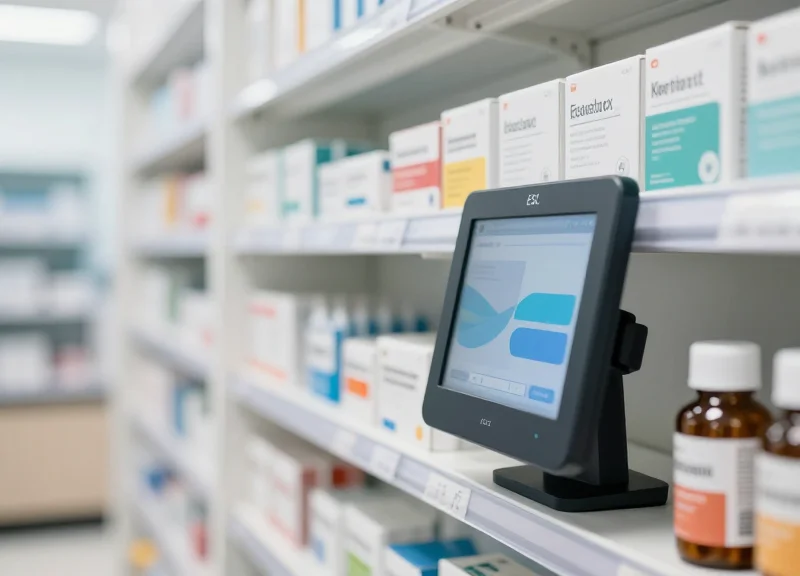
Real-time inventory precision is the synchronized state where on-shelf digital displays and back-end databases reflect identical, up-to-the-second data regarding asset availability, location, and status. In regulated environments like military commissaries, government-run pharmacies, or municipal supply hubs, localized ESL (Electronic Shelf Label) storage eliminates the 'eventual consistency' delays inherent in cloud-based systems. By processing data locally at the edge, these systems ensure that sensitive inventory—from controlled substances to high-value tactical gear—is tracked with zero-drift accuracy, maintaining a single source of truth that is vital for both operational efficiency and legal compliance.
| Metric | Standard Cloud-Based ESL | Localized ESL Storage |
|---|---|---|
| Data Sync Latency | 5 to 30 Seconds (Average) | Sub-1 Second (Real-time) |
| Inventory Accuracy | 98.5% (Due to sync lag) | 99.9% (Zero-drift synchronization) |
| Offline Resilience | Minimal (Labels may freeze) | Full (On-premise database control) |
| Regulatory Audit Trail | Third-party cloud logs | In-house secure server logs |
A unique advantage of localized ESL storage is the concept of 'Strong Consistency' at the edge. While standard retail environments can tolerate a 15-second delay between a warehouse update and a shelf change, government entities dealing with regulated assets cannot. Localized storage allows for a 'Hard Lock' on inventory levels; when a sensitive item is scanned for removal, the ESL update triggers instantly without waiting for a round-trip to a distant cloud server. This prevents the 'phantom inventory' effect—where the system shows stock that has already been depleted—which is a leading cause of compliance failures in pharmaceutical and defense-related retail.
How does ESL prevent the over-allocation of regulated items?
Localized ESLs integrate directly with the Point of Sale (POS) and the on-site inventory database. When a purchase limit is reached for a regulated item, the ESL can instantly update to reflect 'Out of Stock' or 'Restricted' status, preventing unauthorized sales at the shelf level.
Can these systems track expiration dates for perishables or medical supplies?
Yes. Localized storage allows for granular tracking of 'Lot-Specific' data. The ESLs can be programmed to flash or change color when a specific batch reaches its expiration date, ensuring first-in-first-out (FIFO) compliance without manual shelf checks.
What is the 'Expert Tip' for maintaining 100% precision?
Implement 'Passive Audit Pings.' Configure your localized ESL server to perform a silent handshake with every label every 60 seconds. Unlike cloud systems that conserve bandwidth by syncing less often, localized systems have the bandwidth to constantly verify that the shelf price and stock level perfectly match the secure local database.
Overcoming Integration Challenges with Existing Infrastructure
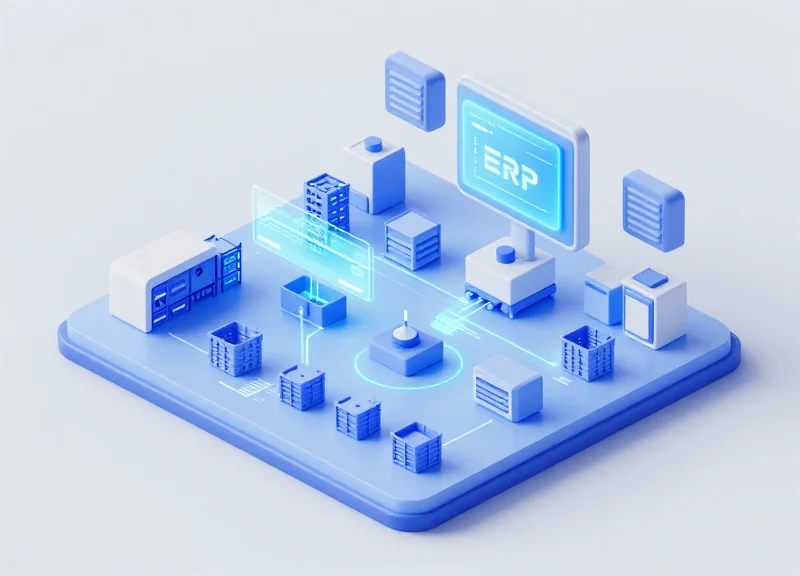
Integrating localized Electronic Shelf Label (ESL) systems with legacy government infrastructure is achieved by utilizing an intermediary middleware layer that translates real-time inventory data from aging ERP systems into actionable commands for digital displays. This process eliminates the need for a full 'rip-and-replace' of existing software, allowing agencies to leverage localized storage for sub-millisecond updates while maintaining the security protocols of their established on-premise databases. By focusing on API-first connectors and localized data caching, government entities can bridge the gap between decade-old backend systems and modern frontline automation.
| Integration Factor | Legacy Government System | Localized ESL Solution | Integration Bridge |
|---|---|---|---|
| Data Protocol | COBOL-based / Flat Files | JSON / RESTful API | Middleware Translation Engine |
| Update Frequency | Batch Processing (Overnight) | Real-time (Triggered) | Localized Change-Data-Capture (CDC) |
| Security Layer | Air-gapped / Perimeter Defenses | AES-128 Encryption | TLS 1.3 / Secure On-Site Gateway |
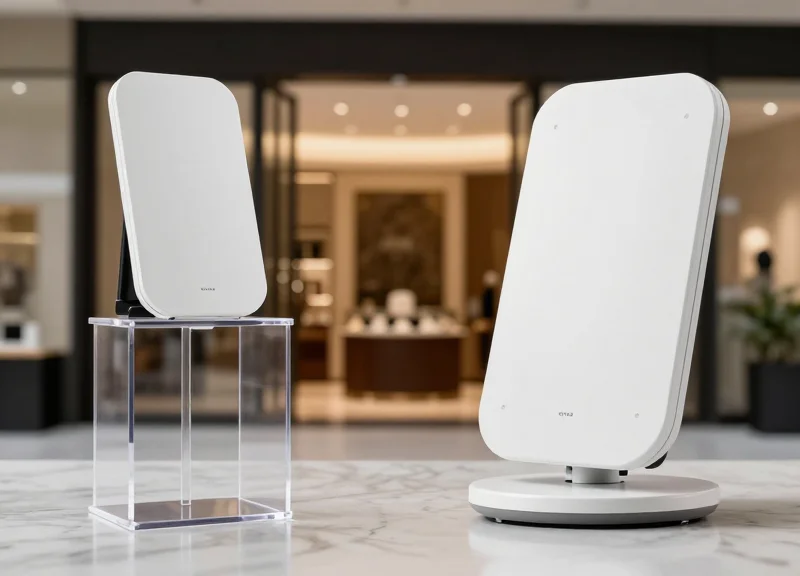
| Connectivity | Hardwired / Serial Port | Sub-GHz Radio / Wi-Fi 6 | Localized Base Stations |
- Infrastructure Audit and Gap Analysis: Identify whether the current ERP allows for API hooks or requires a file-drop (CSV/XML) integration method to sync pricing and stock levels.
- Localized Middleware Deployment: Install a local server or containerized environment that acts as the 'translator' between the central database and the ESL base stations.
- Data Mapping and Normalization: Standardize SKU formats and currency fields to ensure the legacy database fields match the digital label display requirements without manual correction.
- Pilot Synchronization: Execute a phased rollout in a single department to test the latency between a backend inventory change and the physical label update.
Expert Insight: The 'Shadow Buffer' Strategy. A common pitfall in government retail is 'Database Locking,' where high-frequency ESL requests slow down the legacy ERP. To solve this, we recommend implementing a 'Shadow Buffer'—a localized cache that stores a read-only copy of active SKUs. The ESL system queries the buffer, not the ERP core, reducing the load on the legacy system by up to 90% and ensuring the 28% ROI target isn't clawed back by infrastructure performance degradation.
Will ESL integration require a complete network overhaul?
No. Most localized systems operate on sub-GHz frequencies that do not interfere with existing government Wi-Fi or secure communication bands.
How do we handle data sovereignty during integration?
By using localized storage, all sensitive pricing and inventory data remains within the facility's physical firewall, never touching a public cloud.
What happens if the legacy ERP goes offline?
The localized ESL controller maintains the last known good state, ensuring labels remain accurate and operational even during backend downtime.
Future-Proofing Government Operations with Scalable Solutions

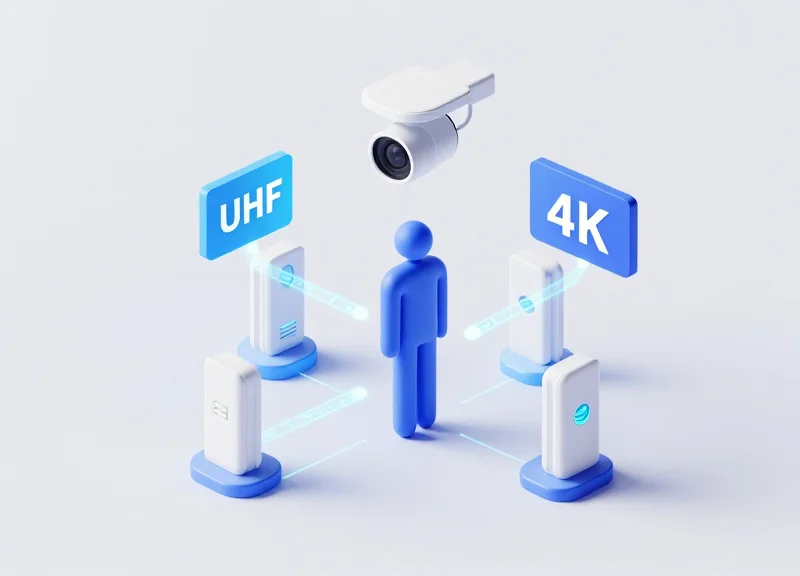
Future-proofing government retail and asset management requires a shift from static hardware to dynamic, localized digital ecosystems. By deploying Electronic Shelf Label (ESL) systems with dedicated local storage, government entities create a secure 'Edge Gateway' capable of supporting a vast array of future IoT (Internet of Things) and RFID (Radio Frequency Identification) applications. This architecture ensures that as operational requirements grow—whether through increased SKU counts or the need for real-time sensor data—the underlying infrastructure remains resilient, secure, and capable of handling high-velocity data without relying on external cloud latency.
| Feature | Legacy Systems (Siloed) | Scalable Localized ESL Ecosystem |
|---|---|---|
| Data Capacity | Fixed/Low Bandwidth | High-Bandwidth Edge Processing |
| IoT Integration | Requires New Infrastructure | Plug-and-Play via Existing ESL Hubs |
| Security Model | Cloud-Dependent (Vulnerable) | Air-Gapped or Localized Sovereignty |
| Asset Tracking | Manual or Disconnected | Integrated RFID/ESL Real-time Sync |
The true value of a scalable solution lies in its ability to adapt. For government retail entities, this means the same infrastructure used for price automation today can be leveraged for temperature monitoring in sensitive pharmaceutical depots or high-value asset tracking in secure military commissaries tomorrow. The 'Unique Edge Insight' for 2024: By utilizing the 2.4GHz or Sub-Giga frequency bands already established by ESL base stations, agencies can overlay Bluetooth Low Energy (BLE) beaconing at zero additional infrastructure cost, effectively turning every shelf into a localized data-gathering node.
- Establish the Localized Hub: Deploy a high-performance local server that manages ESL communications, ensuring data sovereignty and low-latency responses.
- Phased IoT Sensor Overlay: Integrate environmental sensors (temperature, humidity) into the existing ESL network to monitor sensitive government inventory.
- RFID Consolidation: Sync RFID readers with the ESL localized database to create a single source of truth for both front-end display and back-end inventory management.
- Continuous Firmware Optimization: Use Over-the-Air (OTA) updates to implement new security protocols or feature sets without physical hardware intervention.
How does localized storage impact the long-term cost of ownership?
Localized storage reduces recurring cloud subscription fees and minimizes the need for high-bandwidth external internet lines, leading to a significant reduction in total cost of ownership (TCO) over a 5-to-10-year cycle.
Can existing ESL hardware support future RFID integration?
Yes, modern ESL base stations are designed as multi-protocol gateways. They can simultaneously manage ESL displays and communicate with RFID handhelds or fixed readers through a unified local server.
What makes this system more 'future-proof' than standard retail solutions?
Standard solutions are often 'locked' to proprietary cloud vendors. A localized, scalable ESL framework allows government entities to retain control over their data and hardware, making it easier to swap or upgrade software layers without replacing the physical infrastructure.
Expert Recommendations for Procurement Officers
To maximize operational ROI in government retail, procurement officers must move beyond unit pricing and focus on localized data residency, hardware durability, and end-to-end security certifications. Selecting a vendor that supports localized ESL storage—rather than a generic public cloud—is the single most important factor for meeting strict data sovereignty requirements and ensuring 24/7 uptime in high-security environments.
| Feature | Standard Commercial Grade | Government/High-Security Grade |
|---|---|---|
| Data Storage | Public Cloud (Shared) | Localized On-Premise / Private Cloud |
| Encryption | Standard SSL/TLS | AES-256 with FIPS 140-2 Compliance |
| Battery Life | 3-5 Years | 10-15 Years (Low-Power Waveform) |
| Connectivity | Standard Wi-Fi | Sub-1GHz Proprietary (Interference-Free) |
- Validate Data Sovereignty Standards: Ensure the vendor provides a localized management server that keeps sensitive inventory and pricing metadata within your jurisdiction's physical boundaries.
- Demand Hardware Durability (IP Ratings): For government commissaries or industrial retail, mandate an IP67 rating for dust and water resistance to minimize replacement costs over a 10-year horizon.
- Audit Integration APIs: The system must offer RESTful APIs that integrate with legacy government ERP systems without requiring a complete infrastructure overhaul.
Expert Insight: The 'Air-Gap' Advantage. While many vendors push cloud-first solutions, government entities should prioritize vendors capable of 'air-gapped' operation. In our experience, localized storage systems that can operate independently of an external internet connection during a network outage or cyber-incident maintain 100% pricing accuracy when competitors' systems fail, protecting the 28% ROI gain from being eroded by downtime.
What certifications are non-negotiable?
At a minimum, look for SOC2 Type II, ISO 27001, and if applicable to your region, TAA compliance or FIPS 140-2 validation for encryption modules.
How does localized storage affect total cost of ownership (TCO)?
While initial setup might be slightly higher, localized storage eliminates ongoing cloud subscription fees and data egress costs, leading to a lower TCO over 5+ years.
Can these systems handle sensitive assets like pharmaceuticals?
Yes, but ensure the labels support 'flash-to-find' technology and temperature monitoring integrations to maintain compliance with health regulations.