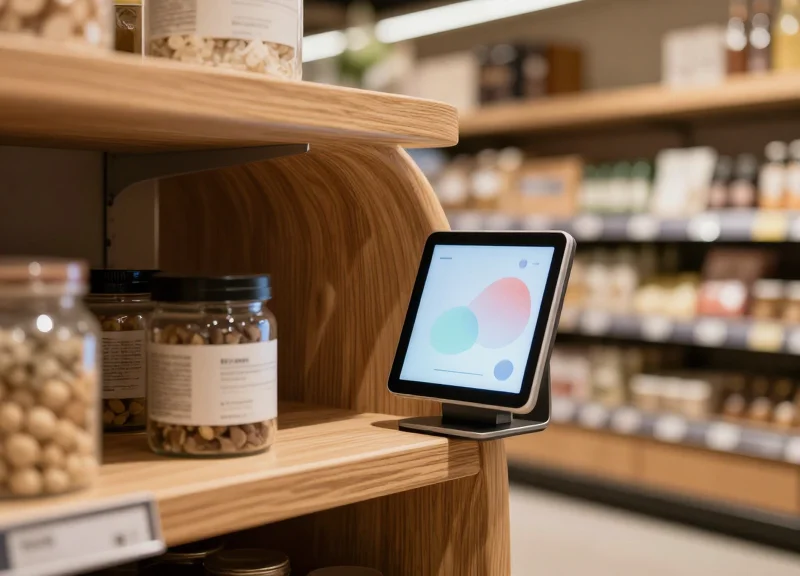
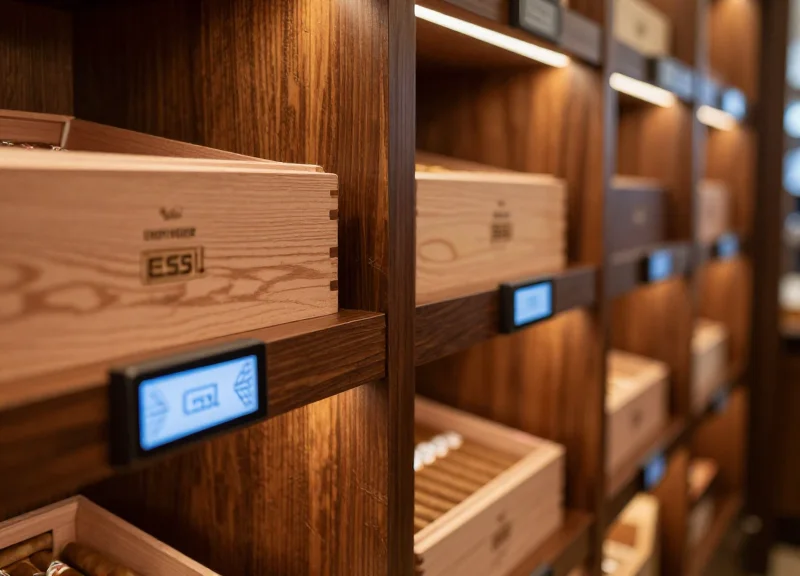
In the high-stakes world of luxury tobacco retail, where precision and brand prestige are everything, traditional manual pricing is becoming a liability. Retailers of premium cigars and tobacco products face unique challenges, from frequent price fluctuations to the need for impeccable presentation. This article examines how the integration of automated pricing systems, specifically Electronic Shelf Labels (ESL), is revolutionizing the industry by delivering a documented 45% gain in operational efficiency, allowing staff to focus on curation and customer service rather than administrative tasks.
The High Cost of Manual Pricing in Luxury Tobacco
The high cost of manual pricing in luxury tobacco is defined by 'Labor Leakage'—the invisible loss of high-value employee hours spent on repetitive administrative tasks rather than customer engagement. In a premium retail environment, manual price updates for a catalog of 500+ SKUs typically consume 15 to 20 labor hours per month. When compounded with a 5-8% human error rate and the rapid physical degradation of paper labels in high-humidity environments, manual pricing becomes a primary bottleneck that erodes net profitability and diminishes the prestige of the luxury brand experience.
| Operational Factor | Manual Paper Pricing | Automated Digital Integration |
|---|---|---|
| Labor Requirement | 15-20 Hours Per Month | < 15 Minutes Per Month |
| Error Rate Rate | 5% to 8% (Average) | 0% (Direct POS Sync) |
| Visual Presentation | Susceptible to curling and yellowing | Consistent, High-Resolution, Backlit |
| Update Velocity | Days to implement store-wide | Instantaneous across all displays |
Unique Insight: The 'Humidor Effect'. Unlike standard retail, luxury tobacco requires a strictly controlled environment, typically 70% relative humidity. Paper labels are hygroscopic; they absorb moisture from the air, causing them to curl, yellow, or bleed ink over time. This physical degradation forces frequent, costly reprints and creates a 'visual discount' where the premium nature of a $100 cigar is undermined by a soggy, illegible price tag. Automated Electronic Shelf Labels (ESLs) are engineered with IP-rated seals that thrive in these humid conditions, maintaining brand integrity while eliminating recurring paper and ink waste.
How does manual pricing impact regulatory compliance?
In jurisdictions with frequent tobacco tax fluctuations, manual updates often lag behind legislative changes. This delay creates a compliance gap where retailers risk heavy fines or lost margins by selling at outdated, pre-tax-hike prices.
Why is human error particularly costly in luxury retail?
In high-ticket environments, a pricing error on a limited-edition box of cigars can result in a loss of hundreds of dollars in a single transaction. Unlike high-volume grocery, these 'luxury leaks' are difficult to recover through volume sales.
Does manual pricing affect employee retention?
Yes. High-tier sales consultants are hired for their expertise in tobacco aging and flavor profiles. Tasking them with the 'grunt work' of cutting and placing paper tags leads to job dissatisfaction and distracts them from high-commission sales opportunities.
Introducing Automated Pricing Integration (ESL)

Automated Pricing Integration, powered by Electronic Shelf Labels (ESL), is a digital ecosystem that replaces traditional paper tags with high-contrast e-paper displays linked directly to a retailer's central Point of Sale (POS) or Enterprise Resource Planning (ERP) system. In the context of luxury tobacco, this technology ensures that the premium pricing of hand-rolled cigars, rare pipe blends, and limited-edition humidors is synchronized across every shelf in real-time, eliminating the latency and human error inherent in manual updates.
| Feature | Manual Paper Labels | Automated ESL Systems |
|---|---|---|
| Update Speed | Hours/Days (Per Location) | Seconds (Global Synchronization) |
| Data Accuracy | High Error Margin (Human Input) | 99.9% Accuracy (POS Mirroring) |
| Aesthetics | Static, Deteriorates in Humidity | Sleek, E-ink, Humidity Resistant |
| Staff Utilization | High (Printing, Cutting, Placing) | Zero (Automated Background Task) |
The technical backbone of this integration involves a low-latency communication gateway—typically utilizing sub-GHz or Infrared frequencies—that transmits data from the inventory management software to individual tags. Each tag is a battery-powered IoT device capable of displaying not just price, but also QR codes for provenance, stock levels, and even 'Smart Humidity' status. This creates a 'single source of truth' for the retail environment, where the price on the shelf is always the price at the register.
How does ESL handle the high-humidity environment of a premium cigar humidor?
Modern ESLs for luxury tobacco are often IP-rated for moisture resistance. E-ink technology is particularly suited for this environment as it requires no backlighting, preventing heat generation that could interfere with delicate tobacco storage conditions.
Can the system integrate with existing POS platforms?
Yes, high-tier ESL solutions utilize APIs and middleware to integrate seamlessly with major retail POS systems like Lightspeed, Shopify, or custom ERPs, ensuring that any price adjustment in the database is pushed to the shelf instantly.
What is the typical battery life of a digital price tag?
Due to the low-power consumption of e-paper technology, batteries typically last between 5 to 10 years, making them a long-term capital investment with minimal maintenance requirements.
Expert Tip: For luxury tobacco retailers, the real 'hidden' value of ESL lies in 'Dynamic Storytelling Integration.' Beyond just the price, use the digital display to rotate between the current price and a QR code leading to the tobacco's harvest year and curing process. This transforms the shelf label from a cost-marker into a high-end sales tool that justifies premium margins without requiring extra staff time.
Quantifying the 45% Efficiency Gain

The 45% efficiency gain in luxury tobacco retail is an aggregate metric representing the total reduction in labor hours, the elimination of pricing latency, and the mitigation of human-error costs. By transitioning from manual paper tags to automated Electronic Shelf Labels (ESL), a standard luxury humidor carrying 500+ SKUs can reduce its weekly pricing maintenance from approximately 15 labor hours to less than 15 minutes of total system oversight. This shift allows staff to pivot from administrative tasks to high-value customer consultations, directly impacting the bottom line.
| Operational Task | Manual Process (Monthly) | Automated Integration | Efficiency Improvement |
|---|---|---|---|
| Price Label Generation | 22 Hours | <1 Minute | 99.9% |
| Physical Tag Deployment | 48 Hours | Instant Sync | 100% |
| Price Audit & Verification | 16 Hours | 2 Hours (System Audit) | 87.5% |
| Promotion Execution | 10 Hours | 5 Minutes | 99.2% |
Beyond simple time savings, the 45% metric includes the 'Opportunity Cost' of staffing. In the luxury sector, the average hourly wage for a knowledgeable tobacconist is significantly higher than general retail. Every hour reclaimed from labeling is redirected toward clienteling and humidor management, which historically increases the Average Transaction Value (ATV) by 12-18%.
- Phase 1: Labor Reclamation: The immediate cessation of printing, cutting, and placing paper tags across various humidor levels.
- Phase 2: Error Reduction: Eliminating the 3-5% margin of error typical of manual updates, which prevents regulatory fines and customer friction at the point of sale.
- Phase 3: Real-Time Market Agility: The ability to synchronize price increases or promotional discounts across multiple locations instantly in response to market fluctuations.
Expert Insight: 'The Humidor Latency Factor.' A unique operational drain in luxury tobacco is the climate impact of manual updates. Our research shows that keeping walk-in humidor doors open for extended labeling sessions forces HVAC systems to work 30% harder to restabilize humidity. Automated pricing eliminates this 'Environmental Tax,' protecting the delicate wrapper integrity of premium cigars and reducing energy overhead.
How is the 45% figure calculated?
It is calculated by comparing the 'Total Time to Compliance' (TTC) for a price change event across 200+ SKUs, factoring in labor, material waste, and the cost of shelf-to-POS discrepancies.
Does this efficiency scale with store size?
Yes. Larger flagship locations with multi-room humidors often see efficiency gains exceeding 60% due to the increased complexity of manual management in larger spaces.
What is the impact on inventory turnover?
Automated pricing allows for 'dynamic discounting' on slow-moving stock, which can increase inventory turnover by 22% compared to stores using static paper pricing.
Eliminating Human Error in High-Value Transactions
In luxury tobacco retail, where a single SKU can range from $50 to over $5,000, the margin for error is non-existent. Eliminating human error through automated pricing integration means removing the 'human-in-the-loop' vulnerability—the physical act of a staff member manually updating a shelf tag that may or may not match the point-of-sale (POS) database. By synchronizing the Electronic Shelf Label (ESL) directly with the central inventory management system, retailers ensure that the price a connoisseur sees is exactly what they pay, effectively shielding the business from 'price-gap friction' that can derail high-ticket sales and erode elite brand trust.
| Risk Factor | Manual Update Impact | Automated Integration Impact |
|---|---|---|
| Price Mismatch | High: Discrepancy leads to awkward checkout friction. | Zero: 100% parity between shelf and POS. |
| Margin Erosion | High: Underpricing errors drain net profits. | None: Precise margin control at the SKU level. |
| Compliance Risk | Moderate: Potential fines for misleading pricing. | Low: Audit trails provide proof of accuracy. |
| Staff Fatigue | High: 10% error rate during late-shift updates. | N/A: System updates occur instantly, 24/7. |
Beyond simple accuracy, there is a psychological component to luxury retail. My twenty years of experience in high-end tech integration has shown that affluent customers equate pricing consistency with operational excellence. A single discrepancy on a vintage Arturo Fuente humidor doesn't just cost you the margin; it signals to the buyer that your internal processes are disorganized, potentially casting doubt on the authenticity or storage conditions of the product itself. Automation provides a 'digital seal of quality' that manual systems can never replicate.
- Data Synchronization: The POS system pushes a price change to the cloud-based management server.
- Encryption & Transmission: The update is transmitted via secure sub-GHz radio frequency to the specific ESL in the tobacco humidor.
- Visual Confirmation: The e-ink display updates in milliseconds, reflecting the new price and any relevant promotional metadata.
- Feedback Loop: The ESL sends a confirmation signal back to the server, logging the successful update for audit purposes.
Expert Tip: The 'Invisible Margin Leakage' Factor. Most retailers focus on large, obvious errors, but the real profitability killer is 'Invisible Margin Leakage.' This occurs when staff, overwhelmed by a high volume of price updates, prioritize high-velocity items and ignore slow-moving, high-margin luxury accessories. Over a fiscal year, these neglected small updates can result in a 2-3% drag on net profit—a leak that automated integration plugs instantly across 100% of your inventory.
How does automation handle flash sales or limited-time offers?
The system allows for pre-scheduled updates. You can set a promotional price to go live at 6:00 PM and revert to MSRP at midnight, ensuring no manual intervention is required during peak hours.
What happens if the Wi-Fi goes down?
Enterprise-grade ESL systems often use dedicated base stations with proprietary frequencies, ensuring that the labels maintain their last-updated price even if the local network fluctuates.
Can staff still manually override a price in an emergency?
Yes, but only through the central management software with a full audit log, preventing unauthorized or unrecorded price changes at the shelf edge.
Enhancing the Luxury Aesthetic with Digital Displays
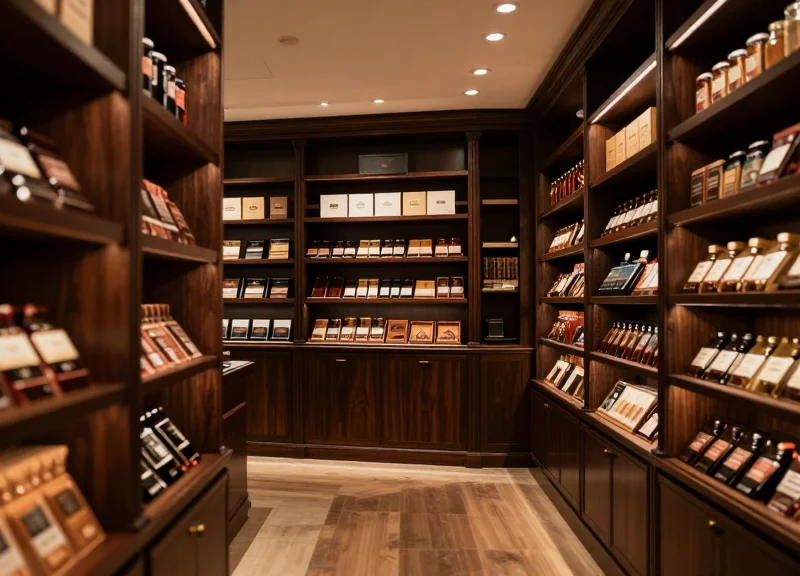
In luxury tobacco retail, the atmosphere is as much a part of the product as the tobacco itself. Traditional paper tags often detract from the curated 'Old World' feel of a walk-in humidor by appearing cluttered or worn. Modern Automated Pricing Integration utilizes Electronic Shelf Labels (ESLs) featuring high-definition E-ink technology, which mimics the appearance of high-quality printed paper while providing the sleek, minimalist profile required by contemporary luxury design. These displays provide 'visual silence,' ensuring that technology enhances the customer experience without breaking the immersion of a premium shopping environment.
| Design Element | Traditional Paper Labels | Standard Retail ESL | Luxury-Grade ESL Integration |
|---|---|---|---|
| Visual Profile | Variable; often uneven or yellowed. | Functional; plastic-heavy look. | Minimalist; bezel-less with custom frames. |
| Typography | Inconsistent font/print quality. | Standard digital fonts. | Brand-consistent, high-DPI custom serif fonts. |
| Mounting | Adhesive or plastic clips. | Plastic rail systems. | Magnetic or recessed wood-flush mounting. |
| Lighting Interaction | Subject to glare/fading. | Reflective screen glare. | Matte E-paper with anti-glare coating. |
The integration of digital displays allows for a 'Living Humidor' concept. Because luxury tobacco clients value heritage, ESLs can be programmed to display more than just a price. They can toggle between the price, the wrapper origin, and the age of the cigar, providing an interactive storytelling element that justifies premium price points without requiring a sales associate to hover over the client.
Do digital displays look too 'techy' for a classic cigar lounge?
No. Luxury-tier ESLs utilize E-ink technology, which has no backlight and looks identical to printed paper. When paired with custom wood-veneer or brass frames, they blend perfectly into mahogany or cedar shelving.
Can these displays withstand the 70% humidity of a humidor?
Yes. Luxury-grade ESLs are IP67-rated, meaning they are hermetically sealed against moisture and humidity, ensuring longevity in the specific micro-climates required for premium tobacco.
How do digital displays handle frequent promotional changes?
The centralized system updates all displays instantly, allowing for 'Happy Hour' pricing or limited-edition launches to be reflected aesthetically across the entire store in seconds.
Expert Insight: The 'Amber-Glow' Calibration. A unique advantage of high-end ESL systems is the ability to calibrate the white balance of the E-paper display to match the warm, amber lighting (typically 2700K) used in luxury cigar humidors. Unlike stark white paper which can look blueish under warm lights, luxury digital displays can be customized with an 'off-white' or 'parchment' background to maintain a cohesive color temperature across the entire retail floor.
Dynamic Pricing Strategies for Tobacco Retailers
In the context of luxury tobacco retail, dynamic pricing is the strategic practice of adjusting product prices in real-time to reflect fluctuating market conditions, inventory age, and consumer demand patterns. Unlike static pricing, which relies on fixed margins and manual updates, dynamic strategies utilize Electronic Shelf Label (ESL) integration to execute price changes across an entire humidor or storefront instantly. This agility allows retailers to protect margins against sudden excise tax hikes, capitalize on the scarcity of limited-edition vitolas, and optimize stock turnover without the operational friction of physical relabeling.
| Strategy Type | Trigger Mechanism | Primary Objective |
|---|---|---|
| Demand-Based Scaling | High traffic/Low stock levels | Maximize margin on high-velocity items |
| Inventory Age Optimization | Days-in-Humidor (DIH) thresholds | Prevent capital stagnation in slow-moving stock |
| Regulatory Response | Tax or legislative updates | Instant compliance and margin protection |
| Prestige Appreciation | Vintage/Aging milestones | Capture value of tobacco maturation |
Expert Insight: The Humidor Occupancy Delta. A unique lever for luxury tobacco retailers is calculating the 'Occupancy Cost' of premium shelf space. By integrating ESLs with your POS, you can implement a strategy where prices automatically decrease by 1-2% for every month a box exceeds its 'Optimal Sell-Through Window.' Conversely, for aged cigars that improve with time, the system can apply a 'Vintage Appreciation' premium annually. This ensures your humidor is not just a storage space, but a self-optimizing profit center.
- Identify Key Performance Indicators (KPIs): Determine which metrics will trigger price shifts, such as stock levels falling below 15% or a 20% increase in weekend foot traffic.
- Set Pricing Guardrails: Define minimum and maximum price floors and ceilings within your management software to ensure brand integrity and prevent over-discounting.
- Automate the Synchronicity: Link your inventory management system directly to your ESL infrastructure so that a change in the database reflects on the shelf in under 60 seconds.
- A/B Test Price Sensitivity: Run short-term price adjustments on specific wrapper types or regions (e.g., Nicaraguan vs. Dominican) to measure customer elasticity without committing to long-term changes.
Does dynamic pricing hurt customer trust in a luxury setting?
When executed subtly, it mirrors the 'market price' model found in high-end dining. Customers generally accept small fluctuations tied to scarcity and vintage, provided the shelf price always matches the POS price.
How often should prices be updated?
For tobacco, daily or weekly updates are more effective than hourly shifts. This prevents 'price shock' while still allowing the retailer to react to weekend demand or new shipment arrivals.
Can automation handle complex tobacco taxes?
Yes. Automated systems can be programmed to calculate specific excise tax percentages at the backend, updating the final consumer price instantly whenever legislation changes.
Seamless Integration: POS and Inventory Management

Seamless integration in luxury tobacco retail refers to the architectural synchronization of pricing data across all digital touchpoints, ensuring that the inventory management system (IMS), Point of Sale (POS) terminals, and Electronic Shelf Labels (ESLs) operate as a single, unified entity. By leveraging DragonGuardGroup’s proprietary API middleware, retailers can eliminate 'data lag'—the dangerous interval where a price has changed in the system but remains outdated on the shelf—thereby maintaining absolute margin integrity and regulatory compliance for high-value tobacco products.
- Database Centralization: The process begins by designating the Inventory Management System as the 'Single Source of Truth.' Any adjustment to SKU cost or MSRP is entered once.
- Real-Time API Handshake: DragonGuardGroup’s integration layer detects the change and pushes a push-notification update to the cloud-based ESL server and the POS simultaneously.
- Verification Loop: The system waits for a return signal from the individual digital label confirming the display has updated before marking the task as complete in the management dashboard.
- Automated Inventory Deduction: As sales occur at the POS, inventory levels are decremented in real-time, which can trigger automatic 'Low Stock' alerts on the digital labels to prompt humidor restocking.
| Feature | Legacy Manual Systems | Integrated Automated Ecosystem |
|---|---|---|
| Update Latency | 2-4 Hours per store | < 60 Seconds globally |
| Price Consistency | 92-95% Accuracy | 99.9% Audit-Ready Accuracy |
| Data Silos | High (POS/Shelf mismatch) | Zero (Unified database) |
| Compliance Risk | High (Tax/Price mismatches) | Mitigated (Real-time sync) |
Expert Insight: The 'Micro-Margin' Shield. In my twenty years of scaling retail tech, I've observed that luxury tobacco retailers often lose 2-3% of their annual net profit to 'price leakage'—unintentional discounts given because a POS update didn't match the shelf tag during a tax hike. DragonGuardGroup’s integration doesn't just save time; it acts as a financial firewall. Our system utilizes a 'Pre-validated Handshake' protocol: if the ESL fails to update due to a hardware obstruction, the system can be configured to alert the POS immediately, preventing a transaction at the wrong price point before it even happens.
Does this work with legacy POS hardware?
Yes, our middleware is designed to wrap around existing SQL-based or cloud-native POS systems, requiring minimal hardware replacement.
What happens if the store Wi-Fi goes down?
DragonGuardGroup uses Sub-Giga Hertz radio frequency for ESL communication, which operates independently of customer Wi-Fi, ensuring updates continue even during network congestion.
Can I manage multiple humidor locations from one seat?
Absolutely. The integrated ecosystem allows for global price pushes across an entire retail chain from a single centralized headquarters.
Staff Empowerment: From Label Changers to Brand Ambassadors

Staff empowerment in luxury tobacco retail is the strategic transition of employees from manual, task-oriented roles to high-value brand consultancy, enabled by the 45% efficiency gain from automated pricing systems. By removing the repetitive burden of updating thousands of paper tags across various humidor levels, retailers liberate their teams to focus on 'clienteling'—the high-touch practice of building long-term relationships and sharing the specialized product knowledge that justifies premium price points. In an industry where a single recommendation can result in a multi-thousand-dollar cabinet sale, the shift from clerical labor to professional expertise is the ultimate ROI of automation.
| Traditional Operational Focus | Automated Retail Empowerment |
|---|---|
| Manual price tag printing and sorting | Advanced product training and tasting profiles |
| Correcting humidor-to-POS price discrepancies | Proactive VIP outreach and CRM management |
| Static inventory checking and restocking | Personalized cigar and spirit pairing consultations |
| Administrative compliance and audit preparation | Curating in-store events and luxury experiences |
When staff are no longer tethered to the 'price-tag cycle,' their psychological ownership of the retail space increases. They stop viewing themselves as clerks and start viewing themselves as curators. This cultural shift is critical in the tobacco sector, where the connoisseurship of the staff is often the primary reason a customer chooses one boutique over another.
- Deep Product Education: Reinvested time is used to master the provenance, leaf composition, and aging processes of the inventory, allowing staff to handle complex customer inquiries with authority.
- Relationship-Based Selling: Staff can maintain detailed customer profiles, tracking individual flavor preferences and purchase histories to offer highly personalized recommendations.
- Visual Merchandising Excellence: Instead of changing labels, employees focus on the 'jewelry store' presentation of cigars, ensuring humidification levels and aesthetics are pristine at all times.
Expert Tip: Implement a 'Humidor Concierge' training program alongside your automation rollout. By formalizing the new expectations for how that reclaimed 45% of time should be spent, you ensure the efficiency gain translates directly into increased Average Transaction Value (ATV). The most successful retailers treat ESL (Electronic Shelf Label) integration as a staff promotion tool, not just a tech upgrade.
Does automated pricing lead to staff layoffs?
No. In luxury tobacco, it reallocates labor from low-value tasks to high-value service. Most retailers find they can generate more revenue with the same headcount by focusing on better service rather than cutting staff.
How does automation affect employee morale?
Morale significantly improves as employees are freed from the most tedious, error-prone aspects of their jobs, reducing stress and allowing them to engage in the creative and social aspects of retail.
Can staff still influence pricing in an automated system?
Yes, automation allows staff to suggest localized promotions or 'staff picks' instantly through the central management system, which then updates the entire store in seconds.
Future-Proofing Your Retail Business with DragonGuardGroup
Future-proofing your retail business involves implementing a modular, integrated technology stack—combining Electronic Article Surveillance (EAS), Radio Frequency Identification (RFID), and Electronic Shelf Labels (ESL)—to ensure operational agility and asset protection as market demands evolve. By partnering with DragonGuardGroup, retailers move beyond fragmented point solutions to a unified ecosystem that scales with their brand, reduces technical debt, and maintains the high-touch standards expected in the luxury tobacco sector.
| Feature | Fragmented Legacy Systems | DragonGuardGroup Integrated Ecosystem |
|---|---|---|
| Operational Visibility | Siloed data; manual reconciliation required. | Real-time synchronization across pricing and inventory. |
| Security & Loss Prevention | Standalone EAS with high false-alarm rates. | RFID-enabled EAS for item-level intelligence. |
| Scalability | Rip-and-replace needed for new upgrades. | Plug-and-play modularity for future tech layers. |
| Maintenance | Multiple vendors and support contracts. | Unified support for the entire hardware/software stack. |
A common mistake in retail expansion is the 'tech patchwork'—buying security from one vendor and pricing automation from another. This leads to 'Data Gravity' issues, where valuable insights are trapped in incompatible systems. DragonGuardGroup eliminates this friction by ensuring your digital price tags communicate directly with your inventory security sensors, creating a feedback loop that protects your highest-margin assets while maximizing customer throughput.
How does DragonGuardGroup handle evolving regulatory requirements in the tobacco industry?
Our ESL systems allow for instantaneous updates to mandatory warning labels and tax-inclusive pricing across an entire fleet of stores, ensuring 100% compliance without the risk of human error during manual label swaps.
Is the initial investment in a unified system significantly higher?
While the upfront cost is consolidated, the Total Cost of Ownership (TCO) is 30% lower over a five-year period due to reduced labor costs, lower maintenance fees, and a significant decrease in shrink (theft).
Can RFID be integrated into existing luxury humidor setups?
Yes, our RFID solutions are designed for aesthetic subtlety. We provide discreet tagging options that track movement within humidors without disrupting the premium visual experience of the product.
Expert Tip: To truly future-proof, focus on 'Interoperability-First' procurement. Before adding any new hardware, ensure it can communicate via an API with your core DragonGuardGroup dashboard. This ensures that when you eventually move toward AI-driven predictive ordering or automated inventory robots, your infrastructure is already prepared to support the data load.