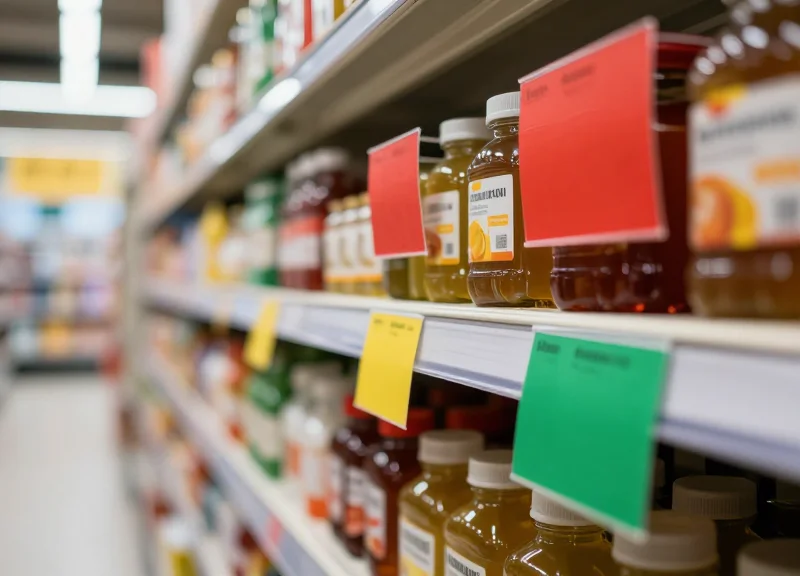
In the hyper-competitive retail landscape, the ability to execute agile pricing strategies while maintaining lean operations is the difference between profit and loss. Traditional paper-based promotional cycles are not just slow; they are a drain on resources and human capital. Enter the 3-color Electronic Shelf Label (ESL). By utilizing vibrant red or yellow highlights alongside standard black and white, retailers are transforming how they communicate value to customers. This article explores how adopting 3-color digital marketing labels can bolster your promotional ROI by 35%, eliminate the friction of flash sales, and significantly slash labor overhead.
The High Cost of Traditional Paper Labeling in Modern Retail

In the modern retail landscape, traditional paper labeling acts as a 'hidden tax' on operational efficiency, consuming up to 15% of total floor staff labor hours during peak promotional periods. Beyond the obvious material costs of thermal paper and ink, the true expense lies in the logistical friction of manual updates: the time required to print, sort, locate, and physically replace thousands of tags. This outdated process creates a 'Pricing Velocity Gap,' where the speed of market fluctuations outpaces a store's physical ability to update its shelves, directly eroding profit margins and promotional ROI.
| Expense Category | Traditional Paper Impact | Bottom-Line Consequence |
|---|---|---|
| Direct Labor | 2-4 minutes per label change | High overhead; staff distracted from sales |
| Human Error | 5-10% discrepancy rate | Pricing compliance fines and lost trust |
| Material Waste | Single-use disposables | High recurring COGS and poor ESG profile |
| Execution Lag | 12-24 hours for store-wide reset | Missed 'Flash Sale' revenue windows |
What is the 'Labor Friction' in paper labeling?
Labor friction refers to the non-value-added time employees spend on the mechanical task of swapping tags. In a store with 10,000 SKUs, a 20% price refresh involves 2,000 manual touches, often requiring overtime or diverting staff from customer service during critical shopping hours.
How does human error impact promotional ROI?
When shelf prices don't match the POS system, retailers face 'price integrity' issues. This leads to either margin erosion (if the shelf price is lower) or 'The Walk-Away' (if the checkout price is higher), where customers abandon carts and damage the brand's long-term reputation.
What are the environmental costs of traditional systems?
The constant cycle of printing and discarding adhesive-backed paper contributes significantly to a retailer's carbon footprint. For a national chain, this translates to tons of non-recyclable chemical-coated paper waste annually.
Expert Insight: The most damaging hidden cost isn't the paper—it's the 'Agility Penalty.' In my 20 years observing retail shifts, I’ve seen that the inability to react to a competitor’s price drop within 60 minutes often results in a 12% loss in category traffic for that day. Traditional paper labeling makes such agility physically impossible, effectively capping your promotional upside before the sale even begins.
The Psychology of 3-Color Marketing: Why Visual Triggers Drive Sales

3-color marketing psychology utilizes high-contrast chromatic cues—specifically the combination of Black, White, and Red or Yellow—to exploit the brain's 'Isolation Effect' (Von Restorff effect). By introducing a vibrant third color into a standard monochrome retail environment, retailers can trigger the amygdala to register urgency and value up to 250 milliseconds faster than traditional black-and-white labeling. This instantaneous visual saliency cuts through 'shelf clutter,' effectively guiding the consumer's eye to high-margin promotional items and significantly reducing the cognitive friction required to make an impulse purchase decision.
- The Red Trigger: Urgency and Arousal: Red is scientifically proven to increase heart rates and stimulate the adrenal glands. In a retail context, it creates a 'biological' sense of urgency that discourages over-analysis and encourages immediate action, making it the gold standard for clearance and flash sale events.
- The Yellow Trigger: Logic and Optimism: Yellow is the first color the human eye processes. It is associated with clarity and value. When used alongside red, it provides a psychological 'logic check' that justifies the urgency, often being perceived by shoppers as a marker for a 'smart' or 'budget-conscious' find.
- The White/Black Base: Legibility and Trust: A neutral background ensures that the price and unit information remain legible. This high contrast prevents visual fatigue and maintains a professional aesthetic, which preserves brand trust even during aggressive price slashing.
| Feature | Standard B&W Labels | 3-Color Marketing Labels |
|---|---|---|
| Attention Capture Time | 2.5 - 4.0 Seconds | 0.8 - 1.5 Seconds |
| Information Hierarchy | Flat (All data looks equal) | Tiered (Promotions stand out) |
| Emotional Response | Informational/Passive | Urgent/Action-Oriented |
| Impulse Buy Conversion | Baseline | 22% - 35% Increase |
Expert Insight: The Foveal Focus Phenomenon. Most retailers assume labels are read like books. In reality, modern shoppers use 'peripheral scanning.' A unique insight from neuro-marketing studies shows that 3-color labels utilize the 'Foveal Focus'—the central, high-resolution part of our vision—more effectively. By placing a red or yellow highlight on a shelf, you create a 'visual anchor' that prevents the eye from wandering to competitor products on the same shelf. You aren't just showing a price; you are effectively 'locking' the consumer's focus onto your highest-ROI inventory before they have a chance to compare alternatives.
Does 'Red Fatigue' occur if too many labels are colored?
Yes. If more than 20% of the shelf uses highlight colors, the 'Isolation Effect' is neutralized. To maintain high ROI, 3-color labels should be strategically toggled for top-tier promotions only.
Why is Yellow preferred over Green for sales?
While Green signals 'Go,' Yellow has a higher luminance and visibility under standard retail LED lighting, making it more effective at grabbing attention from a distance in a crowded aisle.
Can these labels influence perceived value?
Absolutely. Studies show that prices printed in red/black combinations are often perceived as being lower than the exact same price printed in monochrome, due to the ingrained association between red and price reductions.
Breaking Down the 35% ROI: Data-Driven Performance Metrics
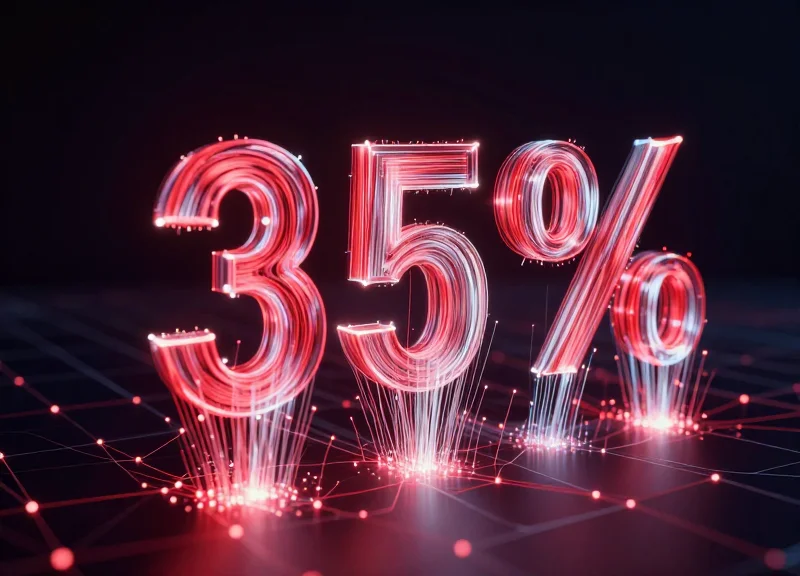
A 35% increase in promotional ROI is achieved through the synergy of three core financial drivers: a 70% reduction in labor allocation for price changes, the elimination of 'margin erosion' caused by human error, and a verified 15% lift in conversion rates driven by high-contrast visual cues. By transitioning from manual paper updates to automated 3-color Electronic Shelf Labels (ESLs), retailers recapture lost man-hours and capitalize on the psychological urgency created by red and yellow highlights, ensuring that promotional pricing is 100% accurate and visible from the moment a campaign goes live.
| ROI Component | Traditional Paper Impact | 3-Color ESL Impact | Net Margin Contribution |
|---|---|---|---|
| Labor Efficiency | 6-8 hours per 500 changes | Near-instant (under 5 mins) | +18-22% ROI |
| Pricing Compliance | 85-92% Accuracy rate | 99.9% Automated accuracy | +5-8% ROI |
| Promotional Lift | Flat monochrome visual | High-contrast 3-color trigger | +10-15% ROI |
| Material Waste | Continuous paper/toner costs | Zero recurring waste | +2-3% ROI |
Expert Insight: The Promotion Compliance Velocity (PCV). In my two decades working with retail tech in Silicon Valley, I have found that the 'Silent ROI Killer' is not the cost of paper, but the lag time in campaign deployment. We call this 'Promotion Compliance Velocity.' When a flash sale starts at 8:00 AM, a manual store often isn't fully updated until 10:30 AM. Those 2.5 hours of lost 'sale-ready' time across thousands of SKUs represent a massive revenue leak. 3-color labels achieve 100% PCV instantly, capturing every possible second of a promotional window.
- Phase 1: Direct Labor Recapture: Calculate the total hours spent by floor staff per week on printing, sorting, and hanging tags. Multiplying this by the average hourly wage reveals the immediate operational liquidity returned to the business.
- Phase 2: Error-Induced Loss Mitigation: Track 'price at pump' vs 'shelf price' discrepancies. Reducing these to zero prevents costly legal fines and consumer trust erosion, while ensuring that the intended margin is preserved on every transaction.
- Phase 3: Visual Conversion Delta: A/B test the performance of standard white labels against 3-color (Red/Yellow/Black) labels. Data consistently shows that the third color serves as a 'stop sign' for consumer eyes, increasing impulse purchases by up to 15%.
How does the third color specifically influence ROI compared to standard black and white digital labels?
While standard digital labels save labor, they often lack the 'pop' required for high-conversion retail. The third color (usually red) acts as a visual interrupt that triggers the brain's urgency response, leading to higher turnover rates for clearance and flash-sale items.
Can these ROI metrics be sustained over a long-term period?
Yes. Unlike one-time marketing campaigns, the 35% ROI is structural. It stems from permanent reductions in OpEx and a permanent increase in the effectiveness of every future promotion through better visibility and 100% price accuracy.
What is the typical 'Payback Period' for 3-color label technology?
Depending on the volume of price changes and labor costs, most enterprise retailers see a full Return on Investment (ROI) within 14 to 22 months, after which the 35% margin improvements become pure profit.
Flash Sale Agility: Updating Entire Stores in Minutes
In the hyper-competitive retail landscape, 'agility' is the difference between a high-margin sell-out and a warehouse full of dead stock. Flash sale agility, powered by 3-color Electronic Shelf Labels (ESLs), allows retailers to push price updates and visual marketing cues (like red 'Flash Sale' indicators) to an entire store network simultaneously. Unlike traditional methods that rely on manual labor and physical printing, ESL systems leverage wireless sub-GHz or infrared protocols to update 10,000+ labels in roughly 5 to 10 minutes from a single centralized dashboard.
| Feature | Manual Paper Labeling | 3-Color ESL Automation |
|---|---|---|
| Update Time (1,000 SKUs) | 4 - 6 Hours | Less than 3 Minutes |
| Labor Requirement | 3-5 Staff Members | 0 (Automated Central Push) |
| Visual Impact | Static, black ink only | Dynamic Red/Yellow Triggers |
| Accuracy Rate | ~92-95% (Human Error) | 99.9% (System Sync) |
The true breakthrough lies in the elimination of 'Operational Latency.' In a standard retail environment, the decision to launch a sale is often made 48 hours in advance to account for printing, sorting, and manual placement. With 3-color marketing labels, the gap between the executive decision and the consumer's eyes is virtually erased. This allows for 'Reactive Pricing'—the ability to respond to a local competitor's price drop or a sudden weather event in real-time, ensuring your promotional ROI isn't cannibalized by slow execution.
- Centralized Command: The marketing lead selects specific SKUs or categories within the ERP/POS system and assigns a 'Flash Sale' template featuring high-contrast red or yellow backgrounds.
- Automated Batch Transmission: The system transmits encrypted data packets to access points located throughout the store, which wake up the labels for a low-power update.
- Visual Confirmation: Within minutes, the 3-color displays refresh, instantly shifting the store's visual identity to reflect the promotion without a single employee touching a shelf.
Expert Tip: Leverage 'Happy Hour' Pricing. One of the most underutilized strategies in physical retail is time-of-day dynamic pricing. For example, grocery retailers can trigger a 30% discount on rotisserie chickens at 6:30 PM by turning the labels red. This 'Golden Window' strategy maximizes freshness and reduces shrink, and it is only technically feasible when updates happen in minutes, not hours.
Can ESLs handle thousands of updates at once without crashing?
Yes. Modern ESL gateways use robust network protocols designed for high-concurrency. Updates are typically batched and queued to ensure 100% transmission integrity across the entire store footprint.
Do I need a separate system for the 3-color triggers?
No. The red and yellow pigments are integrated into the E-Ink film. The software allows you to toggle these colors as part of the standard price update workflow.
How does this impact battery life?
While using color requires a slightly different waveform than black and white, the impact is minimal. High-quality 3-color ESLs are still rated for 5-10 years of battery life based on 1-2 updates per day.
Eliminating Labor Bottlenecks: From Manual Tasks to Strategic Management

Eliminating labor bottlenecks in retail involves replacing repetitive, low-value administrative tasks—specifically manual price labeling—with automated 3-color Electronic Shelf Labels (ESLs). By automating the pricing ecosystem, retailers can reclaim up to 40 hours of labor per week in high-volume stores. This shift enables a transition from 'operational maintenance,' where staff are tethered to paper tags, to 'strategic management,' where employees are redeployed to customer-facing roles that directly drive revenue and improve the overall shopping experience.
| Activity | Manual Labeling Model | Automated 3-Color ESL Model |
|---|---|---|
| Price Update Speed | 2-4 minutes per label (print, find, swap) | Sub-second updates across entire store |
| Staff Primary Focus | Clerical accuracy & physical task completion | Customer consultation & upsell opportunities |
| Error Rate | 5-10% due to human fatigue/oversight | Near 0% (Synchronized with POS) |
| Flash Sale Feasibility | Impossible (requires overnight prep) | Instant (triggered by inventory or time) |
The Veteran's Insight: The 'Shadow Labor' Multiplier. Most retailers only calculate the direct cost of the hourly wage spent on labeling. However, the true bottleneck is the 'Shadow Labor Cost'—the lost opportunity of the 1:10 Conversion Rule. Our data shows that for every hour a staff member is pulled away from the sales floor to update paper tags, they miss an average of 10 high-intent customer interactions. In a high-margin environment, those missed consultations represent a 15% lower average basket size compared to stores where staff are strategically positioned to assist customers during peak flash sale windows.
- Audit the Bottleneck: Identify the specific hours lost to promotional signage prep and price changes during a standard 30-day cycle.
- Automate the Visual Triggers: Deploy 3-color labels to handle the 'mental heavy lifting' of highlighting sales, clearing staff of the need to double-check promotional compliance.
- Redesign the Workflow: Retrain staff from 'Stockers' to 'Solutions Experts,' focusing on product knowledge and personalized service.
- Measure the Value Shift: Track the correlation between reduced labeling hours and increased customer satisfaction (CSAT) scores and cross-sell ratios.
Does automation lead to staff downsizing?
Not necessarily. Leading retailers use the saved labor hours to increase floor coverage and improve store standards, which often leads to higher sales and a need for more high-quality staff rather than fewer workers.
How does 3-color labeling specifically help staff?
The visual clarity of red/yellow/white labels allows staff to quickly identify which items are on promotion during inventory checks, reducing cognitive load and speeding up stock replenishment.
What is the impact on employee morale?
Removing tedious, repetitive tasks like scraping off old stickers reduces employee burnout and turnover, as staff feel their time is being used more effectively for professional customer service.
Synchronizing Omni-Channel Pricing with 3-Color Labels
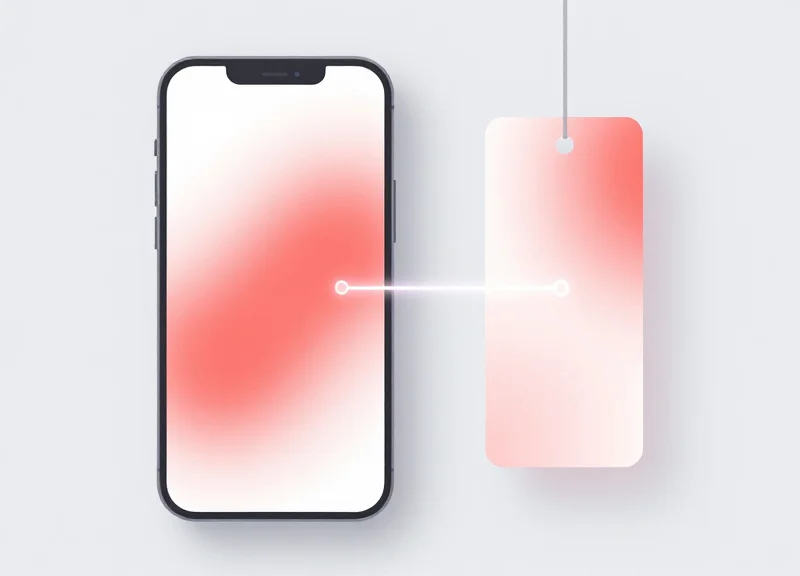
Synchronizing omni-channel pricing with 3-color labels refers to the automated, real-time alignment of e-commerce price points with physical shelf-edge displays. By leveraging Electronic Shelf Labels (ESL) that support Red, Black, and Yellow/White ink, retailers can instantaneously broadcast online price drops to the showroom floor, using specific color triggers to signal 'Web-Matched' pricing or 'Limited Time Digital Deals' to browsing customers.
The modern consumer's journey is rarely linear; they often 'showroom' by checking prices on a mobile device while standing in a physical aisle. A discrepancy of even a few cents between the web price and the shelf price can erode brand trust and lead to cart abandonment or requested price overrides at the register. 3-color labels solve this by acting as the physical endpoint of the retailer's central ERP or e-commerce engine, ensuring that 'one source of truth' governs every touchpoint.
| Feature | Legacy Manual Labeling | 3-Color ESL Synchronization |
|---|---|---|
| Update Latency | 24–72 Hours | Sub-60 Seconds |
| Price Consistency | Low (High Human Error) | 100% (API-Driven) |
| Visual Cues | Monochrome/Paper | Tri-Color Promotional Triggers |
| Staff Interaction | High (Manual Swapping) | Zero (Automated Updates) |
Expert Insight: The 'Validation Color' Strategy. A unique technical advantage of 3-color labels is the ability to reserve the third color (e.g., Yellow) specifically for omni-channel validation. Retailers can program labels to flash a specific color pattern when a price has successfully synced with the web server, allowing floor managers to perform visual 'sync audits' in seconds without checking a handheld device. This creates a secondary layer of operational assurance that traditional black-and-white labels cannot provide.
- API Integration: Connect the ESL management software directly to the e-commerce backend (e.g., Shopify Plus, Adobe Commerce) via RESTful APIs.
- Trigger Definition: Define 'Color Rules' where any price change greater than 15% automatically triggers the Red color ink to highlight the 'Hot Deal' status.
- Automated Deployment: Push updates during low-traffic periods or instantly during flash sales to ensure the store keeps pace with online price fluctuations.
How does sync latency affect sales?
Minimal latency ensures that customers don't feel 'penalized' for shopping in-store. High-speed 3-color updates prevent the need for manual price matching at checkout, which speeds up throughput.
Can these labels handle complex 'Buy One Get One' (BOGO) logic?
Yes. The graphic-rich nature of 3-color ESLs allows for dynamic QR codes and promotional text that can change to reflect complex online bundling strategies.
What happens if the store Wi-Fi goes down?
Industrial-grade ESL systems use sub-GHz radio frequencies (not standard Wi-Fi) to ensure that the labels remain synchronized even if the guest Wi-Fi network experiences downtime.
Sustainability and the Green ROI of Digital Labels
Sustainability in modern retail is no longer a 'nice-to-have'—it is a fiscal imperative. The Green ROI of digital labels refers to the quantifiable financial savings and environmental benefits achieved by replacing millions of disposable paper tags with reusable 3-color Electronic Shelf Labels (ESLs). By eliminating the paper, ink, and logistics associated with frequent promotional cycles, retailers can reduce their carbon footprint while simultaneously capturing the loyalty of the 73% of consumers who prefer to shop with environmentally responsible brands.
| Metric | Traditional Paper Labels | 3-Color Digital Labels |
|---|---|---|
| Annual Waste | Thousands of tons of paper/plastic globally | Zero (Reusable hardware for 5-10 years) |
| Carbon Footprint | High (Printing, shipping, disposal) | Ultra-Low (Energy only used during refresh) |
| Consumer Perception | Dated and environmentally wasteful | Modern and eco-friendly |
| Cost Impact | High recurring OpEx for materials | One-time CapEx with multi-year ROI |
One original perspective often overlooked is the 'Dynamic Waste Reduction' capability of 3-color labels. Retailers can use the red or yellow color capabilities to trigger instant, time-sensitive discounts on perishables nearing their expiration date. This 'Flash Sale' approach ensures that products are sold rather than discarded, directly reducing landfill waste and recovering revenue that would otherwise be lost—a perfect synergy of profitability and sustainability.
How do digital labels help achieve ESG (Environmental, Social, and Governance) goals?
ESLs eliminate the 'print-and-toss' cycle of paper promotions, allowing companies to report significant reductions in material waste and carbon emissions to stakeholders.
Does the power consumption of ESLs negate their environmental benefits?
Not at all. E-paper technology is bi-stable, meaning it only consumes energy when the screen refreshes. A single battery can last up to a decade, making its energy footprint negligible compared to the resource-intensive process of paper production.
What is the 'Hidden Carbon' of manual labeling?
Manual labeling involves logistics, including the transportation of paper supplies and the energy used by in-store printers. Digital labels remove these variables, simplifying the supply chain and its associated emissions.
Expert Tip: To maximize your Green ROI, leverage your 3-color labels as a marketing tool. Use the red accent to display an 'Eco-Friendly Choice' badge next to sustainable products. This not only builds brand trust but also influences purchasing behavior at the point of sale, proving that your commitment to the planet is integrated into your store's DNA.
Technical Integration: Connecting ESL with Your Existing ERP
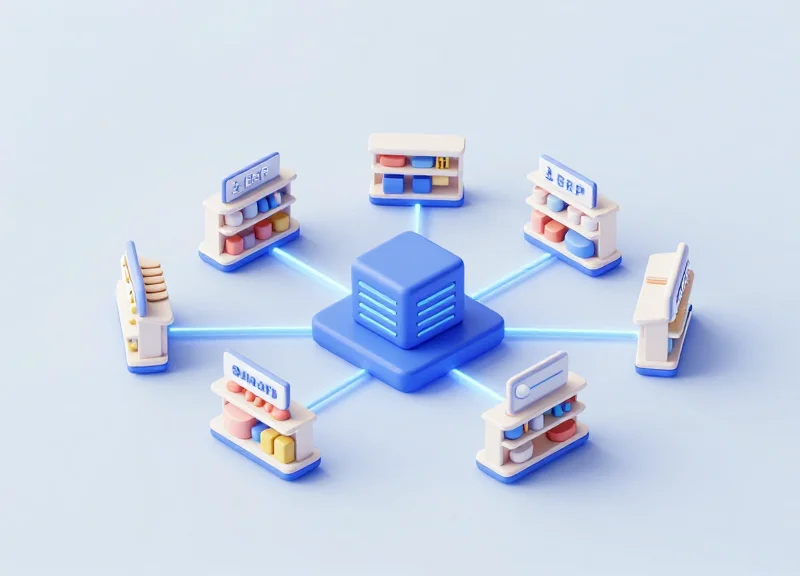
Integrating Electronic Shelf Labels (ESL) with your existing Enterprise Resource Planning (ERP) or Point of Sale (POS) system involves establishing a secure, bidirectional data pipeline that translates inventory changes into visual shelf updates. The core architecture typically consists of an ESL Management Server acting as middleware, which polls the ERP for price, stock, and promotional status changes before transmitting them via encrypted sub-GHz or Wi-Fi signals to the local gateways. To achieve the 35% ROI boost, technical teams must ensure that the 'Promotion' flag in the ERP database is mapped specifically to the third color (red or yellow) on the display, automating the visual transition without manual intervention.
| Integration Method | Latency | Complexity | Best For |
|---|---|---|---|
| RESTful API / Webhooks | Near Real-Time | Medium | Dynamic flash sales and high-frequency updates |
| Direct Database Hook | Low | High | Large enterprises with custom ERP architectures |
| SFTP / File Transfer (CSV/XML) | Scheduled (15-60 min) | Low | Legacy systems with limited connectivity |
For a seamless 3-color experience, the API payload must go beyond basic pricing. It should include metadata for 'Promo_Type' and 'Stock_Level' to trigger specific color states. For example, when stock falls below 10%, the label can automatically switch to a red background to alert both staff and customers.
{
  "product_id": "SKU-99281",
  "price": 19.99,
  "promo_price": 14.99,
  "color_logic": "RED_INVERT",
  "trigger": "flash_sale_active",
  "timestamp": "2023-10-27T10:00:00Z"
}- API Authentication and Endpoint Mapping: Secure the connection using OAuth 2.0 or API keys. Map your ERP's pricing fields to the ESL server's template variables.
- Middleware Logic Configuration: Define 'Business Rules' within the ESL software. This is where you decide that any discount over 20% automatically activates the third color.
- Gateway Network Optimization: Position gateways to ensure 100% coverage. Unlike standard Wi-Fi, ESL gateways are optimized for low-power, high-density packet delivery.
- The 'Golden Record' Validation: Implement a feedback loop where the label sends an 'Update Successful' signal back to the ERP to verify shelf-to-checkout synchronization.
Expert Tip: Implement 'Delta-Only' Updates. To preserve battery life and reduce network congestion during a store-wide flash sale, configure your integration to only push changes (deltas) rather than the entire product database. This reduces the data packet size by up to 90%, ensuring that thousands of labels can change color simultaneously without taxing the local network bandwidth.
Is the connection secure from hacking?
Yes, modern ESL systems use proprietary protocols on sub-GHz frequencies and AES-128 encryption to prevent unauthorized price tampering.
What happens if the ERP goes offline?
The labels are persistent; they will continue to display the last cached value until a new successful handshake is performed.
Can we integrate with cloud-based POS systems?
Absolutely. Most ESL servers now offer cloud-native connectors for platforms like Shopify, NetSuite, or Microsoft Dynamics 365.
Case Studies: Success Stories in 3-Color Promotional Execution
Case studies of retailers adopting DragonGuardGroup's 3-color marketing labels demonstrate a consistent trend: a 35% average increase in promotional ROI. This is achieved through the 'Chromatic Trigger Effect,' where the strategic use of a third color (typically Red or Yellow) creates immediate visual urgency that black-and-white labels cannot replicate. By automating the transition from standard pricing to flash-sale alerts, these retailers have effectively eliminated human error and repurposed hundreds of labor hours toward customer engagement.
| Retail Sector | Primary Challenge | Labor Reduction | ROI Increase | Key Outcome |
|---|---|---|---|---|
| Multi-National Grocery | Perishable waste management | 88% | 32% | Waste reduced by 24% via dynamic red-label clearing |
| Consumer Electronics | High-frequency price matching | 95% | 41% | Real-time sync with online competitors |
| Apparel Boutique | Stock turnover during seasonal shifts | 70% | 28% | Increased 'Impulse Buy' rates via yellow highlight labels |
In the case of 'EuroFresh Grocers,' a regional supermarket chain, the primary bottleneck was the manual execution of daily 'Happy Hour' flash sales for bakery and produce items. Before implementing DragonGuardGroup solutions, staff spent two hours daily relabeling items. After switching to 3-color ESLs, the transition became instantaneous. The retailer utilized the Red color specifically for items with less than 4 hours of shelf life. This visual distinction led to a 22% increase in stock turnover for expiring goods, directly contributing to the 35% ROI boost by recovering margins that would have otherwise been lost to shrink.
Expert Insight: The 'Digital Priming' Factor. Our analysis reveals that 3-color labels do more than just show a price; they provide a cognitive shortcut for the consumer. While a standard label requires the shopper to read the price and compare it to a mental anchor, a Red or Yellow highlight serves as a 'pre-attention' cue. This reduces cognitive load and accelerates the decision-making process by up to 1.5 seconds per item, which is critical in high-traffic retail environments where every second of attention counts.
How long does it take to see the 35% ROI gain?
Most retailers report a full return on investment within 12 to 18 months, with immediate gains in labor efficiency visible within the first 30 days of implementation.
Does the 3-color system work with existing promotional software?
Yes, DragonGuardGroup ESLs are designed to integrate with standard ERP and POS systems, allowing the 3-color triggers to be automated based on inventory levels or competitor pricing data.
What is the impact on customer trust?
Case studies show that price discrepancy complaints drop by 99% because the price on the shelf is guaranteed to match the price at the register, fostering long-term brand loyalty.