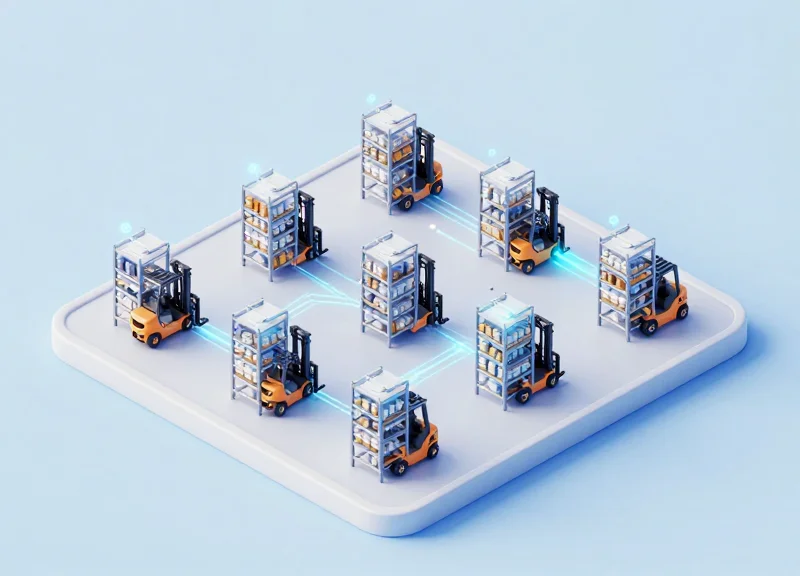
As global e-commerce demands surge toward 2026, fulfillment centers face a critical decision: how to optimize picking speed while maintaining 100% accuracy. Dynamic slotting has moved from a luxury to a necessity in the age of rapid delivery. This guide breaks down the high-stakes choice between traditional Pick-to-Light (PTL) systems and the rapidly evolving Electronic Shelf Label (ESL) technology, helping logistics leaders build a resilient, future-proof warehouse ecosystem that balances cost, speed, and precision.
The Evolution of Fulfillment: Why 2026 Demands Dynamic Slotting
Dynamic slotting is a high-velocity warehouse management strategy where pick locations are continuously reassigned based on real-time demand data, ensuring high-frequency items are always in the most ergonomic and accessible zones. As we approach 2026, the traditional 'static' model—where a product stays in a fixed bin for months—is being rendered obsolete by 'Hyper-Fluidity.' This evolution is mandatory for fulfillment centers facing the triple threat of SKU proliferation, labor scarcity, and the industry-wide shift toward sub-two-hour delivery windows.
| Feature | Traditional Static Slotting | 2026 Dynamic Slotting |
|---|---|---|
| Re-slotting Frequency | Quarterly or Annually | Daily or Shift-based |
| Logic Driver | Historical Seasonal Data | Real-time Predictive AI |
| Travel Time | High (Fixed paths) | Minimized (Heat-mapped zones) |
| SKU Life Cycle | Long-term stability | Rapid 'Flash' trends |
The move to dynamic slotting isn't just about speed; it's about the 'Frictionless Zone.' In 2026, fulfillment centers are no longer just storage boxes; they are high-frequency processing hubs. Static shelving fails because it cannot adapt to the 'Ghost SKU' phenomenon—items that trend globally on social media, spike for 48 hours, and then vanish. Without technologies like Pick-to-Light (P2L) or Electronic Shelf Labels (ESL) to instantly re-label and re-route pickers, warehouses lose 30-50% of their operational efficiency to 'dead travel'—the time pickers spend walking to empty or low-velocity bins.
Why is the 2026 SKU cycle different?
SKU life cycles have compressed by nearly 40% since 2020. Products now move through 'Hot, Warm, and Cold' status in days, necessitating a layout that can be updated instantly without manual re-labeling.
How does dynamic slotting solve labor shortages?
By using P2L or ESL, you eliminate the 'mental search' time. New or temporary workers can become 100% productive in minutes because the shelf tells them where to go, regardless of how often the layout changes.
What role does Micro-Fulfillment (MFC) play?
Small, urban fulfillment centers have limited space. Dynamic slotting maximizes cube utilization, ensuring that every square inch of high-value urban real estate is occupied by the highest-velocity items at that exact hour.
Expert Insight for 2026: We are seeing the rise of 'Cognitive Pick-Faces.' Unlike static warehouses of the past, the 2026 facility uses a 'Liquid Layout' where the software doesn't just suggest a move—it uses ESL and P2L to physically manifest that change for the picker instantly. The unique competitive advantage here is 'Zero-Latency Re-profiling,' allowing managers to flip a warehouse from a 'General E-commerce' setup to a 'Flash Sale' configuration in under 60 seconds.
Understanding Pick-to-Light (PTL): The High-Speed Standard
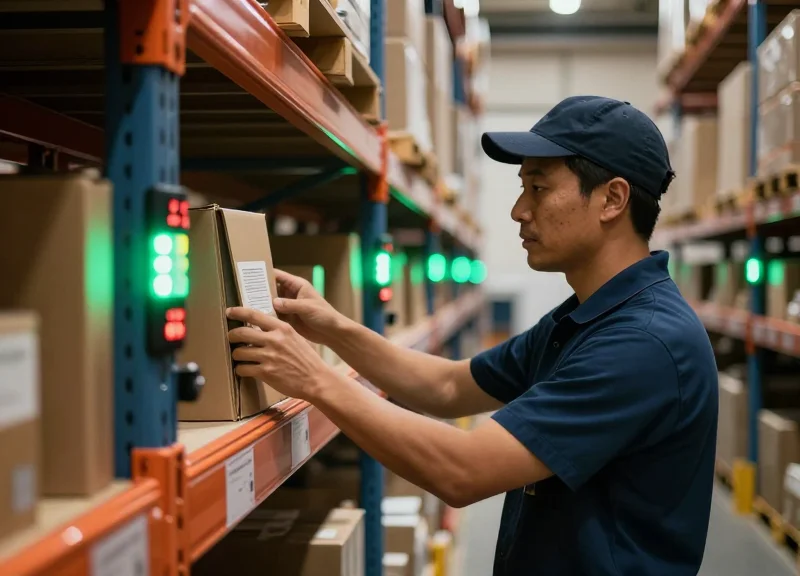
Pick-to-Light (PTL) is a semi-automated fulfillment technology that uses light-directed displays to guide warehouse operators to specific storage locations. By replacing paper pick lists and handheld scanners with high-visibility LEDs and alphanumeric displays, PTL eliminates 'search time'—the most significant bottleneck in manual picking. In the context of 2026 fulfillment, PTL stands as the benchmark for high-velocity zones where SKU turnover is measured in hours rather than weeks.
- Visual Directives: Bright LEDs (often multi-colored for multi-operator zones) illuminate the exact bin, showing the quantity to be picked on a digital display.
- Hands-Free Validation: Operators confirm picks by pressing a physical 'task complete' button or triggering an integrated infrared sensor, keeping both hands free for material handling.
- Real-Time WMS Integration: PTL systems provide instantaneous feedback to the Warehouse Management System, allowing for immediate inventory reconciliation and cycle count triggers.
- Zonal Logic: The system organizes the warehouse into specific pick modules, where work is passed between zones to maximize throughput in high-density areas.
| Feature | PTL Performance Metric | Operational Impact |
|---|---|---|
| Picking Speed | 350 - 500+ lines per hour | Highest possible manual throughput |
| Accuracy Rate | 99.9%+ | Virtually eliminates mispicks via visual cues |
| Onboarding Time | < 30 minutes | Minimal training required for seasonal labor |
| Connectivity | Hardwired Bus System | Zero-latency response for rapid-fire picking |
Expert Insight: The Latency Advantage. While modern logistics is moving toward wireless everything, the 2026 PTL standard relies on a hardwired 'Bus System' for a reason often overlooked: sub-millisecond response times. In a high-speed pick module, even a 500ms delay in a wireless signal (common in dense metallic environments) can disrupt an operator's flow. PTL’s hardwired backbone ensures the next light is on before the operator has even moved their hand, a critical requirement for facilities pushing the absolute limits of lines-per-hour.
Is PTL still relevant with the rise of AMRs?
Yes. While robots handle transport, PTL is increasingly used in 'Put-Walls' where robots drop off bulk loads and humans quickly sort them into individual customer orders.
What is the biggest limitation of PTL?
Its lack of flexibility. Because units are hardwired to the racking, moving a pick location requires physical rewiring or re-addressing, making it less ideal for warehouses with high SKU volatility.
Can PTL handle 'Pick-to-Task' complexity?
Modern 2026 PTL displays include multi-line screens that can show lot numbers, serial requirements, or special packaging instructions, expanding its use beyond simple item counts.
The Rise of ESL in Warehousing: Beyond Just Price Tags
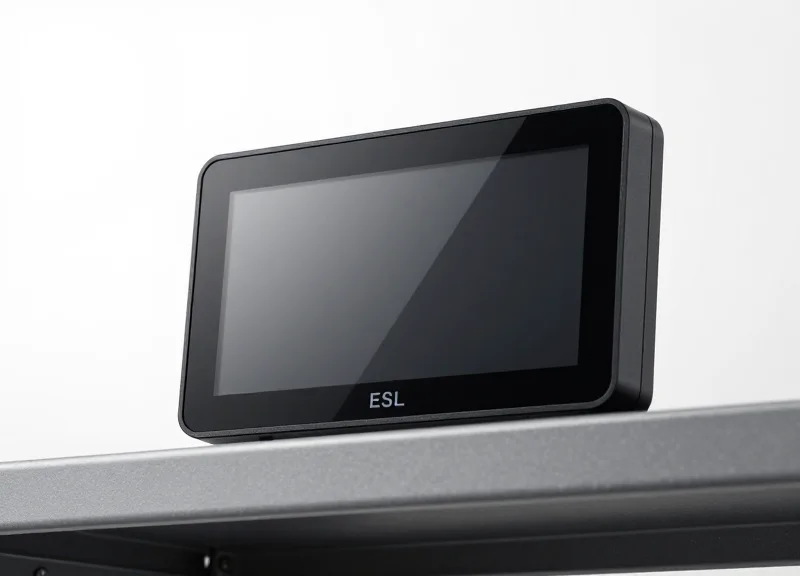
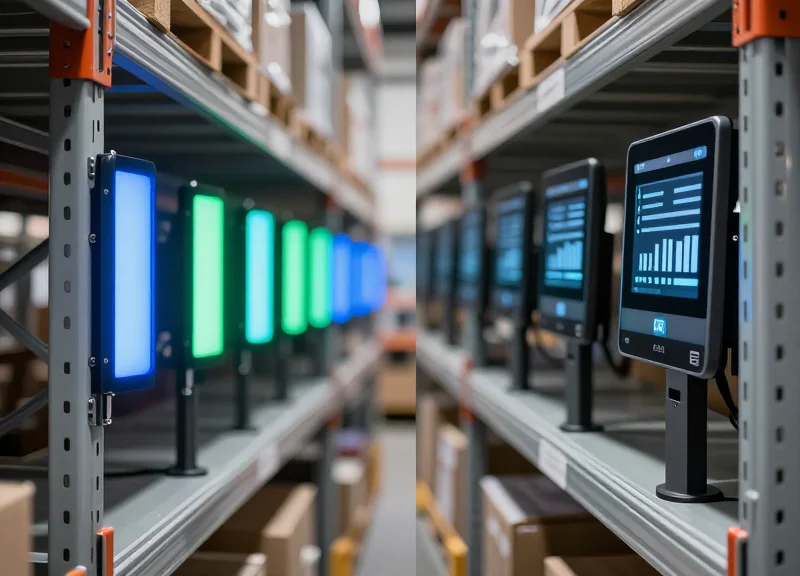
Electronic Shelf Labels (ESL) represent the next generation of warehouse visualization, moving past the static constraints of traditional signage and the high infrastructure costs of hardwired Pick-to-Light systems. Originally perfected in the high-volume retail sector, modern industrial ESLs utilize e-paper displays (E-ink) and sub-GHz wireless protocols to provide high-contrast, bi-directional communication at the shelf edge. In the context of 2026 fulfillment, an ESL is no longer just a digital label; it is a wireless IoT node capable of reconfiguring a warehouse's slotting logic in seconds without a single technician touching a wire.
- Multi-Color LED Logic: Modern units feature up to 7-color programmable LEDs, allowing multiple pickers to work the same zone simultaneously or signaling different priority levels (e.g., Red for 'Rush', Green for 'Standard').
- E-Paper Data Density: Unlike PTL which usually only shows digits, ESLs display QR codes, barcodes, product images, and real-time inventory counts, reducing 'search and find' time for pickers.
- Ultra-Low Power Infrastructure: Utilizing proprietary wireless protocols, these devices can operate for 5 to 10 years on a single coin-cell battery, even with several daily display updates.
| Feature | Legacy Retail ESL | 2026 Industrial ESL |
|---|---|---|
| Refresh Speed | Slow (Minutes) | Near Instant (Sub-second) |
| Durability | Plastic/Brittle | IK07+ Impact Resistant / IP67 Rated |
| Visual Feedback | Black/White Text | 7-Color Flash & High-Res Graphics |
| Connectivity | Uni-directional | Bi-directional (NFC & Cloud Sync) |
The 2026 Edge: Contextual Intelligence at the Rack. A unique advantage of ESL in modern logistics is the 'Maintenance Mode.' By integrating NFC (Near Field Communication), warehouse staff can tap a smartphone to the label to trigger a replenishment request or report a damaged bin. This transforms the label from a passive display into a data-entry portal, a feat that traditional PTL systems cannot achieve without significant middleware upgrades.
Can ESL handle the high-speed environment of a Tier-1 DC?
Yes. While older versions had latency issues, 2026-spec ESLs utilize dedicated gateways that can update thousands of labels per hour, making them suitable for all but the most extreme high-velocity 'broken case' picking lines.
Is the lack of a physical 'confirm' button a drawback?
Not necessarily. Modern ESL workflows often pair the visual cue with wearable scanners or voice-picking headsets, creating a multi-modal verification system that is more accurate than a simple button press.
How does ESL support dynamic slotting?
When your WMS decides a SKU needs to move due to seasonal demand, it pushes a wireless update. The ESL automatically changes the SKU name, barcode, and picking instructions, allowing you to re-slot an entire aisle during a lunch break.
Comparative Analysis: Speed, Accuracy, and Human Error
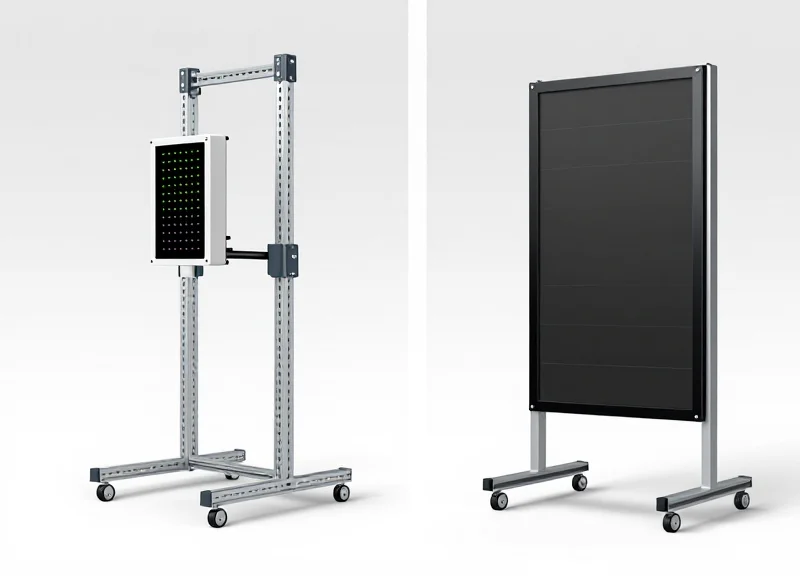
In the context of 2026 fulfillment, the choice between Pick-to-Light (PTL) and Electronic Shelf Labels (ESL) hinges on the balance between raw throughput and data-rich accuracy. While PTL remains the industry benchmark for high-velocity, 'zone-picking' environments—capable of sustaining pick rates exceeding 450 lines per hour—modern ESL systems are closing the gap by offering sub-second refresh rates and multi-color LED indicators that rival traditional light modules. The fundamental difference lies in cognitive load: PTL optimizes for muscle memory and speed, whereas ESL optimizes for information density and error prevention through on-screen SKU verification.
| Performance Metric | Pick-to-Light (PTL) | ESL (2026 Generation) |
|---|---|---|
| Average Pick Rate | 350 - 550+ picks per hour | 200 - 350 picks per hour |
| Error Rate (Typical) | 0.1% - 0.5% | 0.01% - 0.2% |
| Human Interaction | Haptic (Physical Button) | Visual (E-Ink Display) |
| Information Density | Low (Numeric/LED only) | High (Images, QR, Text) |
| Dynamic Slotting Agility | Moderate (Fixed wiring) | Maximum (Wireless/Agile) |
When examining human error, PTL systems occasionally suffer from 'reflexive confirmation,' where a picker hits the acknowledgment button before actually securing the item. In contrast, ESL’s ability to display the actual product name, unit of measure, or even a thumbnail image on the e-paper display acts as a secondary validation step. For 2026 fulfillment centers managing high SKU churn or complex kits, this visual confirmation significantly reduces 'wrong item' errors that PTL might overlook in a high-speed environment.
Does PTL always result in higher speed than ESL?
Generally, yes. PTL's dedicated hardware and physical confirmation buttons allow for faster hand-eye coordination. However, for 'each-picking' of similar-looking items, ESL can be faster overall by reducing the time spent on double-checking labels.
How does ESL handle 'Pick-to-Light' functionality?
Modern ESLs include high-intensity, multi-color LEDs. By flashing specific colors for specific orders, they mimic the PTL workflow while maintaining the advantage of an informational display.
Which system is better for reducing new-hire training time?
ESL is superior for training. Because the labels can display descriptive text and instructions in multiple languages, new workers require less 'memorization' of warehouse geography compared to the more abstract PTL signals.
Expert Insight: The 'Latency-Accuracy Paradox'. In my two decades of logistics optimization, I have observed that PTL often creates a false sense of security in high-speed zones. While PTL is 'faster,' the cost of a single mispick in a 2026 D2C environment—including reverse logistics and customer churn—often outweighs the 15% speed advantage it holds over ESL. We are seeing a trend where 'Hybrid Slots' are utilized: PTL for the top 5% of hyper-fast movers, and ESL for everything else to ensure the lowest possible Total Cost of Error (TCOE).
The Dynamic Slotting Advantage: Flexibility and Reconfiguration

In the context of 2026 fulfillment, dynamic slotting flexibility refers to the speed at which a warehouse can reassign SKU locations and pick-face configurations to accommodate seasonal demand shifts, promotional spikes, or new product launches. While Pick-to-Light (PTL) excels in fixed, high-velocity environments, Electronic Shelf Labels (ESL) offer a superior 'zero-infrastructure' advantage for reconfiguration, allowing operators to remap pick-faces via software without the downtime associated with physical rewiring or rail adjustments.
The primary bottleneck in traditional PTL systems is the physical tether. Most PTL modules are mounted on electrified rails or require specific cabling runs. When you need to expand a zone or change the density of items on a shelf, you are often looking at a weekend-long project involving technicians and cable management. In contrast, modern ESL systems utilize sub-GHz or Bluetooth Mesh wireless protocols. Because they are battery-powered and untethered, moving a pick location is as simple as clipping the label to a different slot and updating the 'logical' mapping in the Warehouse Management System (WMS).
| Feature | Traditional Pick-to-Light (PTL) | Next-Gen ESL (Electronic Shelf Labels) |
|---|---|---|
| Installation Hardware | Fixed bus-bars/Hardwired rails | Wireless/Battery-powered modules |
| Re-mapping Time | Hours/Days (Requires physical move) | Seconds (Software-defined) |
| Labor Requirement | Electrical/Maintenance Technicians | Floor Staff / Operations |
| Scalability | Incremental (Rail length limited) | Elastic (Add labels anywhere) |
Expert Insight: In 2026, the concept of 'Technical Debt' has moved from software to the warehouse floor. Static PTL systems create physical technical debt—assets that are too expensive to move when market trends shift. The 'Dynamic Slotting Advantage' is actually about 'Agility Insurance.' By opting for ESL, centers reduce the total cost of ownership by eliminating the $50-$150 per-node labor cost typically associated with physical reconfiguration of wired systems.
How does ESL handle 'Shadow Slotting' during peak seasons?
ESL allows for temporary 'shadow slots' where secondary pick locations for high-velocity items can be activated in seconds. Once the peak ends, the labels can be logically cleared and repurposed for different SKUs without touching a single screwdriver.
Does wireless reconfiguration impact signal reliability?
Modern 2026-spec ESLs use proprietary wireless protocols that avoid the 2.4GHz interference common in warehouses. This ensures that even during massive re-mapping events, the latency between the WMS update and the label display is under 500 milliseconds.
Can PTL systems be made 'dynamic'?
Only through hybrid approaches or 'Snap-In' rails. However, these still require a physical rail infrastructure. For true 'pop-up' fulfillment or highly volatile SKU sets, ESL remains the only truly decoupled solution.
Total Cost of Ownership (TCO): Installation vs. Maintenance
Total Cost of Ownership (TCO) for fulfillment technology is defined as the sum of initial procurement and installation costs (CAPEX) plus the ongoing operational, energy, and maintenance expenses (OPEX) over a standard five-year lifecycle. While Pick-to-Light (PTL) systems typically demand a 40-60% higher upfront investment due to complex electrical infrastructure and professional cabling, Electronic Shelf Labels (ESL) introduce a 'maintenance tail' involving battery management and gateway optimization that can narrow the cost gap over time.
| Expense Category | Pick-to-Light (PTL) | Electronic Shelf Labels (ESL) |
|---|---|---|
| Initial Installation | High (Requires conduit, wiring, and PLC integration) | Low (Peel-and-stick or clip-on, wireless setup) |
| Energy Consumption | Higher (Constant draw from warehouse mains) | Negligible (Ultra-low power e-paper/battery) |
| Maintenance Needs | Low (Components are rugged and hard-wired) | Moderate (Battery replacement every 3–5 years) |
| Reconfiguration Cost | Very High (Requires rewiring and labor) | Minimal (Software-driven remapping) |
| 5-Year TCO Profile | Front-loaded; stable long-term costs | Balanced; rising costs in years 4-5 |
Expert Insight: The Infrastructure Rigidity Tax. When calculating TCO, many managers overlook the 'Rigidity Tax.' In a 2026 fulfillment environment where SKU velocity changes monthly, the cost to relocate 100 PTL nodes can exceed $15,000 in labor and materials. ESL has a 'zero-dollar' physical relocation cost, making it the superior financial choice for facilities that anticipate frequent layout changes or seasonal shifts in slotting logic.
How long do ESL batteries actually last in high-volume picking?
While manufacturers claim 5-10 years, in a 24/7 high-volume fulfillment center with frequent LED flashing, expect a 3.5 to 4.5-year lifespan. Budgeting for a full battery refresh in Year 4 is critical for a realistic TCO.
Is PTL hardware more durable than ESL?
Generally, yes. PTL modules are built for industrial impact. ESLs, originally designed for retail, have improved significantly but remain more susceptible to physical damage from heavy picking bins or pallet contact.
Does PTL require specialized IT staff for maintenance?
PTL often requires an electrician or a controls engineer for hardware fixes. ESL maintenance is primarily handled by warehouse staff (replacing units) and IT (managing the wireless access points).
Software Integration: Connecting to Your WMS and ERP

In 2026, the success of dynamic slotting hinges on 'Integration Velocity'—the speed at which hardware signals translate into actionable inventory data within your Warehouse Management System (WMS). Modern integration typically involves a middleware orchestration layer that abstracts the hardware (PTL or ESL) from the business logic of the ERP. By utilizing standard RESTful APIs and JSON data structures, fulfillment centers can ensure that a button press on a PTL module or a price update on an ESL tag reflects across the entire supply chain ecosystem in sub-second latency.
| Feature | PTL Integration Profile | ESL Integration Profile |
|---|---|---|
| Primary Protocol | TCP/IP, Ethernet/IP, or Proprietary Bus | REST API, MQTT, or CoAP (via Cloud/Edge) |
| Data Direction | Bi-directional (Push/Pull triggers) | Primarily Push (Price/Slot updates) |
| Bandwidth Needs | High (Continuous polling for speed) | Low (Burst-based updates) |
| System Logic | Controller-heavy (PLC/Edge PC) | API-heavy (Gateway-to-Cloud/WMS) |
The 'Unique Tech Insight' for 2026: Move beyond simple point-to-point connections. Leading-edge facilities are now adopting Unified Device Management (UDM) layers. Instead of the WMS sending a command to 'Light 101,' it sends a semantic command to 'Slot A-12.' The UDM layer identifies whether that slot is currently served by a PTL module or an ESL tag and routes the signal accordingly. This hardware-agnostic approach prevents vendor lock-in and allows you to mix PTL for high-velocity items and ESL for long-tail SKUs within the same aisle.
How do you ensure data integrity during a network outage?
Implement an 'Edge Cache' strategy where the hardware controller or gateway stores pending pick confirmations and synchronizes them with the WMS immediately upon reconnection, preventing inventory discrepancies.
Is middleware necessary, or can I connect hardware directly to my ERP?
While possible via custom scripts, middleware is highly recommended for 2026 standards to handle protocol translation and load balancing, protecting your ERP from being overwhelmed by high-frequency hardware pings.
What is the role of MQTT in ESL integrations?
MQTT acts as a lightweight messaging protocol that allows thousands of ESL tags to update simultaneously without clogging the network, making it the gold standard for large-scale wireless deployments.
{
  "action": "UPDATE_SLOT",
  "slot_id": "A-402",
  "sku": "5922-X",
  "display_color": "green",
  "quantity_required": 5,
  "timestamp": "2026-05-21T14:30:01Z"
}
Sustainability and Energy Efficiency in the 2026 Warehouse
Sustainability in the 2026 warehouse is defined by the shift from energy-intensive, hard-wired systems to ultra-low-power wireless ecosystems that leverage Electronic Shelf Label (ESL) e-paper technology and advanced IoT protocols. By utilizing bi-stable e-paper displays—which require zero energy to maintain an image—fulfillment centers can achieve up to an 85% reduction in carbon emissions associated with aisle signaling and slotting updates compared to traditional Pick-to-Light (PTL) hardware. This evolution allows modern warehouses to meet ESG (Environmental, Social, and Governance) targets without sacrificing the real-time responsiveness required for high-velocity fulfillment.
| Energy Metric | Wired Pick-to-Light (PTL) | 2026 Wireless ESL (E-Paper) |
|---|---|---|
| Idle Power Draw | Constant (1-3W per node) | Zero (Bi-stable state) |
| Update Power Source | Grid/AC Main Power | Coin Cell or Solar Ambient |
| Installation Waste | High (Copper wiring/PVC) | Low (Battery/Recyclable plastic) |
| Annual CO2 Impact | Significant (High kWh load) | Negligible (μW/update cycle) |
The 2026 hardware landscape is dominated by the 'Energy Harvest' philosophy. Unlike legacy PTL systems that require extensive copper wiring and continuous electrical load, modern ESLs operate on low-power protocols such as Sub-GHz, Zigbee, or Bluetooth 5.4 (LE). These protocols allow devices to remain in a 'deep sleep' mode, waking only for milliseconds to receive slotting updates or trigger a pick LED. This ensures that even in a 24/7 operation, the cumulative energy pull remains a fraction of what was required just five years ago.
How long do the batteries actually last in a high-volume 2026 warehouse?
With current power management, ESL batteries last 7 to 10 years based on 3-5 daily updates. Many 2026 models now incorporate indoor light-harvesting strips that can extend life indefinitely in well-lit fulfillment centers.
Does the transition to ESL contribute to E-waste?
While ESLs introduce batteries, the 2026 circular economy focus has led to 'Modular Hardware' where the e-paper screen, PCB, and casing are easily separable for 95% recyclability, far outweighing the waste generated by thousands of miles of discarded copper wiring in PTL systems.
Can e-paper handle cold-chain sustainability?
Yes. Advanced e-paper formulations for 2026 are optimized for freezer environments (-25°C), maintaining clarity without the heating elements often required by legacy LCD or LED displays.
Expert Insight: The 'Protocol Efficiency' Advantage. My unique observation for 2026 is that the true sustainability hero is not just the display, but the shift to Sub-GHz wireless frequencies. By operating at lower frequencies than 2.4GHz Wi-Fi, ESL signals penetrate dense metal racking with significantly less transmission power. This 'Signal Efficiency' allows a single access point to manage up to 50,000 labels, reducing the total network hardware footprint by 60%, further lowering the warehouse's overall electrical and thermal load.
Expert Verdict: Choosing the Right Solution for Your Scale
In 2026, the 'correct' choice is no longer about which hardware is objectively better, but which technology aligns with your facility's Dynamic Velocity Index. For high-density, fixed-location picking where speed is the only metric that matters, Pick-to-Light (PTL) remains the gold standard. However, for mid-to-high scale operations where SKU profiles shift weekly and facility agility is a competitive advantage, Electronic Shelf Labels (ESL) provide a superior ROI by eliminating the labor-intensive rewiring and re-labeling processes that plague traditional systems.
| Operational Metric | Best for PTL | Best for ESL |
|---|---|---|
| SKU Churn Rate | Low (<10% monthly) | High (>25% monthly) |
| Target Pick Speed | 400+ Units per Hour (UPH) | 150 - 350 Units per Hour (UPH) |
| Facility Footprint | Compact / High-Density Zones | Large / Sprawling Floor Plans |
| Initial Capital Outlay | High (Hardware + Wiring) | Moderate (Device Unit Cost) |
| Scalability Speed | Slow (Requires Contractors) | Instant (Plug-and-Play) |
My expert tip for 2026: Avoid the 'All-or-Nothing' trap. Modern WMS platforms now support 'Hybrid Mesh' environments. We are seeing Silicon Valley leaders deploy hard-wired PTL in their 'Fast-Mover' zones (top 5% of SKUs) while utilizing ESL for the 'Long-Tail' inventory. This strategy minimizes the TCO of PTL while maximizing the flexibility of ESL where it is most needed. If your facility exceeds 50,000 square feet, a 100% PTL implementation will likely become a technical debt anchor within three years.
At what scale does PTL become cost-prohibitive?
Once a facility reaches over 5,000 pick faces with high SKU turnover, the labor cost of re-slotting and maintaining wired PTL systems typically exceeds the initial savings in pick speed, making ESL the more fiscal choice.
Can ESL handle the same throughput as PTL?
While ESL lacks the large, bright physical 'task-complete' buttons of PTL, the 2026 generation of ESLs with ultra-low-latency LEDs and NFC confirmation can reach up to 90% of PTL throughput levels.
Which system is more resilient to 2026 labor shortages?
ESL is generally more resilient because it allows for 'on-the-fly' training through the display of product images and multi-language instructions directly on the tag, significantly reducing the onboarding time for seasonal staff.