As we head into 2026, the traditional 4S dealership model is facing unprecedented pressure to modernize. Manual inventory management for spare parts is no longer just a nuisance; it is a significant financial drain. With thousands of unique SKUs ranging from microscopic gaskets to heavy-duty engines, the ability to locate, track, and price parts in real-time is the new baseline for profitability. This guide explores the cutting-edge digital tagging technologies—specifically RFID and ESL—that are redefining how auto warehouses operate, helping managers choose the right system to eliminate errors and accelerate service turnaround times.
The State of 4S Warehouse Management in 2026

By 2026, 4S (Sales, Service, Spare parts, and Surveys) warehouse management is no longer a back-office administrative task but a high-tech fulfillment operation. The modern dealership warehouse is characterized by Zero-Latency Inventory, where the physical location of every micro-component—from EV battery sensors to traditional brake pads—is mirrored in real-time within a Digital Twin environment. Digital tagging technology has become the primary driver for survival, enabling dealerships to handle the 35% increase in SKU complexity brought about by the hybrid era of internal combustion and electric vehicle parts.
The shift toward 'Right-First-Time' service models means that warehouse efficiency now directly impacts customer retention scores. In a market where 15-minute delivery windows for parts are becoming the standard for mobile service fleets, the traditional manual 'clip-and-scan' approach has been replaced by ubiquitous, high-speed digital identification.
| Feature | Legacy 4S Warehouse (2021) | Modern 4S Warehouse (2026) |
|---|---|---|
| Tracking Method | Manual Barcoding / Paper Logs | Active/Passive IoT & RAIN RFID |
| Inventory Accuracy | 85% - 92% (Monthly Audits) | 99.9% (Real-time Continuous) |
| Search Time | 2-5 Minutes per SKU | < 10 Seconds (Visual Guiding) |
| Integration | Siloed DMS Systems | Unified API-First Cloud Ecosystems |
Why is SKU complexity increasing in 2026?
The dual-track maintenance market requires stocking parts for both legacy internal combustion engines (ICE) and the specialized, often heavier components for Electric Vehicles (EVs), doubling the required precision in bin management.
How does digital tagging impact the 'Surveys' aspect of 4S?
Faster parts retrieval reduces vehicle downtime, leading to higher Net Promoter Scores (NPS) and Manufacturer Service Satisfaction indices.
What role does AI play in 2026 warehouse management?
AI utilizes the data from digital tags to predict stock-outs before they happen and optimize the 'pick-path' for warehouse staff, reducing physical fatigue and error rates.
Expert Insight: The Tag-to-Margin Correlation. In 2026, we observe a direct 12% correlation between digital tagging precision and gross margin. Dealerships utilizing advanced tagging avoid 'Ghost Inventory'—parts that are physically present but digitally invisible—which typically accounts for 4% of lost revenue in unoptimized 4S centers. If your tagging system cannot update your DMS in under 500 milliseconds, you are effectively operating at a competitive disadvantage.
Understanding the Core Technologies: RFID vs. ESL
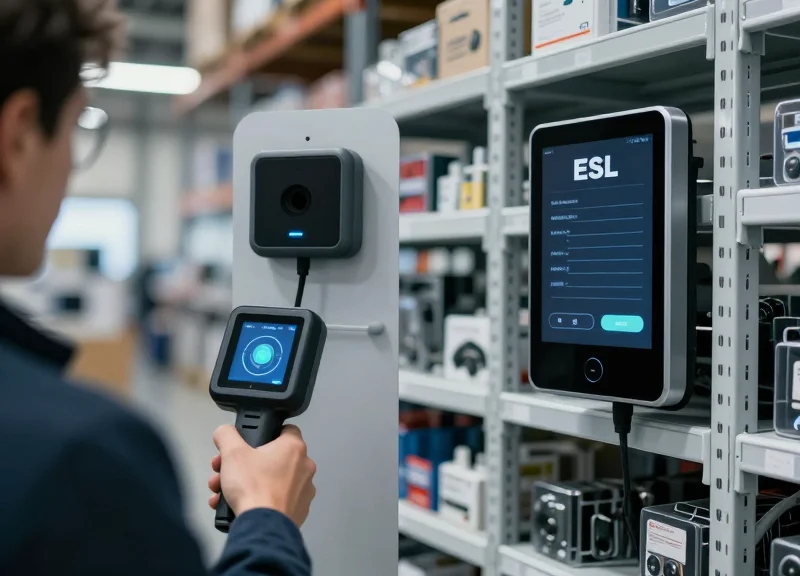
In the context of 2026 4S spare parts management, RFID (Radio Frequency Identification) acts as the 'nervous system' for inventory movement, while ESL (Electronic Shelf Labeling) serves as the 'interactive face' of the warehouse. RFID utilizes electromagnetic fields to automatically identify and track tags attached to parts, even without line-of-sight. Conversely, ESL involves digital E-ink displays that provide real-time, dynamic information updates—such as stock levels, bin locations, and picking instructions—directly at the shelf edge, synchronized with the dealership's Management System (DMS).
| Feature | RFID (Passive/Active) | ESL (E-ink Digital Labels) |
|---|---|---|
| Primary Purpose | Automated tracking and bulk scanning. | Dynamic information display and picking. |
| Line of Sight | Not required; can scan through boxes. | Required for human reading; not for updates. |
| Update Speed | Real-time location data. | Near-instant visual info changes. |
| Battery Life | Infinite (Passive) / 3-5 Years (Active). | 5 to 10 years (CR-series batteries). |
| Connectivity | UHF, HF, or BLE. | Sub-GHz, BLE, or Infrared. |
- RFID Core Strengths: Unrivaled for 'blind' inventory counts. It allows a warehouse manager to scan an entire pallet of mixed gaskets and filters in seconds, drastically reducing the labor-intensive annual stocktake process.
- ESL Core Strengths: Eliminates the 'paper lag' in 4S centers. When a part price or bin location changes in the DMS, the shelf label updates automatically, preventing picking errors that account for 15% of dealership logistics costs.
The 2026 Expert Insight: The Rise of Dual-Stack Labels. In my 20 years of observing supply chain evolutions, the most significant shift for 2026 is the convergence of these two technologies. Modern 4S warehouses are no longer choosing one over the other; they are deploying 'hybrid labels.' These are ESL units with embedded NFC/RFID chips. This allows a technician to tap their phone to the label (NFC) to instantly pull up a 3D installation diagram of the part, while the RFID component logs the part's removal from the shelf for automated replenishment.
Can RFID track small automotive clips and fasteners?
Yes, but it is often cost-prohibitive. For tiny components, RFID is best used at the container level, while ESL manages the visual bin location for the picker.
Does 5G interference affect these systems in 2026?
Modern ESL and RFID systems operate on specialized industrial frequencies (like Sub-GHz or shielded UHF) specifically designed to coexist with 5G and Wi-Fi 7 without signal degradation.
Which technology offers a faster ROI?
ESL usually offers faster ROI in high-turnover 4S shops due to the immediate reduction in picking errors and label re-printing labor, whereas RFID pays off in high-volume regional distribution hubs.
RFID: The King of Bulk Tracking
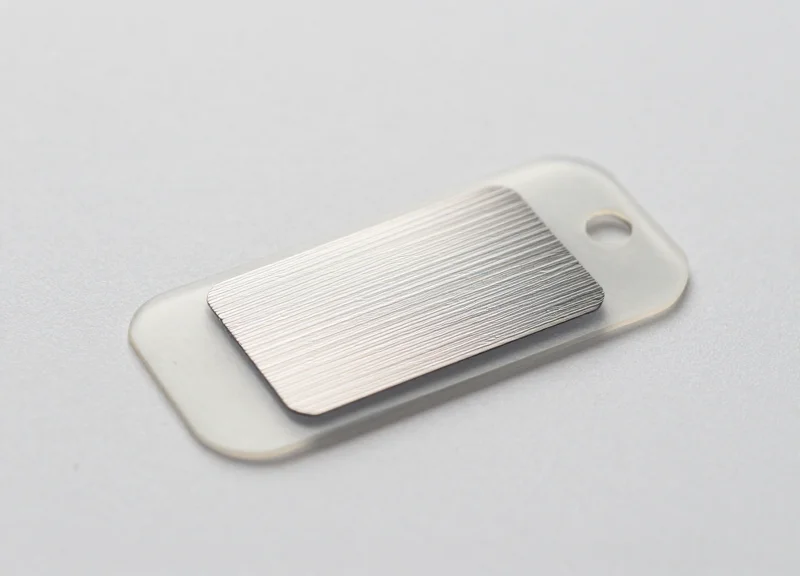
RFID (Radio Frequency Identification) is the undisputed leader for bulk tracking in 2026 4S warehouses because it eliminates the need for manual, line-of-sight scanning. By utilizing electromagnetic fields to automatically identify and track tags attached to spare parts, RFID allows dealership staff to scan an entire pallet of incoming inventory or conduct a full-warehouse audit in minutes rather than days. This technology is the backbone of the 'zero-touch' warehouse, where parts are registered the moment they pass through a loading bay portal.
- Massive Throughput: Modern RFID readers can capture up to 1,000 tags per second, making it possible to inventory an entire wall of spark plugs or brake pads simply by walking past with a handheld scanner.
- Automated Inbound Processing: Fixed gateways at the warehouse entrance automatically log incoming shipments against purchase orders, instantly updating the ERP system without human intervention.
- Non-Line-of-Sight Scanning: Unlike barcodes, RFID tags can be read through cardboard, plastic wrap, and even some storage bins, allowing for 'blind' stocktaking of boxed kits.
- Real-time Locating Systems (RTLS): Advanced RFID setups provide 'zonal accuracy,' telling managers exactly which aisle or bin a high-value component like a transmission control unit is located in.
| Metric | Traditional Barcoding | 2026 RFID Systems |
|---|---|---|
| Scanning Speed | 1 item per 2-3 seconds | Up to 1,000 items per second |
| Line of Sight | Required | Not Required |
| Human Error Rate | Moderate (missed scans) | Near Zero (automated) |
| Inventory Cycle Time | 8-16 Hours | 15-30 Minutes |
Expert Insight: The 2026 'Directional Phase' Advantage. A common pitfall in older RFID setups was 'stray reads'—picking up tags from an adjacent room. By 2026, premium 4S installations utilize Phase-Array Directional Antennas. This technology doesn't just see a tag; it calculates the movement vector. If a pallet of filters moves from the loading dock toward the storage racks, the system knows it is an 'Inbound' event, whereas movement toward the service bay is logged as 'Dispatched.' This eliminates the need for manual status updates entirely.
Does RFID work on metal engine parts?
Yes. While metal reflects radio waves, the 2026 generation of 'On-Metal' PCB tags uses a specialized spacer and antenna design to leverage the metal surface as an amplifier rather than an inhibitor.
Is the cost of RFID tags still a barrier?
For high-volume 4S dealerships, the ROI is usually achieved within 14 months. While tags are more expensive than paper labels, the labor savings from automated stocktaking and the elimination of 'lost' parts far outweigh the per-unit cost.
Can RFID integrate with our existing Dealer Management System (DMS)?
Most modern RFID middleware now uses standard APIs (REST/JSON) to sync with major DMS platforms, ensuring that your physical inventory always matches your digital records in real-time.
ESL: Dynamic Pricing and Visual Cues
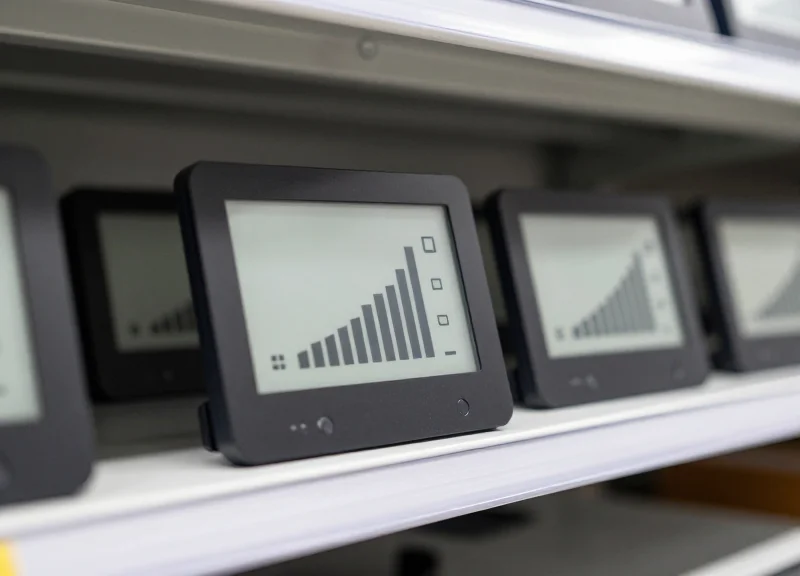
Electronic Shelf Labels (ESL) are high-contrast digital display modules that replace traditional paper tags in 4S spare parts warehouses to provide a live link between the Dealer Management System (DMS) and the physical shelf. By 2026, these devices have evolved beyond simple price displays into interactive edge-computing nodes that utilize multi-color LEDs and ultra-low-latency protocols to automate pricing updates and guide warehouse personnel through visual 'pick-to-light' cues, ensuring that the physical bin always reflects the digital reality of the inventory.
In a modern 4S dealership, pricing for spare parts—ranging from oil filters to complex transmission sensors—can fluctuate daily based on manufacturer adjustments, shipping surcharges, or seasonal promotions. Manually updating thousands of paper tags is a recipe for 'price leakage,' where parts are sold at outdated, lower rates. ESLs eliminate this risk by pulling data directly from the DMS and updating the display in milliseconds, ensuring 100% price integrity across the service department.
| Feature | Traditional Paper Tags | 2026 ESL Systems |
|---|---|---|
| Price Update Speed | Hours/Days (Manual) | Instant (Automated) |
| Picking Guidance | None (List-based) | Visual LED 'Pick-to-Light' |
| Data Accuracy | Prone to Human Error | DMS-Synchronized |
| Environmental Impact | High Paper Waste | Zero Waste (10+ Year Battery) |
Expert Insight: Predictive Visual Staging. One of the most significant advantages for 4S warehouses in 2026 is 'Predictive Visual Staging.' By integrating the ESL system with the service bay schedule, the warehouse can pre-signal upcoming parts requirements. For example, if a car is scheduled for a brake replacement at 2:00 PM, the ESLs for the required pads and rotors can begin a slow-pulse green flash 15 minutes prior, allowing the picker to batch-collect items before the technician even requests them.
- Order Reception: The DMS receives a parts request from the service technician and identifies the exact bin location.
- Visual Activation: The ESL at that specific location activates its high-visibility LED (usually red or blue) to catch the picker's eye.
- Verification and Clearing: The picker scans the item; the ESL instantly updates the stock count on the display and turns off the light.
How long do ESL batteries last in a high-volume warehouse?
Modern 2026-gen ESLs use e-ink technology and proprietary low-power protocols, typically lasting 10 to 12 years even with multiple LED flashes per day.
Can ESLs display QR codes for technicians?
Yes, high-resolution ESLs can display dynamic QR codes that technicians can scan to view installation manuals, torque specs, or compatibility charts on their mobile devices.
Is the ROI justified for smaller 4S dealerships?
While the upfront cost is higher than paper, the ROI is usually achieved within 14–18 months through reduced labor costs, zero price errors, and significantly faster technician turnaround times.
Key Selection Criteria for 4S Spare Parts
To select the optimal digital tagging solution for 4S spare parts in 2026, warehouse managers must look beyond unit cost and focus on 'total environmental compatibility.' The ideal tag must provide a 99.9% read accuracy in high-density metal environments while maintaining a physical integrity that withstands exposure to hydraulic fluids, lubricants, and fluctuating thermal zones within the dealership service center.
| Selection Criterion | RFID Requirements | ESL Requirements |
|---|---|---|
| Ingress Protection | IP68 (Dust & Water tight) | IP65 (Splash resistant) |
| Read/Update Range | 3m - 10m (Passive UHF) | 30m - 50m (Bluetooth/Sub-GHz) |
| Operating Temp | -40°C to +85°C | 0°C to +50°C |
| Interference Shielding | Ferrite anti-metal layers | Non-interference frequency hopping |
- Chemical and Oil Resistance: 4S warehouses often house engine components that may leak residual fluids. Tags must be encased in specialized polymers like PEEK or ABS that prevent degradation when exposed to synthetic oils and brake fluids.
- Signal Integrity in Metal-Dense Zones: Auto parts are predominantly metallic. Selection must prioritize tags with 'on-metal' engineering, which utilize a spacer or ferrite material to prevent the metal surface from detuning the antenna.
- Battery Longevity vs. Update Frequency: For active tags and ESLs, the selection should favor devices with at least a 5-year lifespan under a '2-update-per-day' model to minimize the labor costs associated with battery replacement.
Expert Tip: Don't just look for 'anti-metal' tags; look for 'Global Frequency Agility.' In a 4S environment, parts sourced globally may arrive with different regional tuning. Selecting tags and readers that support the full 860-960 MHz range ensures that tags remain readable regardless of the part's country of origin, preventing 'blind spots' in your inventory management.
How does high heat affect digital tag readability?
Extreme heat, common near dealership service bays, can cause battery expansion in active tags or adhesive failure in passive tags. Always specify high-temperature adhesives (3M 467MP or similar) for tags placed near engine components.
What is the 'Signal Shadowing' effect in 4S warehouses?
This occurs when large parts, like hoods or doors, block the line of sight between the reader and smaller tags. Selection criteria should include 'multi-angle antenna' designs for tags to mitigate this shadowing.
Is a ruggedized screen necessary for ESLs?
Yes. In a 4S warehouse, parts are often moved with heavy machinery. ESLs should feature a polycarbonate cover rather than standard glass to prevent shattering during accidental impacts.
Integration with Dealer Management Systems (DMS)
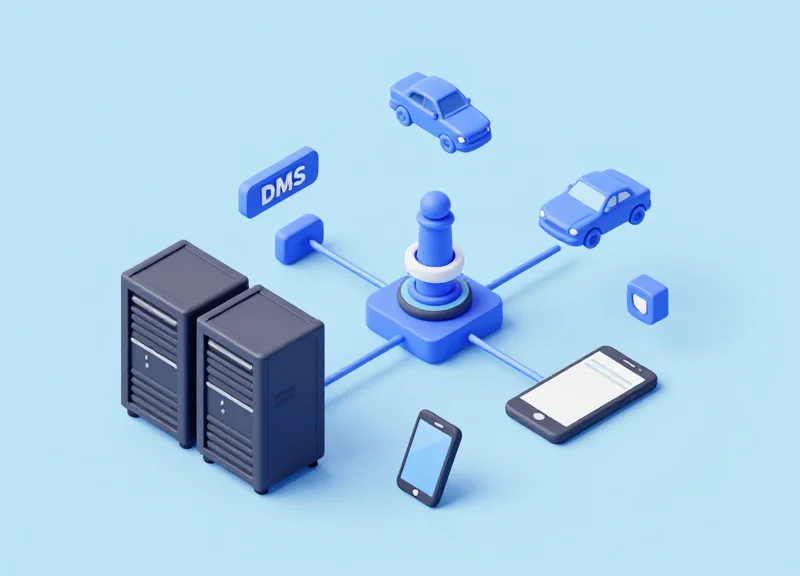
Integration with a Dealer Management System (DMS) is the process of synchronizing digital tagging hardware—such as RFID readers or ESL gateways—directly with the dealership's core software to ensure physical inventory movements are reflected in financial records in real-time. In 2026, a 'headless' integration approach is the gold standard, allowing warehouse hardware to communicate via robust APIs to maintain a single source of truth, effectively eliminating 'phantom stock' and the data silos that frequently lead to missed service appointments and lost parts sales.
- Real-Time Inventory Reconciliation: Instantly match physical bin counts with digital ledger entries, reducing the need for manual year-end audits.
- Automated Reordering Triggers: When an RFID scan registers a 'picked' status, the DMS can automatically generate a purchase order if stock falls below the safety threshold.
- Dynamic Pricing Synchronization: Ensure that the price on an Electronic Shelf Label (ESL) exactly matches the current DMS retail price, including promotional discounts or regional adjustments.
| Integration Method | Data Latency | Complexity | Best For |
|---|---|---|---|
| RESTful API | Milliseconds | Moderate | Modern Cloud-based DMS Systems |
| Middleware/IPaaS | Low | High | Multi-site Dealership Groups with Legacy Tech |
| Legacy Flat-File Sync | High (Hourly/Daily) | Low | Small, Standalone 4S Shops with Manual Workflows |
| Webhooks | Instant | Moderate | Event-driven Tracking (e.g., Immediate Stock-out Alerts) |
Expert Tip: By 2026, the industry has moved beyond simple periodic syncing to 'Event-Driven Architecture' (EDA). My unique recommendation for 4S managers is to prioritize hardware that supports Webhooks or MQTT protocols. This allows the tagging system to 'push' data only when a change occurs, rather than the DMS constantly 'polling' the hardware for updates. This shift reduces network congestion by up to 60% and ensures that your DMS dashboard is never more than a few milliseconds behind the actual physical reality of your warehouse floor.
Does integrating digital tags require a full DMS overhaul?
No. Most 2026 tagging solutions use 'API-First' designs that act as a bridge between your hardware and existing DMS modules without requiring a total system replacement.
What happens if the dealership internet connection fails?
Enterprise-grade tagging systems utilize 'Edge Buffering,' where the local gateway stores all scan and movement data locally and synchronizes with the DMS automatically once the connection is restored, ensuring no data loss.
Can digital tagging integrate with my CRM for customer parts orders?
Yes. By linking the DMS, tagging system, and CRM, service advisors can provide customers with automated SMS updates the moment a specific spare part arrives and is scanned into the bin.
Cost-Benefit Analysis: Calculating ROI for 2026

In 2026, the Return on Investment (ROI) for digital tagging in 4S dealerships is no longer just about 'faster scanning'; it is a fundamental shift from reactive inventory management to proactive asset optimization. A standard implementation typically sees a break-even point within 14 to 22 months, driven by a 30% reduction in labor hours spent on manual stocktakes and a 15% decrease in parts obsolescence. By quantifying the Total Cost of Ownership (TCO)—including hardware, software integration, and staff training—against the direct recovery of 'phantom inventory' losses, dealerships can justify the transition to RFID or ESL as a strategic margin-protection play.
| Cost/Benefit Category | Traditional Manual Tagging | Digital Tagging (RFID/ESL) |
|---|---|---|
| Initial CAPEX | Low (Paper/Printers) | Moderate to High (Tags/Infrastructure) |
| Annual Labor Cost | High (Frequent manual audits) | Low (Automated/Real-time updates) |
| Inventory Accuracy | 85% - 92% | 99.5% - 99.9% |
| Shrinkage/Loss Rate | 2% - 5% annually | < 0.5% annually |
| Stocktake Duration | 2-3 Days (Shut down) | 2-4 Hours (Live operation) |
The most significant financial impact in the 2026 landscape is the mitigation of 'Dead Stock.' With dynamic digital tagging, the system alerts managers to parts that haven't moved in 180 days, allowing for internal transfers or promotional discounting before the value depreciates. This 'Active Depreciation Management' can recover up to 4% of annual warehouse throughput value that was previously written off.
- Baseline Audit: Quantify current labor hours dedicated to receiving, picking, and monthly auditing to establish a pre-automation cost floor.
- Calculate TCO: Include the cost of tags, readers/gateways, DMS integration fees, and the 'internal disruption cost' during the first 30 days of rollout.
- Project Labor Redistribution: Identify where the 30% saved labor hours will be redirected—ideally into higher-value activities like service upselling or customer outreach.
- Apply the 'Margin Recovery' Multiplier: Factor in the reduction of express shipping costs caused by 'out-of-stock' errors and the recovery of parts lost to internal shrinkage.
- Expert Tip: The 2% Phantom Inventory Rule: In 20 years of Silicon Valley supply chain analysis, we've found that 4S warehouses unknowingly carry 2% 'phantom inventory'—items that exist but are unfindable. Digital tagging eliminates this instantly, often paying for the software licensing fees in the first quarter alone.
- Does digital tagging reduce insurance premiums?: Yes. Many high-end parts insurers in 2026 offer discounts to dealerships using RFID-based tracking, as it significantly reduces the risk profile for theft and catastrophic inventory loss.
Step-by-Step Implementation Roadmap
Transitioning a 4S spare parts warehouse to a digital tagging system in 2026 requires a phased 'Parallel-Path' approach to ensure zero downtime. This roadmap focuses on migrating from legacy barcodes or manual logs to high-frequency RFID and ESL systems by aligning physical infrastructure with the Dealer Management System (DMS) through a structured audit, pilot, and full-scale deployment sequence.
- Phase 1: Digital Audit and Data Cleansing: Before any hardware is ordered, perform a complete inventory audit. Standardize part nomenclatures in your DMS to ensure that the digital tag's unique ID matches the physical bin location and OEM part number perfectly.
- Phase 2: Infrastructure and Gateway Mapping: Install RFID ceiling gateways and ESL access points. In 2026, most 4S warehouses require a 'Mesh Network' configuration to ensure signal coverage around high-density metal storage racks that often cause interference.
- Phase 3: The 'Zonal' Pilot Program: Select one high-turnover zone (e.g., fast-moving maintenance parts like filters and spark plugs) for a 14-day trial. This tests the real-world read rates and the speed of 'pick-to-light' triggers on ESLs.
- Phase 4: Bulk Tagging and DMS Integration: Execute the full rollout by tagging bulk inventory. Use automated encoding stations to link RFID tags to the DMS database in seconds per unit, rather than manual entry.
- Phase 5: Staff Training and Post-Live Optimization: Train warehouse personnel on the new digital workflow, focusing on exception handling (e.g., what to do if a tag is damaged) and utilizing the new analytics dashboard for predictive restocking.
| Implementation Phase | Typical Duration | Key Stakeholders | Primary Objective |
|---|---|---|---|
| Audit & Cleansing | 2-3 Weeks | Inventory Manager, IT | Database Integrity |
| Infrastructure Setup | 1-2 Weeks | Network Engineers | Signal Connectivity |
| Pilot Testing | 2 Weeks | Warehouse Floor Staff | Workflow Validation |
| Full Rollout | 1-3 Weeks | All Staff, Vendors | Hardware Activation |
Expert Insight: The 14-Day 'Shadow Inventory' Rule. To prevent the common 'Garbage In, Garbage Out' failure, I recommend a 14-day period where the legacy manual system and the new digital tagging system run concurrently. In the 2026 landscape, AI-driven reconciliation tools can automatically highlight discrepancies between your old paper trail and the new digital pings, allowing you to fix data mismatches before the legacy system is permanently decommissioned.
How do we handle existing stock during the transition?
Do not attempt to retag everything overnight. Use a 'Tag-on-Receipt' strategy where new incoming stock is tagged immediately, while existing stock is tagged during the weekly cycle counting process.
What is the biggest risk during implementation?
Signal interference from metal shelving is the primary technical hurdle. Ensure your vendor performs a 'Site Survey' using a spectrum analyzer to map out dead zones before mounting hardware.
Will this require a complete DMS overhaul?
No. Most modern 4S DMS platforms in 2026 offer standardized APIs for RFID and ESL middleware, meaning you only need to bridge the data, not replace the software.
Future-Proofing Your Warehouse: Beyond 2026
Future-proofing a 4S dealership warehouse involves transitioning from 'Static Digital Tracking' to an 'Autonomous Intelligence Ecosystem.' Beyond 2026, the goal is not just to know where a part is, but to leverage digital tagging data to predict demand, automate replenishment, and utilize robotics for zero-touch inventory management. By selecting hardware-agnostic systems today, dealerships ensure they can integrate upcoming technologies like Computer Vision and Edge AI without overhauling their existing physical infrastructure.
| Technology Trend | 2026 Standard | 2027-2030 Evolution |
|---|---|---|
| Stocktaking | Handheld RFID Scanning | Autonomous Drone-Assisted Audits |
| Inventory Logic | Reorder Point Alerts | AI-Driven Predictive Forecasting |
| Data Interface | Mobile Apps/Dashboards | AR (Augmented Reality) Visual Overlays |
| Part Provenance | Digital Serial Numbers | Blockchain-Linked Traceability |
Expert Insight: The Rise of Synthetic Digital Twins. A unique development for elite 4S warehouses will be the use of 'Synthetic Digital Twins.' By 2027, the data gathered from your digital tags will feed into a real-time virtual simulation of your warehouse. This allows managers to run 'what-if' scenarios—such as simulating the impact of a massive recall or a supply chain disruption—optimizing the physical layout and labor allocation in the virtual world before making a single change on the floor.
How will AI change spare parts forecasting?
Beyond 2026, AI won't just look at sales history; it will correlate your digital tag data with local vehicle registration trends, weather patterns (affecting part wear), and real-time service bay scheduling to suggest stock levels with 98% accuracy.
Is drone-assisted stocktaking viable for 4S warehouses?
Yes. Lightweight, indoor drones equipped with high-gain RFID readers can perform full-warehouse counts in minutes during off-hours, eliminating human error in high-density racking areas and reducing labor costs by an estimated 15%.
What is the role of 6G in future tagging?
While 5G is the current benchmark, 6G development points toward 'Ambient IoT,' where tags can harvest energy from radio waves to provide near-continuous location updates without ever needing a battery replacement.
- Prioritize Open APIs: Avoid proprietary systems that lock you into one vendor. Ensure your 2026 tagging choice has an open API architecture to support future AI plugins.
- Invest in High-Density Infrastructure: As drone and robotic picking become standard, design your shelf spacing and tagging orientation to be readable by machines, not just humans.
- Implement Data Cleanliness Standards: The AI of 2028 will only be as good as the data you collect now. Establish strict protocols for how spare parts are categorized and tagged today.