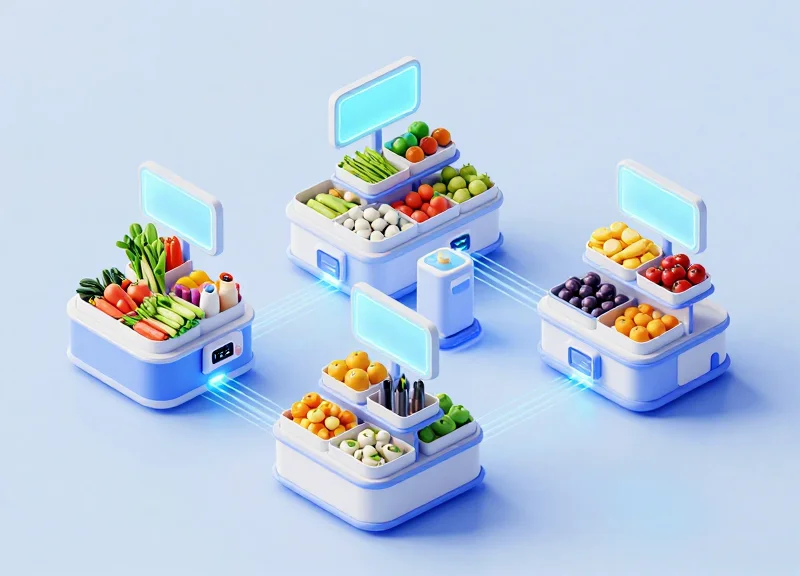
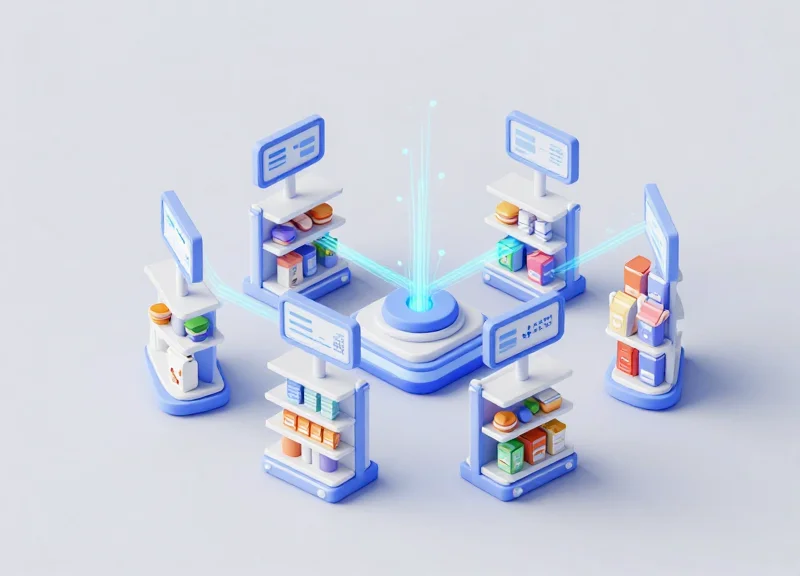
As the 2026 regulatory deadlines for food safety and transparency approach, the retail and food service sectors face an unprecedented challenge. Traditional static labeling is no longer sufficient to handle the frequent updates required for allergen warnings and complex nutritional data. This guide provides a deep dive into how technical integration of Electronic Shelf Labels (ESL) and IoT-driven data management can transform compliance from a liability into a competitive advantage, ensuring consumer safety through real-time accuracy.
Understanding the 2026 Compliance Landscape

The 2026 compliance landscape represents a fundamental shift from static, print-and-forget food labeling to a dynamic, 'living' data ecosystem. Driven by the final implementation of the FDA’s Food Safety Modernization Act (FSMA) Section 204 and the EU’s evolving Front-of-Package (FOP) labeling requirements, 2026 marks the deadline for food manufacturers to integrate end-to-end traceability and real-time allergen transparency. This shift is not merely an aesthetic update but a legal mandate for high-stakes digital accountability across global supply chains.
| Region | Key Regulation | Primary Requirement | Deadline |
|---|---|---|---|
| United States | FSMA Rule 204 | Enhanced traceability records for high-risk foods (FTL list). | January 20, 2026 |
| European Union | FOP Nutrition Labeling | Mandatory harmonized front-of-pack nutritional declarations. | Q1/Q2 2026 |
| Canada | FOP Nutrition Symbol | Mandatory symbols for products high in saturated fat, sugars, or sodium. | January 1, 2026 |
| UK | Precision Breeding Act | Labeling requirements for precision-bred organisms and allergens. | Ongoing 2026 rollout |
The legal implications for non-compliance are severe, ranging beyond simple fines. In the United States, failure to maintain proper traceability under FSMA 204 can lead to administrative detention of food products and criminal prosecution. In the private sector, there is a rising trend of 'Failure to Warn' class-action lawsuits. When allergen data is outdated or nutritional tagging is inaccurate due to ingredient substitutions, companies face massive recall costs and irreversible brand erosion in an era where consumers verify claims via QR codes instantly.
What is the biggest risk for food manufacturers in 2026?
The 'Data Integrity Gap'—the discrepancy between actual ingredient shifts and the static information on physical packaging. Automated, dynamic tagging is the only way to mitigate this risk.
Does 2026 compliance affect small-scale producers?
Yes. While some exemptions exist for very small farms, most processors and distributors must comply if they sit within a supply chain that serves major retail or international markets.
How does digital tagging improve compliance?
Digital tagging allows for instant updates to nutritional profiles and allergen warnings via QR codes or GS1 Digital Link, ensuring the consumer sees the most recent batch-specific data.
Expert Insight: The Concept of 'Regulatory Latency'. Having worked with Silicon Valley ag-tech firms for two decades, I’ve observed that the most successful companies in 2026 will be those that solve for 'Regulatory Latency.' This is the time delay between a supply chain change (e.g., a new pea protein supplier) and the update of the consumer-facing label. If your latency is more than 60 seconds, you are operating at a legal deficit. The goal is 'Software-Defined Labeling'—where the label is a render of a database, not a static graphic file.
The Technical Limitations of Traditional Labeling
Traditional labeling relies on a decoupled, asynchronous workflow where digital product information is manually translated into physical media. This process introduces a 'Data-Latency Gap'—the time elapsed between a back-end nutritional update and the physical label replacement. In the context of 2026 regulatory mandates, this gap is no longer just an operational inefficiency; it is a legal liability. Static paper systems cannot maintain a 'Single Source of Truth' (SSoT) because the physical tag remains unchanged even when the upstream database reflects a new allergen profile or updated caloric value.
| Metric | Traditional Paper Labels | Dynamic Digital Tagging |
|---|---|---|
| Update Latency | Hours to Days (Manual) | Sub-60 Seconds (Automated) |
| Error Rate | High (Human Transcription) | Near-Zero (API-Driven) |
| Audit Trail | Non-Existent/Manual Logs | Cryptographic/Immutable Logs |
| Labor Overhead | Significant (Re-printing/Re-hanging) | Minimal (Cloud Management) |
Why is human error considered a systemic risk in 2026 compliance?
Human error in manual labeling is estimated to occur in 3-5% of all label updates. Under 2026 standards, even a single mislabeled allergen can result in catastrophic fines and mandatory recalls, making the 'human-in-the-loop' model a high-risk technical bottleneck.
How does static labeling impact operational scalability?
As SKU counts increase and nutritional regulations become more granular, the man-hours required to maintain compliance grow linearly. This creates a 'Complexity Wall' where staff cannot physically update tags fast enough to keep pace with inventory or recipe changes.
What is the hidden cost of 'Compliance Throttling'?
Because companies cannot update labels instantly, they often delay rolling out healthier recipe improvements or new ingredient suppliers to avoid the cost of a full re-labeling cycle, effectively stifling product innovation.
Expert Tip: The most overlooked limitation of traditional labeling is the lack of 'Closed-Loop Verification.' In a manual system, the central office has no technical way to verify that a label has actually been changed at the shelf edge. Digital tagging systems resolve this by providing bidirectional communication, allowing the system to ping each tag and confirm that the correct 2026-compliant data is currently being displayed to the consumer. This 'Proof of Compliance' is critical for mitigating liability during regulatory audits.
Architecture of Real-Time Allergen Warning Systems
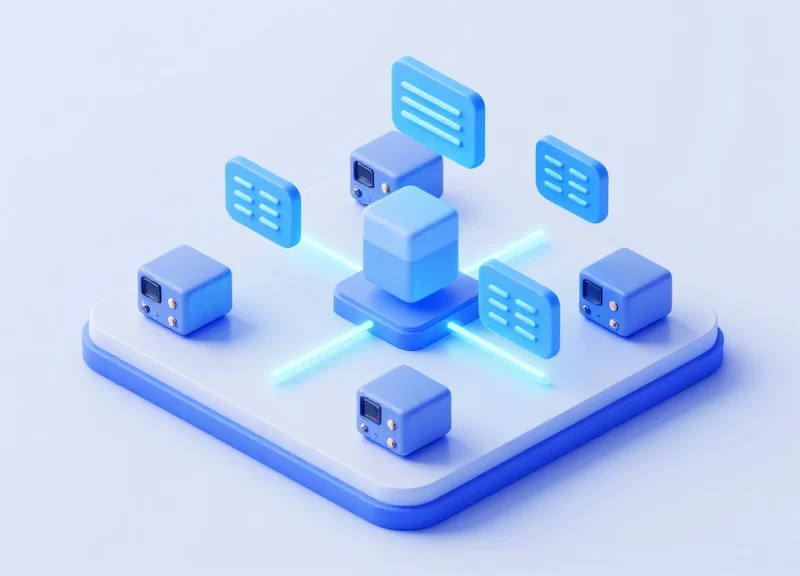
The architecture of a real-time allergen warning system is a high-availability, low-latency framework designed to synchronize Master Data Management (MDM) systems with Electronic Shelf Labels (ESL) via an IoT gateway. By decoupling the data ingestion layer from the physical display layer through asynchronous message brokers like MQTT or RabbitMQ, retailers can achieve sub-second updates across thousands of points-of-sale. This ensures that critical allergen changes—such as an unannounced ingredient substitution—reach the consumer the moment the update is committed to the central database, effectively mitigating legal risks associated with the 2026 compliance mandates.
| Layer | Core Component | Primary Function |
|---|---|---|
| Data Orchestration | Cloud-Native MDM / ERP | Centralized 'Source of Truth' for ingredient lists and allergen profiles. |
| Communication Layer | MQTT Message Broker | Pub/Sub messaging for low-bandwidth, high-reliability data transmission to stores. |
| Edge Connectivity | IoT Gateway / Access Point | Translates TCP/IP cloud signals into sub-GHz proprietary protocols for shelf devices. |
| Display Layer | Electronic Shelf Labels (ESL) | Visual rendering of dynamic nutritional tags and red-flag allergen warnings. |
- Ingredient Event Trigger: A change in the supply chain or recipe triggers a webhook in the central Product Information Management (PIM) system.
- Cloud Processing and Delta Generation: The cloud engine identifies the specific stores and devices affected, generating a 'delta' update to minimize data transmission size.
- Asynchronous Broadcasting: The message broker pushes the update to regional IoT gateways using a Publish/Subscribe model, ensuring 99.9% delivery success even in low-bandwidth environments.
- Edge Rendering: The local gateway broadcasts the signal to the specific E-ink display, which updates the screen layout to highlight the new allergen warning in high-contrast mode.
Expert Tip: The 'Audit-Ready Feedback Loop' is the missing link in most basic systems. To meet 2026 standards, your architecture must include a return signal from the ESL back to the cloud. This 'Ack' (acknowledgment) signal confirms that the physical display has actually changed, providing a timestamped digital audit trail that can be used as evidence of compliance during a regulatory inspection. Relying on 'fire-and-forget' logic is a significant legal liability.
What is the typical latency for a store-wide allergen update?
In a well-optimized architecture using sub-GHz radio frequencies, a single label update takes less than 500ms, while a full-store refresh of 10,000 labels can be completed in under 5 minutes without disrupting store Wi-Fi.
How does the system handle power outages or connectivity loss?
E-ink technology is bi-stable, meaning the last allergen warning remains visible even without power. For connectivity loss, local gateways store a 'last known good state' and retry synchronization immediately upon reconnection.
Can this architecture integrate with third-party nutritional apps?
Yes. By exposing the cloud layer via a secure RESTful API, the same real-time data powering the shelf tags can be consumed by consumer-facing mobile apps to provide personalized allergen alerts via NFC or QR code scans.
Implementing Dynamic Nutritional Tagging via ESL
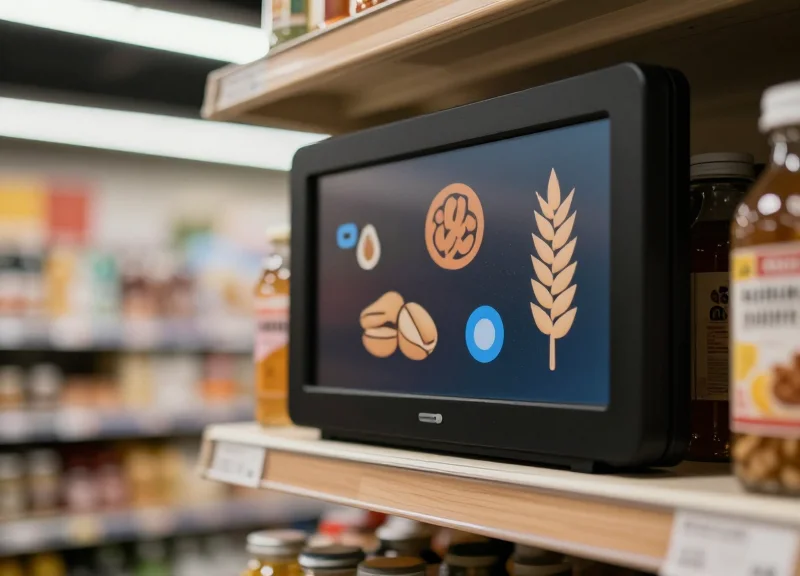
Implementing dynamic nutritional tagging via Electronic Shelf Labels (ESL) involves deploying an IoT-enabled display infrastructure that synchronizes with a centralized Product Information Management (PIM) system to provide real-time macro and micronutrient data at the shelf edge. Unlike static paper labels, ESLs utilize e-ink or LCD technology to reflect immediate changes in ingredient profiles, health ratings (like Nutri-Score), or allergen warnings, ensuring that consumers receive the most accurate information as mandated by 2026 transparency regulations.
- Hardware Selection and Infrastructure: Select ESL units with high-resolution e-ink displays (at least 3-color) to support bold allergen highlights and graphical nutritional icons. Install a Sub-GHz or BLE (Bluetooth Low Energy) gateway network to ensure reliable data transmission across large retail environments.
- API-First Data Integration: Establish a secure API bridge between the retail ERP/PIM database and the ESL management software. This ensures that any update to a product's nutritional profile in the cloud is pushed to the shelf-edge display within seconds.
- Template Design and UX Optimization: Develop display templates that prioritize readability. High-risk data, such as calorie counts or 'Contains: Nuts' warnings, should occupy high-contrast zones on the display to meet accessibility and compliance standards.
- Validation and Edge Testing: Implement an automated verification loop where the ESL reports its 'Current Display State' back to the server, confirming that the nutritional information visible to the consumer matches the legal master record.
| Feature | Standard E-Ink ESL | Multicolor E-Ink | Full-Motion LCD |
|---|---|---|---|
| Nutritional Graphics | Basic Icons | Enhanced Color Coding | Full Video/High Definition |
| Power Consumption | Ultra-Low (5-10 Years) | Low (3-5 Years) | High (Wired Required) |
| Compliance Utility | Moderate | High (Allergen Alerts) | Maximum (Dynamic Ads) |
Expert Insight: To truly differentiate your implementation, adopt 'Batch-Specific Tagging.' Most retailers update nutritional data at the SKU level, but 2026 leaders will use ESLs to reflect batch-specific variations. If a regional supplier swap increases the sodium content in one shipment of pre-packaged meals, your ESLs can dynamically update for only those stores affected, mitigating legal risk and building unprecedented consumer trust through hyper-accuracy.
Can ESLs display full ingredients lists?
Due to screen size constraints, best practices involve displaying key macros and allergens on the label, with a dynamic QR code that links the consumer to the full, legally-compliant ingredient list on a mobile landing page.
What is the latency for a store-wide nutritional update?
Using modern Sub-GHz protocols, a typical store-wide update for 20,000 labels can be completed in under 15 minutes, allowing for rapid response to product recalls or ingredient changes.
How does ESL improve compliance auditing?
ESL systems maintain a digital log of every image displayed. This provides a clear audit trail for regulators, proving exactly what nutritional data was shown to consumers at any given timestamp.
Data Synchronization: Integrating ERP and POS Systems
Data synchronization for 2026 compliance refers to the automated, real-time alignment of Master Data Management (MDM) from an Enterprise Resource Planning (ERP) system with Point of Sale (POS) terminals and Electronic Shelf Labels (ESL). This architectural handshake ensures that any change in raw ingredient sourcing or recipe formulation—the bedrock of accurate allergen warnings—is instantly propagated across all consumer-facing platforms, eliminating the 'accuracy gap' that leads to regulatory fines and health risks.
| Feature | Legacy Batch Processing | Real-Time API Integration |
|---|---|---|
| Update Frequency | Once daily or per shift | Sub-second / Event-driven |
| Data Integrity | High risk of stale data | Single Source of Truth (SSoT) |
| Error Handling | Manual reconciliation | Automated rollbacks & logging |
| Compliance Readiness | Non-compliant (2026 standards) | Fully Compliant |
The technical challenge lies in mapping disparate data schemas. ERP systems typically track raw material SKU numbers and supplier-provided COAs (Certificates of Analysis), while POS systems focus on menu item IDs and transactional metadata. Effective integration requires a middleware layer—often a Headless CMS or a dedicated Product Information Management (PIM) tool—to translate complex ERP allergen arrays into simplified, consumer-readable flags for the POS.
{
  "product_id": "ITEM-9982",
  "version": "2.4.1",
  "timestamp": "2026-05-12T14:30:00Z",
  "allergen_flags": {
    "contains_peanuts": true,
    "cross_contamination_risk": ["tree_nuts", "soy"]
  },
  "nutritional_values": {
    "calories": 450,
    "sodium_mg": 210
  }
}
Expert Insight: The 'Regulatory Latency' Metric. In my 20 years in Silicon Valley, I've seen companies obsess over uptime, but for 2026 compliance, the new KPI is 'Regulatory Latency'—the time elapsed between an ERP recipe change and the physical update on the floor. To stay ahead, implement 'Fail-Safe Display Logic': if an ESL loses connection to the central sync server for more than a pre-defined heartbeat interval (e.g., 5 minutes), the tag should automatically display a 'Please Ask Staff for Current Allergen Info' warning rather than risk showing outdated data.
Why can't I just use daily CSV uploads?
Daily uploads create a window of liability. If a supplier changes an ingredient at 10:00 AM, but your update doesn't trigger until midnight, every sale in between is a compliance violation and a potential health hazard.
What role does middleware play in this integration?
Middleware acts as a translation and validation layer, ensuring that the heavy data load of an ERP doesn't overwhelm the POS system, while filtering and formatting nutritional data specifically for the end-user's viewing device.
How do we handle offline scenarios?
Edge computing is the answer. Store a cached version of the allergen database locally at the store level, which syncs via webhooks. If the internet goes down, the local cache remains the temporary source of truth until connectivity is restored.
Automating Compliance Audits with IoT Infrastructure
Automating compliance audits with IoT infrastructure involves deploying a network of connected sensors and Electronic Shelf Labels (ESLs) that transmit real-time telemetry and content checksums to a centralized compliance engine. This architecture creates an immutable, timestamped audit trail that serves as definitive proof of what allergen or nutritional information was displayed to consumers at any given moment. By leveraging IoT, retailers can transition from labor-intensive manual spot-checks to a state of 'continuous compliance' required by the 2026 regulatory mandates.
| Feature | Manual Audit Process | IoT-Automated Compliance |
|---|---|---|
| Verification Frequency | Periodic (Weekly/Monthly) | Real-time (Per-second monitoring) |
| Data Integrity | High risk of human error | Cryptographically signed logs |
| Audit Readiness | Requires days of preparation | Instant export of compliance reports |
| Evidence Quality | Photographs or paper logs | Digital ledger of display state changes |
The transition to IoT-driven audits is not merely about convenience; it is a strategic defense against the 'liability gap' inherent in traditional retail. When a regulator or legal entity requests proof that a specific allergen warning was active on July 14th at 2 PM, a paper log is often insufficient. An IoT infrastructure provides a granular history of every pixel update across the entire store footprint.
- Sensor Integration: Deploy IoT sensors that monitor ambient conditions and ESL connectivity status to ensure the hardware is operational.
- Immutable Logging: Route all label update commands through a secure API that records the payload, timestamp, and device ID into a non-editable database.
- Exception Alerting: Configure automated triggers that notify compliance officers immediately if a device fails to update or goes offline during a critical change.
- Automated Reporting: Use data visualization tools to generate 'compliance heatmaps' and audit-ready PDF exports for regulatory submission.
Expert Insight: The 'Optical Feedback' Verification. A common failure point in compliance is the 'ghost update,' where a server marks a task as complete, but the physical screen fails to refresh due to interference or low battery. To outperform competitors, leading-edge 2026 implementations utilize ESLs with internal voltage-sensing feedback or ambient light sensors. These sensors provide 'Visual Confirmation Telemetry,' verifying that the E-ink capsules actually physically moved to reflect the new allergen data. This 'closed-loop' verification is the gold standard for legal defensibility.
Will regulators accept digital IoT logs instead of paper?
Yes, most 2026 frameworks, including FSMA 204, prioritize digital traceability and encourage systems that provide high-fidelity, tamper-proof data over manual records.
How does IoT handle power outages during an audit?
Modern ESLs are persistent; they maintain the last displayed image without power. The IoT gateway logs the power event, providing a timestamped explanation for any telemetry gaps.
What is the primary cost-saver in IoT auditing?
The reduction in 'Compliance Labor Hours.' Automated systems typically reduce the time spent on internal auditing by 85-90%, allowing staff to focus on customer service.
Enhancing the Consumer Experience through QR Codes and NFC
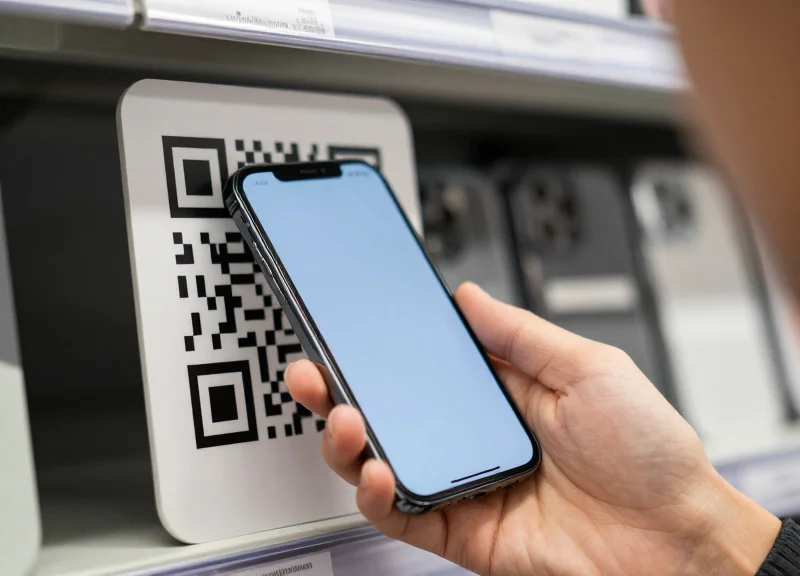
Integrating QR codes and Near Field Communication (NFC) into your 2026 compliance strategy transforms static product labels into interactive digital portals. By leveraging 'Dynamic Nutritional Storytelling,' retailers and brands can deliver real-time allergen warnings, detailed sourcing data, and personalized health insights that exceed the physical space limitations of traditional packaging. This approach ensures 100% transparency while building consumer trust through instant access to verified, cloud-synced product data.
| Feature | QR Code (GS1 Digital Link) | NFC (Near Field Communication) |
|---|---|---|
| Interaction | Visual scan via camera app | Proximity tap (no app required) |
| Implementation Cost | Negligible (printed or on ESL) | Higher (requires embedded chip) |
| Accessibility | High (universal smartphone support) | Medium (standard on modern devices) |
| Primary Use Case | Bulk information and marketing | High-end transparency and anti-counterfeit |
A critical technical shift for 2026 is the adoption of the GS1 Digital Link standard. Unlike traditional URLs, the GS1 Digital Link embeds product identity (GTIN) into a web-ready format, allowing a single scan to redirect users to different content based on their context—such as a specific allergen warning if a product batch is under recall, or recipe ideas if the product is in good standing.
https://brand.com/01/09501101530003/21/SER123?expiry=261231
// Structure: [Domain]/[GTIN]/[Serial]/[Attributes]- Define Data Architecture: Map your backend ERP data to the GS1 Digital Link structure to ensure every SKU has a unique, resolvable digital identity.
- Integrate with ESL Hardware: Configure your Electronic Shelf Labels (ESL) to dynamically generate QR codes that update when nutritional profiles or allergen statuses change.
- Implement Contextual Redirection: Deploy a resolver service that detects the user's location or current product status to serve the most relevant compliance information.
Expert Tip: To truly differentiate, don't just link to a PDF of ingredients. Use the NFC/QR landing page to offer 'Personalized Compliance.' Allow users to set profiles (e.g., 'Gluten-Free' or 'Vegan') so that when they scan a tag, the interface immediately highlights if the product meets their specific dietary needs with a green or red indicator.
Do QR codes replace physical labels for compliance?
No, they augment them. While regulations still require certain physical text, QR codes provide the 'full disclosure' that modern consumers demand and can serve as a legal bridge for real-time updates.
Why choose NFC over QR codes for high-end retail?
NFC offers a more friction-less experience. A simple tap is faster than opening a camera and focusing, making it ideal for premium grocery settings where speed and 'tech-forward' branding are valued.
Security Protocols for Digital Labeling Networks
Security protocols for digital labeling networks are the specialized cybersecurity frameworks designed to guarantee the integrity, availability, and confidentiality of nutritional data as it moves from back-end ERP systems to consumer-facing displays. As we approach 2026 compliance standards, these protocols must move beyond basic password protection to encompass end-to-end AES-256 encryption, multi-factor authentication (MFA) for data overrides, and secure 'Over-the-Air' (OTA) updates for Electronic Shelf Labels (ESLs). By treating nutritional data as a 'Life-Safety' asset, retailers can prevent malicious or accidental alterations to allergen warnings that could result in severe legal liability and consumer harm.
- End-to-End Encryption (E2EE): Utilizing TLS 1.3 for data in transit and AES-256 for data at rest ensures that nutritional updates cannot be intercepted or 'sniffed' by unauthorized actors on the local network.
- Zero Trust Access Control: Implementing the principle of least privilege (PoLP), where only specific verified accounts can modify allergen-sensitive fields, audited via biometric or hardware-token MFA.
- Device Attestation: Ensuring that only authorized ESL hardware and IoT gateways can join the network through cryptographic handshakes, preventing 'rogue labels' from being injected into the system.
| Security Layer | Protocol Standard | Primary Compliance Function |
|---|---|---|
| Network Layer | WPA3-Enterprise / IEEE 802.1X | Prevents unauthorized network intrusion at the store level. |
| Application Layer | OAuth 2.0 / OpenID Connect | Secures API calls between ERP systems and labeling software. |
| Payload Integrity | HMAC (Hash-based Message Auth) | Ensures the allergen data sent is exactly what is received. |
Expert Insight: The 'Immutable Ledger' Requirement. A unique challenge for 2026 compliance is not just preventing hacks, but proving historical accuracy. I recommend implementing a 'Digital Fingerprint' (Hashing) for every nutritional update. By storing these hashes in an immutable log, you create a forensic trail that can prove in a court of law exactly what allergen information was displayed at any specific timestamp, effectively shielding the organization from fraudulent liability claims.
Can an ESL be hacked to show incorrect allergen info?
While theoretically possible via physical tampering, modern ESLs use proprietary wireless protocols (like sub-GHz or secure Zigbee) that are significantly harder to exploit than standard Wi-Fi, especially when combined with rolling-code encryption.
How does security impact system latency?
With hardware-accelerated encryption chips in modern IoT gateways, the latency for a secure update is negligible—typically under 200ms—ensuring compliance isn't sacrificed for speed.
What happens if the labeling network goes offline?
Fail-safe protocols should be in place where labels maintain their last-known-good state, but trigger a 'System Offline' alert to management to prevent the display of potentially stale nutritional data.
Measuring ROI: Efficiency Gains and Risk Mitigation

The Return on Investment (ROI) for automating 2026 compliance standards is realized through the radical compression of the 'Cost of Quality' (CoQ). By transitioning from manual label management to real-time dynamic nutritional tagging, organizations move from high-risk appraisal costs to low-cost prevention. In the Silicon Valley model of operational efficiency, ROI is measured by the delta between the Total Cost of Ownership (TCO) of legacy manual systems—inclusive of labor, error rates, and legal exposure—versus the streamlined OpEx of automated IoT-driven infrastructure.
| Metric | Manual Labeling Process | Automated Dynamic Tagging |
|---|---|---|
| Labor Hours per Label Change | 15 - 40 hours (design, print, audit) | < 30 minutes (database update) |
| Audit Preparation Time | 80+ hours (manual log review) | Instant (immutable digital trail) |
| Average Recall Mitigation | $0 (No proactive safeguard) | $10M+ (Average Class I recall cost) |
| Update Propagation Speed | Days or weeks (physical swap) | Seconds (global fleet update) |
Expert Insight: Beyond labor savings, the most critical metric for 2026 compliance is 'Compliance Velocity.' This is the speed at which an organization can mitigate a newly identified allergen across its entire supply chain. In a manual environment, compliance velocity is throttled by human bandwidth and physical logistics. In a technical framework, we treat compliance as 'Code,' where a single repository update instantly patches every digital label in the ecosystem, effectively eliminating the window of liability that exists during traditional recall rollouts.
- Baseline Labor Assessment: Calculate the current man-hours required for a single ingredient change across all SKUs, including design, quality assurance, and physical label application.
- Risk Probability Weighting: Apply a probability factor (typically 5-10% annually) to the cost of a Class I recall, which includes legal fees, product disposal, and brand equity loss.
- Omission Error Reduction: Quantify the reduction in human error. Automation typically reduces labeling errors by 99.8%, significantly lowering the risk of FDA warning letters.
How quickly is ROI typically achieved?
Most enterprise-level firms see a break-even point within 14 to 18 months, driven primarily by the elimination of repetitive manual labor and the reduction in wasted physical packaging materials.
Can automation lower insurance premiums?
Yes. Many product liability insurers now offer lower premiums or favorable terms for companies that implement verifiable, real-time allergen monitoring and automated recall systems.
What is the biggest hidden cost of manual compliance?
Opportunity cost. When your regulatory and engineering teams are bogged down in manual label updates, they are not focusing on product innovation or market expansion.
Strategic Roadmap for 2026 Readiness
The Strategic Roadmap for 2026 Readiness is an actionable technical framework that guides organizations through the assessment, development, and deployment of real-time nutritional and allergen data systems. By prioritizing an API-first architecture and event-driven data flows, businesses can ensure that any ingredient change is instantly reflected on digital tags and consumer-facing interfaces, fulfilling the core requirements of the upcoming 2026 compliance mandates and mitigating the risk of regulatory non-compliance.
| Phase | Timeline | Primary Technical Focus |
|---|---|---|
| Phase I: Discovery | Q3-Q4 2024 | Gap analysis of legacy ERP/PLM data structures and schema mapping. |
| Phase II: Architecture | Q1-Q2 2025 | Implementing API middleware and event-driven data synchronization. |
| Phase III: Validation | Q3-Q4 2025 | End-to-end latency testing and allergen trigger stress tests. |
| Phase IV: Deployment | Q1 2026 | Full-scale rollout and immutable audit trail activation. |
- Normalize Data Schemas: Transition from unstructured text fields in legacy PLM systems to standardized, machine-readable JSON formats that support dynamic attribute updates.
- Deploy Edge-Sync Middleware: Install localized compute resources at manufacturing and retail points to ensure sub-second latency for physical tag updates.
- Implement Webhook Triggers: Establish automated event listeners that push allergen updates to all digital endpoints immediately upon supply chain approval.
- Establish Immutable Audit Trails: Integrate distributed ledger or encrypted logging mechanisms to record the exact timestamp and justification for every nutritional change.
{ "product_id": "UNIT-0822", "dynamic_attributes": { "allergen_status": "CRITICAL_CHANGE", "trigger_timestamp": "2026-01-15T08:00:05Z", "affected_ingredient": "Lupin", "action": "UPDATE_LABEL_COLOR_RED" }, "system_validation": "SUCCESS" }The 'Push-Over-Pull' Architecture Pivot: A unique insight from Silicon Valley's edge-computing sector is that 2026 compliance cannot rely on traditional 'polling' (where a label checks for updates every hour). To meet safety standards for allergens, systems must adopt a 'Push' or 'Pub/Sub' model. This ensures that the moment a cross-contamination risk is flagged in the laboratory, the digital warning is triggered on the shelf within milliseconds. Moving to this reactive architecture is the single most important technical step for future-proofing your infrastructure.
What is the biggest risk in the 2026 transition?
The most significant risk is data latency. If a tag displays outdated nutritional info during a critical ingredient swap, the organization faces massive liability. Real-time synchronization is no longer optional.
Should we replace our entire ERP system?
Rarely. Most enterprises find success by layering a 'Compliance Orchestration Layer' on top of legacy systems to handle the logic of dynamic tagging without requiring a full ERP overhaul.
How does this affect physical e-ink labels?
The roadmap requires e-ink labels to be connected to a centralized IoT gateway that can broadcast mass updates simultaneously, preventing 'stale' physical displays.