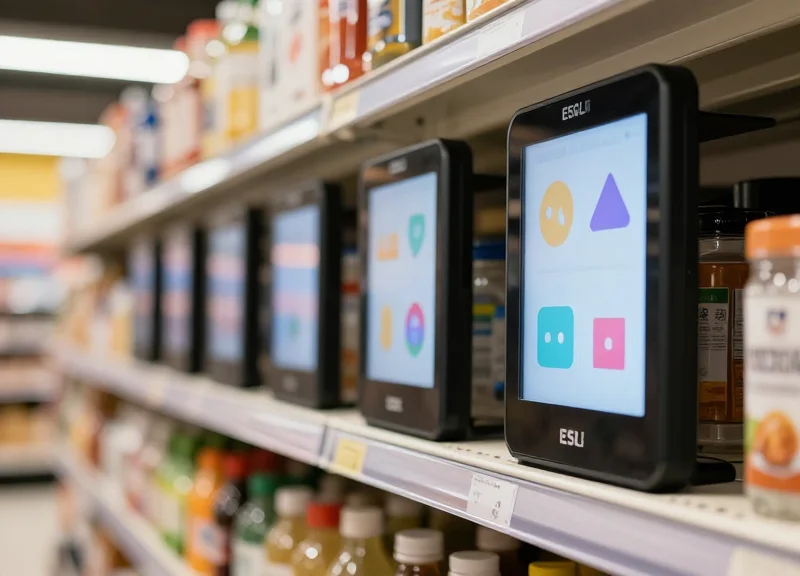
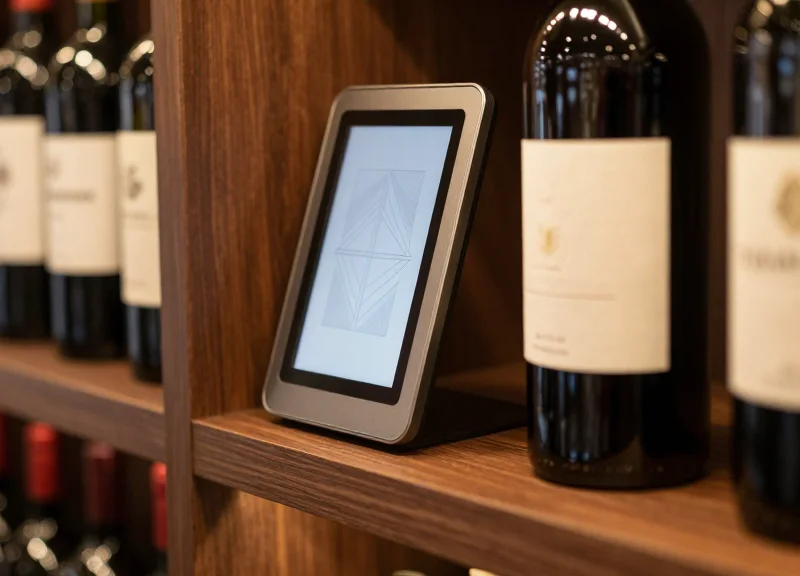
In the sophisticated world of luxury spirits and fine wine, precision and presentation are paramount. As we approach 2026, manual pricing is no longer sustainable for high-end boutiques managing rare vintages and fluctuating market values. Electronic Shelf Labels (ESL) have evolved from simple price displays into powerful tools for inventory management and customer engagement. This guide explores how to select the perfect ESL solution that complements the prestige of your collection while driving operational excellence in a competitive global market.
The Strategic Shift: Why Luxury Wine Boutiques Need ESL in 2026
In 2026, the strategic shift toward Electronic Shelf Labels (ESL) in luxury wine boutiques is driven by the need for 'Hyper-Agile Pricing' and 'Contextual Storytelling.' Unlike traditional retail, fine wine requires a delicate balance between preserving aesthetic heritage and providing real-time data on vintage scarcity, critic scores, and provenance. ESL technology allows boutiques to automate price adjustments across thousands of SKUs instantly, ensuring that rare bottles are always aligned with fluctuating global auction market values while freeing staff to focus on high-touch sommelier services.
| Feature | Traditional Paper Labels | 2026 ESL Luxury Standard |
|---|---|---|
| Update Frequency | Manual (Days/Weeks) | Instant (Cloud-Synced) |
| Data Depth | Price & Name only | QR-linked Terroir, Vintages, & Ratings |
| Aesthetic Integrity | Prone to yellowing/fading | High-contrast E-ink with custom bezels |
| Price Accuracy | High error rate in multi-unit stores | 100% ERP-to-Shelf synchronization |
The move to digital is no longer about saving on paper costs; it is about the 'Digital Twin' of the bottle. In the 2026 landscape, a luxury spirit's value is as much about its data—history, ownership chain, and storage conditions—as it is about the liquid inside. ESLs serve as the physical interface for this digital data, providing a portal for collectors to verify authenticity via NFC or blockchain-integrated QR codes directly at the shelf edge.
Why is dynamic pricing critical for wine in 2026?
With the rise of wine as an investable asset class, prices fluctuate based on real-time global demand and limited supply. ESLs allow boutiques to sync with live market indices (like Liv-ex), ensuring the store never sells a 'blue chip' vintage below its current replacement value.
Does digital tech ruin the 'luxury feel' of a cellar?
Modern ESLs for luxury retail now utilize 'Nebula-Finish' E-ink and artisanal frames (wood, brushed brass, or leather) that complement, rather than clash with, high-end interior design and dimly lit cellar environments.
How does ESL impact staff productivity in spirits boutiques?
Automating price updates saves an average of 15-20 labor hours per week in a mid-sized boutique, allowing staff to transition from administrative 'tagging' to proactive clienteling and private tasting sessions.
Expert Insight: The 'Vintage Volatility Index' integration is the true game-changer for 2026. Forward-thinking boutiques are now connecting their ESL systems to API-fed market trackers. This allows for 'Scarcity-Based Pricing' where the shelf price can automatically increase as the boutique's internal inventory of a specific rare vintage drops below a certain threshold, maximizing margins on the final bottles of a highly-coveted stock.
Aesthetic Harmony: Matching ESL Design with Premium Store Interiors
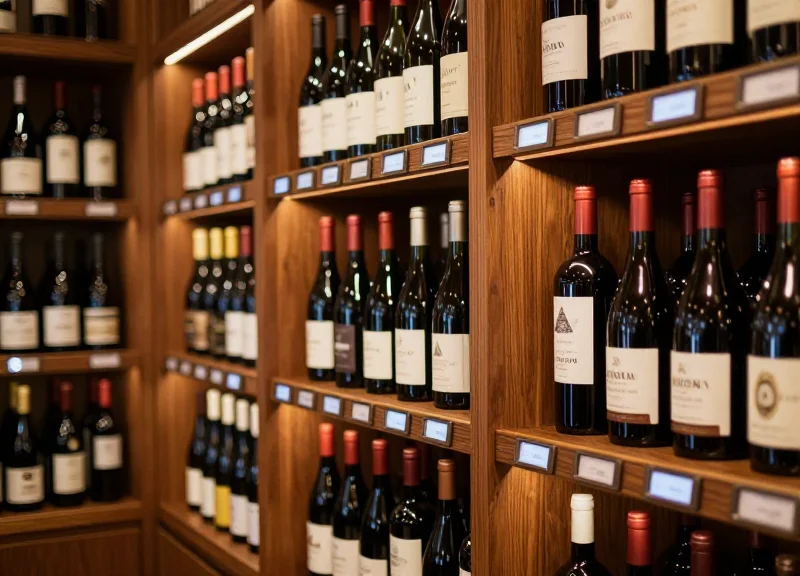
Aesthetic harmony in luxury retail technology is the strategic selection of hardware that maintains the visual integrity of a high-end environment while providing digital functionality. For fine wine and spirits boutiques, this means prioritizing Electronic Shelf Labels (ESL) with ultra-slim profiles, customizable frames, and E-ink displays that mimic the matte texture of traditional paper, ensuring the digital transition feels like a natural evolution of the store’s existing design language.
In a space where customers are paying for heritage and craft, a bulky plastic label can shatter the illusion of luxury. The goal for 2026 is 'invisible technology'—hardware that serves its purpose without demanding attention away from the vintage bottles. This requires a shift from off-the-shelf industrial designs to curated aesthetics that consider materials such as brushed metal, matte polymers, and edge-to-edge glass.
| Design Element | Standard Industrial ESL | Luxury Boutique ESL |
|---|---|---|
| Bezel Design | Thick plastic borders (8mm+) | Bezel-less or ultra-slim ( <2mm) |
| Display Surface | Reflective glass/plastic | Anti-glare, paper-white E-ink |
| Case Finish | Generic white/grey plastic | Custom Pantone matching / Metallic |
| Mounting | Clip-on plastic rails | Magnetic or recessed flush mounts |
| Visual Density | Low DPI (jagged fonts) | High DPI (300+ for serif typography) |
- Bezel-less and Full-Surface Displays: Modern 2026 ESL models eliminate the 'digital photo frame' look by extending the display to the very edge of the device, allowing it to blend into shelving units made of dark wood or marble.
- Custom Color Palettes & Textures: Leading manufacturers now offer wood-grain finishes or metallic 'champagne gold' casings that match the architectural hardware of luxury spirit rooms.
- Specialized Typography Support: Luxury labels must support high-resolution serif fonts that evoke the feeling of a handwritten sommelier’s note rather than a supermarket price tag.
Expert Insight: The 'Kelvin-Matched' Display. A common mistake in luxury ESL deployment is a color temperature mismatch. In 2026, top-tier boutiques are selecting ESLs with adjustable white-point E-ink. This allows the 'white' background of the digital label to be tuned to match the warm 2700K lighting typically found in premium wine cellars, preventing the labels from looking blue or 'clinical' against aged oak shelving.
Will ESLs look too 'high-tech' for a traditional cellar?
Not if you use 'Paper-White' E-ink technology. Unlike LCD or LED screens, E-ink does not emit light, meaning it looks exactly like printed cardstock under boutique spotlights.
Can I use different frames for different sections?
Yes. Many luxury retailers use brushed brass frames for the 'Rare & Vintage' section and matte black for modern spirits to help customers navigate the store's hierarchy visually.
How do I hide the mounting hardware?
Opt for magnetic mounting systems or custom-milled shelf grooves that allow the labels to sit flush with the wood, making them appear as an integrated part of the furniture.
Advanced Display Technologies: E-Ink and High Contrast for Wine Cellars
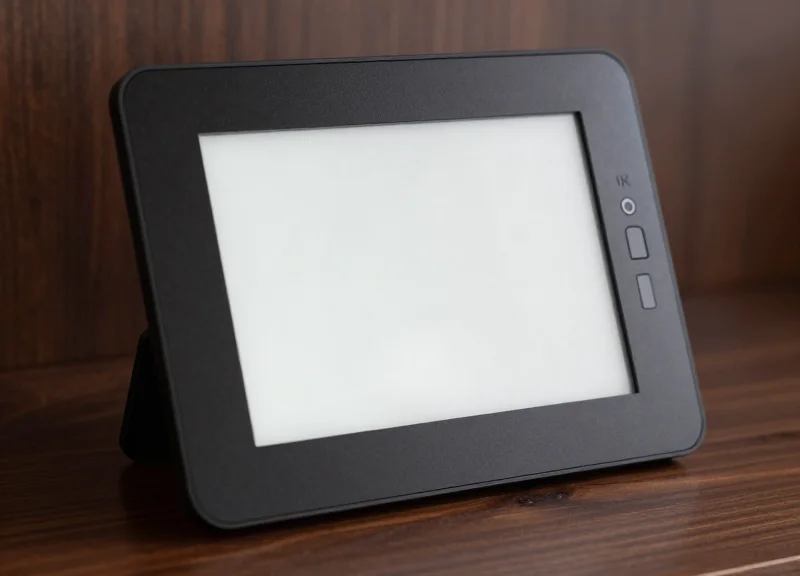
For luxury wine boutiques, display technology must solve a unique paradox: providing crystal-clear product information in the dim, atmospheric lighting required to preserve fine vintages. Advanced Electronic Shelf Labels (ESLs) utilize bistable E-ink technology, which mimics the appearance of ink on paper and requires no backlight, ensuring that labels are legible from any angle without emitting heat or light that could compromise the wine's chemical stability.
| Feature | Standard Retail ESL | 2026 Luxury Wine ESL (E-Ink Spectra 6) |
|---|---|---|
| Contrast Ratio | 10:1 to 15:1 | 30:1+ (Enhanced saturation) |
| Color Palette | BWR (Black, White, Red) | Full Color / 6-Color Gamut |
| Viewing Angle | 160 Degrees | Near 180 Degrees (Spherical) |
| Refresh Speed | 3-5 Seconds | Sub-1 Second (Partial Refresh) |
In 2026, the gold standard for high-end spirits is the E-ink Spectra 6 display. Unlike previous generations that suffered from 'ghosting' or washed-out colors in cool environments, these displays utilize a high-density micro-cup architecture. This allows for rich, velvety blacks and vibrant gold or deep burgundy accents that match the sophisticated branding of top-tier estates. Furthermore, because wine cellars are often viewed from multiple heights—from floor-level bins to ceiling-high racks—the ultra-wide viewing angle of modern E-ink is non-negotiable for a premium customer experience.
Why is high contrast vital for wine cellars?
Cellars typically operate at 30-50 lux to protect wine from light strike. High-contrast E-ink provides 300 DPI resolution, allowing customers to read small-font tasting notes and vintage years without needing a flashlight.
How does temperature affect E-ink performance?
Standard displays lag in cellar temperatures (approx. 12°C/55°F). Premium 2026 models include 'Cold-Chain Optimized' waveforms that ensure rapid screen updates even in chilled environments.
Can these displays handle high humidity?
Yes, luxury-grade ESLs feature IP67 or IP68 ratings with optical bonding, preventing internal fogging between the E-ink film and the protective glass cover.
Expert Insight: The UV-C Filter Advantage. A common industry oversight is the impact of ambient UV on digital displays. For 2026, we recommend specifying ESLs with integrated UV-filtering glass. While wine is protected by dark glass bottles, the long-term exposure of an ESL to even low levels of UV can yellow the display's 'white' state. Optical-grade, UV-protected glass ensures the label remains a pristine, paper-white color for the full 10-year battery life, maintaining the boutique's premium look.
Durability Standards: Operating in Temperature-Controlled Environments
In 2026, the durability of Electronic Shelf Labels (ESLs) in luxury wine environments is defined by their ability to withstand constant relative humidity (RH) levels of 50% to 70% and stable temperatures between 10°C and 14°C (50°F–57°F). Standard retail ESLs often fail in these conditions due to micro-condensation and battery depletion; therefore, luxury boutiques must prioritize hardware with a minimum Ingress Protection (IP) rating of IP67, specifically engineered with hermetically sealed casings to prevent internal moisture ingress that can lead to circuit corrosion or screen fogging.
| Feature | Standard Retail ESL | Luxury Boutique (Cellar-Grade) ESL |
|---|---|---|
| IP Rating | IP54 (Dust/Splash resistant) | IP67 (Dust-tight/Immersion resistant) |
| Operating Temp | 5°C to 40°C | -20°C to 50°C |
| Humidity Tolerance | Up to 50% RH (Non-condensing) | Up to 95% RH (Condensing protected) |
| Battery Chemistry | Standard Alkaline/Li-MnO2 | Low-Temp Optimized Li-SoCl2 |
- Anti-Fogging Optical Bonding: Premium ESLs utilize optical bonding between the E-ink film and the protective lens to eliminate the air gap where condensation typically forms during temperature fluctuations.
- Corrosion-Resistant Contact Points: Cellar-grade units feature gold-plated or specialized alloy battery contacts to prevent the oxidation common in high-humidity viticulture storage.
- Extended Thermal Battery Life: Cold environments slow chemical reactions in batteries. Look for 2026 models with 10-year lifespans specifically rated for use at 12°C to avoid annual maintenance cycles.
Expert Tip: The Vapor Pressure Deficit (VPD) Factor. One original insight often overlooked by generic providers is the Vapor Pressure Deficit within airtight ESL casings. In a cooled wine boutique, if the ESL is not vacuum-sealed or nitrogen-purged during manufacturing, the internal air contains moisture that will condense against the screen as soon as the unit is placed in the cellar. Always request certification that your ESLs are 'hermetically vacuum-sealed' rather than just 'water-resistant' to ensure the display remains crystal clear for a decade.
Will high humidity cause the E-ink to bleed?
No, if the unit is IP67 rated. The E-ink capsules are stable; the risk is the moisture affecting the driver IC on the PCB. Sealed units prevent this entirely.
Do I need special mounting brackets for cold environments?
Yes. Standard plastic clips can become brittle in sustained cold. We recommend polycarbonate or stainless steel rail systems that maintain structural integrity at lower temperatures.
How does temperature affect update speed?
E-ink refreshes slightly slower in colder temperatures (latency may increase from 500ms to 1s). However, for fine wine pricing which rarely changes hourly, this impact is negligible.
Real-Time Pricing Agility for Rare Vintages and Market Fluctuations

Real-time pricing agility for luxury spirits is the capability of a retailer to synchronize physical shelf prices with global market indices, auction results, and inventory scarcity in seconds. In the 2026 landscape, Electronic Shelf Labels (ESL) act as the physical endpoint of an automated pricing engine, allowing boutiques to treat their inventory like a liquid asset class. This eliminates the 'arbitrage risk' where a rare vintage—such as a 1982 Bordeaux—might be sold at yesterday's price despite a morning auction surge at Sotheby's or Christie's.
| Feature | Manual Paper Labeling | 2026 ESL Cloud Integration |
|---|---|---|
| Update Latency | 2–4 Hours (Staff Dependent) | Under 60 Seconds |
| Market Sync | Manual Research/Entry | API Connection to Liv-ex/Wine-Searcher |
| Margin Protection | Reactive (Occurs after sale) | Proactive (Adjusts to global trends) |
| Customer Trust | Risk of 'Price at Till' mismatch | Guaranteed consistency across channels |
Expert Insight: By 2026, leading boutiques are adopting 'Sentiment-Based Pricing.' This involves linking ESL software to social media trends and critic scores. If a specific vintage receives a sudden 100-point rating from a major critic, the ESL system can automatically apply a 'scarcity premium' within minutes, capturing immediate demand without requiring the shop manager to be present.
- Identify Value Triggers: Connect your ESL backend to external data feeds like Liv-ex or professional wine indices.
- Define Buffer Logic: Set automated rules (e.g., 'If global average price rises >5%, update shelf price by 4%').
- Batch Review: Use a 'Manager Approval' mobile notification to confirm high-value changes for bottles over $5,000 before they go live.
- Omnichannel Sync: The system pushes the update to the ESL, the e-commerce store, and the POS system simultaneously.
Does frequent price changing alienate luxury clients?
In the luxury sector, price volatility is often seen as a sign of authenticity and market relevance. Transparency via QR codes on the ESL that link to current market valuations helps justify these changes to discerning collectors.
Can ESLs handle promotional 'Flash' events for members?
Yes. Advanced 2026 systems allow for 'Member-Only Pricing' where the label displays a standard price but flashes a QR code for a personalized discount available via the boutique's app.
What happens if the Wi-Fi fails during a price update?
Modern ESLs utilize sub-GHz radio frequencies (like 800/900MHz) which offer superior penetration through glass and liquid. Most units feature 'Fail-Safe Display' memory, holding the last verified price until a secure reconnect is established.
Interactive Customer Engagement: NFC and QR Code Integration
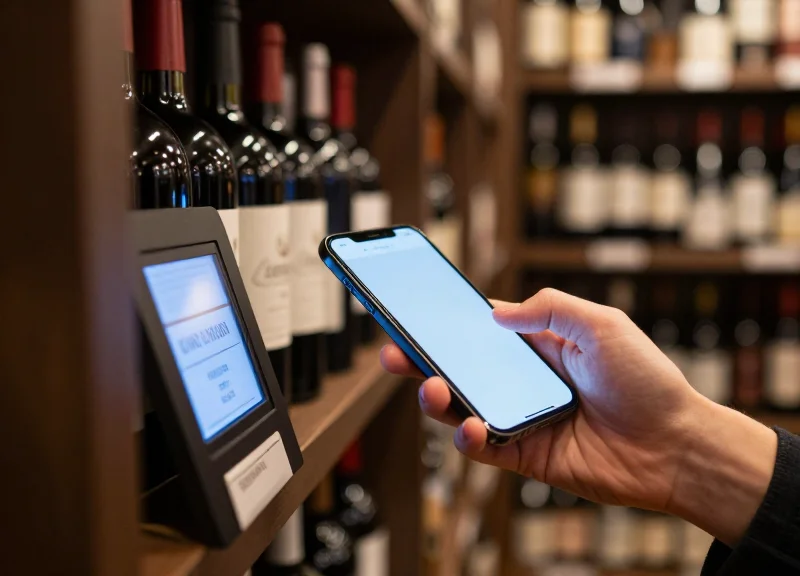
In the 2026 luxury retail landscape, Electronic Shelf Labels (ESLs) have evolved from mere price tags into sophisticated touchpoints for 'Invisible Tech' engagement. By integrating Near Field Communication (NFC) and QR codes directly into the ESL hardware, luxury spirits boutiques can bridge the gap between a physical bottle of rare Bordeaux and its rich digital narrative. This integration allows customers to instantly access high-definition tasting notes, vineyard history, and real-time critic ratings (such as Robert Parker or Wine Spectator scores) simply by tapping their smartphone against the shelf edge, creating a frictionless information flow that respects the customer's autonomy.
| Feature | NFC (Near Field Communication) | QR Code (Quick Response) |
|---|---|---|
| User Experience | Zero-friction 'Tap-and-Go' interaction. | Requires opening camera/scanning app. |
| Aesthetic Impact | Invisible; embedded within the ESL bezel. | Visible graphic; can clutter clean designs. |
| Data Depth | Can trigger secure, personalized CRM actions. | Primarily links to static or dynamic URLs. |
| Accessibility | Standard on 95% of 2026 smartphones. | Universal; works with any camera phone. |
Expert Insight: For luxury boutiques, the 2026 trend is 'The Haptic Handshake.' While QR codes are functional, NFC is the preferred standard for high-end environments because it maintains the visual purity of the label. An ESL with an embedded NFC chip allows the retailer to offer 'Exclusive Unlock' content—such as a personal video message from the winemaker—that feels like a private concierge service rather than a generic marketing push.
- Provenance Verification: Link the ESL to blockchain-backed certificates of authenticity, allowing collectors to verify the bottle's journey from the chateau to the boutique.
- Virtual Sommelier Integration: Trigger an AI-driven pairing guide that suggests food matches or similar vintages based on the customer’s current selection.
- Inventory 'Wishlisting': Allow customers to tap an NFC-enabled label to add a rare bottle to their digital cellar or 'wishlist' for future purchase via the boutique’s app.
Will NFC work through thick glass wine cabinets?
Standard NFC has a range of about 4cm. For refrigerated wine lockers or thick-glass displays, we recommend placing the ESL on the exterior handle or using 'High-Gain' NFC tags specifically designed for short-range penetration.
How do I track customer engagement data?
Modern ESL management software provides real-time analytics. You can see which bottles are being 'tapped' most frequently, helping you optimize your floor plan and inventory selection based on actual customer interest.
Is the digital content difficult to update?
No. The QR/NFC links are managed via a Centralized Management System (CMS). When you update the URL in your database, the ESL interaction point updates automatically across all store locations.
Connectivity and Infrastructure: Choosing Between Infrared, Radio, and Bluetooth
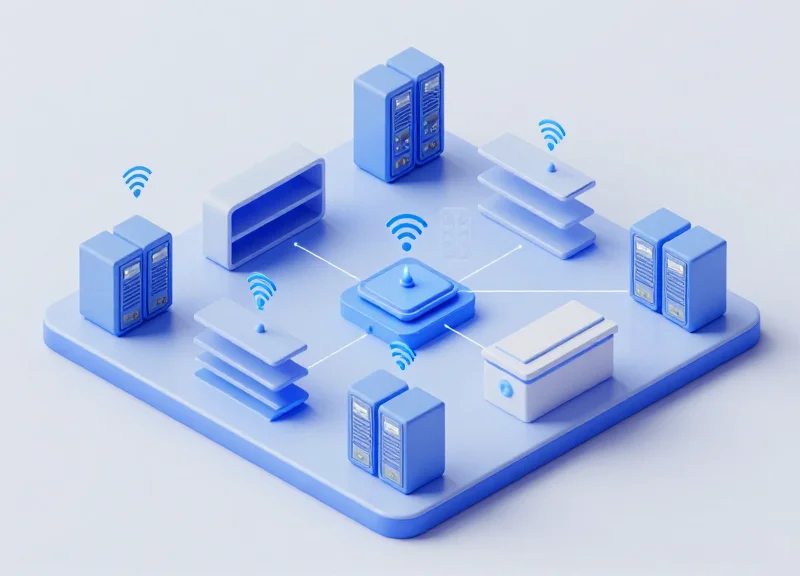
The communication protocol serves as the central nervous system of an Electronic Shelf Label (ESL) ecosystem, determining how reliably price updates reach the shelf in a luxury retail setting. For fine wine boutiques in 2026, the infrastructure must handle 'dense' environments where hundreds of bottles—filled with liquid that absorbs radio waves—are packed into metal or wooden racking. The three primary technologies available are Infrared (IR), Radio Frequency (RF, typically Sub-GHz or 2.4GHz), and Bluetooth Low Energy (BLE), each offering distinct trade-offs in terms of signal penetration, power efficiency, and hardware overhead.
| Protocol | Signal Type | Line-of-Sight Needed? | Interference Resistance | 2026 Boutique Suitability |
|---|---|---|---|---|
| Infrared (IR) | Light-based | Yes | Low (Susceptible to blocked views) | Niche / Legacy only |
| Radio Frequency (RF) | Sub-GHz / 2.4GHz | No | High (Excellent through walls/racks) | High (The industry standard) |
| Bluetooth (BLE) | 2.4GHz Digital | No | Very High (Supports Mesh & NFC) | Premium (For interactive boutiques) |
When managing a high-end cellar, the physical properties of wine present a unique challenge: liquid is an exceptional absorber of 2.4GHz radio waves (the frequency used by standard Wi-Fi). This means a boutique with thousands of bottles acts as a series of signal dampeners. While Infrared was once popular because it does not suffer from radio interference, its requirement for a direct line-of-sight makes it impractical for modern, multi-layered wine displays where labels may be tucked under shelf lips or behind decorative moldings.
Why is Sub-GHz RF often preferred over standard Wi-Fi?
Sub-GHz RF operates at lower frequencies that wrap around obstacles and penetrate glass/liquid more effectively than the crowded 2.4GHz band used by consumer Wi-Fi, ensuring 100% update success rates even in deep cellars.
How does Bluetooth 5.0+ benefit luxury retailers?
Modern BLE protocols allow for bidirectional communication, meaning the tag can send a 'confirmation' back to the server once a price is updated, providing the absolute audit trail required for high-value assets like First Growth Bordeaux.
Does the infrastructure require extensive wiring?
No. Most 2026 systems use PoE (Power over Ethernet) access points that cover up to 5,000 square feet, requiring minimal invasive cabling in historically significant or high-design boutique spaces.
Expert Insight: The 2026 Shift to PAwR. A significant advancement for luxury wine retailers is the adoption of Bluetooth 5.4 with PAwR (Periodic Advertising with Response). Unlike older ESL systems that required tags to 'wake up' constantly to check for updates—draining battery—PAwR allows thousands of tags to be synchronized into precise time slots. This allows a boutique to update 10,000 labels across multiple floors in under a minute while maintaining a 10-year battery life, even when frequently pushing data-heavy updates like new critic scores or vintage stock levels.
The Synergy of ESL and RFID: A Holistic Approach to Loss Prevention
The synergy between Electronic Shelf Labels (ESL) and Radio Frequency Identification (RFID) represents the gold standard for luxury spirits boutiques, combining digital pricing precision with real-time, item-level tracking. In this holistic ecosystem, the ESL serves as the visual anchor and data portal, while RFID tags hidden beneath the capsule or on the rear label provide a digital identity for every individual bottle. This integration allows retailers to synchronize physical inventory with digital records instantly, ensuring that a bottle's price, location, and security status are managed through a single, automated interface.
| Feature | ESL Functionality | RFID Functionality | Combined Synergistic Value |
|---|---|---|---|
| Inventory Auditing | Displays stock levels on-shelf | Automates cycle counts | Instant reconciliation of 'shelf vs. actual' stock |
| Security | Flashes LEDs during unauthorized movement | Triggers alarms at exits | Identifies exactly which vintage/bottle is being stolen |
| Location Services | Pinpoints the shelf section | Tracks individual bottle movement | Heat-mapping of customer interaction with rare bottles |
| Authentication | Displays provenance data via QR | Digital 'birth certificate' for the bottle | Full chain-of-custody verification for investors |
Expert Insight: The 2026 'Silent Alert' Paradigm. A unique advantage emerging in 2026 is the use of ESLs as localized gateways for RFID pings. Instead of relying on expensive ceiling-mounted sensors, the ESL itself can detect if a specific RFID-tagged bottle is moved out of its proximity zone. If a bottle of 1945 Romanée-Conti is lifted, the ESL can trigger a 'silent alert' to staff tablets or wearables, allowing for proactive customer service or security intervention before the bottle even reaches the store exit.
- Item-Level Tagging: Apply discreet, wine-safe RFID tags to high-value bottles during the intake process.
- ESL Mapping: Link the RFID tag ID to the specific ESL ID in the store's backend management software.
- Zone Definition: Establish digital perimeters using the ESL network to monitor shelf-dwell time and movement patterns.
- Automated Reconciliation: Set the system to perform hourly 'digital handshakes' between labels and bottles to detect missing items immediately.
Will RFID tags affect the quality of the wine?
No. Passive RFID tags use non-ionizing radio waves that do not generate heat or penetrate the glass and liquid to an extent that would alter the chemical composition of the wine.
How does this prevent 'Sweethearting' or internal theft?
Because the ESL and RFID systems are integrated with the POS, any bottle that leaves the store without a 'sold' status in the database triggers an immediate digital audit trail, pinpointing the exact time and location of the discrepancy.
Can the tags be removed by shoplifters?
Modern tags for luxury spirits are often integrated into the tamper-evident foil or placed under the back label with high-bond adhesives that make removal impossible without damaging the bottle's aesthetic and resale value.
Evaluating ROI: Long-Term Benefits for High-Margin Spirits Retailers
For luxury spirits boutiques, the Return on Investment (ROI) for Electronic Shelf Labels (ESL) extends far beyond simple price automation; it is a multi-layered financial strategy that typically achieves break-even within 14 to 18 months. By converging operational efficiency with high-margin protection, ESL systems allow retailers to reallocate human expertise from administrative tasks to high-touch clienteling, while ensuring that premium inventory is never sold below its real-time market value due to human error.
| Metric | Manual Paper Labeling | ESL System (2026 Standard) |
|---|---|---|
| Price Update Speed | 2-4 minutes per bottle | Near-instant (Global) |
| Labor Allocation | 15-20 hours/month (Admin) | 1-2 hours/month (Audit) |
| Pricing Error Rate | 2% - 5% (Human Error) | 0% (System Synchronized) |
| Brand Perception | Static / Traditional | Interactive / Innovative |
| Information Depth | Price & Name only | Vintages, Ratings & Origin |
The Vintage Appreciation Offset (Unique Insight): One of the most overlooked ROI factors in fine wine retail is the 'Critic Score Spike.' In traditional settings, when a prestigious critic (like Robert Parker) releases a 100-point rating, boutique owners often take days to update shelf prices, missing the window to capture the immediate surge in market value. ESL systems integrated with market intelligence allow for 'Margin Capture'—automatically adjusting prices the moment a vintage is upgraded, which can account for an additional 3-5% in annual gross profit for high-end collections.
- Labor Optimization: Shift your sommeliers and spirits experts from printing and cutting paper to hosting tastings and closing high-value sales.
- Waste and Error Reduction: Prevent 'Price Lag' where expensive bottles are accidentally sold at outdated, lower prices after a market shift or tax increase.
- Agile Markdown Strategies: Liquidity is key; use ESL to instantly launch 'Bin End' flash sales on slower-moving inventory to optimize cash flow.
Will ESL increase my store's energy costs significantly?
No. Modern e-Ink ESLs only consume power during a refresh. A typical battery lasts 5–10 years, making the ongoing operational cost negligible compared to paper and ink supplies.
How does ESL impact customer trust in a luxury setting?
It enhances trust by ensuring the price at the shelf always matches the POS. In the luxury sector, price discrepancies are seen as a lack of professionalism, which can damage long-term brand loyalty.
Can I justify the cost for a small boutique with low SKU count?
Yes. While the scale is smaller, the margin per bottle is higher. Protecting the price integrity of a single $10,000 bottle of Macallan can pay for a significant portion of the infrastructure.