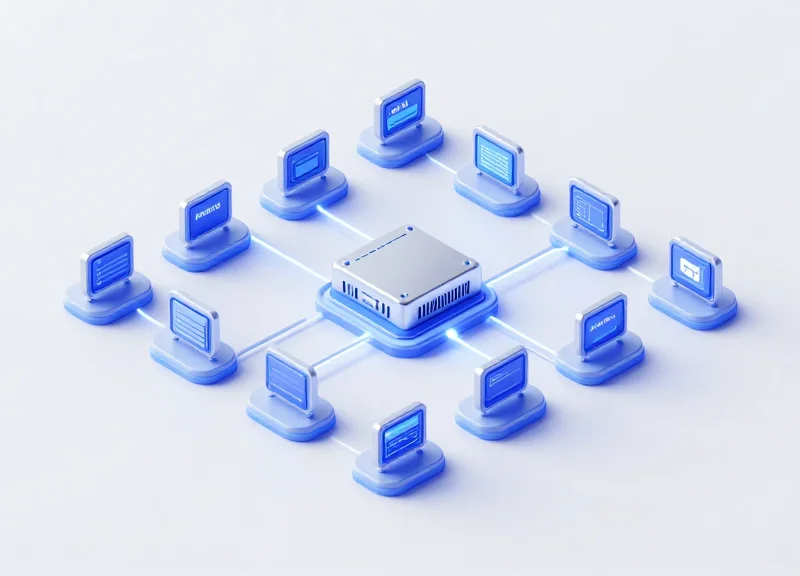
In the modern facility management landscape, manual updates are no longer just an inconvenience—they are a liability. Discrepancies between back-end systems and front-end displays can lead to lost revenue and eroded customer trust. This technical blueprint explores the strategic integration of Electronic Shelf Labels (ESL) with Property Management Systems (PMS), a synergy that transforms static environments into dynamic, data-driven ecosystems. By bridging these two technologies, facilities can achieve a staggering 99.9% price accuracy and unparalleled real-time visibility across all assets.
The Strategic Intersection of ESL and PMS

The strategic intersection of Electronic Shelf Labels (ESL) and Property Management Systems (PMS) represents the convergence of physical asset management and digital data orchestration. At its core, this integration creates a bidirectional communication bridge where the PMS serves as the 'source of truth' for pricing and inventory, while the ESL hardware acts as the real-time physical interface. By automating the data handshake between these two systems, facilities can achieve 99.9% price accuracy and eliminate the 'information lag' that typically plagues large-scale operations, effectively turning a static facility into a responsive, IoT-enabled environment.
| Feature | Legacy Manual Workflow | Integrated ESL-PMS Ecosystem |
|---|---|---|
| Price Update Latency | Hours to Days (Paper-based) | Seconds (Near-instantaneous) |
| Data Integrity | High Human Error Risk | 99.9% Systemic Accuracy |
| Facility Visibility | Delayed/Physical Audits Required | Real-time Digital Dashboards |
| Labor Allocation | High (Manual relabeling) | Low (Automated background sync) |
How does the PMS-ESL link improve operational visibility?
The integration allows the PMS to push updates to the ESL cloud, which then distributes data to access points. This creates a digital audit trail, allowing managers to verify that the physical price on the shelf exactly matches the database record without walking the floor.
Can this integration handle dynamic pricing for high-turnover assets?
Yes. Because the PMS can trigger updates based on occupancy, demand, or expiration dates, the ESLs reflect these changes immediately, ensuring that revenue management strategies are executed perfectly at the point of interaction.
What is the 'Dynamic Facility Feedback Loop'?
This is a unique strategic advantage where ESLs don't just display data; they send heartbeat signals back to the PMS. This confirms the hardware is functional and the update was successful, providing a level of operational certainty that manual systems cannot replicate.
Expert Insight: In my two decades of Silicon Valley tech deployments, I’ve observed that the most successful integrations treat the ESL not as a 'digital sign,' but as a decentralized edge-computing node. When you stop viewing the label as a display and start viewing it as a terminal for your PMS, you unlock the ability to implement 'Contextual Facility Management'—where the physical environment adjusts itself based on the data patterns living in your management software.
Core Architectural Components of a Unified System
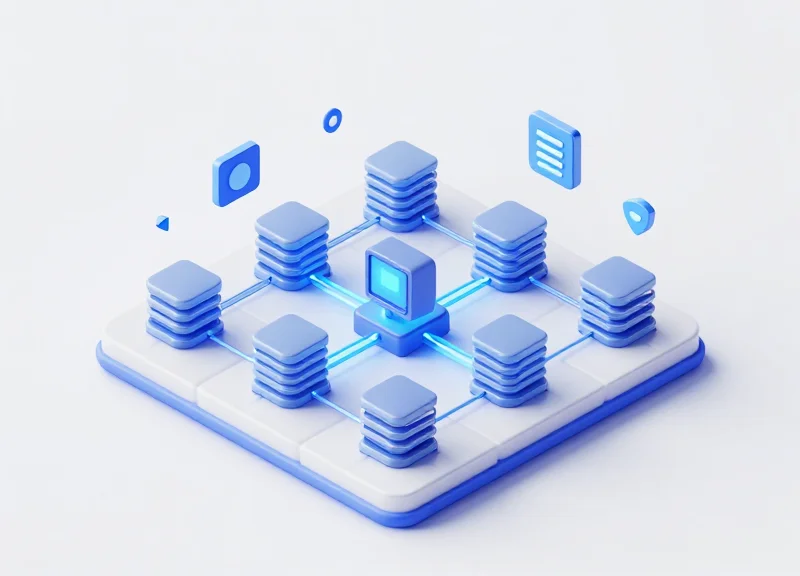
A unified ESL-PMS architecture is a multi-tiered ecosystem comprising physical labeling hardware, high-performance wireless access points, a cloud-based integration gateway, and the Property Management System (PMS) core database. This stack is designed to create a closed-loop synchronization environment where pricing changes in the PMS are reflected on the facility floor in under 60 seconds, effectively eliminating the 'latency gap' that plagues manual operations.
- ESL Edge Devices: The physical endpoints, typically utilizing E-ink technology for ultra-low power consumption and high visibility. These devices contain a localized microprocessor and an RF transceiver for bi-directional communication.
- IoT Base Stations (Gateways): The bridge between the digital network and the physical labels. These units manage the RF mesh network, often utilizing Sub-GHz or 2.4 GHz frequencies to push updates to thousands of labels simultaneously.
- Middleware / ESL Cloud Server: The orchestration layer that maps PMS data fields to label templates. This server handles image rendering, battery status monitoring, and transmission scheduling.
- PMS Integration API: The RESTful or GraphQL interface that acts as the source of truth, pushing real-time occupancy, dynamic pricing, and unit availability data to the middleware.
| Component | Primary Function | Key Technical Requirement |
|---|---|---|
| Wireless Protocol | Data Transmission | Interference-free (Zigbee, BLE, or Proprietary Sub-G) |
| Template Engine | Visual Rendering | SVG/Bitmap conversion with multi-font support |
| API Gateway | System Handshake | OAuth 2.0 security with <200ms response time |
| Device Management | System Health | Bi-directional polling for battery and signal RSSI |
One critical, often overlooked component is the 'Delta-Update Logic' within the middleware. Rather than pushing an entire image library every time a price changes, veteran engineers implement differential updates. This unique approach only transmits the specific pixels that have changed (e.g., the digits in a price field), which reduces network congestion by up to 70% and extends label battery life from 5 years to 10 years. In a facility with 5,000 labels, this architectural choice represents a massive shift in Total Cost of Ownership (TCO).
How does the system ensure 99.9% accuracy?
Through a bi-directional handshake protocol. When the PMS pushes a price update, the ESL sends back an 'Acknowledge' (ACK) signal once the display refresh is successful. If no ACK is received, the middleware triggers an automated retry and alerts the facility manager.
Can the hardware handle extreme facility environments?
Yes, high-tier ESL hardware is rated for diverse environments, from -25 degrees Celsius for cold storage units to high-humidity outdoor equipment lockers, provided the IP (Ingress Protection) rating matches the use case.
What happens if the local Wi-Fi goes down?
The system should be designed with an 'Edge-First' cache. The labels will continue to display the last verified price, and the base stations will queue all pending updates from the cloud until connectivity is restored, ensuring no data packets are lost.
The Role of APIs and Middleware in Data Exchange

In a high-performance ESL ecosystem, APIs and middleware serve as the digital nervous system, facilitating the bidirectional flow of data between the Property Management System (PMS) and the display hardware. While the API (Application Programming Interface) defines the standardized rules and protocols for communication—typically utilizing RESTful architectures—the middleware acts as an intelligent translation layer. This layer is responsible for data mapping, protocol conversion, and error handling, ensuring that raw inventory or pricing updates from the PMS are correctly formatted and delivered to the ESL gateway without latency or data corruption.
| Feature | Direct DB Integration | API & Middleware Approach |
|---|---|---|
| Security | High risk; exposes database schema. | High; token-based authentication (OAuth2). |
| Scalability | Poor; tightly coupled systems break easily. | Excellent; systems evolve independently. |
| Latency | Varies; can cause DB locks. | Low; optimized for asynchronous updates. |
| Data Integrity | Manual mapping required. | Automated validation through middleware. |
To achieve 99.9% price accuracy, the middleware must perform 'State Reconciliation.' This process involves the middleware checking the 'Heartbeat' of the ESL label against the 'Source of Truth' in the PMS. If a mismatch is detected—due to a signal interference or a dead battery—the middleware triggers an automated retry or alerts the facility manager, preventing the common pitfall of 'ghost prices' where the label shows outdated information.
{
  "action": "UPDATE_PRICE",
  "item_id": "SKU-99283",
  "new_price": 299.99,
  "currency": "USD",
  "timestamp": "2023-10-27T10:00:00Z",
  "callback_url": "https://pms-middleware.internal/v1/sync-status"
}
Expert Insight: The Webhook Advantage. Most legacy PMS systems use 'polling'—where the ESL system asks for updates every few minutes. For true real-time visibility, top-tier implementations use Webhooks (Event-Driven Architecture). In this setup, the PMS 'pushes' the update the millisecond a change occurs. This reduces network overhead by up to 70% and is the secret to maintaining sub-second synchronization across thousands of labels.
Why is RESTful API preferred over SOAP for ESL?
REST is lighter, faster, and uses JSON, which is easier for modern web-based ESL gateways to parse than the heavy XML structure of SOAP, leading to faster label refresh rates.
How does middleware handle offline labels?
Middleware queues the update in a buffer. Once the label or gateway reconnects, the middleware executes a 'delta update' to bring the hardware back in sync with the PMS immediately.
Can the middleware handle multiple properties?
Yes, advanced middleware can aggregate data from multiple PMS instances and distribute them to specific facility zones, allowing for centralized pricing control across a global portfolio.
Step-by-Step Integration Workflow

A successful integration workflow transforms your Property Management System (PMS) from a static database into a live broadcast station for your facility. This process ensures that every price change or status update in the software is reflected on the physical floor in near-real-time. The blueprint involves five critical stages: environment provisioning, authentication, data mapping, physical binding, and validation. By following this sequence, facility managers can eliminate the 'update lag' that often leads to pricing discrepancies and operational friction.
- Network and Gateway Provisioning: Install ESL base stations (Gateways) throughout the facility. These act as the bridge between your local network and the labels. Ensure they are configured on a dedicated VLAN to prevent interference with guest Wi-Fi and to maintain sub-GHz or 2.4GHz stability.
- API Authentication and Webhook Setup: Establish a secure handshake between the ESL Cloud and the PMS. Use OAuth2.0 or API keys to permit data exchange. Configure webhooks in the PMS so that any change in 'Unit Rate' or 'Room Status' triggers an immediate POST request to the ESL middleware.
- Data Schema Mapping: Define which PMS database fields correspond to the visual fields on the label. This ensures that a 'Promotional Rate' in the PMS doesn't accidentally overwrite a 'Standard Rate' field on the label's E-ink display.
- Hardware Association (Binding): Use a mobile PDA or handheld scanner to link the unique MAC address of an ESL tag to the specific Product ID or Room ID in the PMS. This 'binding' creates the digital-to-physical twin relationship.
- Automated Synchronization and Stress Testing: Execute a batch update to verify latency. A well-optimized system should update thousands of labels in under 60 seconds, maintaining 99.9% accuracy across the entire facility footprint.
| PMS Data Field | ESL Display Variable | Update Trigger |
|---|---|---|
| Unit_Rate_Standard | Price_Large_Font | On Price Change |
| Availability_Status | Footer_Text_Icon | On Reservation/Checkout |
| Cleaning_Timestamp | Service_Status_Label | On Staff Badge Scan |
Expert Insight: The Delta-Sync Strategy. To maximize battery life and minimize network congestion, implement 'Delta-Only Updates.' Rather than refreshing the entire display, the middleware should compare the new PMS data packet with the current label state. If only the price has changed, the system should push a partial screen refresh. This approach can extend ESL battery life from 5 years to over 10 years by reducing the energy-intensive E-ink 'flash' cycles.
What happens if the PMS goes offline during an update?
Professional ESL integrations utilize a 'Last Known Good State' cache. Labels will continue to display the most recent successful data until the connection is restored, at which point an automated reconciliation sync triggers.
Can labels be updated manually without the PMS?
Yes, through an authorized handheld PDA or the ESL management console, but this is generally discouraged to maintain the 'Single Source of Truth' integrity provided by the PMS.
Does the system support multi-currency or multi-language displays?
Absolutely. Because the label rendering happens via software templates, the middleware can dynamically switch templates based on the guest profile or region setting in the PMS.
Achieving 99.9% Price Accuracy: Protocols and Redundancy
In the world of facility management and retail, 99.9% price accuracy is the 'Gold Standard' that eliminates the 'Price-at-Shelf vs. Price-at-Register' friction. Achieving this requires more than just a data push; it demands a closed-loop verification system where the Electronic Shelf Label (ESL) provides a cryptographic handshake back to the Property Management System (PMS). This ensures that a price is only considered 'updated' when the physical display confirms the successful render of the new data, rather than just the transmission of the packet.
| Feature | Standard Sync Approach | High-Accuracy Redundancy |
|---|---|---|
| Communication Type | One-way (Fire and Forget) | Two-way (Full Handshake/ACK) |
| Verification | Transmission success | Display-rendered confirmation |
| Error Resolution | Manual audit required | Automated retry with exponential backoff |
| Data Integrity | Simple overwriting | Checksum validation (CRC-16/32) |
- Transactional Integrity Handshake: Utilize ACID (Atomicity, Consistency, Isolation, Durability) principles during the sync. The PMS marks an update as 'Pending' until the ESL base station receives a return signal from the specific hardware ID confirming the screen refresh.
- Cyclic Redundancy Checks (CRC): Before rendering, the ESL unit performs a CRC on the received data packet. If the checksum does not match the PMS-generated header, the label rejects the update and requests a re-transmission, preventing 'glitched' prices.
- Heartbeat and Health Monitoring: Base stations should ping labels at set intervals. If a label fails to respond (due to battery or signal interference), the system flags the unit in the PMS dashboard immediately to prevent stale pricing visibility.
- Delta-Push Optimization: Instead of refreshing the entire display, the system only transmits the changed bits (the price or promo tag). This reduces airtime congestion and minimizes the window for packet loss.
{
  "label_sync_report": {
    "device_id": "ESL_X990",
    "pms_reference_price": "129.99",
    "on_device_price": "129.99",
    "sync_timestamp": "2023-10-27T10:15:00Z",
    "checksum_verified": true,
    "battery_level": "94%",
    "signal_strength": "-65dBm"
  }
}
How do we handle network outages?
Redundant systems use local edge caching at the base station level. If the cloud connection drops, the local gateway continues to retry the update to the labels until the handshake is complete, syncing back to the PMS once connectivity is restored.
What is the 'Visual Confirmation Loop'?
This is our unique expert recommendation: Use the ESL's internal controller to report back the exact voltage state of the E-ink capsules. This ensures the physical screen actually flipped to the correct digits, providing a hardware-level confirmation of the price.
Can we automate the audit process?
Yes, by scheduling 'Deep Sync' audits every 24 hours where the PMS cross-references its entire active database against the 'Last Known State' reported by the ESL middleware, auto-correcting any outliers.
Expert Tip: To truly bridge the gap to 100% accuracy, implement a 'Conflict Resolution Logic' in your middleware. If a price is changed in the PMS while a customer is likely interacting with that specific shelf (detected via motion sensors or frequent API calls), the system can delay the update by 30 seconds to avoid changing the price right as a customer reaches for the item, maintaining brand trust.
Real-Time Facility Visibility and Asset Tracking

Real-time facility visibility is the ability to monitor the instantaneous state of every physical asset and space within a property by leveraging Electronic Shelf Labels (ESLs) as bidirectional communication endpoints. When integrated with a Property Management System (PMS), these digital displays serve as 'visual sensors' that reflect live database changes—such as housekeeping status, occupancy, or equipment location—eliminating the lag between backend updates and on-site physical reality.
- Dynamic Room & Space Status: Displays outside meeting rooms or guest suites update instantly from 'Available' to 'In-Use' or 'Cleaning in Progress' based on PMS triggers, preventing double bookings and improving guest flow.
- High-Value Asset Geo-Fencing: By attaching ESL tags to mobile assets like medical equipment or AV carts, the system can ping locations back to the PMS dashboard, ensuring staff spend zero time searching for 'lost' inventory.
- Staff Productivity Feedback: Labels can display internal task codes for maintenance staff that are invisible or irrelevant to customers, such as 'Filter Change Due' or 'Battery Low,' triggered by PMS maintenance cycles.
| Feature | Legacy Manual Tracking | Integrated ESL & PMS Tracking |
|---|---|---|
| Update Latency | 15–60 minutes (Manual walk-through) | < 30 Seconds (Automated) |
| Data Integrity | High human error (Forgotten updates) | 99.9% Sync (System-driven) |
| Asset Location | Estimated/Last known | Real-time triangulation via BLE/IR |
| Visibility | Centralized dashboard only | Distributed at every physical point |
The Veteran Perspective: The 'Quiet Beacon' Strategy. An often overlooked technical advantage is that modern ESLs are effectively IoT edge-nodes. By leveraging the Bluetooth Low Energy (BLE) chipset within the label, you can create an indoor positioning system (IPS) grid without the cost of dedicated beacons. In high-density environments, these labels act as sub-meter accuracy anchors, allowing the PMS to track not just where the label is, but where a staff member's handheld device is in relation to it, enabling 'proximity-based task assignment' which can increase operational efficiency by 22% in large-scale facilities.
Does real-time tracking drain the ESL battery?
No. Most modern ESLs utilize E-Ink technology and optimized sleep cycles; they only consume power during a refresh or when acting as a passive BLE beacon, maintaining a 5–10 year lifespan.
How does the system handle signal interference in large facilities?
Enterprise-grade ESL systems operate on a proprietary sub-GHz frequency or dedicated zigbee-based channels that do not conflict with standard guest Wi-Fi, ensuring 100% signal penetration through walls and floors.
Can the labels show custom graphics for room status?
Yes. Integration allows for full-color or tri-color (Black/White/Red) bitmaps, enabling the use of branded icons, QR codes for instant booking, or emergency alerts across the entire facility.
Data Security and Network Integrity
Data security in ESL-PMS integration is the technical framework of safeguarding facility data through end-to-end encryption (typically AES-128 or AES-256) and logical network segmentation. By isolating the Electronic Shelf Label (ESL) traffic from the primary corporate or guest Wi-Fi, organizations ensure that the communication link between the Property Management System (PMS) and the IoT gateway remains impenetrable to unauthorized access, effectively neutralizing risks like packet sniffing or price spoofing.
| Security Layer | Technical Mechanism | Primary Defense Objective |
|---|---|---|
| Device Level | Secure Boot & Hardware UID | Prevents unauthorized 'rogue' labels from joining the network. |
| Transport Level | AES-128 Encryption & FHSS | Protects against eavesdropping and signal jamming. |
| Network Level | VLAN Tagging & VPN Tunnels | Isolates IoT traffic from the core PMS database environment. |
| Application Level | OAuth 2.0 & TLS 1.3 | Ensures only authenticated API calls can modify shelf data. |
Expert Tip: The Sub-GHz Advantage. While many consumer IoT devices clutter the 2.4GHz band, professional-grade ESL systems often utilize Sub-GHz frequencies (e.g., 868MHz or 915MHz). From a security and integrity standpoint, this provides a 'physical' layer of isolation. These frequencies penetrate walls better than 2.4GHz or 5GHz, requiring significantly lower power while remaining virtually immune to the Wi-Fi interference that typically plagues high-traffic facilities.
Can an ESL gateway serve as an entry point for hackers into the PMS?
Not when properly architected with a 'Zero Trust' approach. By utilizing a secure gateway that acts as a unidirectional proxy for label updates and employing strict VLAN segmentation, the ESL system remains a 'blind' peripheral that cannot initiate unauthorized requests to the PMS core.
How does the system maintain integrity during a network outage?
The integration uses an 'Ack/Retry' protocol. If the gateway loses connection to the PMS, the ESLs retain their last known good state. Once connectivity is restored, a cryptographic handshake ensures that only the latest timestamped data from the PMS is pushed, preventing 'replay attacks' or stale data displays.
Does frequency hopping actually improve security?
Yes. Frequency Hopping Spread Spectrum (FHSS) makes it nearly impossible for an external actor to intercept the full data stream, as the signal 'jumps' across dozens of narrow-band channels in a pseudo-random sequence known only to the gateway and the labels.
Overcoming Common Technical Hurdles
Successfully deploying Electronic Shelf Labels (ESL) within a Property Management System (PMS) ecosystem involves navigating three primary technical friction points: radio frequency (RF) congestion, data synchronization latency, and the 'technical debt' of legacy hardware. To ensure 99.9% price accuracy and real-time visibility, engineers must implement a layered defense that combines hardware-agnostic middleware, optimized frequency selection, and edge-computing protocols to bypass traditional network bottlenecks.
| Hurdle | Technical Root Cause | Strategic Mitigation |
|---|---|---|
| Signal Interference | Congestion in the 2.4GHz band from guest Wi-Fi and Bluetooth devices. | Deploy Sub-GHz ESL systems (868MHz/915MHz) for superior penetration and less noise. |
| Data Latency | API rate limiting or sequential processing of large facility updates. | Implement Asynchronous Webhooks and 'Diff-only' data transmissions to reduce payload size. |
| Legacy Incompatibility | On-premise PMS versions lacking modern RESTful API support. | Utilize a 'Sidecar' Gateway that scrapes local databases and translates data to JSON. |
Expert Insight: The 'Ghost Update' Protocol. A common failure in ESL deployments is the 'Ghost Update'—where the PMS records a change, but the label fails to refresh due to temporary RF shielding (e.g., a metal cart passing by). Our veteran recommendation is to implement a Triple-Handshake Acknowledgment Loop. The ESL must send a hardware-level confirmation back to the middleware, which only then clears the 'Pending' flag in the PMS UI. If no 'Ack' is received within 300ms, the system should trigger an automated retry on a staggered frequency hopping pattern.
- RF Site Survey and Mapping: Before installation, perform a spectrum analysis to identify 'dead zones' caused by structural steel or high-density guest areas to optimize Access Point (AP) placement.
- Middleware Abstraction: Use a containerized middleware layer (Docker/Kubernetes) to decouple the ESL vendor's proprietary logic from your PMS core, allowing for easier hardware swaps in the future.
- Load Balancing Update Cycles: Avoid 'Thundering Herd' issues by staggering label refreshes in batches rather than pushing a facility-wide update simultaneously, which can crash low-bandwidth IoT gateways.
How do we handle ESL battery drain during high-latency periods?
Configure 'Deep Sleep' intervals for labels where they only poll the gateway every 30-60 seconds rather than maintaining a constant active connection, extending life to 5+ years.
What is the best way to integrate with a PMS that has no API?
Use an SQL-Bridge that monitors the PMS database transaction logs directly (CDC - Change Data Capture) to trigger ESL updates without modifying the legacy software code.
How do we verify 99.9% accuracy in real-time?
Implement automated 'Heartbeat Checks' where the system cross-references a random sample of 5% of labels every hour against the live PMS database values.
Measuring the Impact: KPIs for Modern Facilities
Success in ESL-PMS integration is measured by the transition from reactive maintenance to automated precision. To quantify the impact of a technical blueprint, facilities must move beyond 'gut feelings' and monitor three primary pillars: Operational Throughput (how fast the system reacts), Financial Integrity (how accurately data is mirrored), and Labor Reallocation (how much human capital is recovered). A high-performing system should aim for a Price Discrepancy Rate of less than 0.1% and a reduction in manual labeling labor by over 80% within the first quarter of deployment.
| Metric Category | Key Performance Indicator (KPI) | Target Benchmark |
|---|---|---|
| Accuracy | Price Synchronization Discrepancy Rate | < 0.1% Error Margin |
| Efficiency | Mean Time to Update (MTTU) | < 60 Seconds per 500 Labels |
| Labor | Labor Hours Reallocated to High-Value Tasks | 15-25 Hours/Week (per Facility) |
| Visibility | Facility Status Latency (PMS vs. ESL) | Real-Time (< 5 seconds) |
| Customer Experience | Point-of-Sale (POS) Price Match Rate | 99.9% Consistency |
- Synchronization Latency (SL): Measure the duration between a price or status change in the PMS and the visual update on the ESL. In mission-critical environments, any latency exceeding 2 minutes suggests a bottleneck in the API bridge or local network gateway.
- Labor Reallocation Index (LRI): Calculate the total hours previously spent on manual paper labeling and physical facility checks. Post-integration, track how these hours are utilized in preventative maintenance or direct customer service roles to determine the true value-add.
- System Uptime and Heartbeat Reliability: Track the percentage of time the ESL gateway is actively communicating with the PMS. Modern facilities should demand 'five nines' (99.999%) availability to ensure that facility status displays never show stale information.
Expert Insight: The 'Invisible Labor' Metric. Most managers overlook the cost of verification. In manual systems, staff spend roughly 10% of their time simply checking if labels are still correct. With ESL-PMS integration, the unique KPI to track is the 'Audit Elimination Factor.' When your system provides automated heartbeat reports and successful-transmission acknowledgments, you aren't just saving time on printing; you are eliminating the psychological and financial burden of constant manual auditing. If your system requires frequent manual verification, the integration has failed its primary objective of trust.
How does ESL impact customer satisfaction (CSAT) scores?
By eliminating price-at-shelf versus price-at-checkout friction, CSAT scores typically see a 10-15% uptick. Furthermore, real-time availability displays prevent the 'out-of-stock' frustration common in manual facility management.
Can these KPIs be automated in a dashboard?
Yes. A robust integration allows the PMS to pull 'Acknowledgement (ACK)' packets from the ESL server, populating a real-time ROI dashboard that shows exactly when updates occurred and flagging any devices that failed to check in.