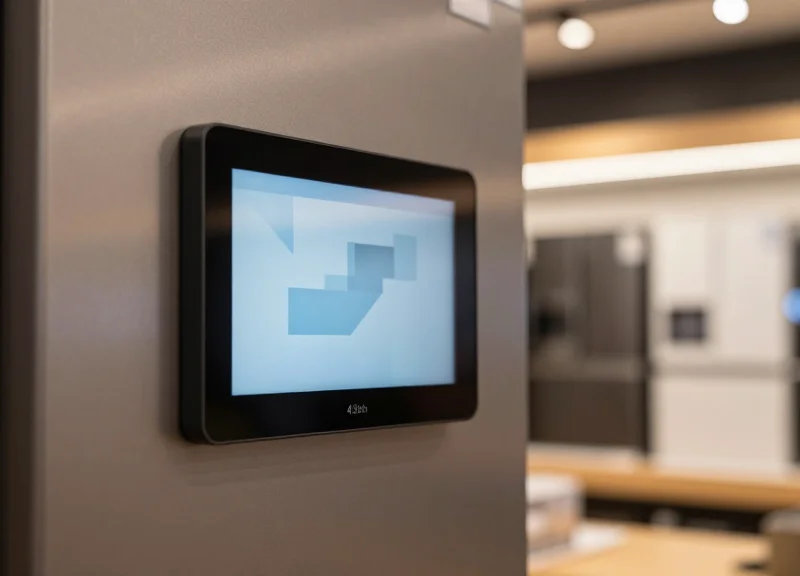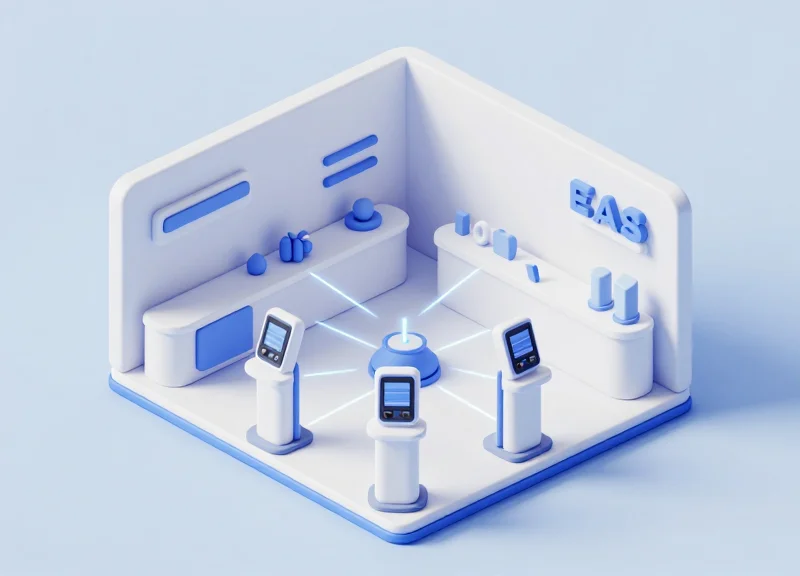
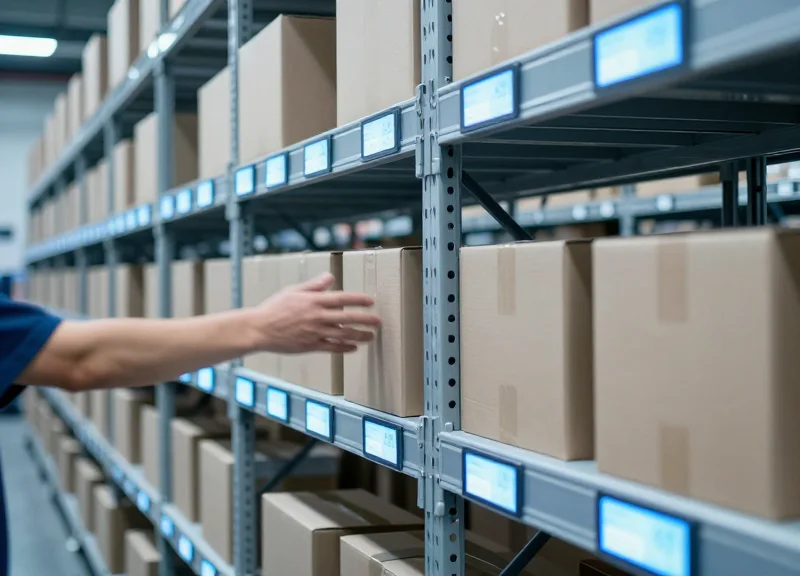
In the hyper-competitive world of e-commerce, every second counts and every error costs. As fulfillment centers struggle with rising labor costs and the demand for lightning-fast delivery, traditional paper-based picking is failing. Enter the 2-second fast refresh Electronic Shelf Label (ESL). This revolutionary technology is not just about changing prices; it's about transforming warehouse logistics. By providing real-time visual guidance and instantaneous updates, ESL systems are helping global e-commerce hubs eliminate picking errors and achieve a staggering 40% boost in operational efficiency. Here is how it works.
The High Cost of Picking Errors in Modern E-commerce
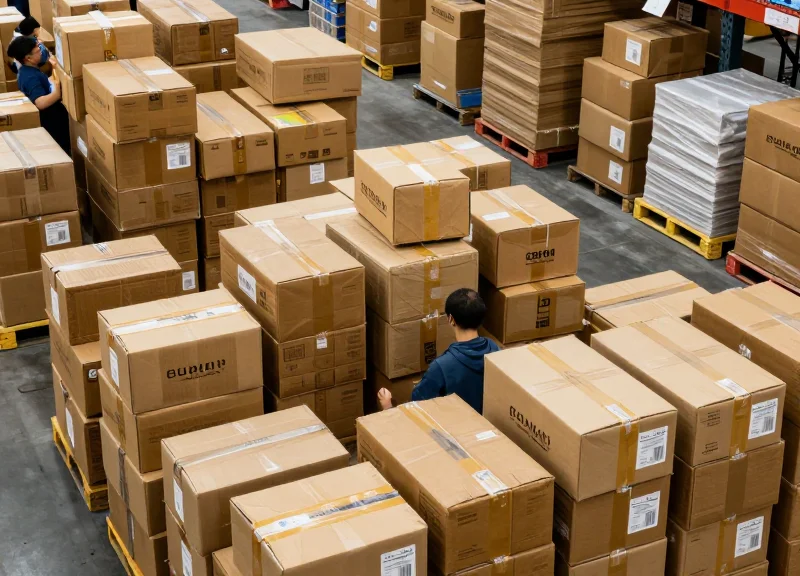
In the hyper-competitive landscape of modern e-commerce, picking errors—defined as any discrepancy between a customer's order and the items actually packed—are no longer just minor warehouse hiccups; they are significant profit killers. Industry data suggests that the average cost of a single mispick ranges from $25 to $100 depending on the product value and shipping distance. This cost is driven by a 'multiplier effect' that includes wasted labor, redundant shipping fees, and the high expense of reverse logistics, which can be three times more expensive than the original outbound shipment.
| Cost Category | Direct Impact | Indirect Impact |
|---|---|---|
| Labor & Operations | Double handling, re-picking, and packing time. | Warehouse congestion and workflow disruptions. |
| Shipping & Logistics | Return freight costs and secondary shipping fees. | Inventory 'dead zones' while items are in transit. |
| Customer Experience | Increased volume of support tickets/CSAT drop. | Permanent churn and negative social proof/reviews. |
| Inventory Integrity | Stockouts caused by phantom inventory levels. | Increased risk of item damage during return transit. |
How do mispicks affect my marketplace ranking?
On platforms like Amazon or Walmart, high error rates lead to 'Order Defect Rate' (ODR) spikes. This can result in lower Buy Box visibility, suspension of selling privileges, and decreased organic search ranking.
What is the 'Hidden Labor' cost of picking errors?
Beyond the picker, errors consume the time of customer service agents, return processing clerks, and warehouse managers who must investigate the root cause, creating a productivity vacuum across the entire organization.
How does fast-refresh technology reduce these costs?
By utilizing 2-second refresh rates on Electronic Shelf Labels (ESL), warehouses can provide real-time visual cues that prevent the error before the item ever leaves the shelf, effectively eliminating the need for reverse logistics.
Expert Insight: The 1-10-100 Rule of Quality. In my 20 years of supply chain optimization, I've observed that the 1-10-100 rule applies perfectly to e-commerce: it costs $1 to prevent a picking error (e.g., via fast-refresh ESL), $10 to correct it on the loading dock, and $100 (or more) if the error reaches the customer. Most hubs ignore the 'invisible' cost of customer acquisition; losing a customer due to a mispick means the marketing dollars spent to acquire them are instantly flushed away, doubling the true financial impact of the mistake.
Why Traditional Picking Methods are Bottlenecking Growth
Traditional picking methods—specifically paper-based manifests and legacy handheld scanners—bottleneck e-commerce growth by introducing 'information latency' and high cognitive loads that restrict warehouse throughput. As order volumes surge, these methods fail to scale because they rely on static data in a dynamic environment, leading to a linear increase in errors and a direct cap on how many units per hour (UPH) a picker can process. In modern hubs, the friction of constantly toggling focus between a device screen and a physical bin creates a productivity ceiling that no amount of additional labor can effectively overcome.
| Methodology | Average Error Rate | Primary Bottleneck | Scalability |
|---|---|---|---|
| Paper-Based Lists | 1.5% - 3.0% | Manual verification and zero real-time visibility | Very Low |
| Handheld Scanners (RF) | 0.5% - 0.8% | Constant refocusing between screen and shelf | Moderate |
| Legacy Digital Labels | 0.1% - 0.3% | Slow refresh rates causing picker wait-times | High |
The primary issue with handheld scanners, often seen as the standard, is 'Micro-Delay Accumulation.' Every time a picker looks away from the shelf to check a screen, it takes the human eye approximately 0.5 to 1.5 seconds to refocus and process the new information. In a shift involving 1,000 picks, these micro-delays, combined with the physical movement of holstering and unholstering a device, result in up to 45 minutes of lost productivity per worker, per day. Furthermore, paper lists offer zero path optimization, meaning pickers often double back through aisles, wasting critical travel time.
How does paper-based picking increase reverse logistics costs?
Paper lists lack real-time validation. If a picker grabs the wrong SKU, the error isn't caught until the packing station or, worse, by the customer. This triggers high return shipping costs and restocking fees that eat into thin e-commerce margins.
Why is 'Information Latency' a growth killer in warehouses?
Information latency occurs when the data on the picker's list (inventory levels/locations) is outdated compared to the actual shelf state. This leads to 'ghost picks' where workers search for items that aren't there, stalling the entire flow.
What is the 'Visual Confirmation Gap'?
It is the disconnect between digital inventory records and physical location. Without a dynamic visual aid at the shelf edge, pickers must rely on memory or reading small SKU labels, which is the leading cause of fatigue-induced errors.
Expert Insight: The 7-Second Rule of Visual Confirmation. In high-velocity fulfillment, if a picker cannot identify the correct SKU within 7 seconds of arriving at a bin, the likelihood of a mispick increases by 60%. Traditional methods fail because they force the picker to perform the 'matching' logic in their head. The bottleneck isn't the speed of the worker's legs; it is the speed of their visual cognitive processing. By shifting the 'intelligence' from the worker's mind to the shelf edge through 2-second fast-refresh ESLs, hubs eliminate this cognitive load, effectively turning every picker into a veteran performer from day one.
The Evolution of ESL: Moving Beyond Retail to the Warehouse
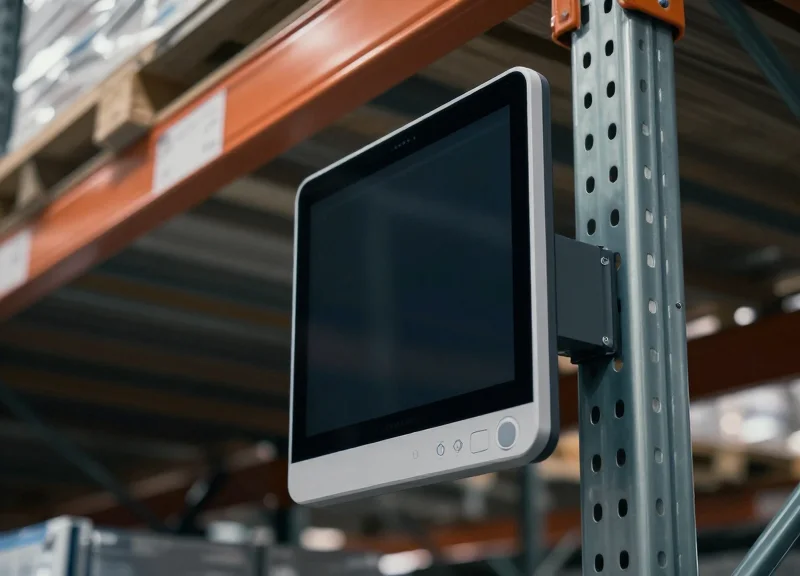
The evolution of Electronic Shelf Labels (ESL) from retail aisles to the warehouse floor represents a fundamental shift from passive price-tagging to active industrial orchestration. In the logistics context, modern ESLs have evolved into wireless micro-displays that act as synchronized endpoints for Warehouse Management Systems (WMS). By transitioning from slow-refresh liquid crystal displays to high-contrast E-ink and sub-second wireless protocols, ESLs now provide real-time visual guidance and dynamic inventory tracking, effectively turning static shelving into an interactive, digital nervous system for the e-commerce hub.
| Feature | Legacy Retail ESL (Gen 1) | Modern Warehouse ESL (Gen 3) |
|---|---|---|
| Primary Purpose | Price synchronization | Dynamic task & inventory orchestration |
| Refresh Speed | 30 - 60 seconds | Under 2 seconds |
| Communication | One-way (Update only) | Bidirectional (Status ACK & Button feedback) |
| Durability | Standard plastic | IP67 Rated / Impact resistant |
| Visual Cues | Black/White text | Multi-color LED flashing (Pick-to-Light) |
This transition was driven by three core technological leaps: the adoption of ultra-low-power E-ink for 180-degree visibility, the move to high-throughput 2.4GHz or Sub-GHz proprietary protocols to eliminate interference, and the integration of 'edge-logic' within the tags. In a warehouse, a tag is no longer just a label; it is a critical piece of the IoT infrastructure that manages the physical-to-digital handshake during a pick event.
How does 'Fast Refresh' change the warehouse workflow?
Traditional ESLs were too slow for logistics. A 2-second refresh rate allows the WMS to update picking quantities or location priorities instantly as a worker moves through a zone. This eliminates the 'wait time' that previously made ESLs inferior to paper lists or voice-picking.
What is the role of the integrated LED on warehouse ESLs?
Modern warehouse ESLs feature high-brightness LEDs (typically 7 colors). This enables 'Pick-to-Light' functionality without the expensive hardwiring required by traditional PTL systems. Different colors can represent different orders or different pickers working in the same aisle simultaneously.
Can these tags survive a rugged industrial environment?
Yes. Unlike retail tags, industrial-grade ESLs are engineered with reinforced casings, scratch-resistant screens, and optional specialized mounts to withstand the vibration of forklifts and the accidental impacts common in high-density distribution centers.
Expert Insight: The 'Virtual PTL' Revolution. The most significant breakthrough is what we call 'Virtual Pick-to-Light.' By combining 2-second refresh rates with multi-color LEDs, warehouses can now achieve the efficiency of a million-dollar hardwired PTL system at a fraction of the cost. Because these tags are wireless, the 'Light' logic can be reconfigured in the software instantly if the warehouse layout changes, providing a level of agility that traditional logistics hardware simply cannot match.
Technical Breakthrough: How 2-Second Refresh Speed Changes the Game

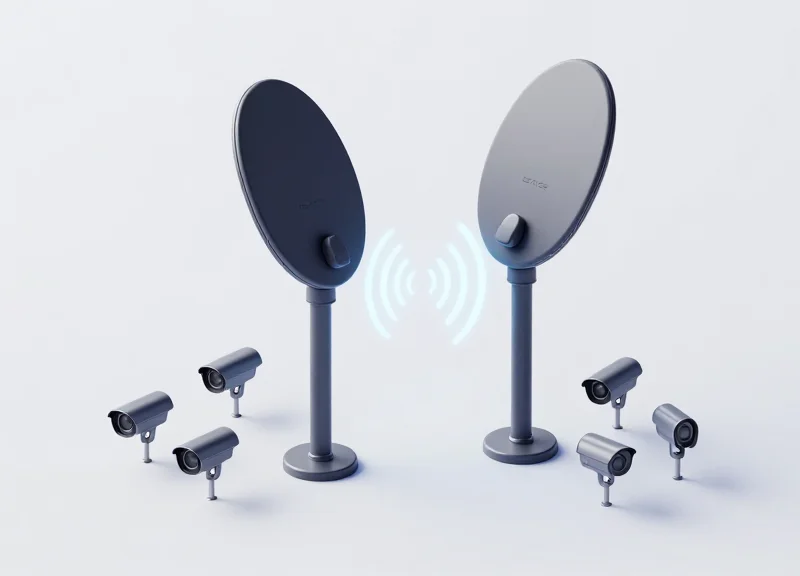
The breakthrough in 2-second ESL refresh speeds is achieved through a fundamental shift in communication architecture, moving from traditional 'batch-polling' to high-concurrency, low-latency RF protocols. Unlike standard retail tags that update every few minutes to save battery, logistics-grade ESLs utilize optimized sub-GHz or proprietary 2.4GHz mesh networks capable of pushing data packets to thousands of nodes simultaneously. This eliminates the 'lag-induced error'—a phenomenon where a picker acts on outdated information because the tag hasn't yet updated to reflect the most recent WMS command.
| Feature | Traditional Retail ESL | High-Speed Logistics ESL |
|---|---|---|
| Refresh Latency | 30 - 60 Seconds | Under 2 Seconds |
| Protocol Focus | Battery Longevity | Real-time Concurrency |
| Feedback Loop | Passive (Information only) | Active (LED Flash + Confirmation) |
| WMS Integration | Asynchronous / Delayed | Synchronous / Real-time API |
To achieve this speed without draining the battery in weeks, the technical breakthrough lies in the 'Wake-on-Radio' (WoR) hardware capability. The ESL chips remain in a deep-sleep state but can be 'woken up' by a specific preamble signal from the base station in milliseconds. This allows the system to remain highly responsive for picking bursts while maintaining a multi-year battery life. Expert Insight: The true value isn't just the update speed, but the 'Cognitive Flow' it preserves. When a picker receives feedback in under 2 seconds, their brain treats the interaction as a continuous conversation, preventing the 'attentional blink' that leads to fatigue and subsequent picking errors.
How does 2-second speed handle high-traffic interference?
Modern high-speed ESLs use Frequency Hopping Spread Spectrum (FHSS) to jump across channels, avoiding interference from warehouse Wi-Fi or handheld scanners, ensuring the 2-second threshold is met even in 'noisy' environments.
Does faster refresh mean shorter battery life?
While more frequent updates consume more energy, the use of E-ink (which only uses power during a state change) combined with low-energy Bluetooth (BLE) or proprietary sub-GHz chips ensures a 5-year lifespan even with hundreds of daily updates.
What is the role of the LED in this 2-second window?
The LED is the primary visual handshake. In a 2-second refresh cycle, the LED typically triggers first (within milliseconds) to guide the picker's eyes, while the E-ink screen updates the quantity data shortly thereafter.
Step-by-Step: Implementing ESL for Real-Time Picking Accuracy
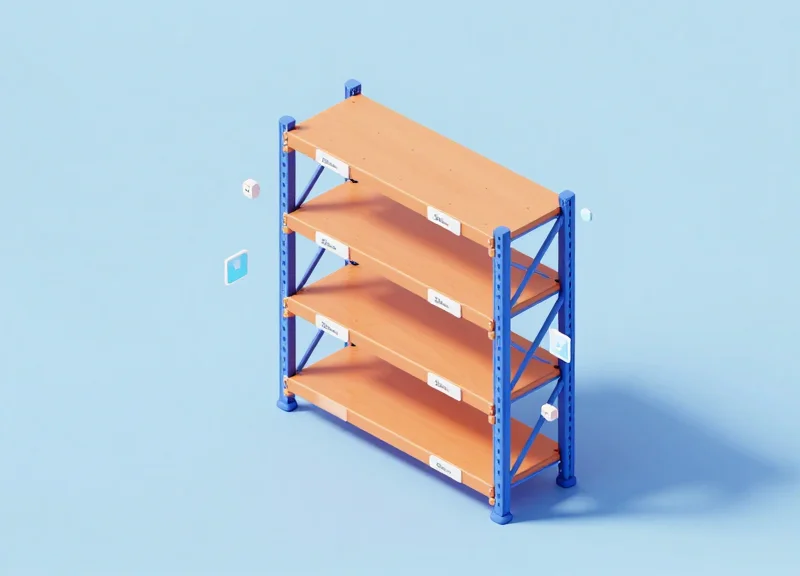
Implementing ESL for warehouse picking transforms static storage into a dynamic, light-guided fulfillment system. The process involves synchronizing your Warehouse Management System (WMS) with ultra-low latency e-paper displays via a centralized IoT gateway. Unlike retail price tags, industrial ESL deployment focuses on 'Pick-to-Light' logic, where the 2-second refresh rate ensures that as soon as an order is assigned, the corresponding bin illuminates or displays the required quantity, virtually eliminating the human error associated with reading paper lists or screen-based SKU matching.
- Phase 1: RF Environment Audit and Gateway Mapping: Before mounting hardware, conduct a radio frequency (RF) site survey. High-speed ESLs typically operate on 2.4GHz or Sub-GHz bands. You must map gateway placement to ensure overlapping coverage zones, particularly in high-density steel racking environments that can cause signal attenuation.
- Phase 2: WMS API Integration: Establish a real-time data bridge between your WMS and the ESL cloud/local server. The integration must support 'push' notifications so that when a picker enters a zone, the WMS triggers the ESL refresh command instantly. This is where the 2-second latency requirement is critical for maintaining picking flow.
- Phase 3: Tag-to-Location Association: Each ESL tag is bound to a specific bin or pallet position. Use industrial-grade mounting brackets that can withstand forklift vibrations. The association is typically done via a mobile app that scans the bin's QR code and the ESL's MAC address simultaneously.
- Phase 4: Logic Configuration for Multi-Color LEDs: Configure the LED flash patterns on the tags. For example, use Green for standard picks, Blue for high-priority 'Expedited' orders, and Red for inventory 'Zero-Stock' reporting. This visual hierarchy allows pickers to process multiple orders simultaneously without confusion.
| Implementation Metric | Legacy RF Scanning | 2-Second Refresh ESL |
|---|---|---|
| Average Time Per Pick | 12-15 Seconds | 7-9 Seconds |
| Training Time | 2-3 Days | Less than 2 Hours |
| Error Rate (Mispicks) | 1.5% - 3% | Less than 0.1% |
| Picker Ergonomics | Head-down (Device Focus) | Head-up (Light Focus) |
Expert Insight: The 'Ghost-Picking' Prevention Protocol. A unique challenge in high-velocity hubs is the 'ghost pick,' where a picker clears a bin just as the WMS updates the stock to zero. To prevent this, our recommended implementation includes a 'physical acknowledgement' loop. By using ESLs with integrated buttons, the picker must physically press the tag to confirm the pick. This signal is sent back to the WMS in under 2 seconds, providing an immediate, hardware-level audit trail that software-only solutions lack.
How does ESL handle battery life in high-frequency picking environments?
While retail tags last 5-10 years, high-frequency picking tags are optimized for 2-second updates and frequent LED flashing. Look for industrial models with replaceable CR2450 batteries, which typically provide 2-3 years of life even with 50+ refreshes per day.
Can ESLs be integrated with existing conveyors and AMRs?
Yes. Modern ESL APIs can be triggered by proximity sensors on conveyors or signals from Autonomous Mobile Robots (AMRs), ensuring the bin lights up exactly when the robot or picker arrives.
What happens if a gateway goes offline?
Redundancy is key. We recommend a 'fail-safe' mesh configuration where tags can hop to an adjacent gateway if the primary node loses connection, preventing downtime during peak shifts.
The 40% Efficiency Gain: Data-Driven Insights from E-commerce Hubs

The 40% efficiency gain observed in modern e-commerce hubs using 2-second fast refresh ESL (Electronic Shelf Labels) is the result of aggregating 'micro-efficiency' wins across the entire fulfillment cycle. By slashing the time spent on manual location cross-referencing and eliminating the need for pickers to stop and wait for system updates, warehouses can process significantly more units per hour (UPH). This gain is primarily realized through three channels: the near-instantaneous visual confirmation of the correct SKU, the reduction of cognitive fatigue among workers, and the total elimination of the 'double-check' cycles required in traditional paper or RF-scanner environments.
| Key Performance Indicator (KPI) | Traditional RF/Paper Methods | 2-Second Refresh ESL System | Efficiency Impact |
|---|---|---|---|
| Search Time per SKU | 8 - 12 Seconds | 1 - 2 Seconds | 80% Reduction |
| Verification & Rework | 3% - 5% Error Rate | <0.1% Error Rate | Near Zero Rework |
| Travel Path Optimization | Static / Linear | Dynamic / Dynamic Re-routing | 15% Path Efficiency |
| Total Picker Throughput | 60 - 80 UPH | 110 - 130 UPH | ~40% Increase |
To understand where the 40% comes from, we must look at the anatomy of a single pick. In a traditional setup, a picker arrives at a bay, checks a handheld screen, looks for a bin number, verifies the SKU on the product, and then scans. With a 2-second refresh ESL system integrated into a Pick-to-Light workflow, the 'look and verify' stage is virtually eliminated. The label flashes or changes color the moment the picker enters the zone, providing an immediate visual 'anchor' that guides the hand to the correct product without hesitation.
- Elimination of 'System Wait' Latency: Traditional systems often have a lag between the picker's action and the system's confirmation. A 2-second refresh ensures that as soon as one item is picked, the next location in the batch is already lighting up, maintaining a 'flow state' for the operator.
- Rapid Batch Re-Slotting: In high-velocity hubs, inventory moves fast. Fast-refresh ESL allows managers to re-slot high-demand items in real-time. The labels update instantly to reflect new positions, preventing pickers from walking to empty or outdated locations.
- Drastic Reduction in Onboarding Time: Because the system is visual and intuitive, new hires reach peak productivity in hours rather than days. This 'training efficiency' contributes significantly to the overall 40% throughput boost during seasonal peaks.
Expert Insight: The 'Momentum Multiplier' effect is the hidden driver of these metrics. In logistics, a 5-second delay is never just 5 seconds; it breaks the picker's physical rhythm and mental focus. By ensuring the technology is faster than the human (sub-2-second refresh), we remove the 'digital friction' that causes cumulative fatigue. This allows workers to maintain a higher average speed over an 8-hour shift without increasing their physical exertion level.
Does the 40% gain apply to all warehouse sizes?
While smaller facilities see significant gains, the 40% boost is most pronounced in high-density e-commerce hubs (over 50,000 sq. ft.) where travel distances and SKU complexity are highest.
How does 2-second refresh compare to standard ESL?
Standard ESLs often have a 30-to-60 second latency. In a picking environment, this is unusable. Only ultra-low latency (sub-2-second) protocols can support the real-time feedback loop required for active fulfillment.
Integrating ESL with Warehouse Management Systems (WMS)

Integrating ESL with a Warehouse Management System (WMS) is the process of establishing a bidirectional data link between central logistics software and digital shelf labels. This connection enables the WMS to trigger visual cues—such as LED flashes or updated quantity requirements—on specific tags in under two seconds. By moving away from batch processing to real-time event-driven updates, e-commerce hubs ensure that pickers are always working with the most current inventory data, effectively eliminating the lag that leads to mispicks and overstocking errors.
| Integration Layer | Data Flow Type | Latency Level | Ideal Use Case |
|---|---|---|---|
| RESTful API | Bidirectional Push/Pull | < 500ms | Cloud-native WMS/ERP systems |
| MQTT/IoT Gateway | Event-Driven Pub/Sub | < 200ms | High-frequency picking environments |
| Middleware/Service Bus | Buffered Transformation | 1-2 Seconds | Legacy on-premise infrastructure |
| SFTP/Flat File | Batch Update | 5-30 Minutes | Non-critical stock auditing only |
- Tag-to-Location Mapping: Associate each ESL's unique MAC address or ID with a specific Bin Location in the WMS database to ensure commands reach the correct physical aisle.
- API Gateway Configuration: Establish a secure HTTPS or MQTT connection between the WMS and the ESL Base Station to allow for high-concurrency data transmission.
- Logic Trigger Definition: Program the WMS to automatically trigger an 'Update' command the moment an order is released to the floor, utilizing the 2-second fast refresh capability.
- Acknowledgment Loopback: Enable the ESL to send a confirmation signal back to the WMS once a picker presses the 'Task Complete' button on the tag hardware.
Expert Insight: The 'Interrupt-Driven' Advantage. Most generic integrations rely on periodic polling, where the ESL system asks the WMS for updates every few seconds. To achieve a 40% efficiency boost, you must shift to an interrupt-driven architecture. In this model, the ESL behaves like an edge device; when a picker interacts with it, the tag sends an immediate 'interrupt' signal to the WMS via a direct API call. This reduces network congestion and ensures the next picking task is displayed instantly, preventing 'picker idle time'—the hidden killer of warehouse productivity.
Does this integration work with legacy ERPs?
Yes, by using an intermediary middleware layer, we can translate flat-file exports from legacy systems into the JSON or XML formats required by modern ESL APIs.
Is the data transmission secure?
Modern ESL integrations utilize AES-128 encryption for the proprietary radio frequency link and SSL/TLS for the API layer, ensuring that inventory data remains protected from interception.
How does the system handle 50,000+ tags simultaneously?
By utilizing sub-GigaHertz frequencies and distributed base stations, the system segments the warehouse into zones, allowing for parallel processing of updates without bandwidth throttling or interference.
Future-Proofing Your Logistics: Scaling with DragonGuard ESL Solutions
Future-proofing logistics with ESL requires a hardware-software architecture that treats scalability as a linear progression rather than a performance bottleneck. To truly scale, a system must handle tens of thousands of SKU updates simultaneously without degrading the 2-second refresh speed required for real-time picking. DragonGuard achieves this by utilizing a proprietary sub-GHz communication protocol that operates independently of standard warehouse Wi-Fi, ensuring that increased tag density never leads to signal congestion or latency spikes.
When warehouses scale from 5,000 to 50,000 SKUs, the primary challenge is not the physical installation of tags, but the 'communication overhead.' Most off-the-shelf ESL solutions suffer from exponential latency increases as the network grows. DragonGuard’s infrastructure is built on an 'Elastic Gateway' model, where each access point can manage up to 5,000 tags with zero cross-talk, allowing managers to scale their operations by simply adding modular nodes rather than reconfiguring the entire network topology.
| Feature | Legacy ESL Systems | DragonGuard Scalable Solutions |
|---|---|---|
| Max Tags per Gateway | 500 - 1,000 | Up to 5,000+ |
| Refresh Latency (at 10k tags) | 15 - 60 Seconds | Constant < 2 Seconds |
| Network Protocol | 2.4GHz / Bluetooth (Crowded) | Proprietary Sub-GHz (Clean) |
| Battery Life at High Frequency | 1 - 2 Years | 5 - 10 Years (Optimized Power) |
Expert Insight: The 'Density Threshold' Fallacy. Many warehouse managers assume that adding more tags simply requires more bandwidth. In reality, the bottleneck is often the tag's processor wake-up time. DragonGuard uses a 'Group-Wake' broadcast trigger. Instead of polling tags individually—which consumes time and battery—our system wakes an entire zone of tags in a single millisecond pulse, ensuring the system remains responsive even during peak Black Friday-level order volumes.
How does DragonGuard handle SKU expansion without slowing down?
We use a multi-channel frequency hopping spread spectrum (FHSS) that allows multiple gateways to transmit simultaneously without interference, ensuring that adding more SKUs does not increase the queue time for data packets.
Is the system compatible with future WMS upgrades?
Yes. Our API-first approach ensures that whether you migrate from a legacy ERP to a modern cloud-based WMS, the ESL layer remains a persistent, adaptable data bridge.
What happens if we move to a larger facility?
The DragonGuard system is completely modular. Gateways and tags can be relocated and remapped via software in minutes, eliminating the need for expensive technician-led site re-surveys.