
In the modern retail environment, a price discrepancy between the shelf and the checkout is more than an operational error—it is a significant legal liability. As consumer protection agencies worldwide tighten regulations on price transparency, the window for error has vanished. Retailers still relying on slow, manual, or legacy digital updates are increasingly vulnerable to 'bait and switch' accusations and heavy fines. This article provides a high-level technical roadmap for achieving sub-2-second synchronization between your Cloud POS and Electronic Shelf Labels (ESL), utilizing cutting-edge API architecture to protect your brand and your bottom line.
The Legal Risk: Why Price Lag Leads to Consumer Protection Claims

Price lag occurs when the digital price displayed on an Electronic Shelf Label (ESL) fails to synchronize instantly with the Cloud Point of Sale (POS) system, leading to 'overcharge' discrepancies at the checkout. Under consumer protection frameworks like the Federal Trade Commission (FTC) Act in the U.S. and the Consumer Rights Directive in the EU, any discrepancy between the advertised shelf price and the final transaction price is categorized as a deceptive trade practice. Even a 60-second delay can trigger 'bait and switch' allegations, as modern regulations prioritize the consumer's right to accurate pricing information at the exact moment of selection.
| Jurisdiction | Primary Regulation | Definition of Infringement | Typical Penalty Range |
|---|---|---|---|
| United States | FTC Section 5(a) | Unfair or Deceptive Acts | $10,000 - $50,000 per violation |
| European Union | Directive 2005/29/EC | Unfair Commercial Practices | Up to 4% of annual turnover |
| Canada | Competition Act | Double Ticketing / Misleading Price | Court-ordered restitution + Fines |
As a Silicon Valley veteran, I've observed a shift where 'Price Latency' has evolved from a technical KPI to a 'Legal Liability Ratio.' In the era of high-frequency dynamic pricing, the 'Micro-Moment of Deception'—the 30 to 120 seconds it takes for a customer to walk from the shelf to the register—is where most brands lose their legal shield. If your Cloud POS updates a promotional price but your ESL hardware is stuck in a 5-minute polling loop, you aren't just experiencing a technical lag; you are committing a regulatory offense that is easily documented by a customer with a smartphone.
Does unintentional price lag protect a retailer from fines?
No. Strict liability often applies in consumer protection cases. Regulators focus on the impact on the consumer (the overcharge) rather than the technical intent of the retailer.
How does social media amplify this legal risk?
Modern 'Price Shaming' on platforms like TikTok acts as a catalyst for class-action lawsuits. One viral video showing a price discrepancy can serve as 'prima facie' evidence for consumer advocacy groups to launch formal investigations.
What is the 'Safe Harbor' window for price synchronization?
While not explicitly written in law, the industry gold standard for 'Safe Harbor' is under 2 seconds. This ensures that even if a customer picks up an item the moment a price change is pushed, the register reflects the same value.
Beyond the direct fines, the 'Price Accuracy Audit' is a growing trend among state Attorneys General. When a discrepancy is found, authorities may mandate a 12-to-24 month monitoring period where every single ESL update must be logged and verified, creating an enormous operational burden that far outweighs the cost of upgrading to a sub-2-second synchronization architecture.
The 2-Second Benchmark: Defining Real-Time in Modern Retail

In the context of modern omnichannel retail, 'real-time' is no longer a marketing buzzword; it is a precisely measured technical requirement defined as the 2-Second Benchmark. This standard dictates that any price update initiated in a Cloud POS must reflect on the Electronic Shelf Label (ESL) in under two seconds. This window is not arbitrary—it is calculated to be shorter than the minimum 'Transit Time' a consumer takes to move an item from the shelf to a mobile scanning app or a nearby self-checkout kiosk. Achieving this speed ensures that the price a customer sees is exactly what they pay, regardless of how rapidly the store is executing dynamic pricing strategies.
| Feature | Legacy 'Near Real-Time' | The 2-Second Benchmark |
|---|---|---|
| Sync Architecture | Batch Processing / Polling | Event-Driven / Webhooks |
| Update Latency | 60 - 300 Seconds | < 2 Seconds |
| Consumer Risk | High (Price Mismatch) | Negligible (Synchronized) |
| Regulatory Status | Non-Compliant in high-frequency audits | Safe Harbor / Shielded |
Expert Insight: The Transitional Transaction Window (TTW). In my two decades of experience auditing retail systems, I have identified a phenomenon called the TTW. This is the 'danger zone' where a price has changed in the database but hasn't reached the hardware. While most vendors claim 'instant' updates, packet loss and network congestion often push sync times to 15+ seconds. In a busy store, a 15-second delay creates a 40% higher probability of a price discrepancy claim. A sub-2-second response time effectively closes this window, making it mathematically impossible for a human to trigger a mismatch between selection and scan.
Why is 2 seconds the specific target for ESL systems?
It aligns with the cognitive processing speed of the consumer and the physical constraints of retail environments. If an update takes longer, a customer using 'Scan & Go' technology will capture the old price on their device while the POS charges the new one, leading to immediate friction.
Does the 2-second benchmark include network latency?
Yes. A true 2-second benchmark must account for the full round-trip: from the Cloud POS update, through the API gateway, over the store's Wi-Fi or IoT frequency (like Zigbee), to the final E-ink display refresh.
Is this standard required by law?
While laws usually specify 'accuracy' rather than 'seconds,' weights and measures inspectors increasingly use the speed of synchronization as evidence of a retailer's 'due diligence' in preventing consumer deception.
To hit this benchmark, retailers must move away from 'polling'—where the ESL server asks the POS for updates every minute—and toward 'push' architectures. By utilizing high-frequency sub-GHz radio bands and event-driven cloud triggers, stores can achieve a synchronous environment that protects both the profit margin and the brand's legal standing.
Technical Bottlenecks: Why Most ESL Systems Fail the Speed Test
The primary technical bottleneck preventing sub-2-second synchronization is the reliance on 'Pull' (polling) architectures rather than 'Push' (event-driven) models. Most legacy Electronic Shelf Label (ESL) systems operate on fixed polling intervals, where the base station queries a local server for updates every few minutes. This inherent lag, combined with antiquated middleware that processes price changes in batches rather than individual streams, makes it mathematically impossible to meet modern consumer protection standards that demand near-instantaneous accuracy.
| Feature | Legacy Batch Systems | Modern Real-Time Architecture |
|---|---|---|
| Data Transfer | Periodic Polling (30-300s) | Instant Event-Driven Push (<1s) |
| Middleware | Thick, On-Premise Servers | Cloud-Native Serverless APIs |
| Network Protocol | Proprietary Sub-GHz (Slow) | High-Speed BLE or Wi-Fi 6 |
| Concurrency | Sequential (One-by-one) | Parallel Broadcast |
To solve for the 2-second benchmark, we must address the 'Triple Threat' of retail latency: infrastructure overhead, network congestion, and database locking. Below are the specific areas where standard systems lose time.
- The Polling Trap: Many systems check for price updates every 5 to 10 minutes to save battery life. If a price change occurs just after a poll, that label remains inaccurate for the entire next cycle, exposing the retailer to legal risk.
- Middleware Translation Overhead: Legacy middleware acts as a 'translator' between the POS and the ESL gateway. Every layer of translation adds 500ms to 1s of latency as data is parsed, re-formatted, and re-transmitted.
- RF Interference and Packet Loss: In crowded retail environments, 2.4GHz signals often compete with customer Wi-Fi. Without advanced error correction and collision avoidance, data packets must be resent multiple times, killing the update speed.
Expert Insight: Most retailers overlook the 'Thundering Herd' problem. When a central office pushes a store-wide sale (e.g., 5,000 items), legacy gateways often crash or queue the updates sequentially. A true sub-2-second system must utilize multicast broadcasting, where a single packet updates hundreds of identical labels simultaneously, rather than addressing each label individually.
Does cloud-to-edge latency impact the 2-second goal?
Yes. If your ESL server is in a different region than your Cloud POS, the round-trip time (RTT) alone can consume 200ms. Using Edge Computing nodes within the store can reduce this to sub-10ms.
Why is battery life often blamed for slow updates?
Labels 'sleep' to save energy. A system optimized for speed must use 'Wake-on-Radio' technology, which allows the gateway to wake up specific labels instantly without requiring them to stay fully powered 24/7.
Leveraging API Webhooks for Instantaneous Data Transmission

To achieve a sub-two-second synchronization, retail architects must abandon the 'Polling' model—where the ESL server periodically asks the POS if data has changed—and adopt an 'Event-Driven' architecture powered by API Webhooks. A Webhook is a reactive 'push' mechanism that allows the Cloud POS to broadcast an HTTP POST request to the ESL management system the exact millisecond a price update is committed to the database. This eliminates the 'wait time' inherent in polling intervals, which often account for 90% of total synchronization latency.
| Feature | Legacy Polling (Pull) | API Webhooks (Push) |
|---|---|---|
| Trigger Mechanism | Scheduled (e.g., every 5-10 mins) | Immediate (Event-based) |
| Average Latency | 30 - 300 Seconds | < 1.5 Seconds |
| Network Overhead | High (Constant empty requests) | Minimal (Only sends on change) |
| Legal Risk Shield | Weak (High window for error) | Maximum (Real-time alignment) |
The transition to Webhooks requires a 'Delta-Only' mindset. Instead of transmitting entire product catalogs, the system should only push the specific attributes that have changed. This reduces packet size, minimizes decryption time at the ESL controller, and ensures the radio frequency (RF) broadcast starts almost immediately.
- The Update Event: An administrator changes a price in the Cloud POS. The POS generates a 'price_update' event.
- Webhook Dispatch: The POS server sends a lightweight JSON payload to a pre-configured ESL API endpoint via a secure HTTPS connection.
- Validation & Routing: The ESL server validates the API key and routes the command to the specific store's base station (AP) using a persistent WebSocket or MQTT connection.
- RF Broadcast: The base station wakes the ESL tag and updates the display, completing the cycle in under 2 seconds.
{
  "event": "price.updated",
  "timestamp": "2023-10-27T10:00:01Z",
  "data": {
    "sku": "PROD-9982",
    "new_price": 19.99,
    "currency": "USD",
    "store_id": "NY-01"
  }
}
Expert Tip: To ensure reliability, implement a 'Webhook Acknowledgment' loop. If the ESL server doesn't return a 200 OK status within 500ms, the POS should immediately retry with exponential backoff. This ensures that even during minor network flickers, the price remains consistent across all consumer touchpoints, shielding the brand from 'bait and switch' claims.
What happens if the internet goes down during a Webhook push?
Modern architectures use a Message Queue (like RabbitMQ or Amazon SQS). If the ESL server is unreachable, the message is queued and retried the moment connectivity is restored, maintaining a strict 'Audit Log' for compliance.
Can legacy POS systems be upgraded to support Webhooks?
Most legacy systems require a 'Middleware Wrapper.' This is a small application that monitors the legacy database for changes and generates the Webhook signal on behalf of the older software.
Cloud Architecture Optimization: Reducing Latency at the Edge

To achieve a sub-2-second synchronization between a Cloud POS and Electronic Shelf Labels (ESL), retailers must shift from a 'Centralized Cloud' approach to an 'Edge-First' architecture. In this model, the heavy lifting of data processing and transmission occurs at the local store level via an intelligent Edge Gateway, effectively eliminating the high-latency 'round-trip' typically required for data to travel from the store to a central data center and back. By processing price changes locally, retailers ensure that the digital price tag reflects the checkout price nearly instantaneously, providing a foolproof shield against pricing discrepancy claims.
| Feature | Legacy Centralized Cloud | Edge-Optimized Architecture |
|---|---|---|
| Average Latency | 5 - 15 Seconds | < 1.5 Seconds |
| Bandwidth Dependency | High (Constant polling) | Low (Local processing) |
| Offline Resilience | ESL fails to update | Localized updates continue |
| Data Priority | Batch processing | Real-time event streaming |
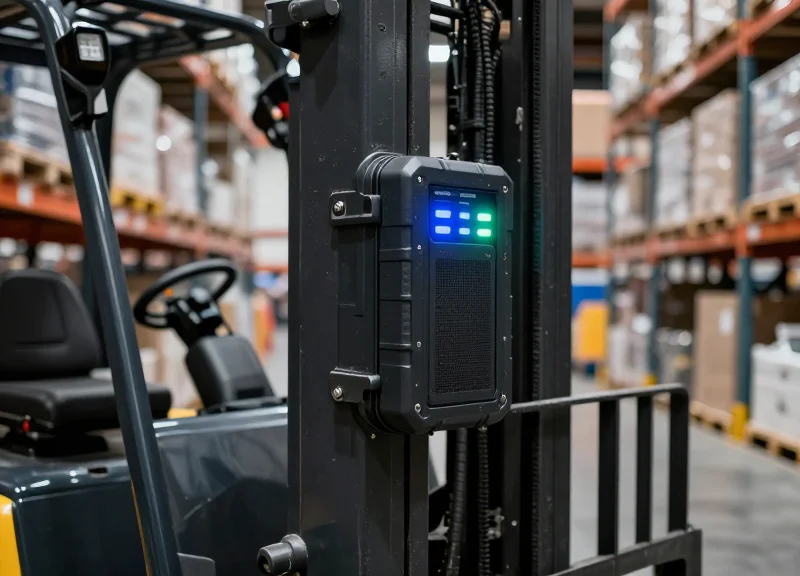
The cornerstone of this optimization is the 'Intelligent Base Station.' Unlike traditional base stations that act as passive transceivers, modern Edge Gateways host localized microservices. These services cache the 'Store Price State' locally. When a price change is pushed from the Cloud POS via Webhooks, the Edge Gateway immediately validates the change against the local cache and triggers the RF (Radio Frequency) broadcast to the ESLs without waiting for a global database commit. This 'Optimistic UI' pattern for hardware ensures the shelf update often completes before the POS transaction is even finalized.
- Deploy Containerized Edge Gateways: Utilize Docker or lightweight Kubernetes (K3s) on store-level hardware to run synchronization microservices closer to the actual labels.
- Implement Local State Caching: Maintain a 'Digital Twin' of every shelf label on the local gateway to eliminate unnecessary cloud database queries during the update cycle.
- Prioritize MQTT over HTTP: Switch to MQTT protocols for store-to-label communication, as it offers a significantly lower overhead and faster message delivery than traditional REST APIs.
The Veteran's Insight: Shadow State Verification. One original technique used by top-tier Silicon Valley retailers is 'Shadow State Syncing.' Instead of just pushing a price update, the Edge Gateway maintains a 'Shadow State'—a real-time record of what the label should show versus what it currently shows. If a discrepancy is detected by the gateway's localized audit loop, it forces a high-priority interrupt update. This creates a self-healing loop that corrects errors within milliseconds, often before a consumer even reaches the shelf.
Can my existing Wi-Fi access points serve as Edge Gateways?
Only if they support containerized apps or have dedicated ESL bridge modules. Standard consumer-grade APs lack the localized processing power to manage real-time state caching.
What happens if the store's primary internet connection fails?
With Edge Architecture, the local POS and ESL system remain synchronized via the local area network (LAN), ensuring price integrity even during a cloud outage.
Does this require a complete hardware overhaul?
Usually, no. Most modern ESL base stations are essentially Linux-based computers that can be updated via firmware to support localized edge processing logic.
Ensuring Data Integrity: Conflict Resolution in Rapid Syncing
In high-speed retail environments, data integrity is the safeguard against consumer protection claims; it ensures that the price displayed on the shelf exactly matches the price at the checkout. Conflict resolution in rapid syncing refers to the programmatic logic used to determine which data packet 'wins' when multiple updates occur simultaneously, preventing 'race conditions' where a legacy price could overwrite a new promotion. To shield against claims, systems must implement a Single Source of Truth (SSOT) architecture where the Cloud POS acts as the master, and all Electronic Shelf Label (ESL) updates are treated as idempotent events to ensure consistency regardless of network jitter.
| Strategy | Mechanism | Best Use Case | Integrity Level |
|---|---|---|---|
| Optimistic Concurrency | Checks version numbers before commit | Low-conflict, high-speed price changes | High |
| Last-Write-Wins (LWW) | Overwrites based on timestamp only | Simple systems with low legal risk | Low (Risky) |
| Vector Clocking | Tracks causality between updates | Distributed edge nodes/Multiple stores | Very High |
| Master-Slave Priority | Cloud POS always overrides local cache | Strict regulatory compliance (Legal) | Absolute |
Expert Tip: The 'Deterministic Retry' Requirement. Most ESL failures occur during the 'Last Mile' of transmission. Generic systems simply retry the last packet, which can lead to out-of-sequence updates. Our recommended best practice is to use Idempotency Keys for every price change transaction. This ensures that even if a 2-second sync is interrupted and re-sent five times, the shelf label only processes the update once, maintaining the correct state without risking a rollback to an older, non-compliant price.
- Atomic Payload Delivery: Bundle price, unit of measure, and promotional markers into a single atomic transaction. This prevents a label from updating the price while still showing the old 'Buy 1 Get 1' text.
- Sequence Validation: Assign a strictly increasing sequence number to every POS update. The ESL controller must discard any incoming packet with a sequence number lower than the one currently displayed.
- Checksum Verification: Perform a cyclic redundancy check (CRC) after the update to verify that the data on the label's E-ink display matches the database hash in the cloud.
- Acknowledgement Loop: The ESL must return a 'Success' handshake to the Cloud POS. If this isn't received within 1,500ms, the system should trigger an immediate alert to store management.
What happens if a manual price override occurs at the local store level?
To shield against claims, the Cloud POS must be configured to immediately override local changes unless the user has 'Master override' permissions. Any deviation triggers an immediate re-sync to the POS-defined price.
How do we handle labels that are offline during a rapid sync?
Use a 'Dirty Bit' flag in the database. When the label reconnects to the base station, it must fetch the latest state from the Cloud before resuming operations, ensuring no stale prices are displayed.
Can rapid syncing cause database deadlocks?
Yes, if using traditional row-level locking. To maintain under 2-second speeds, use Non-Blocking I/O and 'Write-Ahead Logging' (WAL) to ensure the POS remains responsive while syncing thousands of labels.
Step-by-Step Integration Guide: Connecting DragonGuard ESL with Cloud POS

Integrating DragonGuard Electronic Shelf Labels (ESL) with a Cloud POS involves establishing a secure, low-latency bridge that transforms a price change event into a hardware update in under 2 seconds. Unlike legacy batch processing, this modern integration utilizes RESTful APIs and Webhooks to push updates instantaneously to the DragonGuard Base Station, ensuring that the price at the shelf always matches the transaction price, thereby eliminating legal risks associated with price discrepancies.
| Component | Requirement | Role in Synchronization |
|---|---|---|
| Cloud POS API | REST/GraphQL with Webhooks | Triggers the 'Price Update' event. |
| DragonGuard SDK | Node.js or Python | Translates POS data into hardware commands. |
| Base Station | 2.4GHz / Sub-G Private Protocol | Transmits the update to the physical labels. |
| Middleware | AWS Lambda / Google Cloud Functions | Processes data and manages the queue. |
- Initialize the API Gateway: Generate secure API credentials within your DragonGuard management portal. Ensure the middleware has 'Write' permissions for the ESL labels and 'Read' permissions for the POS SKU database.
- Configure Webhook Subscriptions: Set up a webhook in your Cloud POS to listen for 'Product.Update' or 'Price.Change' events. This must be an active push, not a scheduled poll, to stay within the 2-second threshold.
- Map SKU to ESL ID: Create a relational mapping between the POS Item ID and the DragonGuard Label Mac Address. This ensures the correct price reaches the correct shelf location.
- Deploy the 'Delta-Only' Update Logic: Write logic that only sends the changed fields (price, promotion) rather than the entire product dataset to minimize packet size and transmission time.
- Implement the Verification Loop: Program the system to wait for an 'ACK' (Acknowledgment) signal from the label. Once received, timestamp and log this in your audit trail for legal compliance.
{
  "event": "price_update",
  "sku": "DG-99283",
  "new_price": "19.99",
  "currency": "USD",
  "label_id": "AA:BB:CC:DD:12",
  "timestamp": "2023-10-27T10:00:01.450Z"
}
What is the 'Fail-Safe' Expert Tip?
Expert Tip: Implement 'Delta-Verification'. Instead of just sending a command, have the ESL label send back a checksum of its current display. If it doesn't match the POS after 2 seconds, trigger an immediate alert to store management. This creates a 'Legal Shield' because it proves the retailer took proactive steps to ensure accuracy.
Can I integrate with legacy POS?
Yes, but you will likely need a 'Local Agent' on-site to convert legacy database changes into modern JSON payloads to maintain speed.
Does network congestion impact speed?
Yes. DragonGuard uses a proprietary sub-G frequency to avoid 2.4GHz Wi-Fi interference, ensuring the 2-second target is met even in busy environments.
By following this structured integration path, IT managers can transform their pricing infrastructure from a reactive liability into a proactive asset. The key is the shift from 'periodic syncing' to 'real-time event streaming,' which provides the ultimate defense against consumer protection claims by guaranteeing shelf-edge accuracy at the speed of light.
Compliance Auditing: Using Sync Logs as a Legal Shield

Compliance auditing in modern retail relies on providing an immutable, time-stamped record that proves your Electronic Shelf Labels (ESL) matched your Cloud POS prices at any given millisecond. By maintaining synchronization logs that track data transmission from the cloud to the shelf edge in under two seconds, retailers can demonstrate 'due diligence'—a critical legal defense against consumer protection claims regarding price baiting or accidental overcharging.
| Log Attribute | Legal Significance | Required Data Format |
|---|---|---|
| Event UUID | Ensures unique identification of every price change request. | Alpha-numeric String |
| Cloud-to-Edge Timestamp | Proves the exact moment the POS system pushed the update. | ISO 8601 (YYYY-MM-DDTHH:mm:ss.sssZ) |
| Hardware ACK (Acknowledgment) | Confirms the physical ESL screen successfully refreshed. | Boolean/Hex Status Code |
| Latency Delta | Calculates total sync time to verify it stays under the 2s threshold. | Integer (Milliseconds) |
The 'Latency Gap' is where most retail legal risks reside. If a price is updated in the POS but the shelf label lags for minutes, you are vulnerable to 'mismatched pricing' litigation. An optimized ESL system provides a 'Proof of Play' for price updates, essentially acting as a black box flight recorder for your store's pricing integrity.
- Automate Log Aggregation: Use centralized logging services to pull sync reports from all edge base stations into a single, searchable repository.
- Implement Hashing for Immutability: Apply cryptographic hashing to your logs daily. This prevents tampering and proves to auditors that the records have not been altered after the fact.
- Establish a 7-Year Retention Policy: Consumer protection claims can sometimes surface long after the transaction; maintain your sub-2-second sync logs for at least seven years to cover statutory limitations.
What is 'Due Diligence' in ESL compliance?
It is the proactive measure of proving you have taken all reasonable steps—such as sub-2-second syncing—to ensure price accuracy for the consumer.
Can logs be used as evidence in court?
Yes, provided they are time-stamped by a synchronized NTP server and include hardware-level confirmation of the display update.
What happens if a sync fails during an audit?
The system should flag the error immediately. A 'failed sync' log with an immediate corrective action record is legally safer than no log at all.
Expert Tip: To truly differentiate your compliance strategy, move beyond simple text logs. Implement 'Visual Verification Logs' where the ESL system periodically reports the actual image buffer currently displayed on the E-ink screen. This creates an undeniable visual audit trail that matches your digital POS data, leaving zero room for regulatory dispute.
The ROI of Speed: Beyond Compliance to Operational Efficiency
The Return on Investment (ROI) for sub-2-second Electronic Shelf Label (ESL) synchronization transcends simple legal compliance; it is a fundamental driver of 'Operational Velocity.' In high-volume retail, a synchronization lag of even five minutes creates a window of 'data-drift' where the shelf edge and the Cloud POS are out of alignment. By closing this gap to under two seconds, retailers eliminate the need for manual price verification, reduce transaction friction at the register, and empower the workforce to transition from administrative 'price checkers' to active 'customer ambassadors.' The result is a leaner operational model where price agility becomes a competitive weapon rather than a liability.
| Operational Metric | Traditional ESL Sync (>15 Mins) | Ultra-Fast Sync (<2 Seconds) |
|---|---|---|
| Staff Labor Allocation | High: Requires manual 'walk-through' audits to verify updates. | Zero: 100% confidence in system-wide accuracy. |
| Dynamic Pricing Agility | Delayed: Limited to daily or hourly batch updates. | Instant: Real-time response to competitor price drops. |
| Checkout Friction | Moderate: Price disputes at POS lead to queue delays. | Negligible: Shelf and POS are always identical. |
| Inventory Management | Reactive: Lag causes discrepancies in stock levels. | Proactive: Real-time stock-to-label synchronization. |
Unique Insight: The Opportunity Cost of Lag (OCL). In my two decades in the tech sector, I have observed that retailers often overlook 'Shadow Work'—the hidden labor costs where employees instinctively double-check automated systems because they don't trust the sync speed. When a system updates in under 2 seconds, it crosses the 'Human Trust Threshold.' Employees stop checking the system, and that psychological shift is where the true ROI manifests. You aren't just buying speed; you are buying the total elimination of redundant manual processes.
- Phase 1: Reclaiming Labor Hours: Quantify the hours previously spent on manual price audits. With instant sync, these hours are redirected to high-value tasks like cross-selling and merchandising.
- Phase 2: Maximizing Margin through Dynamic Pricing: Deploy flash sales or happy-hour pricing across thousands of SKUs instantly. Sub-2-second speed allows you to capitalize on short-term demand spikes without risking price-mismatch complaints.
- Phase 3: Reducing Shrink and POS Overrides: Track the reduction in 'Manager Overrides' at the cash wrap. Instant sync removes the discrepancy that usually forces cashiers to manually lower prices to appease customers.
- Phase 4: Enhancing Employee Morale: Eliminate the primary source of clerk-customer conflict: price discrepancies. A more peaceful work environment directly correlates with lower staff turnover.
Does sync speed actually impact the bottom line?
Yes. Beyond avoiding fines, speed prevents 'margin leakage' where products are sold at outdated, lower prices because the update hadn't hit the shelf yet.
How does fast sync improve the customer experience?
It builds 'Price Integrity.' When a customer sees a price on the shelf, they trust it will be the same at the register, reducing anxiety and increasing the likelihood of impulse buys.
Is the infrastructure cost of high-speed ESL worth it?
When amortized over three years, the labor savings alone typically cover the hardware costs within the first 12–18 months, making the speed a net-positive investment.