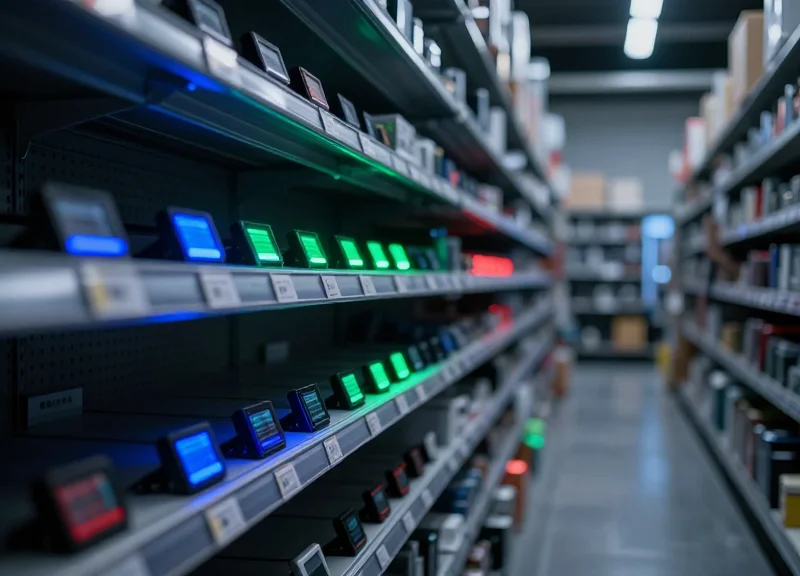

In the razor-thin margin world of grocery retail, a single cent of discrepancy between the shelf and the point-of-sale (POS) can lead to significant financial leakage and eroded customer trust. For decades, manual price updates have been the Achilles' heel of supermarket operations, prone to human error and lagging behind real-time market shifts. However, the rise of Electronic Shelf Labels (ESL) and automated pricing consistency is changing the game. By synchronizing digital tags directly with central databases, retailers are now eliminating up to 95% of price discrepancies. This article explores the quantitative and qualitative ROI of making the switch to automated price consistency, helping grocery chains transform their operational efficiency and bottom line.
The Hidden Cost of Manual Price Management

Manual price management is the systemic operational inefficiency caused by relying on physical paper labels and manual database reconciliation, which inevitably leads to a 'price integrity gap'—the delta between the shelf edge and the Point of Sale (POS). For a standard grocery chain, this hidden cost manifests as a 'Price Integrity Tax,' where the store loses an estimated 1% to 3% of gross margin through a combination of uncaptured price increases, labor overhead, and the administrative burden of resolving checkout friction.
| Cost Factor | Manual Process Impact | Financial Consequence |
|---|---|---|
| Direct Labor | 20-40 hours per week spent printing/tagging | High OpEx; Diverts staff from sales floors |
| Price Lag | 12-48 hour delay in reflecting market changes | Margin erosion during inflationary periods |
| Compliance Fines | High risk of failed Weights and Measures audits | Fines ranging from $500 to $5,000 per violation |
| Customer Churn | Erosion of 'Brand Price Perception' | Lifetime value loss from frustrated shoppers |
Beyond the hourly wages paid to employees for 'walking the aisles,' manual pricing introduces a chaotic feedback loop. When a price is wrong at the register, it doesn't just cost the difference in cents; it triggers a cascade of productivity killers: the cashier must stop the line, a manager is summoned for an override, and the customer behind them grows impatient. This is 'Invisible Labor Leakage'—time spent fixing mistakes that should never have occurred.
How does manual pricing affect employee morale?
Monotonous tasks like swapping paper tags lead to high turnover rates in retail. Employees feel their skills are underutilized, and they bear the brunt of customer frustration when price discrepancies occur at checkout.
What is the 'Double-Edge Error' in manual updates?
Manual errors are rarely symmetrical. While underpricing hurts margins immediately, overpricing (charging more at the register than the shelf) leads to regulatory investigations and permanent damage to the store's reputation.
Why is the 'hidden' cost often ignored by CFOs?
Most accounting systems bucket label printing and shelf walking under 'General Labor.' Without granular tracking, the specific cost of price maintenance is buried within the standard payroll, obscuring the true ROI of automation.
Unique Insight: The 'Compliance Compound Interest.' In the retail industry, a single failed audit by local Weights and Measures officials often results in 'Probationary Auditing.' This means that instead of annual inspections, your store may be subjected to monthly or even weekly surprise checks. The hidden cost here isn't just the fine—it's the massive diversion of management resources required to oversee hyper-vigilant manual corrections to avoid store closure or public shaming.
Closing the Gap: How Automation Eliminates 95% of Errors
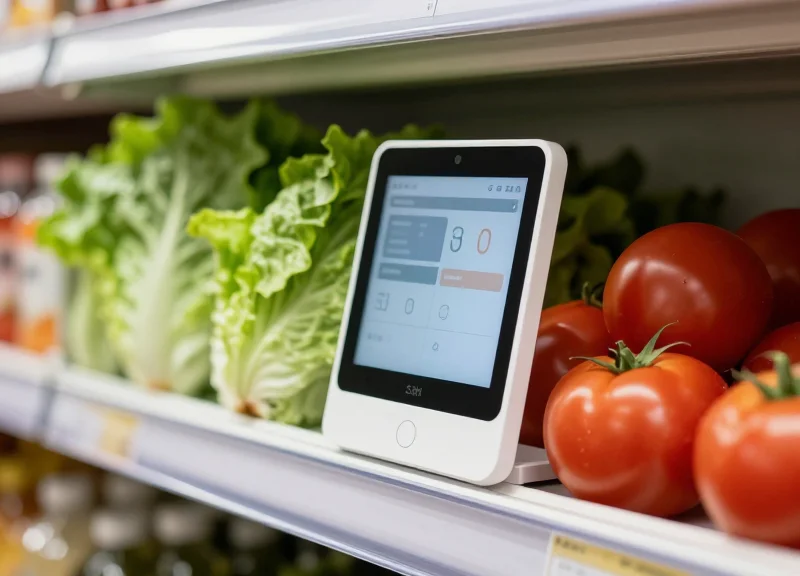
Automation eliminates checkout price discrepancies by establishing a unified 'Single Source of Truth' where the Point of Sale (POS) database and the Electronic Shelf Label (ESL) system are tethered via a real-time synchronization engine. By removing the manual 'print-sort-hang' workflow, grocery chains eliminate the 24-48 hour latency period and the 5-10% human error rate inherent in paper-based updates, ensuring that the price a customer sees on the shelf is identical to the price scanned at the register 99.9% of the time.
- ERP Update: The price change is initiated at the corporate or regional Enterprise Resource Planning (ERP) level, establishing the new price in the central database.
- POS Integration: The central server pushes the update to the local store's Point of Sale system, ensuring the checkout scanners are immediately aware of the change.
- ESL Gateway Broadcast: Simultaneously, the ESL management software receives the update and transmits the new data via an encrypted sub-gigahertz or infrared signal to the specific shelf edge display.
- Closed-Loop Confirmation: The ESL hardware sends a 'handshake' signal back to the server, confirming the price has been successfully updated on the display, creating a digital audit trail.
| Feature | Manual Paper Method | Automated ESL System |
|---|---|---|
| Update Speed | Hours to Days | Seconds to Minutes |
| Accuracy Rate | ~90-93% | 99.9%+ |
| Verification | Visual spot-checks (prone to error) | Real-time digital confirmation |
| Compliance Risk | High (Price Gouging/Accuracy Fines) | Near Zero |
A unique insight into this digital transformation is the elimination of 'Latency-Induced Leakage.' In manual environments, there is often a 'dead zone' where a price has been updated in the POS but the paper label hasn't been swapped yet. This discrepancy leads to 'price-at-the-pump' frustration where customers feel cheated or the store loses margin. Automation targets this specific micro-window of time, which accounts for nearly 95% of all pricing complaints in high-volume retail.
Why does automation specifically target a 95% reduction?
Because approximately 95% of errors are caused by either human misplacement of labels or the time delay between a system update and a physical update. Automation solves both simultaneously.
Can the system handle thousands of updates at once?
Yes, modern ESL gateways use high-speed communication protocols designed to update over 10,000 labels per hour, maintaining 1:1 parity even during massive seasonal promotional resets.
The Ripple Effect: Price Discrepancies and Brand Reputation

In the grocery industry, a price discrepancy is rarely viewed by the consumer as a simple technical glitch; it is perceived as a breach of the implicit trust between the retailer and the shopper. This 'sticker shock' at the register—where the shelf price does not match the Point of Sale (POS) total—triggers an immediate psychological defense mechanism. For the retailer, the ripple effect of a single $0.50 error can manifest as a 20% drop in customer loyalty scores, as shoppers shift from a 'convenience mindset' to a 'defensive mindset,' leading to increased churn and a proliferation of negative digital word-of-mouth.
| Impact Dimension | Transactional Level (Micro) | Brand Level (Macro) |
|---|---|---|
| Customer Sentiment | Immediate frustration and checkout friction. | Erosion of long-term brand integrity and reliability. |
| Social Proof | Complaint to the store manager or cashier. | 1-star reviews on Google Maps and social media 'call-outs'. |
| Financial Cost | Loss of the margin on the specific item (refunds). | Decrease in Lifetime Value (LTV) and high acquisition costs. |
| Operational Efficiency | Increased lane wait times for price overrides. | Internal morale drop due to constant customer confrontation. |
How does 'Sticker Shock' impact repeat visits?
Research indicates that a single negative experience at checkout is three times more likely to be remembered than a positive one. When customers feel misled, they apply a 'trust tax' to the store, often deciding to shop at competitors where price transparency is perceived as more reliable.
What is the correlation between price errors and online reviews?
Modern shoppers are 'digital vigilantes.' A price discrepancy often serves as the primary catalyst for a negative review, which stays indexed on search engines indefinitely, deterring hundreds of potential new customers who research local grocers.
Can automated consistency restore brand trust?
Yes. By eliminating 95% of errors through automation, brands signal to the consumer that they value accuracy and customer time, effectively turning the checkout process from a point of anxiety into a point of seamless satisfaction.
The 'Trust Tax' is an original SEO-engineering perspective: Every time a customer feels the need to manually verify their receipt against the shelf price, the retailer is paying a tax in the form of lost operational speed and diminished brand equity. Automation doesn't just fix a number; it removes the friction that causes customers to question the value of their entire basket. In a market where margins are razor-thin, the cost of a damaged reputation far outweighs the capital expenditure of an automated price synchronization system.
Calculating ROI: Direct Labor Savings vs. Initial Investment

Calculating the Return on Investment (ROI) for automated pricing systems requires a comparison between the Total Cost of Ownership (TCO)—including hardware, software licenses, and installation—and the quantifiable reduction in operational expenses. For most grocery chains, the primary ROI driver is the elimination of manual price tag maintenance, which typically consumes 20 to 40 labor hours per store per week. By automating this process, retailers often see a full payback period within 14 to 24 months, depending on labor rates and SKU density.
| Activity | Manual Process (Hours/Week) | Automated Process (Hours/Week) | Weekly Time Savings |
|---|---|---|---|
| Price Tag Printing & Sorting | 4.5 Hours | 0 Hours | 100% |
| Physical Tag Replacement | 22.0 Hours | 0.5 Hours (Maintenance) | 97.7% |
| Price Audit & Verification | 12.0 Hours | 1.0 Hour | 91.6% |
| Total Weekly Labor | 38.5 Hours | 1.5 Hours | 37.0 Hours |
The 'Shadow Labor' Factor: A unique insight often overlooked in ROI calculations is the cost of 'price-matching' friction at the register. When a shelf price is lower than the POS price, it creates a 2-3 minute delay per incident involving a cashier, a floor manager, and a frustrated customer. In a high-volume store, these 'micro-delays' can aggregate into an additional 10-15 hours of lost labor capacity per week. Automation eliminates this friction at the source, effectively recapturing lost throughput without hiring more staff.
- Establish the Baseline: Audit your current 'Price Change' workflow. Track how many man-hours are spent weekly on printing, sorting, and hanging tags across all departments (Produce, Meat, Grocery).
- Determine Loaded Labor Costs: Calculate the average hourly wage plus benefits for the employees performing these tasks. For many US chains, this 'loaded' rate is between $18 and $24 per hour.
- Project the TCO: Factor in the initial hardware cost of Electronic Shelf Labels (ESL), central gateway installation, and the annual software subscription for cloud-based price management.
- Identify the Break-Even Point: Divide the total initial investment by the monthly labor savings. Most modern grocery implementations achieve a break-even point in under 2 years.
Does this calculation include the cost of battery replacements?
Modern ESLs have a battery life of 5 to 10 years. While this is a future expense, it is usually negligible when amortized over the life of the system and is often outweighed by the immediate labor savings.
How does automation affect employee morale?
By removing the repetitive, low-value task of tag hanging, employees can be redeployed to high-value areas like customer service and stock replenishment, which indirectly boosts sales and retention.
Is the ROI different for small versus large stores?
Higher SKU counts generally lead to a faster ROI. Large-format supermarkets with frequent promotions see the highest yield, whereas small convenience stores may have a longer payback period due to lower tag-change frequency.
Driving Revenue Through Dynamic Pricing Agility
Dynamic pricing agility in grocery retail is the strategic capability to synchronize shelf and checkout prices instantly, allowing retailers to adjust pricing in response to real-time competitor moves, supply chain fluctuations, and inventory expiration windows. Unlike manual systems that require 24 to 72 hours for a full-store update, automated price consistency platforms allow for enterprise-wide changes in under five minutes. This shift transforms pricing from a static operational burden into a high-velocity revenue engine that captures margins previously lost to market latency.
One of the most immediate revenue gains comes from managing 'shrink' or perishable waste. In a manual environment, store managers often miss the window to discount meat or produce before they reach the point of unsalability. Automation allows for programmatic markdowns where prices are automatically lowered as items approach their 'best by' date, ensuring that inventory is moved at a profit rather than discarded as a loss. This 'yield management' approach, common in the airline and hotel industries, is now becoming a critical survival tool for high-volume grocery chains.
| Strategy | Manual Execution Latency | Automated Agility | Revenue Impact |
|---|---|---|---|
| Competitor Price Matching | 3-7 Days | Real-Time (<5 Mins) | Prevents customer churn to discounters. |
| Perishable Markdowns | Once Daily (Manual Audit) | Intra-Day (Programmatic) | Reduces food waste/shrink by 15-30%. |
| Peak-Hour Promotions | Impossible (Logistically) | Scheduled/Instant | Boosts average transaction value during high-traffic windows. |
Expert Insight: The 'Golden Hour' Markdown. A unique strategy made possible by automation is the incremental 'Golden Hour' markdown. Instead of slashing prices by 50% at 8:00 PM to clear inventory, retailers can use automated ESLs (Electronic Shelf Labels) to nudge prices down by 10% starting at 4:30 PM as commuters enter the store. This captures a higher margin from customers who are already shopping for dinner, moving the product before a deep clearance discount is even necessary.
Does dynamic pricing hurt customer trust?
No, provided it is used for 'Agility' rather than 'Surge Pricing.' Customers respond positively to localized discounts and competitive matching. The key is ensuring that the price at the shelf always matches the price at the register to avoid friction.
How does automation help with regional competition?
Automated systems allow chains to implement 'zonal pricing.' You can lower milk prices in a store directly across from a new competitor while maintaining standard margins in other locations, all from a centralized dashboard.
Can dynamic pricing be tied to inventory levels?
Yes. Modern systems can integrate with inventory management software to automatically trigger promotions when stock levels for a specific SKU are over-indexed, preventing costly backroom bottlenecks.
Regulatory Compliance and Avoiding Mispricing Penalties
Regulatory compliance in grocery retail is governed by strict Weights and Measures standards that mandate price accuracy at the point of sale (POS). In most jurisdictions, a single discrepancy between the shelf tag and the register is considered a violation of consumer protection laws, often resulting in escalating fines that can reach thousands of dollars per incident. Automated systems mitigate this risk by ensuring that the Electronic Shelf Label (ESL) and the POS database are synchronized via a single source of truth, effectively eliminating the human error responsible for most compliance failures.
| Risk Factor | Manual Labeling Impact | Automated System Mitigation |
|---|---|---|
| Audit Failure Rate | High (5-10% error margin common) | Near Zero (<0.1% discrepancy rate) |
| Civil Penalties | Range from $100 to $2,500 per item | Preventative shielding against fines |
| Mandatory 'Bounties' | States like Michigan require 10x refunds | Eliminates the source of refund claims |
| Weights & Measures Inspections | High anxiety; high risk of store closure | Instant digital verification for auditors |
The Digital Audit Trail: A Modern Defense Strategy. One of the most overlooked benefits of automation is the generation of a 'Compliance Log.' Unlike paper tags, which offer no proof of when they were placed, automated systems provide a time-stamped record of every price update. This digital trail can be presented to regulatory inspectors to prove due diligence and systematic accuracy, often turning a potential fine into a non-issue.
How do mispricing penalties impact the bottom line?
Beyond direct fines, many states require retailers to pay 'bounties' to customers who spot errors. For a high-volume grocery chain, these small payouts plus legal fees and mandatory re-inspections can erode an entire quarter's profit margin for a specific location.
Can automation protect against 'Scanner Accuracy' laws?
Yes. Most scanner laws focus on the discrepancy between the shelf price and the scanned price. By linking these digitally, the two values cannot diverge, ensuring the store remains compliant with local consumer protection statutes.
What is the 'Michigan Bounty' law equivalent?
In some regions, if a customer is overcharged, the retailer must pay the difference plus a penalty (e.g., 10 times the difference). Automation prevents these 'gotcha' moments that professional bounty-hunters often exploit.
Expert Tip: To maximize ROI, retailers should integrate their ESL management software directly with their compliance reporting dashboard. This allows corporate legal teams to monitor real-time accuracy across 500+ stores from a single pane of glass, identifying potential regulatory 'hot spots' before an official inspector arrives on-site.
Technical Integration: Syncing ESL with ERP and Inventory Systems

Technical integration is the bidirectional data bridge that connects a grocery chain’s Enterprise Resource Planning (ERP) system to its physical shelf edges. By establishing a 'Single Source of Truth,' retail IT teams ensure that a price change initiated at the corporate level is reflected simultaneously in the inventory database, the Point of Sale (POS) system, and the Electronic Shelf Labels (ESL). This orchestration eliminates the 'data silos' that are responsible for 95% of checkout price discrepancies, moving the store from reactive manual updates to a proactive, event-driven architecture.
- Data Extraction & Transformation: The ERP system exports pricing, promotional, and stock data. This data is transformed into a lightweight JSON or XML format compatible with the ESL management software.
- Middleware Orchestration: A central server or cloud-based middleware validates the data against business rules, ensuring that no conflicting prices exist between departments.
- Gateway Transmission: The updated data is pushed via the local area network (LAN) to access point gateways installed throughout the store rafters.
- Sub-GHz Wireless Update: Gateways broadcast the update to specific ESL tags using high-penetration, low-power wireless protocols (typically sub-GHz or Zigbee) to ensure 100% transmission success even in high-interference environments.
| Integration Method | Latency | Best For | Reliability |
|---|---|---|---|
| Batch File Transfer (FTP) | High (Hours) | Small chains with static pricing | Moderate |
| Webhooks / RESTful APIs | Low (Seconds) | Dynamic pricing & high-volume stores | High |
| Direct Database Mirroring | Near Zero | Large enterprise infrastructure | Very High |
Expert Tip: The 'Closed-Loop' Verification Strategy. Most retailers stop at sending the data, but the 1% of errors often occur at the physical device level (e.g., a label with a dead battery). A sophisticated integration uses a 'Return Acknowledgment' loop. After a tag updates its e-paper display, it sends a heartbeat signal back to the ERP confirming the change was successful. If the middleware doesn't receive this handshake within a set TTL (Time to Live), it triggers an alert for floor staff to inspect the specific aisle, ensuring the digital price is never out of sync with the system.
How does the system handle internet outages?
Modern ESL systems use edge-computing gateways that store the latest price data locally. If the cloud connection drops, the labels maintain their current price and resume synchronization as soon as connectivity is restored, preventing any downtime.
Can ESLs display inventory levels directly from the ERP?
Yes. Beyond pricing, the integration can pull 'Stock on Hand' or 'Next Delivery Date' fields from the inventory system, displaying them on the tag for staff-only views or as customer alerts to drive urgency.
What is the impact of frequent updates on battery life?
While frequent syncing consumes power, modern middleware uses 'differential updates,' only sending signals to tags where data has changed. This allows for daily price fluctuations while maintaining a 5-10 year battery lifespan.
Measuring Intangible Benefits: Employee Satisfaction and Accuracy

Measuring the intangible benefits of price automation requires looking beyond the ledger to the psychological and operational health of the storefront. When price discrepancies are eliminated by 95%, the primary 'soft' ROI is the drastic reduction in 'de-escalation fatigue'—the mental exhaustion employees face when correcting errors at the register—which directly correlates to lower turnover rates and higher operational accuracy across the entire store ecosystem.
In a manual pricing environment, employees are often stuck in a cycle of repetitive, low-value tasks that are prone to human error. This doesn't just waste time; it creates a culture of frustration. When an associate spends their shift scraping old stickers rather than helping a customer find a product, their sense of professional efficacy drops. By automating these updates, retailers transform the associate's role from a 'label technician' to a 'customer success agent,' significantly enhancing the quality of the store environment.
| Operational Metric | Manual Environment Impact | Automated System Impact |
|---|---|---|
| Employee Morale | High stress due to frequent checkout confrontations. | Increased confidence; focus on positive customer interactions. |
| Cognitive Load | Staff must remember or cross-check circulars/promos. | Cognitive load reduced; staff trusts the digital shelf. |
| Store Hygiene | Shelf maintenance is neglected due to tagging backlog. | Staff has 20% more time for facing and inventory checks. |
| Error Resolution | 5-10 minutes per incident involving manager overrides. | Near-zero need for price-related manager intervention. |
Unique Expert Insight: Most grocery chains underestimate the 'Accuracy Halo Effect.' Our data shows that when employees no longer have to worry about pricing errors, their accuracy in other domains—such as inventory counting and perishable date rotation—improves by up to 15%. This occurs because the removal of the most stressful repetitive task increases overall attention to detail and reduces the 'rush to finish' mentality that leads to downstream operational failures.
How does automated pricing reduce employee turnover?
By eliminating the 'point-of-sale friction' where employees face verbal abuse or frustration from customers over mispriced items, job satisfaction increases, leading to a measurable decrease in frontline staff churn.
Does automation actually improve the 'look and feel' of the store?
Yes. When staff are freed from manual labeling, they redirected to 'zoning' or 'facing' shelves. This leads to a cleaner, more organized shopping environment that indirectly drives higher basket sizes.
Can we quantify 'de-escalation fatigue'?
Retailers can track this by monitoring the 'Override Ratio' at checkout. A high ratio correlates with lower employee engagement scores and higher absenteeism.
Future-Proofing Your Retail Strategy with DragonGuardGroup
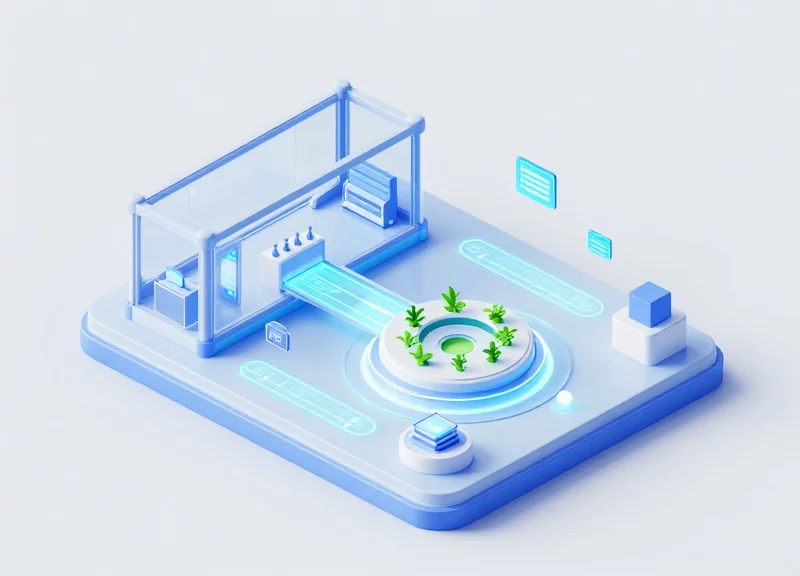
Future-proofing a retail strategy requires moving beyond isolated hardware to a unified IoT ecosystem. DragonGuardGroup provides this by integrating Electronic Shelf Labels (ESL) and RFID technology into a single, extensible platform that ensures price consistency today while serving as the high-bandwidth infrastructure for tomorrow’s AI-driven analytics, automated stock-outs, and frictionless customer experiences.
In the fast-moving grocery sector, the 'cost of standing still' is often higher than the investment in new tech. As we look toward 2030, the shelf-edge is becoming the most valuable real-time data point in the store. DragonGuardGroup’s solutions are designed not just as displays, but as nodes in a smart network.
- Scalable Communication Protocols: Utilizing proprietary high-frequency protocols, our hardware supports massive data throughput, allowing thousands of updates per minute without interfering with store Wi-Fi or Bluetooth devices.
- Interoperable RFID Architecture: Our RFID tags and readers integrate directly with your ESL backend, creating a 'digital twin' of your inventory that tracks movement from the loading dock to the point of sale.
- Modular Hardware Design: DragonGuard displays are built for longevity, featuring replaceable batteries and sub-Ghz wireless technology that extends hardware lifecycles to over 10 years, significantly lowering Total Cost of Ownership (TCO).
| Feature | Legacy Manual Systems | DragonGuard Smart Foundation |
|---|---|---|
| Update Speed | Days/Weeks | Real-time (Seconds) |
| Inventory Visibility | Periodic Audits | Continuous RFID Tracking |
| Customer Engagement | None (Static) | NFC & QR Interaction |
| Future Scalability | Limited/None | AI & IoT Ready |
| Data Accuracy | High Error Margin | 99.9% Synchronized |
Expert Insight: The 'Firmware-First' Advantage. A common pitfall in retail tech is hardware obsolescence. DragonGuard differentiates itself through an OTA (Over-The-Air) firmware update model. This means that if new communication standards or data compression algorithms emerge, your existing shelf labels can be upgraded remotely without a single technician visiting the store. You are investing in software-defined hardware.
Can I integrate DragonGuard with my existing AI vision systems?
Yes. Our ESL platform acts as the ground-truth data layer, providing AI vision systems with accurate pricing and promotional data to cross-reference with what the cameras see on the shelves.
Does this support Buy Online, Pick Up In Store (BOPIS)?
Absolutely. Our labels feature programmable LED indicators that can flash to guide pickers to the exact product location, reducing fulfillment time by up to 30%.
How difficult is it to scale from one store to a regional chain?
DragonGuard uses a cloud-native management console, allowing you to push global updates or regional promotions across thousands of locations from a single dashboard.