In the high-stakes world of pharmaceutical retail, expired inventory is a silent profit killer. For chain pharmacies, manually monitoring thousands of expiration dates is not only labor-intensive but prone to costly human errors. DragonGuardGroup introduces a transformative approach: leveraging Electronic Shelf Labels (ESL) to automate expiry management. By integrating real-time data with digital displays, pharmacies can proactively manage stock, ensure patient safety, and realize a staggering 40% return on investment through reduced waste and optimized labor.
The Escalating Cost of Pharmaceutical Waste
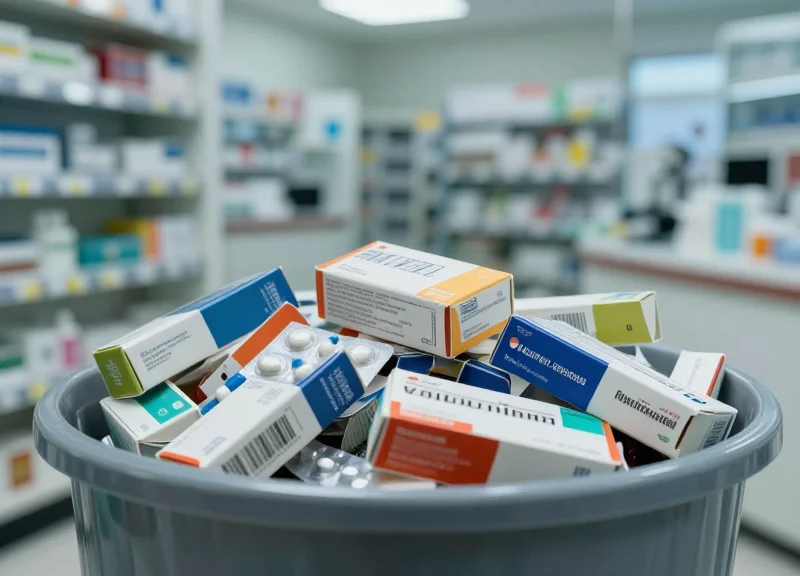
Pharmaceutical waste in chain pharmacies refers to the direct financial loss incurred when medications reach their expiration date before being dispensed, typically draining 1.5% to 3.0% of a pharmacy's annual revenue. This waste goes beyond the simple loss of Cost of Goods Sold (COGS); it encompasses a 'hidden cost multiplier' that includes specialized hazardous waste disposal fees, the high labor cost of manual inventory scanning, and the significant risk of regulatory fines or patient safety incidents. For a chain operating hundreds of locations, these individual leaks aggregate into a systemic profitability crisis that cannot be solved by traditional inventory management alone.
| Cost Category | Impact Area | Financial Significance |
|---|---|---|
| Direct Loss | Wholesale value of non-returnable expired drugs | High: 100% loss of initial investment |
| Labor Costs | Staff hours spent on monthly manual shelf audits | High: Significant overhead and opportunity cost |
| Disposal Fees | Third-party reverse logistics and hazardous waste processing | Moderate: Increasing due to environmental regulation |
| Compliance Risk | Potential fines for stocking expired medications | Severe: Risk of legal action and brand damage |
What is the average financial impact per location?
Industry benchmarks suggest that a typical high-volume chain pharmacy can lose between $2,000 and $5,000 per month specifically to expired medication that was not identified in time for return-to-vendor (RTV) credits.
How does human error contribute to waste?
Manual expiry date checks have a documented error rate of 20% to 30%, leading to 'zombie stock'—expired items that remain on shelves, creating liability risks and occupying valuable shelf space that could hold high-turnover inventory.
Why are disposal costs escalating?
Stricter EPA and state-level regulations on pharmaceutical disposal mean that destroying chemical waste is 3x more expensive than it was a decade ago, making 'prevention' the only viable financial strategy.
Unique Insight: The 'Shadow Expiry' Phenomenon. Most pharmacy managers focus on the products that have already expired, but the greater strategic threat is 'Shadow Expiry.' This occurs when items are stocked incorrectly—specifically when newer stock is placed in front of older stock—effectively 'burying' products that are 3-6 months away from expiration. Because these items are invisible to traditional inventory counts, they represent a guaranteed future loss. Automated expiry management via Electronic Shelf Labels (ESL) solves this by providing real-time visibility into the batch-level aging of inventory. By utilizing 'Next-to-Expire' alerts, pharmacies can implement dynamic pricing or pharmacist-led interventions to move stock before it loses all value, turning a 100% loss into a recovery event.
Limitations of Manual Expiry Management

Manual expiry management is the traditional process of pharmacy staff physically inspecting medication packaging to identify, log, and remove products approaching their end-of-life. This method is inherently reactive, relying on 'pen-and-paper' logs or disconnected spreadsheets that fail to provide real-time visibility. Because it depends entirely on human vigilance, it is characterized by high labor costs, a lack of scalability across chain locations, and a significant margin for error that often results in expired drugs remaining on shelves or being discarded prematurely.
| Risk Factor | Manual Process Impact | Business Consequence |
|---|---|---|
| Accuracy | 15-20% error rate in date identification | Regulatory fines and patient safety risks |
| Labor Efficiency | Average 12-15 hours/month per technician | High operational overhead and burnout |
| Inventory Velocity | Static data in localized spreadsheets | Missed opportunities for stock transfers |
| Waste Control | Reactive 'Search and Rescue' scanning | Increased shrinkage and 0% recovery on expired units |
One of the most damaging aspects of manual tracking is the 'Cognitive Fatigue Leakage.' In a high-volume chain pharmacy environment, technicians often perform expiry checks during 'down-time,' which is frequently interrupted. Research suggests that after checking just 50 consecutive SKUs, human accuracy in reading small-print expiration dates drops by nearly 30%. This leads to a false sense of security where logs show a shelf as 'cleared,' yet expired units remain hidden in plain sight.
Why is manual tracking a barrier to chain-wide profitability?
Manual systems create 'data silos' where inventory insights are trapped in individual stores. Without a centralized digital view, a chain cannot move near-expiry stock from a low-volume store to a high-volume store, resulting in avoidable waste.
What are the hidden labor costs of manual audits?
Beyond the hourly wage, the opportunity cost is massive. Every hour spent squinting at bottles is an hour not spent on clinical services, patient consultations, or revenue-generating vaccinations.
Does manual management meet modern regulatory standards?
Barely. As DSCSA (Drug Supply Chain Security Act) requirements tighten, manual logs often lack the granularity and audit trail necessary for quick compliance reporting during inspections.
The fundamental flaw of the manual approach is that it treats expiry management as a chore rather than a strategic financial lever. In a 100-store chain, the cumulative effect of these small manual inefficiencies results in millions of dollars in 'silent shrinkage'—losses that are often written off as unavoidable costs of doing business, when they are actually symptoms of an obsolete infrastructure.
The Evolution of ESL: Beyond Simple Price Tag Updates
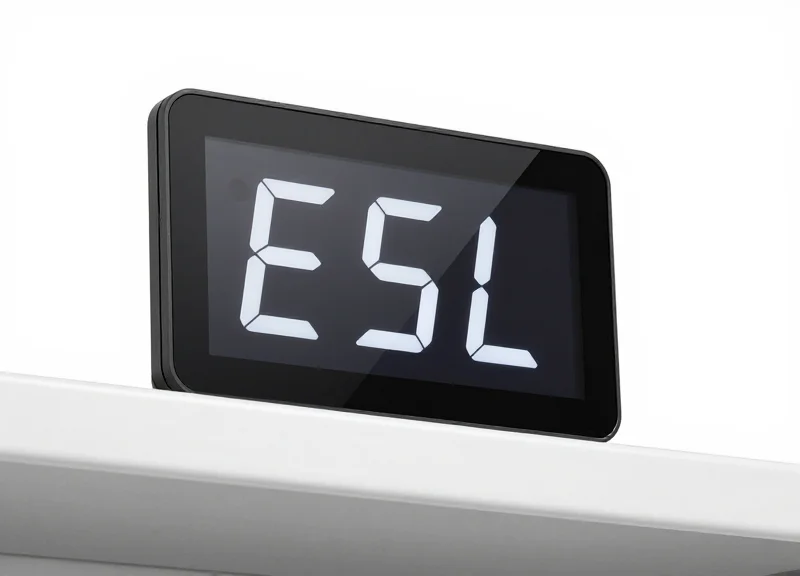
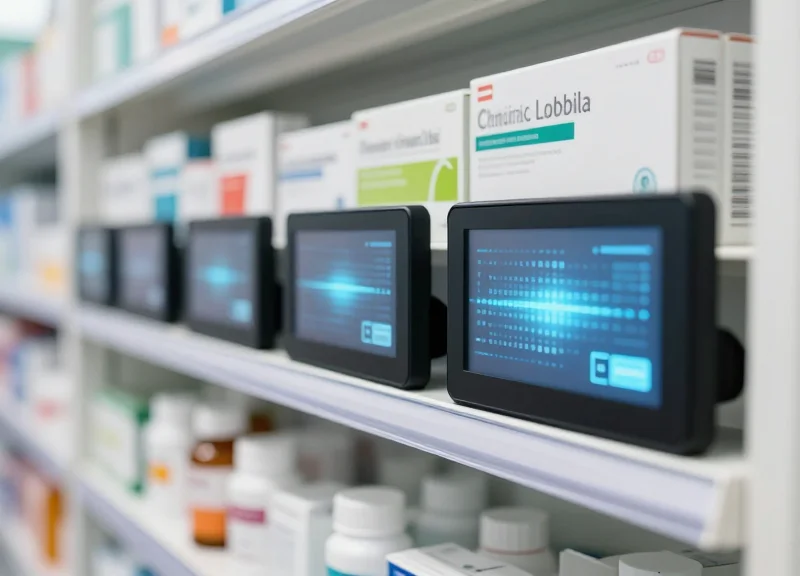
Modern Electronic Shelf Labels (ESLs) have undergone a radical transformation, moving from static e-paper displays intended solely for price updates to sophisticated IoT edge nodes. Today, these devices act as the 'eyes and ears' of the pharmacy shelf, providing a bi-directional data bridge between the physical medication stock and the digital Pharmacy Management System (PMS). This evolution enables pharmacies to treat every shelf slot as a dynamic data point, facilitating real-time tracking of batch numbers, manufacture dates, and expiration windows without manual intervention.
In the early iterations of ESL technology, the primary value proposition was labor savings on manual price re-labeling. However, the current generation of 'Smart ESLs' incorporates high-frequency wireless protocols (like Sub-1GHz or BLE), multi-color LED indicators, and NFC capabilities. For chain pharmacies, this means the label is no longer a terminal point for information; it is an active participant in the supply chain that can trigger alerts when a specific batch of medication is nearing its end-of-life.
| Feature | Legacy ESL (Price Tags) | Modern Smart ESL (IoT Hubs) |
|---|---|---|
| Primary Function | Static Price Display | Real-time Inventory & Expiry Tracking |
| Communication | One-way (Server to Tag) | Bi-directional (Full System Integration) |
| Interaction | None | LED Visual Picking & NFC Consumer Info |
| Data Capacity | Limited to Alpha-numeric | Rich Metadata (Batch, Lot, Expiry, QR) |
| System Role | Peripheral Accessory | Critical Infrastructure / Data Node |
Expert Insight: The 'Silent Auditor' Perspective. While most competitors focus on the display aspect, the true 'Silicon Valley' advantage of modern ESL is its role as a decentralized audit log. By embedding expiration logic at the 'edge'—meaning the label itself knows when the product it is tracking will expire—the system can autonomously 'flash' or change color to alert staff during routine walks. This transforms the pharmacy staff from 'searchers' into 'responders,' effectively eliminating the cognitive load of checking every individual bottle.
How does the ESL 'know' a product is expiring?
The ESL is synced with the Pharmacy Management System via a centralized API. When a new batch is received, the expiry date is mapped to the specific ESL ID. The tag then tracks this date internally, triggering visual alerts based on pre-set thresholds (e.g., 30, 60, or 90 days out).
Can these labels withstand pharmacy environments like refrigerators?
Yes, modern ESL lineages include specialized IP-rated tags designed for cold-chain storage. These units utilize low-temperature batteries and specialized displays that remain legible and functional in medical-grade refrigeration units.
Does this require a total overhaul of our existing software?
No. Modern ESL platforms are designed as middleware. They sit between your existing ERP/PMS and the shelves, pulling data via standard JSON or XML exports to ensure a seamless flow of information without needing to replace core pharmacy software.
How ESL-Driven Automated Expiry Management Works

ESL-driven automated expiry management works by synchronizing a pharmacy's central management system (PMS) with digital shelf labels via a secure IoT cloud gateway. This creates a real-time data bridge where batch-specific expiry dates are automatically pushed to the shelf edge. Unlike static labels, these intelligent displays use localized logic to monitor time-to-expiry and trigger visual or system-wide alerts without manual intervention, ensuring that high-risk inventory is managed with surgical precision.
- Data Synchronization: The Pharmacy Management System (PMS) transmits batch-level data—including NDC codes, lot numbers, and expiration dates—to the ESL central server via API integration.
- Cloud Processing and Analysis: The cloud server calculates the remaining shelf life for each SKU. It prioritizes items based on pre-defined thresholds (e.g., 30, 60, or 90 days from expiry).
- Wireless Edge Transmission: Updates are sent via high-frequency wireless protocols (Sub-Ghz or BLE) to the specific digital labels on the pharmacy floor, updating the display in seconds.
- Automated Visual Alerting: When a product crosses an expiry threshold, the ESL can trigger a flashing LED light or change the screen background to red, immediately signaling staff to take action.
| Feature | Manual Process | ESL-Automated Process |
|---|---|---|
| Update Frequency | Monthly/Quarterly | Real-Time (24/7) |
| Human Error Risk | High (Visual Oversight) | Near Zero (System Driven) |
| Labor Intensity | 8-12 hours per week | Zero active labor hours |
| Inventory Rotation | LIFO (Common Error) | FEFO (Enforced) |
Expert Insight: The 'Multi-Page Batch' Strategy. Modern ESLs support multiple data pages stored in the tag's local memory. We recommend a configuration where 'Page 1' shows the customer price, while a hidden 'Page 2'—accessible by staff via a handheld remote or NFC smartphone—displays the exact stock count for the oldest batch vs. the newest shipment. This enables 'Dynamic FEFO' (First Expired, First Out), ensuring pharmacists always dispense the medication that expires soonest, a move that alone can reduce waste by up to 25%.
Calculating the 40% ROI: Where the Savings Come From

A 40% Return on Investment (ROI) for chain pharmacies adopting ESL-integrated expiry management is not a speculative figure; it is the mathematical result of eliminating systemic inefficiencies. By transforming expiration tracking from a reactive, manual task into a proactive, data-driven workflow, pharmacies can recapture lost capital across three primary pillars: direct product loss (shrinkage), administrative labor overhead, and missed revenue opportunities for short-dated inventory. When these factors are aggregated across a multi-location chain, the financial impact shifts from marginal improvement to a core driver of bottom-line profitability.
| Financial Driver | Manual Baseline | ESL-Automated Impact | Projected Savings |
|---|---|---|---|
| Product Shrinkage | 2.5% - 4% of total inventory lost to expiry | Proactive alerts allow for stock transfer or return | 30% reduction in waste |
| Labor Overhead | 12-15 hours/week per store on manual audits | Exception-only management via digital alerts | 80% reduction in labor cost |
| Markdown Recovery | Items discarded at 100% loss | Automated dynamic pricing for near-expiry meds | 15-20% revenue recapture |
| Regulatory Risk | Potential for heavy fines/audit failures | 100% digital audit trail and compliance | Risk mitigation value |
- Identify the 'Dead Capital' Baseline: Calculate the total annual value of medication discarded due to expiration over the last three fiscal years to establish a baseline for potential recovery.
- Quantify the Hidden Labor Tax: Measure the total man-hours technicians spend physically checking labels. Multiply this by the average hourly wage to find the 'hidden' cost of manual compliance.
- Apply the Dynamic Pricing Multiplier: Estimate the revenue gained by discounting medications with 30-60 days of shelf life remaining, which would otherwise result in a total loss.
Expert Insight: Beyond the obvious savings, the most significant 'silent' ROI driver is what I call the 'Opportunity Cost of Clinician Time.' In a traditional pharmacy model, pharmacists and technicians are over-qualified for the administrative burden of shelf-scanning. By automating expiry management, you aren't just saving 15 hours of labor; you are reinvesting those 15 hours into high-margin services like immunizations, medication therapy management (MTM), and patient consultations that drive volume and loyalty.
What is the typical Payback Period for an ESL system in a pharmacy?
Most chain pharmacies achieve a break-even point within 14 to 18 months, depending on their existing shrinkage rates and store volume.
Does the ROI account for initial hardware and installation costs?
Yes. A 40% ROI calculation typically factors in the Total Cost of Ownership (TCO), including hardware, software licensing, and the initial integration with the Pharmacy Management System (PMS).
Can automated markdowns really sell short-dated stock?
Absolutely. Data shows that price-sensitive patients or those paying out-of-pocket are 65% more likely to fulfill a prescription when a 'near-expiry' discount is applied at the point of sale, facilitated by the ESL's real-time price update.
Enhancing Regulatory Compliance and Patient Safety
Automated expiry management through Electronic Shelf Labels (ESL) enhances regulatory compliance by replacing error-prone manual logs with real-time, digitized monitoring that ensures expired or recalled medications never reach a patient. By integrating directly with Pharmacy Management Systems (PMS), ESLs act as a physical and digital barrier, utilizing visual indicators (like flashing LEDs) and automated price-lock functions to prevent the sale of compromised products, thereby meeting the stringent standards set by the FDA, DEA, and The Joint Commission.
In the pharmaceutical industry, compliance is not just about avoiding fines; it is a fundamental component of patient safety. Traditional manual checks are statistically vulnerable to human oversight, with fatigue and high prescription volumes leading to 'silent expirations' on the shelf. Automated systems remove the cognitive load from pharmacy staff, allowing them to focus on clinical consultation rather than inventory policing.
| Compliance Metric | Manual Management | ESL Automated Management |
|---|---|---|
| Audit Trail Accuracy | Fragmented, paper-based logs | Continuous, time-stamped digital records |
| Recalls / Alerts | Manual search and removal | Instant LED visual alerts for isolation |
| Dispensing Error Risk | High (Dependent on human vision) | Near-zero (System-level lockout) |
| DSCSA Support | Difficult to maintain item-level data | Native support for unit-level tracking |
The Drug Supply Chain Security Act (DSCSA) requires pharmacies to track medications at the unit level. ESLs facilitate this by displaying and storing lot-specific data that is instantly accessible during inspections. This transition from reactive to proactive compliance creates a 'Safety First' culture that bolsters a pharmacy's reputation and reduces the liability profile for chain owners.
How does automated expiry management assist during a board of pharmacy inspection?
It provides a centralized dashboard where inspectors can view the current status of all inventory, including upcoming expiry dates and historical logs of how expired items were handled, significantly reducing audit time and findings.
Can ESLs prevent the sale of a drug if the staff ignores the warning?
Yes, when integrated with the POS system, the barcode scanning process can trigger a 'hard stop' if the system identifies the specific lot number at the shelf as expired, preventing the transaction from being completed.
Does this technology help with medication recalls?
Absolutely. Upon receiving a recall notice, the system can instantly trigger the LEDs on all affected labels, allowing staff to locate and remove the specific batches in minutes rather than hours.
Expert Insight: The 'Dynamic Quarantine' Advantage. One of the most powerful yet overlooked benefits of ESL expiry management is the ability to implement a 'Dynamic Quarantine.' Instead of waiting for a drug to expire, pharmacies can program ESLs to automatically trigger a 'DO NOT DISPENSE' status 48 hours before the actual expiry timestamp. This creates a safety buffer that accounts for patients who may not start their medication immediately after pickup, ensuring that the medication remains potent and safe for the duration of its intended use in the patient's home.
Operational Efficiency: Freeing Up Pharmacists for Patient Care

Automated expiry management via Electronic Shelf Labels (ESL) transforms pharmacy operations by eliminating the need for manual, shelf-by-shelf expiration date audits. By digitizing inventory lifecycles, chain pharmacies can reclaim approximately 10 to 15 hours of professional labor per week. This allows pharmacists to shift their focus from 'back-room' logistics to 'front-facing' clinical care—such as medication therapy management (MTM), health screenings, and immunizations—which directly increases pharmacy service revenue and improves patient outcomes.
| Operational Metric | Manual Inventory Management | ESL-Automated Management |
|---|---|---|
| Expiry Audit Frequency | Intermittent (Monthly/Quarterly) | Continuous (24/7 Monitoring) |
| Staff Required | Pharmacists or Senior Technicians | Automated System (Zero Labor) |
| Human Error Risk | High (Fatigue-related oversight) | Minimal (Algorithmic precision) |
| Resource Allocation | Reactive (Fixing issues found) | Proactive (System-led alerts) |
The economic logic of this shift is rooted in the 'Opportunity Cost of a Pharmacist’s Minute.' When a highly trained Doctor of Pharmacy (PharmD) spends hours cross-referencing lot numbers and dates, the pharmacy loses the ability to bill for clinical services that offer higher margins. In an era where reimbursement rates for dispensing are tightening, the ability to automate mundane tasks is the primary lever for maintaining profitability through diversified service offerings.
How does ESL automation affect staff retention?
By removing repetitive, low-skill administrative tasks, pharmacists can practice at the 'top of their license.' This reduces occupational burnout and increases job satisfaction, which is critical in a competitive labor market.
Can ESL systems help during peak prescription hours?
Yes. ESLs can use multicolor LED flashing to guide staff to specific stock locations or highlight priority items, significantly reducing 'search time' and speeding up the dispensing workflow.
Does this impact patient consultation quality?
Absolutely. With automated alerts handling inventory integrity, pharmacists have more uninterrupted time for patient counseling, which improves medication adherence and strengthens patient loyalty.
The Hidden Labor Leak: Most chain pharmacies underestimate the 'context switching' cost of manual audits. Research suggests it takes an average of 23 minutes for a professional to return to deep focus after being interrupted by a logistical task. By centralizing expiry data via ESL, you aren't just saving minutes; you are preserving the 'Clinical Flow State,' which is essential for preventing dispensing errors and providing high-quality diagnostic advice.
Implementation Strategies for Large-Scale Pharmacy Chains
Successfully implementing automated expiry management via ESL at scale requires a three-tiered approach: centralizing data through cloud-based API integration with Pharmacy Management Systems (PMS), executing a 'Cluster Pilot' to refine operational workflows, and deploying a standardized 'train-the-trainer' program to ensure staff adoption. By shifting from reactive manual checks to a centralized, API-driven 'Exception Management' model, large-scale chains can achieve a 90% reduction in time spent on manual inventory audits while ensuring 100% compliance across all retail locations.
| Deployment Phase | Strategic Focus | Primary Deliverable |
|---|---|---|
| Phase 1: Integration Discovery | Mapping ESL middleware to legacy Pharmacy Management Systems (PMS). | Unified Data Synchronization Schema |
| Phase 2: The 'Cluster Pilot' | Testing hardware durability and signal range in high-volume stores. | Workflow Optimization Manual |
| Phase 3: National Rollout | Rapid hardware installation and cloud-based provisioning. | Enterprise-wide Expiry Visibility |
- Network Infrastructure Audit: Before tag placement, conduct a site survey to ensure IoT gateway coverage. High-density pharmaceutical shelving often requires sub-GHz frequency ESLs to penetrate metal racking and provide 100% signal reliability.
- Establish Middleware Synchronization: Develop a bidirectional API bridge between the central database and the ESL station. This ensures that when a pharmacist receives a new batch of drugs, the expiry data flows automatically to the digital label without manual entry.
- Define Tiered Discounting Logic: Standardize the 'Markdown Protocol.' For example, set the system to trigger a 20% discount on the ESL when a product is 30 days from expiry, and a 50% discount at 10 days, maximizing sell-through before waste occurs.
- Expert Tip: The 'Shadow Audit' Strategy: To overcome staff skepticism, run the ESL expiry alerts alongside existing manual logs for the first 30 days. The discrepancy data—showing where ESLs caught items that human auditors missed—is the most effective tool for driving cultural adoption at the store level.
- Visual Exception Management: Configure ESLs to flash high-visibility LED lights (e.g., Red for 3 days to expiry, Yellow for 14 days). This allows staff to identify and pull at-risk stock in seconds while walking the aisle for other tasks.
How do we manage diverse store layouts?
Use a cloud-based 'Planogram Template' that allows for regional variations while maintaining a core SKU mapping strategy that syncs with central inventory levels.
What is the primary barrier to chain-wide adoption?
The 'Initial Data Cleanup' is the biggest hurdle. Implementation success is 20% hardware and 80% ensuring your legacy PMS data for batch-expiry dates is accurate before syncing to the tags.
Can these systems work with refrigerated medications?
Yes, specialized ESLs with IP67 ratings and low-temperature batteries are required for cold-chain monitoring, ensuring expiry management remains active even in refrigerated units.
Future-Proofing Your Pharmacy with DragonGuardGroup Solutions
Future-proofing your pharmacy involves moving beyond isolated hardware upgrades to a unified digital ecosystem where Electronic Shelf Labels (ESL), Radio Frequency Identification (RFID), and Electronic Article Surveillance (EAS) operate in synergy. By choosing DragonGuardGroup, pharmacy chains transition from reactive manual labor to a proactive, data-driven environment that secures high-value inventory while automating the entire product lifecycle from delivery to disposal.
In the volatile landscape of modern healthcare retail, scalability is the ultimate competitive advantage. DragonGuardGroup provides an interoperable infrastructure that allows pharmacists to manage thousands of SKUs across hundreds of locations through a single cloud-based interface, ensuring that today's investment remains compatible with tomorrow's AI-driven inventory analytics.
| Technology Component | Primary Function | Future-Proof Benefit |
|---|---|---|
| ESL (Electronic Shelf Labels) | Automated pricing & expiry alerts | Eliminates paper waste; enables instant promotional agility. |
| RFID (Radio Frequency ID) | Real-time inventory tracking | Provides 99.9% stock accuracy for omnichannel fulfillment. |
| EAS (Electronic Article Surveillance) | Loss prevention & security | Integrates with POS to detect 'sweethearting' and internal shrinkage. |
Expert Insight: Most vendors treat ESL and EAS as separate silos. The DragonGuardGroup advantage lies in 'Hardware Convergence'—utilizing the same digital backbone to monitor stock levels and prevent theft simultaneously. This reduces total cost of ownership (TCO) by up to 25% by minimizing redundant network hardware and installation labor.
- Assessment and Customization: We begin with a comprehensive audit of your current shrink rates and labor overhead to tailor a technology stack that addresses your specific pain points.
- Seamless System Integration: Our solutions integrate directly with existing Pharmacy Management Systems (PMS) and ERPs, ensuring a single source of truth for all inventory data.
- Scalable Deployment: Whether launching a pilot in five stores or a rollout across five hundred, our modular hardware allows for rapid, non-disruptive installation.
- Continuous Optimization: Leverage our analytics dashboard to identify patterns in drug expiry and theft, allowing for data-backed adjustments to procurement strategies.
Can DragonGuardGroup solutions work with our existing shelving?
Yes, our ESL and EAS systems are designed with universal mounting options that fit most standard retail pharmacy fixtures, minimizing the need for expensive cabinetry replacements.
How does DragonGuardGroup ensure data security?
Our systems utilize bank-grade encryption for all wireless communications between ESLs and the central hub, protecting sensitive pricing and inventory data from external interference.
Is the system ready for future AI features?
Absolutely. Our hardware is built with excess processing capacity to support upcoming AI-driven features like automated predictive ordering and customer heat-mapping.