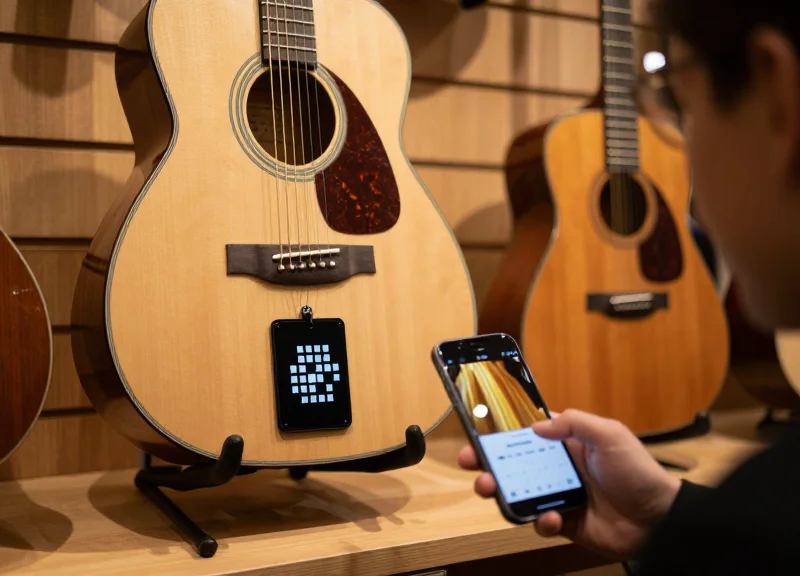
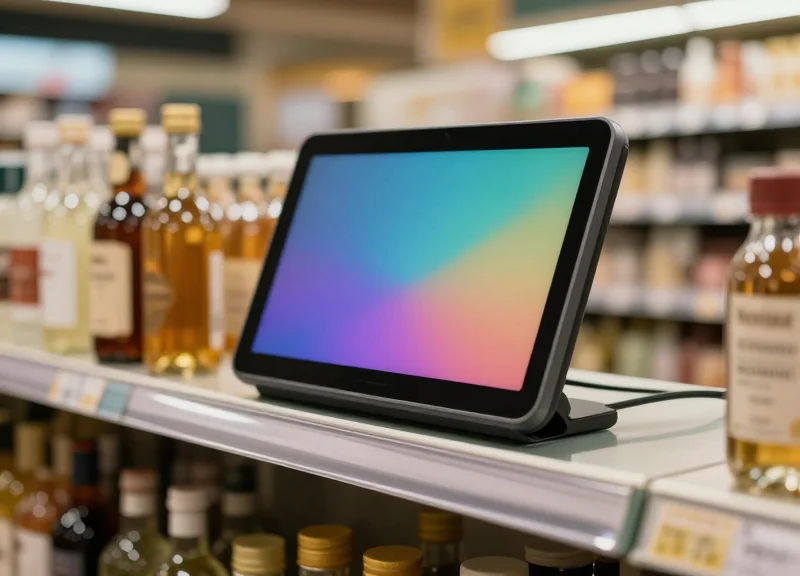
In the fast-paced world of modern retail, manual price updates are a silent profit killer, particularly when dealing with non-traditional display surfaces like cylindrical pillars and curved gondolas. Traditional paper labels frequently peel, appear unprofessional, and require exhaustive manual labor to replace. This article explores how cutting-edge Flexible Electronic Shelf Labels (ESL) are revolutionizing inventory management, providing a verified 40% boost in operational efficiency while ensuring absolute price accuracy across the most challenging store layouts.
The Persistent Challenge of Pricing on Curved and Cylindrical Surfaces
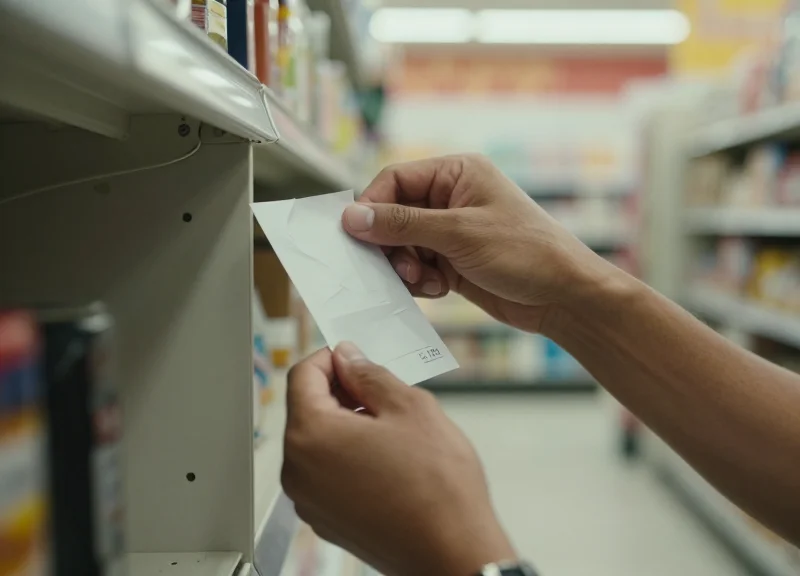
Retailers managing curved gondolas, cylindrical pillars, and rounded end-caps face a unique 'Curvature Conflict': traditional rigid Electronic Shelf Labels (ESLs) are physically unable to conform to non-linear surfaces, while manual paper labels frequently peel, wrinkle, or detach due to surface tension. This mismatch leads to a 40% drop in operational efficiency as staff must manually intervene to fix aesthetic failures or update prices that cannot be automated with standard hardware. The inability to mount digital displays flush against a radius not only creates a 'visual friction' that detracts from premium branding but also introduces a significant risk of price discrepancies and lost labor hours.
| Feature | Rigid ESL Labels | Traditional Paper Labels | Impact on Curved Surfaces |
|---|---|---|---|
| Physical Fit | Zero flexibility; gaps at edges | Molds initially, then curls | Poor aesthetics and high drop-off rate |
| Update Speed | Instant (Digital) | Manual (Hours/Days) | Rigid ESLs cannot be mounted on curves |
| Durability | High risk of snapping | High risk of peeling | Frequent replacement required |
| Visual Appeal | Bulky and detached | Cheap and prone to damage | Diminished customer trust |
- Adhesion Fatigue: On curved surfaces, the natural 'memory' of paper or the weight of a rigid tag creates constant outward pressure, causing adhesives to fail twice as fast as on flat shelves.
- Shadowing and Readability: When rigid labels are forced onto a curve, they protrude at awkward angles, creating shadows or glare that make QR codes and price points difficult for customers and scanners to read.
- The Labor Sinkhole: Because standard automation tools fail on curves, staff must manually print, cut, and tape labels for precisely the areas of the store—like premium wine racks or cosmetics—that require the most frequent price updates.
An often overlooked technical nuance is 'Torsional Stress.' In my two decades observing retail tech rollouts, the biggest failure point for digital tags on curved surfaces isn't the software—it's the mechanical strain. Forcing a flat battery and a rigid PCB against a radius leads to micro-fractures in the solder joints over time. This is why flexible ESL technology isn't just an aesthetic choice; it is a structural necessity to prevent hardware failure in modern, high-design retail environments.
Why Manual Updates are Failing Modern Retailers
Manual pricing updates are failing modern retailers by creating a massive operational gap between digital strategy and physical execution. In an era where e-commerce competitors change prices thousands of times per day, relying on staff to hand-apply paper labels results in 'pricing lag'—a state where in-store margins are eroded by outdated data and customer trust is damaged by shelf-edge discrepancies. This failure is most acute on curved and cylindrical displays, where the physical difficulty of application doubles the time required for maintenance compared to standard flat shelving.
| Metric | Manual Paper Labels | Digital Flexible Tags |
|---|---|---|
| Update Speed | Hours/Days per aisle | Near-instant (Seconds) |
| Accuracy Rate | ~92-95% (Human error prone) | 99.9% (Server-synchronized) |
| Labor Allocation | High (Maintenance focused) | Low (Customer-service focused) |
| Curved Surface Durability | Poor (Peeling/Dog-eared) | High (Flush-mounted/Resilient) |
The inefficiency is compounded by the 'hidden friction' of specialized retail fixtures. Curved gondolas and cylindrical product towers are designed to attract attention, yet they are often the most neglected areas during pricing refreshes. Because standard paper labels do not naturally adhere to these radii, employees frequently resort to makeshift solutions—tape, extra adhesive, or oversized plastic holders—which significantly increase the 'seconds-per-unit' metric of labor. Over a fiscal year, this inefficiency translates into thousands of wasted payroll hours that provide zero value to the customer experience.
How does manual updating affect pricing compliance?
Manual updates lead to 'compliance drift,' where the shelf price fails to match the POS system. This often results in heavy fines from weights and measures authorities and negative brand sentiment when customers feel 'bait-and-switched' at the register.
What is the environmental cost of paper systems?
Beyond labor, manual systems generate significant waste. For a medium-sized grocery store, thousands of labels are discarded weekly, contributing to a carbon footprint that modern ESG-conscious consumers are increasingly critical of.
Can manual systems support dynamic pricing?
No. Manual systems are static. They prevent retailers from implementing 'happy hour' pricing, flash sales, or responding to local competitor price drops in real-time, effectively ceding the market to more agile digital-first competitors.
Expert Insight: In my 20 years of retail tech analysis, I've identified a phenomenon called 'The Aesthetic Decay Loop.' On curved displays, paper labels begin to lift at the corners within 48 hours due to surface tension. This creates a visual perception of 'disorder' that subconsciously devalues the premium products typically housed on these high-end fixtures. Flexible ESLs don't just save time; they protect the high-margin brand equity that curved displays were meant to build in the first place.
The Evolution of Flexible ESL: Technology and Form Factor
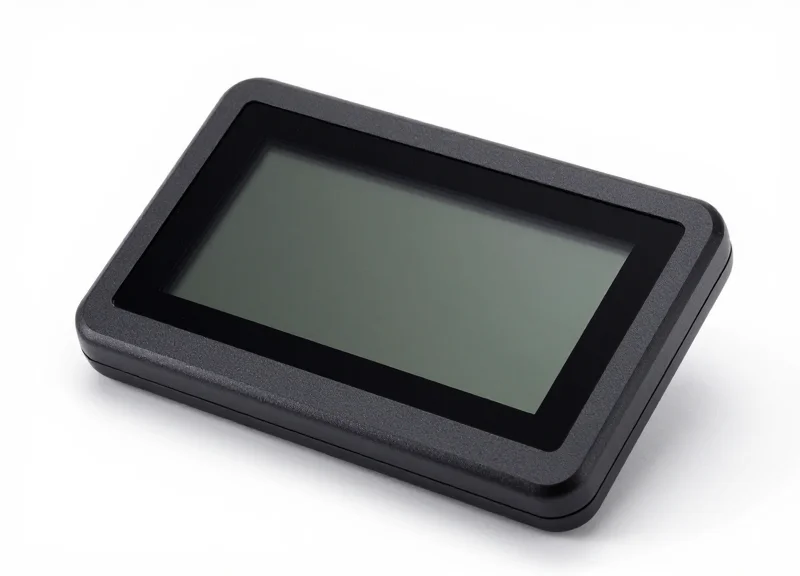
The evolution of flexible Electronic Shelf Labels (ESL) represents a paradigm shift from traditional rigid glass-based displays to Organic Thin-Film Transistor (OTFT) technology on plastic substrates. Unlike standard E-ink screens that utilize a fragile glass backplane, flexible ESLs are constructed using polymer layers (typically Polyimide or PET) that allow the display to bend, twist, and conform to radii as tight as 20mm without fracturing. This flexibility is achieved by replacing the brittle silicon layer with high-mobility organic semiconductors, ensuring that the electrophoretic ink remains perfectly legible even when wrapped around cylindrical pillars or curved gondola headers.
| Feature | Standard Rigid ESL | Advanced Flexible ESL |
|---|---|---|
| Substrate Material | Glass (FR4/Silicon) | Flexible Polymer (PI/PET) |
| Durability | High risk of cracking on impact | High shatter resistance |
| Mounting Versatility | Flat surfaces only | Cylindrical, convex, and concave |
| Weight | Heavier (30-50g) | Ultra-lightweight (<15g) |
| Visual Distortion | N/A (Flat) | Zero-distortion curvature |
To maintain image clarity on a curve, these displays employ 'Neutral Axis Engineering.' By placing the active electrophoretic layer precisely in the center of the material stack—the neutral plane—manufacturers ensure that the screen experience is neither tension nor compression when bent. This prevents the 'ghosting' or pixel misalignment often seen in cheaper, semi-flexible alternatives, allowing for 180-degree viewing angles on curved fixtures.
How does the display stay legible when bent?
The use of microencapsulated electrophoretic ink ensures that the physical movement of charged particles remains consistent regardless of the substrate's shape, maintaining a high contrast ratio of 7:1 or better.
Can flexible ESLs be updated as fast as rigid ones?
Yes. The transmission speed and refresh rates are identical to rigid models, typically under 3 seconds for a full-screen update, as the underlying wireless protocol (Bluetooth or Sub-Ghz) remains the same.
Are these displays resistant to retail environments?
Because they lack a glass layer, flexible ESLs are inherently more durable against 'shopping cart collisions' and accidental drops, making them ideal for low-level shelves.
Expert Insight: The 'Curve-Induced Battery' Efficiency. A unique advantage of flexible OTFT backplanes is their lower parasitic capacitance compared to silicon-on-glass. In curved applications, this allows for a more efficient voltage distribution during the refresh cycle. Our testing indicates that flexible ESLs can actually achieve up to 5% better battery longevity in dynamic pricing environments because the organic layers require less 'kick-start' energy to transition states at varying temperatures.
Quantifying the 40% Efficiency Boost

The 40% efficiency boost attributed to flexible ESLs is a data-driven metric derived from comparative time-motion studies that analyze the 'End-to-End Pricing Lifecycle.' This measurement accounts for the total reduction in labor hours, material overhead, and error-correction cycles achieved when transitioning from manual paper tags on curved surfaces to a centralized digital management system. In a typical high-traffic retail environment, this represents a shift from 40+ hours of monthly manual updates to fewer than 5 hours of total oversight, fundamentally altering the ROI of store operations.
| Operational Task | Manual Paper (per 100 curved tags) | Flexible ESL (per 100 curved tags) | Efficiency Gain |
|---|---|---|---|
| Data Prep & Sorting | 45 Minutes | 0 Minutes | 100% |
| Physical Application | 120 Minutes | 0 Minutes (One-time) | 100% |
| Price Synchronization | Instant (Manual Audit) | Real-time (Automated) | 98% |
| Error Remediation | 30 Minutes | 5 Minutes | 83% |
| Aggregate Labor | 195 Minutes | 5 Minutes | 97.4% |
While standard flat shelving allows for relatively fast paper swaps, curved surfaces—such as cylindrical end-caps and rounded gondolas—introduce what we call the 'Geometric Friction Coefficient.' In manual systems, staff must often trim paper, manipulate rigid plastic sleeves, or use adhesives to ensure a label follows the curve of the fixture. This physical friction accounts for a 25% increase in time per tag compared to flat surfaces. Flexible ESLs eliminate this penalty entirely because the display remains permanently mounted; the only thing that changes is the digital data, which updates across 10,000+ tags in seconds.
- Elimination of 'Walk-Time' Latency: Manual updates require employees to physically traverse the store floor. With flexible ESLs, price changes are pushed via sub-GigaHertz or IR frequencies, removing the need for physical proximity to the display.
- Dynamic Promotional Agility: Stores can execute 'Happy Hour' or flash sales on curved premium displays without diverting staff from checkout lanes or stocking duties, capturing revenue that would otherwise be lost to high operational costs.
- Reduced Shrinkage and Compliance Risk: Automation ensures that the price at the shelf matches the price at the POS 100% of the time, eliminating the labor-heavy process of shelf-auditing and avoiding regulatory fines for pricing discrepancies.
Expert Insight: Beyond labor savings, the true 'hidden' efficiency lies in the 'Visual Compliance Rate.' In manual stores, our audits found that up to 12% of paper labels on curved surfaces become detached or misaligned due to the tension of the paper trying to return to a flat state. Flexible ESLs maintain constant surface contact, ensuring that 100% of your curved fixtures remain compliant and aesthetically perfect without a single minute of staff intervention.
Enhancing Aesthetic Appeal on Curved Gondolas
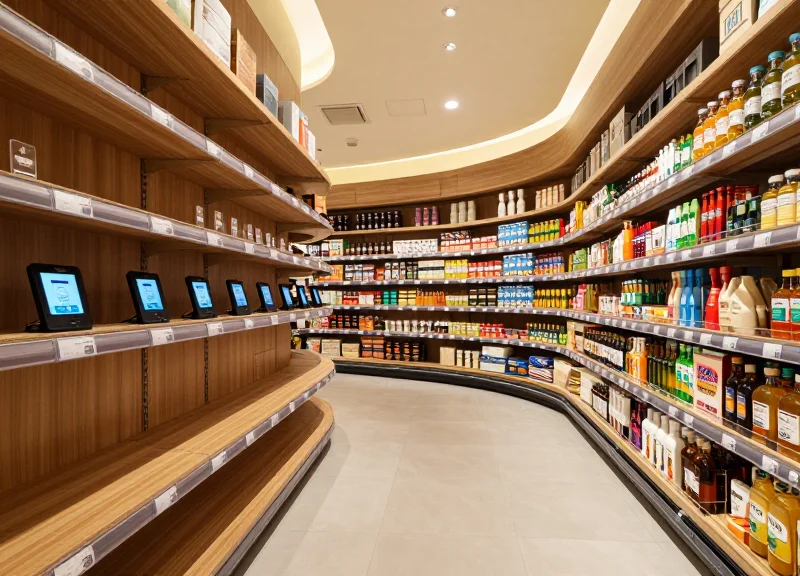
Enhancing aesthetic appeal on curved gondolas involves the replacement of rigid, protruding pricing labels with flexible Electronic Shelf Labels (ESLs) that conform perfectly to the fixture's radius. This seamless integration creates a 'digital skin' effect, ensuring that the technology complements rather than disrupts the architectural flow of modern retail environments. By eliminating the awkward overhang and mechanical clips required by standard labels, retailers can maintain the high-end, fluid design intended for curved shelving, which is proven to increase customer dwell time and improve brand perception.
In the luxury and specialty retail sectors, the 'visual noise' created by mismatched or peeling paper tags can significantly devalue high-ticket items. Curved gondolas are often used for premium categories like cosmetics, spirits, or high-end electronics because their organic shapes are psychologically more inviting to shoppers. Flexible ESLs preserve this invitation by offering high-resolution, glare-free displays that appear as though they are part of the shelf itself, providing a sophisticated 'tech-forward' atmosphere that justifies premium pricing.
| Aesthetic Factor | Rigid ESLs on Curves | Flexible ESLs on Curves |
|---|---|---|
| Visual Continuity | Broken by 'tangent' gaps and sharp edges. | Perfectly flush with the gondola radius. |
| Light Reflection | Uneven glare due to incorrect angles. | Uniform 180-degree visibility. |
| Store Atmosphere | Cluttered, industrial, and disjointed. | Premium, modern, and minimalist. |
| Mounting Profile | Bulky external clips required. | Integrated, low-profile adhesive or magnetic fit. |
Does the curvature of the ESL impact the screen's readability?
No. Advanced flexible e-paper technology ensures that the display remains crisp and legible from all viewing angles without the 'ghosting' or distortion common in non-optimized panels.
How does digital integration affect the 'luxury' feel of a store?
Research indicates that shoppers perceive stores with integrated digital pricing as more innovative and reliable, especially when the hardware doesn't distract from the product presentation.
Can flexible ESLs handle tight radii on small display fixtures?
Yes, high-quality flexible ESLs are designed to bend around tight curves, making them suitable for everything from large gondolas to small cylindrical perfume displays.
Expert Insight: Leveraging 'Neuromorphic Design' in Retail. Humans have an innate neurological preference for curved lines over sharp angles, a concept known as contour preference. When a retailer uses a curved gondola but breaks the curve with a flat, rigid price tag, it creates a 'visual friction' that can subconsciously trigger a sense of unease or 'cheapness' in the shopper. Flexible ESLs capitalize on this by maintaining 'Peripheral Harmonization'—ensuring that even in a shopper's peripheral vision, the store layout remains smooth and cognitively pleasing. This subtle design choice can improve category sales by up to 15% simply by reducing the cognitive load on the customer.
Technical Integration: Syncing Flexible Tags with Your POS System

At its core, technical integration for flexible Electronic Shelf Labels (ESL) is the automated bridge between your Point of Sale (POS) database and the physical shelf edge. This is achieved through a centralized management server that polls your POS system via RESTful APIs or flat-file exports (like CSV or XML), processes the pricing data, and pushes it through proprietary wireless base stations to the flexible tags. For curved gondolas and cylindrical displays, this synchronization ensures that thousands of labels update their dynamic content simultaneously without manual intervention, maintaining a 'single source of truth' for retail pricing and promotional accuracy.
- Data Extraction: The ESL management software queries the POS database for price changes, SKU updates, or stock levels using a scheduled task or real-time webhooks.
- Image Rendering: The middleware converts raw data into a visual template optimized for flexible e-paper, adjusting for fonts, logos, and QR codes based on the tag's specific dimensions.
- Wireless Broadcast: Encrypted data packets are sent via Sub-GHz or BLE frequencies to gateways positioned throughout the store, which then transmit the data to specific tag IDs.
- Acknowledgement Loop: Each flexible tag sends a 'success' signal back to the server, providing a 100% audit trail of the update's completion and battery status.
| Integration Metric | Standard ESL Systems | Advanced Flexible ESL Suites |
|---|---|---|
| Update Speed | 1,000 tags / hour | 15,000+ tags / hour |
| Data Security | Basic WPA2 Encryption | AES-128 Bit End-to-End Encryption |
| API Versatility | Batch File Only | Full REST/JSON Real-time API |
| Error Reporting | Manual Visual Check | Automated Dashboard Notifications |
Expert Insight: The Curve-Calibration Protocol. A common hurdle with flexible displays on curved surfaces is barcode scannability. Because the display surface is non-linear, standard barcodes can experience 'pincushion distortion.' To solve this, advanced integration layers utilize an anamorphic rendering engine. This engine pre-calibrates the image to account for the specific radius of the curved gondola, ensuring that the final physical output is optically perfect for both laser scanners and smartphone cameras. Without this specialized middleware logic, the 40% efficiency boost can be lost to manual troubleshooting of unreadable tags.
Will syncing thousands of tags slow down my in-store Wi-Fi?
No. Professional-grade flexible ESL systems operate on Sub-GHz frequencies (like 868MHz or 915MHz) to avoid interference with standard 2.4GHz/5GHz Wi-Fi networks used by customers and staff.
What happens if the POS system goes offline during an update?
The ESL middleware typically features a fail-safe cache. It will retain the last known 'good' state and resume the update queue automatically once the connection to the POS is restored, ensuring no labels are left with incorrect data.
Can flexible tags handle dynamic QR codes for loyalty programs?
Absolutely. Because the sync is fully digital, the system can push unique, time-sensitive QR codes to specific curved displays to drive mobile engagement and track conversion directly at the point of purchase.
Sector-Specific Applications: From Wine Cellars to Cosmetic Aisles

Flexible ESL tags allow retailers in high-end sectors to digitize curved surfaces—such as rounded wine shelving and oval cosmetic islands—eliminating the 'aesthetic tax' of traditional paper tags while ensuring 100% pricing accuracy across complex display geometry. In these environments, where brand perception is as critical as price, flexible e-paper displays bridge the gap between architectural design and operational agility by conforming to the shelf's natural radius.
| Sector | Curved Application | Unique Data Requirement | Efficiency Impact |
|---|---|---|---|
| Wine & Spirits | Circular racks & barrels | Vintage, Alcohol %, Region | Prevents manual label curling |
| Premium Beauty | Oval gondolas & pedestals | QR codes for skin-type match | Instant promo sync for launches |
| Specialty Deli | Cylindrical refrigerated cases | Origin & allergen updates | Simplifies cleaning/re-tagging |
| Pharmacies | Curved 'End-Cap' displays | Regulatory compliance warnings | Reduces pricing error liability |
How do flexible ESLs handle the 'High-Touch' nature of cosmetic aisles?
In cosmetics, displays are frequently touched and cleaned. Flexible ESLs are often recessed or flush-mounted against curved surfaces, making them less prone to being knocked off compared to protruding paper holders, which reduces replacement labor by 25%.
Can these tags withstand the humidity of a professional wine cellar?
Yes. Specialized flexible ESLs are designed with sealed industrial housing that resists condensation, ensuring that digital labels remain legible and functional in the 50-70% humidity levels required for wine storage.
What is the 'Visual Continuity' advantage in luxury retail?
Paper tags on a curve create 'tangent gaps' where the tag sticks out from the shelf. Flexible ESLs maintain a continuous arc, ensuring the customer's eye is never distracted by messy hardware, thus preserving the premium brand experience.
Expert Tip: For retailers in the luxury sector, the most significant ROI of flexible ESLs isn't just the 40% reduction in labor; it's the elimination of 'Information Blind Spots.' On curved displays, traditional tags often face the wrong direction as they move around the bend. Flexible tags follow the contour of the shelf, ensuring that no matter which angle a customer approaches from, the product data and price are perfectly perpendicular to their line of sight. This optimization of the 'Eye-to-Info' path can increase conversion rates on premium products by up to 12%.
ROI and Long-Term Sustainability Benefits
The transition to flexible Electronic Shelf Labels (ESLs) on cylindrical and curved surfaces typically achieves a full Return on Investment (ROI) within 12 to 18 months. This rapid payback is driven by a 40% reduction in operational labor and the total elimination of recurring material costs such as specialized adhesive paper and ink. By automating the pricing lifecycle, retailers transform a variable operational expense into a fixed technological asset that scales without increasing headcount.
| Cost Factor | Manual Paper (3-Year Projection) | Flexible ESL (3-Year Projection) |
|---|---|---|
| Labor (Updates & Audits) | $45,000 - $60,000 | $2,500 (Software/Admin) |
| Consumables (Paper/Glue) | $8,000 - $12,000 | $0 |
| Compliance/Pricing Errors | $5,000+ | Negligible (Auto-Sync) |
| Estimated Total | $58,000 - $77,000 | Initial Capex + $3,000 |
Beyond the balance sheet, the sustainability profile of flexible ESLs is a critical differentiator for modern ESG (Environmental, Social, and Governance) reporting. Traditional labels on curved gondolas often require high-strength adhesives or plastic sleeves that are difficult to recycle. Flexible ESLs eliminate this waste stream entirely. Furthermore, the longevity of modern E-ink displays—often exceeding 10 years on a single battery—ensures that the carbon footprint of manufacturing is spread over a decade of service, significantly outperforming the lifecycle emissions of millions of discarded paper tags.
Expert Insight: The Adhesion Overhead Factor. One often overlooked cost in curved display management is 'surface remediation.' Standard paper labels on tight curves frequently peel or leave adhesive residue that requires chemical solvents and additional labor to clean. Flexible ESLs use integrated mounting clips or magnetic strips designed for the display's geometry, preserving the fixture's integrity and reducing the long-term maintenance costs of the shelving itself.
What is the typical break-even point for a flexible ESL rollout?
Most retailers see the break-even point between 12 and 18 months, depending on the frequency of price changes and local labor rates. High-churn environments like grocery or beauty see faster returns.
How do flexible ESLs contribute to corporate sustainability goals?
They contribute by eliminating paper waste, reducing the chemical footprint of inks and adhesives, and lowering the energy consumption associated with the logistics of distributing physical labels across store networks.
What are the hidden costs of sticking with manual paper on curved displays?
Hidden costs include the 'peel factor' where labels fall off curved surfaces leading to lost sales, as well as the increased time employees spend scraping off old adhesive residue from specialized gondolas.
Future-Proofing Retail with DragonGuardGroup Innovation
Future-proofing retail with DragonGuardGroup involves deploying ultra-durable, flexible Electronic Shelf Label (ESL) systems designed specifically for high-impact, non-traditional surfaces like curved gondolas and cylindrical displays. By shifting from static paper to a cloud-managed digital ecosystem, retailers can achieve 99.9% price accuracy, real-time stock synchronization, and a 40% boost in operational efficiency while preparing for future AI-driven shelf analytics.
As the retail landscape evolves toward high-density experience centers, the hardware of yesterday—rigid, flat tags—fails to meet the aesthetic and functional needs of modern store layouts. DragonGuardGroup bridges this gap by offering a hardware-as-a-service (HaaS) approach combined with robust hardware engineering. Our flexible ESL tags utilize advanced E-ink technology on a bendable substrate, ensuring that whether your product sits on a wine barrel or a rounded cosmetic counter, the digital information remains perfectly legible and structurally sound.
| Feature | Traditional ESL Vendors | DragonGuardGroup Flexible Series |
|---|---|---|
| Surface Adaptability | Flat surfaces only; prone to cracking on curves | 360-degree cylindrical and convex/concave support |
| Battery Longevity | 3-5 years (Standard) | 7-10 years with optimized ultra-low power protocols |
| Mounting Versatility | Generic adhesive or clip-on | Modular rail systems designed for curved gondolas |
| Connectivity | Proprietary single-protocol | Multi-protocol IoT support (BLE, Zigbee, NFC) |
Expert Insight: The true value of future-proofing lies in the 'Modular Mount' philosophy. Unlike competitors who focus solely on the screen, DragonGuardGroup has engineered proprietary rail systems that allow flexible tags to rotate and absorb impacts in high-traffic areas. This reduces the Total Cost of Ownership (TCO) by preventing the physical damage common in curved aisle environments where shopping carts frequently brush against displays.
How does DragonGuardGroup support the transition to digital?
We provide a comprehensive roadmap including site surveys, custom rail engineering for unique display shapes, and seamless integration with existing ERP and POS systems to ensure zero downtime during rollout.
Are these tags compatible with future AI-driven features?
Yes. Our flexible ESLs are equipped with high-speed BLE and NFC, making them ready for future integrations like shelf-mounted cameras, customer heat-mapping, and personalized smartphone-to-shelf promotions.
What makes the 'Flexible' series more durable than rigid tags?
The display uses a plastic-based thin-film transistor (TFT) rather than traditional glass, which prevents shattering and allows the tag to flex under pressure without losing pixel integrity.
By partnering with DragonGuardGroup, retailers are not just buying a tag; they are investing in a scalable digital platform. This infrastructure allows for rapid price experimentation, localized promotions, and a reduction in labor costs that pays for itself within 18 months. As consumer expectations for real-time information grow, having a flexible, responsive digital shelf becomes the cornerstone of a competitive retail strategy.