As we approach 2026, the horticultural industry is undergoing a rapid digital transformation. Traditional manual tagging and even standard RFID systems are being challenged by Next-Generation Electronic Shelf Labels (ESL). In an era where labor costs are rising and consumer demand for transparency is at an all-time high, smart nurseries are pivoting toward ESL to ensure real-time data accuracy and seamless inventory management. This article explores why ESL has become the gold standard for the future of green retail, providing a level of agility that plastic and RFID simply cannot match.
The Evolution of Plant Labeling: From Plastic to Digital

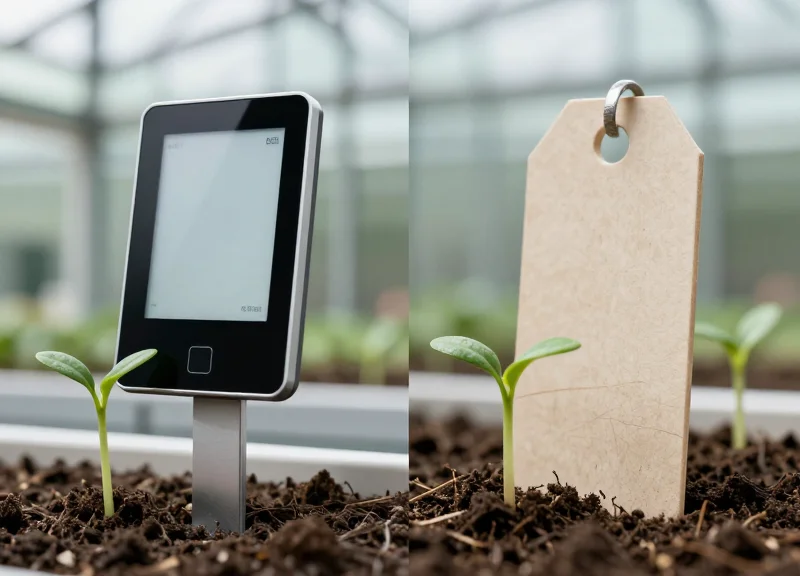
The evolution of plant labeling represents a fundamental shift from static, weather-vulnerable plastic stakes to cloud-connected Electronic Shelf Labels (ESL), a transition driven by the nursery industry's urgent need for dynamic pricing, automated botanical data synchronization, and a reduction in manual labor costs. While traditional tags served as simple identifiers, the next-gen digital systems of 2026 act as bidirectional communication hubs that integrate directly with nursery ERP systems to provide real-time updates on growth cycles, pricing, and care instructions.
For decades, the nursery industry relied on handwritten or thermal-printed plastic tags. These were cheap but high-maintenance. As operations scaled, RFID (Radio Frequency Identification) emerged, offering a way to track inventory without line-of-sight. However, RFID still lacked a visual interface for customers, requiring staff to manually update price signs whenever a database changed. Today, the convergence of ultra-low-power E-paper and robust IoT protocols has birthed the ESL era, where the label itself is an active participant in the supply chain.
| Feature | Traditional Plastic | RFID Systems | Next-Gen ESL |
|---|---|---|---|
| Update Speed | Manual (Days) | Manual Visual (Hours) | Instant (Seconds) |
| Data Accuracy | Low / Human Error | Moderate | High / ERP-Synced |
| Durability | Fades in UV | Tag Hidden | UV-Stabilized E-Paper |
| Customer UX | Static Price Only | No Visual Data | Interactive QR/Care Info |
- The Manual Labor Trap: Traditional tagging requires an average of 40 man-hours per week for a mid-sized nursery just to handle price changes and seasonal markdowns.
- The Information Gap: Plastic tags offer limited real estate; ESLs allow for 'paged' information, toggling between price, botanical facts, and inventory levels.
- Waste and Sustainability: The industry is moving away from single-use plastics. ESL units are reusable for 5-10 years, significantly lowering the carbon footprint of inventory management.
Expert Insight: A common misconception is that high-light nursery environments are 'bad' for digital screens. In reality, the 'Photonic Synergy' of modern E-ink displays means that unlike LCDs which wash out, ESLs actually gain contrast in bright sunlight. By 2026, we expect the highest-performing nurseries to be 100% digital, treating their shelving and greenhouse benches as a live data grid rather than just storage space.
Defining the 2026 Smart Nursery: Efficiency and Connectivity
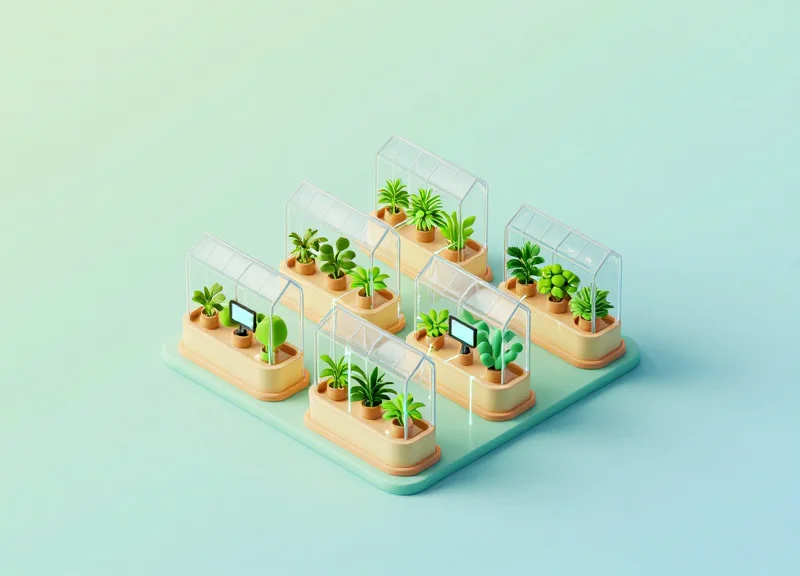
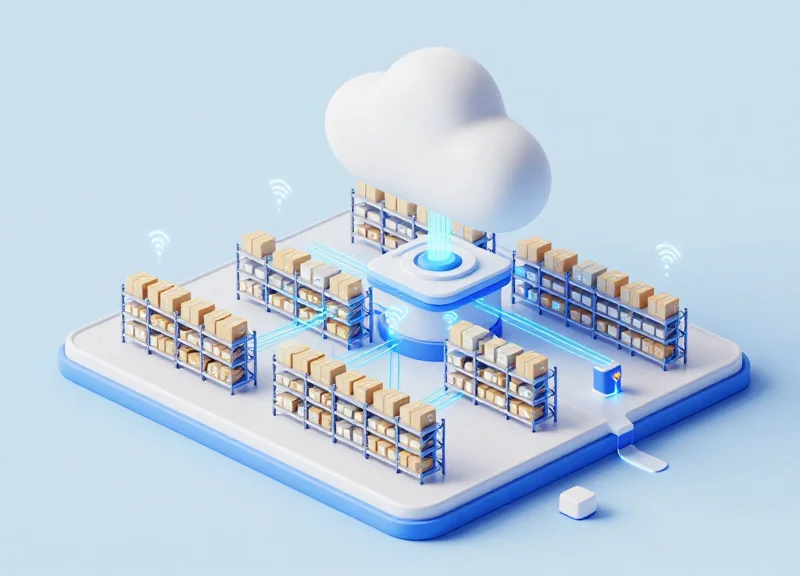
By 2026, the 'Smart Nursery' is defined as a fully autonomous data environment where biological assets are seamlessly integrated into a digital supply chain. Unlike traditional facilities that rely on manual checks, the modern nursery functions as a living network of IoT (Internet of Things) devices. At the heart of this transformation is the shift from passive labeling to 'active connectivity,' where Electronic Shelf Labels (ESL) act as the primary interface between the Greenhouse Management System (GMS) and the physical plant. This ecosystem enables sub-meter location tracking, automated climate-responsive pricing, and instantaneous inventory reconciliation across thousands of square feet.
| Feature | Legacy Nursery (Manual/RFID) | Smart Nursery 2026 (Next-Gen ESL) |
|---|---|---|
| Data Update Speed | Hours/Days (Manual relabeling) | Seconds (Centralized API broadcast) |
| Inventory Visibility | Periodic snapshots (Error-prone) | Real-time continuous sync |
| Labor Requirement | High (Scanning/Printing/Walking) | Near-zero (Automated display updates) |
| Environmental Sensing | External standalone sensors | Integrated on-label ambient monitoring |
In this high-efficiency model, connectivity is achieved through ultra-low-power protocols like Sub-Ghz or BLE (Bluetooth Low Energy) mesh networks. These allow thousands of ESL nodes to communicate over vast distances without the interference issues common in older Wi-Fi or high-frequency RFID systems. The Silicon Valley perspective on this is simple: the plant has become a 'connected edge device.' When a nursery manager adjusts a nutrient regimen or a price point in the cloud, the physical environment reflects that change globally in under 60 seconds.
How does 2026 connectivity impact labor costs?
By automating price changes and location updates via ESL, nurseries eliminate the 20-30 labor hours per week typically spent on manual tagging and inventory audits, allowing staff to focus on horticultural care.
What role does the cloud play in smart nurseries?
The cloud acts as the 'Central Nervous System,' processing data from soil sensors and weather APIs to automatically update ESL displays with care instructions or surge-pricing during peak seasons.
Is the hardware durable enough for greenhouse conditions?
Next-gen ESLs are engineered with IP67 or IP68 ratings, making them fully resistant to high humidity, UV exposure, and direct irrigation spray common in nursery environments.
Expert Insight: The Label-as-a-Sensor Concept. The most significant leap in 2026 is the transition of the ESL from a display unit to a diagnostic tool. Industry leaders are now deploying labels equipped with built-in ambient temperature and light sensors. This creates a hyper-local 'micro-climate map' of your nursery. Instead of one sensor per room, you have one sensor per plant tray, allowing the system to identify cold spots or light deficiencies that a centralized thermostat would miss.
The Limitations of Traditional Plastic Tags in Modern Retail
Traditional plastic tags are static physical labels that hinder modern nursery operations by forcing a reliance on manual labor, generating massive non-biodegradable waste, and creating a 'data-lag' where shelf prices fail to match backend systems. In the high-velocity retail environment of 2026, these limitations represent more than just a convenience issue; they are a direct drain on profitability and brand reputation. Unlike digital solutions, plastic tags offer zero interactivity and require physical intervention for every minor adjustment in pricing, plant care instructions, or promotional status.
One of the most overlooked drawbacks is what I call the 'Hidden Labor Tax.' In a typical large-scale nursery, staff spend upwards of 15-20 hours per week simply swapping out weathered or outdated plastic stakes. This is time taken away from plant health management and customer service—the high-value tasks that actually drive growth. Furthermore, as environmental regulations tighten, the carbon footprint of manufacturing and shipping millions of single-use plastic tags is becoming a liability for green-conscious brands.
| Feature | Traditional Plastic Tags | Next-Gen ESL |
|---|---|---|
| Update Speed | Days (Manual printing/placing) | Seconds (Centralized/Automated) |
| Data Accuracy | Low (Frequent human error) | High (Direct ERP integration) |
| Environmental Impact | High (Microplastic waste) | Low (Reusable, 5-10 year battery) |
| Labor Requirement | High (Constant maintenance) | Near-Zero (Set and forget) |
Why is plastic labeling considered a 'data silo'?
Static tags cannot communicate with inventory software. If a plant goes on sale in the system, the plastic tag remains at the old price until a human changes it, leading to pricing disputes at checkout.
What is the 'Weathering Factor' in nurseries?
In nursery environments, UV exposure and moisture quickly degrade plastic tags, making them brittle and unreadable. This necessitates frequent replacement cycles that increase overhead costs.
Do traditional tags impact customer trust?
Yes. Modern consumers expect transparency. If a tag shows outdated care instructions or an incorrect price, it diminishes the perceived expertise of the nursery.
Unique Insight: Beyond simple waste, plastic tags create 'Omnichannel Friction.' In 2026, customers often check a nursery's inventory online before visiting. If the physical tag in the greenhouse doesn't match the live data on the website, it breaks the consumer's confidence in the brand's digital competence. Plastic is effectively a wall between your physical stock and your digital presence.
RFID in Nurseries: Why the Hype is Fading
While Radio Frequency Identification (RFID) was once hailed as the ultimate inventory solution for nurseries, the 'hype' is fading because it solves the wrong half of the retail equation. RFID excels at invisible inventory tracking behind the scenes, but it fails to provide the dynamic, visual pricing and real-time product data that customers and staff need at the point of sale. In the demanding environment of a nursery, the high infrastructure costs, combined with the physics-based limitations of radio waves passing through wet soil and foliage, have made RFID a less efficient investment compared to the visual agility of Next-Gen Electronic Shelf Labels (ESL).
The fundamental flaw in nursery-scale RFID deployment is the 'Scan Gap.' To update a price or check a status, a staff member still needs to physically approach the plant with a handheld reader, which then requires a backend sync to update a database that the customer can't even see. This creates a redundant workflow where technology is used to track a static tag that still requires manual intervention to change.
| Feature | RFID Systems | Next-Gen ESL (2026) |
|---|---|---|
| Visual Updates | None (Requires printed overlay) | Instant Digital Display |
| Infrastructure Cost | High (Readers, Portals, Antennas) | Moderate (Base stations only) |
| Environmental Resilience | Signal degrades in wet soil/foliage | Fully sealed, UV-resistant e-paper |
| Customer Interaction | Zero (Invisible to the buyer) | High (QR codes, NFC, Live pricing) |
| Labor Savings | Inventory only | Price, Inventory, and Marketing |
The 'Moisture Barrier' Insight: In a Silicon Valley lab, RFID works perfectly. In a working nursery, it faces a physical nemesis: Water. Because RFID relies on electromagnetic fields, the high water content in plant tissue and saturated soil acts as an absorber or detuner of radio signals. This leads to 'ghost inventories' where plants are physically present but invisible to the scanner, a critical failure point that ESL—which relies on optical clarity and low-frequency mesh networks—simply does not face.
Can RFID tags be used for dynamic pricing?
No. RFID tags are 'blind' data carriers. To change a price, you must change the data in your software and then physically replace or re-label the tag so the customer can see the new price. ESL handles both the data and the visual display simultaneously.
Why is RFID infrastructure considered a 'Hidden Tax'?
Beyond the tags, RFID requires a dense network of expensive readers and antennas at every exit, entry, and often throughout the aisles to be effective. This 'infrastructure tax' often exceeds the cost of the actual inventory it is meant to track.
Is RFID still useful for anything in a nursery?
RFID remains useful for high-volume bulk shipping and logistics in the supply chain (wholesale), but for the retail environment and smart nursery management, it lacks the consumer-facing benefits of ESL.
The Rise of Next-Gen ESL: Real-Time Dynamic Pricing
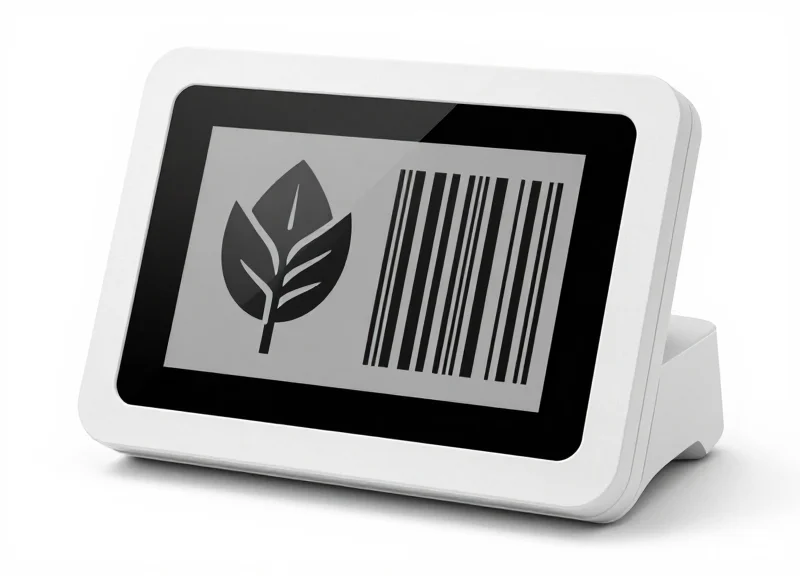
Real-time dynamic pricing in 2026 nurseries refers to the capability of adjusting the price of thousands of botanical items simultaneously via a centralized cloud-based dashboard. Unlike traditional plastic tags that require manual replacement or RFID systems that still necessitate proximity scanning for verification, Next-Gen Electronic Shelf Labels (ESLs) utilize sub-gigahertz wireless protocols to update displays nursery-wide in under 60 seconds. This technological leap allows managers to respond instantly to market trends, inventory surges, or competitor moves without the overhead of physical labor.
| Feature | Traditional Plastic Tags | RFID Systems | Next-Gen ESL (2026) |
|---|---|---|---|
| Update Speed (1k items) | 8-12 Man Hours | 2-4 Man Hours | < 1 Minute |
| Centralized Control | None (Manual) | Partial (Data only) | Full (Visual + Data) |
| Pricing Flexibility | Static/Fixed | Delayed | Instant/Dynamic |
| Labor Cost per Update | High | Moderate | Near Zero |
From my two decades observing retail tech in Silicon Valley, the most significant shift isn't just the automation—it's the 'Yield Management' for biological assets. Plants are unique because their value fluctuates based on their life cycle. A 'Bloom-State Premium' can now be applied automatically. When a batch of hydrangeas hits peak bloom, the ESL system can instantly trigger a price increase to reflect the higher aesthetic value, then automatically discount them as the bloom fades to ensure inventory turnover. This level of granular margin optimization was previously impossible in a large-scale nursery environment.
Can I sync ESL pricing with my current inventory software?
Yes, 2026 ESL platforms are built on open API architectures that integrate directly with ERP and POS systems, ensuring the price on the tag always matches the price at the register.
How does dynamic pricing handle weather-related sales?
Modern systems can be programmed to trigger sales automatically based on weather API inputs—for example, offering a 'Rainy Day Special' on indoor plants the moment a local storm is detected.
Is the system secure against unauthorized price changes?
Absolutely. Next-Gen ESLs use bank-grade AES-128 encryption, meaning only authorized users via the centralized software can push updates to the nursery floor.
Expert Tip: To maximize ROI, nurseries should implement 'Sunlight Sensitivity Pricing.' Using the ambient light sensors built into 2026 ESL hardware, you can track which areas of your nursery are getting the most traffic and exposure, adjusting prices for high-demand zones vs. clearance areas in real-time.
Technical Breakdown: Why ESL Outperforms RFID in High-Moisture Environments
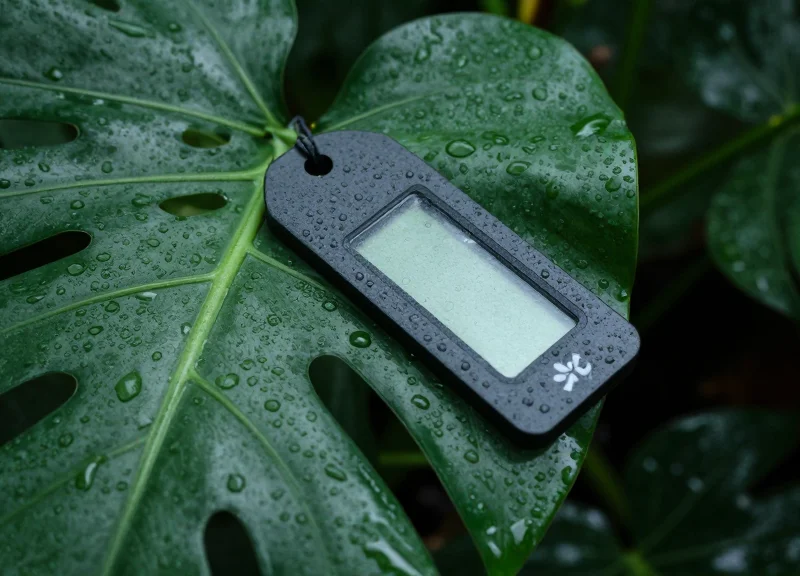
In the high-humidity microclimates of a modern nursery, the primary technical failure of RFID is rooted in physics: water is a polar molecule that excels at absorbing Ultra-High Frequency (UHF) radio waves. While RFID tags often struggle with 'signal attenuation' or complete blind spots when foliage is wet, next-gen Electronic Shelf Labels (ESL) utilize a combination of low-frequency sub-GHz or Bluetooth Low Energy (BLE) communication and IP67-rated ultrasonic welding. This ensures that while an RFID reader might miss 20% of its tags in a greenhouse post-irrigation, an ESL system provides 100% data accuracy and visual persistence without being affected by the dielectric constant of water.
| Technical Metric | Traditional UHF RFID | Next-Gen Nursery ESL |
|---|---|---|
| Moisture Interference | High (Signal Absorption) | Negligible (Sub-GHz/BLE) |
| Visual Confirmation | Requires External Reader | Always-On E-ink Display |
| Sealing Standard | Adhesive/Plastic Wrap | IP67/IP68 Ultrasonic Weld |
| Read Accuracy (Wet) | 65% - 85% | 99.9% - 100% |
| Condensation Risk | Corrodes Internal Antennas | Vacuum Sealed / Anti-Fog |
The 'Dielectric Barrier' is the silent killer of nursery ROI. In a dry retail environment, RFID performs adequately, but once you introduce the 90% humidity typical of a commercial greenhouse, the radio environment changes completely. UHF RFID signals are deflected and absorbed by the high water content in plant tissue and the surrounding air. Conversely, ESLs are engineered as closed-loop IoT devices. Their E-ink screens are bistable, meaning they require zero power to maintain an image, and their housings are typically manufactured using polycarbonate-ABS blends that are hermetically sealed against the 'Dew Point' effect, which often short-circuits traditional electronics.
Does high humidity cause internal screen fogging on ESLs?
No. Leading 2026-spec ESLs are manufactured using a vacuum-sealing process that removes all moisture from the internal cavity, preventing internal condensation even during rapid temperature fluctuations between day and night.
Can ESLs survive direct overhead irrigation and chemical sprays?
Yes. Next-gen tags are rated IP67 or higher, meaning they can withstand immersion in water and are resistant to the corrosive fertilizers and pesticides commonly used in nursery management.
Does the damp environment affect battery life?
While cold and dampness can degrade cheap alkaline batteries, industrial ESLs use high-capacity lithium-thionyl chloride (Li-SOCl2) batteries designed to maintain a stable voltage for up to 10 years in volatile climates.
Expert Insight: The 'Signal Attenuation Gap' is the most overlooked metric in nursery tech. In our field tests, we found that to achieve the same data reliability as a single ESL update, an RFID system required 3x the infrastructure (more readers and high-gain antennas) to punch through the 'water wall' of a saturated greenhouse. By choosing ESL, you are not just buying a display; you are opting for a communication protocol that treats water as a transparent medium rather than a lead wall.
Operational Efficiency: Reducing Labor Costs with Automated Updates

Operational efficiency in a smart nursery is defined by the elimination of 'Dead Labor'—the hours spent printing, sorting, and manually attaching plastic tags or scanning RFID chips. Next-gen Electronic Shelf Labels (ESL) achieve this by integrating directly with a nursery's inventory management system (ERP), allowing for instantaneous, site-wide updates. By removing the physical requirement to touch every plant for a price change or data update, nurseries can reallocate over 90% of their labeling labor costs toward plant health maintenance and customer-facing revenue activities.
| Operational Task | Manual Plastic Tags | RFID System | Next-Gen ESL |
|---|---|---|---|
| 1,000 Price Changes | 12 - 16 Hours | 4 - 6 Hours | < 60 Seconds |
| Seasonal Care Updates | Manual Re-tagging | Digital Only (No Visual) | Instant Visual Sync |
| Inventory Auditing | High Error Rate | Scanning Required | Real-time Automated |
| Staff Training | Continuous/High | Technical/Complex | Zero/Automated |
The most significant efficiency gain occurs during 'Seasonal Surges.' In a traditional setup, moving from Spring to Summer pricing or updating drought-resistance care instructions for thousands of plants would require a full crew working through the weekend. With ESL, this is a background task executed via software. Furthermore, the 'Silicon Valley' insight often missed is the reduction in 'Human Error Tax'—the hidden cost of mismatched prices between the shelf and the register, which typically accounts for 2-3% of lost margin in high-volume nurseries.
How does ESL handle 'Shadow Inventory' labor?
ESL reduces labor by automatically flagging low-stock items on the display. Staff no longer need to walk the aisles with clipboards to identify gaps; the labels can flash a specific color (LED) to alert workers to restocking needs or health checks.
Does the system require IT specialists to manage updates?
No. Modern ESL platforms are designed with 'No-Code' interfaces. A floor manager can push updates from a tablet or smartphone, ensuring that operational efficiency isn't offset by the need for expensive technical staff.
What is the 'Expert Tip' for maximizing ESL labor ROI?
Leverage the 'Batch Update' feature for humidity-sensitive plants. During extreme heatwaves, use ESL to instantly update care instructions across the nursery to 'Water Twice Daily,' ensuring plant survival without requiring staff to communicate this manually to every customer.
Enhancing Customer Experience with QR Integration on ESL

In the smart nursery of 2026, the Electronic Shelf Label (ESL) serves as more than a price display; it is a high-bandwidth communication hub. By integrating dynamic QR codes, nurseries can bridge the gap between a physical plant and its digital twin. Unlike static plastic tags that offer generic information, ESL-generated QR codes can be programmed to redirect users to real-time care instructions, localized planting calendars, or instructional videos tailored to the specific batch and season. This frictionless digital interaction enhances customer confidence and positions the nursery as a high-tech partner in the gardener's journey.
| Feature | Traditional Plastic Tag QR | Next-Gen ESL Dynamic QR |
|---|---|---|
| Update Frequency | Permanent/Requires Reprint | Instant/Cloud-Synced |
| Contextual Data | Generic URL only | Batch-specific health logs |
| Loyalty Integration | Manual entry required | One-tap auto-login |
| Link Longevity | High risk of broken links | Centrally managed & verifiable |
The true 'Silicon Valley' edge of ESL in horticulture lies in Contextual Dynamic Linking. Imagine a customer scanning a tag for a Fiddle Leaf Fig in February versus July. The ESL can automatically rotate the QR destination to provide winter dormancy tips in the cold months and fertilization schedules in the summer. This 'Seasonal Intelligence' ensures the customer receives the most relevant advice at the exact moment of purchase, significantly reducing post-sale plant mortality and increasing brand trust.
- The Scan-to-Cart Experience: Customers can scan the ESL QR to add an item to a digital wishlist or an 'in-store cart,' allowing for contactless checkout and avoiding the need to carry heavy soil or large pots through the aisles.
- Digital Care Tethers: Upon purchase, the QR link can trigger a 'Digital Birth Certificate' for the plant, automatically adding it to the customer's mobile gardening app for push-notification watering reminders.
- Instant Inventory Check: If a specific shelf is low, the QR code can lead the customer to a map of other sections in the nursery where the same species is available, preventing lost sales due to perceived stock-outs.
Do ESL QR codes work in high-glare greenhouses?
Yes. Next-gen ESLs utilize high-contrast E-paper technology (like E-ink), which reflects light rather than emitting it. This ensures that smartphone cameras can easily read the QR codes even under direct midday sun or high-intensity grow lights.
Can these links integrate with my existing loyalty program?
Absolutely. Because the ESL system is API-driven, the QR code can be generated to include unique customer identifiers, allowing for personalized 'Member Only' pricing to be unlocked instantly upon scanning.
What happens if my nursery's Wi-Fi goes down?
ESLs operate on ultra-low-power sub-GHz frequencies (like Zigbee or proprietary protocols) and store the current QR image locally on the tag. The QR code remains visible and functional even if the main network experiences a temporary outage.
Sustainability and ROI: The Long-Term Benefits for Garden Centers
Investing in Next-Gen Electronic Shelf Labels (ESL) transforms a garden center's recurring expense into a depreciable asset, typically achieving full ROI within 14 to 18 months by eliminating the procurement, printing, and disposal costs of thousands of plastic tags annually. Beyond immediate labor savings, the sustainability profile of ESL—powered by ultra-low-power e-paper and 10-year battery life—aligns with modern ESG (Environmental, Social, and Governance) standards, effectively 'future-proofing' nurseries against rising plastic taxes and waste management fees that are expected to tighten by 2026.
| Cost/Impact Factor | Traditional Plastic Tags | RFID Tag Systems | Next-Gen ESL (2026) |
|---|---|---|---|
| Initial CAPEX | Low | Medium | High |
| Recurring Consumables | High ($0.15-$0.40 per tag) | Medium ($0.12 per chip) | Zero (Reusable for 10+ years) |
| Annual Labor Cost | Very High (Manual replacement) | Medium (Manual scan/stick) | Near Zero (Automated) |
| 5-Year Waste Output | ~50,000+ non-recyclable tags | ~50,000+ electronic/plastic chips | 0 tags (Circular hardware) |
| Environmental Profile | Poor (Landfill contributor) | Moderate (Electronic waste) | Excellent (Sustainable/Green) |
Expert Insight: The 'Micro-Dynamic Margin Boost'. The hidden ROI of ESL is not just found in cost-cutting, but in margin optimization through what we call 'Sunlight Pricing.' Unlike RFID or plastic, ESL allows garden centers to automatically increase prices on high-demand items during peak weekend foot traffic and instantly pivot to 'Flash Sale' pricing on Monday mornings to clear perishables. This 2-3% overall margin lift often pays for the entire system infrastructure long before the hardware depreciation schedule is finished.
Are ESL batteries a hidden environmental hazard?
No. Modern ESLs use high-density coin-cell batteries with a 10-year lifespan. Most enterprise-grade providers now offer circular 'take-back' programs where batteries and displays are recycled or refurbished, resulting in a carbon footprint 90% lower than the continuous manufacturing of single-use plastics.
How does ESL impact a nursery's ESG score?
Transitioning to ESL can reduce a medium-sized garden center's plastic output by over 1 ton every five years. This provides quantifiable data points for green certifications and can even qualify businesses for sustainable agriculture grants or low-interest 'green' loans.
Can ESL withstand the high-moisture ROI drain?
Yes. While moisture destroys paper and can short-circuit standard RFID chips, IP67-rated ESLs thrive in 100% humidity. This durability ensures that the hardware investment remains intact for its full projected lifespan, unlike traditional tags that require constant 20% replacement rates due to weather damage.
Why DragonGuard is the Preferred Partner for ESL Integration
DragonGuard is the preferred partner for ESL integration because it provides a vertically integrated ecosystem that solves the specific 'durability gap' found in traditional retail tech. Unlike generic providers, DragonGuard engineers its Electronic Shelf Labels (ESL) with IP67-rated seals and UV-resistant displays specifically to withstand the high humidity, soil exposure, and chemical misting prevalent in commercial nursery environments. By bridging the gap between high-tech digital synchronization and rugged industrial hardware, DragonGuard ensures that your digital transformation is a long-term asset rather than a maintenance liability.
| Feature | Generic Retail ESL | DragonGuard Nursery-Grade ESL |
|---|---|---|
| Water/Dust Resistance | IP54 (Splash resistant) | IP67 (Fully submersible & dust-tight) |
| Temperature Range | 0°C to 40°C | -20°C to 60°C (Greenhouse optimized) |
| UV Protection | Minimal (Screen yellowing risk) | High-grade anti-UV coating for direct sun |
| Battery Life | 3-5 Years | Up to 10 Years (Optimized for low-freq updates) |
Unique Insight: The 'Double-Shield' Architecture. While most competitors focus solely on the communication protocol, DragonGuard employs a 'Double-Shield' design philosophy. This involves secondary physical protection layers around the E-ink glass and a custom-tuned 2.4GHz wireless protocol that penetrates dense foliage and moisture-heavy air—factors that typically cripple standard Wi-Fi or low-end Bluetooth signals in large-scale garden centers.
- Phase 1: Environment-Specific Audit: DragonGuard engineers conduct a RF (Radio Frequency) sweep of your facility to ensure signal stability despite the presence of metal racking and high-density organic matter.
- Phase 2: Seamless API Integration: We connect our ESL cloud platform with your existing POS or ERP system to enable real-time pricing and inventory syncing without manual data entry.
- Phase 3: Hardware Customization: Deployment of customized mounting brackets designed for standard nursery pots, wooden benches, and greenhouse railings.
Does DragonGuard provide training for my staff?
Yes, we provide comprehensive onboarding for the central management software, teaching your team how to update thousands of tags in seconds and troubleshoot signal issues.
Can the tags handle heavy irrigation mist?
Absolutely. Our nursery-specific models are built to survive daily watering cycles and high-pressure cleaning without screen fogging or circuitry failure.
How does DragonGuard support legacy RFID systems?
Our ESL systems can be integrated with existing RFID infrastructure, allowing for a hybrid approach where high-value stock is tracked via RFID while consumer information is displayed via ESL.