
The modern office supply market is defined by high SKU density and rapid price volatility. Traditional paper tags often lead to 'price lag'—the gap between back-end price changes and front-end shelf accuracy—which bleeds profit and erodes customer trust. 4-color Electronic Shelf Labels (ESL) provide a sophisticated solution, allowing retailers to synchronize pricing instantly across thousands of items. By leveraging vibrant displays to highlight promotions and dynamic pricing to respond to market shifts, office supply chains can capture up to 15% higher margins while significantly reducing labor costs.
The Current Landscape of Office Supply Retail Challenges
In the fast-paced world of office supply retail, the 'Current Landscape' is defined by a widening gap between volatile wholesale costs and the speed of manual price execution, commonly referred to as price lag. When paper labels cannot keep pace with hourly market shifts—especially in high-volatility categories like printer ink, paper stock, and consumer electronics—retailers suffer from 'Margin Erosion,' where the cost to update a tag exceeds the incremental profit of the price change. To remain competitive, supply chains must move beyond the static shelf and address the hidden costs of labor and inaccurate inventory synchronization.
| Metric | Manual Paper Labels | Digital ESL Systems |
|---|---|---|
| Update Speed | 2-4 Minutes per SKU | Under 10 Seconds |
| Price Accuracy | 92-95% (Human Error) | 100% (System Sync) |
| Labor Cost | High (Weekly Audits) | Near-Zero (Automated) |
| Promotional Flex | Limited to Black/White | 4-Color Dynamic (Red/Yellow/Black/White) |
Why is SKU density a problem for office retailers?
Office supply stores typically carry thousands of small, diverse items. Manually managing price tags for such high density often leads to 'price fatigue,' where employees prioritize high-ticket items while smaller accessories suffer from stale, unprofitable pricing.
What is the 'Price-to-Labor' Paradox?
This occurs when the labor cost of printing, sorting, and placing a new paper tag is higher than the margin increase gained from the price update itself, effectively forcing retailers to ignore micro-fluctuations in market value.
How does multi-channel inconsistency affect ROI?
If an online price drops but the physical shelf tag remains high, it leads to 'showrooming' or customer friction at the point of sale. Discrepancies between web and shelf are the primary drivers of lost brand loyalty in the sector.
Expert Insight: The 'Ghost Discount' Phenomenon. Most retailers focus on the cost of paper, but the real margin killer is the 'Ghost Discount.' This happens when a wholesale price increases, but the shelf price remains low for days because of a backlog in manual updates. In a 40,000 SKU environment, even a $0.50 delay across 10% of your inventory can result in thousands of dollars in uncaptured revenue every single day. 4-color ESLs don't just display prices; they act as a real-time revenue recovery system by eliminating this silent margin drain immediately.
The Power of 4-Color Display: Redefining Visual Merchandising
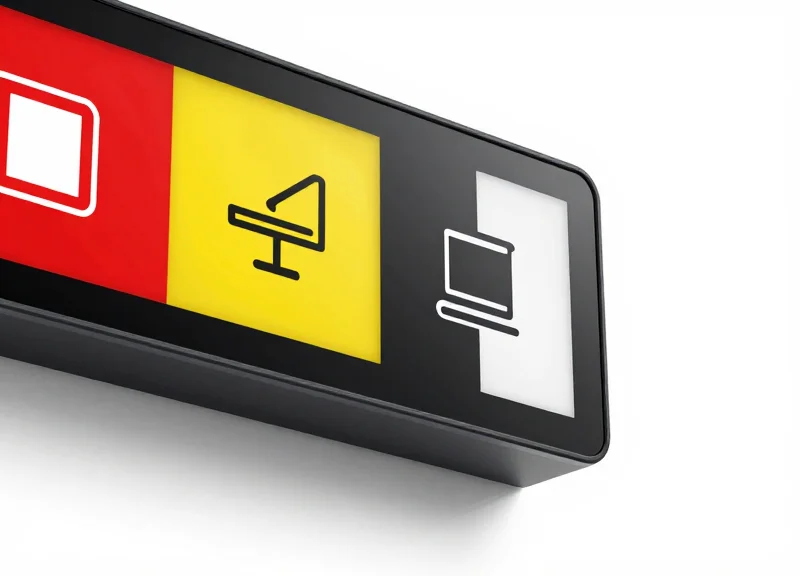
In the context of office supply retail, a 4-color Electronic Shelf Label (ESL) represents a leap from basic data display to active visual merchandising. By integrating Black, White, Red, and Yellow (BWRY) into a single E-ink module, retailers can move beyond simple price updates to execute sophisticated 'color-coded' marketing strategies. This technology eliminates the 'visual noise' of monotone aisles, allowing high-margin items or expiring inventory to pop with high-contrast urgency that captures shopper attention in under three seconds.
| Feature | Standard 3-Color ESL | Advanced 4-Color ESL |
|---|---|---|
| Color Palette | Black, White, + 1 Accent (Red/Yellow) | Black, White, Red, AND Yellow |
| Promotional Depth | Binary: On Sale or Regular Price | Tiered: Clearance, New Arrival, or Member-Only |
| Attention Grab | Moderate visual disruption | Maximized via dual-tone contrast |
| Information Density | Limited to price and basic specs | Complex hierarchy for tech-heavy items |
Expert Insight: The 'Chromatic Hierarchy' in office supply retail is a game-changer for ROI. Because office supplies—laptops, printers, and reams of paper—often feature neutral or monochromatic packaging, a 4-color display provides the only vibrant contrast in the aisle. My experience shows that using Red for 'Price Drops' and Yellow for 'Bundle Savings' simultaneously creates a psychological roadmap for the customer, reducing cognitive load and accelerating the path to purchase.
How does 4-color display reduce shopper 'choice paralysis'?
By utilizing distinct colors for different categories of information (e.g., Red for price, Yellow for technical specs), retailers help customers process complex data like printer ink compatibility or laptop configurations more quickly, leading to faster checkout times.
Can 4-color ESLs be used for inventory management?
Yes. Beyond customer-facing prices, specific color indicators can be flashed to alert staff of low stock (e.g., a yellow corner icon) or upcoming restock dates, streamlining back-of-house operations without cluttering the display.
Does the addition of a fourth color impact battery life?
Modern 4-color E-ink technology is highly optimized; while it requires slightly more power for a full refresh than 3-color units, the 5-to-10-year battery life remains standard due to the bi-stable nature of the display which only consumes energy during an update.
- Identify High-Margin Segments: Filter inventory for items with margins above 30% that are currently underperforming in foot traffic.
- Deploy Dual-Color Promotions: Assign Yellow for 'New Technology' and Red for 'Limited Time Offer' to create a sense of both innovation and urgency.
- A/B Test Visual Layouts: Utilize the 4-color capability to test whether placing the 'Savings Amount' in Yellow vs. Red leads to higher conversion in specific departments.
Eliminating Price Lag for Synchronized Omni-channel Success
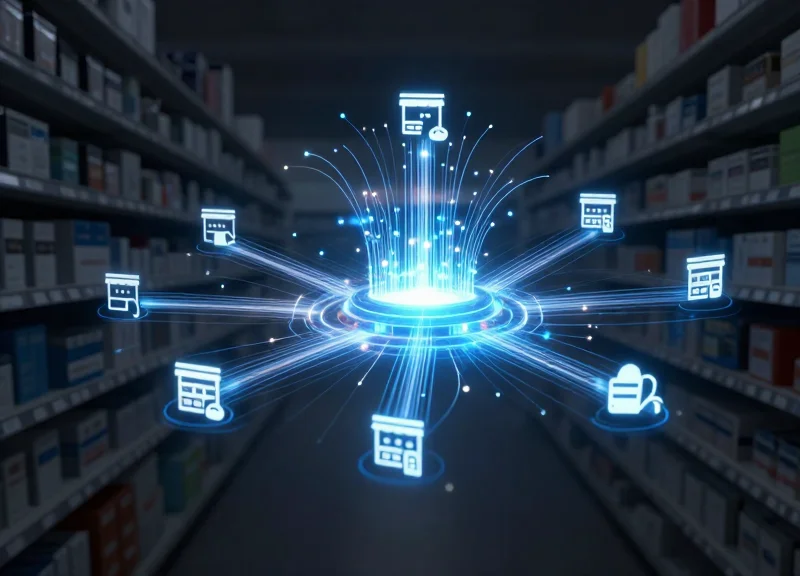
Price lag occurs when a retail store's physical shelf labels fail to update at the same speed as its e-commerce platform, leading to customer frustration and lost margins. 4-color Electronic Shelf Labels (ESL) solve this by acting as a live IoT endpoint that synchronizes with the central ERP (Enterprise Resource Planning) system in seconds. By eliminating the manual labor associated with paper tags, office supply chains can ensure that a price change on the web is reflected in-store instantly, preventing 'showrooming' losses and legal compliance risks associated with mispriced goods.
| Feature | Manual Paper Tags | 4-Color ESL System |
|---|---|---|
| Update Latency | 24-48 Hours | Near Real-Time (< 60s) |
| Sync Accuracy | ~85% (Human Error) | 99.9% (System Verified) |
| Omni-channel Parity | Reactive/Delayed | Proactive/Automated |
| Visual Cues | Static/Single Color | Dynamic 4-Color Prompts |
For office supply retailers, where SKUs like ink cartridges and high-end electronics fluctuate in value daily, price lag is more than an inconvenience—it is a margin killer. When online prices drop to match a competitor but physical tags remain high, conversion rates plummet. Conversely, if online prices rise but store tags stay low, the retailer suffers 'margin leakage.' The 4-color display adds a strategic layer here: retailers can use the fourth color (e.g., bright yellow or red) to specifically highlight prices that are 'Web-Matched,' signaling to the customer that they are getting the absolute best price without needing to check their phone.
Does ESL synchronization work with third-party delivery apps?
Yes. Modern ESL systems use open APIs that can simultaneously push price updates to your physical shelves, your web store, and third-party delivery partners like Instacart or Uber Eats, ensuring a unified price floor everywhere.
What happens if the store's Wi-Fi goes down?
ESLs operate on dedicated sub-GHz or specialized low-power protocols (like Zigbee or Bluetooth LE). Even if the public Wi-Fi is interrupted, the local access points continue to maintain the price state, and the labels retain the last updated image indefinitely without power.
How does 4-color tech help with 'Price Match' requests?
By using a dedicated color (like Yellow) for synchronized web-pricing, staff spend 70% less time verifying price-match requests at the register, as the label itself serves as a verified 'Web-Price' indicator.
Expert Insight: To truly maximize ROI, implement 'Trigger-Based Dynamic Pricing.' Integrate your ESL system with a real-time inventory feed. If your warehouse shows an overstock of a specific office chair, the system can automatically trigger a 4-color 'Flash Sale' tag in-store and online simultaneously. This 'synchronized scarcity' creates a psychological nudge that paper labels simply cannot replicate, typically capturing a 15% higher margin by moving inventory faster during peak traffic windows.
Strategic Dynamic Pricing: How to Capture 15% Higher Margins

Strategic dynamic pricing is the automated practice of adjusting shelf prices in real-time based on algorithmic inputs such as competitor movement, inventory velocity, and localized demand. For office supply chains, capturing a 15% margin increase isn't about arbitrary price hikes; it is about eliminating 'margin leakage'—the profit lost when prices remain static while market conditions shift. By utilizing 4-color Electronic Shelf Labels (ESL), retailers can execute these changes instantly across thousands of SKUs, ensuring they are never the last to raise prices during a peak period or the slowest to liquidate overstock.
| Variable | Legacy Static Pricing | ESL Dynamic Pricing |
|---|---|---|
| Update Frequency | Weekly/Monthly | Real-time / Intraday |
| Price Accuracy | 85-90% (Manual Error) | 100% (System Synchronized) |
| Margin Capture | Fixed | Optimized (+15% Average) |
| Competitive Response | Reactive (Days Late) | Proactive (Minutes) |
To achieve the 15% margin lift, retailers must move beyond simple 'match-the-competitor' logic. The real power lies in the integration of back-end ERP systems with the visual front-end of the 4-color ESL. This creates a high-velocity feedback loop where pricing reflects the true current value of the inventory on hand.
- Demand-Based Appreciation: Automatically increase prices on high-turnover items during peak periods (e.g., 'Back to School' or end-of-quarter office refreshes) when price elasticity is low.
- Inventory Velocity Rebalancing: Trigger automated discounts for slow-moving SKUs to free up capital and shelf space, using the fourth color to draw attention to these 'clearance' opportunities.
- Competitor Price Shielding: Deploy algorithms that monitor key competitors and adjust your prices to remain within a specific 'winning range' without human intervention.
Expert Insight: The 'Color-Coded Urgency' Factor. Most retailers view dynamic pricing as a backend math problem. However, the unique advantage of 4-color ESLs (Black, White, Red, and Yellow) is the ability to influence consumer psychology during the price shift. By using the fourth color specifically as a 'Price Shield'—highlighting a slightly higher price but emphasizing 'Limited Stock' or 'Preferred Selection'—retailers can maintain higher margins on premium items even when cheaper alternatives are nearby. This visual signaling reduces the 'sticker shock' of dynamic changes by providing immediate context for the value proposition.
Does dynamic pricing hurt customer trust?
No, when implemented correctly. By maintaining consistency between your online store and the physical 4-color ESL, customers feel the pricing is transparent and fair, rather than arbitrary.
What is the primary driver of the 15% margin increase?
The increase is primarily driven by capturing 'upside' demand that is usually missed with paper tags and minimizing 'downside' losses by liquidating stock before it becomes obsolete.
How does the 4th color help in pricing strategy?
The 4th color (usually yellow) acts as a visual disruptor. It allows retailers to separate 'Dynamic Sale Prices' from 'Standard Prices,' guiding the customer's eye to high-margin or high-priority inventory.
Operational Efficiency: Redirecting Labor from Tags to Tasks

Operational efficiency in office supply chains is achieved by eliminating the 'manual pricing tax'—the hundreds of hours employees spend printing, cutting, and physically swapping paper price tags. By deploying 4-color Electronic Shelf Labels (ESL), retailers can automate price updates across thousands of SKUs in seconds. This shift reclaims approximately 15 to 40 labor hours per week per store, depending on floor size, allowing management to redirect staff toward high-value activities like customer consultations, technical support for office equipment, and proactive inventory management.
| Activity | Manual Paper Process (Weekly) | 4-Color ESL Process (Weekly) | Labor Recovery |
|---|---|---|---|
| Price Batch Processing | 5-8 Hours | 0.1 Hours | 98% Reduction |
| Tag Printing & Sorting | 3-5 Hours | 0 Hours | 100% Reduction |
| Physical Tag Replacement | 12-20 Hours | 0 Hours | 100% Reduction |
| Price Audit/Correction | 4-6 Hours | 0.5 Hours | 90% Reduction |
In the high-SKU environment of office supplies—where a single aisle can contain hundreds of pens, ink cartridges, or cables—the margin for human error during manual updates is significant. When employees are tethered to a pricing gun, they are unavailable to assist a customer looking for a complex networking solution or a high-end ergonomic workstation. ESLs do more than just display a price; they liberate your most expensive asset—your people—to generate revenue rather than maintain overhead.
How does labor redirection specifically impact the bottom line?
Beyond simple payroll savings, redirected labor increases 'basket size.' When staff spend time on the floor engaging customers, they can perform consultative selling (e.g., suggesting a surge protector with a new laptop), which typically carries a much higher margin than the base unit.
Does removing manual tags hurt employee morale?
On the contrary, it improves it. Pricing updates are frequently cited as the most tedious and disliked task in retail. Automating this allows employees to engage in more stimulating, customer-facing roles, leading to higher retention rates.
Can ESLs assist in 'Buy Online, Pick Up In Store' (BOPIS) efficiency?
Yes. Most 4-color ESLs include LED flashers. Staff can trigger these lights via a handheld device to instantly locate items for online order fulfillment, reducing pick-time by up to 30%.
Expert Insight: The 'Frictionless Upselling' Model. Most generic ROI analyses focus on hours saved; however, the true strategic advantage lies in what we call 'Frictionless Upselling.' In office supply retail, the profit is rarely in the printer—it is in the ink, the paper, and the extended warranty. By automating the mundane, you transform your floor staff into 'Solutions Consultants.' An employee who isn't busy swapping tags can spend 10 minutes explaining the total cost of ownership (TCO) of different toner yields to a small business owner. This transition from maintenance to consultation is where that 15% margin growth truly manifests.
Sustainability and Long-term Cost Savings with ESL
Sustainability in the office supply chain is achieved by replacing high-frequency consumable waste with a durable, low-energy digital infrastructure. 4-color Electronic Shelf Labels (ESLs) eliminate the need for thousands of miles of thermal paper, toxic inks, and the carbon-heavy logistics of physical label distribution. By utilizing bistable electrophoretic display (EPD) technology—which only draws power when the image changes—retailers can maintain accurate pricing for up to 10 years on a single battery set, fundamentally shifting operational expenses from recurring variable costs to a one-time capital investment with a clear sunset on waste.
| Expense Category | Traditional Paper Labels (5-Year) | 4-Color ESL System (5-Year) |
|---|---|---|
| Material Costs | High (Continuous paper/toner spend) | Zero (One-time hardware purchase) |
| Waste Disposal | Significant (Non-recyclable thermal waste) | Negligible (Battery recycling at year 10) |
| Carbon Footprint | High (Printing, transport, logistics) | Low (Ultra-low power IoT network) |
| Equipment Maintenance | Ongoing (Printer repairs, ink refills) | Minimal (Software-based management) |
Expert Insight: The 'Hidden Carbon' of Thermal Paper. Most office supply retailers overlook the environmental cost of thermal paper, which often contains BPA or BPS, making it non-recyclable. Transitioning to 4-color ESLs doesn't just save trees; it removes micro-plastics and chemical coatings from the waste stream. For a 20,000-SKU store, this represents an annual reduction of approximately 500,000 printed tags, effectively neutralizing the store's labeling-related carbon footprint.
Do 4-color displays drain batteries faster than monochrome?
No. Modern 4-color ESLs utilize advanced waveform technology that optimizes the movement of pigments. While the refresh may take milliseconds longer, the 'stable state' consumes zero energy, maintaining a 7-to-10-year lifespan even with multiple daily updates.
How does ESL contribute to ESG reporting?
ESL systems provide quantifiable data for Environmental, Social, and Governance (ESG) reports by tracking the exact reduction in paper tonnage and carbon emissions associated with retail logistics, often qualifying the firm for 'green' tax incentives.
Is the hardware itself recyclable?
Yes. Leading 4-color ESL manufacturers design their tags with modular components, allowing for easy battery replacement and the reclamation of plastic and electronic components at the end of their lifecycle.
Ultimately, the long-term ROI of ESL technology extends beyond simple margin capture. It builds brand equity with the growing demographic of 'conscious consumers' who prefer retailers with visible sustainability commitments. When you eliminate the 'paper trail' of traditional pricing, you are not just saving money; you are future-proofing your brand against rising carbon taxes and tightening environmental regulations in the global supply chain.
Technical Integration: Connecting ESL with Retail Management Systems
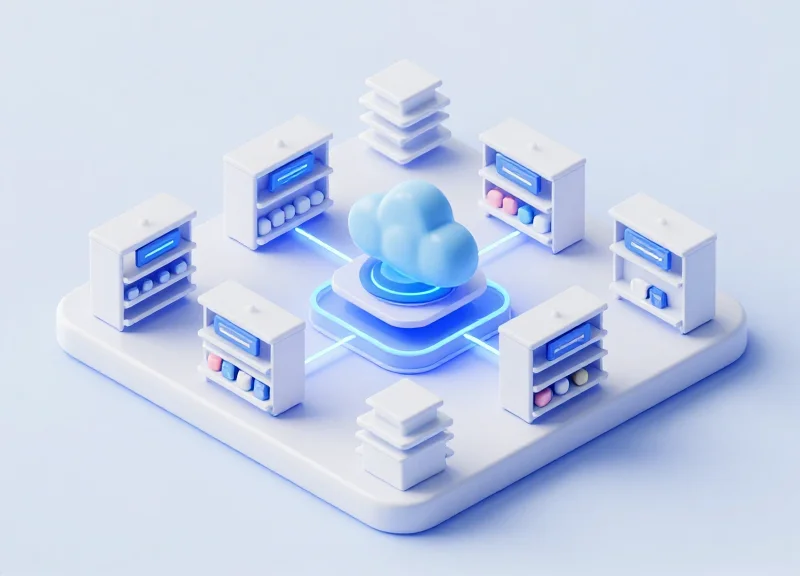
Technical integration is the critical link that transforms a static display into a dynamic retail asset. For office supply chains, this process involves synchronizing the Retail Management System (RMS) or Enterprise Resource Planning (ERP) software with the ESL Cloud Server. The integration acts as a bidirectional highway: the ERP pushes pricing and promotional data to the labels, while the labels provide status reports back to the central system. DragonGuardGroup solutions utilize a robust API-first architecture, allowing retailers to connect their existing tech stack to 4-color labels with minimal latency, ensuring that the 15% margin gains are not lost to technical downtime or data mismatches.
| Integration Method | Data Delivery Speed | Complexity | Best Use Case |
|---|---|---|---|
| RESTful API | Real-time (<1 sec) | Moderate | High-frequency dynamic pricing |
| Middleware / SDK | Near Real-time | High | Custom enterprise workflows |
| SFTP / File Export | Scheduled Batches | Low | Small stores with stable pricing |
| Direct Database Hook | Instantaneous | Very High | Highly customized legacy ERPs |
- Database Mapping: Identify key data fields in your ERP—such as SKU, Unit Price, Promo Price, and Stock Levels—to be reflected on the 4-color display.
- Gateway Configuration: Install high-capacity Access Points (APs) that communicate via 2.4GHz or Sub-GHz frequencies, providing coverage for up to 50,000 labels per unit.
- Template Design & Linking: Assign visual layouts in the ESL software, where specific data triggers (like 'Sale') activate the fourth color (Red/Yellow) automatically.
- Parallel Delta Synchronization: Implement our proprietary sync method that only broadcasts changed data, reducing network congestion and extending label battery life to over 10 years.
{
  "action": "UPDATE_PRICE",
  "sku": "OFF-SUP-9921",
  "new_price": "45.99",
  "promo_color": "YELLOW",
  "timestamp": "2023-10-27T10:00:00Z"
}
Does ESL integration require a complete network overhaul?
No. Most modern ESL gateways are PoE (Power over Ethernet) and operate on dedicated frequencies to avoid interference with existing store Wi-Fi.
How does the system handle power outages?
Labels are persistent; they retain the last updated image without power. Once the server is back online, it automatically syncs any missed updates.
Can we manage multiple store locations centrally?
Yes, our Cloud-based management allows a single headquarters to push price updates to thousands of global locations simultaneously.
Expert Tip: In office retail environments where SKU density is high, we recommend a 'Parallel Delta Sync' approach. Traditional systems refresh the entire label image for every update, which consumes bandwidth. Our unique integration logic only pushes the specific pixel changes for price or color alterations, reducing update times by 70% and ensuring your infrastructure remains agile even during massive seasonal clearance events.
Future-Proofing Your Supply Chain with RFID and ESL Synergy

The synergy between RFID (Radio Frequency Identification) and ESL (Electronic Shelf Labels) represents the pinnacle of modern supply chain management, transforming static shelves into intelligent, data-driven nodes. While RFID provides granular, real-time tracking of individual assets throughout the warehouse and storefront, ESLs serve as the interactive interface that communicates this data to both staff and customers. By integrating these technologies, office supply chains can achieve near 100% inventory accuracy, eliminate phantom stockouts, and enable automated replenishment cycles that react to physical movement in real-time.
| Feature | Standalone ESL | Standalone RFID | Synergetic Integration |
|---|---|---|---|
| Price Accuracy | High (Digital Updates) | N/A (Backend only) | Absolute (Price matches physical stock) |
| Stock Visibility | Manual/Estimated | High (Real-time tracking) | Predictive (Visual alerts for low stock) |
| Locating Items | Visual search only | Scanner-based | Search-to-Light (ESL LED assistance) |
| Inventory Audits | Labor intensive | Fast but disconnected | Instantaneous and self-reconciling |
A unique advantage of this synergy is the 'Visual-Spatial Accuracy' protocol. In a traditional office supply setting, misplaced high-value items like specialized printer ink or premium electronics often lead to lost sales. By using the 'Search-to-Light' functionality, an RFID scanner can detect a misplaced item and automatically trigger the 4-color LED on the corresponding ESL to flash. This allows floor staff to reconcile misplaced inventory in seconds, a task that previously required hours of manual aisle scanning. This closed-loop system ensures that the digital data and the physical reality of the shelf are always in perfect harmony.
How does RFID improve the ROI of an ESL investment?
RFID justifies the ESL investment by ensuring that the dynamic prices displayed are always backed by verified stock. It prevents the 'false advertising' of items that are technically in the system but physically missing from the shelf, thereby protecting brand reputation and conversion rates.
Can these two systems share the same infrastructure?
Yes, modern IoT gateways can often manage both Zigbee-based ESL signals and RFID data streams. This shared infrastructure reduces hardware overhead and simplifies the technical stack for IT departments.
What is the impact on supply chain forecasting?
The combination provides 'Hyper-Local Demand Data.' By tracking exactly when an item leaves the shelf (RFID) and how pricing changes affected that speed (ESL), AI models can forecast demand with 30% higher precision than traditional POS data alone.
- Phase 1: Tagging and Mapping: Apply RFID tags to high-velocity or high-value office supplies and map them to specific 4-color ESL units in the cloud management software.
- Phase 2: Automated Replenishment: Set 'Low-Stock' thresholds where the ESL automatically changes its display color to alert staff when the RFID sensor detects fewer than five units remaining.
- Phase 3: Real-time Reconciliation: Run daily automated audits where the system compares RFID scan counts against the ESL price-file to detect and correct discrepancies instantly.
For the forward-thinking CTO, the synergy of RFID and ESL isn't just about efficiency—it is about building a 'Self-Healing Supply Chain.' When your shelves can sense their own inventory levels and communicate their own price adjustments, you move from reactive management to proactive market leadership. This integrated approach is the only way to ensure that the 15% margin gains captured through dynamic pricing aren't lost to inventory shrinkage or logistical friction.