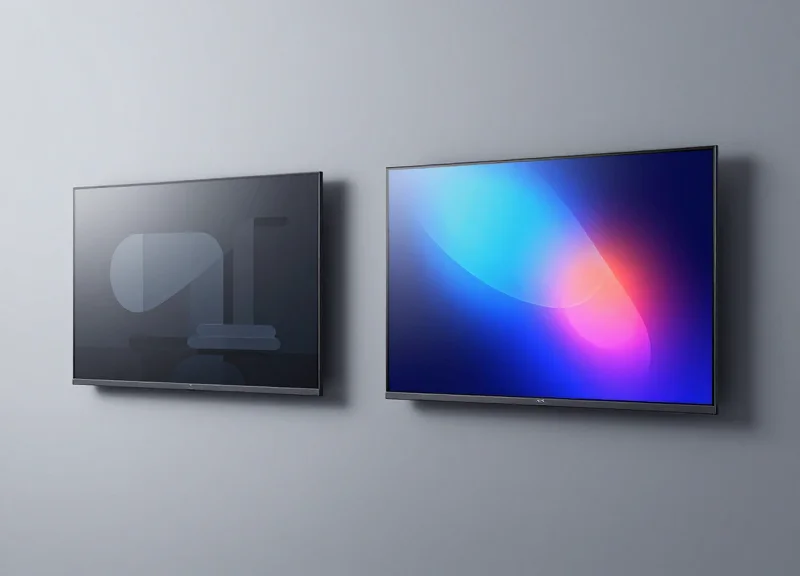
As we approach 2026, the definition of a 'smart office' is shifting from simple connectivity to deep sustainability. For years, active LCD screens were the standard for meeting room bookings and digital signage, but they come with high energy consumption and distracting glare. Today, a paradigm shift is occurring. Passive E-Paper technology, once reserved for e-readers, is now the leading choice for forward-thinking enterprises. This article explores the technological and economic drivers behind why E-Ink and passive display solutions are replacing traditional LCDs to create the next generation of eco-friendly, efficient workspaces.
The Shift Toward the Green Workspace in 2026
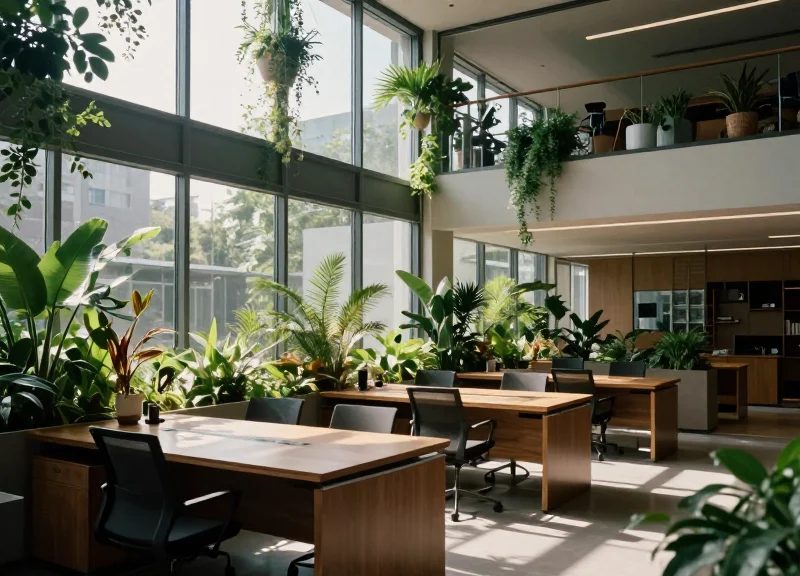
The shift toward the green workspace in 2026 is defined by a fundamental transition from energy-consuming active displays to carbon-neutral passive signage. Driven by global ESG mandates like the EU's Corporate Sustainability Reporting Directive (CSRD) and the SEC's climate disclosure rules, modern enterprises are replacing high-draw LCD screens with bistable e-paper technology. This evolution moves digital infrastructure from a 'power-always-on' model to an 'ambient information' model, where displays only consume energy when content changes, effectively reducing the digital carbon footprint of a standard office by up to 90%.
| Metric | Legacy LCD Signage | 2026 E-Paper Standard |
|---|---|---|
| Power Consumption | Continuous (High Wattage) | Zero (Static State) |
| Heat Emission | Significant (Requires Cooling) | Negligible |
| Carbon Intensity | High (Operational & Embedded) | Ultra-Low |
| Regulatory Status | Restricted in Green Buildings | ESG Compliant |
A critical and often overlooked driver of this shift is what I call the 'Dark Screen Policy.' By 2026, leading LEED-certified workspaces will adopt protocols where any screen emitting light when not actively being used for a presentation is viewed as an environmental liability. Unlike LCDs that require a constant backlight to remain legible, passive e-paper utilizes ambient light, mirroring the aesthetic of high-quality print while maintaining the agility of a digital system. This allows facilities managers to maintain 'always-on' information transparency—such as room schedules and wayfinding—without violating strict 2026 energy-intensity caps.
Why is 2026 the tipping point for office signage?
2026 marks the first full reporting cycle for many global sustainability laws. Corporations must now prove operational energy reductions, and switching from LCD to E-Paper is one of the lowest-hanging fruits for immediate ROI in 'Scope 2' emission reductions.
How does passive signage impact employee wellness?
Beyond energy savings, passive e-paper reduces blue light pollution and 'screen fatigue' in the office. It creates a calmer, paper-like visual environment that aligns with biophilic design principles popular in modern green workspaces.
Can e-paper handle the dynamic needs of a smart office?
Yes. Current 2026-gen e-paper supports rapid refresh rates and multi-color palettes (ACeP), making it more than capable of handling real-time data syncs with calendar software and IoT occupancy sensors.
Passive E-Paper vs. Active LCD: Understanding the Core Technology
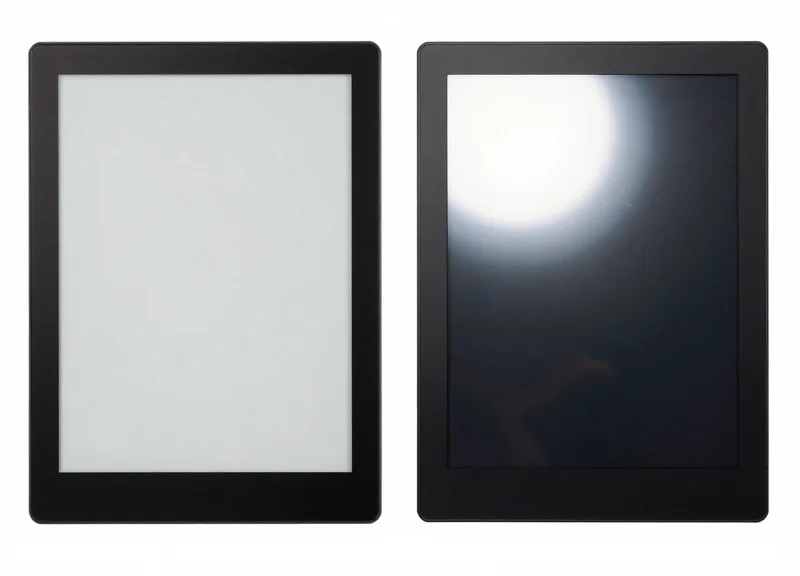
The core difference between Passive E-Paper and Active LCD lies in bistability versus refresh dependency; while LCDs require constant electricity to keep pixels active and backlit, E-Paper only consumes energy when the image changes, utilizing ambient light rather than generating its own. This fundamental shift from 'emitting' light to 'reflecting' light is why E-Paper is the superior choice for 2026 sustainable signage.
Active LCD (Liquid Crystal Display) technology functions by passing a backlight through a layer of liquid crystals that act as shutters. These shutters require a continuous electrical charge to remain open or closed, and the backlight consumes significant wattage regardless of the content being displayed. Conversely, Passive E-Paper uses Electrophoretic Display (EPD) technology. This involves millions of tiny microcapsules containing charged pigment particles. An electric pulse moves these particles to the surface to create an image, where they stay fixed without any further power input until the next update.
| Feature | Active LCD | Passive E-Paper (EPD) |
|---|---|---|
| Static Image Power | Constant (High) | Zero (Bistable) |
| Light Mechanism | Transmissive (Backlit) | Reflective (Ambient) |
| Refresh Rate | 60Hz - 144Hz (Fixed) | On-Demand Only |
| Outdoor Visibility | Poor (Washout) | Excellent (Sunlight Readable) |
| Heat Profile | Significant Heat Sink | Thermally Neutral |
Expert Insight: The 'Double-Tax' of Office Cooling. In high-density smart offices, hundreds of LCD room schedulers act as micro-radiators. A unique advantage of Passive E-Paper is that it is thermally neutral. By eliminating the heat dissipation of LCDs, facility managers don't just save on the display's power cord—they also reduce the 'Secondary Energy Load' on the building's HVAC system, which no longer has to fight the ambient heat generated by digital signage.
What does 'bistability' actually mean for office management?
Bistability is the physical property that allows an E-Paper screen to retain an image (like a meeting room schedule) even if the power source or battery is completely removed. In a smart office, this means signage remains functional during power outages or system reboots.
Can E-Paper handle the color requirements of 2026 branding?
Yes. While early E-Paper was monochrome, 2026 standards utilize Advanced Color e-Paper (ACeP) or Spectra technologies, providing a full color gamut that matches corporate branding without the blue-light fatigue associated with LCDs.
Why is 'Reflective' light better than 'Transmissive' light?
Transmissive light (LCD) shines directly into the user's eyes, causing digital eye strain. Reflective light (E-Paper) mimics ink on paper, using the room's existing light to illuminate the display, which is significantly more comfortable for employees in open-plan offices.
The Energy Efficiency Revolution
The 2026 energy efficiency revolution is not merely an incremental improvement; it is a fundamental shift in how digital infrastructure interacts with the power grid. Passive e-paper technology utilizes a 'bistable' mechanism, meaning the screen requires zero electricity to maintain a static image. Unlike traditional Liquid Crystal Displays (LCDs) that require a constant, energy-intensive backlight to remain visible, e-paper only draws current during the few seconds it takes to rearrange physical ink capsules. In a typical smart office environment—where room schedules or wayfinding maps may only change a few times an hour—this results in a power reduction of over 99% compared to active digital signage.
| Feature | Traditional Active LCD | Passive E-Paper (2026 Tech) |
|---|---|---|
| Power State (Static Image) | 5W - 20W (Constant) | 0W (Zero Draw) |
| Power State (Updating) | 10W - 25W | 0.1W - 0.5W |
| Annual CO2 Footprint | ~35.2 kg per unit | ~0.4 kg per unit |
| Operational Longevity | Requires Hardwiring | 5+ Years on Coin Battery |
One original perspective often overlooked by facility managers is the 'HVAC Cascade Effect.' Traditional LCD panels are effectively small heaters; in a large-scale deployment of 500+ digital room signs, the cumulative thermal output of active displays forces the building's air conditioning system to work harder. By 2026, sustainable office standards (LEED Platinum and beyond) will account for this secondary heat load. By switching to e-paper, which generates zero heat during operation, enterprises can realize an additional 12-15% savings on cooling-related energy costs that are never captured in the display's specification sheet alone.
How does bistability contribute to sustainability?
Bistability allows the display to hold text and images indefinitely without power. This enables 'wire-free' installations, reducing the need for copper wiring and high-voltage infrastructure during office fit-outs.
Is the power savings significant for color e-paper?
Yes. Even with the advent of advanced 2026 color e-paper (like E Ink Spectra or Gallery tech), the energy consumption remains focused only on the 'refresh' cycle, maintaining a massive efficiency lead over active emissive displays.
Can e-paper displays run entirely on harvested light?
In many 2026 smart office configurations, e-paper signs are paired with small indoor photovoltaic cells. This allows them to update indefinitely using only ambient office lighting, achieving a true 'Net Zero' energy state.
Finally, the energy revolution extends to the 'Total Cost of Ownership' (TCO). While the hardware cost of e-paper has reached parity with professional-grade LCDs, the elimination of electrical installation labor—which can cost up to $300 per drop in modern high-rises—makes passive signage the only logical choice for scalable sustainability. In the 2026 landscape, an office that still 'plugs in' its signage is considered a legacy environment.
Visual Comfort and Workplace Ergonomics

Visual comfort in the modern workplace is defined by a display's ability to present information without causing digital eye strain (DES) or ocular fatigue. Unlike traditional LCDs that use an active backlight to push light directly into the user's eyes, passive e-paper utilizes reflective technology to bounce ambient light off the screen, mimicking the natural appearance of ink on paper. By eliminating high-energy visible (HEV) blue light and screen flicker, e-paper provides a superior ergonomic experience that supports long-term focus and aligns with the WELL Building Standard for light and occupant health.
| Ergonomic Factor | Active LCD Displays | Passive E-Paper (E-Ink) |
|---|---|---|
| Light Source | Emissive (Backlit) | Reflective (Ambient) |
| Blue Light Exposure | High / Constant | Zero (Passive mode) |
| Screen Flicker | Present (PWM Dimming) | Non-existent (Static) |
| Glare Resistance | High (Mirror effect) | Minimal (Matte texture) |
| Viewing Angles | Color shift at angles | Nearly 180 degrees |
The shift toward e-paper in 2026 is largely driven by the concept of 'Calm Technology.' In a high-density office environment, the constant glow of LCD signage contributes to visual noise and cognitive overload. E-paper displays do not compete for attention; they integrate into the architecture. This 'biophilic' approach to digital signage ensures that even as offices become more data-rich, the physical environment remains soft and conducive to deep work, rather than feeling like a chaotic control room.
Does e-paper help with the 20-20-20 rule?
Yes. While the rule suggests looking 20 feet away every 20 minutes, using a reflective e-paper display reduces the initial ciliary muscle strain caused by focusing on high-contrast, emissive screens, making the transition between near and far vision less taxing.
How does ambient light impact readability?
Paradoxically, e-paper performs better as ambient light increases. In sun-drenched 2026 glass-walled offices, LCDs wash out and require more power to compete with the sun, whereas e-paper becomes clearer and more vibrant.
Can e-paper reduce workplace headaches?
By removing the 60Hz to 120Hz refresh flicker common in LCD backlights—which can trigger migraines in sensitive individuals—e-paper provides a medically sound alternative for shared office signage.
Expert Insight: The 'Depth of Field' Advantage. A unique ergonomic benefit of e-paper often overlooked is the lack of a glass-gap. In traditional monitors, the image is rendered several millimeters behind a glass or plastic layer, forcing the eye to constantly adjust focus between the surface reflections and the actual content. E-paper pigments sit directly on the surface of the film substrate. This 'surface-level' rendering significantly reduces the micro-oscillations of the eye's lens, effectively lowering the cognitive load required to process text and imagery over an eight-hour workday.
Wireless Infrastructure and Ease of Installation
In the evolution of smart offices, the greatest barrier to adoption has historically been the 'infrastructure tax'—the massive cost and disruption of running power and data cables to every door and desk. Passive e-paper signage effectively eliminates this barrier. By leveraging ultra-low-power wireless protocols (such as Sub-GHz, BLE, or Zigbee) and bistable display technology, these devices can operate for up to a decade on a single set of coin-cell batteries. This creates a 'zero-trace' installation environment where digital transformation no longer requires structural permits, electrical contractors, or invasive wall cutting.
| Feature | Traditional LCD Signage | Passive E-Paper Signage |
|---|---|---|
| Power Requirement | Constant AC or PoE (Wired) | Battery-powered (Wireless) |
| Installation Labor | Electrician / Data Tech required | General maintenance / DIY |
| Wall Modifications | Cutting, recessing, conduits | Adhesive or simple bracket |
| Deployment Time | 2-4 hours per unit | Under 5 minutes per unit |
| Relocation Flexibility | Fixed; requires rewiring | Instant; peel and move |
Expert Insight: The 'Permit-Free' Advantage. From a facility management perspective, the most overlooked cost of active LCDs is the regulatory compliance. Because LCDs require high-voltage power or specific PoE fire-rated cabling, they often trigger building code inspections. E-paper labels are classified as low-voltage IoT peripherals, allowing for massive scale-out across global real estate portfolios without a single building permit, saving millions in hidden administrative overhead.
- Phase 1: Gateway Placement: Install a centralized IoT gateway. A single Sub-GHz hub can typically manage over 5,000 e-paper displays within a 50-meter radius, even through office partitions.
- Phase 2: Peel-and-Stick Mounting: Utilize industrial-grade 3M adhesives or magnetic mounts to place displays on glass, wood, or concrete without drilling.
- Phase 3: Logic Pairing: Scan the QR code on the display using a mobile app to instantly link the physical location to the office management software (e.g., Microsoft Outlook or Google Workspace).
How does the wireless signal handle office interference?
Most enterprise e-paper systems use Sub-GHz frequencies (868MHz/915MHz) which penetrate walls better than 2.4GHz Wi-Fi and avoid the congested 'noise' of consumer devices, ensuring 99.9% update reliability.
What is the typical battery lifespan for a 2026-era device?
With passive technology, batteries only drain during image refreshes. For a standard room booking sign updated 10 times a day, batteries are projected to last 7 to 10 years.
Is the data transmitted to these signs secure?
Yes, enterprise-grade e-paper ecosystems utilize AES-128 or AES-256 encryption for all over-the-air updates, preventing unauthorized 'spoofing' of office information.
Integration with Smart Office Ecosystems
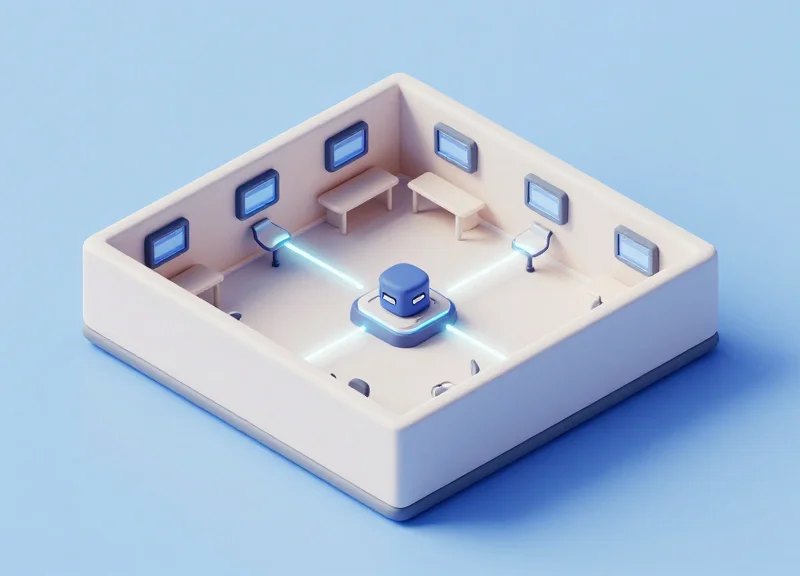
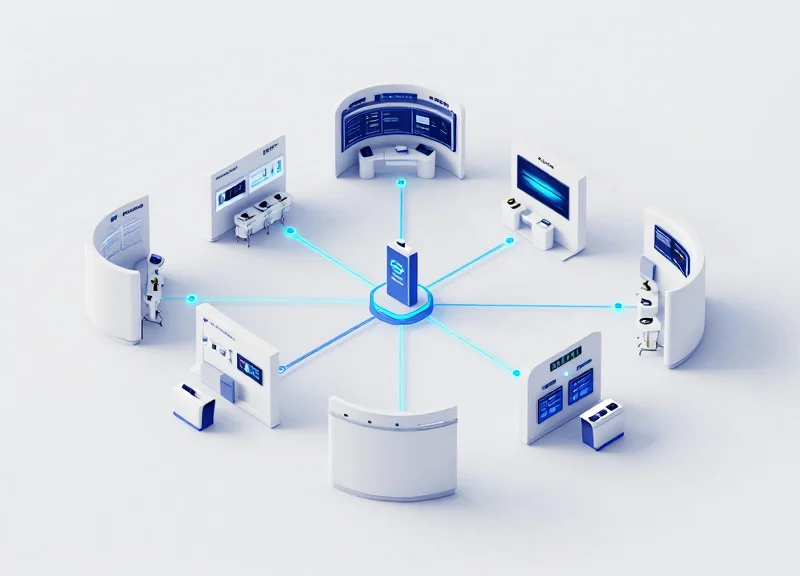
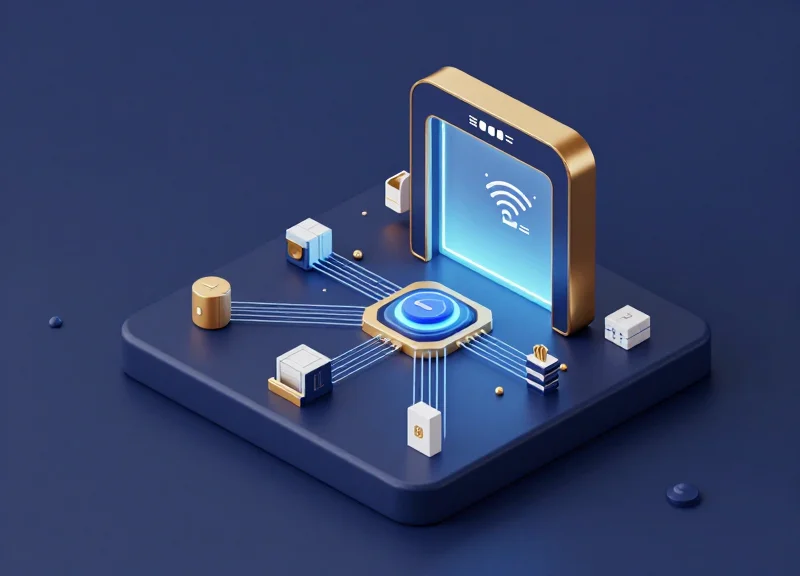
In the 2026 smart office landscape, integration is no longer about simple connectivity; it is about creating a cohesive, responsive environment where digital data manifests physically without the friction of wires or power constraints. Passive e-paper signs act as the 'physical endpoint' for enterprise software suites like Microsoft Outlook, Google Workspace, and Integrated Workplace Management Systems (IWMS). Through centralized cloud gateways, these displays reflect real-time occupancy, reservation status, and dynamic wayfinding, ensuring that the physical office stays in perfect sync with the digital schedule.
- Direct API Calendar Syncing: Automatically pulls meeting data from Exchange or Google Calendar to update door signs instantly when a room is booked or released.
- IoT Sensor Feedback Loops: Integrates with PIR or mmWave occupancy sensors to display 'In Use' or 'Available' status based on actual human presence, rather than just scheduled time.
- BLE Mesh and Sub-GHz Networks: Utilizes low-power wireless protocols to manage thousands of displays from a single access point, minimizing interference with corporate Wi-Fi.
- Emergency Notification Overlays: Can be triggered globally to display safety protocols or evacuation routes during office emergencies, functioning even during localized power outages.
| Feature | Active LCD Integration | Passive E-Paper Integration |
|---|---|---|
| Power Requirement | Requires PoE or AC outlet; high overhead | Battery-powered; years of life on one charge |
| Data Refresh Impact | Constant power draw while display is active | Energy consumed only during the 2-second update |
| Network Protocol | Usually high-bandwidth Wi-Fi/Ethernet | Proprietary Low-Power RF or BLE 5.0 |
| API Complexity | Complex video streaming/rendering | Lightweight image/text metadata pushes |
Expert Insight: The true shift in 2026 is the 'Ambient Data Layer.' Unlike LCDs that demand attention with bright light, e-paper provides 'calm technology' that exists in the periphery. A unique advantage we are seeing is the use of NFC (Near Field Communication) built into the e-paper frame. Employees can tap their smartphone against a 'Room Busy' sign to instantly book the next available slot or 'check-in' to their desk, bridging the gap between personal mobile devices and shared office infrastructure.
{ "display_id": "ROOM_302_ALPHA", "status": "occupied", "meeting_title": "Q3 Strategic Planning", "organizer": "Sarah Chen", "duration": "14:00 - 15:30", "nfc_trigger_url": "https://office.io/book/302" }How often can e-paper signs update without draining the battery?
Most 2026-gen ESL signs are rated for 5-10 updates per day over a 5-year lifespan. For high-traffic rooms, the integration software can batch updates to optimize battery health.
Can these displays be managed through a single dashboard?
Yes, modern systems use a centralized 'Management Station' that provides a bird's-eye view of every display's battery status, signal strength, and current content.
Does it require a complete overhaul of our IT infrastructure?
No. Most e-paper solutions are designed as 'overlay' systems. They connect to your existing network via a small gateway and communicate with your software via standard RESTful APIs.
Cost Analysis: TCO of E-Paper vs. Traditional Signage
The Total Cost of Ownership (TCO) for smart office signage is frequently misunderstood as a simple comparison of hardware price tags. In reality, the TCO for E-Paper displays over a five-year lifecycle is typically 40% to 60% lower than traditional LCD alternatives. While the initial hardware cost of passive E-Paper can be higher, it achieves a rapid 'break-even' point—often within 18 months—due to the near-total elimination of electrical consumption, reduced IT maintenance, and the absence of expensive electrical retrofitting required for powered displays.
| Cost Factor | Traditional LCD Signage | Passive E-Paper (ESL) |
|---|---|---|
| Installation | High ($200-$500/unit for wiring) | Minimal (Peel-and-stick/Magnetic) |
| Energy Use | Continuous (20W - 60W per unit) | Zero (Static) / Negligible (Update only) |
| Infrastructure | Dedicated power lines & LAN cables | Battery-powered / Wireless (BLE/Sub-Ghz) |
| Maintenance | Backlight failure & thermal issues | Battery replacement every 5-10 years |
| Lifespan | 3-5 years (24/7 operation) | 7-10 years (Passive state durability) |
The 'Invisible' Labor Cost: Beyond the utility bill, the 2026 smart office prioritizes labor efficiency. Traditional digital signage often requires manual intervention when network handshakes fail or displays freeze due to OS updates. E-Paper modules, operating on lightweight, purpose-built firmware, require significantly fewer 'truck rolls' or IT support tickets. In a facility with 500 room labels, this reduction in 'Ghost Labor'—the hidden hours spent fixing minor display issues—can save a corporation over $15,000 annually in IT overhead alone.
How long does it take to see a Return on Investment (ROI) with E-Paper?
Most enterprises see a full ROI within 14 to 22 months. This is accelerated in regions with high electricity costs or in older buildings where the cost of drilling and running new electrical conduit is prohibitive.
Do battery replacement costs negate the energy savings?
No. Modern E-Paper displays are optimized to last 5-10 years on a single coin-cell battery set. The cost of a battery swap is roughly $2.00 per unit once per decade, compared to hundreds of dollars in cumulative electricity and thermal management costs for an LCD.
What is the primary financial risk of staying with LCD?
The primary risk is 'Carbon Taxation' and ESG non-compliance. By 2026, many corporate leases will include penalties for high-energy-density office footprints; E-Paper serves as a hedge against these rising regulatory costs.
Veteran Insight: The Wiring-to-Device Ratio. Having overseen dozens of Silicon Valley office deployments, I have observed that the single most overlooked expense is the 'Wiring-to-Device' ratio. In a standard LCD deployment, the cost of labor and materials to bring power to a door sign is often 300% higher than the cost of the display itself. Passive E-Paper flips this script, allowing for a 'Zero-CapEx' infrastructure approach where the only cost is the device itself, making it the only scalable solution for high-density signage environments.
E-Paper as a Pillar of ESG Compliance

E-paper technology has evolved from a niche display solution into a fundamental pillar of ESG (Environmental, Social, and Governance) compliance. By replacing active, light-emitting LCDs with bistable, passive e-ink, corporations can directly reduce their Scope 2 emissions (purchased electricity) and Scope 3 emissions (supply chain and product lifecycle). In the 2026 smart office landscape, e-paper is no longer just a gadget; it is a measurable data point in a company's annual sustainability report, facilitating adherence to global standards like the Task Force on Climate-related Financial Disclosures (TCFD) and the EU’s Corporate Sustainability Reporting Directive (CSRD).
| ESG Category | E-Paper Contribution | Measurable Impact |
|---|---|---|
| Environmental | Near-zero operational power and reduced heat output. | 80-90% reduction in signage-related CO2 footprint. |
| Social | Non-emissive light reduces digital eye strain and promotes wellness. | Higher employee satisfaction scores in ergonomic audits. |
| Governance | Automated, centralized data updates ensure policy transparency. | Real-time compliance with building energy mandates (e.g., Local Law 97). |
Beyond simple energy savings, the implementation of e-paper signage contributes significantly to achieving Green Building certifications. For instance, points toward LEED (Leadership in Energy and Environmental Design) or WELL Building Standard certifications are more easily attained when the internal infrastructure prioritizes low-impact materials and human-centric design. Because e-paper displays do not require constant backlighting, they contribute zero light pollution and minimal thermal load, reducing the secondary energy demand on HVAC systems.
Does e-paper help with Net Zero Carbon targets?
Yes. Since e-paper only consumes power during an image refresh, its carbon intensity is negligible compared to LCDs, which require constant current. For a facility with 500+ meeting room signs, this can save several megawatt-hours annually.
How does e-paper impact 'Circular Economy' goals?
Most high-end e-paper modules are now designed for longevity (7-10 years) and use recyclable components, reducing electronic waste (e-waste) compared to shorter-lived consumer-grade tablets.
Is ESG reporting easier with smart office integration?
Modern e-paper ecosystems provide digital logs of energy usage and uptime, giving ESG officers verifiable data for 'Green ' audits rather than estimations.
Expert Tip: The 'Carbon Avoided' Metric. One original perspective emerging for 2026 is the shift from 'Energy Efficiency' to 'Embedded Carbon ROI.' Unlike LCDs that require copper-heavy wiring and constant cooling, wireless e-paper represents a 'Carbon Avoided' strategy. By eliminating miles of cabling in a 50,000 sq. ft. office, companies reduce the embedded carbon of the building's physical infrastructure itself, not just its daily electricity bill. This 'infrastructure-lite' approach is becoming the gold standard for sustainable retrofitting.
Transitioning Your Office with DragonGuardGroup
Transitioning your corporate environment to a smart office with DragonGuardGroup involves replacing power-hungry LCD panels with ultra-low-power, passive E-Paper solutions that integrate seamlessly into existing IT infrastructures. By leveraging DragonGuardGroup’s end-to-end ecosystem, companies can achieve a 'Zero-Wire' deployment that enhances workplace aesthetics while reducing operational energy consumption by up to 90%. Our transition methodology focuses on scalability, ensuring that your E-Paper labels (ESL) and signage are ready for the 2026 demands of hybrid work and ESG reporting.
| Signage Type | Primary Application | Key Feature | Ideal Battery Life |
|---|---|---|---|
| 7.5" - 12" E-Paper Boards | Meeting Room Displays | NFC/BLE Sync | 3-5 Years |
| 2.6" - 4.2" Digital Labels | Hot Desk Booking | QR Code Integration | 5+ Years |
| 13.3" - 32" Signage | Wayfinding & Directories | Ambient Light Visibility | External/Solar Ready |
To ensure a successful rollout, DragonGuardGroup provides a structured migration path designed to minimize disruption to daily operations while maximizing the technological ROI.
- Environmental Audit: We assess your current lighting conditions and wireless coverage (Sub-GHz or 2.4GHz) to ensure optimal refresh rates and visibility.
- System Integration Setup: Linking DragonGuardGroup's cloud management platform with your existing API-based tools like Microsoft Exchange or Google Workspace.
- Pilot Zone Implementation: Deploying a subset of labels in high-traffic zones to gather user feedback and calibrate automated update triggers.
- Full-Scale Rollout & Training: Final deployment across the facility, including staff training on managing the central signage dashboard.
Expert Insight: The 'Adaptive Refresh' Advantage. Unlike generic suppliers, DragonGuardGroup utilizes proprietary firmware that implements 'Adaptive Refresh.' By analyzing room occupancy data, our displays only refresh when changes are necessary or during low-activity periods, effectively extending hardware longevity by an additional 18-24 months compared to standard industry timers.
Can we use existing Wi-Fi for DragonGuardGroup displays?
While our displays support various protocols, we recommend using our specialized IoT gateways to prevent network congestion and maximize the battery life of the passive e-paper units.
How easy is it to change the branding on the displays?
The DragonGuardGroup CMS allows for centralized template management. You can push new corporate branding, fonts, and layouts to thousands of screens globally with a single click.
Do the screens work in low-light environments?
Passive e-paper reflects ambient light. For darker corridors, we offer integrated front-light versions that maintain the paper-like quality without the harsh glare of traditional back-lit LCDs.