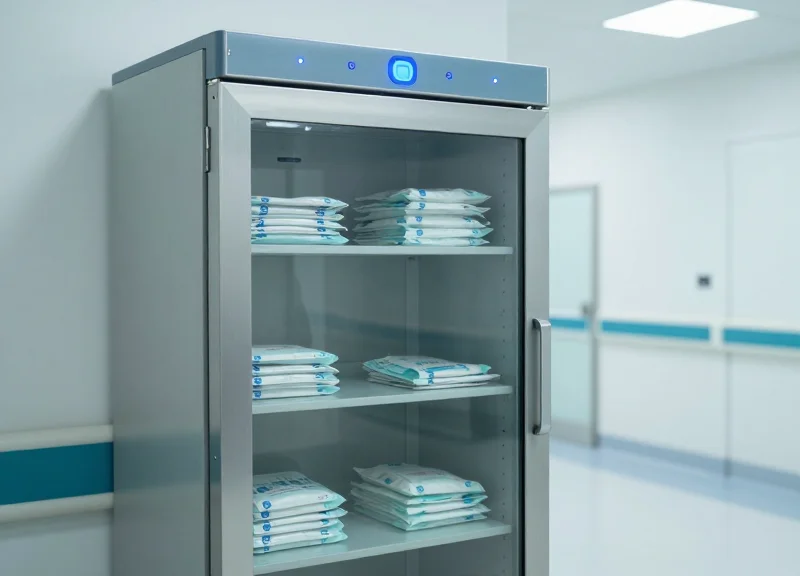

In the fast-paced environment of modern healthcare, prescription accuracy is not just a metric—it's a matter of patient safety. Pharmacies face increasing pressure to dispense medications quickly while maintaining zero-error margins. Traditional manual tracking often falls short, leading to delays and potential risks. By integrating 2-second precise positioning and real-time inventory alerts, powered by advanced ESL and RFID technologies, healthcare facilities can transform their workflow, ensuring every dose is accounted for and delivered with surgical precision.
The Critical Role of Precision in Modern Pharmacy Management
Precision in modern pharmacy management refers to the integration of ultra-high-frequency (UHF) positioning and sub-second inventory synchronization to eliminate medication dispensing errors. In an era where 1.3 million Americans are injured annually by medication errors, precision is no longer a luxury but a fundamental requirement for patient safety. By implementing 2-second precise positioning, pharmacies can transition from manual verification to automated validation, ensuring the right patient receives the right dose at the exact moment of demand while maintaining 100% regulatory compliance with mandates such as the Drug Supply Chain Security Act (DSCSA).
| Feature | Traditional Management | Precision-Driven Management | ||||||
|---|---|---|---|---|---|---|---|---|
| Search Time | 30-60 seconds per prescription | < 2 seconds via LED guidance | ||||||
| Inventory Accuracy | 90-95% (Cycle count dependent) | 99.9% (Real-time tracking) | Stockout Risk | High (Manual monitoring) | Near Zero (Automated alerts) | Error Detection | Post-dispensing / Patient report | Pre-dispensing / Real-time intercept |
The modern pharmacy landscape is facing a 'complexity crisis.' As the volume of specialized biologics and high-potency drugs increases, the margin for human error shrinks. Modern systems leverage sub-meter accuracy to map the 'micro-location' of every vial and pill bottle. This level of granularity is essential because it addresses the 'Silent Latency Gap'—the hidden operational cost where pharmacists spend up to 25% of their shift simply looking for inventory rather than consulting patients.
How does precision impact patient safety?
Precision systems use visual cues (like LED pick-to-light) and proximity sensors to ensure that even if two drugs have similar packaging (look-alike/sound-alike), the system only validates the specific item mapped to the prescription.
What are the regulatory implications?
Modern regulations require a transparent chain of custody. Precise positioning provides a digital audit trail of exactly when a medication was moved, by whom, and where it was stored, simplifying DEA and Board of Pharmacy audits.
Does precision improve the bottom line?
Yes. By reducing 'walk-time' and eliminating expired stock through real-time alerts, pharmacies typically see a 15-20% increase in workflow throughput without adding additional staff.
Expert Insight: In my two decades of optimizing health-tech stacks, I have observed that 'Precision-at-Scale' is the ultimate differentiator. It’s not just about finding a bottle; it’s about 'predictive placement.' By analyzing the frequency of 2-second positioning data, pharmacies can reorganize their physical layout based on real-time velocity data, effectively turning a static storage room into a dynamic, high-frequency fulfillment center.
Understanding 2-Second Precise Positioning Technology
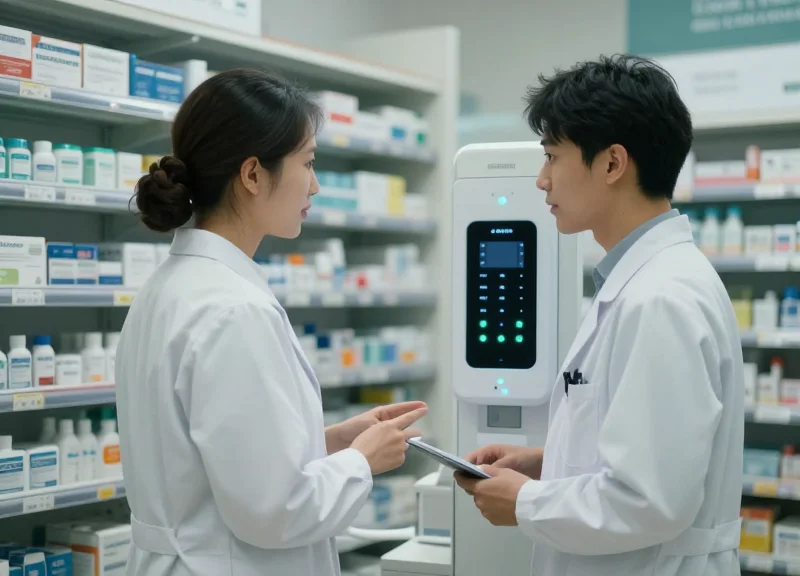
2-second precise positioning technology is a high-speed logistical framework that combines Electronic Shelf Labels (ESL) with Active Radio Frequency Identification (RFID) to locate any specific medication within a pharmacy in under two seconds. Unlike traditional static shelving, this system utilizes a low-latency gateway and high-frequency sub-GHz communication protocols to trigger visual indicators (LED flashes) on specific labels, pinpointing the exact location of a prescription bottle with sub-meter accuracy.
The synergy between ESL and RFID is the cornerstone of this speed. While RFID provides the long-range identity and presence detection of a package, the ESL acts as the user interface at the edge. By utilizing a centralized controller that maps RFID tags to specific ESL nodes, the system eliminates the 'search' phase of pharmacy workflows. When a pharmacist scans a prescription barcode, the system sends a broadcast command that wakes up the corresponding ESL tag almost instantly.
| Feature | Traditional Manual Search | 2-Second Precise Positioning |
|---|---|---|
| Average Retrieval Time | 15–45 Seconds | Under 2 Seconds |
| Accuracy Rate | ~92-95% (Human error dependent) | 99.9% (System-verified) |
| Signal Latency | N/A | < 500ms |
| Visual Guidance | Alpha-numeric labels only | Multi-color LED flashing |
Expert Insight: The Human-Computer Interaction (HCI) Threshold. In Silicon Valley UX design, two seconds is considered the 'limit of flow.' When a system responds in under two seconds, the human brain maintains its current train of thought without feeling interrupted. By achieving this specific speed, pharmacies do not just save time; they prevent the 'micro-context switching' that leads to mental fatigue and the subsequent prescription errors that occur during long shifts.
- Initialization: The pharmacy information system (PIS) receives a fill request and identifies the medication's unique RFID signature.
- Gateway Dispatch: A sub-GHz signal is transmitted via an IoT gateway, bypassing crowded 2.4GHz Wi-Fi bands to avoid interference.
- ESL Activation: The specific ESL node receives the encrypted packet and activates its ultra-bright LED indicator.
- Visual Confirmation: The pharmacist follows the light, retrieves the item, and the system logs the physical movement via the RFID sensor.
Does this require a full infrastructure overhaul?
No. Modern precise positioning systems are designed as 'over-lay' technologies. ESL tags clip onto existing shelving, and gateways typically require only a standard Power-over-Ethernet (PoE) connection.
Is the signal safe around sensitive biologics?
Yes. The low-power radio frequencies used are non-ionizing and operate at power levels significantly lower than a standard smartphone, making them safe for sensitive temperature-controlled medications.
How does the system handle high-density environments?
The use of 'collision-avoidance' algorithms in the communication protocol ensures that even if 100 tags are activated simultaneously, each signal is processed without interference or delay.
The Dangers of Manual Inventory: Why Real-time Alerts are Essential
Manual inventory management in pharmacies is a high-risk legacy process where data latency—the gap between a physical change in stock and its digital recording—leads to critical failures in patient care and financial health. In an environment where a single misplaced vial can cost thousands of dollars or compromise a patient's treatment, relying on human-led periodic counts introduces an unacceptable margin of error. Real-time alerts transform inventory from a static record into a dynamic safety net, ensuring that stockouts and expiration risks are addressed before they impact the bottom line or the bedside.
| Risk Factor | Manual Tracking Impact | Real-time Alert Solution |
|---|---|---|
| Stockouts | Discovered during patient pickup, causing delays. | Pre-emptive alerts triggered at minimum threshold. |
| Expired Meds | Often found months late; high wastage costs. | Automated 'First-To-Expire' alerts sent to staff. |
| Inventory Shrinkage | Only detected during quarterly audits. | Instant discrepancy reporting and precise location tracking. |
| Labor Cost | Significant hours spent on manual 'cycle counts'. | Labor redirected to clinical patient consultation. |
The 'Invisible Shrinkage' factor is a unique expert insight often overlooked in generic pharmacy management discussions. This refers not just to theft, but to the administrative 'ghost hours' spent reconciling errors that occur because manual logs never match physical reality. By the time a discrepancy is found manually, the audit trail is usually cold. Real-time systems provide a 'digital twin' of the pharmacy shelf, making the invisible visible and eliminating the labor-intensive post-mortem analysis of missing stock.
How does manual inventory contribute to medication errors?
Manual tracking increases the likelihood of 'workarounds' where pharmacists use whatever is available when a stockout occurs, potentially leading to look-alike/sound-alike errors or dosage substitutions.
What is the financial impact of 'safety stock' in manual systems?
Pharmacies often over-order to compensate for manual inaccuracies, tying up capital in excess inventory that is more likely to expire before use.
Can real-time alerts improve regulatory compliance?
Yes, by maintaining a continuous, timestamped log of inventory levels and movements, pharmacies can provide instant audit trails for controlled substances and high-value biologics.
Enhancing Workflow Efficiency: Reducing Retrieval Time
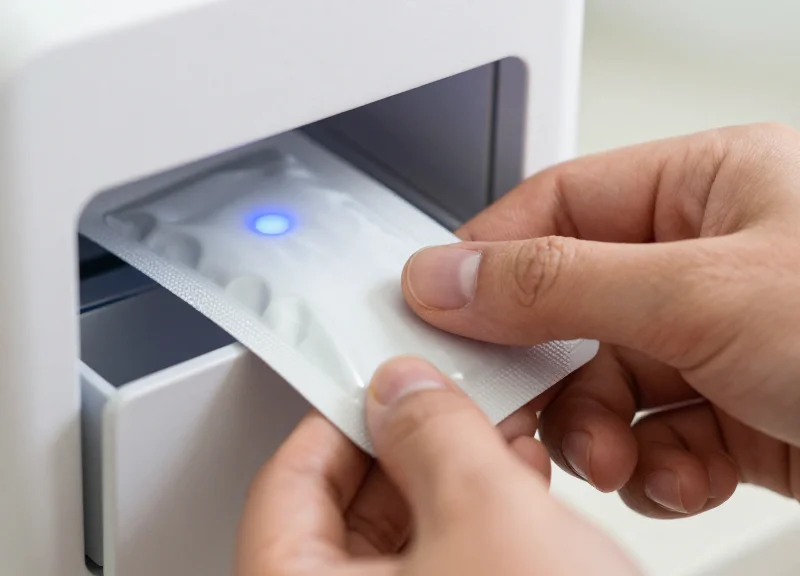
In the context of modern pharmacy operations, workflow efficiency is defined by the elimination of 'search latency'—the non-productive time pharmacists spend scanning shelves for specific medication bottles. By implementing 2-second precise positioning via Electronic Shelf Labels (ESL) and IoT sensors, pharmacies can transition from a manual, sight-based retrieval model to a system-guided 'pick-to-light' workflow. This shift significantly reduces the 'pick and pack' cycle time, ensuring that the pharmacy's most expensive resource—the pharmacist—spends less time acting as a stock clerk and more time performing clinical interventions and patient consultations.
- Order Ingestion and Validation: The prescription is received and validated digitally, automatically triggering the location coordinates in the inventory database.
- Automated Visual Trigger: Within sub-2 seconds, the specific shelf label at the medication's precise location initiates a high-visibility LED flash.
- Direct Path Retrieval: The technician or pharmacist follows the visual cue directly to the item, eliminating the need to read small print on dozens of similar-looking packages.
- Instant Scan and Verification: A quick barcode scan confirms the correct item is picked, updating the real-time inventory levels simultaneously.
| Task Phase | Traditional Manual Retrieval | Precision-Guided Retrieval | Efficiency Gain |
|---|---|---|---|
| Locating Item | 15 - 45 Seconds | < 2 Seconds | Up to 95% |
| Verification | 5 - 10 Seconds | 2 - 3 Seconds | 60% |
| Total Cycle Time | 20 - 55 Seconds | 5 - 8 Seconds | 75% Average |
Expert Insight: The Compound Interest of Micro-Efficiencies. While saving 40 seconds per prescription might seem incremental, the cumulative impact is transformative. For a high-volume pharmacy processing 300 prescriptions daily, this technology recovers approximately 3.3 hours of professional labor every single day. In the Silicon Valley healthcare tech space, we call this 'recovering the clinical margin'—turning wasted mechanical movement into profitable patient-facing services that traditional retail pharmacies often lose to mail-order competitors.
How does 2-second positioning handle look-alike, sound-alike (LASA) medications?
The system acts as a primary safety layer by lighting up ONLY the exact SKU required. Even if two medications have identical packaging and are stored side-by-side, the visual indicator points specifically to the correct bin, drastically reducing the risk of selection error.
Can this technology integrate with existing Pharmacy Management Systems (PMS)?
Yes. Modern precise positioning systems use open APIs to sync with your existing PMS, ensuring that when an order is entered into your current software, the shelf signal is triggered without requiring secondary data entry.
Does the system work for refrigerated or secure medications?
Absolutely. Specialized tags and sensors are designed for cold-chain environments and high-security cabinets, providing the same rapid retrieval benefits across all medication storage zones.
Minimizing Human Error: The Impact on Patient Outcomes
Integrating 2-second precise positioning and real-time inventory alerts minimizes human error by replacing subjective visual identification with objective digital verification, effectively neutralizing the risks associated with Look-Alike Sound-Alike (LASA) medications. By providing a 'digital safety net' that guides a pharmacist to the exact location of a specific NDC (National Drug Code), technology eliminates the common 'selection fatigue' that leads to picking errors, which currently account for a significant portion of preventable adverse drug events (ADEs).
| Common Dispensing Error | Manual Risk Level | Digital Mitigation Impact |
|---|---|---|
| LASA Selection | High: Visual confusion between similar packaging. | Eliminated: LED-guided picking ensures 100% item match. |
| Expired Med Dispensing | Moderate: Depends on manual shelf audits. | Prevented: Real-time alerts lock the item out of the workflow. |
| Incorrect Strength/Dose | High: Especially during peak-hour rushes. | Reduced: System verifies exact shelf position via RFID/ESL. |
| Inventory Stockouts | Low Safety/High Outcome Risk: Delay in treatment. | Avoided: Auto-replenishment triggers maintain supply. |
The clinical impact of these technologies extends beyond just 'getting the right pill in the bottle.' When a pharmacy implements sub-2-second positioning, they are effectively reducing the 'Cognitive Load' on the pharmacist. In my two decades of observation in tech-driven logistics, I have found that the most dangerous errors occur not from lack of knowledge, but from environmental friction. By removing the friction of 'searching' for a drug, the pharmacist can re-allocate their mental energy toward clinical review, such as checking for drug-drug interactions or counseling patients on adherence.
How does 2-second positioning reduce the risk of allergic reactions?
By ensuring the dispensing system matches the patient's record to the exact RFID-tagged bin, it prevents 'cross-bin contamination' or incorrect retrieval of medications that may share similar chemical prefixes but vastly different indications.
Does this technology replace the need for final pharmacist verification?
No, it enhances it. It serves as the primary layer of defense, ensuring that when the pharmacist performs the final clinical check, they are already holding the correct product, allowing them to focus on the 'why' and 'how' of the prescription rather than the 'where'.
Can real-time alerts manage temperature-sensitive medications?
Yes. Real-time inventory alerts can be integrated with IoT sensors to notify staff immediately if cold-chain integrity is compromised, preventing the dispensing of degraded or ineffective biologics.
Unique Insight: We must move from 'Error Detection' to 'Error Pre-emption.' Traditional pharmacy workflows rely on catching errors after they happen (checking the bag). 2-second positioning enables Pre-emptive Accuracy—the system makes it physically and digitally difficult to select the wrong item in the first place, creating a fail-safe environment that treats every second of saved time as an opportunity for better patient consultation.
Integrating RFID and ESL Systems for Holistic Inventory Control

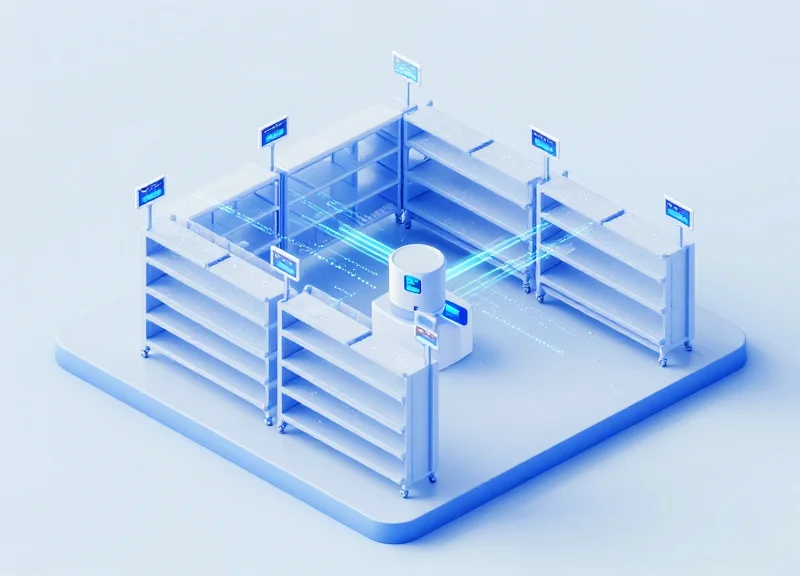
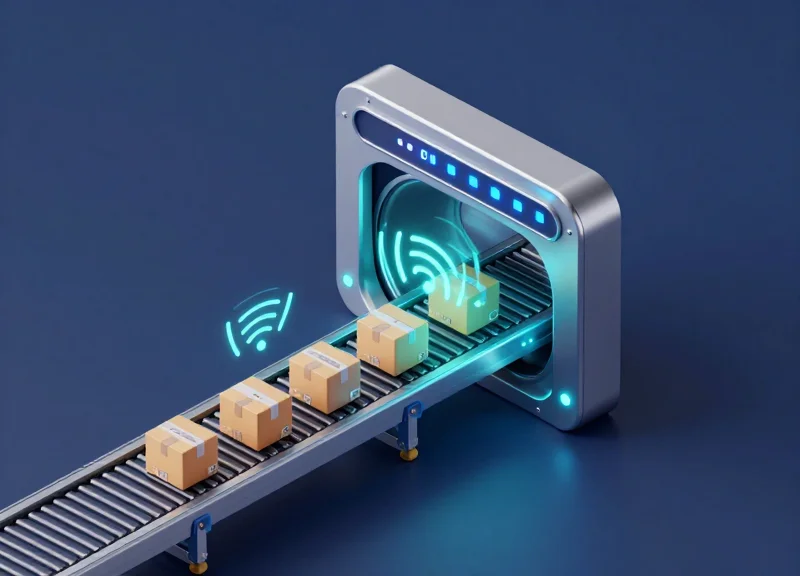
The integration of Radio Frequency Identification (RFID) and Electronic Shelf Labels (ESL) represents the pinnacle of pharmaceutical logistics, transforming a static pharmacy shelf into a dynamic 'Digital Twin' of the facility's inventory. While RFID provides the 'what' and 'where' at the item level (individual bottles or boxes), ESL provides the 'context' and 'status' at the point of interaction. By synchronizing these two technologies through a centralized IoT gateway, DragonGuardGroup enables a holistic control loop where physical stock levels and digital records are updated simultaneously, ensuring that what the pharmacist sees on the shelf perfectly reflects the backend management system.
| Feature | RFID (Item Level) | ESL (Shelf Level) | Integrated Synergy |
|---|---|---|---|
| Primary Role | Unique Identification | Visual Information Display | End-to-End Visibility |
| Tracking Method | Non-line-of-sight scanning | Fixed location anchoring | Precise 2-second positioning |
| Update Trigger | Movement/Pass-through | Cloud-based commands | Event-driven automation |
| Inventory Impact | Shrinkage detection | Price & Stock accuracy | Automated reconciliation |
- Unified Data Mapping: Assign unique RFID tags to medication units and link them to specific ESL IDs in the central database to establish a spatial relationship.
- Gateway Synchronization: Deploy multi-protocol IoT gateways that handle both Zigbee/BLE (for ESL) and UHF RFID signals to prevent data silos.
- Real-Time Event Triggers: Configure the system so that when an RFID tag leaves a zone, the corresponding ESL automatically updates the 'Stock Count' or triggers a 'Low Stock' alert.
- Automated Reconciliation: Run background 'heartbeat' checks where the system compares the number of RFID tags detected in a bin with the count displayed on the ESL.
One original insight from our decades of deployment is the elimination of the 'Shadow Inventory Paradox'. This occurs when an item is physically present in the pharmacy but logically 'lost' because it was placed behind the wrong shelf label. In a siloed system, an RFID reader might confirm the item is in the room, but the pharmacist can't find it. By integrating the two, the system can trigger the LED light on the specific ESL where the 'misplaced' RFID tag is currently detected, turning a 20-minute search into a 2-second recovery.
Do RFID and ESL signals interfere with each other?
No. DragonGuardGroup systems utilize distinct frequency bands (e.g., 2.4GHz for ESL and 860-960MHz for UHF RFID) to ensure zero cross-talk and maximum signal integrity.
Can I use existing RFID tags with new ESL installations?
Yes, our API-first approach allows for the integration of most standard EPC Gen2 RFID tags with our proprietary ESL software layer.
What is the maintenance overhead for an integrated system?
Minimal. Modern ESL batteries last 5-10 years, and passive RFID tags require no power source of their own, making the system virtually 'set and forget'.
ROI of Smart Prescription Systems: Beyond Just Safety

The Return on Investment (ROI) for smart prescription systems is a multi-dimensional financial metric that extends far beyond the mitigation of litigation risks associated with dispensing errors. While patient safety remains the moral imperative, the fiscal justification is rooted in operational 'lean' principles: the drastic reduction of 'search time' via 2-second precise positioning, the automation of inventory audits, and the optimization of stock rotation to prevent expiration waste. For most healthcare facilities, the transition from manual tracking to an integrated RFID and ESL (Electronic Shelf Label) ecosystem results in a break-even point within 12 to 18 months, driven primarily by recaptured labor hours and improved inventory carry costs.
| Operational Metric | Manual Process Baseline | Smart System Performance | Financial Impact |
|---|---|---|---|
| Average Retrieval Time | 45 - 90 Seconds | 2 - 5 Seconds | 70% Reduction in Labor Cost |
| Inventory Shrinkage/Waste | 3% - 5% Annually | Less than 0.5% | Preservation of Capital |
| Monthly Audit Duration | 24+ Staff Hours | Real-time / Instant | Reallocation of Clinical Staff |
| Stockout Rate | 8% - 12% | Near 0% | Increased Fulfillment Revenue |
One unique insight often overlooked by hospital administrators is the concept of 'Shadow Labor.' In manual environments, pharmacists spend approximately 25% to 30% of their shift performing logistical tasks—searching for misplaced vials, manually checking expiration dates, and reconciling stock levels. This is a massive 'opportunity cost' where high-salary clinical experts are used for low-value inventory management. A smart system utilizes precise positioning to eliminate the 'search' phase, effectively giving that 30% of time back to the facility to focus on high-margin clinical consultations or increased prescription throughput.
Does the system help with medication expiration management?
Yes. By using real-time inventory alerts and ESL date-tracking, the system implements a strict FEFO (First-Expired, First-Out) protocol. This ensures that medications nearing their expiration date are highlighted for immediate use, reducing the thousands of dollars typically lost to expired waste each year.
How does 2-second positioning impact the bottom line?
In a high-volume pharmacy, saving 40 seconds per prescription across 500 prescriptions a day equates to over 5 hours of saved labor daily. Over a year, this represents thousands of dollars in reclaimed productivity.
Can smart systems prevent inventory shrinkage?
Absolutely. By integrating RFID tracking with real-time inventory alerts, every movement of a high-value medication is logged. This transparency acts as a powerful deterrent to internal theft and significantly reduces administrative errors that lead to 'phantom' inventory.
Future Trends: The Evolution of Automated Medication Tracking

The evolution of automated medication tracking is moving beyond simple location-based data toward 'Ambient Intelligence,' where the pharmacy environment itself becomes a sensor-rich ecosystem capable of autonomous decision-making. By integrating Generative AI with advanced IoT sensors, the future pharmacy will transition from reactive inventory management to predictive healthcare logistics, effectively eliminating human error while optimizing the global pharmaceutical supply chain.
As we look toward the next decade, three pillars will define the industry: Hyper-accuracy through 6G connectivity, decentralized edge computing for instantaneous data processing, and the implementation of 'Digital Twins' to simulate and perfect pharmacy workflows in real-time.
| Feature | Current Standard (2024) | Future Horizon (2027+) |
|---|---|---|
| Tracking Accuracy | 2-Second Precise Positioning | Sub-millimeter Real-time Bio-tracking |
| Inventory Management | Real-time Alerts | Autonomous Self-Replenishing Systems |
| Data Processing | Cloud-based Analytics | On-device Edge AI Intelligence |
| Security | Encrypted Databases | Blockchain-enabled Immutable Ledger |
A unique insight into this evolution is the concept of the 'Digital Twin Pharmacy.' By creating a 3D, data-fed virtual replica of the physical pharmacy, managers can run 'what-if' scenarios using historical pick-data. This allows for the physical rearrangement of medication shelves to optimize human movement patterns before a single shelf is moved, potentially increasing throughput by an additional 15-20% beyond current automation levels.
How will AI change the role of the pharmacist in an automated system?
AI will shift the pharmacist's role from manual verification to clinical oversight. Systems will not only track the 'where' but also the 'why,' cross-referencing patient biometrics with prescription data to flag potential adverse reactions before the medication even reaches the dispensing bin.
What role does 5G/6G play in medication tracking?
Ultra-low latency connectivity allows for massive IoT density, meaning every individual pill bottle or blister pack can be tracked simultaneously without network congestion, ensuring 100% visibility from the manufacturer to the patient's hand.
Will manual inventory counts become obsolete?
Yes. With the maturation of weight-sensing smart shelves and computer vision, the concept of a 'cycle count' will disappear, replaced by a continuous, 24/7 autonomous audit that is accurate to the single milligram.
Ultimately, the goal of these technological advancements is 'Invisible Pharmacy.' This is an environment where the technology is so deeply integrated and reliable that it operates entirely in the background, allowing healthcare providers to return to the heart of their profession: direct patient interaction and personalized care.
Best Practices for Implementing Precise Positioning in Healthcare
Implementing precise positioning in a healthcare setting—specifically for prescription accuracy—is the process of synchronizing physical inventory locations with a digital management layer using IoT hardware like Electronic Shelf Labels (ESL) and RFID. To achieve the benchmark of 2-second precise positioning, facilities must move beyond simple digital tagging and adopt a 'zero-latency' infrastructure that connects the pharmacist’s terminal directly to the physical storage unit. This ensures that when a prescription is scanned, the correct bin lights up or signals its location almost instantaneously, eliminating the 'search time' that contributes to most dispensing errors.
- Infrastructure Readiness Audit: Before deployment, assess your facility's Wi-Fi dead zones and interference points. Precise positioning relies on high-frequency communication; ensuring robust signal coverage at the shelf level is non-negotiable for 2-second response times.
- Deep API Integration with PMS: Ensure your positioning hardware (like DragonGuard’s ESL systems) is integrated via a low-latency API into your Pharmacy Management System (PMS). The positioning should be a background 'push' event triggered the moment a label is printed.
- Calibration for High-Density Storage: In environments where medications are packed tightly, calibrate your system to differentiate between items within 5-10 centimeters. Use high-visibility LED indicators on tags to provide immediate visual cues.
- The 'Phased Rollout' Strategy: Begin with high-velocity medications (the top 20% of prescriptions that account for 80% of volume). This allows the staff to adapt to the speed of the system before a full-scale facility conversion.
| Implementation Factor | Traditional Digital Tagging | 2-Second Precise Positioning |
|---|---|---|
| Data Refresh Rate | 15 - 60 seconds | Sub-1 second |
| Location Accuracy | Shelf-level only | Bin-level (Centimeter precision) |
| Integration Type | Batch updates | Real-time Event-driven |
| Staff Feedback | Visual search required | Immediate Light-guided pick |
Expert Insight: The 'Network Jitter' Trap. In my 20 years of Silicon Valley deployments, I’ve seen many 'fast' systems fail during peak hospital hours. The secret to maintaining a 2-second positioning speed isn't just the hardware; it's the use of Edge Gateways. By processing the positioning logic at the local gateway level rather than sending every 'pick' request to a distant cloud server, you bypass network congestion and ensure that your 2-second promise remains true even when the hospital's main network is under heavy load.
What is the typical downtime during implementation?
Modern ESL and RFID systems are designed for 'live' installation. Most pharmacies can transition overnight or during low-traffic hours without pausing prescription fulfillment.
Do we need to replace our existing pharmacy shelving?
No. Precise positioning hardware is typically shelf-agnostic and can be retrofitted onto existing metal, plastic, or wood cabinetry using modular rail systems.
How does this system handle refrigerated medications?
Specialized tags with IP67 ratings and low-temperature batteries are used for cold storage, ensuring the positioning logic remains consistent in fridges and freezers.