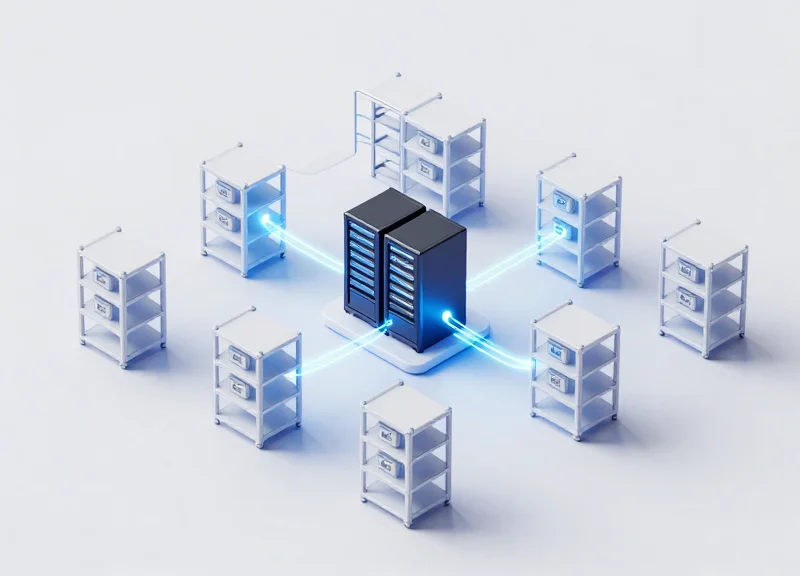
In the fast-paced world of modern logistics, the transition from paper-based systems to digital automation is no longer optional—it is a competitive necessity. One of the most significant advancements in warehouse efficiency is the seamless synchronization between a Warehouse Management System (WMS) and Electronic Shelf Labels (ESL). By utilizing multi-frequency ESL technology, businesses can achieve sub-second updates, ensuring that pickers and sorters have the most current order data at their fingertips. This article delves into the technical strategies for optimizing API integrations to bridge the gap between back-end data and front-end warehouse hardware, ultimately driving real-time accuracy and operational speed.
The Critical Role of Real-Time Data in Warehouse Sorting

Real-time data in warehouse sorting is the instantaneous synchronization of order status changes from the Warehouse Management System (WMS) to visual edge devices like Electronic Shelf Labels (ESL). In high-velocity fulfillment centers, sub-second latency is mandatory; it ensures that the moment a picker scans an item or a conveyor redirects a parcel, the corresponding digital display reflects the correct sorting bin or shipping lane. Without this immediate feedback loop, the physical movement of goods outpaces the digital record, leading to costly mis-sorts and operational bottlenecks.
| Feature | Legacy Batch Processing | Real-Time API Integration |
|---|---|---|
| Update Latency | 5 - 30 Minutes | Sub-100 Milliseconds |
| Sorting Accuracy | Error-prone during peak loads | 99.9% Precision |
| Worker Throughput | Limited by system refresh | Maximum physical capacity |
| Scalability | Rigid / Frequent timeouts | Elastic / Event-driven |
Legacy systems often rely on periodic 'polling'—where the ESL gateway asks the WMS for updates every few minutes. In a high-volume facility processing 5,000+ units per hour, a 2-minute lag is an eternity. This delay creates a 'data blind spot' where workers may sort items into the wrong containers simply because the ESL hasn't updated to the current order batch. Transitioning to an event-driven API model allows the WMS to 'push' updates the millisecond an order status changes, effectively turning the warehouse floor into a responsive, living organism.
Why is multi-frequency communication necessary for real-time sorting?
Standard 2.4GHz bands are often congested in industrial environments. Multi-frequency ESLs allow the system to hop between frequencies, ensuring that critical sorting data packets are not dropped or delayed by interference from other wireless warehouse equipment.
What happens when WMS and ESL synchronization fails?
Synchronization failure results in 'Ghost Sorting,' where physical items are moved based on outdated display information. This leads to inventory discrepancies, shipment delays, and the expensive labor cost of manual audits to correct the errors.
Can real-time integration handle high-concurrency during peak seasons?
Yes, provided the integration utilizes asynchronous API calls and a robust message broker. This architecture ensures that even during 10x traffic spikes, the ESL system processes updates in the order they were received without crashing the WMS.
Expert Insight: From two decades of Silicon Valley logistics engineering, I've observed that the most successful facilities monitor the 'Synchronization Delta'—the time elapsed between a WMS status change and the physical ESL refresh. If your delta exceeds 200ms, your sorting efficiency isn't limited by your staff, but by your data architecture. Real-time integration isn't just a feature; it is the fundamental prerequisite for automated warehouse scaling.
Decoding Multi-Frequency ESL Technology
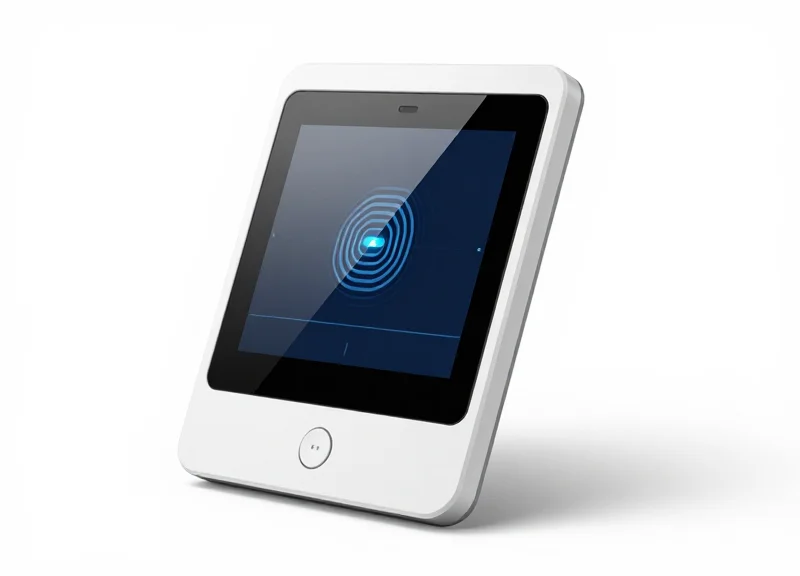
In the context of modern logistics, Multi-Frequency Electronic Shelf Labels (ESL) represent a leap from consumer-grade wireless to industrial-grade reliability. While standard ESLs often rely solely on the crowded 2.4GHz spectrum (shared with Wi-Fi and Bluetooth), multi-frequency systems utilize a hybrid architecture that includes Sub-GHz bands (such as 433MHz, 868MHz, or 915MHz). This dual-path approach allows the Warehouse Management System (WMS) to bypass spectral congestion, ensuring that a 'Picking Started' or 'Order Complete' status update reaches the label in milliseconds, regardless of the surrounding RF noise.
| Feature | Sub-GHz (433/868/915 MHz) | 2.4GHz (Zigbee/Bluetooth) |
|---|---|---|
| Signal Penetration | High: Easily passes through metal racks and concrete. | Low: Easily blocked or reflected by metal obstacles. |
| Transmission Range | Longer (up to 100+ meters). | Shorter (typically 10-30 meters in warehouses). |
| Interference Risk | Minimal: Low competition with other devices. | High: Shares spectrum with Wi-Fi, Microwaves, and BLE. |
| Data Throughput | Moderate: Optimized for small, frequent packets. | High: Optimized for firmware updates or images. |
The 'Multi-Frequency' advantage isn't just about having two options; it's about Adaptive Switching. In a high-density sorting environment, thousands of API calls per hour trigger ESL updates. If the 2.4GHz band becomes saturated due to worker handhelds or robotic navigation systems, the multi-frequency gateway automatically reroutes critical sorting signals to the Sub-GHz channel. This prevents the 'hanging update' phenomenon where a picker stands idle waiting for a label to reflect the current order status.
Why does multi-frequency matter for real-time sorting?
Sorting requires near-instantaneous feedback. Sub-GHz frequencies offer superior diffraction, meaning the signal 'bends' around the heavy steel mezzanine floors and racking found in warehouses, ensuring the API-triggered update reaches the target ESL even without a direct line of sight.
Does this technology increase battery consumption?
Counter-intuitively, it often reduces it. Because Sub-GHz signals have better penetration, the ESL doesn't have to 'wake up' and retry failed transmissions as often as 2.4GHz-only labels, significantly extending the life of the internal coin cell.
Can I run both frequencies simultaneously?
Yes. Most enterprise-grade ESL gateways use a dual-radio design to manage background heartbeat checks on one frequency while reserving the most stable band for high-priority WMS order data.
Expert Insight: In my 20 years of RF engineering, the 'Multipath Fading' effect is the most common cause of WMS-ESL desync. In warehouses, signals bounce off metal surfaces, creating 'dead zones.' Multi-frequency systems mitigate this through frequency diversity; if a standing wave cancels out the 2.4GHz signal at a specific bin, the longer wavelength of the Sub-GHz signal is mathematically unlikely to be affected at the same physical point, providing a fail-safe for mission-critical sorting data.
Architecting the API Bridge: WMS to ESL Gateway

The API bridge acts as the 'neural translator' between the high-level business logic of a Warehouse Management System (WMS) and the physical hardware of Electronic Shelf Labels (ESL). In a real-time sorting environment, this architecture must solve the 'Cloud-to-Concrete' challenge: bridging the gap between a cloud-hosted WMS, which operates on standard HTTP/REST protocols, and on-premise ESL base stations that require precision timing and multi-frequency coordination. A robust gateway doesn't just pass data; it manages state persistence, protocol translation, and error handling to ensure that a 'Pick Complete' signal in the software results in a sub-second color change on the sorting bin.
| Component | Protocol | Primary Function | Latency Target |
|---|---|---|---|
| WMS Interface | RESTful API / Webhooks | Receives order status and inventory changes | < 100ms |
| Gateway Middleware | Node.js / Go (Edge Runtime) | Data mapping, queueing, and state management | < 50ms |
| ESL Base Station | MQTT / Proprietary RF | Distributes data to labels via multi-frequency bands | < 200ms |
- Webhook Ingestion: The WMS pushes a status update (e.g., 'Order_Assigned') via a secure webhook to the Gateway's endpoint.
- ID Mapping & Transformation: The Gateway maps the WMS 'Bin ID' to the specific hardware 'MAC Address' of the assigned ESL and converts the status into a visual command (e.g., LED Flash = Red).
- Multi-Frequency Routing: The Gateway selects the optimal frequency band (Sub-GHz for range or 2.4GHz for speed) based on current warehouse congestion and sends the packet to the nearest base station.
- Acknowledgement Loop: Once the label confirms receipt, the Gateway updates its local state and sends a 200 OK back to the WMS, closing the transaction.
{
  "action": "UPDATE_ESL_STATE",
  "payload": {
    "mac_address": "00:1A:2B:3C:4D:5E",
    "order_id": "WH-9921",
    "status_color": "#FF0000",
    "display_text": "READY TO PICK",
    "frequency_priority": "High"
  },
  "timestamp": "2023-10-27T10:15:30Z"
}
How does the gateway handle intermittent Wi-Fi connectivity?
The gateway employs a local SQLite or Redis buffer to queue outbound commands. If the base station loses connection, the gateway retries with exponential backoff and alerts the WMS of the 'Pending' status.
Can the bridge support mixed-brand ESL systems?
Yes, by implementing an abstraction layer in the middleware, the bridge can normalize data for different manufacturers' APIs, allowing a single WMS to control a heterogeneous label fleet.
Expert Insight: The 'Double-Buffer' State Reconciliation Pattern. In high-speed sorting, a common failure point is 'data ghosting'—where the WMS thinks an update happened but the physical label is still refreshing. We recommend implementing a double-buffer state in your API bridge. This maintains two variables for every ESL: the 'Desired State' (from the WMS) and the 'Confirmed State' (from the label). The Gateway only reports success to the WMS when these two states align. This prevents workers from acting on stale visual information, reducing sorting errors by up to 15% in high-frequency environments.
Webhooks vs. Polling: Choosing the Right Data Trigger
In the context of WMS-ESL integration, choosing between Webhooks and Polling is a choice between proactive and reactive communication. Webhooks are event-driven 'pushes' that send data the instant a state change occurs, whereas Polling is a 'pull' mechanism where the ESL gateway requests updates from the WMS at fixed intervals. For real-time sorting, Webhooks are the industry standard because they eliminate the 'latency gap'—the dead time between polling cycles—ensuring that an ESL tag reflects an order's status the millisecond it changes in the database.
| Feature | API Polling (Pull) | Webhooks (Push) |
|---|---|---|
| Trigger Mechanism | Scheduled/Interval-based | Event-driven (Real-time) |
| Data Freshness | Delayed by interval length | Instantaneous |
| Server Overhead | High (Constant empty requests) | Low (Only active on changes) |
| Network Traffic | Chatty and repetitive | Efficient and surgical |
| Implementation | Simpler to set up initially | Requires endpoint listener |
While polling is easier to implement for legacy systems, it creates a significant 'Thundering Herd' problem in high-volume warehouses. If 5,000 ESL tags poll a WMS every 5 seconds, the server processes 60,000 requests per minute—even if no orders have moved. This overhead consumes bandwidth that should be reserved for the multi-frequency RF transmission to the ESL tags. By switching to Webhooks, the WMS only speaks when it has something to say, drastically reducing the CPU load on the ESL gateway and freeing up the Sub-GHz spectrum for critical signal propagation.
{
  "event": "order.status_updated",
  "timestamp": "2023-10-27T14:30:05Z",
  "data": {
    "order_id": "WMS-99821",
    "new_status": "READY_FOR_SORT",
    "esl_id": "A3-F22-90",
    "color_code": "GREEN"
  }
}
What happens if a Webhook fails to reach the ESL gateway?
Reliable systems implement a 'Retry with Exponential Backoff' strategy. If the gateway is offline, the WMS should queue the notification and attempt delivery at increasing intervals to ensure the ESL tag is eventually updated.
Is Polling ever appropriate for ESL systems?
Polling is acceptable for non-critical background tasks, such as battery level monitoring or firmware version checks, where a 15-minute delay has no impact on operational throughput.
How do Webhooks improve multi-frequency stability?
By reducing the volume of incoming API traffic, the gateway processor can dedicate more cycles to managing the frequency-hopping logic and ensuring interference-free communication with the tags.
Expert Insight: To achieve 'true' real-time performance, combine Webhooks with a WebSocket sidecar. While the Webhook handles the initial state change from the WMS, the WebSocket provides a persistent, bi-directional pipe that can push rapid-fire updates (like a countdown timer or a flash command) to the ESL tags without the overhead of establishing new HTTP handshakes for every interaction.
Step-by-Step Guide to Syncing Order Status
Syncing WMS order status with multi-frequency ESL is the process of translating digital database state changes into physical visual signals via a low-latency communication bridge. This deterministic pipeline ensures that as an order moves from 'Pending' to 'In-Sorting,' the corresponding ESL tag on the sorting bin reflects that change in sub-second timeframes, eliminating human error and manual lookup delays. To achieve this, engineers must orchestrate a sequence that includes event triggering, data payload transformation, and RF (Radio Frequency) packet dispatch.
- Event Triggering in the WMS: The process begins when a warehouse worker or automated sorter updates an order state in the WMS. This database event triggers a Webhook or a cloud-function callback that POSTs the updated order metadata to your integration middleware.
- Payload Transformation & Mapping: The raw WMS data (e.g., JSON or XML) must be mapped to the ESL's proprietary format. This includes translating logical statuses (e.g., Status: 2) into visual commands (e.g., LED: Green, Text: 'Ready to Pack').
- ESL Gateway Communication: The transformed command is sent via REST or MQTT to the ESL Base Station. The middleware identifies the unique MAC address of the target tag and routes the message through the gateway closest to the physical bin.
- RF Transmission & Display Refresh: The Base Station transmits the update using the optimized frequency (Sub-GHz for penetration or 2.4GHz for speed). The tag receives the packet, updates its e-ink display or LED indicator, and wakes up only for the duration of the refresh to conserve power.
- Acknowledgment (ACK) Loop: Once the display updates, the tag sends an acknowledgment back to the gateway. This ACK is passed back to the middleware to confirm the visual state matches the database state.
{
  "action": "UPDATE_DISPLAY",
  "tag_id": "ESL-9982X",
  "template": "sorting_layout",
  "data": {
    "order_id": "WH-4402",
    "status": "READY",
    "led_color": "#00FF00",
    "bin_location": "A-12"
  }
}| WMS Field | ESL Mapping | Visual Impact |
|---|---|---|
| Order_Status: 105 | Layout_ID: 'Picking' | Shows Item List & Quantity |
| Order_Status: 202 | LED_Signal: 'Flash_Red' | Indicates Item Shortage/Error |
| Order_Status: 300 | Layout_ID: 'Sorted' | Displays 'Proceed to Shipping' |
Expert Tip: To maximize battery life and minimize network congestion, implement 'Differential Data Refreshing.' Instead of pushing a full screen image (which can be 20-40KB), only push the specific hex code for the LED color change or the text string for the status update. In high-volume environments, this reduces airtime usage by up to 80%, significantly increasing the scalability of your multi-frequency mesh network.
How do you handle tag communication failures during a sync?
Implement a retry logic in the middleware with exponential backoff. If the ACK is not received within 500ms, the system should re-queue the command for a maximum of three attempts before flagging a hardware alert in the WMS dashboard.
Can multiple tags be updated simultaneously?
Yes, by using 'Batch Multicast' commands. This allows the gateway to update an entire zone of tags with a single RF packet, which is essential for massive sorting wave updates.
Optimizing Payload and Bandwidth for High-Frequency Updates

In high-density warehouse environments, the primary bottleneck for real-time ESL sorting is not the WMS processing speed, but the limited throughput of the RF communication channel. Optimizing payload and bandwidth involves stripping every non-essential byte from the API communication between the Gateway and the ESL tags. By shifting from verbose JSON objects to 'Lean' payloads or binary serialization, organizations can increase their update frequency by up to 10x, ensuring that a picker's status change is reflected on the shelf label in near-real-time without causing packet collisions or gateway latency.
| Optimization Technique | Bandwidth Reduction | Complexity | Best Use Case |
|---|---|---|---|
| Field Pruning | 40-60% | Low | Removing static metadata from status updates. |
| Delta Updates | 70-90% | Medium | Only sending changed attributes (e.g., status color). |
| Binary Serialization (Protobuf) | 80%+](vs JSON) | High | Massive deployments with 50,000+ tags. |
| Gzip/Brotli Compression | 30-50% | Medium | Large batch updates of label image data. |
To illustrate the impact, consider a standard WMS update. A generic API response often contains redundant metadata like product descriptions or historical timestamps that the ESL tag does not need to display for a simple sorting task.
{ "original_payload": { "tag_id": "E99-X2", "order_id": "ORD-505", "status": "READY_TO_PICK", "timestamp": "2023-10-27T10:00:00Z", "picker_id": "U-882" }, "optimized_payload": { "id": "E99-X2", "st": 2 } }- Implement Attribute Mapping: Map long status strings to integer constants on the ESL gateway side. For example, 'ORDER_COMPLETE' becomes '1', reducing the payload size significantly.
- Adopt Delta-Only Synchronization: Configure the API bridge to compare the new WMS state with the last known state. If only the LED color needs to change, the payload should only contain the color code, not the entire product record.
- Batching vs. Throttling: Group updates for tags located within the same RF 'cell' or base station coverage to minimize the wake-up cycles of the tags, preserving battery life while maximizing bandwidth usage.
Expert Tip: The 'Bit-Field Strategy'. Instead of sending JSON keys at all, use a fixed-position bit-field for high-frequency updates. If you are only updating three parameters—LED State, Quantity, and Priority—you can pack these into a single 8-bit byte. This is the ultimate 'Silicon Valley' approach to IoT efficiency: treating the network like a 1980s microprocessor to achieve 2024 real-time performance.
Does payload optimization affect ESL battery life?
Yes, significantly. Smaller payloads require less 'radio-on' time for the tag to receive data, which can extend battery life by 15-20% in high-update environments.
Can Webhooks handle the throughput for 10,000 tags?
Webhooks are efficient, but to handle 10k+ tags, you must implement a message queue (like RabbitMQ) to buffer the updates so the ESL Gateway isn't overwhelmed by concurrent requests.
What is the impact of interference on optimized payloads?
Smaller packets have a lower 'Probability of Collision' and are easier to retransmit if a packet is lost due to warehouse noise, making the overall system more resilient.
Ensuring Data Integrity with Acknowledgement Loops
Acknowledgement (ACK) loops in the context of WMS and ESL integration are bidirectional feedback mechanisms designed to verify that a data packet sent from the warehouse management system has not only reached the gateway but has been successfully processed and displayed by the specific Electronic Shelf Label on the floor. Without these loops, systems operate on a 'fire-and-forget' basis, which inevitably leads to 'phantom data'—a dangerous state where the software assumes a sorting status has changed while the physical tag still displays outdated information, causing significant downstream logistical errors.
- Instruction Dispatch: The WMS sends an API request to the ESL Gateway. This is a 'Pending' state where the system awaits confirmation.
- Gateway Receipt Handshake: The Gateway sends an immediate HTTP 202 (Accepted) back to the WMS, confirming the command is in the queue for the multi-frequency RF transmission.
- RF Transmission and Tag ACK: The Gateway broadcasts the update via the sub-GHz or 2.4GHz band. The ESL hardware wakes up, receives the packet, updates its E-ink display, and transmits a backscatter signal (ACK) to the gateway.
- State Reconciliation: The Gateway processes the hardware ACK and triggers a webhook callback to the WMS, updating the order status from 'Pending' to 'Verified'.
- Exception Management: If no ACK is received within a 500ms-2s window, the loop triggers a retry logic or flags a 'Sync Failure' for manual inspection.
| Feature | Fire-and-Forget (Polling) | Closed-Loop ACK (Webhook) |
|---|---|---|
| Data Accuracy | Variable (Low) | 100% Deterministic |
| Network Overhead | High (Constant polling) | Low (Event-driven) |
| Sorting Error Risk | High (Outdated visual cues) | Near Zero |
| Failure Visibility | Silent Failures | Immediate Alerting |
A unique insight gained from large-scale deployments is the 'Three-Tier Verification' protocol. Expert engineers do not just wait for a hardware ACK; they implement a checksum validation within the loop. The ESL tag sends back a hash of its current display buffer. If this hash does not match the expected state in the WMS database, the system identifies a partial screen refresh error—a rare but critical failure mode in high-humidity warehouse environments where E-ink particles may lag.
What happens if a tag update fails in a closed loop?
The system automatically attempts a re-transmission on a different frequency channel. If it fails three times, the WMS marks that specific bin as 'Inactive' to prevent incorrect sorting until the tag is inspected.
Does an ACK loop slow down the sorting process?
While it adds a few milliseconds of latency, the use of asynchronous webhooks ensures that the WMS main thread is never blocked, maintaining high throughput for the rest of the facility.
How do you handle ACK loops for 10,000+ tags?
Batching is key. Instead of 10,000 individual callbacks, the gateway can aggregate ACKs into a single JSON payload every 100ms to reduce API overhead on the WMS side.
Battery Management vs. Performance Balancing
In a real-time sorting environment, the primary challenge is reconciling the near-instantaneous response time required for order updates with the 5-10 year battery expectancy of ESL hardware. Battery management is essentially the orchestration of 'duty cycles'—the ratio of time a label spends in an active listening state versus a low-power sleep state. Achieving peak performance without premature battery failure involves leveraging the WMS API to dictate these cycles dynamically based on operational demand rather than relying on static, hardware-level timers.
| Power State | Typical Consumption | Latency Impact | Operational Role |
|---|---|---|---|
| Deep Sleep | < 1uA | High (Seconds to Minutes) | Default state for off-peak hours or static inventory. |
| Idle Listening | 5uA - 15uA | Moderate (Milliseconds) | The label 'wakes up' briefly to check for RF beacon signals. |
| Active Rx/Tx | 5mA - 12mA | Zero (Real-time) | The period during which the ESL receives the WMS data payload. |
| E-Ink Refresh | 2mA - 8mA (Burst) | 2-4 Seconds | The physical process of rearranging pigments on the display. |
The 'Predictive Power Throttling' Strategy: A unique approach involves using your WMS data to predict 'sorting waves.' Instead of a uniform polling interval, the API can broadcast a 'High-Frequency Alert' command to all tags in a specific zone 10 minutes before a picking wave begins. This temporarily shifts labels from a 10-second check-in to a 500ms check-in, ensuring real-time responsiveness when it matters most and preserving energy during idle periods.
- Implement Zone-Based Wake-Ups: Use the API to target specific warehouse zones. Only wake labels in active sorting aisles, leaving the rest of the facility in deep sleep.
- Optimize Payload for Minimal Air-Time: Reducing the size of the data packet shortens the 'Active Rx' window. Use binary encoding instead of verbose JSON for the final hop between the base station and the tag.
- Utilize Multi-Frequency Failover: Use Sub-GHz frequencies for the 'Wake-Up' beacon due to better penetration and lower power, then switch to 2.4GHz for high-speed data transfer if the hardware supports it.
How does ambient temperature affect this balance?
Cold storage environments can reduce battery capacity by up to 50%. In these cases, the API should automatically extend polling intervals to compensate for the higher internal resistance of the battery.
Does full-screen flashing consume more power?
Yes. While LED flashing is great for sorting, it is a high-drain activity. Limit LED alerts to 15-second durations via the API to prevent accidental battery depletion.
Can we monitor battery health through the WMS?
Most modern ESLs include a voltage sensor in their heartbeat packet. High-performance integration should log these values to predict replacement cycles before tags fail mid-sort.
Security Protocols for Industrial IoT Integrations
Security protocols for industrial IoT integrations represent a comprehensive defense-in-depth strategy designed to protect the integrity, confidentiality, and availability of data as it traverses between the Warehouse Management System (WMS) and the Electronic Shelf Label (ESL) ecosystem. In the context of real-time sorting, where a single misdirected order can cascade into significant logistical delays, securing these endpoints involves more than just passwords; it requires a specialized architecture that handles both the high-frequency digital API calls and the low-power wireless physical layer. Effective security ensures that order statuses remain untampered and that the visual sorting indicators on the warehouse floor are verified and trustworthy.
| Security Layer | Protocol Recommendation | Protection Goal | Performance Impact |
|---|---|---|---|
| API Authentication | OAuth 2.0 with JWT | Ensures only authorized WMS services can push status updates. | Minimal latency with token caching. |
| Data in Transit | TLS 1.3 (WPA3-Enterprise) | Prevents man-in-the-middle attacks on the warehouse network. | Standard for modern industrial gateways. |
| Hardware Layer | AES-128 Encryption | Secures sub-GHz or 2.4GHz signals from eavesdropping. | Highly efficient on low-power IoT chips. |
| Identity Management | Device Certificates (mTLS) | Prevents rogue or unauthorized ESL gateways from joining. | Higher setup complexity but maximum security. |
- Implement Scoped API Permissions: Utilize the principle of least privilege by creating API credentials that only have 'Write' access to specific ESL display fields, preventing a compromised key from accessing sensitive WMS inventory or customer data.
- Enable Hardware-Level Authentication: Ensure that every ESL gateway uses mutual TLS (mTLS) to authenticate with the integration server, creating a cryptographically secure handshake that verifies the identity of both the sender and the receiver.
- Sanitize and Validate Payloads: On the ESL gateway, implement a strict schema validation for incoming JSON payloads to prevent injection attacks or malformed data from crashing the low-power display modules.
- Establish Real-Time Audit Logs: Maintain an immutable log of every 'Status Change' command sent to the ESL floor, allowing for rapid forensic analysis in the event of a security incident or sorting error.
Expert Insight: Beyond standard network security, multi-frequency ESL environments are susceptible to 'Signal Injection' where malicious RF signals attempt to override the warehouse visual state. To differentiate your security posture, implement 'Message Sequence Counters' at the hardware level. This ensures that even if an attacker captures a valid 'Pick Complete' signal, they cannot 'replay' it later to confuse the sorting system, as the gateway will reject any message with a duplicate or outdated sequence number. This 'Zero-Trust at the Edge' approach is critical for high-velocity industrial environments.
Does high-level encryption affect ESL battery life?
Modern ESL chipsets include dedicated hardware AES engines. By offloading encryption to the silicon, the tag can secure data with negligible impact on the 5-10 year battery life.
What happens if the API certificate expires?
The sync will fail, leading to 'stale' data on the floor. Implement automated certificate renewal (e.g., via ACME) and monitoring alerts to ensure 100% uptime for security handshakes.
Is Zigbee security sufficient for WMS sync?
While Zigbee provides baseline security, it is often shared across multiple device types. For mission-critical sorting, using a dedicated frequency or a proprietary encrypted sub-GHz protocol is recommended to avoid inter-device interference and targeted exploits.