
As we approach 2026, the retail landscape has shifted from merely digitizing price tags to optimizing the total cost of ownership (TCO). While large, high-resolution screens often catch the eye during initial demos, the hidden engine of a successful Electronic Shelf Label (ESL) deployment lies in its battery life management strategy. A system that looks beautiful but requires massive manual intervention for battery swaps every three years is a liability, not an asset. This guide explores why power efficiency is the ultimate metric for modern retail scalability and how it impacts your long-term success.
The Evolution of ESL: Why 2026 Demands a New Approach

In 2026, the evolution of Electronic Shelf Labels (ESL) marks a definitive transition from static digital price tags to high-density IoT nodes where operational longevity—specifically battery life management—dictates the actual Return on Investment (ROI) over physical screen aesthetics. While previous generations focused on 'shelf-edge eye candy' like larger displays and multi-color E-ink, the current retail landscape demands a 'Sustainability-First' strategy. This shift is driven by the realization that the cost of labor to replace a single failed battery often exceeds the cost of the tag itself, making power management the most critical technical specification for modern enterprise deployments.
| Feature Era | Primary Focus | Key Metric | The 2026 Priority |
|---|---|---|---|
| First Gen (2010-2018) | Price Accuracy | Update Speed | Legacy Compatibility |
| Second Gen (2019-2024) | Aesthetics & Marketing | Screen Size/Colors | Visual Impact |
| The 2026 Standard | Operational Efficiency | Energy Autonomy | Battery Management Strategy |
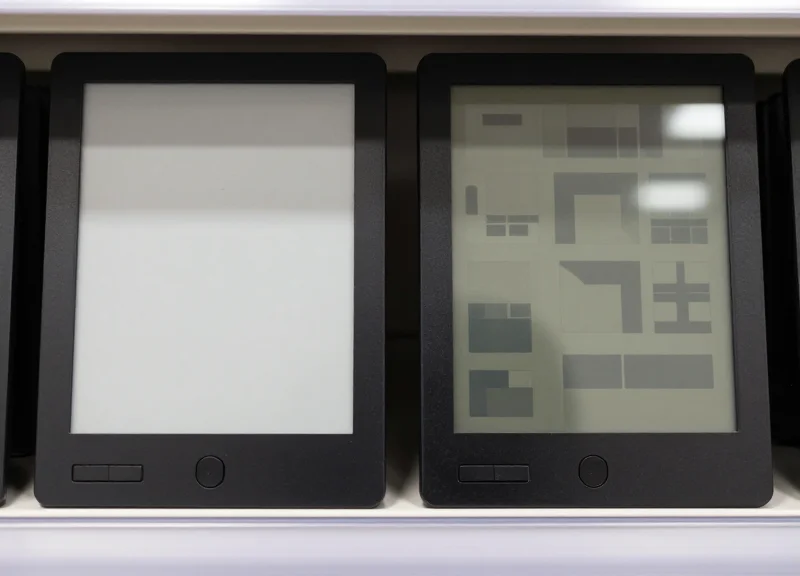
Retailers have historically been seduced by larger screen sizes, treating ESLs as miniature billboards. However, as store networks scale to hundreds of thousands of tags, the 'Screen Size Trap' becomes apparent: larger screens often consume more power during refresh cycles and require more frequent communication with access points. In 2026, the industry has pivoted toward 'Energy-Aware Infrastructure,' where the sophistication of the communication protocol (like proprietary low-power BLE or Sub-GHz sub-waves) is more valuable than an extra inch of display space.
Why is battery management more important than screen size in 2026?
Larger screens offer diminishing returns in customer engagement, whereas poor battery management leads to 'Shadow Maintenance' costs—the labor-intensive process of identifying and replacing dead tags—which can erode five years of profit in a single quarter.
Does screen size impact the frequency of firmware updates?
Indirectly, yes. Larger screens often carry more complex data payloads. Without a robust battery strategy, these frequent, heavy updates drain voltage faster, leading to system-wide instability as the tags age.
What is the 'Golden Ratio' for 2026 ESL deployments?
Experts now recommend a 10-year battery life target as the baseline for any display size, ensuring the technology cycle aligns with store renovation schedules rather than battery expiration dates.
The Veteran's Insight (Unique Perspective): Avoid the 'Resolution Mirage.' In my twenty years of observing Silicon Valley tech cycles, I have seen that the most successful retail IoT deployments are those that solve for 'Zero-Touch Maintenance.' In 2026, a 2.2-inch tag that lasts 12 years because of an intelligent sleep-cycle algorithm is infinitely more profitable than a 4-inch tag that requires a battery swap in year four. We are moving from the 'Display Era' to the 'Protocol Era,' where the efficiency of the data handshake between the server and the shelf is the secret sauce of retail dominance.
Beyond the Display: The Hidden Costs of Poor Battery Management
In 2026, the success of an Electronic Shelf Label (ESL) rollout is measured not by the clarity of the E-ink display, but by the 'silence' of the maintenance cycle. Poor battery management creates a phenomenon I call 'Battery Debt'—a compounding financial liability where the labor and logistics of replacing thousands of power cells across multiple store locations eventually exceed the initial hardware investment. When battery life is short or unpredictable, the ROI of an ESL system evaporates, transforming a digital asset into a massive operational burden.
| Cost Factor | Optimized System (10-Year Life) | Standard System (3-Year Life) |
|---|---|---|
| Initial Hardware Cost | $100,000 | $90,000 |
| Battery Replacements (10yr) | 0 Cycles | 2-3 Cycles |
| Labor Cost (Manual Swap) | $0 | $45,000 - $60,000 |
| Battery Unit Disposal Fees | Minimal | $5,000 - $8,000 |
| Total Cost of Ownership | $100,000 | $140,000+ |
The hidden drain on your budget isn't just the price of the CR2450 cells; it is the labor. In a typical 30,000-unit deployment, a battery swap requires approximately 30 seconds per tag. That translates to 250 man-hours per store. Multiply that by current retail wage inflation and regional disposal regulations, and the 'cheaper' screen becomes the more expensive liability. Furthermore, poor management strategies often lead to uneven discharge across the fleet, forcing technicians to replace batteries in batches prematurely or deal with constant, localized outages.
Why is battery management more critical than screen size in 2026?
As retail environments adopt dynamic pricing (changing prices 3-5 times daily), the energy consumption per tag has tripled. A large screen is useless if the energy protocol isn't efficient enough to handle these high-frequency updates.
What is the 'Silent Killer' of ESL battery life?
Signal interference and 'hunting.' When an ESL constantly struggles to connect to the Access Point due to poor protocol management, it consumes 10x more power than during a standard update, killing the battery in months rather than years.
How does battery failure impact brand perception?
A 'dead' tag on a shelf results in price discrepancies at the POS. In many jurisdictions, this leads to heavy consumer protection fines and a loss of customer trust that far outweighs hardware savings.
Expert Tip: Look for 'Asymmetric Communication' protocols. The most advanced systems in 2026 use ultra-low-power wake-up triggers that allow the tag to stay in a deep-sleep state for 99.9% of its life, only drawing significant current when a verified update is broadcast. This strategy is what separates a 10-year lifespan from a 3-year failure.
Screen Size vs. Longevity: Balancing Aesthetics with Operational Efficiency

In 2026, the primary conflict in ESL procurement is the 'Pixel Penalty'—the reality that while larger screens offer better branding, every additional square inch of E-ink increases the energy required for global updates. While E-paper is often marketed as 'zero-power' because it retains images without electricity, the act of flipping millions of microcapsules during a price update requires a significant current spike. Balancing aesthetics with operational efficiency means selecting a screen size that provides the necessary legibility without crossing the threshold where battery depletion necessitates a mid-cycle hardware refresh.
| Display Size | Typical Resolution | Peak Update Current (mA) | Est. Battery Impact (Relative) |
|---|---|---|---|
| 1.5-2.2 inch | 200x200 px | 8-12 mA | Baseline (1.0x) |
| 4.2 inch | 400x300 px | 25-35 mA | 2.5x Draw |
| 7.5 inch | 800x480 px | 60-85 mA | 6.0x Draw |
| 12.3 inch | 960x640 px | 120+ mA | 11.0x Draw |
The data above highlights a critical engineering truth: power consumption does not scale linearly with screen size; it scales with total pixel volume and the voltage required to drive the backplane. In a 2026 retail environment, a high-density 7.5-inch screen may look stunning for shelf-edge marketing, but if its refresh strategy isn't optimized, it will consume its battery capacity six times faster than a standard price tag, turning a 10-year asset into a 2-year liability.
Does higher pixel density always drain more battery?
Not necessarily. While more pixels require more energy to flip, the real drain comes from 'ghosting' prevention cycles. High-density screens often require more 'shaking' (refresh pulses) to ensure no residue remains, which is where the hidden energy cost lies.
How can I mitigate the power draw of large promotional displays?
Implement a 'Partial Refresh' strategy. Instead of updating the entire 12-inch screen for a minor price change, modern ESL controllers can target specific regions, reducing the active transistors and saving up to 70% of the energy per update.
Why is refresh rate more important than screen size for ROI?
A small screen refreshed three times a day for dynamic pricing will die faster than a massive screen refreshed once a week. The frequency of the 'refresh event' is the primary killer of ESL longevity.
Expert Insight: The 'Refresh-to-Longevity Ratio' (RLR). In my two decades of Silicon Valley hardware consulting, I've seen that the most successful deployments use a 'tiered refresh' policy. They utilize large-format ESLs for slow-moving inventory (weekly updates) and reserve smaller, high-efficiency labels for high-frequency price fluctuations (hourly updates). This hybrid approach maximizes visual impact while keeping the fleet's average battery life above the critical 8-year mark.
The Role of Communication Protocols in Power Consumption

Communication protocols act as the 'nervous system' of an ESL network, dictating exactly how much energy is expended to keep labels updated and synced. In the context of 2026 retail environments, the efficiency of a protocol is measured not just by its data transfer speed, but by its ability to maintain a 'deep sleep' state while remaining responsive to server-side updates. Selecting the right protocol—whether it be Zigbee, Bluetooth Low Energy (BLE), or a proprietary Sub-1GHz solution—can be the difference between a five-year and a ten-year battery life cycle.
| Protocol | Frequency | Power Profile (Idle/Active) | Congestion Resistance | Ideal Use Case |
|---|---|---|---|---|
| Zigbee (802.15.4) | 2.4 GHz | Excellent / Moderate | Medium | High-density mesh networks with frequent updates. |
| Bluetooth LE (BLE) | 2.4 GHz | Good / Low | High | Mobile integration and localized customer engagement. |
| Proprietary Sub-1GHz | 868/915 MHz | Superior / Very Low | Very High | Long-range coverage and maximum battery longevity. |
A critical, often overlooked factor is the 'Listen-Before-Talk' (LBT) mechanism and packet collision rates. In a modern retail store with thousands of labels, a protocol that suffers from high interference (like standard 2.4 GHz Wi-Fi overlap) will force labels to re-transmit data multiple times. Each re-transmission is a 'battery killer.' By 2026, the most advanced ESL systems use time-synchronized communication, where labels wake up for only a few milliseconds at precise intervals, drastically reducing the energy spent on idle listening.
- Analyze the Duty Cycle: Determine the ratio of time the label is active versus in sleep mode. A 0.01% duty cycle is the gold standard for multi-year longevity.
- Assess Protocol Overhead: Evaluate how much data is 'wasted' on packet headers. Proprietary protocols often strip away heavy standard headers to save energy.
- Test Interference Resilience: Run benchmarks in environments with heavy Wi-Fi and microwave noise to see how many retries the ESL system requires.
Is Zigbee better than BLE for ESL?
Zigbee is traditionally more robust for mesh networking, but BLE 5.x has closed the gap with lower active power consumption and better smartphone compatibility.
Why does 'Idle Power' matter more than 'Active Power'?
ESLs spend 99% of their life in an idle state. Even a micro-amp difference in sleep current can result in years of lost battery life across a fleet of 50,000 labels.
What is the impact of Sub-1GHz protocols?
Sub-1GHz signals penetrate walls and shelving better than 2.4 GHz, requiring fewer access points and allowing labels to use lower transmit power.
Expert Insight for 2026: As retail spaces become saturated with IoT sensors, the 'Collision Energy Penalty' is becoming the primary driver of battery failure. My recommendation is to prioritize systems that utilize 'Deterministic Polling.' Unlike traditional 'random access' protocols where labels fight for bandwidth, deterministic systems assign specific time slots to each label, ensuring that no energy is ever wasted on failed transmissions or signal contention.
Cloud-Based Monitoring: Managing Battery Health at Scale

Cloud-based monitoring is the centralized digital oversight of an ESL ecosystem's energy status, allowing IT and operations teams to track, analyze, and predict the battery health of every label in a global fleet from a single dashboard. By 2026, the complexity of retail environments means that physical checks are no longer viable; software-driven visibility is the only way to ensure that thousands of labels across hundreds of locations remain operational without skyrocketing labor costs. This proactive approach ensures that price accuracy is maintained while minimizing the total cost of ownership through data-driven maintenance scheduling.
| Performance Metric | Legacy Local Management | Cloud-Scale Monitoring (2026) |
|---|---|---|
| Fleet Visibility | Single store/siloed only | Global multi-store dashboard |
| Data Granularity | Basic pass/fail voltage check | Lifecycle discharge curve analytics |
| Maintenance Style | Reactive (Emergency replacement) | Predictive (Planned batch updates) |
| Operational Efficiency | High labor cost per unit | Optimized maintenance windows |
- Real-time Fleet Heatmaps: Visualize battery health across different store zones to identify environmental factors like cold-chain interference affecting longevity.
- Predictive Threshold Alerts: Automated notifications triggered when a specific percentage of labels in a cluster hit a low-power state, allowing for one-time site visits.
- OTA Power Profile Optimization: The ability to remotely push ultra-low-power firmware profiles to specific stores with low battery reserves to extend life until the next renovation.
- Automated Replacement Workflows: Direct integration with ERP systems to trigger replacement hardware orders as soon as labels enter their final 10% of life.
Unique Insight: In my 20 years of Silicon Valley infrastructure experience, I have seen that the silent killer of ESL ROI is not the display—it is 'Signal Fatigue.' A robust cloud platform doesn't just monitor battery levels; it monitors 'packet retry rates.' If a label in a specific aisle is retrying 20 times to acknowledge a signal due to shelving interference, it will drain its battery 5x faster than others. A 2026-ready cloud system flags these 'vampire' zones before the battery dies, allowing you to optimize gateway placement and literally reclaim years of hardware life.
Does cloud monitoring itself drain the ESL battery?
No. Modern systems use 'piggybacking' technology where battery status is sent back to the cloud only during existing data syncs, requiring virtually no additional energy overhead.
Can I manage multiple store brands from one dashboard?
Yes, modern cloud-native ESL platforms are built with multi-tenant architectures, allowing global retail groups to manage different brands and geographies from a single pane of glass.
How accurate is the 'remaining life' prediction?
By 2026, AI-driven models can predict battery depletion dates within a 30-day window by factoring in historical update frequency, local temperature fluctuations, and signal quality data.
Sustainability and ESG: The Environmental Impact of Battery Life
In the modern retail landscape, the sustainability of an Electronic Shelf Label (ESL) system is measured by its 'Carbon-per-Update' footprint rather than just its plastic casing. For organizations adhering to strict ESG (Environmental, Social, and Governance) frameworks, the strategy used to manage battery life is the primary lever for reducing e-waste and Scope 3 emissions. By extending the battery lifecycle from the industry standard of five years to ten or more, retailers can effectively halve the environmental impact associated with lithium extraction, manufacturing energy, and the logistics of global disposal programs.
| Impact Metric | 5-Year Replacement Cycle | 10-Year Extended Cycle (Managed) | ESG Improvement |
|---|---|---|---|
| Lithium-Ion/Coin Waste | 20,000 units per 10k labels | 10,000 units per 10k labels | 50% Reduction |
| Labor Carbon Footprint | High (Bi-annual checks/swaps) | Minimal (Single install) | Significant Lowering |
| Disposal/Recycling Costs | Double the hazardous waste fees | Baseline standard fees | Cost Neutralized |
| E-Waste Total Mass | ~250kg per 10k labels | ~125kg per 10k labels | Linear 1:1 Reduction |
Expert Insight: The Total Lifecycle Update Capacity (TLUC) Metric. Generic sustainability reports often overlook the 'Update-to-Waste' ratio. In 2026, the most sophisticated retailers are moving toward a TLUC metric, which calculates the environmental cost per 1,000 price changes. A larger screen with poor management software might exhaust its battery in 15,000 updates, whereas a smaller, optimized label can reach 50,000. Choosing a system with superior battery management protocols—such as sub-GHz frequency hopping or deep-sleep optimization—isn't just a technical preference; it is a quantified environmental victory that directly supports a net-zero retail operation.
How does ESL battery management influence a company's ESG rating?
ESG ratings, such as those provided by MSCI or Sustainalytics, increasingly scrutinize supply chain waste. A battery management strategy that doubles the hardware lifespan reduces the frequency of raw material extraction and the carbon intensity of international shipping, resulting in a more favorable 'Circular Economy' score.
Is battery recycling or longevity more important for retail sustainability?
While recycling is essential, longevity is superior in the waste hierarchy. Extending a battery's life through software optimization prevents the need for recycling processes, which themselves require energy and chemicals. Prevention of waste at the source is the highest tier of sustainability.
Do larger ESL screens negatively impact ESG goals?
Not necessarily. If a larger screen uses an efficient active-matrix e-paper display with a low-power management protocol, it can be more sustainable than a smaller screen with an inefficient, high-latency communication chip. It is the management strategy, not the physical size, that dictates the carbon footprint.
By 2026, 'Planned Longevity' will replace 'Planned Obsolescence' as the hallmark of high-tier ESL providers. Retailers who prioritize intelligent power-saving architectures are not only securing a better ROI but are also future-proofing their brands against tightening environmental regulations and consumer demand for transparently green operations.
Predictive Maintenance: Using AI to Forecast ESL Failure

Predictive maintenance in 2026 leverages machine learning algorithms to analyze power consumption trends, environmental stressors, and communication latency to forecast the exact point of battery failure before a label goes dark. Unlike traditional low-battery alerts that trigger at a fixed voltage threshold—often when the label is already failing—AI-driven systems use historical 'discharge signatures' to provide a 60-to-90-day warning window. This allows retailers to transition from frantic, reactive replacements to synchronized, route-optimized maintenance schedules that eliminate the risk of missing price updates or customer friction due to dead displays.
| Maintenance Model | Detection Method | Lead Time | Labor Efficiency |
|---|---|---|---|
| Reactive | Visual inspection/Failure | None | Poor (Unplanned) |
| Proactive (Standard) | Fixed Voltage Threshold | 1 - 7 Days | Moderate (Disruptive) |
| AI-Predictive (2026) | Neural Discharge Modeling | 60 - 90 Days | Elite (Scheduled) |
The intelligence behind these systems lies in 'Dynamic Discharge Analysis.' By 2026, ESL controllers no longer just report a percentage; they report packet retry rates and internal resistance changes. If a label on a bottom shelf near a refrigerated dairy case is consuming 15% more power due to temperature-induced resistance, the AI adjusts its specific failure forecast for that unit independently of its peers. This granular insight prevents the premature replacement of healthy batteries while catching outliers that would otherwise fail silently.
- Data Aggregation: The system collects telemetry data, including update frequency, signal strength (RSSI), and ambient temperature for every individual tag.
- Pattern Recognition: ML models compare current discharge curves against thousands of 'end-of-life' profiles stored in the cloud.
- Anomaly Detection: The AI identifies 'rogue' labels that are draining faster than predicted due to hardware degradation or interference.
- Automated Work Orders: The system generates a localized map for store associates, grouping battery replacements by aisle to minimize travel time.
Expert Tip: Look for 'Edge-AI' capabilities in your 2026 ESL provider. Modern systems now perform initial anomaly detection at the Access Point level rather than sending all raw data to the cloud. This reduces network congestion and ensures that your predictive alerts remain real-time, even in stores with high-density deployments of over 50,000 labels.
Does AI monitoring drain the ESL battery faster?
No. In 2026, the monitoring is 'passive.' The AI analyzes the data already generated during standard check-ins and heartbeats, meaning there is zero additional overhead on the tag's battery.
How accurate are these failure forecasts?
Advanced systems currently achieve 98% accuracy in predicting failure within a 14-day window when monitored over a six-month period.
Can I integrate this with my existing workforce management software?
Yes, top-tier ESL platforms now use open APIs to push 'Maintenance-Needed' tasks directly into apps like Zebra Reflektion or Microsoft Teams.
Total Cost of Ownership (TCO) Analysis: The Real Math Behind ESL
The Total Cost of Ownership (TCO) for Electronic Shelf Labels (ESL) is a multi-year calculation that combines the initial hardware procurement (CAPEX) with the ongoing maintenance and labor expenses (OPEX). In 2026, the 'Real Math' reveals that while high-spec screens might command a 15% price premium upfront, a poorly optimized battery management strategy can increase total ownership costs by over 200% due to premature hardware failure and the massive labor overhead required for battery replacement across thousands of units.
| Cost Factor | Feature-Heavy System (Poor Power Mgmt) | Strategy-First System (Optimized Power) |
|---|---|---|
| Initial Tag Cost | $6.50 - $8.00 per unit | $7.00 - $8.50 per unit |
| Average Battery Life | 3 - 5 Years | 10 - 15 Years |
| Labor Cost (Replacement) | $2.00 per tag (Year 4) | $0 (No replacement needed) |
| Disposal/ESG Fees | High (Frequent cycles) | Minimal (Decade+ cycle) |
| 10-Year TCO Estimate | $10.50 - $12.00 per tag | $7.50 - $9.00 per tag |
The most significant hidden variable in ESL finance is the 'Labor Multiplier.' Most retailers calculate the cost of a replacement battery at roughly $0.50, which seems negligible. However, when you factor in the hourly wage of a technician to locate, remove, open, replace, and re-sync a tag—often taking 3 to 5 minutes per unit—the cost of 'saving' a tag via battery swap often exceeds the cost of a brand new unit. An optimized battery strategy that lasts 10+ years effectively eliminates this secondary labor spike entirely.
Why does battery strategy impact ROI more than screen resolution?
Higher resolution screens consume more power during refreshes. Without a sophisticated sleep-state protocol and limited refresh strategy, the cost of replacing the battery 2x faster than a managed system destroys the slim margins typically found in retail environments.
Can software-side management reduce TCO?
Yes. By utilizing centralized cloud monitoring to predict which tags are nearing depletion, retailers can batch replacements during scheduled store remodels, reducing 'emergency' maintenance labor costs by up to 40%.
What is the 'Environmental Tax' on TCO?
By 2026, many regions are implementing carbon and e-waste taxes. Systems with shorter lifespans incur higher disposal fees and negatively impact ESG reporting, which can indirectly affect a company's stock valuation or credit terms.
Expert Insight: In a 50,000-tag deployment, a system that requires a battery change every 5 years versus one that lasts 10 years represents a labor variance of approximately $100,000. My advice: Treat your ESL purchase as a 'set-and-forget' infrastructure investment rather than a consumer electronics gadget. If your vendor cannot provide a certified power-budget analysis for your specific update frequency, you are likely buying a ticking financial time bomb.
Selection Checklist: 5 Questions to Ask Your ESL Vendor
To select a sustainable ESL system in 2026, procurement teams must prioritize the underlying power management architecture over cosmetic hardware specs. A high-performance display is a liability if the communication protocol or software layer lacks the sophistication to manage energy discharge curves across thousands of nodes. This checklist moves beyond surface-level queries to uncover the technical realities of a vendor's battery life claims.
What is the 'Quiescent Current' draw of your tags in their idle state?
In 2026, the best tags consume less than 1.5 microamps (µA) during sleep. If a vendor cannot provide this specific figure, they likely lack deep control over their hardware-firmware integration, which leads to unpredictable battery drain.
How does your battery life estimate scale with high-frequency updates?
Ask for a battery life curve based on 1, 5, and 10 updates per day. Many vendors quote a 10-year lifespan based on one update per day; however, modern dynamic pricing strategies often require 5+ updates, which can slash that lifespan by 60% if the protocol is inefficient.
Does your management platform provide API-level access to individual tag voltage telemetry?
Avoid 'black box' systems. You need the ability to pull raw voltage data into your own BI tools to perform independent predictive maintenance and verify that the vendor's power-saving features are actually working.
What is the energy impact of a fleet-wide firmware update?
Over-the-Air (OTA) updates are necessary for security but are notorious energy hogs. Ask the vendor if they support differential updates (patching only changed code) versus full image flashes to save battery.
How does your protocol handle 'Congestion Power Surge'?
In busy retail environments with high RF interference, tags often struggle to connect, leading to repeated, high-power 're-try' cycles. Ask if their system uses adaptive back-off algorithms to prevent batteries from dying during network outages.
| Feature | Red Flag Response | Top-Tier Vendor Response |
|---|---|---|
| Battery Life | 'Standard 10-year life' | Detailed life-cycle analysis based on specific 'Update/Wait' ratios |
| Protocol | 'Standard Bluetooth' | Proprietary Low-Energy protocol optimized for sub-1GHz or BLE 5.4 PAwR |
| Monitoring | 'Low battery alerts only' | Real-time discharge curve tracking and AI-driven depletion forecasting |
Expert Tip: The 'Protocol Overhead' Trap. Not all bits are created equal. Ask your vendor what percentage of their data packet is 'overhead' (syncing, headers, security handshakes) versus actual price data. In 2026, the most efficient systems utilize ultra-lean packet structures that minimize the 'radio-on' time to sub-millisecond windows, which is the single most effective way to preserve battery regardless of screen size.