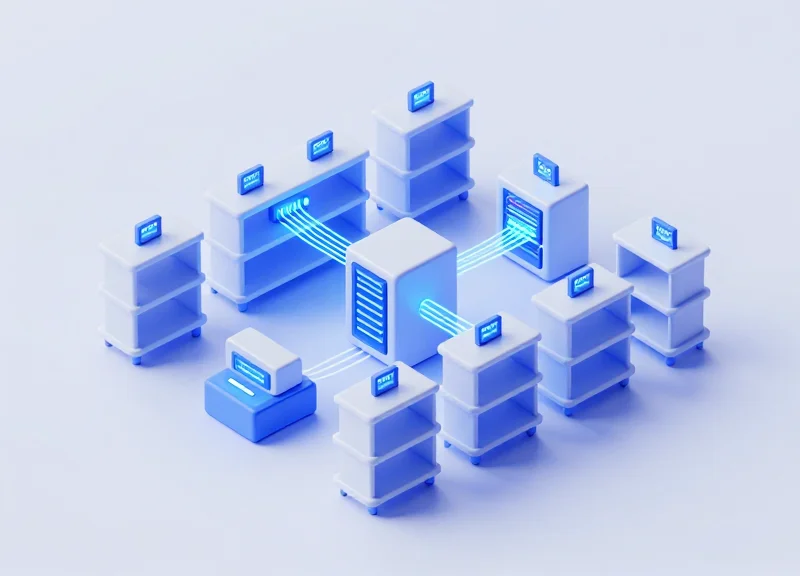
In the high-velocity environment of Just-In-Time (JIT) manufacturing, the difference between a smooth assembly line and a costly bottleneck often comes down to seconds. Traditional paper-based Kanban systems are no longer sufficient for Industry 4.0 standards. This technical guide explores the imperative of achieving sub-2 second synchronization between Electronic Shelf Labels (ESL) and Warehouse Management Systems (WMS). By bridging the gap between digital inventory records and physical line-side displays, manufacturers can eliminate latency, reduce human error, and achieve a truly responsive production floor.
The Evolution of Kanban: Why Sub-2 Second Sync Matters

The evolution of Kanban has moved from physical 'Toyota-style' cards to digital signals, where the primary performance metric is now data synchronization latency. Sub-2 second sync refers to the near-instantaneous update of an Electronic Shelf Label (ESL) when a Warehouse Management System (WMS) triggers a replenishment or pick event. Achieving this speed is essential because any delay over two seconds breaks the operational 'flow state' of line-side workers, leading to inventory inaccuracies, 'ghost' stockouts, and costly manual overrides.
In the traditional Just-In-Time (JIT) framework, a physical card signaled the need for more parts. While reliable, this method lacked real-time visibility for management. Digital Kanban (e-Kanban) solved the visibility problem but introduced a new enemy: technical latency. When a worker pulls a bin and expects the display to update, a 5-to-10 second delay creates a 'cognitive gap.' The worker wonders if the system registered the action, often leading them to scan again or manually log the move, which duplicates data and corrupts the WMS integrity.
| Feature | Manual Kanban | Legacy e-Kanban | Sub-2s ESL Integration |
|---|---|---|---|
| Update Speed | Hours/Days | 10-60 Seconds | < 2 Seconds |
| Data Accuracy | Low (Human Error) | Moderate (Lag-prone) | High (Real-time) |
| Labor Cost | High (Running cards) | Medium (Manual Scans) | Low (Automated ESL) |
| WMS Visibility | None | Delayed | Instantaneous |
Expert Insight: The Psychology of the 2-Second Threshold. In my two decades of Silicon Valley systems architecture, we've found that 2 seconds is the 'patience limit' for industrial UX. Beyond 2 seconds, human operators stop trusting the machine and start developing 'workarounds'—the death knell for any automated system. Sub-2 second sync isn't just a technical flex; it is the psychological requirement for system adoption on the factory floor.
Why is sub-2 second sync considered the industry benchmark?
It aligns with human cognitive response times. When a worker interacts with a bin, they require immediate visual confirmation to proceed to the next task without hesitation, maintaining a high tactical cadence.
How does latency lead to 'Ghost Inventory'?
If an ESL takes 10 seconds to update a 'Low Stock' alert, a second worker might pull from the same bin before the label changes, leading the WMS to believe more stock is present than actually exists.
What are the primary bottlenecks in reaching this speed?
Common bottlenecks include slow API polling intervals between the WMS and the ESL gateway, congested 2.4GHz Wi-Fi environments, and inefficient database write-locks in the WMS architecture.
System Architecture: Designing the ESL-WMS Interface
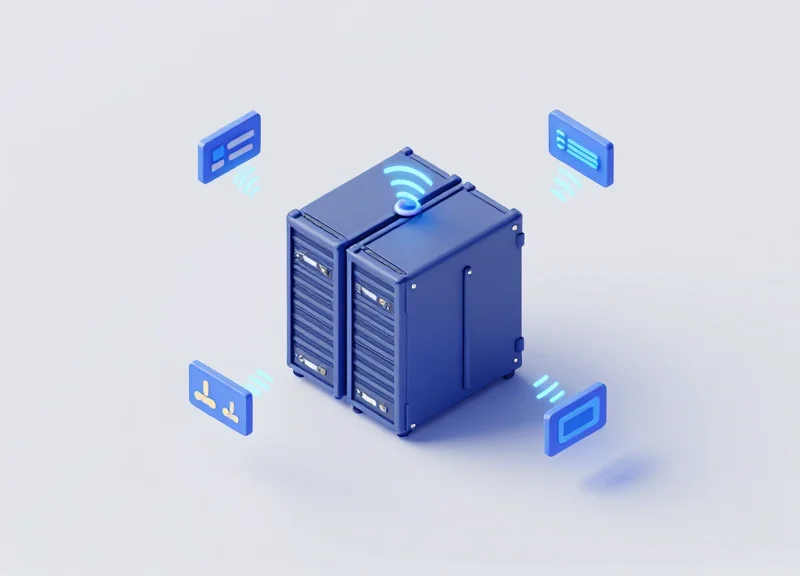
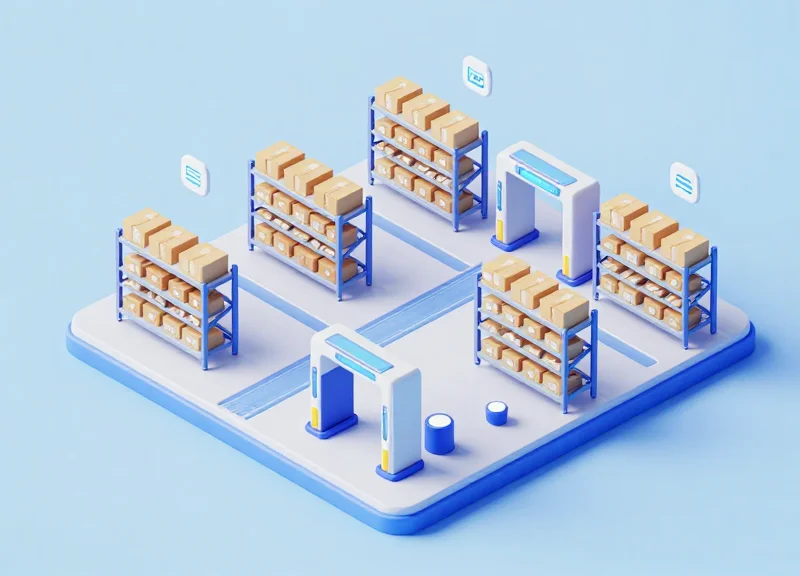
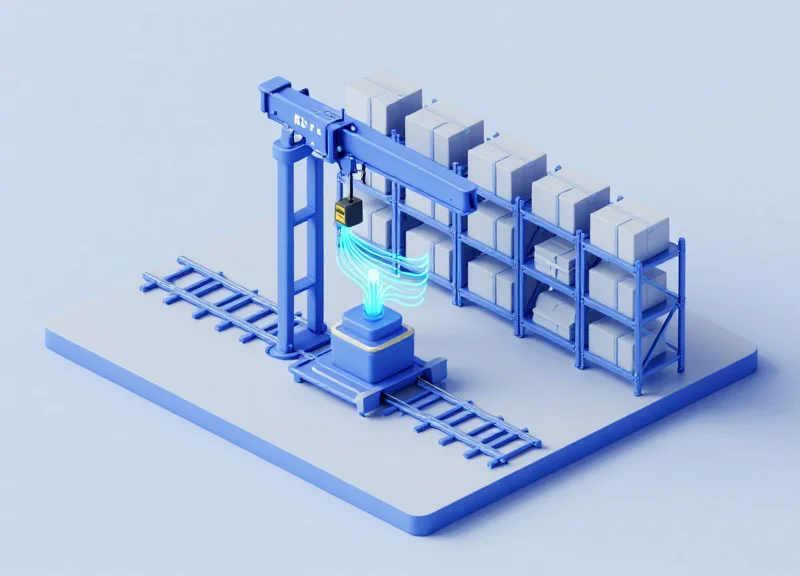
To design an ESL-WMS interface capable of sub-2 second latency, the architecture must move away from legacy 'Batch and Blast' methods. Modern high-speed Kanban systems rely on an Event-Driven Architecture (EDA) where the WMS serves as the event producer and the ESL base station acts as the consumer. The core design principle is the elimination of 'polling'—the practice of the ESL server asking the WMS for updates—replacing it with push-based triggers such as Webhooks or message queues. By reducing the number of intermediate processing layers, we ensure that a physical stock change triggers a visual update on the line-side label before the operator can even reach for the next bin.
| Feature | API-Led Connectivity (REST/Webhooks) | Middleware (Message Brokers / MQTT) |
|---|---|---|
| Latency Profile | Low (50ms - 200ms overhead) | Ultra-Low (<10ms overhead) |
| Implementation Ease | High; standard web protocols | Medium; requires broker setup (e.g., RabbitMQ) |
| Scalability | Vertical; limited by server threads | Horizontal; highly distributed |
| Reliability | Synchronous; retries required | Asynchronous; guaranteed delivery/ACK |
The choice between direct API-led connectivity and middleware often depends on the scale of the facility. For a single line-side Kanban setup, a Direct RESTful API with Webhooks is often sufficient. However, for massive-scale deployments with tens of thousands of tags, a message broker like MQTT is preferred because it offloads the traffic volume from the primary WMS database, preventing 'sync-storms' when thousands of labels update simultaneously.
- Identify the Event Trigger: Configure the WMS to emit an event (JSON payload) the millisecond a database record for a Kanban bin is updated.
- Establish the Webhook Handshake: Set up a listener on the ESL controller that validates the WMS payload and immediately pushes the update to the RF Gateway.
- Packet Prioritization: Implement Quality of Service (QoS) levels on the network to ensure ESL update packets take precedence over non-critical warehouse traffic.
{
  "event_type": "KANBAN_REPLENISH",
  "bin_id": "K-90210",
  "product_id": "SKU-7788",
  "current_qty": 50,
  "status": "CRITICAL",
  "timestamp": "2023-10-27T10:00:01.450Z"
}
Expert Insight: The Ghost Latency of Gateway Queuing. Most architects focus solely on the WMS-to-ESL-Server speed, but the true bottleneck is often the ESL Base Station's radio frequency (RF) queue. Even if your software syncs in 100ms, a congested RF gateway using a sequential broadcast method can add 3-5 seconds of delay. To stay under the 2-second threshold, use a 'Multicast Update' protocol where the gateway updates multiple labels in a single frequency burst rather than addressing each tag individually. This architectural tweak is the secret to maintaining real-time responsiveness during peak manufacturing shifts.
Network Infrastructure Requirements for Low-Latency Updates

To achieve sub-2 second synchronization between your WMS and line-side ESL tags, the network infrastructure must prioritize deterministic latency over raw throughput. This requires a dedicated radio frequency (RF) layer—typically operating on Sub-GHz or IEEE 802.15.4 (Zigbee) standards—that is physically and logically segmented from the facility's standard Wi-Fi traffic. In a high-density Kanban environment, the infrastructure must handle thousands of concurrent state changes without packet collisions, necessitating a dense grid of Power-over-Ethernet (PoE) gateways designed for low-power, high-frequency transmissions.
| Feature | Sub-GHz (900 MHz) | 2.4 GHz Zigbee | Standard Wi-Fi (5/6 GHz) |
|---|---|---|---|
| Wall Penetration | Excellent | Moderate | Poor |
| Interference Risk | Low (Industrial bands) | High (Overlaps Wi-Fi/BT) | Very High |
| Max Latency | < 500ms | < 800ms | Variable (Non-deterministic) |
| Typical Range | 50-100 Meters | 10-30 Meters | 15-25 Meters |
Expert Insight: The LBT (Listen-Before-Talk) Necessity. In a line-side environment, signal noise from heavy machinery and welding equipment creates RF 'ghosts.' To maintain a sub-2 second sync, your ESL gateways must utilize LBT protocols. Unlike standard 'broadcast and pray' systems, LBT-enabled gateways check for a clear channel before transmitting the update. This prevents the exponential back-off delays that usually plague mass tag updates during peak production shifts, ensuring the WMS handshake is confirmed on the first attempt.
Does Zigbee interference with Wi-Fi impact sync speed?
Yes. If using 2.4 GHz Zigbee, you must configure your network to use 'Side-Bands' (Channels 15, 20, or 25) that do not overlap with standard 1, 6, and 11 Wi-Fi channels. Failing to do this can increase sync latency from milliseconds to several seconds due to packet re-transmissions.
How many gateways are needed for a typical Kanban line?
For sub-2 second performance, we recommend a redundancy-first approach: one gateway for every 30-50 linear meters of production line, ensuring every tag has a primary and secondary signal path to minimize 'shadow spots' caused by metal racking.
Is PoE mandatory for ESL gateways?
While not strictly mandatory, PoE is highly recommended for low-latency sync. It ensures stable power and a wired backhaul to the WMS middleware, eliminating the jitter and variable latency inherent in wireless backhaul solutions.
Finally, the physical placement of gateways must account for the Fresnel zone. In many factories, gateways are mounted too high, causing signals to bounce off metal ceilings and create multipath interference. For Kanban lines, the 'Sweet Spot' is typically 3 to 4 meters above the floor, angled at 45 degrees toward the tag arrays to maximize the signal-to-noise ratio (SNR) for rapid polling.
Data Flow Optimization: From WMS Trigger to ESL Refresh
Data flow optimization in a high-speed Kanban environment is the process of reducing the 'time-to-glass'—the duration between a physical stock movement recorded in the WMS and the visual update on the line-side ESL. To hit the sub-2 second benchmark, the architecture must transition from traditional polling mechanisms to an event-driven model that utilizes lean data packets and prioritized wireless transmission protocols.
- WMS Event Capture (CDC vs. Webhooks): Utilize Change Data Capture (CDC) at the database level rather than standard webhooks to eliminate application-layer latency. This captures the exact moment a stock record updates and pushes it immediately to the integration bus.
- Payload Serialization (Protobuf): Convert bulky JSON or XML payloads into Protocol Buffers (Protobuf). This reduces the data size by up to 80%, ensuring the transmission via the local gateway requires fewer packets and less airtime.
- Edge Gateway Queuing: The ESL gateway should implement a Priority Queue (PQ). Kanban 'Stock Out' alerts are assigned the highest priority, jumping ahead of routine battery status updates or firmware checks in the transmission stack.
- Sub-GHz Wireless Broadcast: The gateway broadcasts the update via proprietary sub-GHz frequencies. Unlike Wi-Fi, these protocols are optimized for small data bursts and massive concurrency, reaching thousands of tags simultaneously without collisions.
- Delta-Refresh Execution: The ESL hardware receives the packet and triggers a 'partial refresh.' By only changing the specific pixels for the quantity number rather than the entire screen, the tag completes the visual update in under 500ms.
| Optimization Phase | Traditional Method (5-10s) | Optimized Method (<2s) |
|---|---|---|
| Trigger Mechanism | API Polling (every 30s) | Event-Driven (CDC/Webhooks) |
| Data Format | Heavyweight JSON/XML | Binary Protobuf / Compact Hex |
| Network Protocol | Standard TCP/IP Overhead | Lightweight UDP / Sub-GHz |
| Display Update | Full Screen Refresh | Partial Pixel/Delta Update |
Expert Insight: The 'Ghost Packet' Strategy. In ultra-high-density environments, we often implement what I call 'Pre-emptive Caching.' The gateway predicts the next likely state change (e.g., decrementing a bin by 1) and prepares the radio packet in a 'warm' buffer. When the WMS trigger actually arrives, the gateway doesn't need to generate a new packet; it simply releases the pre-cached one, shaving another 150-300ms off the total latency.
Does encryption slow down the sub-2 second sync?
While AES-128 encryption adds a small computational overhead, using hardware-accelerated encryption at the gateway level ensures the delay is negligible (under 10ms), maintaining both speed and security.
How does packet loss affect the sync speed?
By using a 'Negative Acknowledgment' (NACK) protocol, the system only resends data if the tag fails to receive it, rather than waiting for an 'ACK' for every single update, which significantly reduces network chatter.
Overcoming Technical Bottlenecks in Large-Scale Deployments
In large-scale ESL deployments, the primary technical bottleneck is RF (Radio Frequency) congestion, specifically the 'thundering herd' problem where thousands of tags attempt to acknowledge data packets simultaneously. To maintain sub-2 second sync across tens of thousands of line-side units, engineers must move beyond basic hardware installation and implement sophisticated airtime management and gateway load-balancing strategies that treat wireless spectrum as a finite, high-value resource.
| Bottleneck Factor | Impact on Latency | Mitigation Strategy |
|---|---|---|
| Packet Collision | High (causes retries) | Carrier Sense Multiple Access (CSMA) with adaptive backoff |
| Gateway Saturation | Medium (queuing delay) | Dynamic Load Balancing across multi-protocol gateways |
| RF Interference | High (signal loss) | Sub-GHz frequency hopping and metallic shielding analysis |
| Tag Wake-up Latency | Critical (sync delay) | Pre-emptive polling and 'Listening Window' optimization |
- Implement Gateway Sharding: Divide the factory floor into logical RF zones (shards). Each gateway should manage a controlled number of tags (typically 500-1000) to ensure the downlink command doesn't exceed the available time-slot for a 2-second refresh cycle.
- Deploy Multicast Update Protocols: Instead of individual unicast messages for every tag, use multicast groups for line-side Kanban updates. This allows a single packet to update multiple tags in the same bin or section, drastically reducing airtime consumption.
- Optimize Acknowledgment (ACK) Windows: Configure tags to delay their ACKs by randomized millisecond intervals. This prevents a synchronized 'pulse' of return traffic from overwhelming the gateway's receiver.
Expert Insight: Temporal Sharding. A unique strategy used in high-density Silicon Valley deployments is 'Temporal Sharding.' Instead of updating all tags at the exact millisecond a WMS trigger occurs, the middleware introduces a jitter of 50-200ms across the update queue. This micro-staggering is imperceptible to the human eye but prevents the 'RF spike' that typically causes 90% of packet drops in large-scale Kanban environments.
Does increasing gateway density always improve speed?
No. Excessive gateway density can lead to 'Co-Channel Interference.' The goal is to optimize the signal-to-interference ratio (SIR) through careful channel planning and power output calibration.
How do metallic factory environments affect sub-2 second sync?
Metal surfaces cause multi-path fading and signal reflections. Using diversity antennas and Sub-GHz protocols (which penetrate obstacles better than 2.4GHz) is essential for maintaining low latency in industrial settings.
Ensuring Data Integrity and Security in Wireless Syncing
Data integrity in ESL-WMS integration ensures that the digital information displayed on the line-side tag is a 1:1 mirror of the WMS database record, even in noisy industrial environments. To achieve sub-2 second synchronization without compromising security, systems must employ end-to-end encryption (typically AES-128) and robust error-correction protocols like Cyclic Redundancy Checks (CRC) to prevent 'ghost stock' errors—where a tag displays incorrect quantities due to packet loss or interference.
| Security Layer | Protocol/Standard | Function in Kanban Sync |
|---|---|---|
| Transport Security | TLS 1.2/1.3 | Secures data transit between the WMS API and the ESL Gateway. |
| Wireless Encryption | AES-128 Bit | Encrypts the air interface to prevent packet sniffing or unauthorized overrides. |
| Integrity Check | CRC-16/32 | Detects bit-level errors caused by electromagnetic interference on the factory floor. |
| Authentication | Device White-listing | Ensures only pre-authorized MAC addresses can join the local ESL network. |
Expert Insight: The 'Double-Handshake' Validation. In high-velocity manufacturing, a simple 'fire-and-forget' transmission is a recipe for disaster. We recommend a 'Double-Handshake' logic: the ESL tag must send an Active Acknowledgement (ACK) containing a hash of the received data back to the gateway. If the hash doesn't match the source, the gateway triggers an immediate re-transmit before the next WMS polling cycle. This ensures that even if a packet is partially corrupted by a welding robot's EMI, the display remains accurate.
- Packet Fragmentation Management: Break down large image updates into smaller, encrypted sub-packets to minimize the retry window if a collision occurs.
- Rolling Key Rotation: Implement periodic rotation of encryption keys for each gateway to mitigate the risk of long-term brute-force attacks on the wireless spectrum.
- Stateful Persistence: The ESL controller should maintain a 'Last Known Good State' log to recover tag displays instantly following a power surge or network flicker.
How does interference affect data integrity?
Industrial machinery can create electromagnetic noise that flips bits during wireless transmission. Without CRC checks, this could change a '10' on the display to a '18', leading to overproduction or line-side shortages.
Is cloud-based ESL management secure enough for Kanban?
Yes, provided that the connection between the on-site gateway and the cloud utilizes an encrypted VPN or a dedicated TLS 1.3 tunnel, and multi-factor authentication is required for configuration changes.
Do encrypted updates drain tag batteries faster?
While AES decryption requires CPU cycles on the tag, modern ESL chipsets have hardware-accelerated encryption blocks that perform these tasks in microseconds, resulting in negligible impact on a 5-year battery life.
Benchmarking Success: KPIs for Line-side ESL Performance
Measuring the performance of an ESL (Electronic Shelf Label) system in a Kanban environment requires moving beyond simple connectivity checks to high-precision temporal metrics. Benchmarking success is defined by the system's ability to maintain a 'True-to-WMS' state across thousands of nodes with sub-2 second latency. The core objective is to minimize the latency between a stock-level change in the Warehouse Management System and the physical refresh of the e-ink display on the factory floor, ensuring pickers never operate on stale data.
| KPI Metric | Definition | Target Benchmark | Impact on Operations |
|---|---|---|---|
| Total Synchronization Time (TST) | Duration from WMS API trigger to confirmed physical tag refresh. | < 2.0 Seconds | High TST causes 'picker hesitation' and disrupts Kanban flow. |
| Update Success Rate (USR) | Percentage of tags that update successfully on the first packet broadcast. | > 99.95% | Low USR leads to data integrity issues and requires manual audits. |
| Gateway Queue Latency (GQL) | Time data spends buffered at the IoT gateway before wireless transmission. | < 150 Milliseconds | Critical for managing high-concurrency updates during peak shifts. |
| Visual Refresh Offset (VRO) | Physical lag of e-ink particles transitioning after data reception. | < 400 Milliseconds | Ensures the user perceives the update as near-instantaneous. |
Expert Insight: Most technical guides ignore 'The Confirmation Loop Latency.' In high-frequency Kanban, it is not enough for the WMS to send data; the tag must send an acknowledgment (ACK) back through the gateway. An optimized system should aim for a 'Round-Trip Reliability' score, where the WMS receives confirmation of the physical update within 2.5 seconds. If your ACK packet is getting lost in a noisy RF environment, your WMS may trigger unnecessary retries, creating a 'broadcast storm' that actually slows down your network.
How does packet collision affect line-side KPIs?
In dense factory environments, thousands of tags may try to talk to a single gateway. High packet collision rates degrade the USR and force the system into a retry cycle, which can triple the TST and drastically reduce battery life.
Why is 'Battery-to-Update Efficiency' a critical ROI metric?
Because Kanban triggers are frequent, a tag might update 50 times a day. If each update consumes too much power due to poor signal-to-noise ratios, a 5-year battery will die in 12 months, destroying the project's long-term ROI.
What is the acceptable threshold for 'Stale Data Visibility'?
In a sub-2 second sync environment, any tag displaying data older than 3 seconds is considered a failure point. This threshold ensures that the physical line always reflects the digital twin in the WMS.
To maintain these benchmarks, engineers should implement real-time monitoring dashboards that track 'Gateway Saturation Levels.' By visualizing the load on each access point, you can proactively redistribute tags or add gateways to prevent TST spikes during high-volume production cycles.
Integrating DragonGuardGroup ESL Solutions into Your Stack
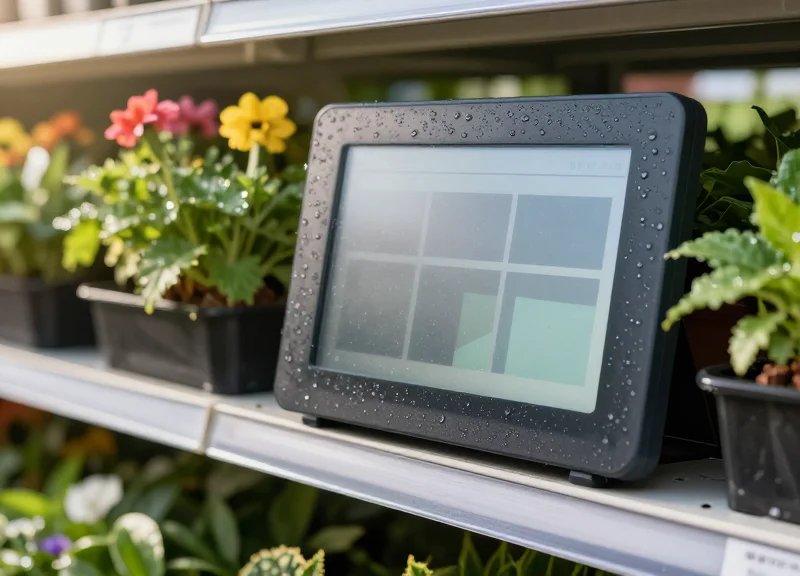
Integrating DragonGuardGroup (DGG) ESL solutions into your tech stack involves bridging the physical layer of E-ink tags with your digital Warehouse Management System (WMS) using our proprietary high-speed API and sub-GHz gateway infrastructure. By utilizing a 'Middleware-Lean' architecture, our solution allows for direct communication between your ERP/WMS and our Base Stations, minimizing the latency overhead that typically plagues generic ESL implementations. This integration ensures that line-side Kanban signals are transmitted and reflected on the factory floor in under two seconds, maintaining the high-velocity data flow required for Just-In-Time (JIT) manufacturing.
| Component | Function | Integration Interface |
|---|---|---|
| DGG Smart Gateway | Translates TCP/IP data to sub-GHz RF signals for tags. | RESTful API / MQTT / Webhooks |
| E-ink Kanban Tags | Visual data display for line-side stock levels. | Proprietary RF (433/868/915 MHz) |
| DGG Central Server | Centralized management of tag health and mapping. | ODBC / JSON over HTTPS |
| Integration SDK | Customizable logic for automated stock triggers. | Python, C#, Java |
### The Implementation Workflow To achieve the desired sub-2-second sync, the integration process focuses on reducing 'data hop' latency. We recommend a four-stage deployment strategy to ensure the hardware and software layers are perfectly synchronized.
- Network Topology Mapping: Identify gateway placement to ensure 100% floor coverage while avoiding electromagnetic interference (EMI) from industrial machinery.
- WMS-to-ESL Mapping: Bind specific Product IDs to Tag IDs within the DGG Central Server using our batch-binding CSV tool or API endpoints.
- Template Orchestration: Define JSON-based visual templates that dictate how stock levels, QR codes, and Kanban status are rendered on the tags.
- Trigger Configuration: Set up Webhooks in your WMS to fire an update event to the DGG Gateway the moment a pick or stock-in transaction is recorded.
{
  "action": "update_tag",
  "tag_id": "DG-8821-XF",
  "template_id": "KANBAN_V2",
  "data": {
    "stock_level": "42",
    "status": "CRITICAL_LOW",
    "last_sync": "2023-10-27T10:01:05Z"
  },
  "priority": "high"
}- Expert Tip: Edge-Calculated Refresh Cycles: Unlike competitors who send full image bitmaps (large payloads), DragonGuardGroup uses 'Edge-Calculated Refresh.' Our gateways send only the delta (changed data) to the tags, which use on-chip logic to update only the modified pixels. This reduces the airtime per update by 70%, ensuring massive tag updates don't clog your RF bandwidth.
- Is the system compatible with legacy WMS?: Yes. While our RESTful API is standard, we offer a File-Drop watcher service that can parse legacy XML or CSV exports from older mainframe-based WMS systems to trigger tag updates.
- How do we handle power management during high-frequency syncing?: DGG tags utilize a dual-sleep mode. They remain in an ultra-low power state until a wake-up signal is broadcast by the gateway, allowing for sub-2-second responsiveness without compromising the 5-year battery life.