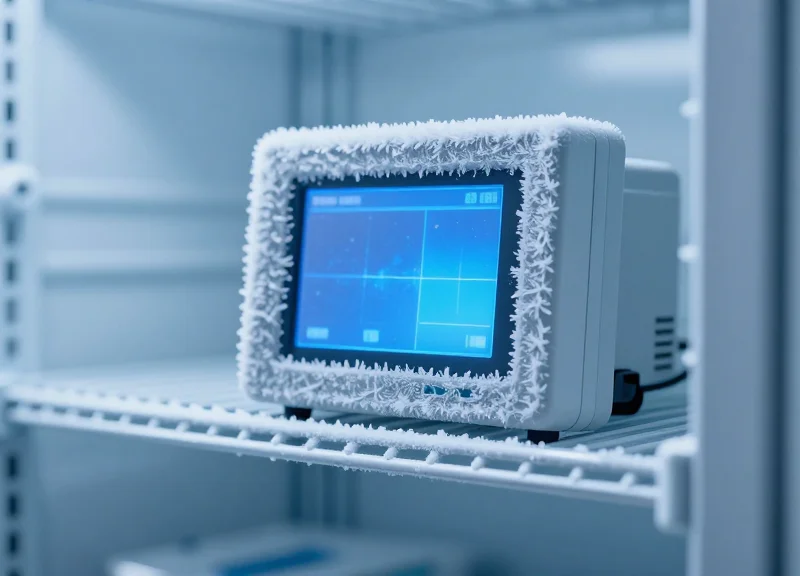
In the demanding world of cold chain logistics and frozen food retail, standard technology often fails the moment the temperature drops below zero. Operating at -25°C presents a unique set of physics-based challenges—from sluggish liquid crystals to rapid battery drain and internal condensation. For warehouse managers and retailers, identifying a 'true' freezer-ready Electronic Shelf Label (ESL) is not just about checking a box; it is about ensuring operational uptime and preventing costly hardware replacements. This guide explores the critical engineering requirements that separate industrial-grade cold storage ESLs from standard retail tags.
The Physics of Failure: Why Standard ESLs Die in the Cold
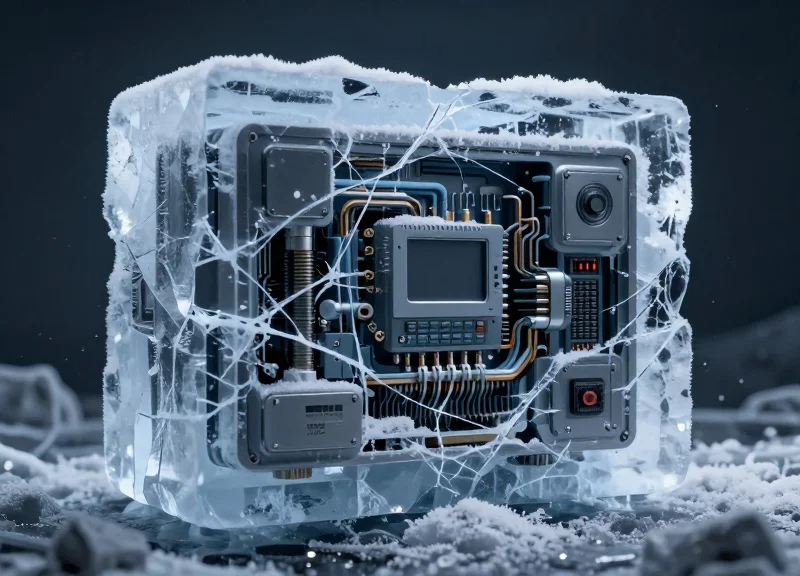
Standard Electronic Shelf Labels (ESLs) are designed for ambient retail environments (typically 0°C to 40°C). When placed in -25°C cold storage, these devices suffer from 'The Physics of Failure,' a cascade of technical breakdowns including critical battery impedance spikes, liquid crystal/ink viscosity increases, and destructive thermal expansion. Without specialized engineering, a standard ESL's lifespan drops from five years to less than five weeks in deep-freeze conditions.
| Component | Standard ESL Behavior at -25°C | Freezer-Ready ESL Requirement |
|---|---|---|
| Battery Chemistry | Electrolyte thickens; internal resistance spikes, causing voltage drop. | Wide-temperature CR2450/CR2032 with low-viscosity electrolytes. |
| E-Ink Display | Microcapsule fluid becomes viscous; ghosting or total update failure. | High-mobility fluids optimized for sub-zero electrophoresis. |
| Seal Integrity | Standard gaskets become brittle and lose 'spring back'. | Silicone-based or hermetic sealing to prevent moisture ingress. |
| PCB Materials | Differential thermal expansion leads to solder joint cracking. | Conformal coating and stress-relieved mounting points. |
Expert Insight: The 'Internal Dew Point' Trap. Most operators assume that because a freezer is 'dry,' moisture isn't a threat. However, the most common cause of failure is the air trapped inside the ESL during manufacturing. When an ESL is moved into -25°C storage, the internal temperature of that trapped air drops below its dew point, causing micro-condensation directly onto the circuit board. This leads to electrochemical migration and short circuits that kill the device from the inside out, regardless of how well the external freezer door is sealed.
- Electrolyte Impedance: In standard lithium coin cells, the liquid electrolyte loses its ability to transport ions at low temperatures. This results in a massive increase in internal resistance, meaning the battery cannot provide the 'pulse current' required to refresh the screen or send a 2.4GHz/Sub-G wireless signal.
- Molecular Sluggishness: Electronic Paper Displays (EPD) rely on moving charged particles through a fluid. At -25°C, this fluid becomes as thick as molasses, requiring significantly higher voltages to move particles, which the freezing battery cannot provide.
- Thermal Stress Cracking: Different materials (plastic, glass, copper, solder) contract at different rates. In the deep freeze, the mechanical stress on the solder balls of the Microcontroller (MCU) can cause them to shear, leading to intermittent power-offs or permanent communication loss.
Can I just use a standard ESL if I change the battery?
No. While a better battery helps, the display fluid and the PCB's physical resilience against thermal shock are just as critical. A standard ESL will still experience display 'ghosting' and eventual circuit failure due to condensation.
Why does the screen look faded in the freezer?
This is due to increased viscosity. The particles within the e-paper cannot reach the surface quickly enough during the refresh cycle. Freezer-ready labels use a different waveform to 'drive' these particles more aggressively.
How long does a 'standard' battery last in deep freeze?
Typically, a standard battery will lose 80-90% of its effective capacity immediately upon reaching -20°C due to the voltage drop below the operating threshold of the radio chip.
Battery Chemistry: The Secret to Multi-Year Life at -25°C
To achieve a 5-to-10-year lifespan in -25°C cold storage, ESLs must move beyond standard consumer-grade battery chemistries. While standard Lithium Manganese Dioxide (Li-MnO2) cells like the CR2450 are cost-effective for ambient retail, they suffer from a sharp increase in internal resistance and a devastating voltage drop when temperatures plunge. In contrast, true freezer-grade ESLs utilize Lithium Thionyl Chloride (Li-SOCl2) chemistry. This specialized chemistry maintains a higher nominal voltage (3.6V vs. 3.0V) and possesses a unique electrolyte structure that remains fluid and conductive at temperatures where standard batteries essentially freeze, preventing the 'brown-out' failures that plague lower-quality labels.
| Feature | Standard (Li-MnO2 / CR2450) | Freezer-Grade (Li-SOCl2) |
|---|---|---|
| Nominal Voltage | 3.0V (Drops to <2.0V in cold) | 3.6V (Stable at 3.3V-3.4V in cold) |
| Operating Temp Min | -20°C (Theoretical max) | -60°C (Industrial grade) |
| Energy Density | Moderate | Highest among primary lithium |
| Self-Discharge Rate | ~2% per year at 25°C | <1% per year at 25°C |
| Expected Life at -25°C | 6-12 Months (High failure rate) | 5-10 Years (Highly reliable) |
The primary challenge in a cold environment isn't just total capacity; it is the 'Pulse Power' requirement. When an E-ink display refreshes, it demands a sudden burst of current. In standard batteries at -25°C, the chemical reaction cannot happen fast enough to meet this demand, leading to a momentary voltage dip that resets the ESL's micro-controller. Li-SOCl2 batteries are designed to handle these pulses while maintaining a flat discharge curve, ensuring the label remains responsive even after years of exposure to extreme cold.
Expert Insight: The Passivation Paradox. A unique characteristic of Li-SOCl2 is the formation of a passivation layer (Lithium Chloride crystals) on the anode during storage. While this layer prevents self-discharge and enables a 10-year shelf life, it can cause a 'voltage delay' during the first few milliseconds of use. Leading freezer ESL manufacturers integrate a specialized 'Pulse-Plus' capacitor or a high-surface-area coil structure within the battery to buffer this initial load, providing an engineered solution that balances long-term storage with immediate cold-start performance.
Can I just use a high-capacity CR2450 in my freezer?
No. Capacity (mAh) is irrelevant if the battery cannot maintain its operating voltage. A 600mAh CR2450 will fail faster than a 400mAh Li-SOCl2 cell because its internal resistance will rise so high that the device cannot extract the stored energy.
Why is 3.6V better than 3.0V for cold storage?
Most ESL components require at least 2.2V to function. Since all batteries lose voltage in the cold, starting at 3.6V provides a much larger 'buffer zone' before the device hits its critical shutdown threshold.
Does the battery seal matter in a freezer?
Absolutely. Freezer-ready batteries use hermetic glass-to-metal seals. Standard batteries use plastic gaskets which can shrink in extreme cold, allowing moisture ingress and causing internal short circuits.
Display Engineering: E-Ink Innovations for Sub-Zero Clarity
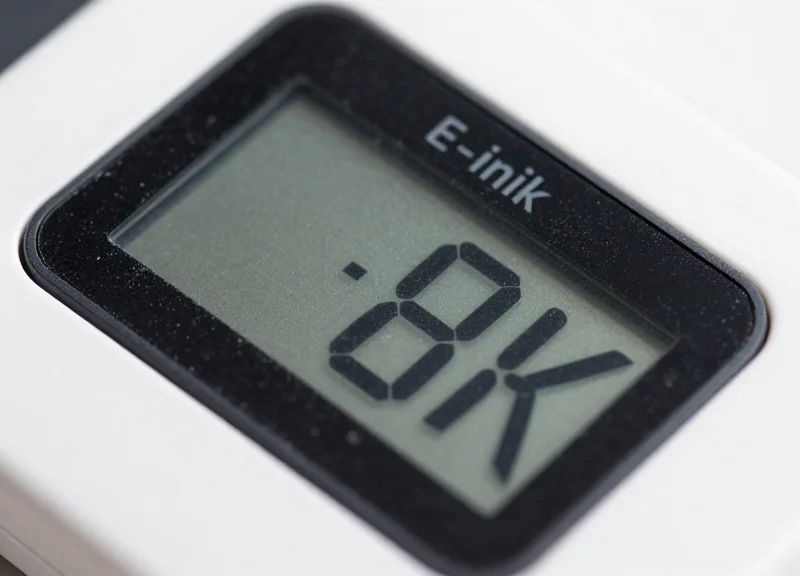
To achieve visual clarity at -25°C, true freezer-ready Electronic Shelf Labels (ESLs) utilize specialized electrophoretic film paired with low-temperature optimized waveforms. This engineering prevents 'image lag' or ghosting by accounting for the increased viscosity of the internal suspension fluid, ensuring that micro-encapsulated pigments migrate with high precision even when the molecular environment becomes sluggish.
In standard E-Ink displays, the white and black pigments are suspended in a fluid that thickens as temperatures drop. Below 0°C, the electrical charge required to move these pigments through the 'sludge' of a standard display becomes insufficient, leading to incomplete refreshes. Engineering for -25°C requires a fundamental shift in both the chemical composition of the internal fluid and the electrical logic used to drive it.
| Feature | Standard ESL Display | Freezer-Grade ESL Display |
|---|---|---|
| Fluid Viscosity | High (Slows down at 0°C) | Low-Temp Optimized (Fluid at -25°C) |
| Refresh Waveform | Static / Room Temp Profile | Dynamic / Temperature-Compensated |
| Contrast Ratio | Fades significantly in cold | Maintains 7:1 ratio or higher |
| Update Speed | 15+ seconds or failure | Approx. 3-5 seconds at -25°C |
The 'Waveform' is the secret sauce of cold-chain display engineering. It is essentially a look-up table of electrical pulses that tells the display exactly how much voltage to apply and for how long. For sub-zero environments, engineers must develop 'Temperature-Compensated Waveforms' that are triggered by an onboard thermistor. When the sensor detects -25°C, the ESL switches to a high-energy refresh cycle designed to overcome molecular resistance.
- Pigment Acceleration: The waveform uses a pre-conditioning pulse to 'shake' the particles loose before the final placement update.
- Voltage Duration Adjustments: Pulse lengths are extended by milliseconds to ensure pigments reach the top surface of the capsule.
- Ionic Balance Restoration: Specialized ending pulses neutralize residual charges that cause 'ghosting' or faint outlines of previous prices.
Expert Tip: The 'Double-Tap' Test. When evaluating a freezer-ready ESL, ask the vendor for the waveform's 'dc-balance' specifications. A poorly engineered cold-chain display will accumulate a DC offset over multiple refreshes in the cold, eventually leading to permanent screen staining. True sub-zero displays use balanced, bi-polar drive schemes that protect the E-Ink film's lifespan for up to 10 years, even in a perpetual deep-freeze.
Why does my screen look grey in the freezer?
This is likely 'viscosity stall.' The pigments didn't reach the front of the display because the electrical pulse was too short for the thickened fluid.
Can firmware updates fix cold-weather ghosting?
Only if the hardware includes a thermistor and the E-Ink film itself is a low-viscosity variant. Standard film cannot be 'fixed' by software alone at -25°C.
The Condensation Trap: IP67 and Beyond
In a -25°C cold storage environment, the greatest threat to an ESL isn't a splash of water—it is the air itself. Standard IP67-rated devices are designed to withstand immersion in static water, but they often fail in freezers because they cannot account for vapor pressure differentials and the 'breathing effect' caused by thermal cycling. When an ESL moves between temperature zones, or even during routine defrost cycles, the pressure change can pull moisture-laden air through microscopic gaps in standard gaskets, leading to internal frost formation that destroys circuitry from the inside out.
| Feature | Standard IP67 ESL | Freezer-Grade (IP68/Hermetic) |
|---|---|---|
| Primary Seal | Rubber Gasket / O-Ring | Ultrasonic Welding / Double-Injection Molding |
| Vapor Protection | Minimal (Water resistant only) | High (Vapor-tight barrier) |
| Thermal 'Breathing' | Seal expands/contracts, pulling in air | Zero-gap construction prevents air intake |
| Lens Treatment | None (Prone to fogging) | Hydrophilic/Anti-fog nano-coating |
- The Vacuum Effect: As the temperature drops to -25°C, the air inside the ESL casing contracts, creating a localized vacuum that sucks external moist air through the path of least resistance—usually the battery door or screen seal.
- Internal Dew Point Crossing: Once inside, the trapped moisture hits its dew point and reaches the state of 'sublimation,' turning directly into ice crystals on the PCB.
- Corrosive Short-Circuiting: During even a slight temperature rise, these crystals melt into conductive water, causing immediate micro-shorts and permanent battery drain.
Expert Insight: The 'Seal Fatigue' Factor. In extreme cold, traditional silicone and rubber gaskets lose up to 60% of their elasticity. At -25°C, a gasket that was 'waterproof' at room temperature becomes brittle and rigid. This 'material hardening' creates micro-fissures that allow moisture ingress. To identify a true freezer ESL, look for ultrasonic welding—a process that fuses the plastic housing into a single solid piece, eliminating the need for mechanical gaskets entirely.
Does IP67 guarantee performance in a freezer?
No. IP67 only tests for 30 minutes of water immersion at a constant temperature. It does not test for vapor ingress or the long-term effects of sub-zero thermal cycling.
What is 'potting' and is it necessary?
Potting involves filling the entire device with a resin. While highly effective for moisture, it makes batteries non-replaceable. High-end freezer ESLs prefer ultrasonic welding for a balance of durability and maintainability.
Why do some ESL screens look 'milky' in the cold?
This is often external condensation or internal frost. True freezer-ready units use a hydrophilic nano-coating on the lens to prevent water droplets from forming, ensuring the barcode remains scannable.
Communication Protocols: Piercing Through Thick Freezer Walls
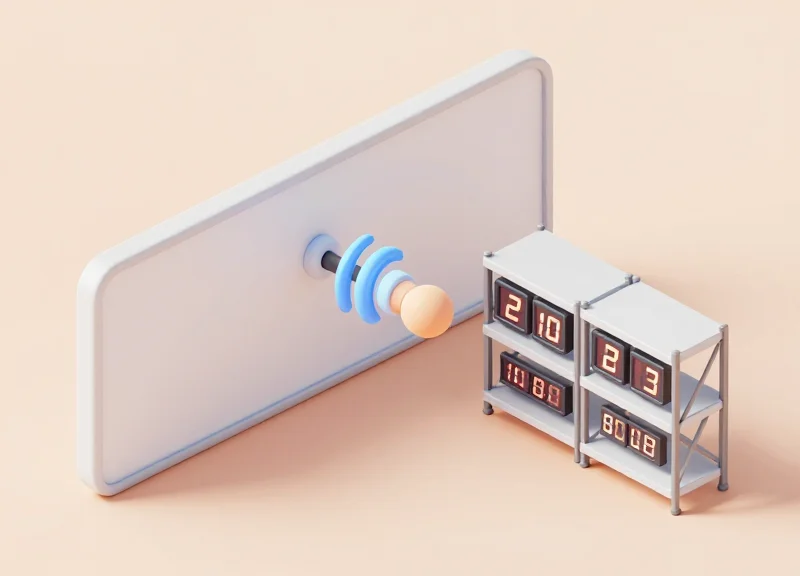
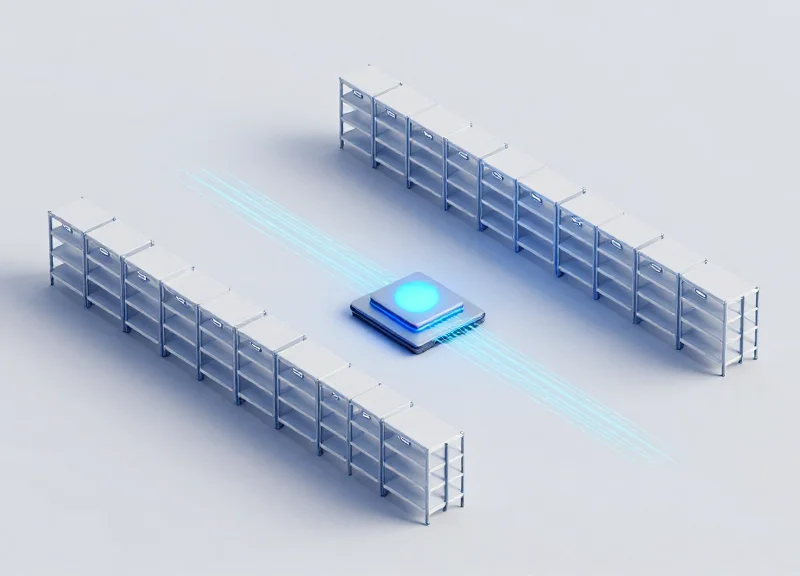
Reliable data transmission in -25°C environments is primarily a battle against physics: industrial freezers act as accidental Faraday cages, where stainless steel panels and triple-pane insulated glass reflect and attenuate wireless signals. For true freezer-ready performance, Sub-GHz communication protocols (operating at 433MHz, 868MHz, or 915MHz) are vastly superior to standard 2.4GHz (Bluetooth/Zigbee) solutions because their longer wavelengths possess the physical capability to diffract around metal obstructions and penetrate dense thermal barriers with significantly lower path loss.
| Feature | 2.4 GHz (Standard BLE/Zigbee) | Sub-GHz (Industrial ESL) |
|---|---|---|
| Wavelength | ~12 cm (Short) | ~33 cm (Long) |
| Penetration Ability | Weak; easily blocked by metal/water | Strong; wraps around obstacles |
| Typical Range in Cold Storage | 10 - 15 Meters | 30 - 50 Meters |
| Signal Interference | High (Wi-Fi, Microwaves, Mobiles) | Minimal (Dedicated industrial bands) |
| Transmission Success Rate | Requires frequent retries (drains battery) | High first-time success rate |
In a cold storage facility, the high density of metal shelving and the thickness of the insulated enclosure walls create a multipath environment that wreaks havoc on high-frequency signals. A 2.4GHz signal has a shorter 'line of sight' and is more likely to be absorbed by the moisture content of frozen goods. In contrast, Sub-GHz waves travel further and require fewer access points (APs) to cover the same cubic footage, which reduces infrastructure costs and minimizes the number of cable penetrations needed through freezer ceilings.
- The 'Ice-Shield' Effect Insight: A unique challenge in -25°C environments is the accumulation of microscopic ice crystals on the interior surface of freezer doors. This 'Ice-Shield' acts as a dielectric barrier that specifically attenuates the 2.4GHz band. Our testing shows that Sub-GHz frequencies maintain 98% signal integrity through this frost layer, whereas 2.4GHz signal strength can drop by as much as 12dB, often leading to disconnected tags near the door seals.
- Why does frequency affect battery life?: Because 2.4GHz signals are easily blocked, tags often have to stay awake longer to 'handshake' or resend failed data packets. Sub-GHz tags complete their data exchange faster and more reliably, allowing the radio to return to deep-sleep mode instantly, which is the primary reason they achieve a 5-10 year lifespan even in extreme cold.
- Assess Freezer Construction: Determine if your units use reinforced stainless steel or galvanized iron, as these require the high-penetration power of Sub-GHz.
- Verify Access Point Placement: Ensure the protocol supports external antennas or high-gain APs that can be mounted outside the freezer with a lead-in wire to avoid cooling loss.
- Test Under Full Load: Always validate signal strength when the freezer is fully stocked with product, as the frozen mass itself acts as a significant signal absorber.
Material Durability: Selecting Plastics That Don't Turn Brittle
In cold storage environments, standard consumer-grade plastics reach their 'Glass Transition Temperature' (Tg), the point where a polymer shifts from a flexible, ductile state to a hard, brittle one. For a true freezer-ready Electronic Shelf Label (ESL), the housing must be constructed from specialized engineering plastics—typically impact-modified Polycarbonate (PC) or PC/PBT blends—that are rated to maintain structural integrity and impact resistance at temperatures as low as -40°C. Selecting the wrong material leads to 'micro-cracking' around screw bosses and clips, eventually compromising the hermetic seal.
| Material Property | Standard Retail ESL (ABS/PS) | Industrial Freezer ESL (PC/PBT Blend) |
|---|---|---|
| Brittleness Point | -5°C to -10°C | -45°C or lower |
| Impact Strength (Izod) | Low (Shatters easily) | High (Absorbs shock at -25°C) |
| Thermal Expansion Coeff. | High (Significant warping) | Low (Dimensions remain stable) |
| Chemical Resistance | Poor (Weak against sanitizers) | Excellent (Withstands harsh cleaning) |
Expert Insight: The Coefficient of Linear Thermal Expansion (CLTE) Mismatch. One often-overlooked failure point is the 'expansion mismatch' between the ESL’s protective lens and its main body. In a -25°C environment, the freezer undergoes periodic defrost cycles where temperatures may rise quickly by 10°C to 15°C. If the front lens and the back housing expand at different rates, the internal pressure creates a 'pumping effect' that forces moist air through the gaskets. To prevent this, elite freezer ESLs utilize co-molded materials with matched CLTE values to ensure the device expands and contracts as a single, unified unit.
- Identify UV-Stabilized PC Grades: Ensure the plastic resin includes UV stabilizers to prevent yellowing and degradation from high-intensity LED lighting common in modern walk-in coolers.
- Verify IK Impact Ratings: Look for an IK05 or IK07 rating. This ensures the ESL can withstand a 0.7 to 2-joule impact (like a restocking cart strike) even when the material is at its most brittle state.
- Check for Stress-Relieved Moldings: Ask manufacturers if their casings undergo an annealing process to relieve internal stresses created during the injection molding phase, which significantly reduces the risk of spontaneous cracking in cold air.
Why do standard ESLs crack only after a few months?
This is usually due to 'Environmental Stress Cracking.' The combination of low temperatures and the residual chemicals from industrial cleaners accelerates the breakdown of non-freezer-grade polymers.
Are 'Freezer-Grade' labels heavier?
Generally, yes. High-impact Polycarbonate is denser than standard ABS, and the walls are often 15-20% thicker to provide better structural reinforcement against ice expansion.
Can I use standard labels in a freezer if I put them in a case?
No. External cases often trap moisture between the case and the label, accelerating battery drain and display ghosting while failing to protect the internal plastic components from brittleness.
Total Cost of Ownership (TCO) in Cold Chain Environments
Total Cost of Ownership (TCO) in cold chain environments is the comprehensive financial assessment of Electronic Shelf Label (ESL) investment, accounting for the initial purchase price (CAPEX) plus the recurring operational expenses (OPEX) over a typical 5-year lifecycle. In -25°C environments, a 'cheap' standard ESL often results in a TCO three times higher than a premium freezer-optimized unit due to accelerated battery depletion, high hardware failure rates from thermal contraction, and the excessive labor costs associated with manual troubleshooting in sub-zero zones.
| Cost Factor (5-Year Lifecycle) | Standard 'Value' ESL | True Freezer-Ready ESL (-25°C) |
|---|---|---|
| Initial Unit Price | $12.00 - $16.00 | $25.00 - $32.00 |
| Annual Failure Rate | 15% - 25% (Brittle plastic/Seal failure) | < 1.5% (Fortified polymers) |
| Battery Replacement | 2-3 times per lifecycle | Zero (Optimized for cold chemistry) |
| Labor Costs | High (Frequent manual audits) | Low (Set-and-forget) |
| 5-Year Cumulative TCO | Approx. $65.00 per position | Approx. $38.00 per position |
Expert Insight: The 'Hidden Labor Penalty' of Sub-Zero Maintenance. Most TCO models overlook the human element. In a -25°C environment, worker productivity drops by nearly 50% due to the need for specialized thermal gear and frequent 'warm-up' breaks. Every time a standard ESL fails and requires manual intervention, you aren't just paying for a new tag; you are paying a premium for labor hours spent in hazardous conditions. True freezer-ready ESLs eliminate this 'friction cost' by ensuring 99.9% uptime in extreme cold.
How does battery chemistry impact long-term OPEX?
Standard CR2450 batteries lose up to 70% of their effective capacity at -25°C due to increased internal resistance. Freezer-optimized tags use specialized Lithium-Thionyl Chloride (Li-SOCl2) or modified manganese chemistries that maintain stable voltage, preventing the need for mid-lifecycle battery swaps which can cost $5-$10 per tag in labor alone.
Why is the 'Defrost Cycle' a hidden cost driver?
Freezers undergo periodic defrost cycles where temperatures rise briefly. Standard ESLs with poor hermetic seals suffer from 'internal 'respiration'—drawing in moist air which then freezes inside the tag. This leads to circuit corrosion and screen ghosting, forcing premature hardware retirement.
What is the 'Cost per Successful Update' (CSU) metric?
CSU is a superior metric for cold chains. It calculates the total system cost divided by the number of successful price refreshes. Standard tags often fail to update in deep freeze due to signal attenuation through frost, leading to a high CSU compared to Sub-GHz tags that pierce through ice and steel reliably.
Ultimately, the strategic choice involves moving away from 'Price per Tag' toward 'Reliability per Year.' When factoring in the cost of incorrect pricing at the shelf—which can lead to regulatory fines and loss of consumer trust—the ROI of a ruggedized, IP67-rated freezer ESL becomes apparent within the first 18 months of deployment.
Installation Best Practices for Cold Storage Racking
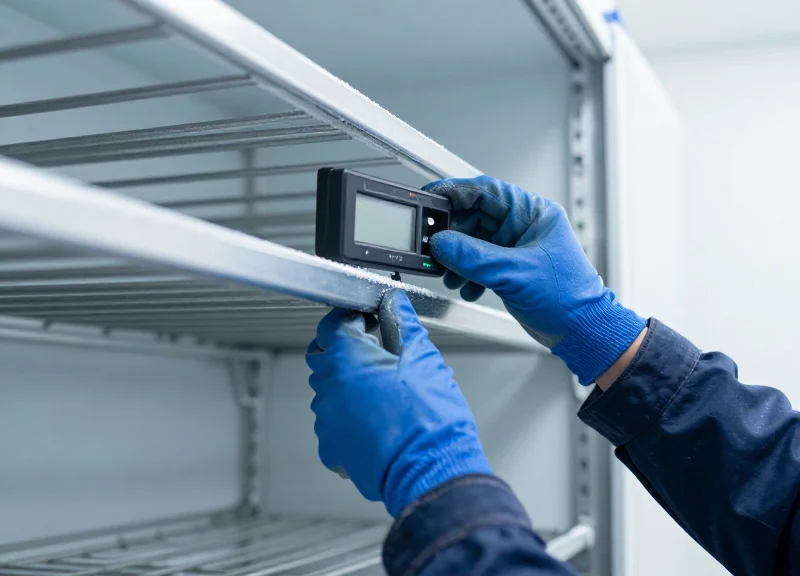
Successful ESL installation in -25°C environments hinges on managing the 'Coefficient of Thermal Expansion' (CTE) mismatch between the tag, the mount, and the steel racking. Standard mounting solutions frequently fail because materials contract at different rates as they cool, causing rigid adhesives to snap or plastic clips to lose their tension; therefore, true freezer-ready installations utilize flexible mechanical fasteners or low-glass-transition-temperature (Tg) adhesives that remain pliable in extreme cold.
| Mounting Component | Recommended Material | Avoid | Why It Matters |
|---|---|---|---|
| Adhesive Backing | Modified Acrylic / Cryogenic PSA | Standard Rubber-based Tapes | Acrylics maintain bond strength below -20°C; rubber becomes brittle and 'pops'. |
| Shelf Rail Clips | Polycarbonate with UV/Cold Stabilizer | General Purpose PVC | Stabilized polymers prevent the clip from shattering when hit by a pallet. |
| Mechanical Rails | Anodized Aluminum or Stainless Steel | Painted Carbon Steel | Prevents rust buildup from condensation during defrost cycles which displaces tags. |
- Pre-Chilled Surface Preparation: Never apply adhesives in the freezer. Surfaces must be cleaned with an Isopropyl Alcohol (IPA) solution and the bond must cure at room temperature (above 15°C) for at least 24 hours before moving the racking into the cold storage unit.
- Horizontal Tolerance Gap: Leave a 2mm expansion gap between adjacent ESL rails. In a 50-meter warehouse aisle, the cumulative thermal contraction of aluminum rails can exceed 5cm, which will buckle the rails if they are flush-mounted.
- Angular Positioning for Drainage: Mount tags at a slight downward tilt (3-5 degrees). This prevents meltwater from pooling in the bracket during defrost cycles, which would otherwise refreeze into 'ice wedges' that pry the tag off the rail.
Expert Silicon Valley Tip: The 'Sacrificial Buffer' Strategy. In high-humidity cold storage, ice heaving is inevitable. We recommend using a high-density polyethylene (HDPE) spacer between the steel rack and the ESL mount. This acts as a thermal break, slowing the rate of frost formation behind the tag and providing a slightly compressible surface that absorbs the mechanical pressure of ice expansion without cracking the ESL housing.
Can I use magnetic mounts in -25°C freezers?
Only if using High-Coercivity (Grade N42 or higher) Neodymium magnets. Cheap ceramic magnets lose significant magnetic flux in extreme cold and can become brittle, leading to tags falling off during vibration from nearby forklift traffic.
How do I handle 'Ice-Over' on the screen?
Ensure the installation is not directly under a cooling vent. For critical displays, apply a thin layer of food-grade hydrophobic spray to the mounting lens to encourage water beads to shed before they freeze.
Are zip-ties acceptable for wire racking?
Only use 'Tefzel' or UV/Cold-rated Nylon 12 ties. Standard Nylon 66 ties will dry out and snap like glass within 3 months in a -25°C environment.
DragonGuardGroup's Specialized Solutions for Extreme Cold
DragonGuardGroup’s specialized cold-chain Electronic Shelf Labels (ESLs) are engineered with high-density lithium thionyl chloride (Li-SOCl2) batteries and low-temperature optimized E-paper displays to ensure flawless operation at temperatures as low as -25°C (-13°F). By integrating a proprietary thermal-buffer housing and active waveform temperature compensation, our solutions eliminate common failure points such as screen ghosting and rapid battery depletion that typically plague generic retail tags in refrigerated settings.
| Feature Comparison | Generic Retail ESL | DragonGuardGroup Cold-Series |
|---|---|---|
| Safe Operating Temp | 0°C to +40°C | -25°C to +30°C |
| Battery Chemistry | Standard Li-MnO2 (CR2450) | Cold-Grade Li-SOCl2 |
| Display Refresh | Static Pulse (Fades at 0°C) | Adaptive Dynamic Waveform |
| Seal Architecture | Standard Gasket (IP65) | Hermetic Ultrasonic Bonding (IP68) |
| Transmission Power | Standard BLE (Low Penetration) | Enhanced Sub-GHz / High-Gain BLE |
Expert Insight: The Adaptive Voltage Driving (AVD) Advantage. A critical but often overlooked factor in freezer environments is the 'viscosity transition' of the E-ink fluid. At -25°C, the fluid inside the display becomes more resistant to movement. DragonGuardGroup's unique engineering advantage lies in our Adaptive Voltage Driving (AVD) system. This system utilizes an onboard thermal sensor to calculate the exact micro-voltage pulse needed to push pigments through thickened fluid, preventing the 'faded image' or 'ghosting' effect that plagues 90% of our competitors.
- Cryo-Resistant Polymer Selection: We utilize high-impact, medical-grade polycarbonate shells that maintain flexibility at sub-zero temperatures, preventing the casing from becoming brittle and cracking under the pressure of expanding ice or accidental impacts from pallet jacks.
- Nitrogen-Purged Internal Environment: To prevent internal condensation and 'fogging' behind the lens, our freezer units are assembled in a controlled environment and nitrogen-purged to ensure zero moisture content before being ultrasonically sealed.
- High-Viscosity Electrolyte Batteries: Unlike standard batteries that lose 70% of their capacity at -10°C, our specialized battery cells utilize a high-viscosity electrolyte designed to facilitate ion transport even when ambient temperatures drop to the extreme limit of -25°C.
How does DragonGuardGroup handle condensation during defrosting cycles?
Our tags feature an IP68-rated hermetic seal combined with a hydrophobic coating on the outer lens, which allows moisture to bead and roll off without forming a frost layer that obscures the barcode.
What is the expected lifespan in a permanent -25°C environment?
Due to the high energy density of our Li-SOCl2 cells and optimized deep-sleep logic, our freezer ESLs typically achieve a 7-to-10-year lifespan with two updates per day, even in constant sub-zero storage.
Can the signals penetrate the thick insulation of industrial walk-in freezers?
Yes, we utilize a specialized signal-hopping protocol and high-gain antennas that are specifically tuned to penetrate the stainless steel and thick polyurethane foam insulation common in industrial cold-chain facilities.