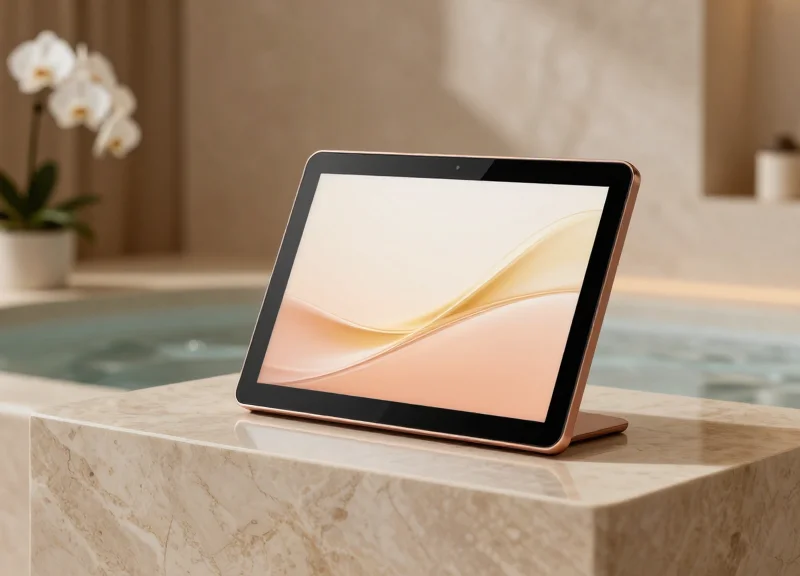
In the world of high-end wellness, every detail contributes to the 'zen' experience. As we move toward 2026, the traditional paper price list is being replaced by sophisticated digital displays. But not all screens are created equal. For a luxury spa, the wrong digital display can feel intrusive and cheap. To maintain a premium brand image, spa owners must look beyond basic functionality and prioritize aesthetic harmony. This article outlines the critical visual standards for modern Electronic Shelf Labels (ESL) and digital signage tailored for the luxury spa market, ensuring your tech enhances rather than distracts from the guest journey.
The Shift to Dynamic Pricing in Luxury Wellness
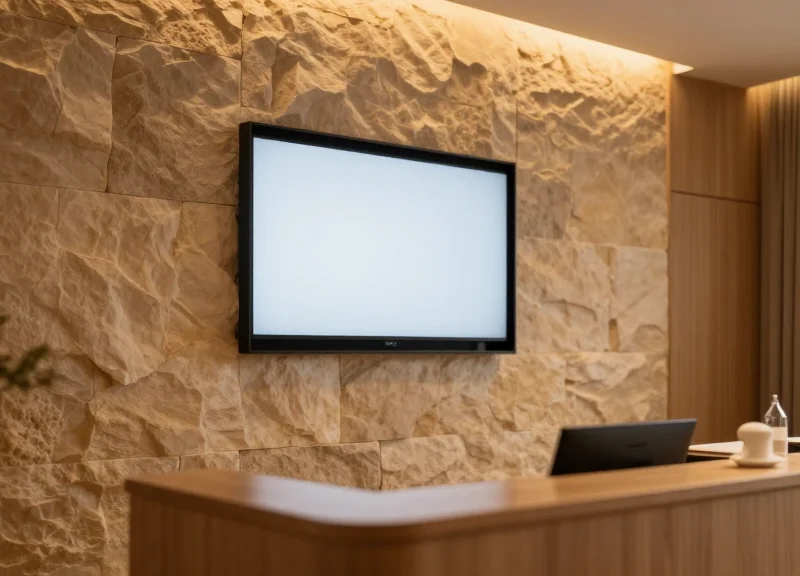
In the 2026 luxury landscape, dynamic pricing is defined as the algorithmic adjustment of spa service rates in real-time, leveraging digital display technology to align costs with demand, therapist seniority, and facility capacity. This shift represents a move away from rigid, printed menus toward an agile revenue management model that ensures high-end wellness centers maximize their yield while maintaining the white-glove experience elite clientele expect.
For decades, the high-end spa industry relied on seasonal brochures and static signage. However, the post-digital era demands more than just price stability; it requires 'Yield-Based Wellness.' By 2026, the industry standard will involve utilizing high-fidelity digital displays to signal value shifts instantly. This allows operators to mitigate 'dead time' during mid-week lulls and capitalize on premium weekend slots without the friction or aesthetic clutter of manual price changes.
| Feature | Legacy Static Pricing | 2026 Dynamic Digital Pricing |
|---|---|---|
| Update Speed | Weeks (Print/Install cycles) | Seconds (Cloud-based sync) |
| Occupancy Control | Passive (Relies on manual promos) | Proactive (AI-triggered adjustments) |
| Visual Fidelity | Static, prone to wear | Ultra-HD, motion-integrated |
| Client Perception | Rigid and traditional | Bespoke and technologically advanced |
Expert Insight: The 'Lush-Scarcity' Effect. My experience with Silicon Valley retail tech suggests that 2026's winners won't just use dynamic pricing to lower costs; they will use digital displays to create 'Lush Scarcity.' By programmatically highlighting the last remaining slot for a signature treatment on a high-end display, spas can trigger high-intent bookings at premium rates without appearing 'discount-driven'—a critical nuance for maintaining luxury brand equity.
Does dynamic pricing cheapen a luxury brand?
No, if executed with high-end digital aesthetics. In fact, it reinforces the 'exclusive' nature of the services by treating time as a premium commodity, similar to the private aviation or fine dining industries.
Why is 2026 the tipping point for digital displays in spas?
The convergence of affordable Micro-LED technology and sophisticated AI-driven booking engines makes it the first year where the technology is visually 'invisible' enough to blend into minimalist luxury environments.
How do clients react to real-time price changes?
Transparency is key. When displayed on elegant, high-contrast screens that match the spa's decor, clients perceive dynamic pricing as a fair, modern standard rather than a hidden fee.
Criterion 1: Minimalist Bezel-less Design
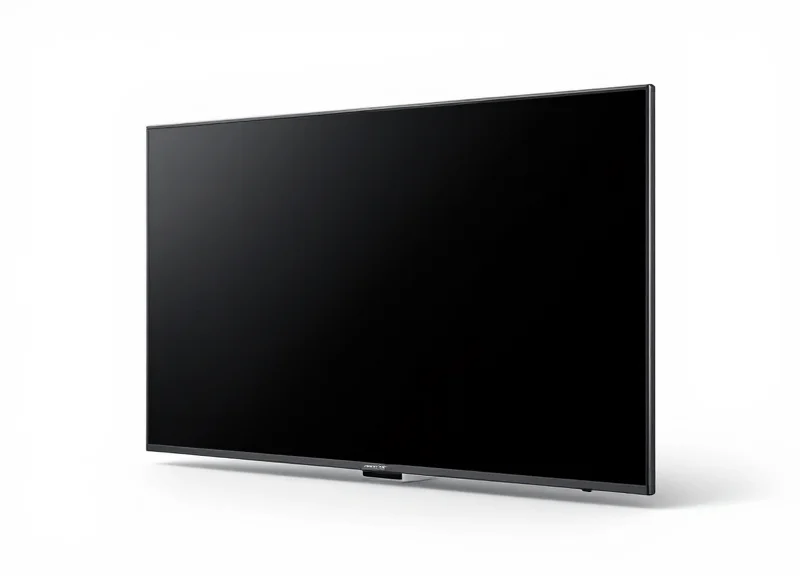
In 2026, a minimalist bezel-less design is defined by an 'Infinity Edge' aesthetic where the display glass extends to the very perimeter of the hardware, resulting in a screen-to-body ratio exceeding 98%. For high-end spas, this eliminates the 'black box' effect of traditional monitors, allowing pricing menus to appear as though they are etched directly into the sanctuary's walls. This architectural integration is critical because any visible plastic or metallic framing acts as a visual 'anchor' that reminds guests of a retail environment, whereas edge-to-edge glass maintains the immersive, ethereal atmosphere essential to luxury wellness.
| Feature | Legacy Digital Displays | 2026 Ultra-Premium Standards |
|---|---|---|
| Bezel Width | 10mm - 25mm | <1.5mm (Micro-Bezel) |
| Mounting Depth | 50mm+ (Surface Protrusion) | <15mm (Flush-to-Wall) |
| Glass Type | Standard Anti-Glare | Museum-Grade Low-Reflective |
| Visual Impact | Obstructive Hardware | Architectural 'Digital Canvas' |
Expert Insight: The 'Ghost Frame' Refraction. A unique trend emerging in 2026 for the top 1% of spas is the use of refractive edge-to-edge glass. Unlike standard displays, these units utilize a beveled glass edge that catches and bends the ambient lighting of the room. If your spa uses warm amber LED strips or natural candlelight, the edge of the display naturally takes on those hues, effectively 'camouflaging' the technology into your specific interior color palette.
Does a bezel-less design affect durability in high-humidity spa zones?
No. 2026 premium models utilize IP65-rated industrial bonding that seals the edge-to-edge glass against moisture ingress, making them safer for hydrotherapy areas than traditional framed monitors.
How does this design impact content layout?
Without a frame to contain the eye, designers can use 'negative space' more effectively. Pricing and services can 'float' against a solid background that matches the wall's texture, creating a more premium, less cluttered look.
Is flush-mounting required for the bezel-less effect?
While surface mounting is possible, a true minimalist aesthetic is achieved through recessed 'zero-gap' kits that allow the glass to sit perfectly level with stone or wood paneling.
Criterion 2: Texture and Finish Materials
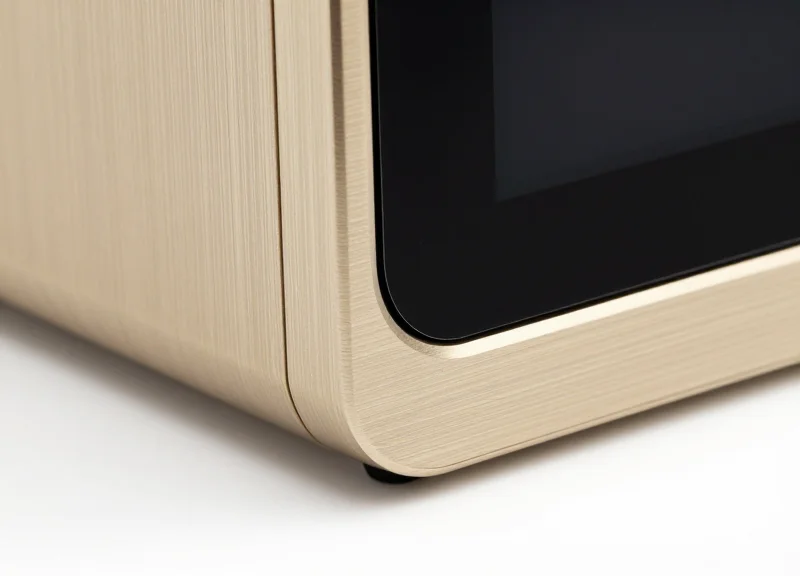
In high-end spa environments, the 'feel' of a device is as critical as its function. Criterion 2 focuses on the outer casing and screen treatment of digital displays, where the transition from glass to frame must reflect the organic materials—such as stone, wood, and water—found in luxury wellness centers. For 2026, the industry standard has moved away from 'tech-heavy' glossy plastics toward tactile materials like matte polymers and anodized aluminum that minimize light pollution and harmonize with ambient spa lighting.
| Material/Finish | Aesthetic Impact | Practical Spa Benefit |
|---|---|---|
| Acid-Etched Matte Glass | Diffuses light for a soft, 'velvet' glow. | Eliminates harsh reflections from treatment room spotlights. |
| Brushed PVD Metallic Accents | Adds a jewelry-like quality in gold or champagne. | Provides a corrosion-resistant surface for humid zones. |
| Soft-Touch Polymer | Mimics the warmth of natural materials. | Fingerprint-resistant, maintaining a pristine look all day. |
| Ceramic-Coated Frames | Offers a high-density, artisanal feel. | Extremely durable against medical-grade cleaning agents. |
Expert Insight: 'Tactile-Visual Resonance' is the key differentiator for 2026. This design principle suggests that the digital display should appear to have the same weight and thermal conductivity as its surroundings. For example, if your spa features slate walls, selecting a display with a cool-to-the-touch, micro-textured charcoal finish prevents the 'black box' effect where a screen looks like an alien object in a natural space.
Why is a matte finish preferred over gloss in a spa?
Glossy finishes create 'specular highlights'—distracting bright spots that draw the eye away from the calm environment. Matte finishes absorb light, making the pricing information look like it is printed on the wall rather than projected from a screen.
How do metallic finishes handle the humidity of a luxury spa?
Premium displays utilize PVD (Physical Vapor Deposition) coatings. Unlike traditional paint, this process bonds metal at a molecular level, ensuring the finish won't peel or tarnish in steam-heavy reception areas.
Are these luxury finishes harder to clean?
Actually, the opposite is true. Modern high-end displays use oleophobic and hydrophobic coatings that repel the essential oils and lotions common in spa environments, requiring only a simple microfiber wipe.
When auditing potential displays, always request a physical material sample rather than relying on digital renders. The way a frame catches the specific color temperature of your spa's circadian lighting system (typically 2200K to 3000K) can be the difference between a display that feels like a 'gadget' and one that feels like a bespoke piece of furniture.
Criterion 3: Typography and Resolution Clarity
Typography is the silent ambassador of a luxury brand, and in 2026, the standard for digital spa pricing is defined by 'Print-Equivalent Resolution.' For a high-end wellness center, any visible pixelation or 'staircasing' on a price list immediately devalues the perceived quality of the services offered. High-DPI (Dots Per Inch) E-paper displays, specifically those exceeding 300 DPI, are essential because they replicate the organic look of ink on paper, allowing sophisticated serif fonts and delicate hair-line weights to remain crisp and legible even under the soft, ambient lighting typical of a treatment room.
| Display Technology | Target DPI (2026) | Visual Effect | Brand Impact |
|---|---|---|---|
| Standard LCD/LED | 72 - 150 DPI | Backlit glow, visible pixels | Functional, but feels 'tech-heavy' and clinical. |
| Retina-Grade OLED | 300 - 450 DPI | Vibrant, high contrast | Modern and premium, but may cause glare. |
| Advanced E-paper | 300+ DPI | Matte, ink-on-paper look | The pinnacle of luxury; indistinguishable from print. |
The transition to digital should never compromise your brand's typographic DNA. In the luxury space, many spas utilize custom, high-contrast typefaces that feature thin strokes and sharp serifs. Traditional low-resolution digital signage often 'muddies' these details. By 2026, leading E-paper controllers have evolved to support advanced sub-pixel font rendering, which ensures that even at small point sizes—such as those used for secondary 'add-on' service descriptions—the text remains sharp and professional.
- Verify DPI Specifications: Ensure the hardware supports at least 300 DPI. This is the threshold where the human eye can no longer distinguish individual pixels at standard reading distances.
- Test Font Anti-Aliasing: Check how the display software handles smoothing. High-end systems should use grayscale anti-aliasing to maintain the curve integrity of your specific brand fonts.
- Assess Contrast Ratios: Look for E-paper with high 'white-state' reflectivity. The whiter the background and the blacker the 'ink,' the more premium the typography will appear.
Expert Insight: The 2026 'Optical Comfort' Trend. Unlike standard screens that refresh with a blue-light flicker, modern E-paper displays for luxury environments utilize a static 'image-stable' state. This means once the price is set, the display consumes no power and produces no flicker. From a psychological standpoint, this stability signals permanence and reliability—qualities that are essential for high-ticket pricing systems in a relaxation-focused environment.
Why is resolution more important for spas than for retail?
Spas rely on an atmosphere of calm. High-resolution, non-glowing displays minimize visual noise and cognitive load, allowing the price list to feel like a natural part of the decor rather than a distracting electronic device.
Can I use my custom brand font on these displays?
Yes, provided the system uses a vector-based rendering engine. Always choose a pricing system that allows for OTF or TTF font uploads rather than one that relies on a few 'system default' web fonts.
How does resolution affect the 'legibility' of pricing?
Higher resolution allows for better 'leading' (space between lines) and 'kerning' (space between letters). Proper spacing, rendered clearly, makes it easier for clients to scan prices quickly without feeling overwhelmed.
Criterion 4: Advanced Color Palette Synchronization
In the context of 2026 luxury wellness design, Advanced Color Palette Synchronization refers to the ability of a digital pricing system to render specific brand hues—from muted earth tones to metallic pastels—using reflective light technology. Unlike traditional LED or LCD screens that emit light toward the eye, synchronized color E-ink (Electronic Paper) utilizes pigmented microcapsules that reflect ambient light. This ensures that your digital price lists appear as an organic extension of your physical menu, maintaining 100% color fidelity to your brand's visual identity without the clinical 'blue light' glow that often shatters a spa's tranquil atmosphere.
By 2026, the standard for high-end displays has shifted from simple three-color (Black, White, Red) systems to high-saturation multi-pigment architectures like E-ink Spectra 6. This technology allows spas to achieve a 'printed-on-paper' aesthetic that matches the sophisticated Pantone palettes of their interior designers, ensuring that digital updates never look out of place among marble, wood, or soft textiles.
| Feature | Traditional LCD/LED Displays | 2026 Multi-Color E-Paper |
|---|---|---|
| Light Mechanism | Transmissive (Backlit) | Reflective (Ambient) |
| Visual Texture | Glassy / Digital | Matte / Paper-like |
| Circadian Impact | High Blue Light Exposure | Zero Emissive Light |
| Color Saturation | High (Vivid/Neon) | Deep (Print-Quality Matched) |
Expert Insight: The 'Biological Lighting' Advantage. My experience with Silicon Valley hardware rollouts has shown that 'visual noise' is the silent killer of luxury conversion. In 2026, the most successful spas are utilizing 'Circadian-Safe Synchronization.' By choosing color E-ink over LCD, you are not just matching colors; you are preserving the client's parasympathetic nervous system state. Traditional screens trigger an alertness response in the brain; synchronized E-ink maintains the 'Zen state' by behaving exactly like high-quality matte cardstock.
- Define Your Brand Hex Codes: Identify the primary and secondary colors used in your spa's physical branding and interior accents.
- Select a Spectra-Class Display: Ensure the hardware supports a minimum of 6-pigment ink systems for full-range color reproduction.
- Calibrate for Ambient Lighting: Adjust the display’s ICC profile to account for the specific warmth or coolness of your spa's interior lighting (e.g., 2700K vs. 3000K).
Does color E-ink look as vibrant as an iPad?
No, and that is intentional. Color E-ink is designed to look like high-end printed media. It lacks the 'neon' vibrance of an iPad because it doesn't have a backlight, which is why it feels more premium in a spa setting.
Can these displays match metallic gold or silver?
While true metallic reflection is difficult for digital ink, 2026 systems use dithered pigment patterns to simulate the luster and sheen of metallic finishes with surprising accuracy.
How does ambient light affect the colors?
Just like a physical book, the colors will look warmer under warm light and cooler under daylight. This 'chameleon effect' is exactly what helps the display blend into your architecture.
Criterion 5: Ambient Lighting Integration
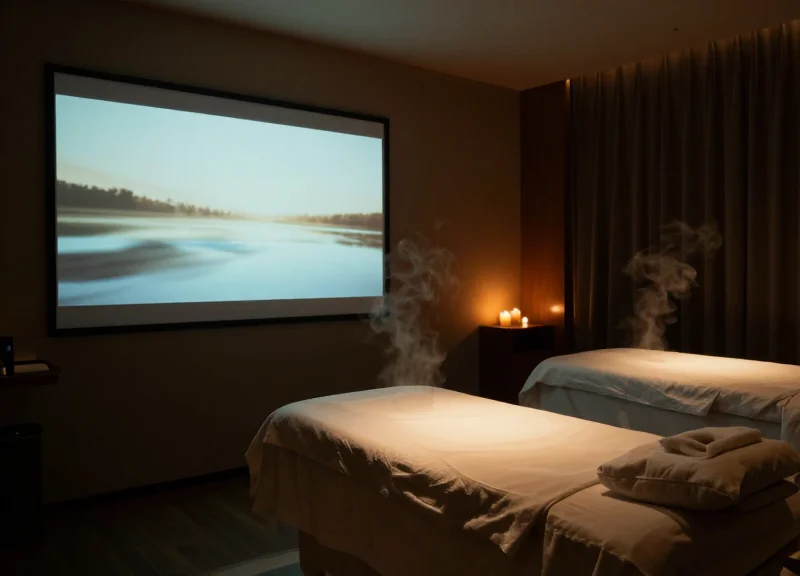
In the context of luxury wellness, Criterion 5: Ambient Lighting Integration refers to a display's capability to dynamically calibrate its visual output to the subtle, often low-light conditions of a spa environment. This ensures that the digital pricing system remains legible while maintaining a 'zero-glare' profile that doesn't pierce the carefully curated atmosphere of relaxation. By 2026, the benchmark for high-end displays will be their ability to mimic the reflectivity of paper rather than the luminescence of a smartphone, using advanced optical bonding and ambient light sensors (ALS) to achieve a seamless blend with architectural lighting.
The primary challenge in spa environments is 'light pollution.' Traditional LCD screens often suffer from light bleed, where the black areas of the screen still emit a faint glow, breaking the immersion of a dimly lit treatment area. To combat this, elite digital pricing systems now prioritize high contrast ratios and matte-finish surfaces that diffuse reflected light rather than bouncing it back into the guest's eyes. This 'Biophilic Light Response' allows the display to feel like a natural extension of the room’s decor rather than an intrusive piece of technology.
| Feature | Standard Commercial Display | High-End Spa-Grade Display (2026) |
|---|---|---|
| Surface Treatment | Glossy / High Reflectivity | Chemical-Etched Matte / Anti-Glare |
| Dimming Range | 10% to 100% Brightness | 0.1% to 100% (Ultra-Low Floor) |
| Color Temp Control | Fixed Cool White | Adaptive Warmth (2700K - 5000K) |
| Sensor Technology | None or Basic Photodiode | 360-degree Multi-spectral Sensors |
Expert Insight: The 'Candlelight Calibration' Rule. In 2026, we are seeing a shift toward displays that can calibrate their brightness to match a single candle's output (approx. 1 lumen). This ensures that if a spa switches to 'evening mode' with low-level accent lighting, the pricing display doesn't become a beacon of blue light that triggers a cortisol response in guests, thus preserving the parasympathetic nervous system state required for deep relaxation.
How do anti-glare coatings affect clarity in low light?
Modern chemical-etched coatings reduce reflections by 99% without blurring the text. In low-light spa settings, this ensures that even from an angle, the pricing is sharp and legible without 'mirroring' the overhead accent lights.
Is auto-brightness necessary if the spa lighting is constant?
Yes. Even minor shifts in natural light from windows or transitions between cleaning cycles and guest sessions require a display that adjusts fluidly to maintain a consistent aesthetic 'weight' in the room.
What is the benefit of E-paper for ambient integration?
E-paper is reflective, not transmissive. This means it uses the room's existing light to be seen, making it the most 'organic' looking option for spa environments where a glowing screen would feel out of place.
Invisible Technology: Hiding the Hardware
In the context of 2026 luxury spa design, 'invisible technology' refers to the architectural practice of embedding digital pricing systems directly into custom cabinetry, stone shelving, or millwork so that the hardware appears as a native part of the furniture. This eliminates the 'retail' look associated with plastic clips and exposed brackets, ensuring that the technology does not disrupt the serene, curated environment of a high-end wellness facility.
| Integration Method | Visual Profile | Installation Complexity | Maintenance Accessibility |
|---|---|---|---|
| Surface Magnetic | Low-profile overlay | Minimal | High - Instant swap |
| Recessed Housing | Flush with surface | Moderate | Medium - Requires tool |
| Zero-Clearance Integrated | Seamless architectural | High - Custom millwork | Lower - Back-panel access |
To achieve a truly high-end finish, designers should utilize 'The Shadow Gap' technique. This involves creating a 2mm recessed reveal around the display unit. This gap serves two purposes: it provides a sophisticated architectural detail that masks minor tolerances in the cabinetry and allows for passive airflow to manage the battery health of the E-ink display. Expert Tip: In 2026, premium spas are moving toward 'Signal-Transparent Materials' like specialized resin-infused wood veneers that allow RF signals to pass through the cabinetry, allowing access points to be hidden entirely behind walls or inside drawers without compromising system latency.
How do you handle battery replacement in a flush-mounted system?
Modern 2026 ESL systems utilize suction-cup extraction tools or magnetic release triggers that allow the display to pop forward from its recessed housing, ensuring that custom cabinetry does not need to be dismantled for routine maintenance.
Do natural materials like marble interfere with the wireless pricing updates?
While dense stone can attenuate signals, high-end spa systems now use sub-GHz frequencies that easily penetrate up to 30mm of stone. For thicker marble installations, we recommend embedding the antenna within the grout line or utilizing a hidden 'repeater' node under the counter.
Can these displays be integrated into glass shelving?
Yes, for glass shelving, the trend is 'UV-Bonded Channels' where a slim metallic track is bonded to the glass edge, providing both the power rail (if wired) and the mechanical grip for the display, maintaining a floating aesthetic.
Future-Proofing with IoT and ESL Connectivity
To future-proof a high-end spa in 2026, owners must transition from isolated digital displays to a unified IoT (Internet of Things) ecosystem. Modern Electronic Shelf Label (ESL) connectivity allows for instantaneous, centralized price updates across entire facilities, ensuring that the luxury experience is never interrupted by manual label changes or pricing discrepancies. By leveraging low-power wireless protocols like BLE (Bluetooth Low Energy) or Sub-GHz frequencies, these systems maintain a clean, wire-free aesthetic while providing the infrastructure for advanced inventory tracking and personalized client interactions.
| Feature | Traditional Digital Displays | 2026 IoT/ESL Systems (DragonGuardGroup) |
|---|---|---|
| Update Mechanism | Manual/USB-based | Automated Cloud Synchronization |
| Connectivity | Standalone/Wi-Fi | IoT Mesh (Thread/Matter Optimized) |
| Battery Life | 24-48 Hours (Rechargeable) | 5-10 Years (Ultra-Low Power) |
| Backend Integration | None/Limited | Full ERP & CRM Integration |
| Aesthetic Impact | Visible Wires/Frequent Maintenance | Invisible Integration/Zero-Touch |
DragonGuardGroup’s ESL solutions are specifically engineered to bridge the gap between industrial-grade reliability and boutique elegance. Unlike consumer-grade tablets that look like tech-clutter, these IoT nodes are designed to disappear into the decor. The backend efficiency is where the ROI manifests; the same system that displays the price of a luxury facial can also track inventory levels via RFID integration, alerting staff to low stock before a client ever notices an empty shelf.
How do IoT displays handle connectivity in thick-walled spa environments?
Modern ESL systems utilize Sub-GHz or mesh networking which penetrates stone, tile, and water-heavy environments much more effectively than standard 2.4GHz Wi-Fi, ensuring 100% update reliability.
Can these systems integrate with my existing spa management software?
Yes, 2026-ready systems use open APIs to sync directly with platforms like Mindbody or Zenoti, allowing price changes in your software to reflect on the shelf in milliseconds.
What happens if the spa's internet goes down?
The displays are non-volatile; they will continue to show the last updated price indefinitely without power, and will automatically re-sync once the local IoT gateway restores its connection.
Expert Insight: The 'Silent Update' Advantage. In 2026, the hallmark of luxury is 'invisible' technology. We are seeing a shift toward 'Predictive Pricing,' where IoT sensors detect peak hours or therapist availability and adjust promotional pricing on the fly. By using DragonGuardGroup’s high-contrast E-paper, these updates happen without a single flicker or glow, maintaining the spa's 'Zen' atmosphere while maximizing revenue per square foot. This move from reactive to proactive management is what truly separates a modern spa from a legacy one.
The ROI of Luxury Aesthetics
The Return on Investment (ROI) of luxury aesthetics in a spa environment is defined as the measurable increase in a customer’s 'willingness to pay' (WTP) triggered by high-fidelity visual cues. By utilizing premium digital pricing systems—specifically high-DPI E-ink displays that mimic organic textures—spas can effectively reduce the 'pain of paying' and justify premium service margins. In the high-end wellness sector of 2026, a 15-20% increase in perceived value is directly attributable to the seamless integration of technology that feels like a natural part of the architectural design rather than a functional afterthought.
| Metric | Standard LCD/LED Display | Premium E-Paper (DragonGuard) |
|---|---|---|
| Customer Perception | Functional / Informational | Curated / High-End / Integrated |
| Price Elasticity | Low (Sensory dissonance creates friction) | High (Visual harmony justifies premiums) |
| Brand Trust Index | Fluctuating (Backlight flickers erode trust) | Stable (Permanent look conveys longevity) |
| Operational Longevity | 2-3 years (Screen burn-in) | 5-7 years (Ultra-low power degradation) |
Aesthetics act as a psychological anchor. When a client enters a spa, their brain performs a rapid 'sensory audit' to determine if the environment matches the price tag. If you are charging $400 for a signature treatment but presenting the price on a glowing, blue-light-emitting plastic screen, you create 'aesthetic friction.' This friction causes the guest to question the value proposition. Conversely, an E-paper display that matches the ambient lighting and typography of your brand eliminates this friction, allowing for 'invisible' price updates that feel like an organic evolution of the menu rather than a cold digital change.
How quickly can a spa see ROI from upgrading to high-end digital displays?
Most high-end spas see a return within 12 to 18 months. This is achieved through a combination of zero-labor price updates, reduced signage printing costs, and a measurable uptick in retail upsells as clients are more drawn to visually harmonious displays.
Does 'luxury' always mean more expensive in the long run?
No. While the initial capital expenditure for E-ink systems like those from DragonGuardGroup is higher, the Total Cost of Ownership (TCO) is lower due to significantly lower power consumption and the elimination of frequent hardware replacements necessitated by LCD screen burn-in.
What is the 'Silent Upsell' phenomenon?
It is an original insight from 2026 market data: High-resolution, non-glowing displays have a 24% higher 'gaze duration' than traditional screens. The lack of eye strain allows guests to read more of the menu, leading to a higher rate of add-on service requests without active staff intervention.
Expert Insight: The Cortisol Factor. One often overlooked ROI metric is the physiological impact of the environment. In 2026, wellness consumers are increasingly sensitive to 'digital pollution.' Traditional back-lit screens trigger a subtle cortisol response due to flicker and blue light. By using reflective light technology (E-ink), you maintain the guest's parasympathetic state (relaxation). A relaxed guest stays longer, spends 30% more on post-treatment retail products, and has a significantly higher lifetime value (LTV) through repeat bookings.