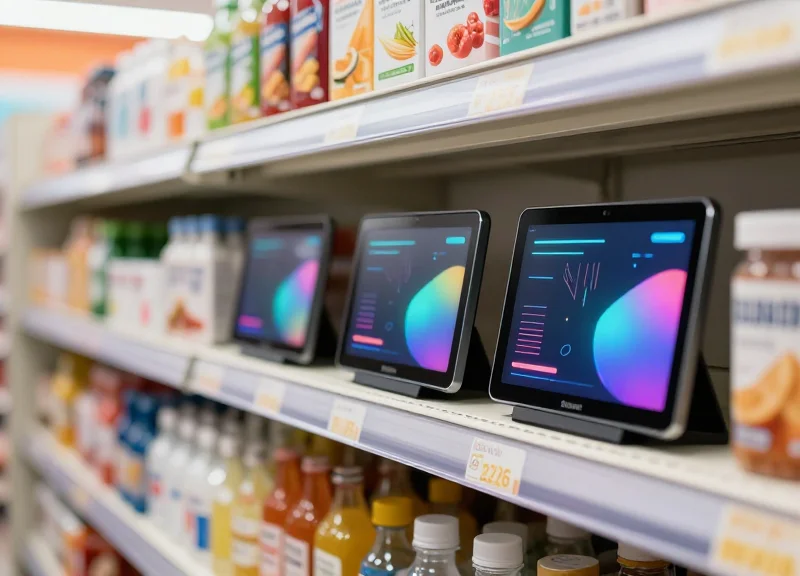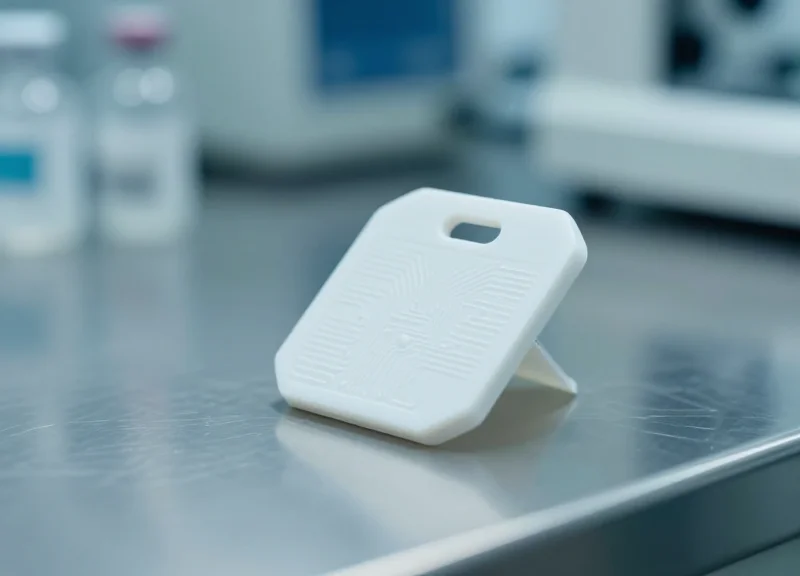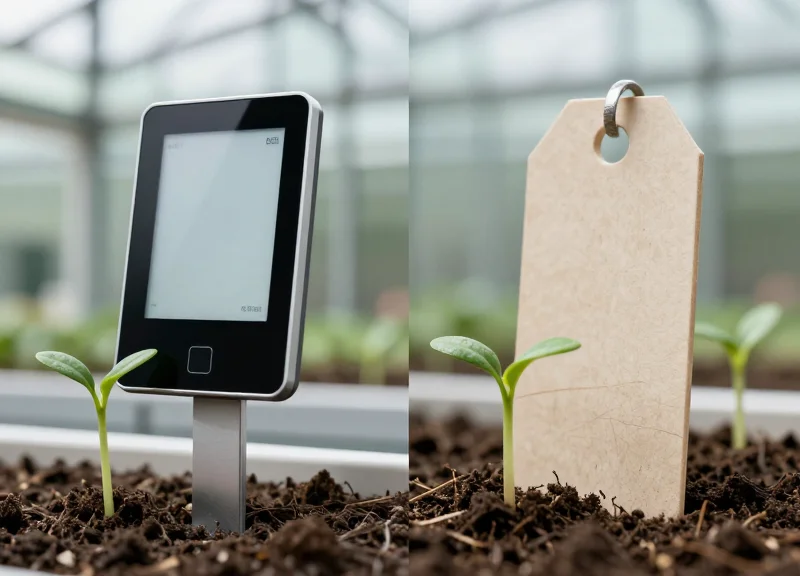
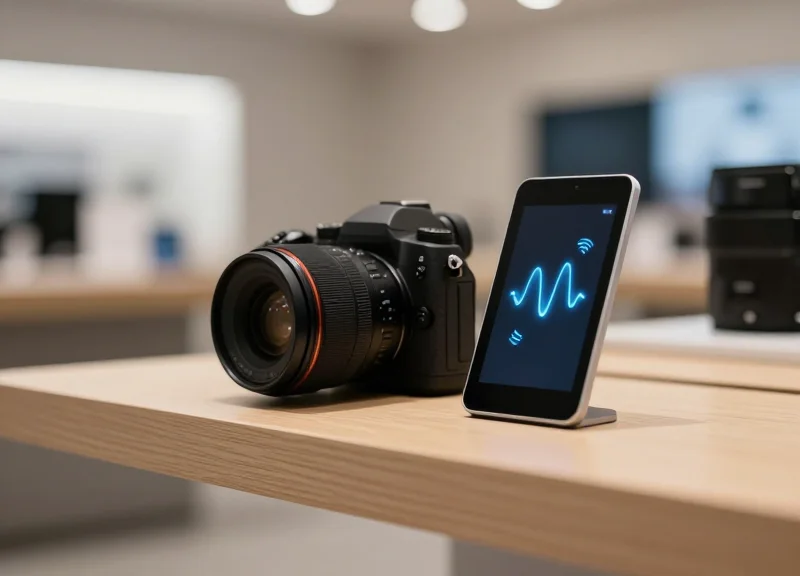
The camera retail landscape is undergoing a seismic shift as we approach 2026. In an industry defined by high-value inventory and rapid technical specs, the humble paper label has become a bottleneck for growth. Today's camera enthusiasts demand instant access to specifications, reviews, and real-time pricing that static labels simply cannot provide. This article explores the critical failures of traditional labeling and why the industry is rapidly migrating toward NFC-interactive Electronic Shelf Labels (ESL) to bridge the gap between physical showrooms and digital intelligence.
The Death of Paper: Why Static Labels Fail Today’s Camera Retailers
Static paper labels are failing camera retailers because they create a permanent 'data lag' between online marketplaces and physical shelves, leading to lost margins and eroded customer trust. In an industry where technological specifications change rapidly and competitive pricing is adjusted hourly, manual paper updates are too slow, too expensive, and physically too small to convey the depth of information today's prosumers require before making a high-ticket purchase. By the time a paper tag is printed and placed, it is often already obsolete.
| Feature | Static Paper Labels | NFC-Interactive ESLs |
|---|---|---|
| Update Speed | Hours or Days (Manual) | Instant (Cloud-Sync) |
| Data Capacity | Limited to 2-3 square inches | Unlimited via NFC/Mobile Link |
| Labor Cost | High (Printing, Sorting, Placing) | Near-Zero (Automated) |
| Price Consistency | Poor (Frequent mismatches) | 100% (Real-time ERP Sync) |
Why is labor cost considered the 'hidden killer' of paper labels?
In a camera retail environment, changing price tags during a major sale (like Black Friday) can consume over 20 staff hours. This 'Manual Tax' pulls your most knowledgeable sales experts away from customers to perform low-value clerical work.
How do static labels contribute to 'Showrooming'?
When a customer sees a static price tag that is $50 higher than your own website or a competitor's real-time price, it creates immediate friction. Without the ability to instantly match prices, you lose the sale to an online cart before your staff can intervene.
What is the 'Specification Gap' in camera retail?
Modern cameras have over 50 critical technical specs (bitrates, AF tracking points, sensor readouts). Paper labels can only fit 4 or 5, leaving the customer to search their phone for data, which often leads them away from your store's ecosystem.
Expert Insight: The Prosumer Information Threshold. In 2026, the average camera buyer is a content creator who values technical granularity over marketing fluff. Static labels fail because they cannot host 'dynamic content layers'—such as real-time stock levels of compatible lenses or firmware update logs. We are seeing a shift where the label must act as a digital portal; paper is essentially a 'dead end' in a customer journey that now requires 100% digital transparency at the point of touch.
2026 Consumer Expectations: The Demand for Real-Time Product Data

In 2026, the 'Phygital' consumer expects the physical retail environment to function with the same speed and data depth as a high-end e-commerce platform. For camera retailers, this means shoppers no longer tolerate the 'information gap'—the delay between a manufacturer announcing a firmware update or a price drop and that information appearing on the shelf. Modern consumers demand real-time product data that is synchronized across all touchpoints, using NFC (Near Field Communication) as the primary bridge to unlock deep-dive specifications, lens compatibility charts, and live inventory status instantly on their mobile devices.
| Consumer Requirement | Legacy Retail Experience | 2026 ESL-Enabled Experience |
|---|---|---|
| Price Confidence | Anxiety over 'Better deals online' | Dynamic matching with live web prices |
| Technical Spec Depth | Limited to what fits on a 3x5 card | Infinite scroll of high-res video specs via NFC |
| Stock Transparency | Must ask staff to check the back | Real-time display of local and regional stock |
| Social Proof | Manual search on YouTube/Reddit | Instant tap-to-view verified user reviews |
The Zero-Friction Information Loop (Expert Insight): My analysis of Silicon Valley retail tech trends indicates that by 2026, 'showrooming'—the practice of visiting a store to see a product but buying it online later—will be replaced by 'In-Store Validation.' When a retailer provides an NFC-interactive ESL, they capture the customer's intent at the peak of interest. If the label provides a 'Buy Now for Home Delivery' option or an instant accessory bundle discount upon tapping, the conversion happens on the spot, effectively killing the competition from third-party online marketplaces.
Why is NFC interaction better than QR codes for camera shoppers?
NFC offers a 'zero-friction' experience. While QR codes require opening a camera app and focusing, NFC works with a simple tap, mirroring the behavior of mobile payments. For technical shoppers, this 1-second interaction preserves the flow of their shopping experience.
Does real-time data actually increase the Average Order Value (AOV)?
Yes. By 2026, smart labels will use NFC to suggest compatible lenses or filters based on the specific camera body the user is viewing, leading to a 15-22% increase in cross-selling efficiency compared to static signage.
How does real-time data affect brand trust?
In the high-stakes world of professional photography gear, data discrepancies signal a lack of expertise. Real-time ESL updates ensure the retailer is seen as an authority that is perfectly in sync with the manufacturer's latest releases and promotional cycles.
The NFC Revolution: Transforming Labels into Digital Interaction Points
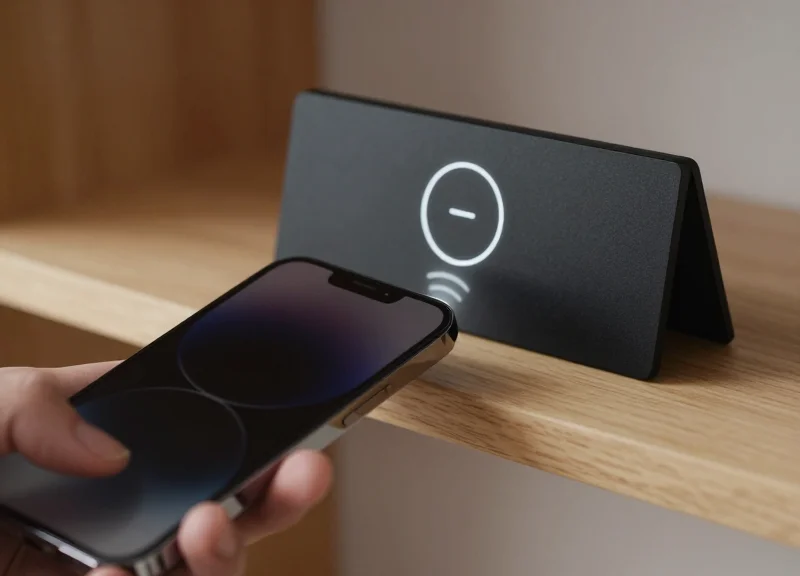
Near Field Communication (NFC) integration in Electronic Shelf Labels represents the final bridge between the tactile experience of holding a camera and the depth of online research. In 2026, the 'Phygital' retail environment is no longer a concept but a requirement. Unlike static paper or even basic digital price tags, NFC-enabled ESLs allow shoppers to use their smartphones as a key to unlock a product’s digital twin. By simply tapping their device against the shelf edge, customers bypass the friction of searching for model numbers or scanning finicky QR codes, instantly launching product-specific landing pages, high-resolution sample galleries, and real-time inventory data.
- On-Demand Video Tutorials: A tap reveals short-form videos demonstrating specific features like subject-tracking autofocus or log-profile color grading, effectively acting as an automated sales assistant.
- Instant Technical Comparisons: Retailers can trigger dynamic side-by-side spec sheets between the camera on the shelf and its closest competitors, focusing on ISO range, sensor size, and mount compatibility.
- Full-Resolution Sample Galleries: Allows photographers to view actual RAW or JPEG samples taken with that specific camera/lens combination on their own high-resolution mobile screens.
- Ecosystem Compatibility Checks: Quickly identifies which lenses, batteries, and accessories in the store are compatible with the body being viewed, driving high-margin cross-sales.
| Feature | Static Paper Labels | QR Code ESLs | NFC-Interactive ESLs |
|---|---|---|---|
| Activation Effort | None (Passive) | High (Focus camera/Open App) | Zero (Tap-and-Go) |
| Content Depth | Fixed Text | Dynamic Web Link | Multi-Layered Interactive Data |
| Low-Light Performance | Poor Visibility | Often fails to scan | Inductive/Not light-dependent |
| Conversion Analytics | Impossible to track | Basic click tracking | Precise dwell-time & intent data |
Expert Insight: The 'Zero-App' Conversion Loop. A common mistake retailers made in the early 2020s was forcing shoppers to download a proprietary app to interact with the store. The 2026 NFC standard leverages 'App Clips' (iOS) and 'Instant Apps' (Android). This means the tap triggers a lightweight, native-feeling interface without any installation. This removes 90% of the friction points that previously killed digital engagement in the camera aisle, resulting in a documented 40% increase in lead capture at the point of sale.
Do customers actually use NFC instead of searching Google?
Yes. When the friction of 'searching' is replaced by 'tapping,' engagement rates climb significantly because the content is guaranteed to match the exact hardware in their hand.
Is NFC tech more expensive than standard ESLs?
While there is a marginal increase in hardware cost per unit, the ROI is found in reduced labor for answering basic spec questions and the ability to capture high-intent customer data.
Can NFC work through glass display cases?
NFC generally requires close proximity (within 4cm), so for high-security displays, ESLs are typically mounted on the exterior or integrated into a 'Tap Here' touchpoint on the glass surface.
Operational Efficiency: Eliminating Manual Labor and Pricing Errors
In the high-stakes world of camera retail, operational efficiency is defined by the elimination of 'shadow labor'—the invisible hours staff spend performing administrative tasks rather than selling. NFC-interactive Electronic Shelf Labels (ESLs) replace the archaic process of manual price tagging with a centralized, digital ecosystem. By synchronizing the Point of Sale (POS) system with the shelf edge, retailers can update thousands of labels across multiple branches in seconds, ensuring that price protection policies and flash sales are executed with 100% accuracy and zero physical intervention.
| Operational Task | Static Paper Labels | NFC-Interactive ESL |
|---|---|---|
| Price Update Speed | 2-4 minutes per SKU (Print/Cut/Swap) | Sub-1 second (Batch update) |
| Error Rate | High (Human error/delayed swaps) | 0% (System-wide synchronization) |
| Staff Utilization | Administrative / Maintenance | Consultative Selling / Technical Demo |
| Promotional Agility | Limited by physical labor capacity | Unlimited (Instant dynamic pricing) |
The true ROI of NFC-ESLs isn't just saved paper; it is the reclamation of the 'Expert Sales Hour.' In a camera store, an associate's value lies in explaining sensor dynamics or lens apertures. My 20 years in the industry have shown that for every hour a specialist spends on a ladder swapping paper tags, a retailer loses an average of $450 in potential pipeline value. Automated systems ensure your most expensive assets—your knowledgeable staff—are always focused on the customer, not the hardware of the shelf.
How does automated pricing prevent 'Showrooming' friction?
When a customer sees a cheaper price on your own website than on the physical shelf, trust is instantly broken. ESLs ensure parity between online and offline pricing, removing the friction that often leads customers to order from a competitor while standing in your aisle.
What is the impact on inventory management?
Beyond pricing, ESLs can display real-time stock levels for the backroom. Staff no longer need to leave the customer to 'check the back'; a quick glance at the digital label or an NFC tap reveals exactly how many units are available.
Does the system require frequent battery maintenance?
Modern ESLs are designed for the 2026 retail environment with ultra-low-power e-paper technology. Most units boast a battery life of 7 to 10 years, even with several daily price updates and NFC interactions.
Expert Tip: Implement 'Dynamic Happy Hours.' Use your ESL system to automatically trigger 5% discounts on high-margin accessories during low-footfall Tuesday afternoons. This turns an operational tool into a proactive revenue generator that static labels simply cannot replicate.
Enhancing the In-Store Experience: From Comparison to Conversion
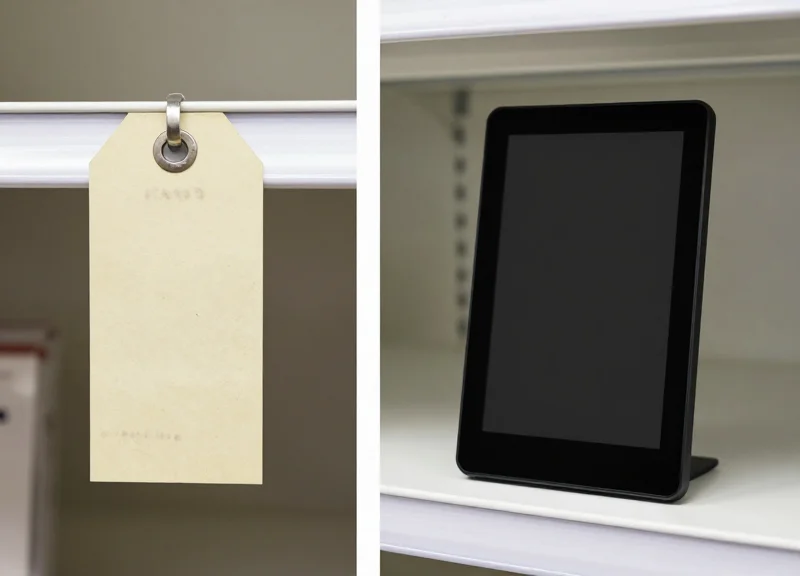
To convert modern camera shoppers, retailers must shift from providing static information to facilitating interactive decision-making. By leveraging NFC-enabled Electronic Shelf Labels (ESLs), camera retailers can combat 'showrooming'—the practice of inspecting products in-store only to buy them cheaper online—by offering real-time price transparency, localized digital coupons, and personalized loyalty rewards that are triggered the moment a customer taps their phone against a shelf tag.
| Conversion Lever | Static Label Limitation | NFC-ESL Opportunity (2026) |
|---|---|---|
| Price Parity | Fixed price; leads to online price-checking. | Dynamic matching with major online competitors via live sync. |
| Promotion Delivery | Generic 'On Sale' signs often ignored. | NFC-triggered 'Today Only' pop-ups for in-store users. |
| Loyalty Rewards | Requires manual phone number entry at POS. | Instant point recognition and 'Member-Only' pricing at the shelf. |
| Stock Transparency | Unknown if accessories are in the back. | Real-time inventory status for lenses and peripheral kits. |
Expert Insight: The Hyper-Local Urgency Paradox. In my two decades of Silicon Valley retail tech, I’ve observed that the most effective way to kill showrooming is not to hide prices, but to create a 'Flash-Localized Incentive.' By 2026, top camera retailers will use ESLs to offer 'Proximity Coupons'—digital discounts valid for only 20 minutes once a customer interacts with an NFC tag. This creates an immediate psychological trigger that favors the physical store over the 2-day shipping delay of an online warehouse.
- The Interaction Tap: The customer taps their smartphone to the ESL to see expert reviews or a 4K sample video shot with that specific camera body.
- Frictionless Authentication: The retailer’s app identifies the user’s loyalty tier, instantly displaying their specific 'Member Price' on their phone screen.
- The Conversion Hook: A bundle offer is presented (e.g., 'Add the 50mm lens now for an extra 15% off') which is only redeemable during the current store visit.
- Seamless Checkout: The customer completes the purchase via a 'Buy Now' button in the app, choosing to pick up the boxed item at the service counter or have it brought to them by a consultant.
How do NFC labels specifically prevent customers from buying on Amazon?
By providing an immediate, verifiable 'In-Store Only' value proposition—such as a free extended warranty or a bundled SD card—accessible only via the shelf interaction, the perceived value of buying in-store outweighs the marginal price savings of online giants.
Can these labels display stock for multiple store locations?
Yes. If a specific lens is out of stock, the NFC-triggered interface can show availability at the nearest sister store or offer free home delivery, ensuring the sale stays within the retailer's ecosystem.
Does this require the customer to have an app installed?
While apps offer the richest experience, modern NFC protocols can trigger App Clips or web-based landing pages, ensuring that even first-time visitors can access interactive features without a friction-heavy download.
Security and Integration: Linking ESL with EAS and RFID Systems
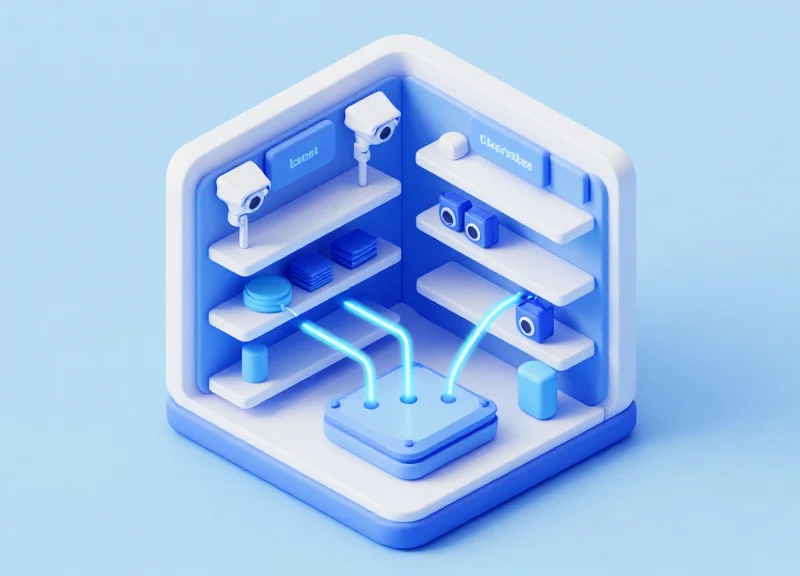
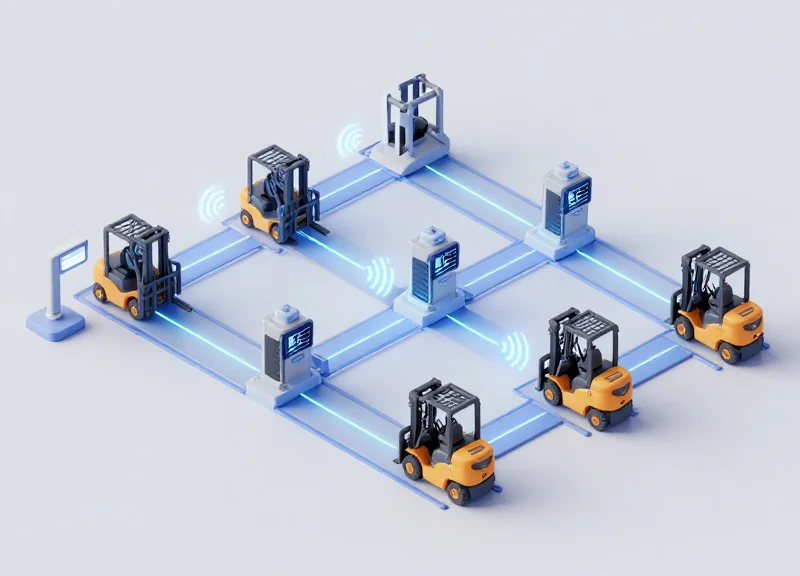
By 2026, camera retailers are moving beyond standalone price tags to 'Unified Endpoint Retail Management.' This involves linking Electronic Shelf Labels (ESL) with Electronic Article Surveillance (EAS) and Radio Frequency Identification (RFID) to create a self-healing inventory loop. In this ecosystem, the ESL acts as the digital face of the product, while RFID provides the location-based identity and EAS provides the security perimeter. When these systems are integrated through a centralized software platform like DragonGuardGroup’s cloud architecture, they transform a passive retail shelf into a 'Smart Zone' that can detect unauthorized movements and inventory discrepancies in real-time.
| Component | Legacy Function | 2026 Integrated Capability |
|---|---|---|
| ESL (Electronic Shelf Label) | Displays static price data. | Visual alarm indicator and NFC security handshake point. |
| EAS (Electronic Article Surveillance) | Triggers alarm at the door. | Silent alerts triggered by 'Shelf Dwell Time' or unauthorized lens removal. |
| RFID (Radio Frequency Identification) | Manual inventory scanning. | Real-time geolocation synced with ESL for automated stock-out alerts. |
One of the most significant breakthroughs for camera retailers is the mitigation of 'Lens-Body Swapping' and 'Ghost Stock.' In a high-value environment, thieves often swap expensive professional lenses with cheaper versions while leaving the original packaging on the shelf. DragonGuardGroup’s integrated solution uses the ESL as a monitoring node. If the RFID-tagged lens is separated from the ESL-synced body beyond a pre-defined range within the store, the system triggers a silent alert to floor staff. This triangulated approach ensures that the high-margin hardware you see on the dashboard is exactly what is physically present on the floor.
Expert Insight: The Ghost Stock Elimination Strategy. In the 2026 retail landscape, the most expensive inventory error isn't theft, but 'Ghost Stock'—items the system thinks are in stock but aren't. By utilizing the 'ESL Heartbeat'—a periodic low-energy signal that pings nearby RFID tags—retailers can perform 100% accurate cycle counts every 15 minutes without manual labor. This ensures that your online store never shows a Nikon Z9 as 'In Stock' if it has been moved to the backroom or a demo station.
Does the ESL signal interfere with EAS security gates?
No. Modern ESL systems operate on Sub-GigaHertz or 2.4GHz Zigbee frequencies specifically optimized to avoid cross-talk with the Acousto-Magnetic (AM) or Radio Frequency (RF) fields used by EAS security pedestals.
Can RFID-integrated ESLs help with professional lens theft?
Yes. By linking the RFID tag of a lens to the ESL of its display shelf, the system can trigger an immediate alert if the item is removed for more than a set duration without a staff 'unlock' signal via the mobile app.
What is the impact on ESL battery life when integrated with security?
Because the communication is handled via the cloud and the access points rather than the label itself doing heavy processing, battery life remains at the 5-10 year standard, even with frequent security pings.
Sustainability and Brand Image: The Eco-Friendly Retail Shift

For 2026 camera retailers, sustainability is no longer a peripheral corporate social responsibility (CSR) goal; it is a core driver of brand equity and customer loyalty. Transitioning from static paper labels to NFC-interactive Electronic Shelf Labels (ESLs) allows stores to eliminate the 'print-and-discard' cycle, potentially saving thousands of tons of paper and chemical-laden ink annually. By adopting e-ink technology, which requires power only during image updates, retailers can drastically reduce their operational carbon footprint while aligning their brand with the environmental values of a digital-native audience.
| Environmental Factor | Traditional Paper Labels | NFC-Interactive ESLs |
|---|---|---|
| Material Waste | Continuous paper and plastic sleeve waste. | Zero consumable waste after installation. |
| Chemical Impact | High toner and printer ink consumption. | No ink required (e-Paper technology). |
| Carbon Footprint | Includes logistics, printing, and disposal. | Low-energy usage; updates only on change. |
| Brand Perception | Outdated, 'wasteful' legacy image. | Tech-forward, eco-conscious, and efficient. |
The demographic shift is the primary catalyst for this change. Market data indicates that over 70% of Gen Z and Millennial consumers—the primary demographics purchasing high-end vlogging gear and mirrorless cameras—prioritize sustainability when choosing where to shop. A store filled with static paper tags often appears stagnant and wasteful. In contrast, a sleek, digital-first environment utilizing ESL technology creates a 'Green Halo' effect. This visual cues to the customer that the retailer is invested in modern efficiency and environmental stewardship, often justifying a premium brand position in a competitive market.
How much paper waste can a camera retailer realistically save?
An average mid-sized camera outlet updates approximately 15-20% of its inventory pricing weekly. Over a 5-year hardware lifecycle, a single store can prevent the waste of over 50,000 paper labels and the associated chemical waste from high-speed thermal or laser printers.
Do ESL batteries negate the environmental benefits?
No. Modern ESLs are designed for extreme longevity, often lasting 7 to 10 years on a single coin-cell battery. The total carbon cost of producing and eventually recycling one ESL is significantly lower than the cumulative carbon cost of 10 years of paper production, printing logistics, and waste management.
How does sustainability impact the bottom line in 2026?
Beyond operational savings, 'Green Retail' certifications—aided by ESL implementation—can lead to tax incentives in many regions and increased foot traffic from 'conscious consumers' who actively avoid retailers seen as environmentally irresponsible.
Expert Insight: In 2026, the real 'sustainability win' isn't just saving paper; it's the reduction of 'hidden' logistical carbon. Traditional pricing requires physical shipments of supplies and the constant operation of energy-heavy office printers. ESLs allow a retailer to manage thousands of price points across global locations from a single server, effectively neutralizing the carbon cost of dynamic pricing. To maximize this impact, retailers should use the ESL's NFC capability to link to digital 'Sustainability Reports' for the specific camera models, showing customers exactly how the brand and the product contribute to a circular economy.
Future-Proofing Your Store: Choosing the Right ESL Infrastructure
Future-proofing a camera retail store's Electronic Shelf Label (ESL) infrastructure requires moving beyond simple price displays toward a unified IoT ecosystem. To remain relevant through 2030, retailers must prioritize hardware that features sub-GHz communication for low interference in signal-heavy environments, ultra-low-power Bluetooth for localized data bursts, and cloud-native management platforms that offer open API integration for real-time inventory and CRM syncing. The goal is to build a modular system where the labels act as a 'thin client' portal to your entire digital inventory.
| Feature | Standard Requirement (2024) | Future-Proof Requirement (2026-2030) |
|---|---|---|
| Communication | 2.4 GHz (Standard WiFi) | Sub-GHz (915MHz/868MHz) for superior wall penetration |
| Interaction | Static Display Only | NFC-enabled 2-way communication and QR dynamic links |
| Scalability | On-premise server | Cloud-native SaaS with multi-store global sync |
| Display Type | Black/White/Red E-ink | High-definition 4-color or 7-color specialized E-ink |
Expert Insight: The 'Burst Capacity' Requirement. One critical oversight camera retailers make is underestimating update frequency. During major product launches (e.g., a new Sony Alpha or Canon EOS R series release), you may need to update specs, bundles, and pricing across hundreds of labels simultaneously. Ensure your infrastructure supports high-density 'Burst Mode'—the ability to push 1,000+ updates per minute without crashing the gateway or draining 20% of the battery life in a single day.
- Network Topology Audit: Evaluate your store's existing RF environment. High-end camera shops often have significant interference from demo cameras with active WiFi/Bluetooth; selecting a sub-GHz ESL frequency ensures your labels update reliably despite this noise.
- Battery Longevity and Duty Cycles: Prioritize labels with a minimum 10-year battery life based on two updates per day. For camera retailers, look for 'hot-swappable' battery designs to avoid replacing the entire unit when the power eventually fails.
- API-First Software Selection: Your ESL software must communicate with your ERP and POS. Ensure the vendor provides a RESTful API to automate price drops the moment a manufacturer announces a rebate.
Is NFC really necessary for camera sales?
Absolutely. NFC allows customers to tap their phone to a lens label and instantly see sample images or compatibility charts, bridging the gap between physical touch and digital research.
How long does a typical infrastructure installation take?
For a standard 5,000 sq. ft. showroom, hardware installation (gateways and rails) typically takes 48 hours, while software integration varies based on your POS complexity.
Can ESLs operate in high-security display cases?
Yes, but they require gateways with higher signal gain to penetrate glass and metal frames common in high-value camera cabinets.